Tennessee Mutual Wills or Last Will and Testaments for Man and Woman living together, not Married with Minor Children
What this document covers
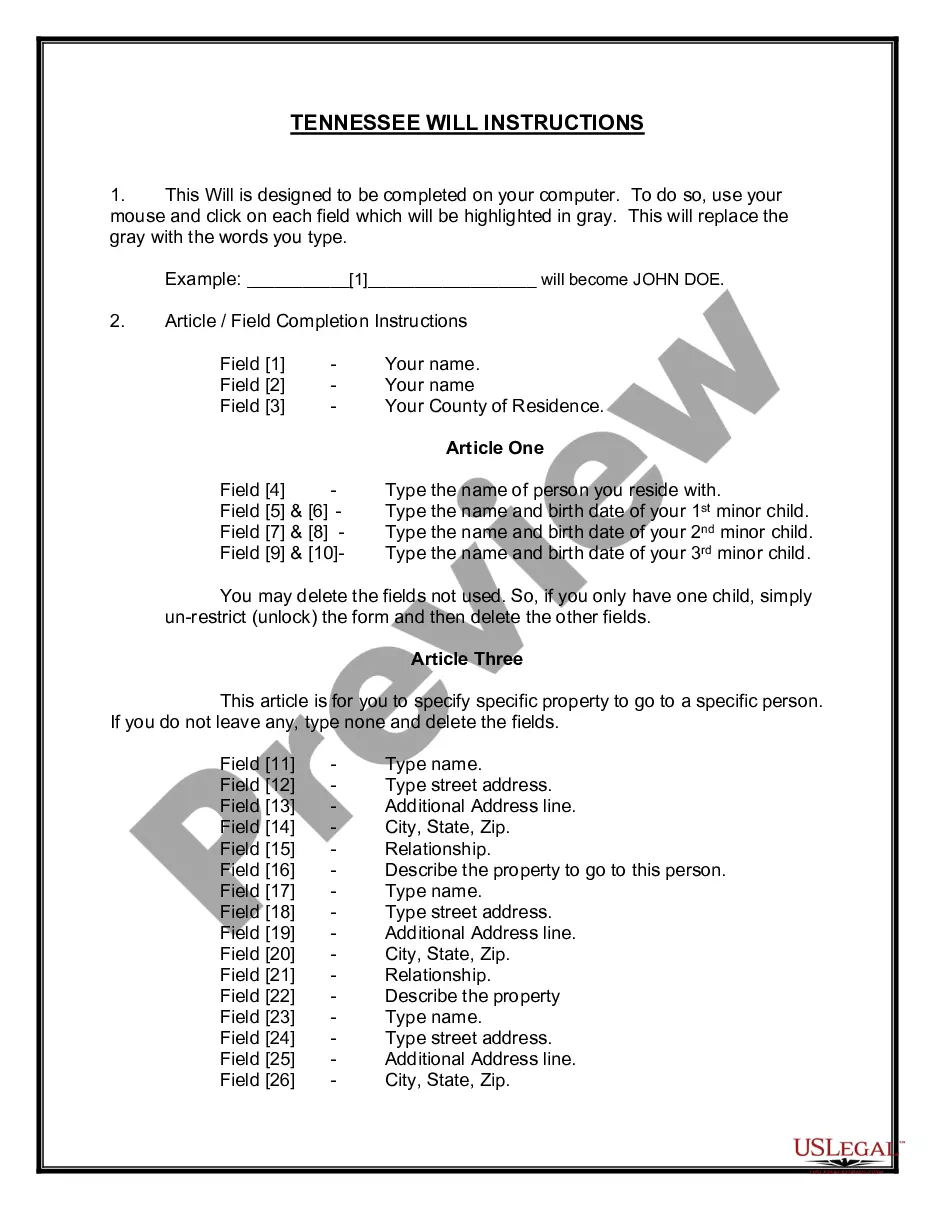
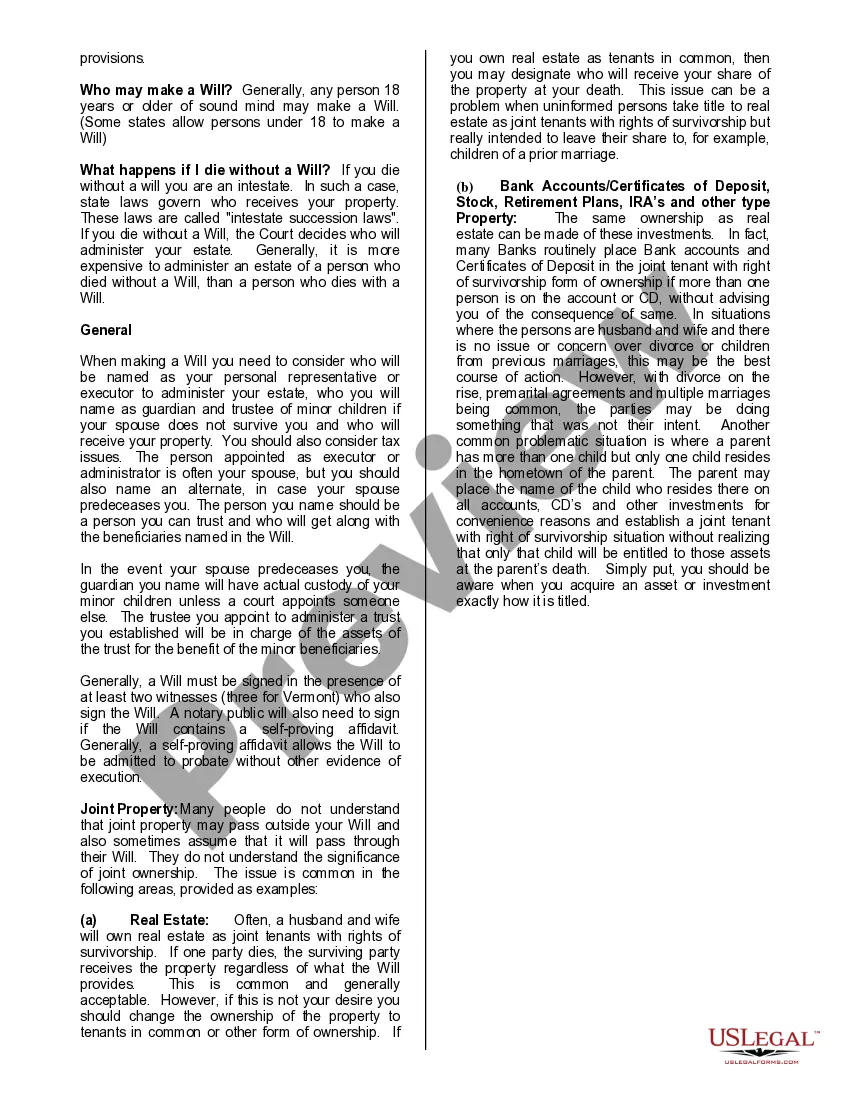
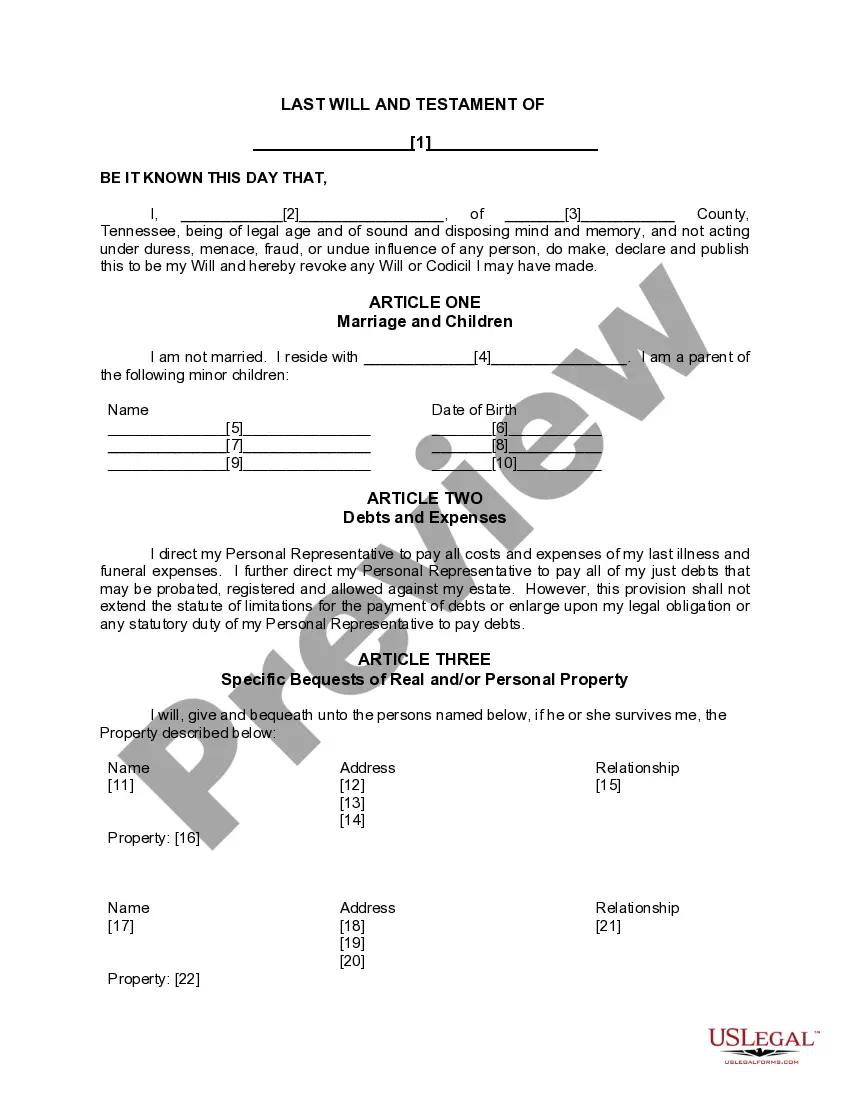
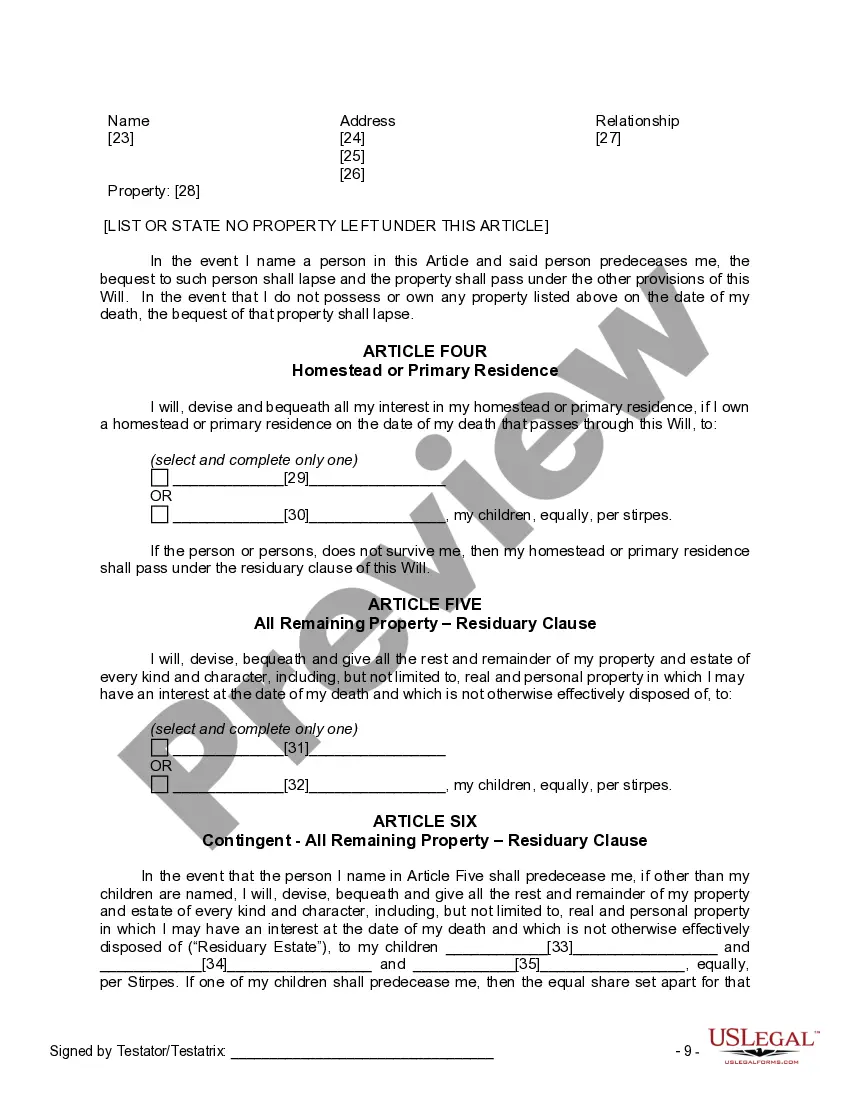
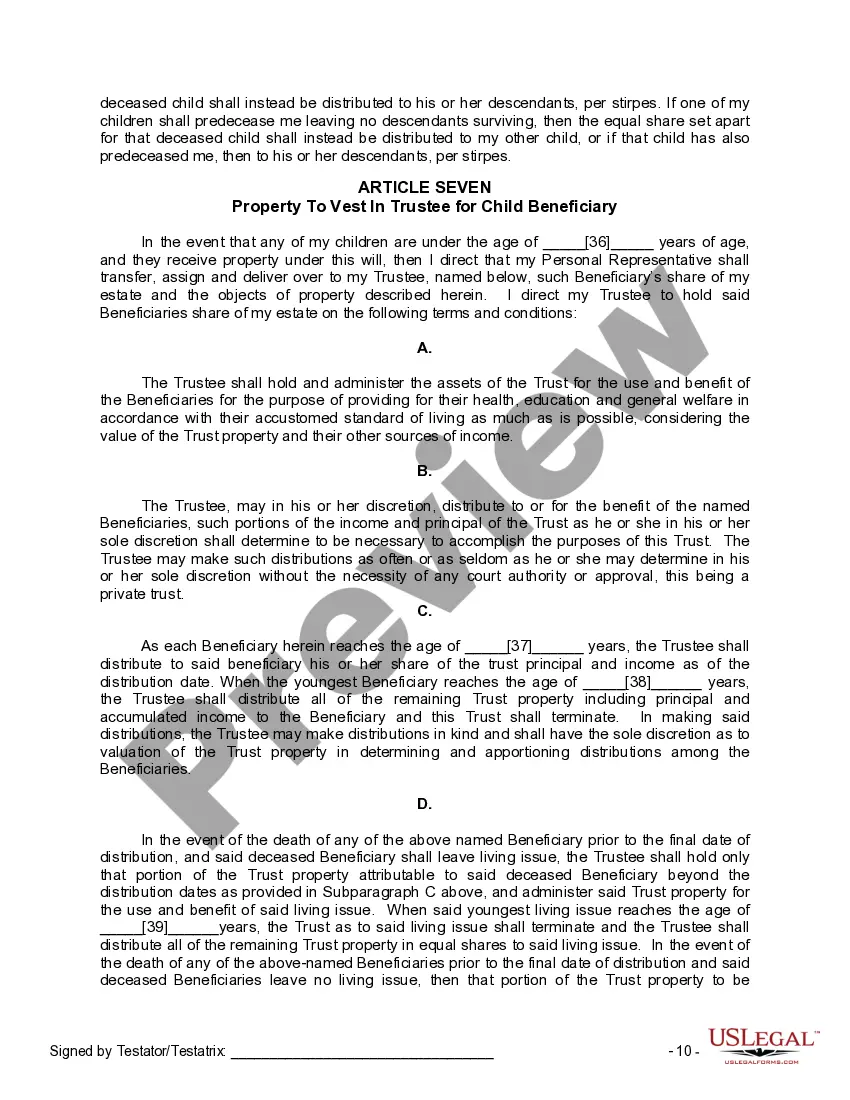
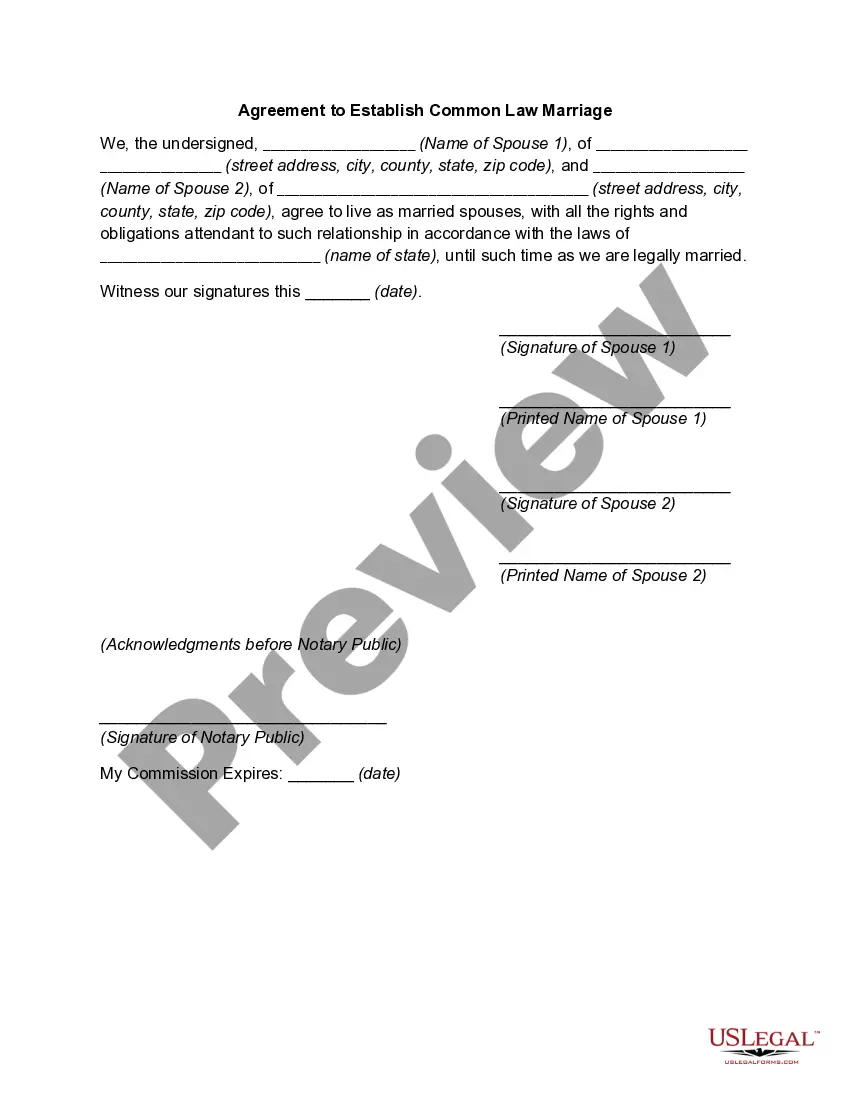
This Mutual Will or Last Will and Testament for a man and woman living together not married with minor children is a legal document that allows partners to mutually designate how their assets will be distributed upon their death. Unlike standard wills, which are typically used by married couples or individuals, this form is specifically tailored for those in a committed relationship but not legally married, ensuring that both partners can provide for each other and their children. This package includes two wills, one for each partner, along with instructions for execution.
Key parts of this document
- Identification of the parties involved, including names and counties of residence.
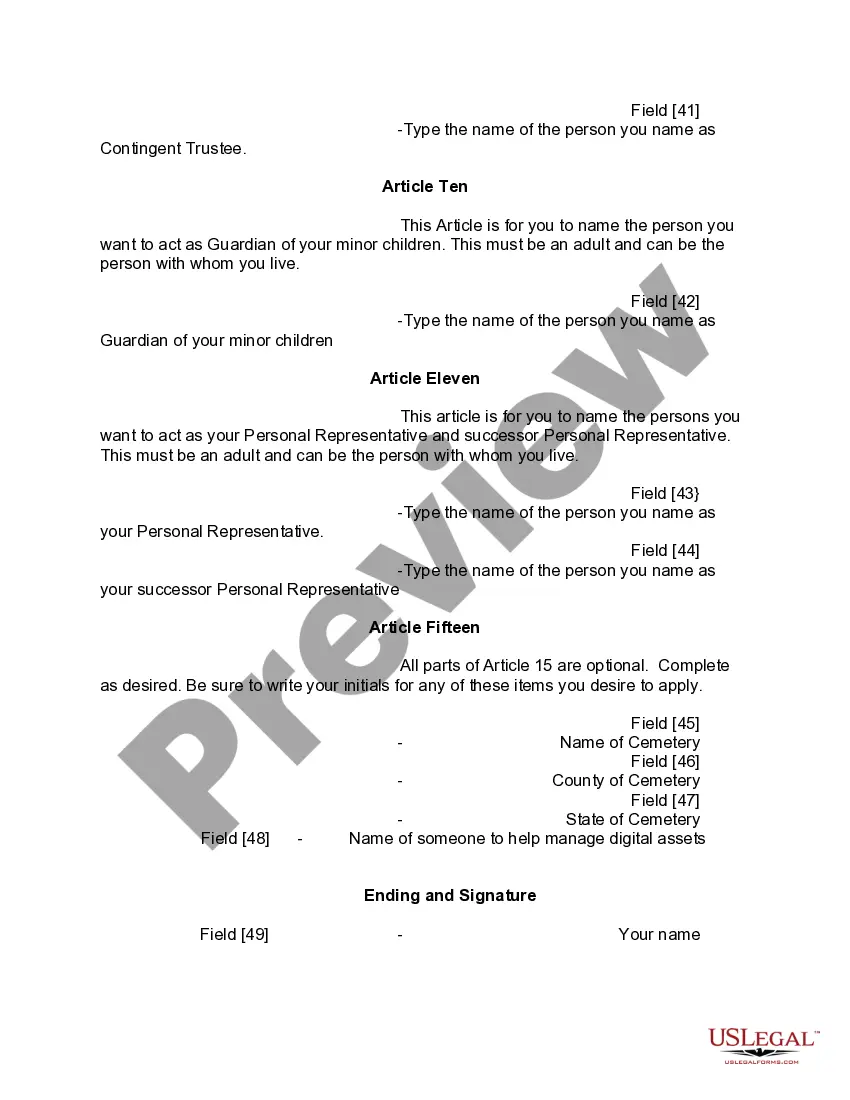
- Designations for guardianship of minor children.
- Specific bequests for personal and real property.
- Residuary clauses for remaining assets.
- Provisions for payment of debts and expenses.
- Execution instructions including required witnesses.



Common use cases
This form should be considered when you and your partner, who are not married but live together and have minor children, wish to establish a mutual agreement regarding the distribution of your assets after death. It is particularly relevant if you want to ensure that your partner is designated as a beneficiary and that your children are cared for according to your wishes.
Intended users of this form
- Unmarried couples who live together and share minor children.
- Partners who wish to ensure that each other's wishes are legally recognized after death.
- Individuals who want to provide for their minor children through mutual wills.
Steps to complete this form
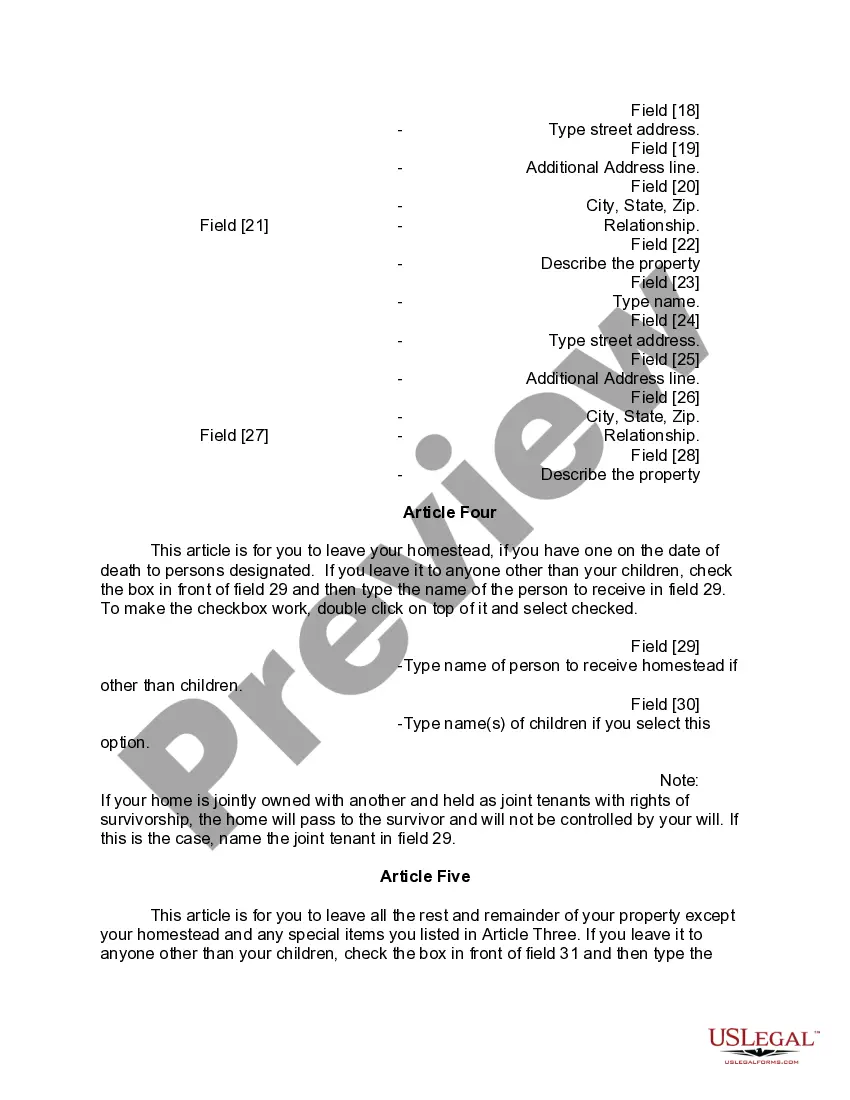
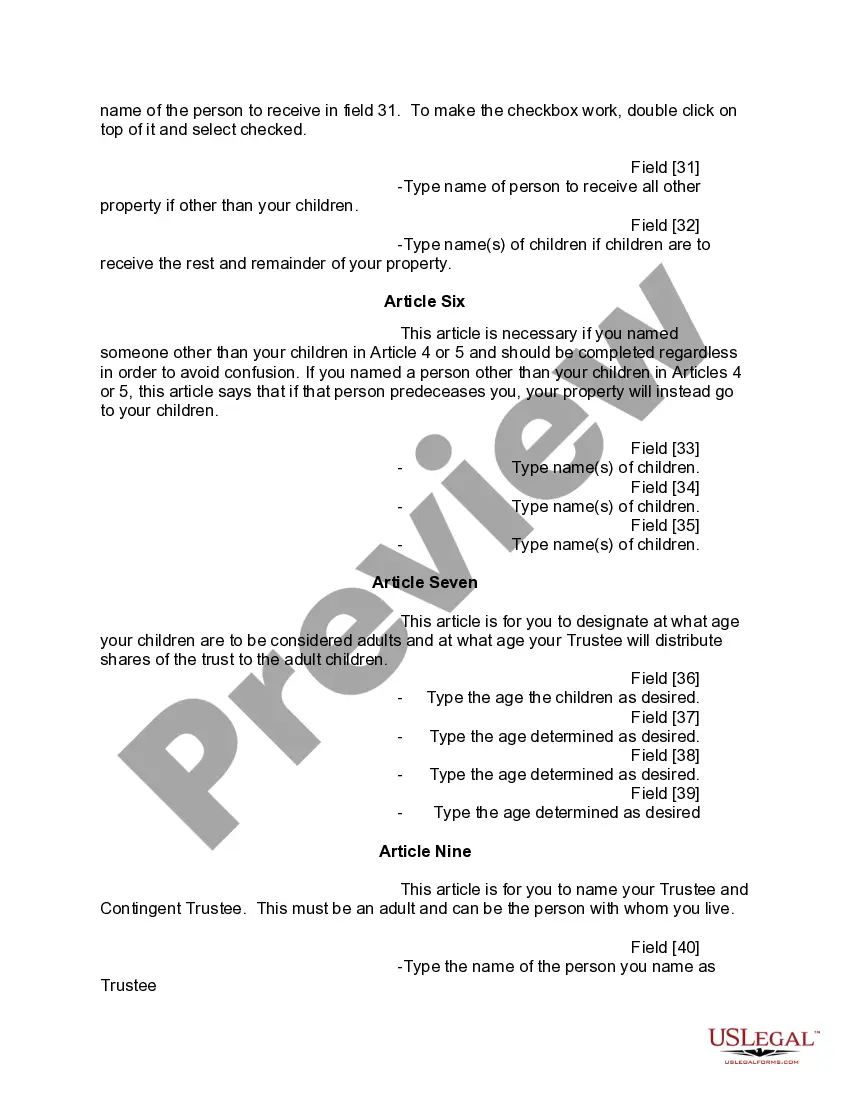
- Begin by entering your name and your partnerâs name in the designated fields.
- List the names and birth dates of your minor children.
- Designate specific bequests and describe any specific property you wish to leave to others.
- Complete the guardianship provisions for your minor children.
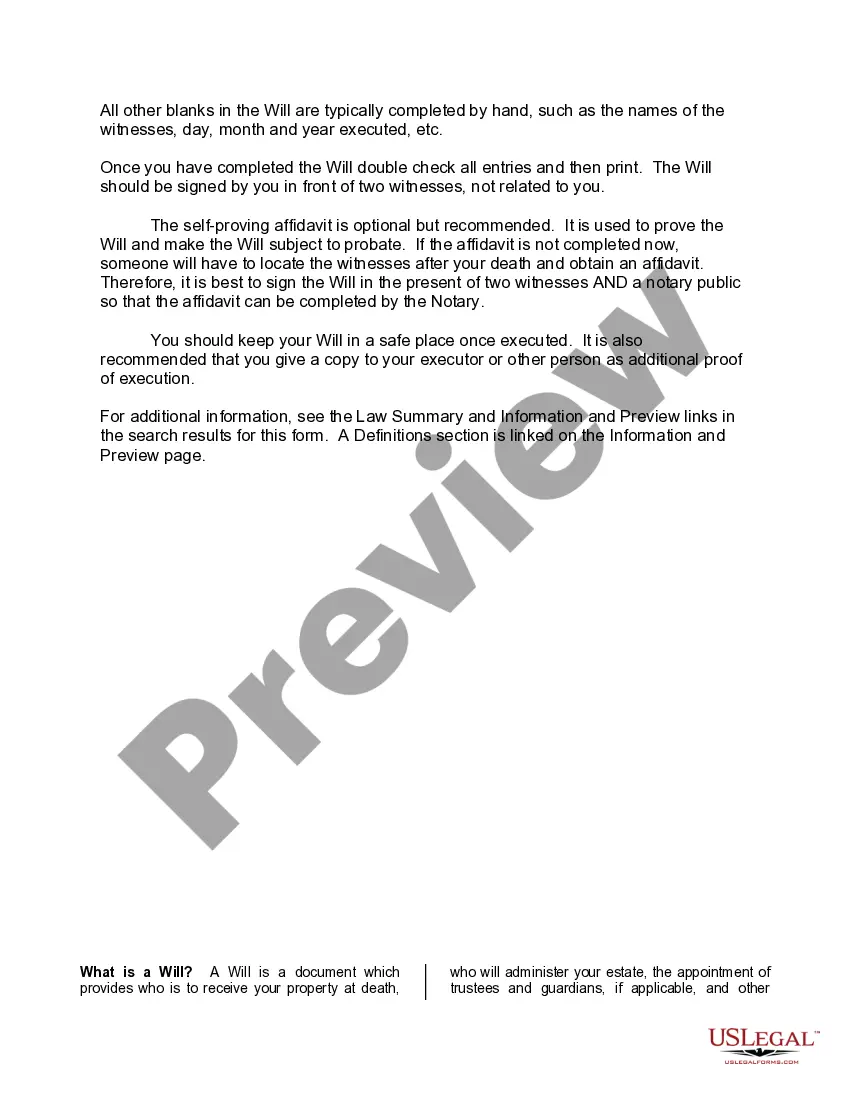
- Sign the wills in the presence of two witnesses.
- If applicable, complete the self-proving affidavit with a notary public.
Notarization guidance
Yes, this form must be notarized to be legally valid if you choose to include a self-proving affidavit. This process helps expedite the probate process and confirms the identity of the signers. US Legal Forms offers integrated online notarization for your convenience, available 24/7 through secure video calls.
Get your form ready online
Our built-in tools help you complete, sign, share, and store your documents in one place.
Make edits, fill in missing information, and update formatting in US Legal Forms—just like you would in MS Word.
Download a copy, print it, send it by email, or mail it via USPS—whatever works best for your next step.
Sign and collect signatures with our SignNow integration. Send to multiple recipients, set reminders, and more. Go Premium to unlock E-Sign.
If this form requires notarization, complete it online through a secure video call—no need to meet a notary in person or wait for an appointment.
We protect your documents and personal data by following strict security and privacy standards.

Make edits, fill in missing information, and update formatting in US Legal Forms—just like you would in MS Word.

Download a copy, print it, send it by email, or mail it via USPS—whatever works best for your next step.

Sign and collect signatures with our SignNow integration. Send to multiple recipients, set reminders, and more. Go Premium to unlock E-Sign.

If this form requires notarization, complete it online through a secure video call—no need to meet a notary in person or wait for an appointment.

We protect your documents and personal data by following strict security and privacy standards.
Common mistakes
- Failing to properly witness the will, which can render it invalid.
- Not explicitly naming guardians for minor children.
- Forgetting to include a residuary clause for remaining assets.
- Leaving out specific bequests or failing to describe them adequately.
Benefits of completing this form online
- Convenient digital completion from the comfort of your home.
- Ability to edit and update easily as circumstances change.
- Reliable and legally appropriate language drafted by licensed attorneys.
Legal use & context
- This form is legally binding when executed according to state laws governing last wills and testaments.
- The mutual aspect of these wills creates a binding agreement between the parties regarding property distribution.
- Each will must be properly witnessed and notarized to ensure enforceability in court.
Summary of main points
- This mutual will is specifically designed for unmarried couples with children.
- It facilitates clear asset distribution and guardianship provisions.
- Proper execution with witnesses and potential notarization is essential for validity.
Looking for another form?


Form popularity
FAQ
Tennessee law requires testators to be 18 and of sound mind, while two or more witnesses must sign the will to make it valid.Signature and material provisions must be in handwriting of testator and handwriting must be proved by two witnesses (no witnesses necessary to the will).
Tennessee inheritance laws protect the inheritance rights of any children who were conceived prior to their parent's death, but were born following it. However, that child must have lived for at least 120 hours and been born in the 10-month window that comes after the parent's death.
Children who are under the age of 18 are deemed to lack legal capacity to receive a gift. Where a gift in your will is going to a child under 18 (which may be a child of a deceased beneficiary), you can give your executors and trustees the option to make the gift to the child's parent or guardian.
If your child inherits property or money of substantial value, the court may appoint a guardian or custodian to hold and manage the inheritance for the child until they reach the age of majority.However, in some states the age of majority could be 21 years old, depending on the amount of the inheritance.
An inheritance tax is essentially a tax on the amount of money or assets the heirs or beneficiaries of an estate receive.This means that if you are a resident of Tennessee, or own real estate in this state, you will not have to pay an inheritance tax.
Anyone who is an immediate family member of the deceased, whether or not he or she is listed in the will, is legally entitled to view a copy.Those are the primary parties who may request access to a will, but there are other less groups of people that also have a legal right to view and receive copies of the document.
This law states that no matter what your will says, your spouse has a right to inherit one-third or one-half (depending on the state and sometimes depending on the length of the marriage) of your total estate. To exercise this right, your spouse has to petition the probate court to enforce the law.
What happens to the death benefit if you name a minor as a beneficiary? If your beneficiary is under the age of majority when you die, the death benefit will be given to a custodian of the funds to hold on to. This guardian can be court-appointed, but the court will most likely choose the surviving parent.
If a person dies intestate without any children, the spouse recovers the entire estate. If the person left a spouse and children, the surviving spouse will receive either one-third of the entire estate or a child's share of the estate, whichever is greater.