Tennessee Letter from Landlord to Tenant as Notice to remove unauthorized inhabitants
What is this form?
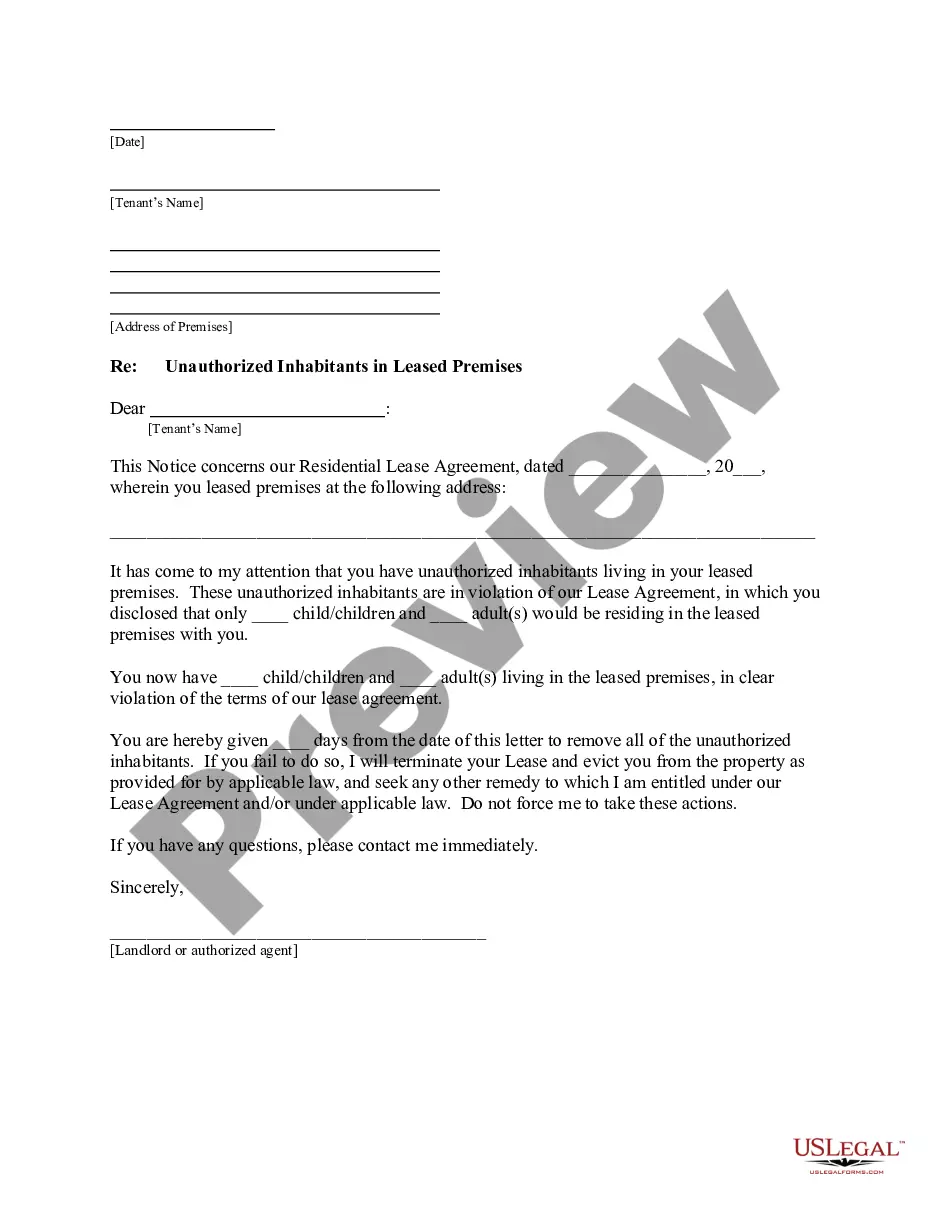
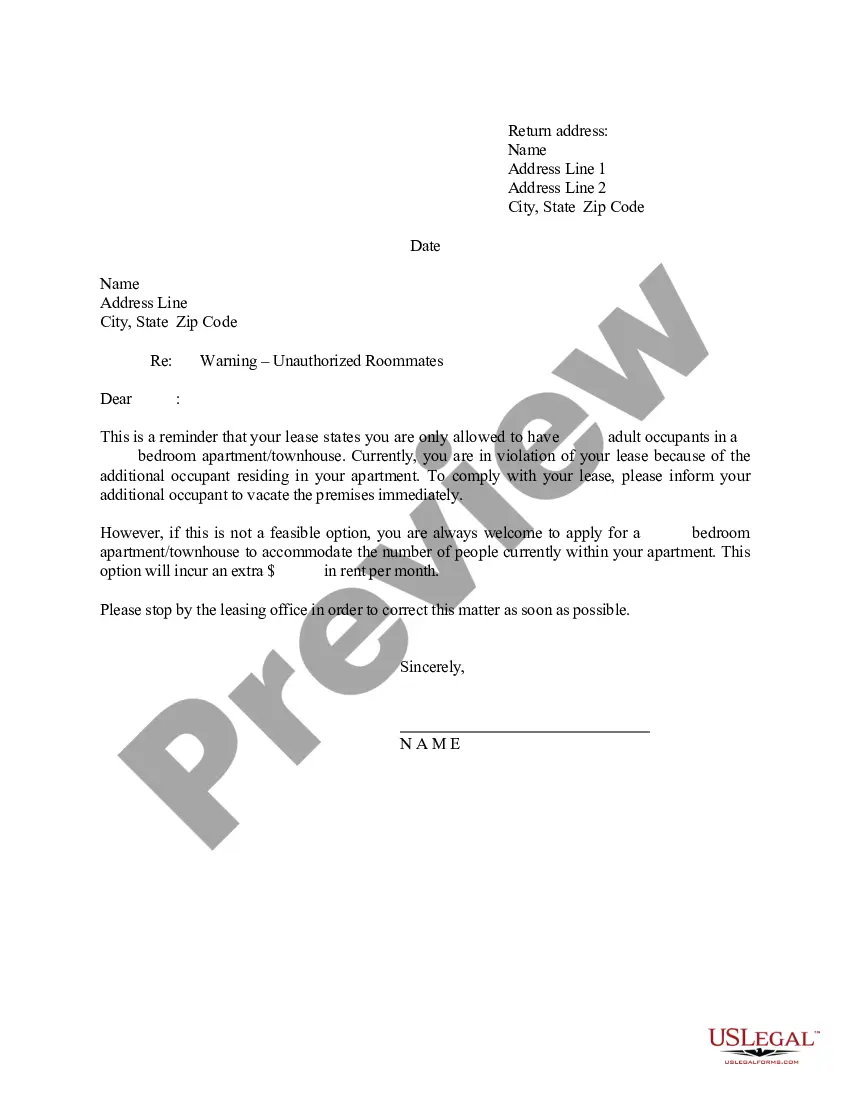
This form is a notice from a landlord to a tenant regarding the removal of unauthorized inhabitants living in a rental property. It serves as a formal request for the tenant to address any violations of the lease agreement related to unauthorized occupants. By using this form, landlords can clearly communicate the breach of lease terms and the potential consequences, such as lease termination and eviction, that may follow if the issue is not resolved.
What’s included in this form
- Date of the residential lease agreement
- Address of the leased premises
- Details about unauthorized inhabitants
- Number of authorized occupants as per the lease
- Deadline for removing unauthorized inhabitants
- Consequence of failing to comply with the notice
- Landlord's contact information for further communication

When this form is needed
This form should be used when a landlord discovers unauthorized individuals living in a rental unit, which violates the terms of the lease agreement. Common scenarios include after a routine property inspection, receiving complaints from neighbors, or being informed by the tenant. This form can help initiate the process of addressing these violations formally before taking further actions such as eviction.
Who needs this form
- Landlords who have entered into a residential lease agreement with tenants
- Property managers acting on behalf of landlords
- Owners of rental properties facing issues with unauthorized residents
How to complete this form
- Identify the date of the lease agreement and enter it in the specified field.
- Provide the full address of the rental property.
- Describe the unauthorized inhabitants and identify the difference in numbers from the authorized occupants.
- Specify a reasonable number of days for the tenant to remove the unauthorized inhabitants.
- Include your signature and printed name as the landlord or authorized agent.
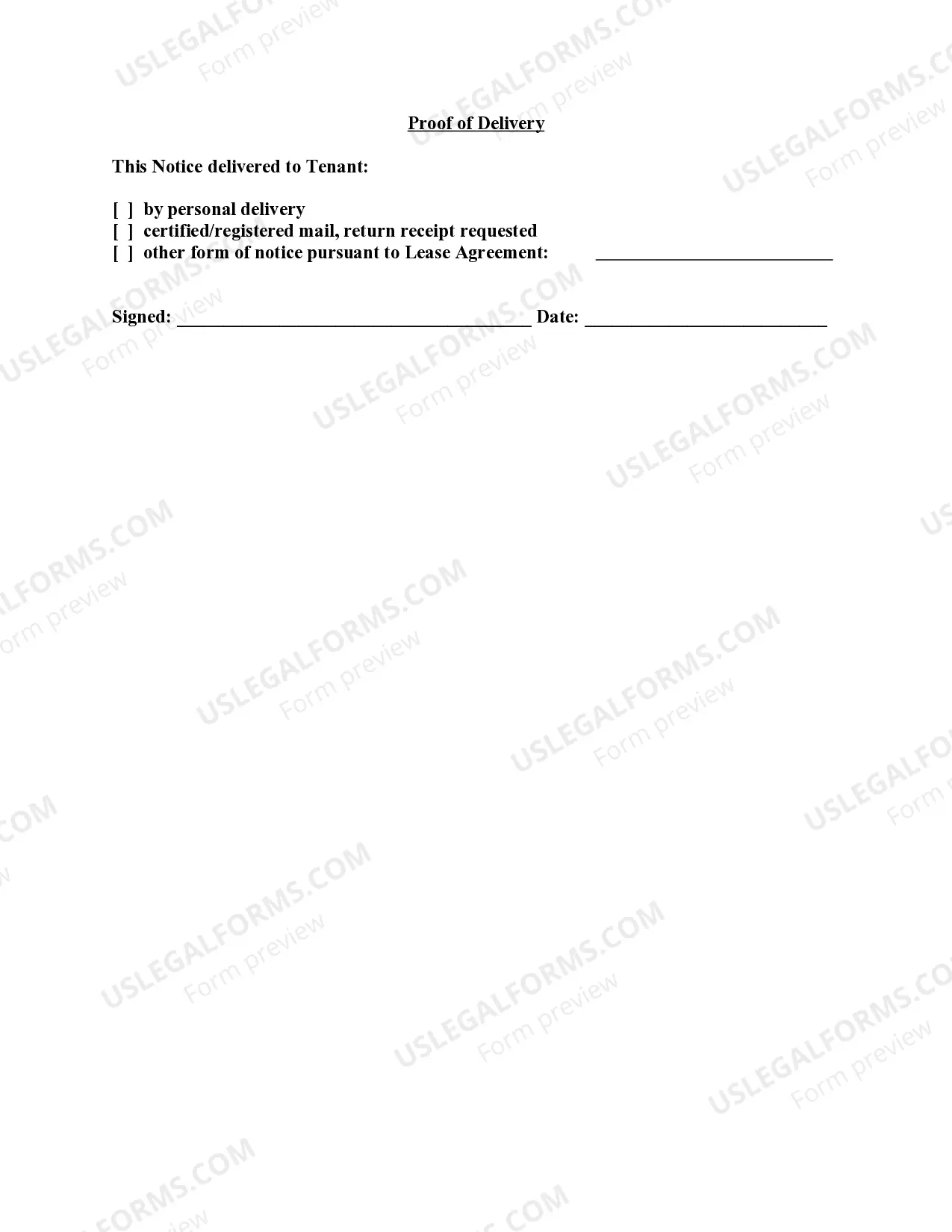
- Document the proof of delivery method used to give notice to the tenant.
Notarization guidance
This form does not typically require notarization to be legally valid. However, some jurisdictions or document types may still require it. US Legal Forms provides secure online notarization powered by Notarize, available 24/7 for added convenience.
Get your form ready online
Our built-in tools help you complete, sign, share, and store your documents in one place.
Make edits, fill in missing information, and update formatting in US Legal Forms—just like you would in MS Word.
Download a copy, print it, send it by email, or mail it via USPS—whatever works best for your next step.
Sign and collect signatures with our SignNow integration. Send to multiple recipients, set reminders, and more. Go Premium to unlock E-Sign.
If this form requires notarization, complete it online through a secure video call—no need to meet a notary in person or wait for an appointment.
We protect your documents and personal data by following strict security and privacy standards.

Make edits, fill in missing information, and update formatting in US Legal Forms—just like you would in MS Word.

Download a copy, print it, send it by email, or mail it via USPS—whatever works best for your next step.

Sign and collect signatures with our SignNow integration. Send to multiple recipients, set reminders, and more. Go Premium to unlock E-Sign.

If this form requires notarization, complete it online through a secure video call—no need to meet a notary in person or wait for an appointment.

We protect your documents and personal data by following strict security and privacy standards.
Mistakes to watch out for
- Failing to specify the exact deadline for removal of unauthorized individuals.
- Not including the details about the original lease agreement and authorized occupants.
- Omitting contact information for follow-up questions or discussions.
- Delivering the notice without a clear record of how it was provided.
Benefits of using this form online
- Convenient access to professionally drafted content that simplifies legal processes.
- Editable templates allow customization to suit specific situations.
- Reliable forms that comply with legal standards, minimizing risks of errors.
- Instant downloads prevent delays in addressing tenant issues.
Looking for another form?
Form popularity
FAQ
This notice is a formal communication from a landlord to a tenant about removing unauthorized inhabitants living in the rental unit. It documents the lease breach and warns of consequences, such as lease termination or eviction, if not resolved. It should be used when unauthorized occupants are discovered and includes fields for the lease date, address, details about occupants, the number of authorized occupants, a removal deadline, consequences, and the landlord’s contact information.
Use this form to formally notify a tenant of unauthorized occupants and to initiate action before eviction. Fill in the lease date, property address, details about the unauthorized roommate, how many occupants are authorized, and a deadline for removal. If noncompliance occurs, the landlord may pursue further eviction steps consistent with the lease terms.
This form serves as that notice tailored to removing unauthorized inhabitants. Fill in required fields: date of the lease, address of the leased premises, details about unauthorized inhabitants, the number of authorized occupants, a removal deadline, the consequences of noncompliance, and the landlord’s contact information. It provides a formal structure to request vacating.
Key details to fill in include the date of the lease, the address of the leased premises, details about unauthorized inhabitants, the number of authorized occupants as per the lease, the deadline for removing unauthorized inhabitants, the consequences of failing to comply, and the landlord’s contact information.
This form does not rely on or reference that code. It’s a lease-notice form designed to document a breach for unauthorized inhabitants and to request removal. For statute-specific definitions or applicability, consult a Tennessee attorney or official state resources.
This form specifically targets unauthorized inhabitants and ties the notice to the lease terms. It includes fields for the lease date, address, details about unauthorized occupants, the number of authorized occupants, a removal deadline, consequences of noncompliance, and the landlord’s contact information, all designed to prompt formal action before eviction.