Tennessee Letter from Tenant to Landlord about Landlord's refusal to allow sublease is unreasonable
What is this form?
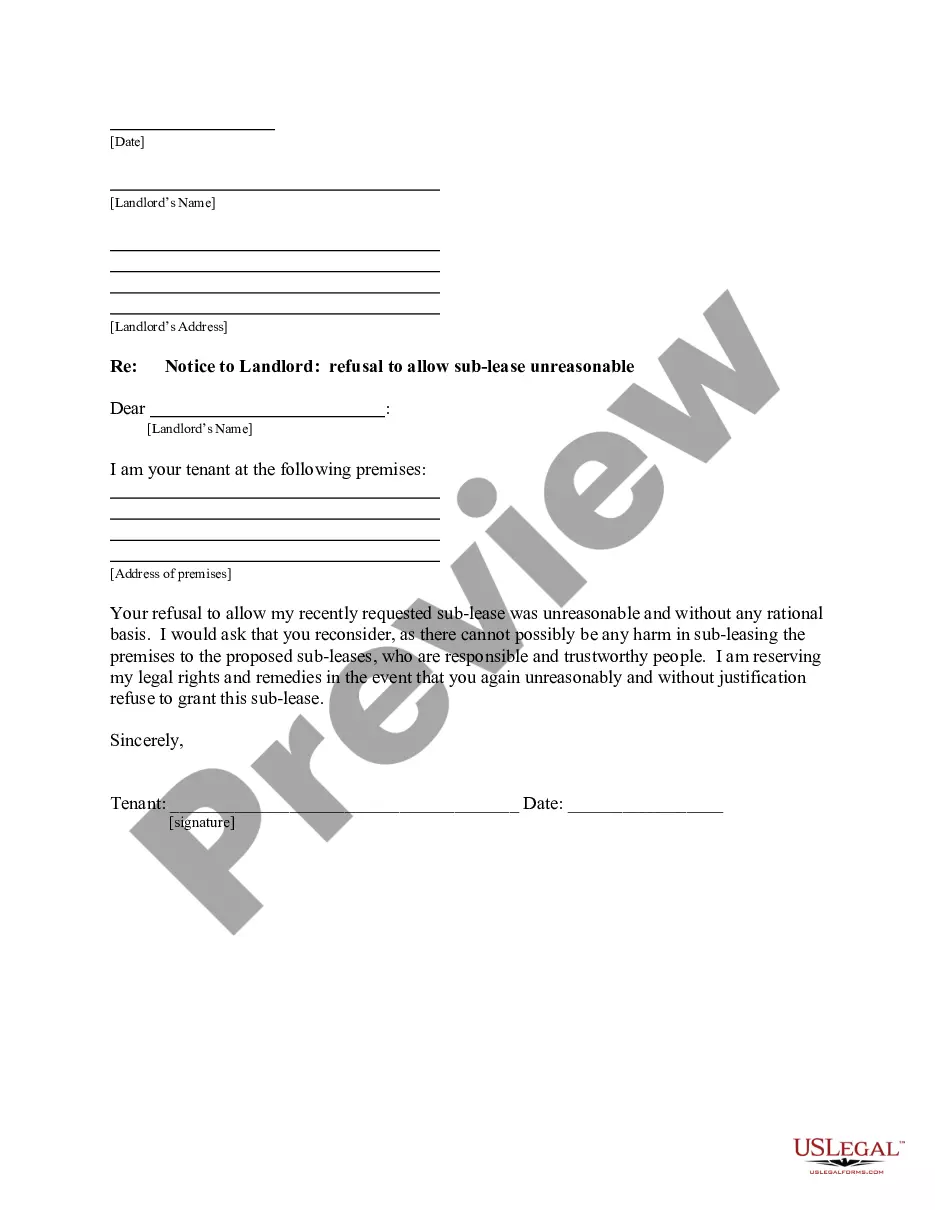
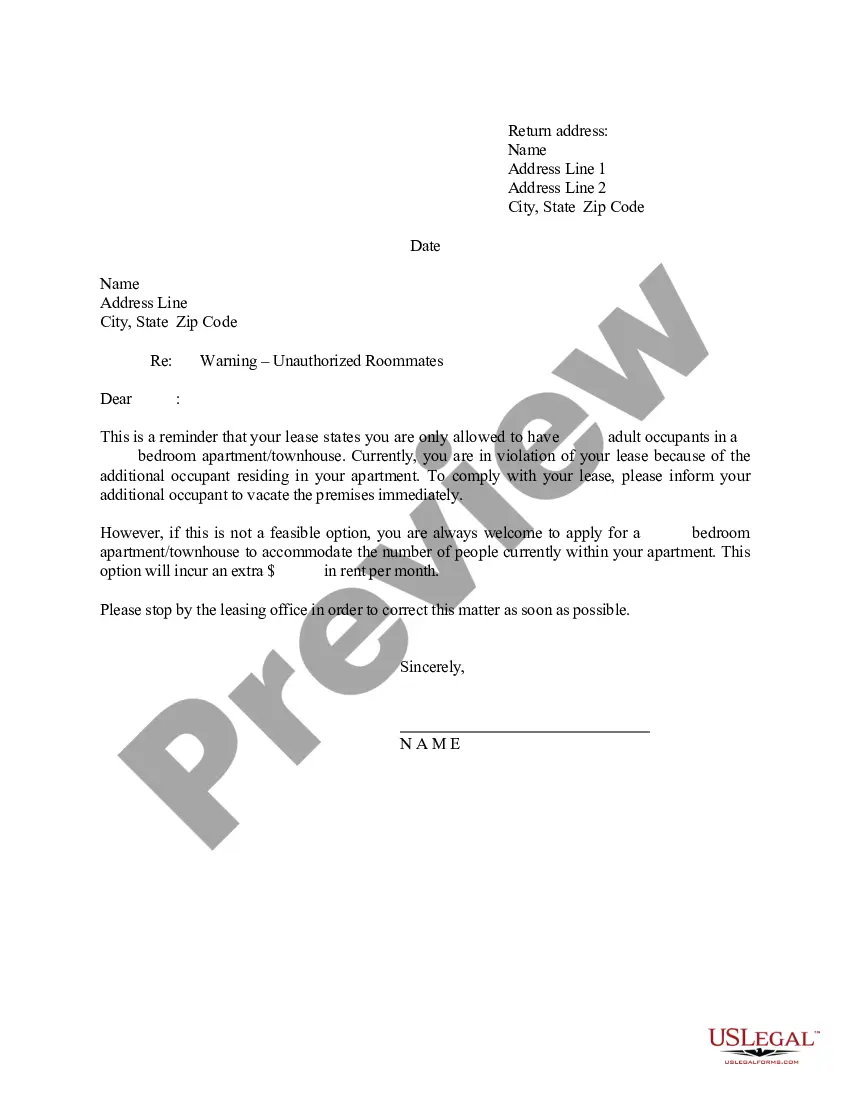
This form is a letter from a tenant to the landlord addressing the landlord's unreasonable refusal to allow a sublease. It is designed to inform the landlord of the tenant's legal rights and remedies if the refusal continues. This letter is essential for tenants needing to document their attempts to sublet their rental property while maintaining a formal record of their communication with the landlord. Unlike other rental forms, this letter specifically addresses disputes regarding subleasing permissions.
Key parts of this document
- Address of the landlord and tenant
- Date of the letter
- Statement outlining the landlord's refusal
- Reference to legal rights and remedies
- Signature of the tenant

Common use cases
This letter should be used when a tenant has requested permission to sublease their rental unit and the landlord has declined that request unreasonably. It serves as a formal notice to the landlord, emphasizing the tenant's intention to uphold their rights in the event of further disputes. This form may also be relevant when tenants need to establish communication regarding subtenants, particularly in shared living arrangements.
Who can use this document
This letter is intended for:
- Tenants who have been denied permission to sublease their rental unit
- Tenants who wish to formally document their communication with their landlord regarding subleasing issues
- Individuals involved in disputes about subleases and rental agreements
Instructions for completing this form
- Identify the parties involved, including the tenant and landlord.
- Insert the date of the letter.
- Clearly state the landlord's refusal to permit subleasing.
- Mention your intention to reserve legal rights in your communication.
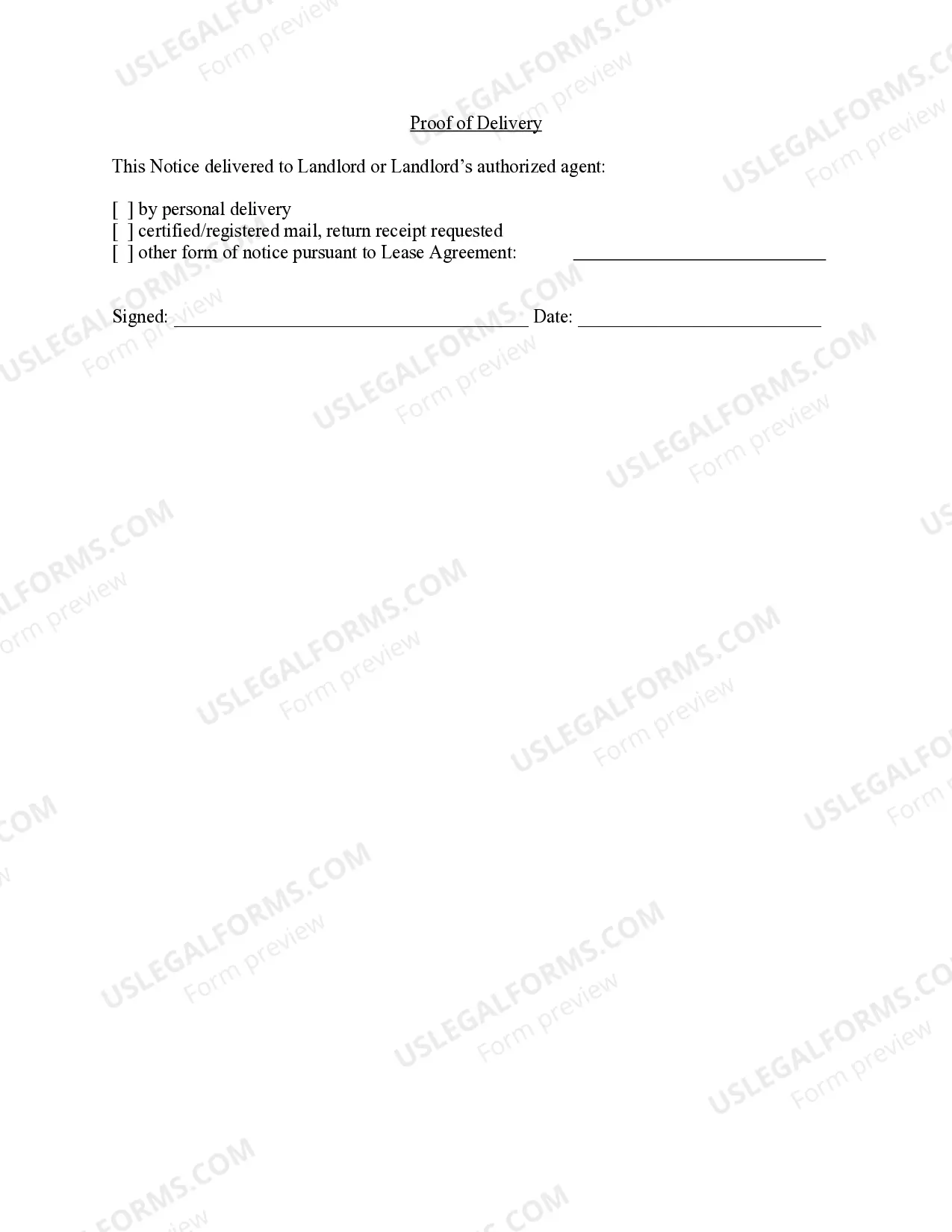
- Sign the letter and provide a method of delivery proof.
Notarization guidance
Notarization is generally not required for this form. However, certain states or situations might demand it. You can complete notarization online through US Legal Forms, powered by Notarize, using a verified video call available anytime.
Get your form ready online
Our built-in tools help you complete, sign, share, and store your documents in one place.
Make edits, fill in missing information, and update formatting in US Legal Forms—just like you would in MS Word.
Download a copy, print it, send it by email, or mail it via USPS—whatever works best for your next step.
Sign and collect signatures with our SignNow integration. Send to multiple recipients, set reminders, and more. Go Premium to unlock E-Sign.
If this form requires notarization, complete it online through a secure video call—no need to meet a notary in person or wait for an appointment.
We protect your documents and personal data by following strict security and privacy standards.

Make edits, fill in missing information, and update formatting in US Legal Forms—just like you would in MS Word.

Download a copy, print it, send it by email, or mail it via USPS—whatever works best for your next step.

Sign and collect signatures with our SignNow integration. Send to multiple recipients, set reminders, and more. Go Premium to unlock E-Sign.

If this form requires notarization, complete it online through a secure video call—no need to meet a notary in person or wait for an appointment.

We protect your documents and personal data by following strict security and privacy standards.
Mistakes to watch out for
- Neglecting to include the date of the communication.
- Failing to clearly state the reasons for requesting a sublease.
- Not reserving legal rights in the letter.
- Omitting proof of delivery, which can be crucial in disputes.
Benefits of using this form online
- Convenient access to a legally-drafted template, saving time and effort.
- Edit and customize the form easily to fit individual circumstances.
- Reliable legal language crafted by licensed attorneys ensures compliance.
Legal use & context
- This letter serves as a formal record of communication regarding subleasing issues.
- It can be used to support legal claims if necessary.
- Understanding local laws is vital to ensure compliance.
Quick recap
- Use this letter to address landlord refusal to sublease.
- Document your rights and assert them explicitly.
- Ensure compliance with state-specific subleasing regulations.
Looking for another form?




Form popularity
FAQ
Each state has different laws regarding subtenancy, with most landlords prohibiting subletting a property without prior permission. If subletting occurs without the landlord's knowledge, that landlord has the right to serve a three-day notice of eviction to both the tenant and the sublessor.
Week-to-week If rent is paid on a week-to-week basis, a landlord must provide the tenant with a 10-Day Notice to Quit. Month-to-month If rent is paid on a month-to-month basis, a landlord must provide the tenant with a 30-Day Notice to Quit.
If the tenant refuses, you are permitted to send them a notice to agree or quit the property. The tenant refusing you access constitutes a breach in the lease agreement, so they could be evicted if they continue to deny access.
Step 1: make a formal complaint. You can make a formal complaint by writing a letter to your landlord. Step 2: complain to your local council. If making a formal complaint to your landlord doesn't solve your problem you might be able to complain to your local council.
While tenants cannot unreasonably deny access to a landlord, landlords must also follow all of the state and local rules regarding access to tenants' apartments. Roughly half of states have rules governing landlord entry into tenants' apartments.
If a court finds you guilty of the first offence of unlawful subletting, you can be fined in the magistrates' court.At the magistrates' court, you can get up to six months in prison or a fine, or both. At the Crown Court the maximum penalty is imprisonment for two years or a fine, or both.
If the lease contains no restrictions, the tenant has absolute freedom. If the lease contains an absolute prohibition then the landlord can refuse or impose unreasonable conditions.If the lease contains a fully qualified covenant, the landlord's consent is not to be unreasonably withheld.
The Bottom Line: Tennessee Property Law does not specifically reference sublets, so what your lease says matters. If your lease prohibits sublets, then sadly you can't sublet. Check your lease. Most likely, your lease contains a clause which requires you to obtain your landlord's approval prior to subletting.
You may rent without any formal agreement, or you may have a lease agreement. The most common type of renter in Tennessee is a renter who signs a lease agreement to pay rent each month throughout the year. Renters may be asked to provide a security deposit. Lease agreements are legally binding contracts.