Tennessee Letter from Tenant to Landlord about Illegal entry by landlord
Understanding this form
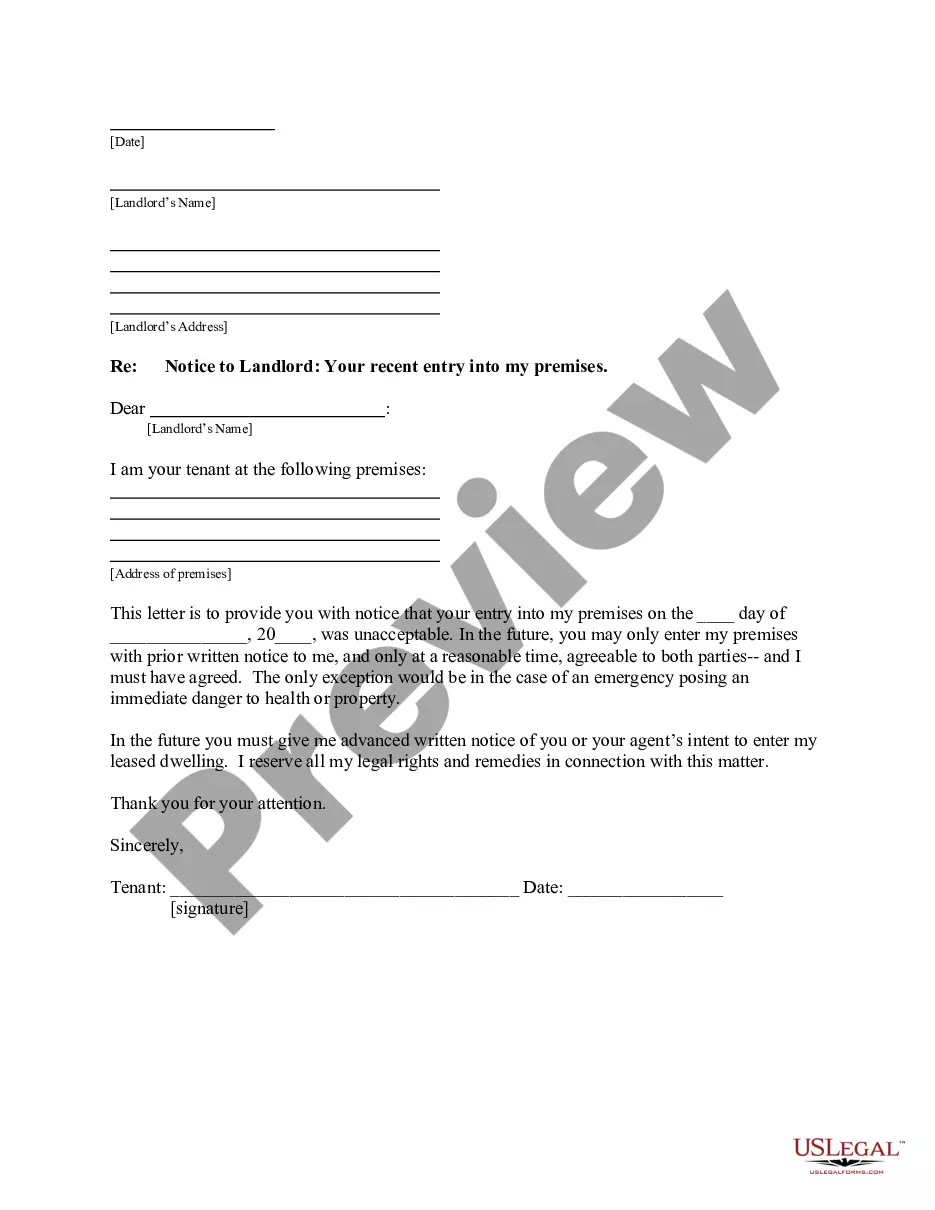
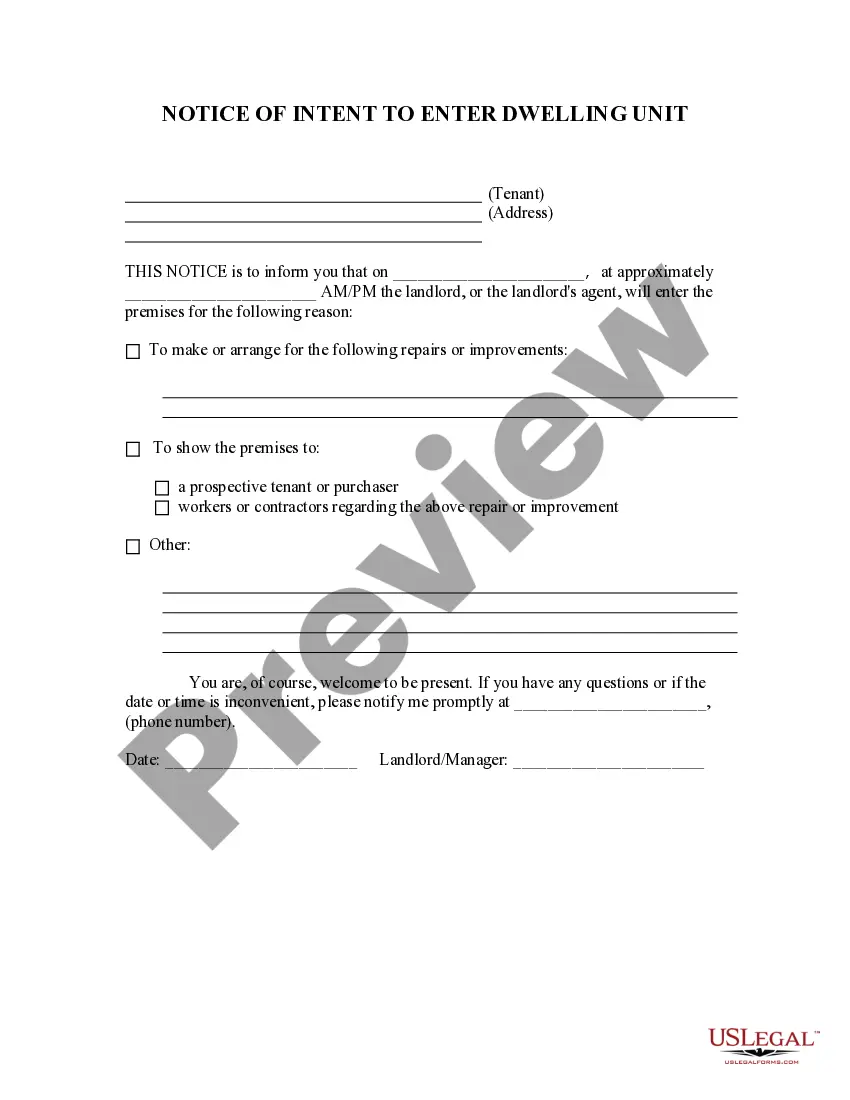
This form is a letter from the tenant to the landlord addressing illegal entry issues. Its purpose is to formally request that the landlord provides advance written notice before entering the leased premises, except in the case of emergencies. This letter serves to safeguard the tenant's rights, differentiating it from other notices by specifically outlining expectations for future landlord access.
What’s included in this form
- Statement requiring advance written notice of landlord entry.
- Specification of acceptable entry times that are reasonable and agreed upon.
- Exemption clause for emergency situations affecting health or property.
- Reservation of legal rights by the tenant regarding the matter.
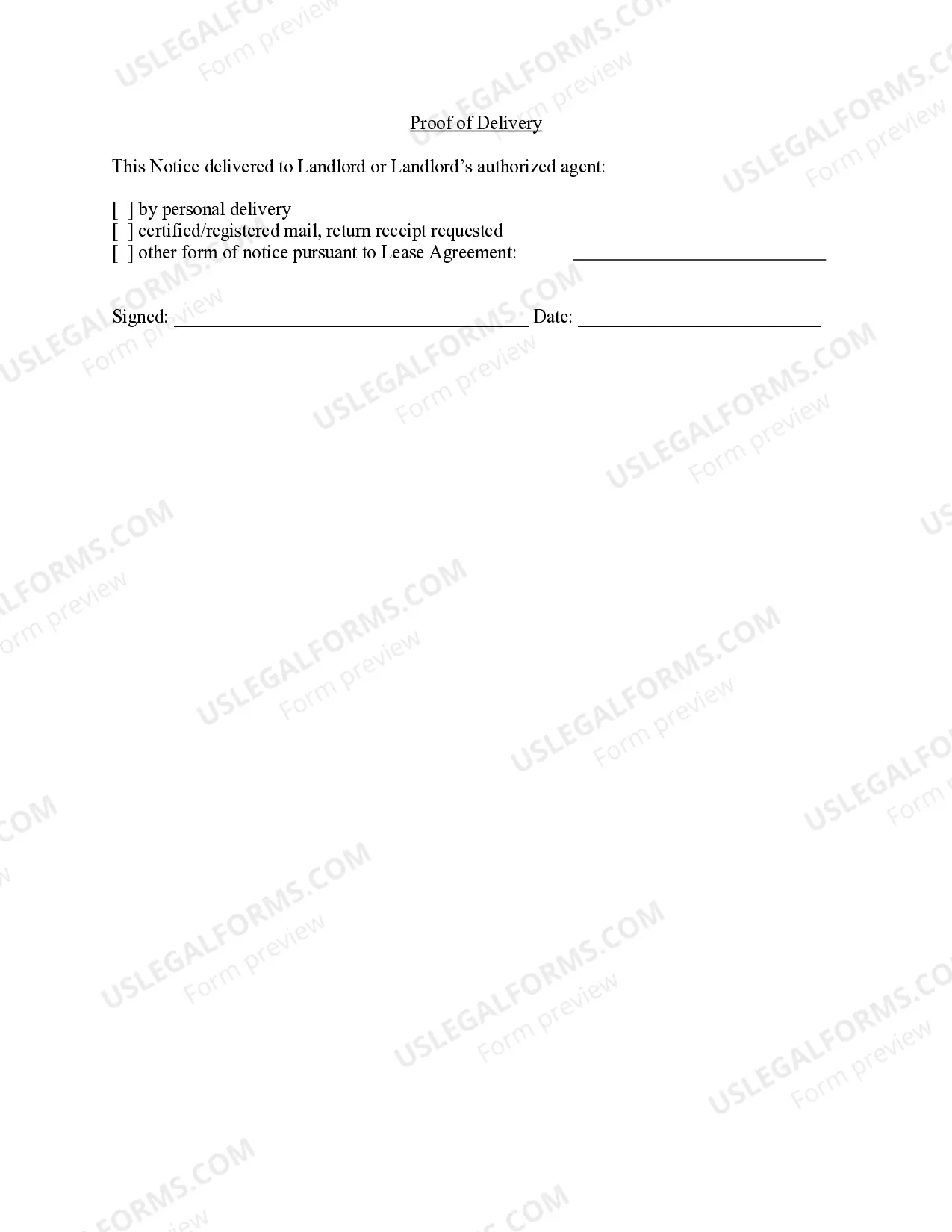
- Proof of delivery section for documentation purposes.

Common use cases
This form should be used when a tenant has concerns about the landlord entering their rented property without appropriate notice. It is particularly useful in situations where the landlord has previously entered without authorization or when the tenant wants to clarify their rights regarding privacy and access to the dwelling.
Who needs this form
- Any tenant who feels their privacy is being violated by unauthorized entry.
- Renters experiencing repeated unsolicited visits from their landlord.
- Individuals seeking to establish clear communication and boundaries regarding property access.
Instructions for completing this form
- Identify the tenant and landlord by including their names and addresses.
- State the intention to require advance written notice for entry.
- Include the date and signature of the tenant for authenticity.
- Choose a method for delivering the notice, such as personal delivery or certified mail.
- Keep a copy for your records as proof of delivery.
Does this form need to be notarized?
Notarization is not commonly needed for this form. However, certain documents or local rules may make it necessary. Our notarization service, powered by Notarize, allows you to finalize it securely online anytime, day or night.
Get your form ready online
Our built-in tools help you complete, sign, share, and store your documents in one place.
Make edits, fill in missing information, and update formatting in US Legal Forms—just like you would in MS Word.
Download a copy, print it, send it by email, or mail it via USPS—whatever works best for your next step.
Sign and collect signatures with our SignNow integration. Send to multiple recipients, set reminders, and more. Go Premium to unlock E-Sign.
If this form requires notarization, complete it online through a secure video call—no need to meet a notary in person or wait for an appointment.
We protect your documents and personal data by following strict security and privacy standards.

Make edits, fill in missing information, and update formatting in US Legal Forms—just like you would in MS Word.

Download a copy, print it, send it by email, or mail it via USPS—whatever works best for your next step.

Sign and collect signatures with our SignNow integration. Send to multiple recipients, set reminders, and more. Go Premium to unlock E-Sign.

If this form requires notarization, complete it online through a secure video call—no need to meet a notary in person or wait for an appointment.

We protect your documents and personal data by following strict security and privacy standards.
Common mistakes
- Failing to clearly state the terms of entry in the letter.
- Not specifying acceptable notice periods for non-emergency entries.
- Missing the signature or date, making the letter invalid.
- Not keeping a record of when and how the notice was delivered.
Why complete this form online
- Easy to download and customize according to your needs.
- Ensures you have a professionally drafted document reflecting legal standards.
- Reduces the time spent on paperwork, allowing for faster communication with your landlord.
Legal use & context
- This letter serves as a formal request to protect tenant rights regarding privacy.
- Compliance with local laws is crucial for the enforceability of tenant rights.
- Failure to follow proper procedures may weaken the tenant's position in disputes.
Main things to remember
- Use this form to assert your rights as a tenant regarding landlord entry.
- Make sure to deliver the form properly and keep records.
- Stay informed about state-specific tenant rights and regulations.
Looking for another form?
Form popularity
FAQ
Notice Requirements for Tennessee Landlords A landlord can simply give you a written notice to move, allowing you 30 days as required by Tennessee law and specifying the date on which your tenancy will end.
In all states, a landlord can enter the property in an emergency without notice or permission.Even if your landlord gives you notice, he or she must have a good reason to enter the property. In most cases, your landlord can enter your home: In an emergency.
You are responsible for: paying your rent on time, paying any late fees, keeping the place clean and safe, not letting anyone else damage it, not breaking the law, disposing of your garbage, and following your landlord's rules. If you break your lease, then it may become a legal issue.
Apply to the Tribunal for orders: to stop the landlord/agent entering the premises. (Apply within 3 months after you become aware of the landlord's/agent's breach.) report trespass to the police. complain to NSW Fair Trading.
When you rent a property from a landlord it becomes your home. They should only enter the property without you being present, if you have given permission for them to do so, or in a genuine emergency.
The big take-away is that in most circumstances a landlord cannot enter a property without agreement from the tenant. And If the landlord ignores the law and enters the property without permission, the tenant may be able to claim damages or gain an injunction to prevent the landlord doing it again.
Title 66 - Property. Chapter 28 - Uniform Residential Landlord and Tenant Act. (b) The landlord may enter the premises without consent of the tenant in case of emergency.