Tennessee Demand for Enforcement of Lien by Individual
About this form
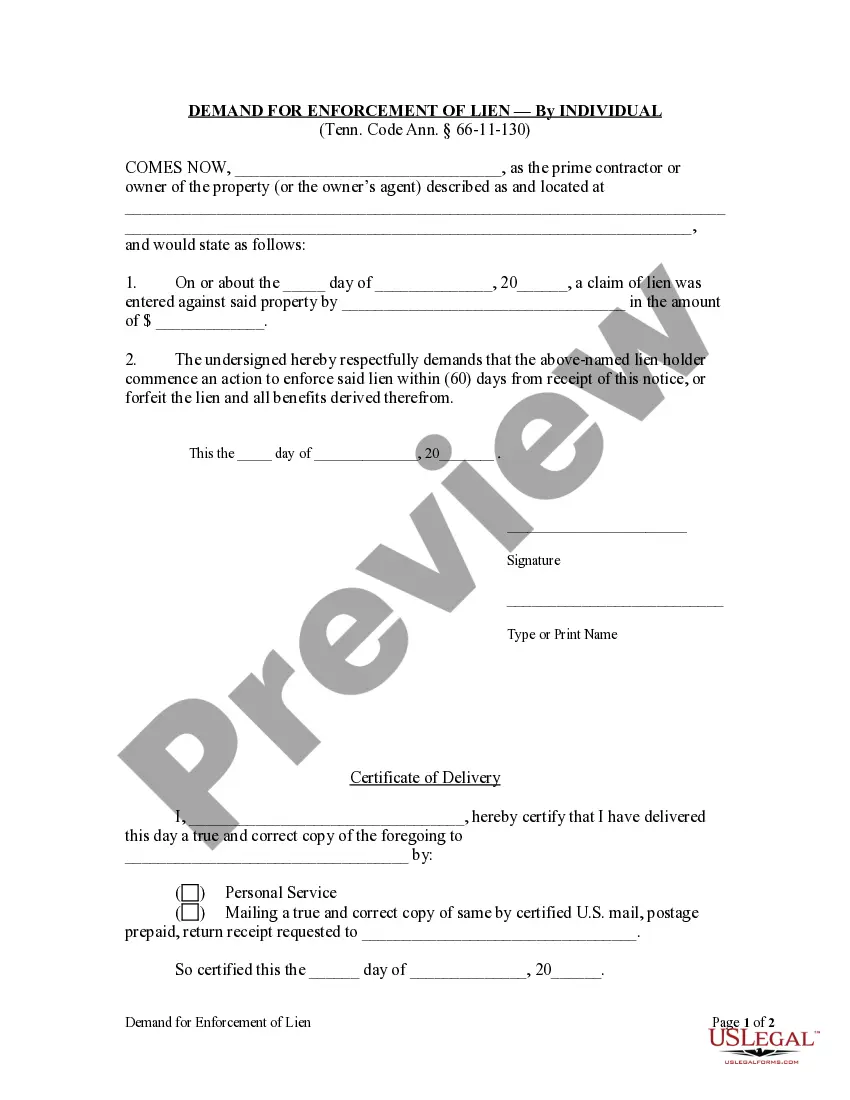
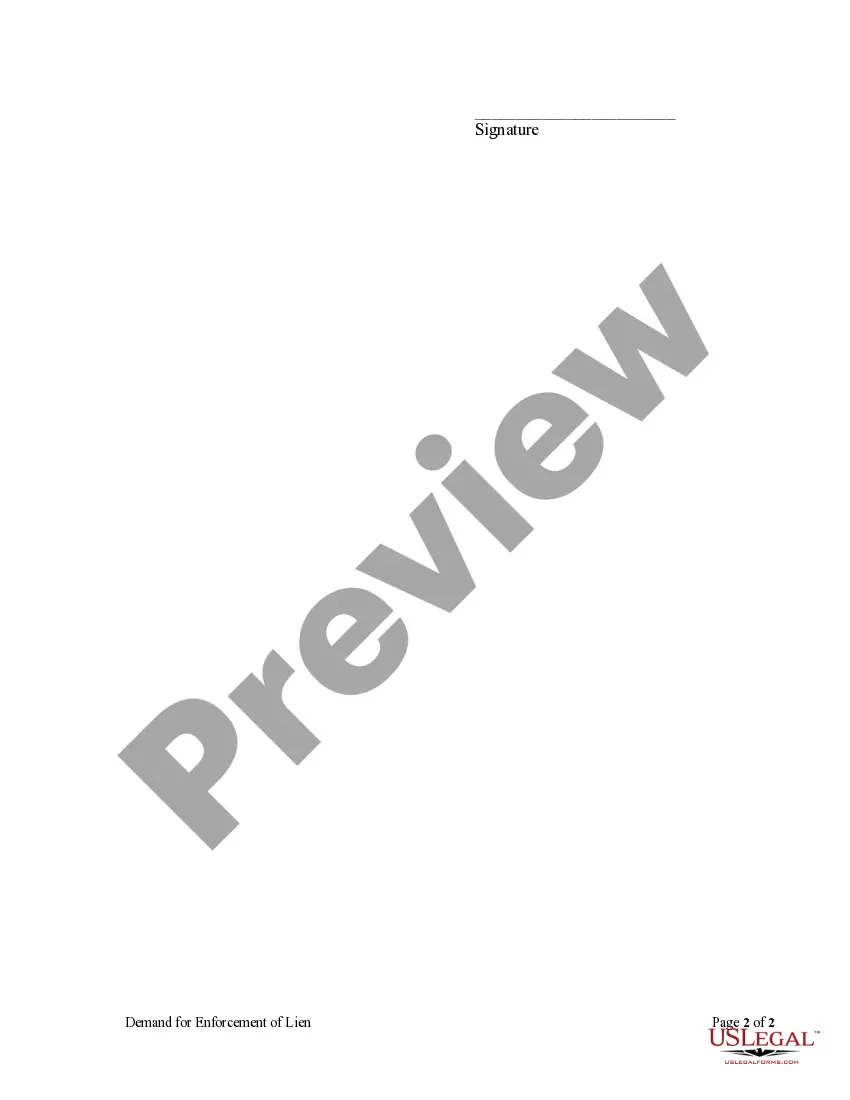
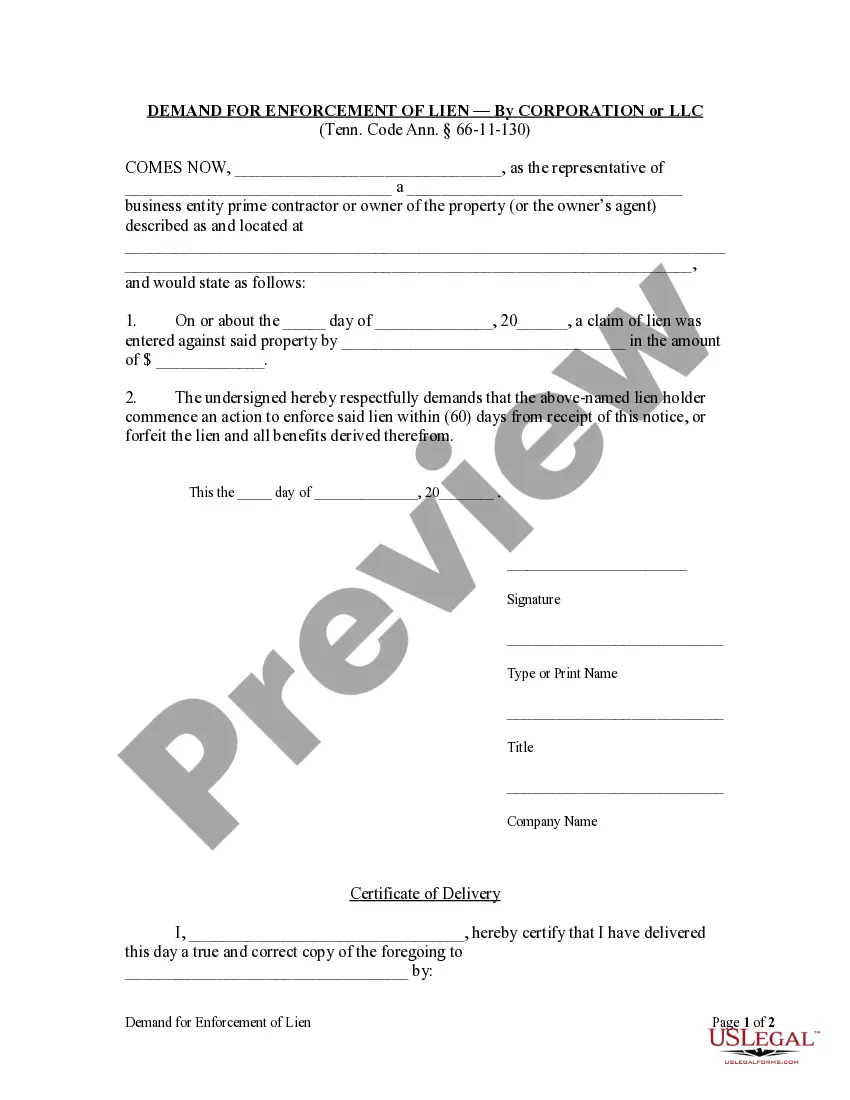
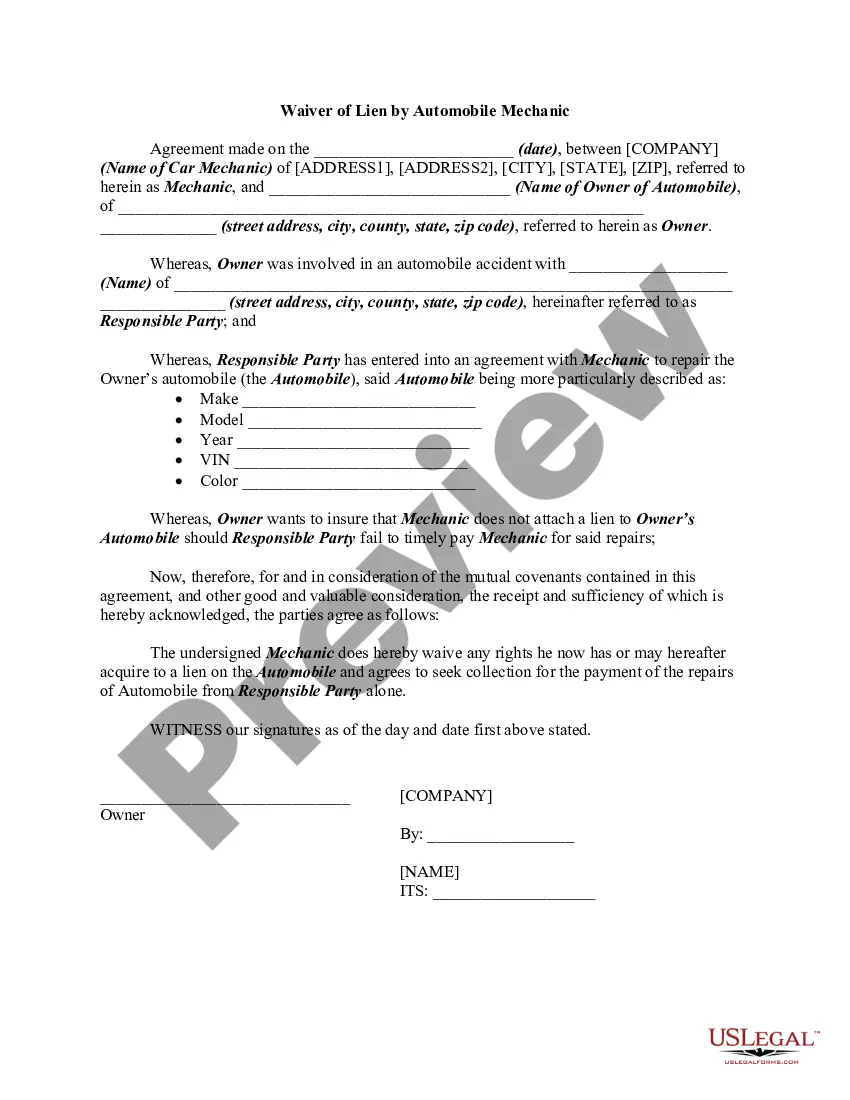
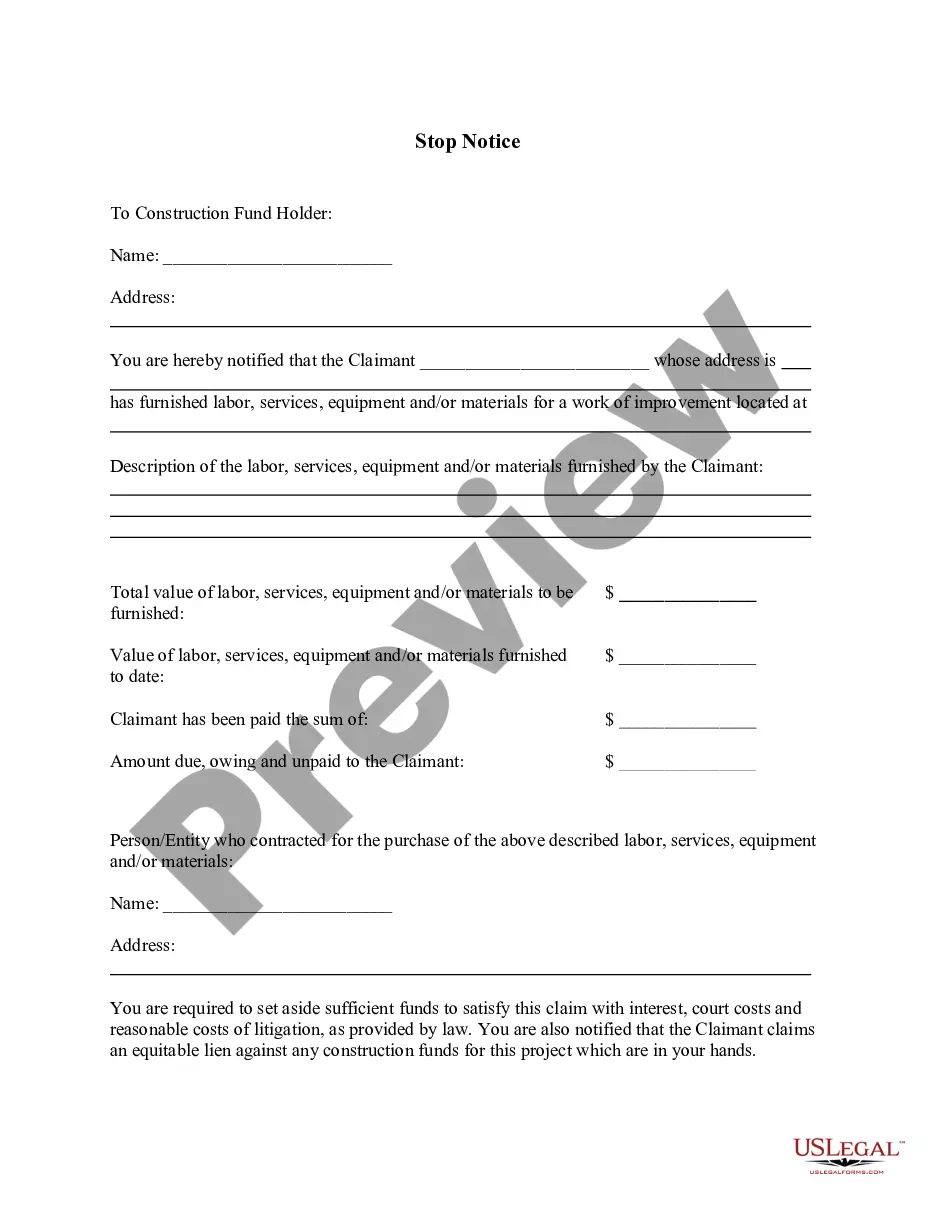
The Demand for Enforcement of Lien by Individual is a legal document used to compel a lien holder to take action to enforce their lien on a property. This form is specifically designed for situations where a property owner or contractor requests that the lienor commence legal action within a specified time frame, ensuring the lien does not become forfeited. Unlike other lien-related forms, this document directly sets a deadline for the lienor's response, making it an essential tool for enforcing property rights effectively.
What’s included in this form
- Party identification: Space to detail the prime contractor or property owner's name.
- Property description: A section to specify the property's location and description.
- Lien information: Details of the original lien claim, including the lien holder's name and the lien amount.
- Demand statement: A formal request for the lien holder to take action within sixty days of receiving the notice.
- Signature lines: Areas for the individual initiating the demand and certifying delivery.
- Certificate of delivery: Verification of how and when the notice was delivered to the lien holder.
When to use this document
This form should be used when a property owner or contractor has a valid claim against a property lien and needs to ensure that the lien holder takes action within sixty days. It is particularly useful in cases where the lienor has been unresponsive or when the owner wishes to reclaim the property from the lien. Utilizing this form can help to clear any potential legal disputes related to unpaid debts connected to the property.
Who this form is for
- Property owners seeking to enforce a claim against a lien holder.
- Prime contractors who have placed a lien on a property.
- Any agent acting on behalf of the property owner or contractor.
Steps to complete this form
- Identify the parties involved: Fill in the name of the property owner or prime contractor.
- Specify the property: Clearly describe the property subject to the lien.
- Enter lien details: Include the name of the lien holder and the amount of the claim.
- Set the demand statement: Make sure to note the requirement for action within sixty days.
- Sign and date the form: Ensure that the person initiating the demand signs and dates the document.
- Deliver the notice: Complete the certificate of delivery, noting how the notice was given to the lien holder.
Notarization requirements for this form
In most cases, this form does not require notarization. However, some jurisdictions or signing circumstances might. US Legal Forms offers online notarization powered by Notarize, accessible 24/7 for a quick, remote process.
Get your form ready online
Our built-in tools help you complete, sign, share, and store your documents in one place.
Make edits, fill in missing information, and update formatting in US Legal Forms—just like you would in MS Word.
Download a copy, print it, send it by email, or mail it via USPS—whatever works best for your next step.
Sign and collect signatures with our SignNow integration. Send to multiple recipients, set reminders, and more. Go Premium to unlock E-Sign.
If this form requires notarization, complete it online through a secure video call—no need to meet a notary in person or wait for an appointment.
We protect your documents and personal data by following strict security and privacy standards.

Make edits, fill in missing information, and update formatting in US Legal Forms—just like you would in MS Word.

Download a copy, print it, send it by email, or mail it via USPS—whatever works best for your next step.

Sign and collect signatures with our SignNow integration. Send to multiple recipients, set reminders, and more. Go Premium to unlock E-Sign.

If this form requires notarization, complete it online through a secure video call—no need to meet a notary in person or wait for an appointment.

We protect your documents and personal data by following strict security and privacy standards.
Mistakes to watch out for
- Failing to accurately identify all parties involved.
- Neglecting to provide a clear and complete property description.
- Not specifying the correct amount in the lien claim.
- Omitting the signature or date from the completed form.
- Forgetting to properly certify the delivery of the notice.
Benefits of using this form online
- Convenience: Easily downloadable and printable from any device.
- Editability: Fill in necessary information at your own pace.
- Reliability: Templates are drafted by licensed attorneys to ensure legal compliance.
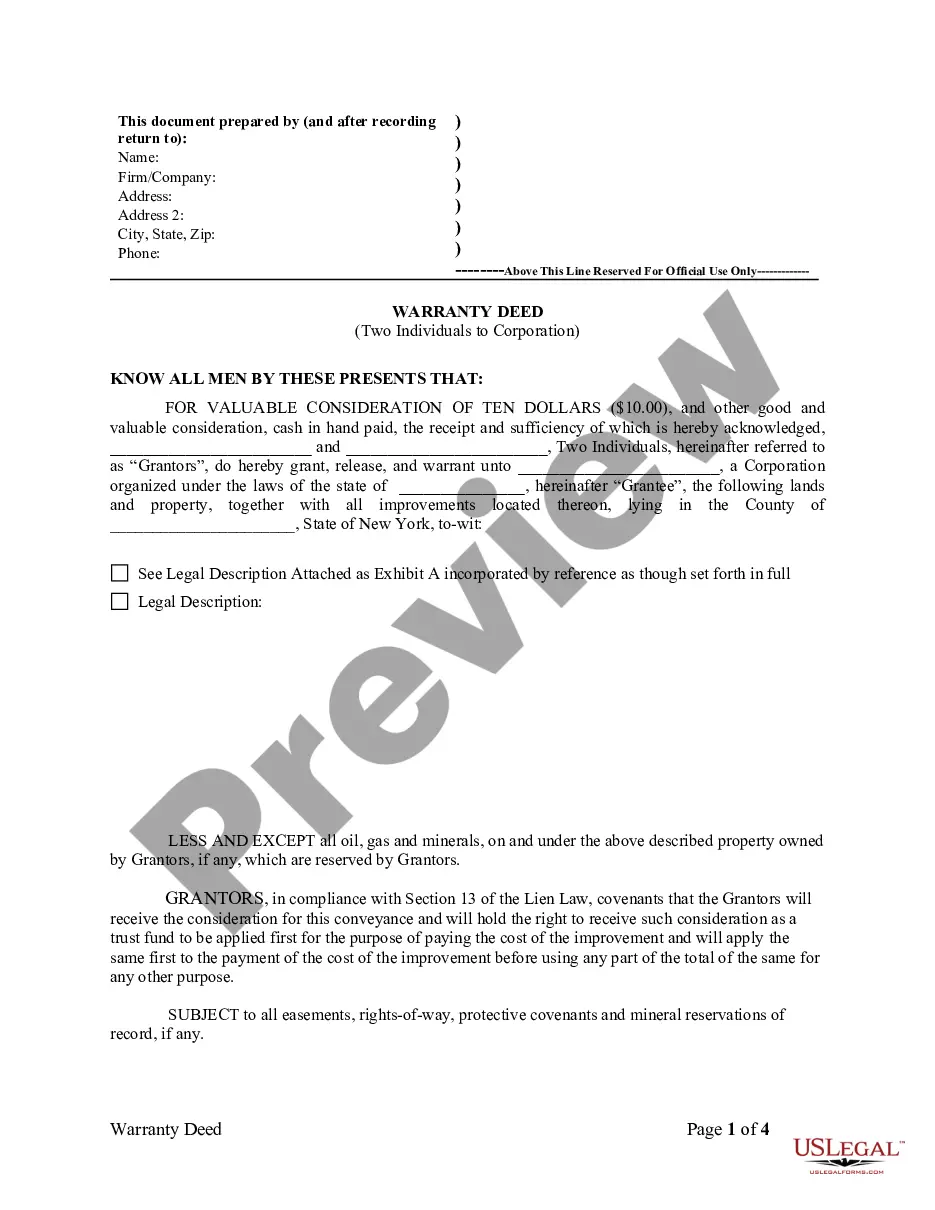
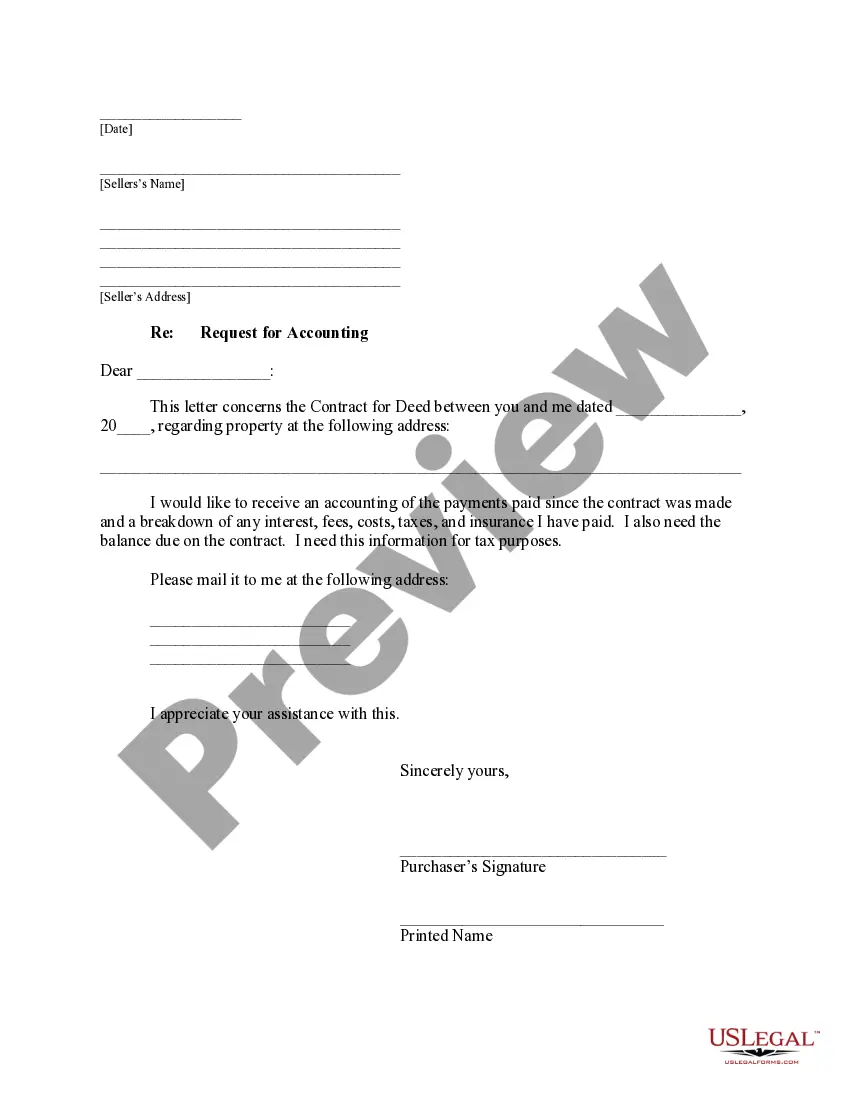
Looking for another form?


Form popularity
FAQ
The simplest way to prevent liens and ensure that subcontractors and suppliers are paid is to pay with joint checks. This is when both parties endorse the check. Compare the contractor's materials or labor bill to the schedule of payments in your contract and the Preliminary Notices.
A mortgage creates a lien on your property that gives the lender the right to foreclose and sell the home to satisfy the debt. A deed of trust (sometimes called a trust deed) is also a document that gives the lender the right to sell the property to satisfy the debt should you fail to pay back the loan.
To attach the lien, the creditor files a certified copy of the judgment with the register of deeds in any Tennessee county where the debtor owns property now or may own property in the future.
Here's how this works: Tennessee statutes allow some assets to be absolutely exempt. These assets include: social security benefits; certain government pensions; certain health care aids; unemployment and veterans benefits; and certain insurance benefits. (See Tenn. Code Ann.
In Tennessee, a contractor with a direct contract with the property owner must initiate a lawsuit to enforce a mechanics lien within 1 year after the completion of the work. However, the period may be shortened to 60 days if the property owner serves the lien claimant a written demand for enforcement of the lien.
While it's unlikely that just anyone can put a lien on your home or land, it's not unheard of for a court decision or a settlement to result in a lien being placed against a property.
Maximize the Homestead Exemption. Protect the Home with Tenancy by the Entirety. Implement an Equity Stripping Plan. Create a Domestic Asset Protection Trust (DAPT) Put the Home Title in the Low-Risk Spouse's Name. Purchase Umbrella Insurance.
Creditors can collect a judgment in a number of ways, including garnishing your wages, levying your bank account, placing a lien on your property, and seizing your personal property like cars or jewelry.
What Is a Fraudulent Lien?the claimant is owed money on another job by the same general contractor or property owner, but didn't file a lien on that project before time expired; or. the claimant wants to file a lien because of personal reasons generally related to the identity of the property owner.