Tennessee Warranty Deed from Husband to Himself and Wife
Understanding this form
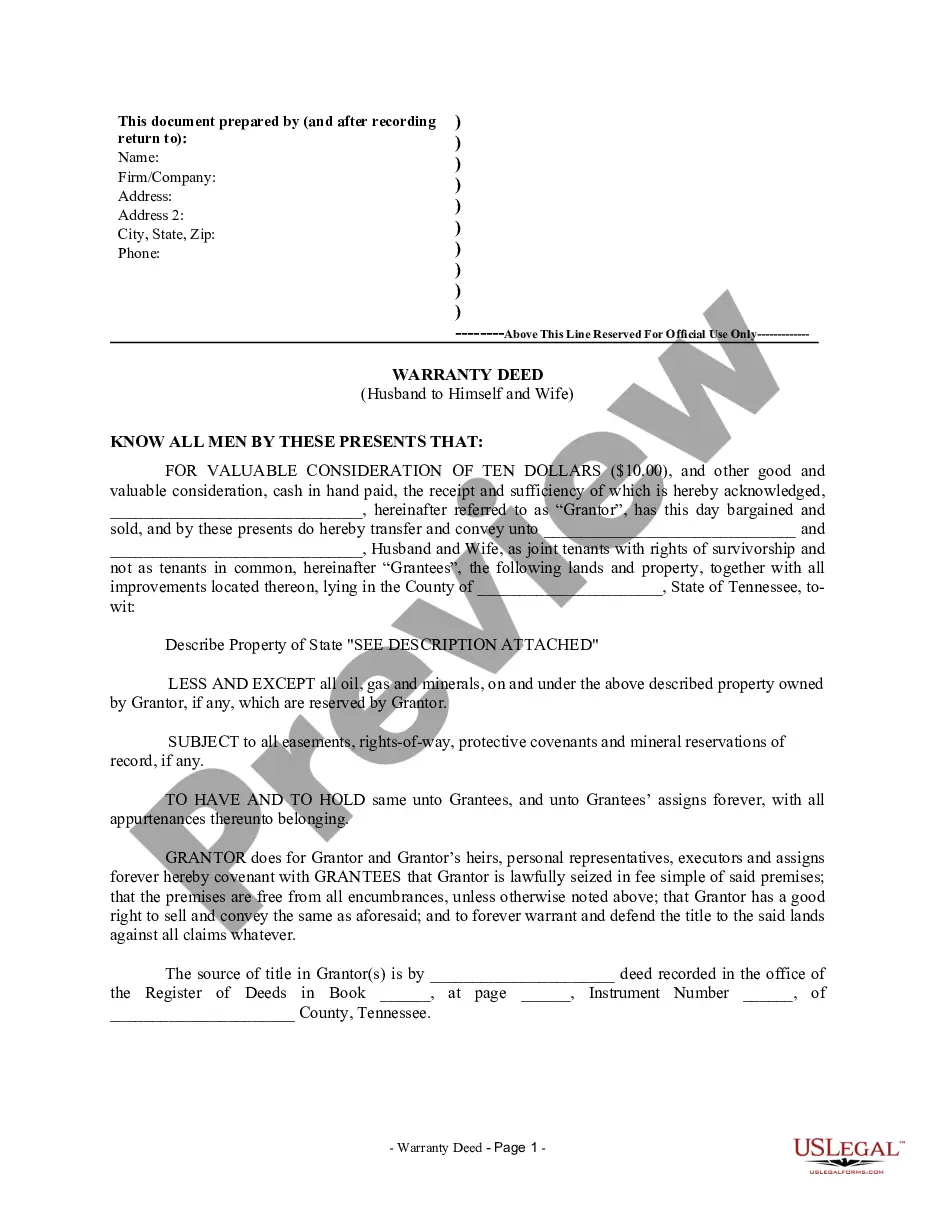
This Warranty Deed from Husband to Himself and Wife is a legal document that transfers property ownership from a husband to himself and his wife. Unlike other types of deeds, this form specifically creates joint tenancy with rights of survivorship. This means that if one spouse passes away, the other automatically inherits the property without the need for probate. This deed also reserves any rights to oil, gas, and minerals beneath the property, ensuring clarity in the transfer of assets.
Key components of this form
- Parties involved: Identifies the grantor (husband) and grantees (husband and wife).
- Description of property: Specifies the property being conveyed, including any reservations.
- Warranties: Includes covenants regarding the grantor's legal ownership and freedom from encumbrances.
- Recording information: Details the source of the grantor's title, which must be filled out.
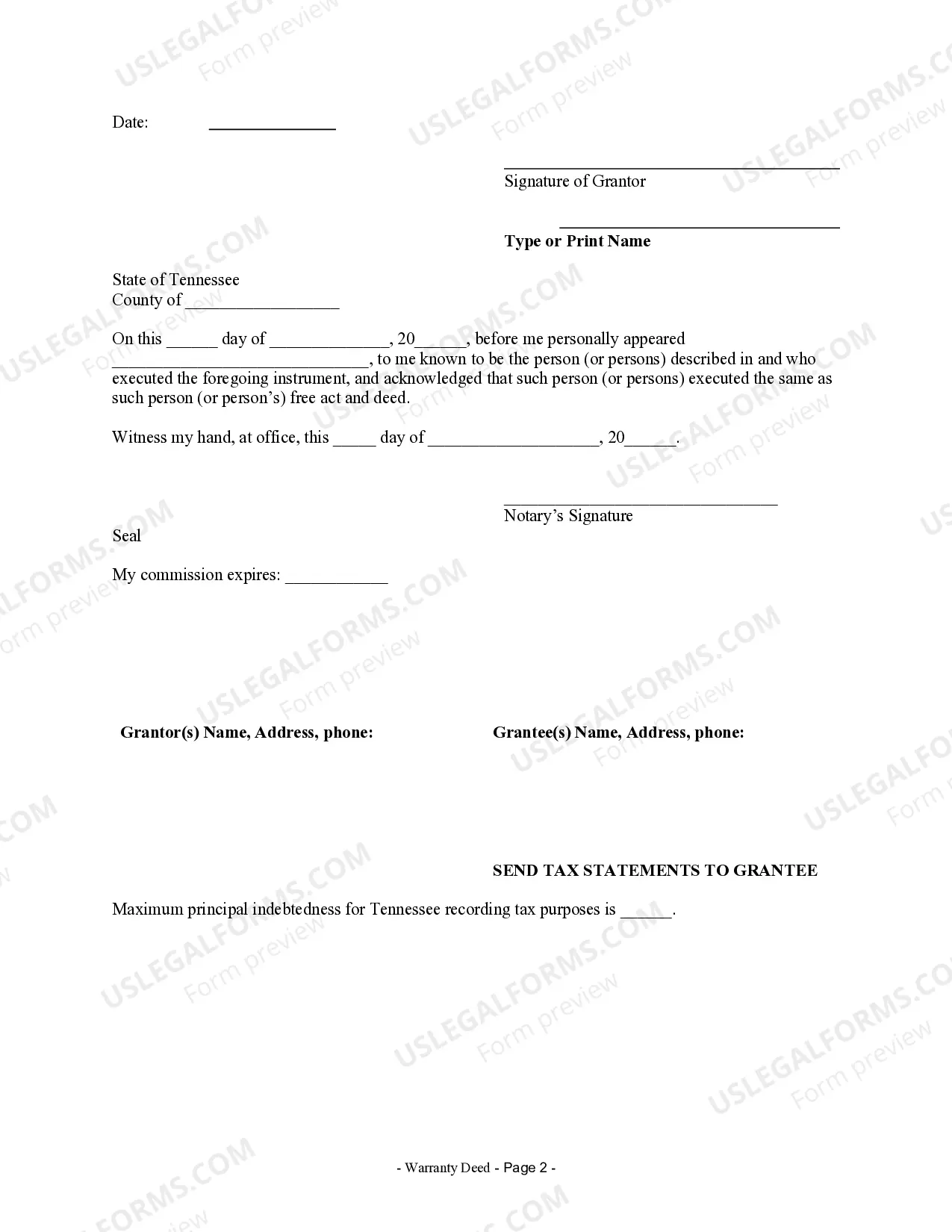
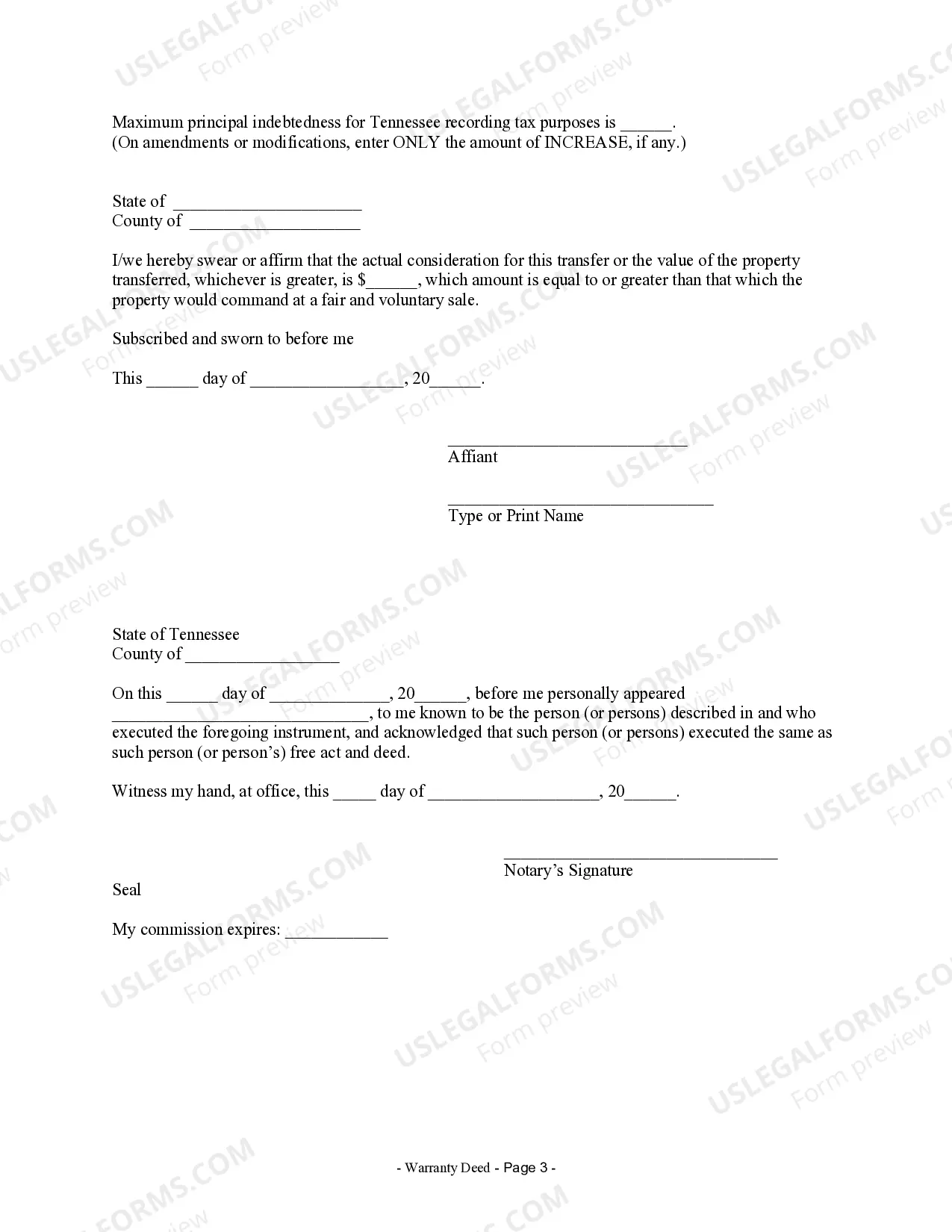
- Notarization section: Area for notarization to validate the deed.



When to use this document
This warranty deed is commonly used when a husband wishes to ensure that both he and his wife hold joint ownership of a property. It is particularly useful in situations like buying a home, transferring inherited property, or consolidating ownership after marriage. The joint tenancy feature is particularly advantageous for estate planning, allowing seamless transfer of ownership upon the death of one spouse.
Who should use this form
- Couples who own property together and want to establish joint tenancy.
- Individuals looking to consolidate property ownership with their spouse.
- Homeowners who want to legally maintain rights of survivorship in property ownership.
- Spouses involved in estate planning or property transfers for inheritance purposes.
Steps to complete this form
- Identify the grantor (husband) and grantees (husband and wife).
- Clearly describe the property being conveyed, along with any exclusions or reservations.
- Complete the section detailing the source of title with the appropriate recorded deed information.
- Review the warranties section to ensure it accurately reflects the grantor's intentions.
- Sign the document in the presence of a notary public to validate it.
Notarization requirements for this form
To make this form legally binding, it must be notarized. Our online notarization service, powered by Notarize, lets you verify and sign documents remotely through an encrypted video session.
Get your form ready online
Our built-in tools help you complete, sign, share, and store your documents in one place.
Make edits, fill in missing information, and update formatting in US Legal Forms—just like you would in MS Word.
Download a copy, print it, send it by email, or mail it via USPS—whatever works best for your next step.
Sign and collect signatures with our SignNow integration. Send to multiple recipients, set reminders, and more. Go Premium to unlock E-Sign.
If this form requires notarization, complete it online through a secure video call—no need to meet a notary in person or wait for an appointment.
We protect your documents and personal data by following strict security and privacy standards.

Make edits, fill in missing information, and update formatting in US Legal Forms—just like you would in MS Word.

Download a copy, print it, send it by email, or mail it via USPS—whatever works best for your next step.

Sign and collect signatures with our SignNow integration. Send to multiple recipients, set reminders, and more. Go Premium to unlock E-Sign.

If this form requires notarization, complete it online through a secure video call—no need to meet a notary in person or wait for an appointment.

We protect your documents and personal data by following strict security and privacy standards.
Common mistakes to avoid
- Failing to accurately describe the property or omitting essential details.
- Neglecting to include all required signatures and notarization.
- Leaving out the source of title, which is crucial for the deed's validity.
- Using outdated or incorrect forms that do not meet state requirements.
Benefits of using this form online
- Convenience of downloading and completing the form at your own pace.
- Access to templates created by licensed attorneys, ensuring legal accuracy.
- Editability allows for adjustments to meet specific needs before finalization.
- Time-saving by eliminating the need for in-person consultations.
Quick recap
- This Warranty Deed transfers property from a husband to both himself and his wife as joint tenants.
- It provides rights of survivorship, essential for estate planning.
- Notarization is required for the deed to be legally valid.
- Ensuring accurate property description and recording is crucial to avoid future disputes.
Looking for another form?

Form popularity
FAQ
What Is the Difference Between a Warranty Deed & a Survivorship Deed?A warranty deed is the most comprehensive and provides the most guarantees. Survivorship isn't so much a deed as a title. It's a way to co-own property where, upon the death of one owner, ownership automatically passes to the survivor.
A special warranty deed to real estate offers protection to the buyer through the seller's guarantee that the title has been free and clear of encumbrances during their ownership of the property. It does not guarantee clear title beyond their ownership.
It will not protect against title issues that arose prior to the time the seller took occupancy. Consequently, it offers less protection to buyers, and more protection to sellers, than a general warranty deed, which is the most common option for selling or buying a property.
The Tennessee general warranty deed is a form that conveys real estate with a guarantee from a Seller to a Buyer that the title shall be free and clear of all liens and encumbrances (fee simple).
Two of the most common ways to transfer property in a divorce are through an interspousal transfer deed or quitclaim deed. When spouses own property together, but then one spouse executes an interspousal transfer or a quitclaim deed, this is known as transmutation.
When recorded, a special warranty deed conveys an interest in real property to the named grantee with limited warranties of title. In Tennessee, special warranty deeds are statutory.This means that the deed will not protect the grantee against title issues that arose prior to the time the grantor acquired title.
A warranty deed guarantees that: The grantor is the rightful owner of the property and has the legal right to transfer the title.The title would withstand third-party claims to ownership of the property. The grantor will do anything to ensure the grantee's title to the property.
A Survivorship Deed transfers residential or commercial property from one property owner (the grantor) to another (the grantee) while allowing them to avoid going through probate when they (the grantor) passes away. The parties transferring property in a Survivorship Deed must have full ownership of the property.