South Dakota Last Will and Testament for Divorced and Remarried Person with Mine, Yours and Ours Children
Understanding this form
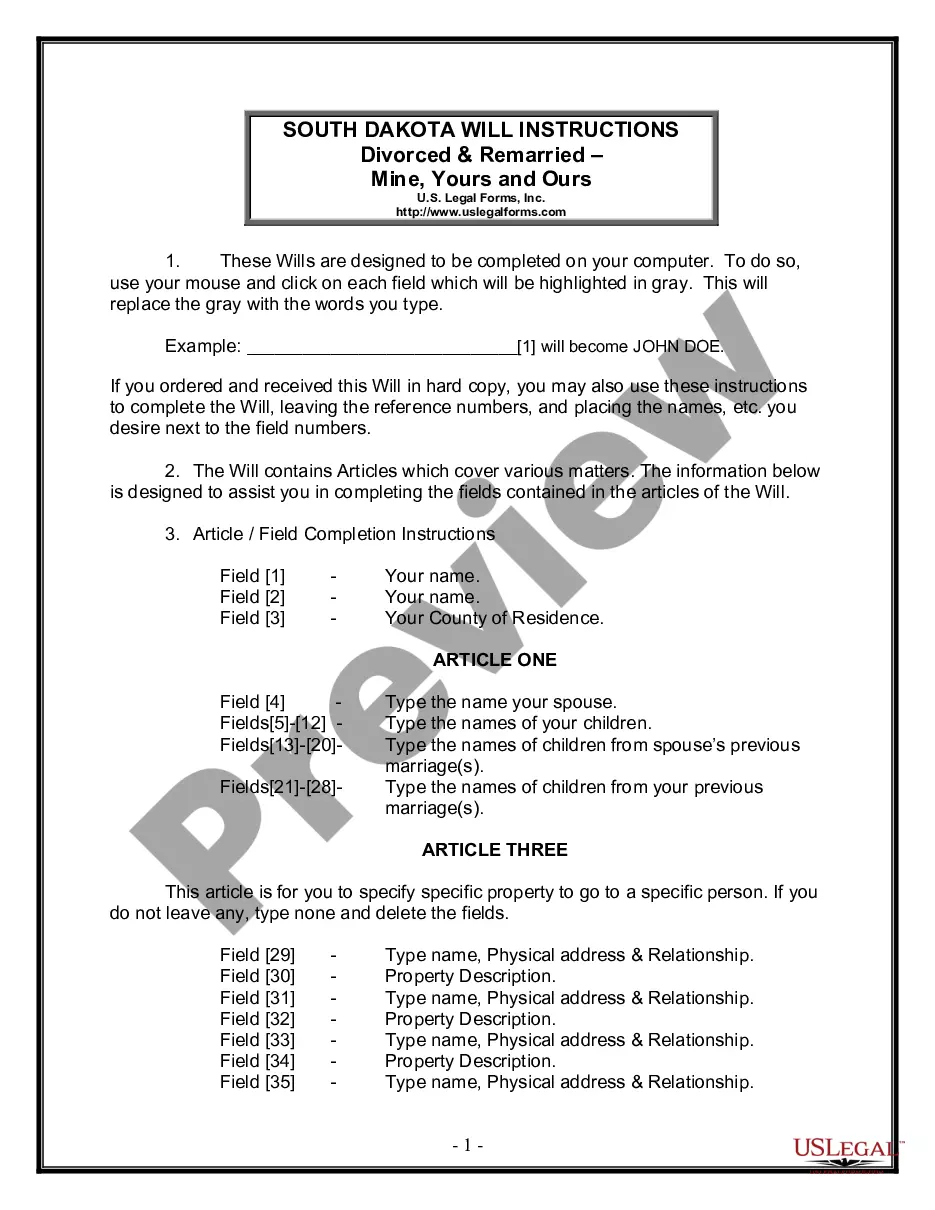
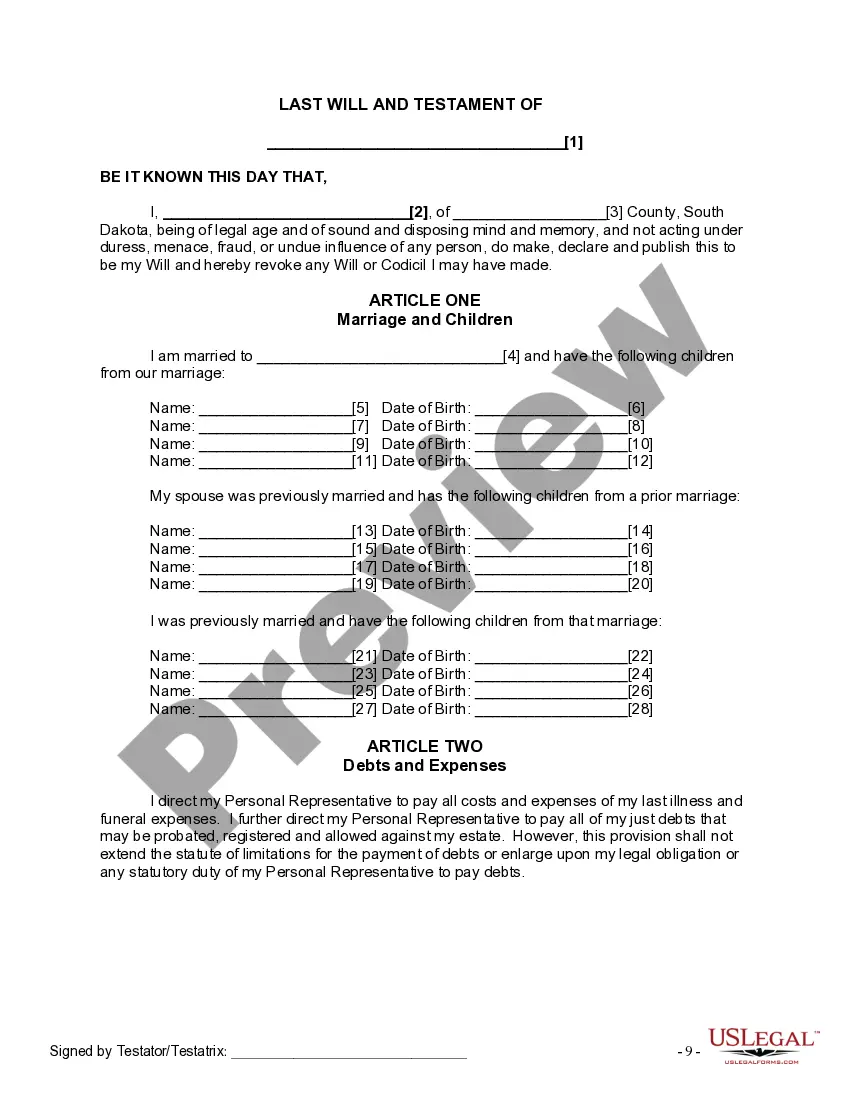
This Last Will and Testament for Divorced and Remarried Person with Mine, Yours, and Ours Children is a legal document designed for individuals who have been divorced and remarried, and have children from both their current and previous relationships. This form addresses the unique family dynamics often present in blended families by specifying how your assets will be divided and who will be responsible for your estate after your passing. It differs from standard wills by including specific provisions for minor children from different marriages, ensuring the fair distribution of assets among all heirs.
Main sections of this form
- Identification of the testator and residence details.
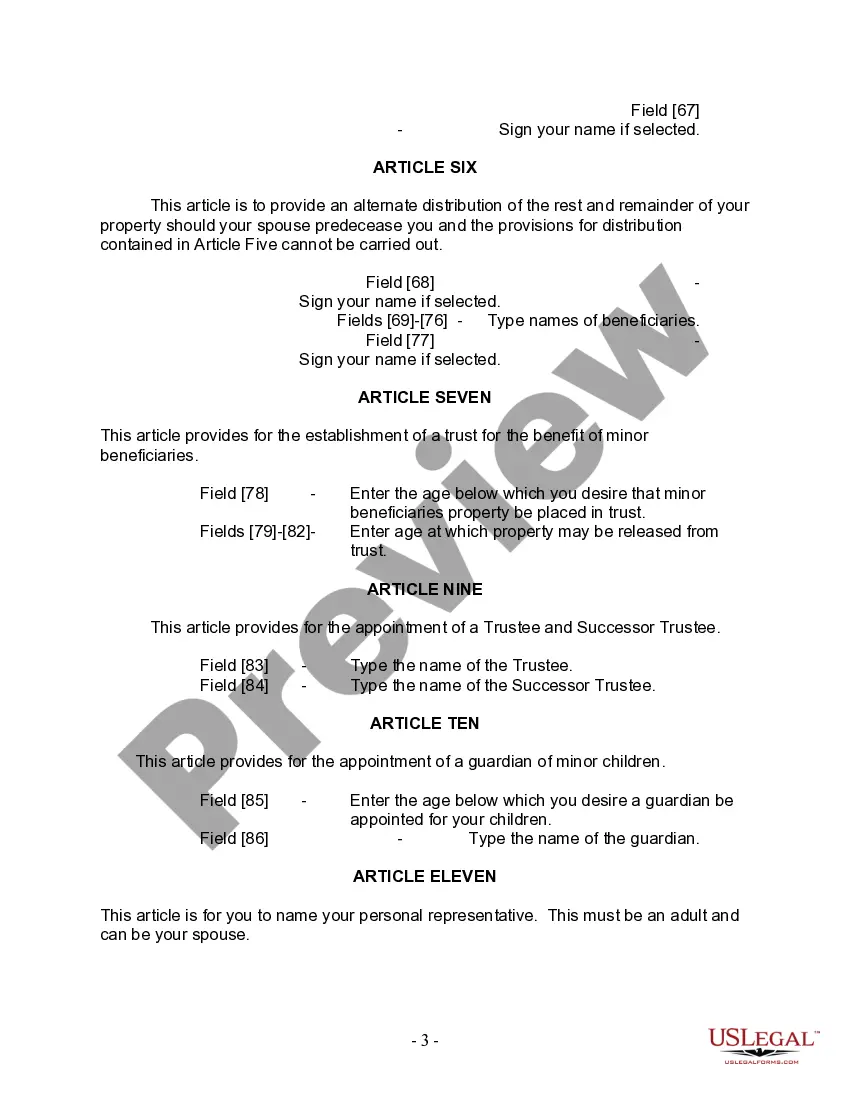
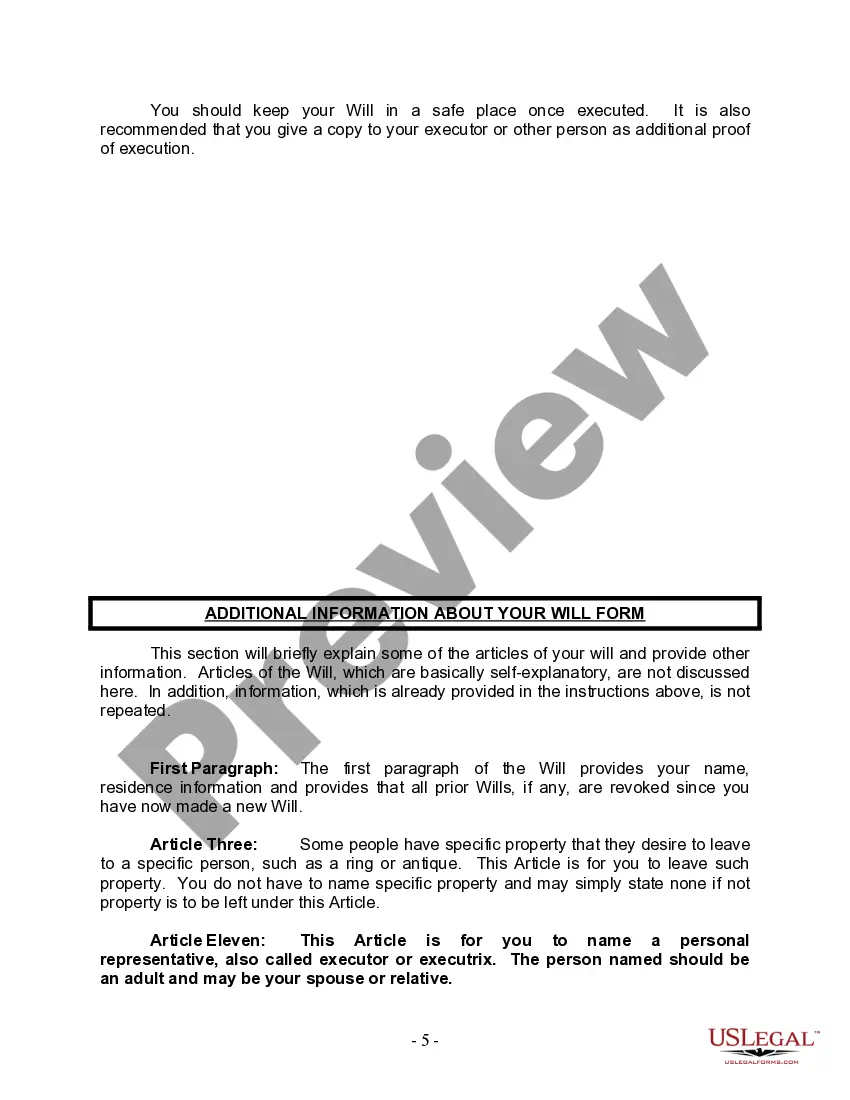
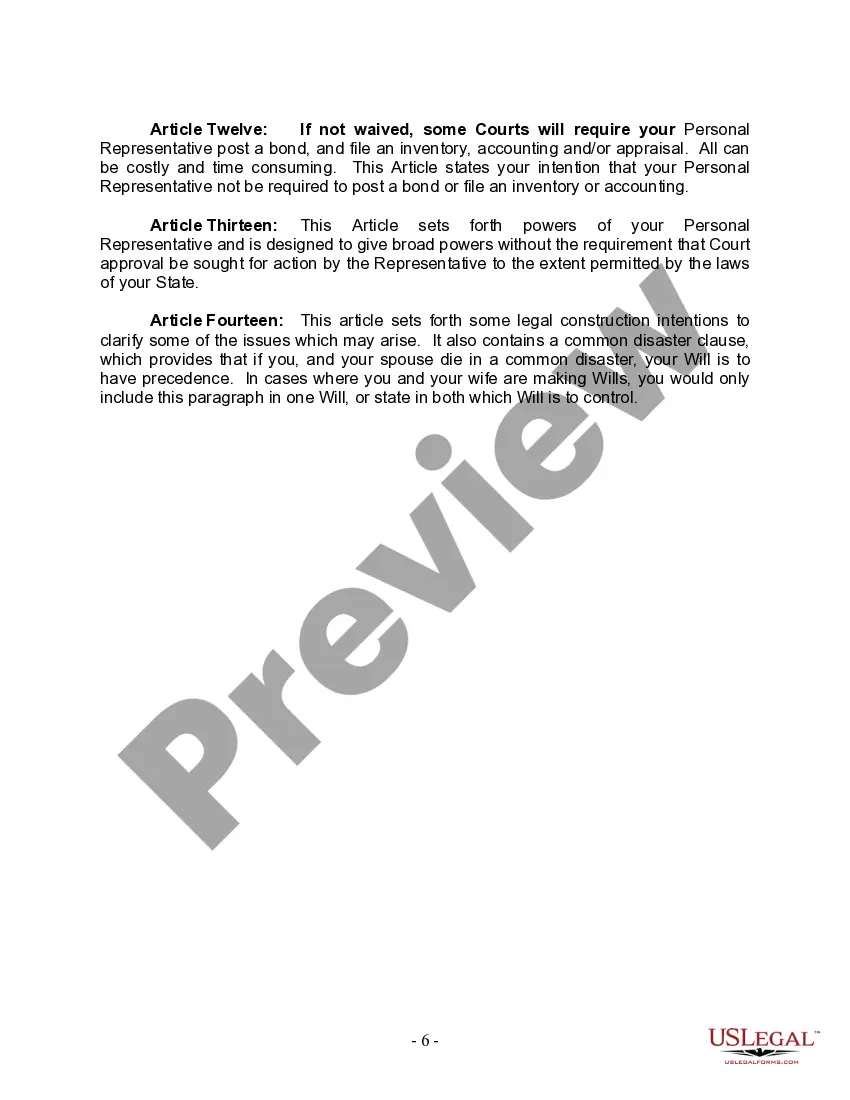
- Designation of a personal representative or executor to manage the estate.
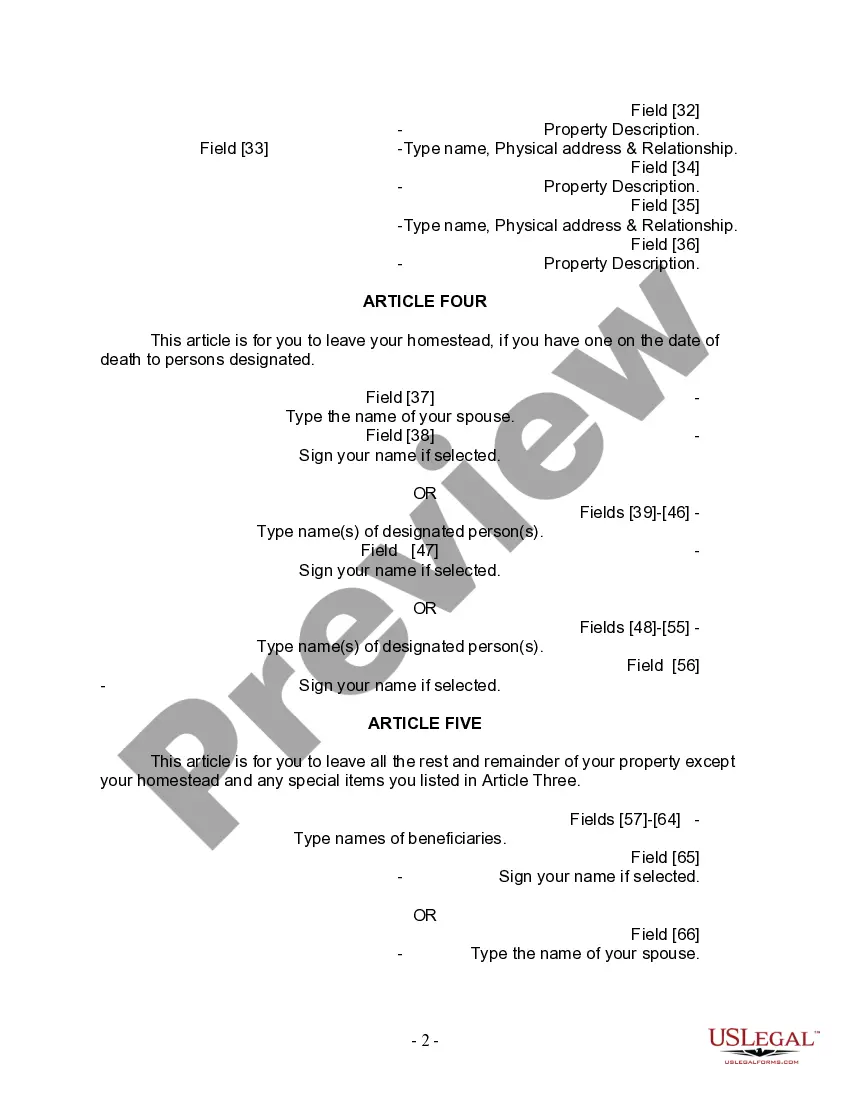
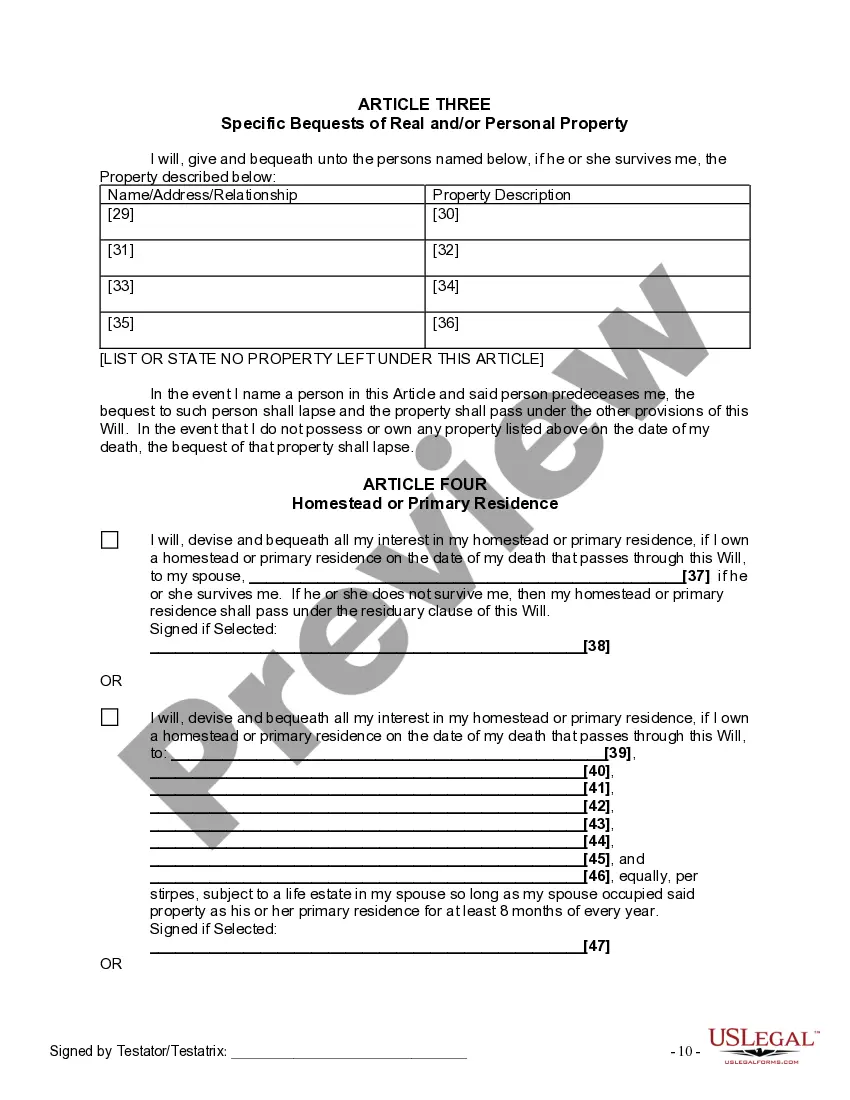
- Specific bequests that outline who receives particular items or properties.
- Homestead provisions indicating who will inherit the primary residence.
- Establishment of a trust for minor children to manage assets until they reach adulthood.
- Appointment of guardians for minor children if both parents pass away.





When this form is needed
This form is essential when a divorced person remarries and has children from both the new and previous relationships. You should use it if you want to clearly define how your assets and responsibilities will be distributed among your children and ensure that your wishes are honored after your death. This will is particularly important to avoid disputes between family members and to protect the interests of minor children.
Who should use this form
- Individuals who are divorced and have remarried.
- Parents with children from previous marriages and/or new marriages.
- Those seeking to establish clear inheritance guidelines for their estates.
- People wishing to protect their children's interests in blended family dynamics.
How to complete this form
- Identify yourself as the testator and provide your current county of residence.
- List your current spouseâs name, as well as the names and birthdates of all children involved.
- Designate specific properties and beneficiaries for those properties if applicable.
- Choose a personal representative to manage your estate.
- Include any desired provisions regarding the management of assets for minor beneficiaries.
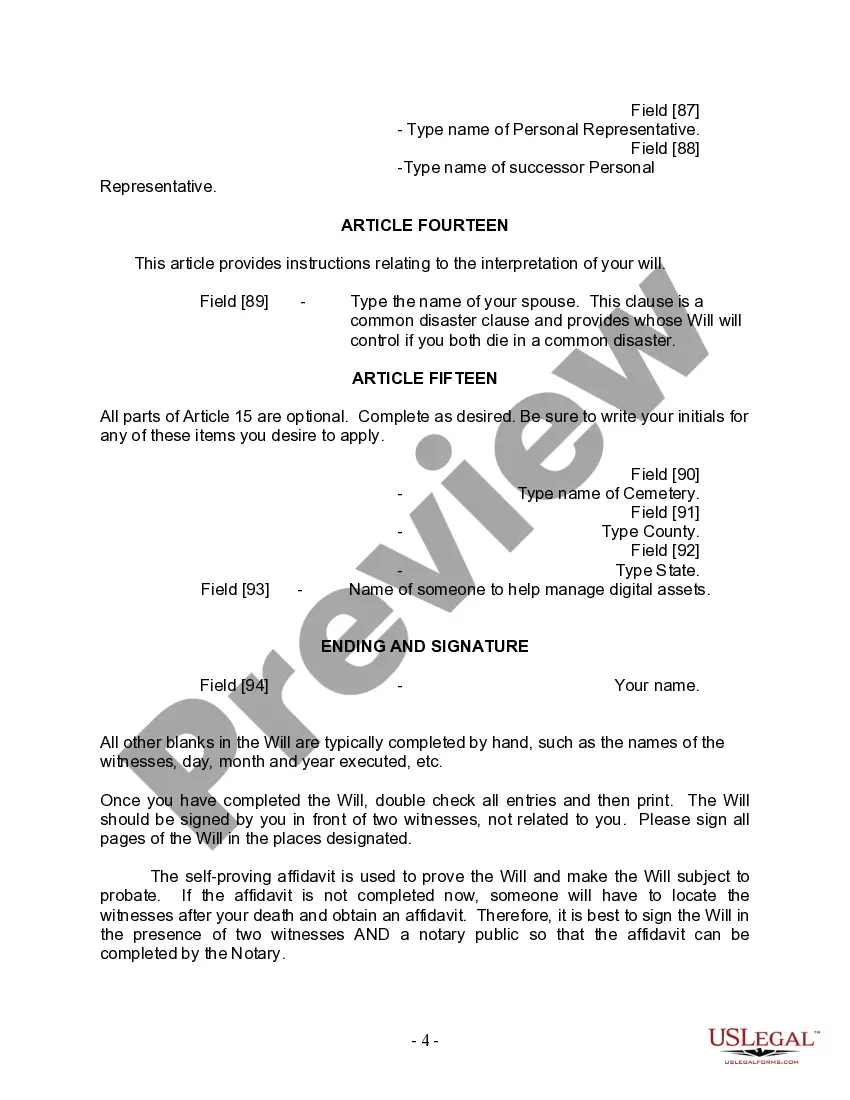
- Sign the will in the presence of two witnesses, and have it notarized if state law requires.
Notarization requirements for this form
Yes, this form must be notarized to be legally valid in most jurisdictions, particularly if you wish to include a self-proving affidavit. Notarization helps simplify the probate process by affirming the authenticity of the will. US Legal Forms offers integrated online notarization options available 24/7, ensuring a convenient and secure process.
Get your form ready online
Our built-in tools help you complete, sign, share, and store your documents in one place.
Make edits, fill in missing information, and update formatting in US Legal Forms—just like you would in MS Word.
Download a copy, print it, send it by email, or mail it via USPS—whatever works best for your next step.
Sign and collect signatures with our SignNow integration. Send to multiple recipients, set reminders, and more. Go Premium to unlock E-Sign.
If this form requires notarization, complete it online through a secure video call—no need to meet a notary in person or wait for an appointment.
We protect your documents and personal data by following strict security and privacy standards.

Make edits, fill in missing information, and update formatting in US Legal Forms—just like you would in MS Word.

Download a copy, print it, send it by email, or mail it via USPS—whatever works best for your next step.

Sign and collect signatures with our SignNow integration. Send to multiple recipients, set reminders, and more. Go Premium to unlock E-Sign.

If this form requires notarization, complete it online through a secure video call—no need to meet a notary in person or wait for an appointment.

We protect your documents and personal data by following strict security and privacy standards.
Typical mistakes to avoid
- Failing to sign in front of qualified witnesses can invalidate the will.
- Not naming a clear personal representative may lead to confusion about who will administer the estate.
- Neglecting to specify provisions for minor children can result in unwanted outcomes regarding their inheritance.
- Overlooking state-specific requirements for wills may lead to legal challenges.
Advantages of online completion
- Conveniently complete the form from the comfort of your home.
- Edit the document easily to ensure all your information is accurate.
- Access professional guidance through included instructions.
- Download and print immediately upon completion for quicker processing.
Legal use & context
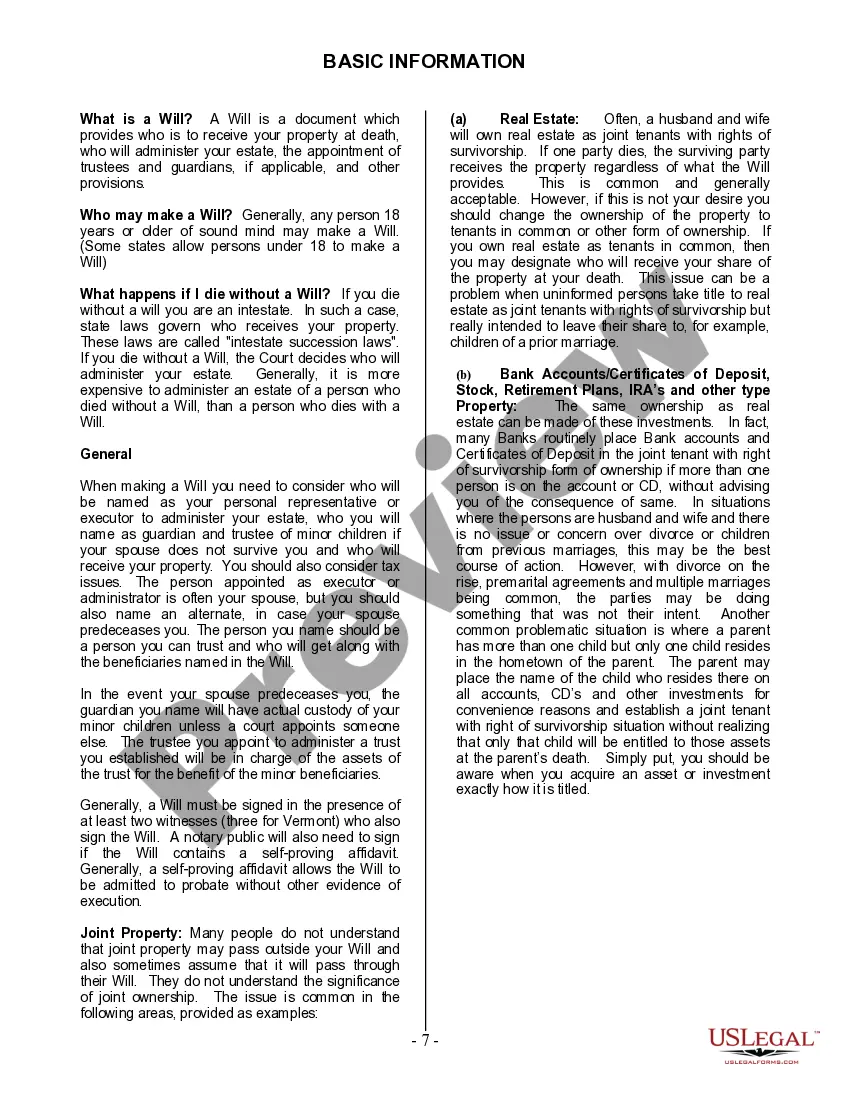
- A legally binding document, this Last Will and Testament ensures that your assets will be distributed according to your specifications.
- It is essential to comply with state-specific laws regarding the execution of wills, especially in blended families.
- This form is effective in avoiding intestacy laws that govern asset distribution when one dies without a will.
Quick recap
- This will is specifically crafted for divorced and remarried individuals with children from various relationships.
- The document addresses both specific property bequests and the establishment of trusts for minor children.
- Proper execution, including signature and witness requirements, is crucial for the will's validity.
Looking for another form?

Form popularity
FAQ
Age: The testator must be at least 18 years old. Capacity: The testator must be of sound mind. Signature: The will must be signed by the testator or by someone else in the testator's name in his conscious presence, by his direction.
As long as it was properly signed and witnessed by two adult independent witnesses who are present at the time you sign your will, it should be legally binding.Using the wrong wording could mean that your instructions aren't followed, or even that your will isn't valid.
Executing a will is the technical term for signing a will and making it legal. To execute a will in any state in the United States, you must 1) sign the document while you have capacity to know what you're doing, and 2) have two people sign the will as witnesses.
A. You don't have to have a lawyer to create a basic will you can prepare one yourself. It must meet your state's legal requirements and should be notarized.A do-it-yourself will that's poorly drafted can save you money but create a mess for your heirs when you're gone.
Contrary to popular belief, you do not need to have an attorney draft a will for you. Anyone can write this document on their own, and as long as it meets all of the legal requirements of the state, courts will recognize one you wrote yourself.
Although a state's laws might not technically require the filing of a will, the probate process cannot beginand thus any heirs or beneficiaries cannot inherit any of the deceased individual's assetsuntil someone submits the document to the probate court.
Do you need a solicitor Many executors and administrators act without a solicitor. However, if the estate is complicated, it is best to get legal advice. You should always get legal advice if, for example: the terms of a will are not clear.
In South Dakota, every person over the age of eighteen (18) years, who is of sound mind, may execute a will. The will should be in writing, signed by the testator in the presence of two (2) witnesses. The two (2) witnesses must write their names on the will.
No. You can make your own will in South Dakota, using Nolo's do-it-yourself will software or online will programs. However, you may want to consult a lawyer in some situations. For example, if you think that your will might be contested or if you want to disinherit your spouse, you should talk with an attorney.