South Dakota Office Lease Agreement
What is this form?
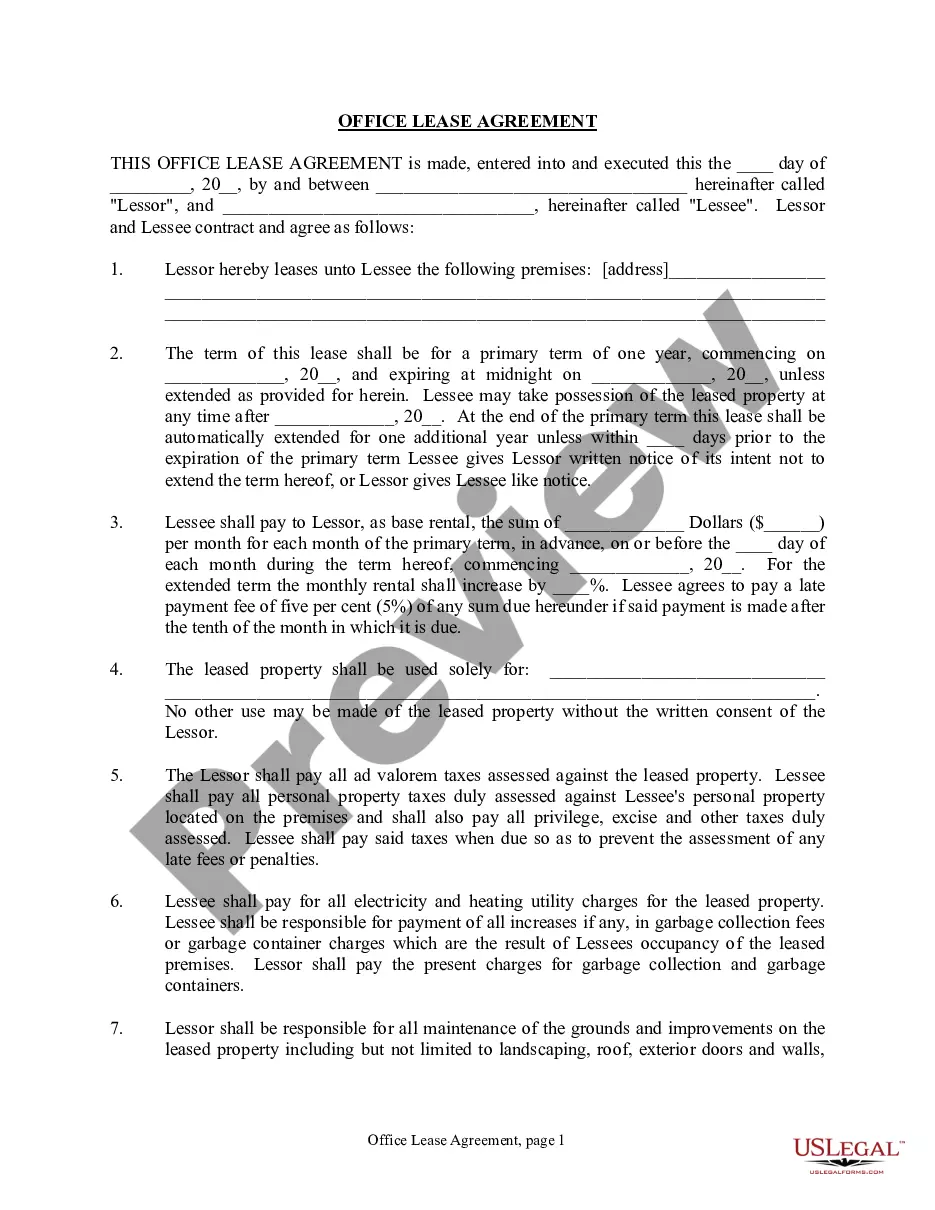
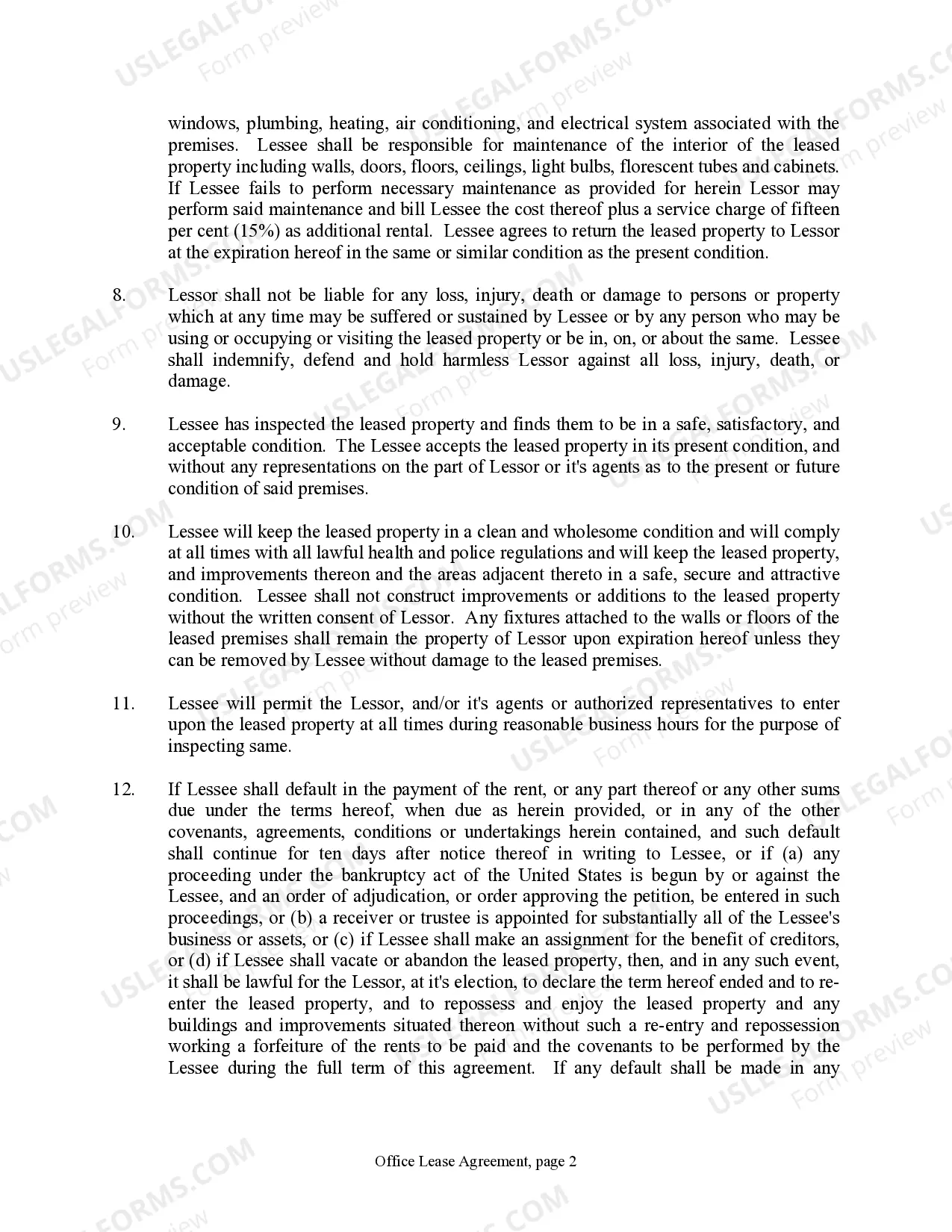
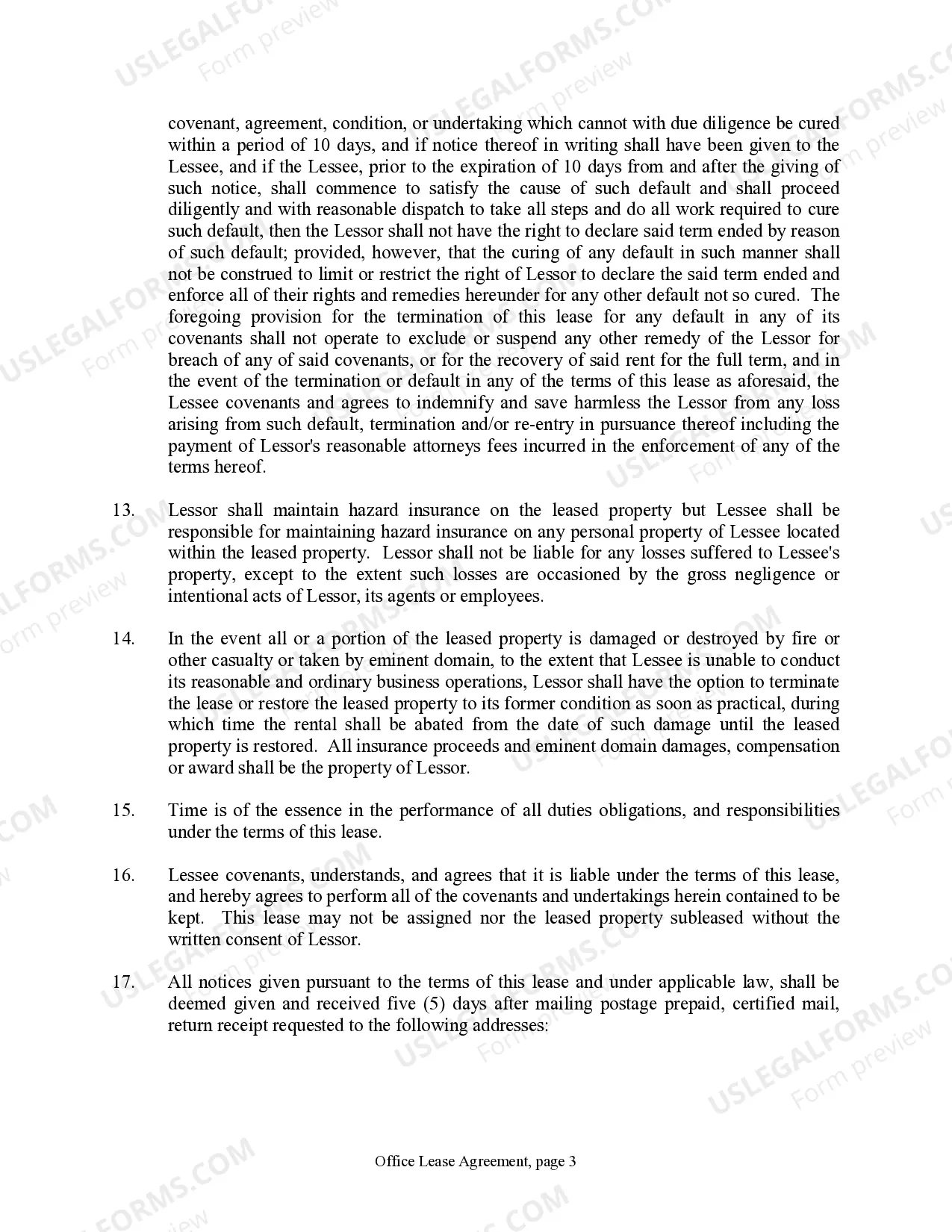
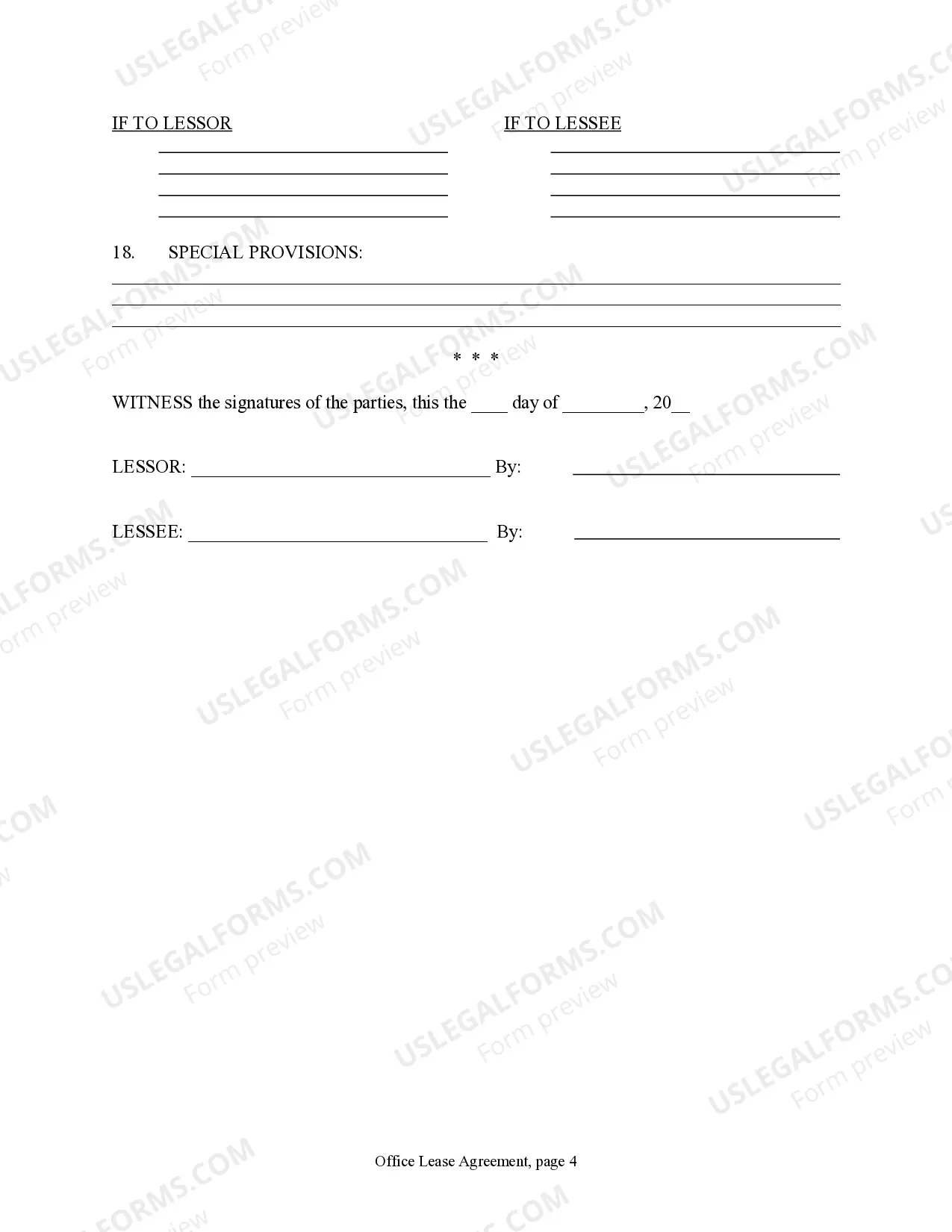
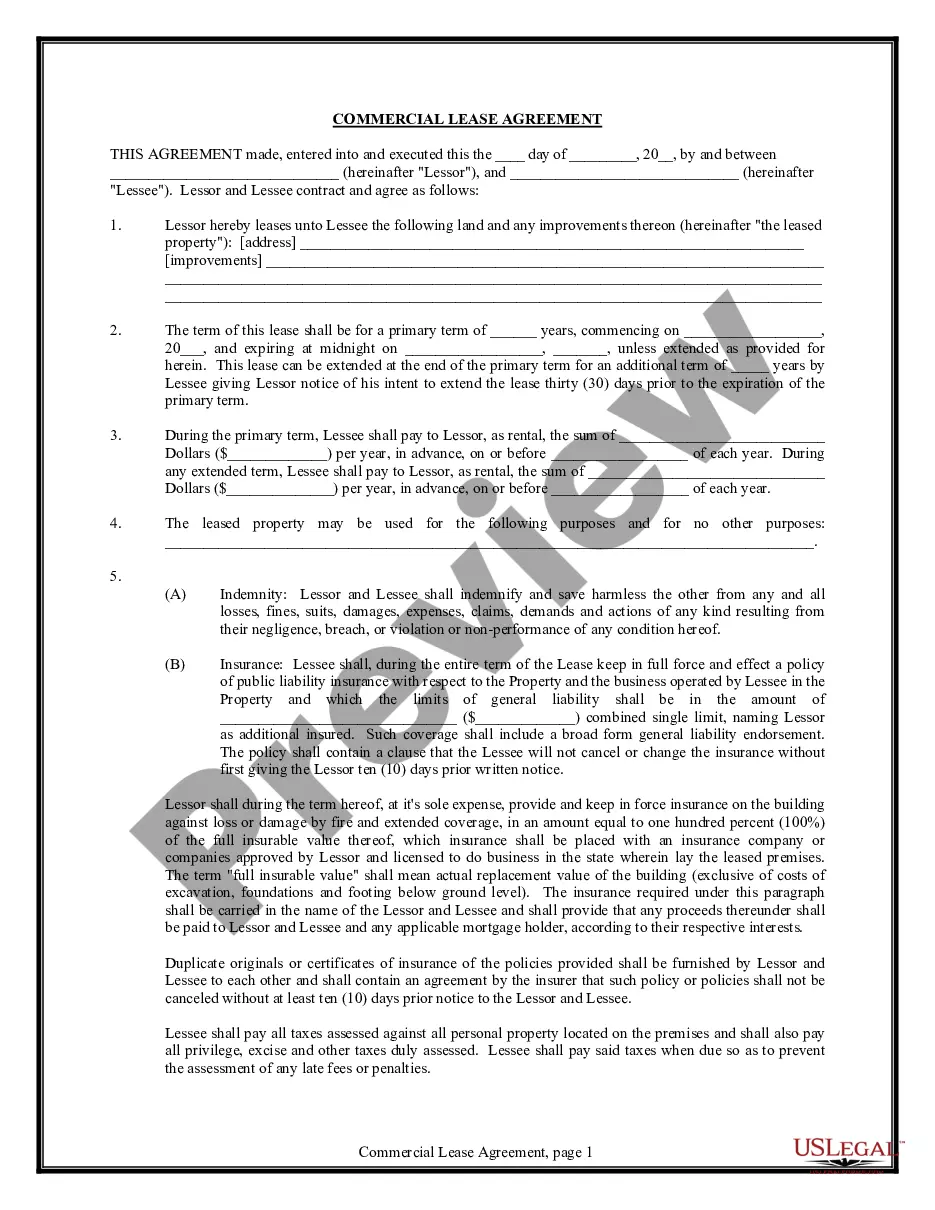
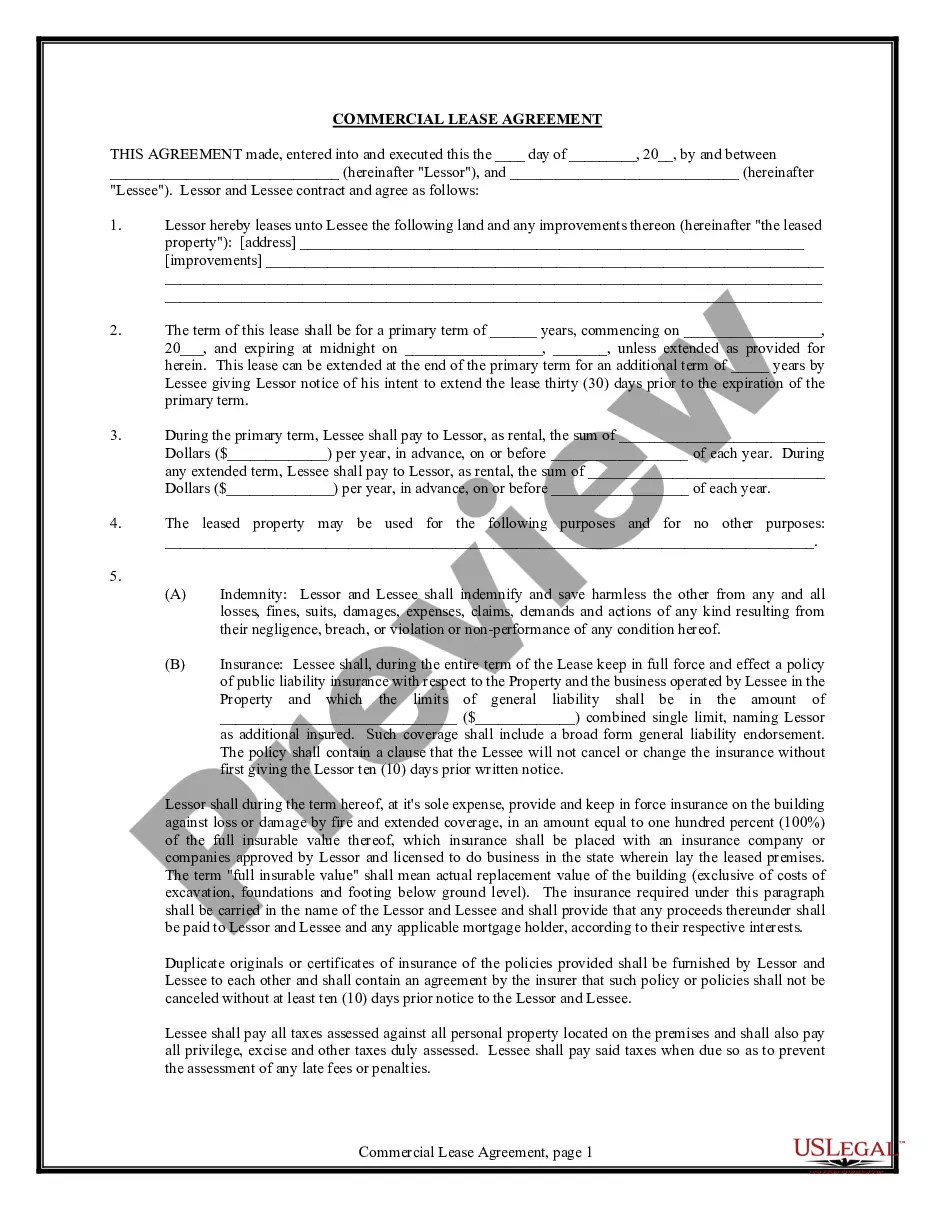
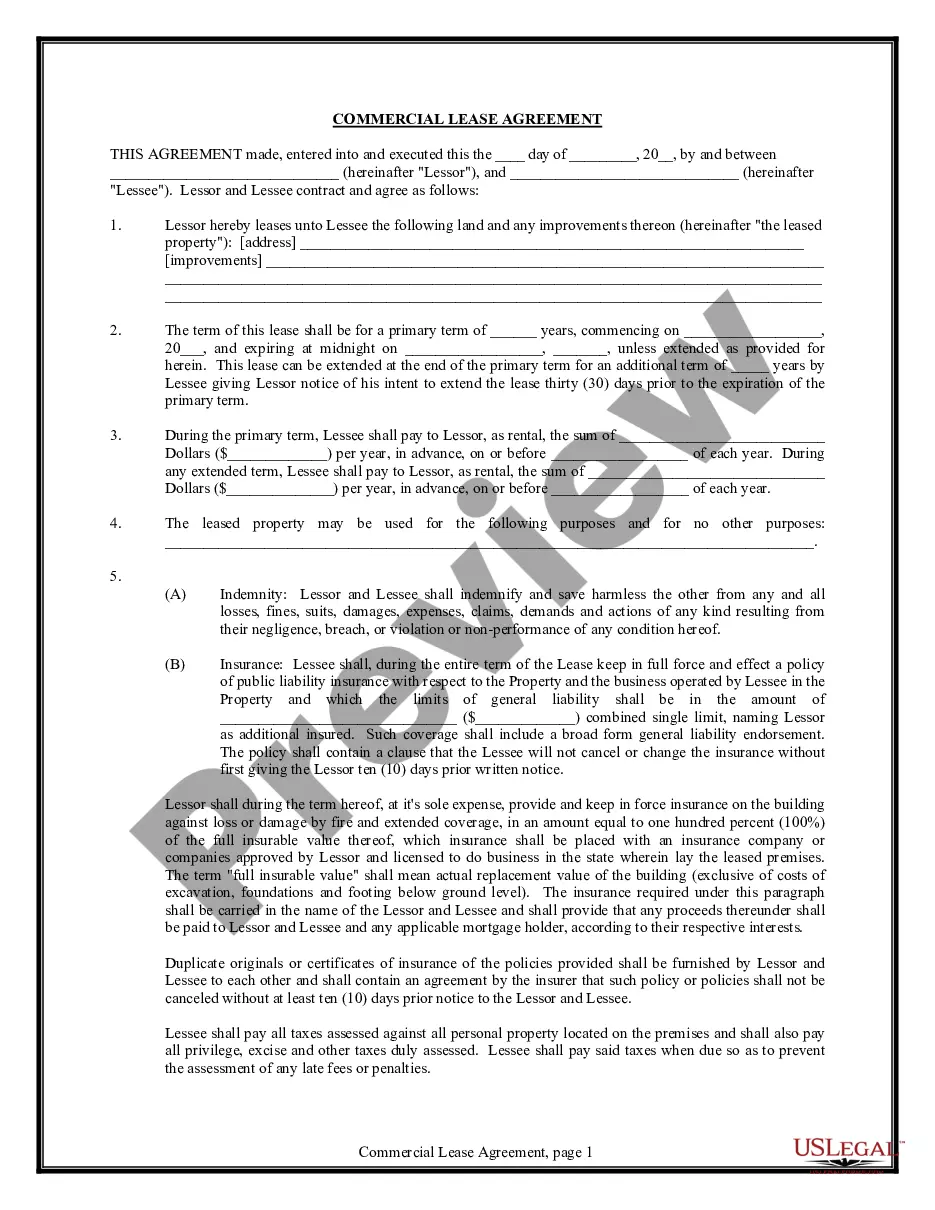
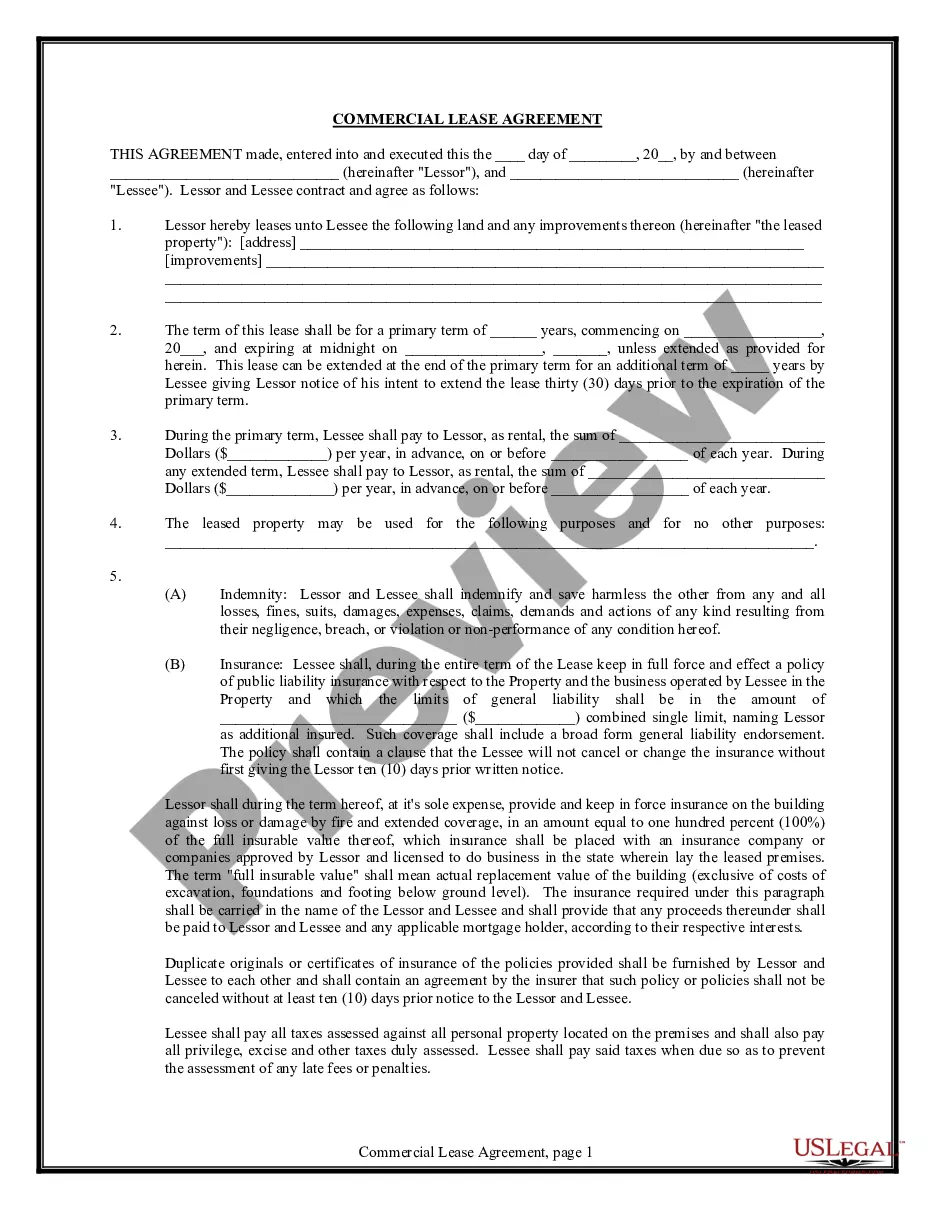
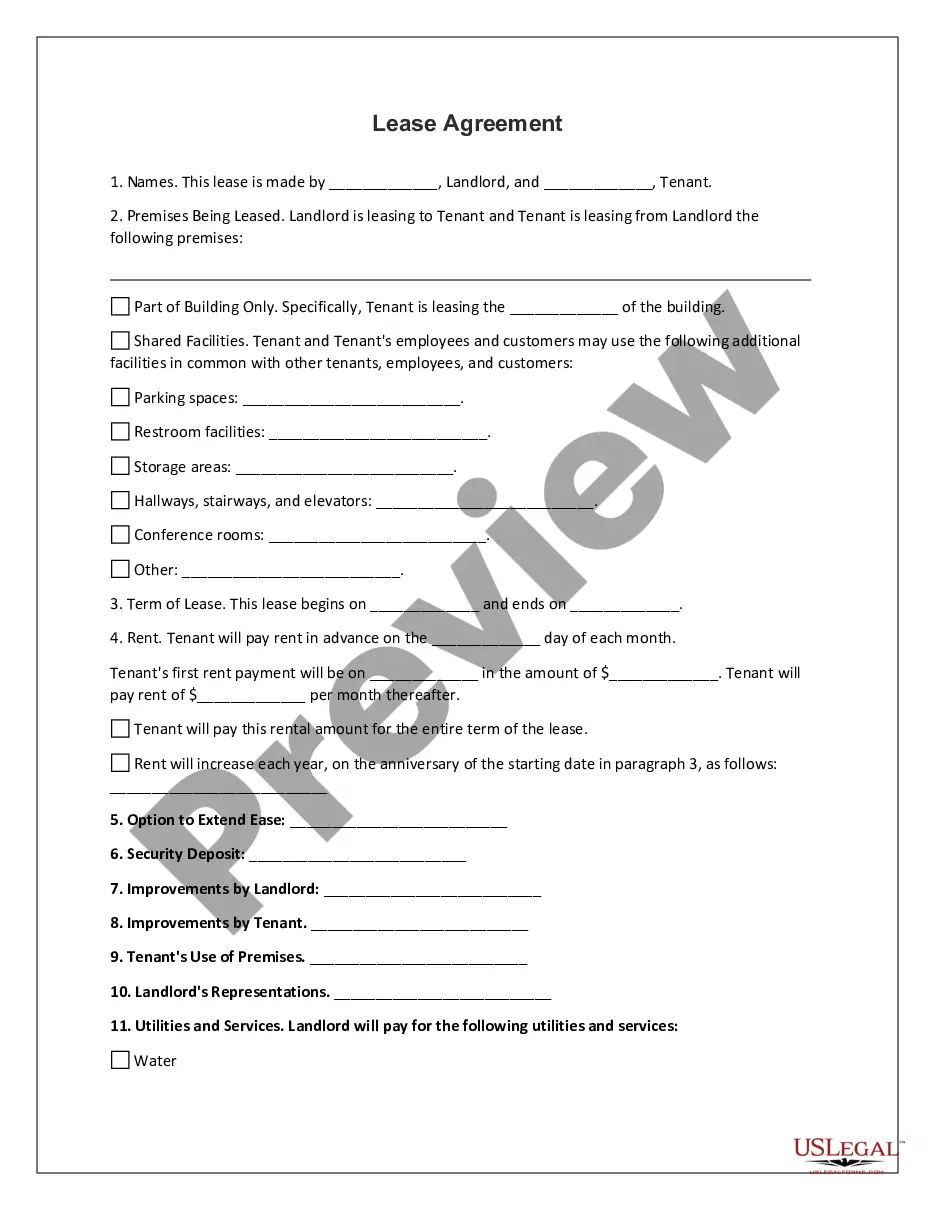
The Office Lease Agreement is a legal document that establishes a contract between a property owner (lessor) and a tenant (lessee) for leasing office space. This agreement outlines essential terms such as the lease duration, rental payment amounts, and responsibilities regarding utilities and property maintenance. Unlike residential leases, office leases often contain specific clauses related to business operations and commercial property use, ensuring compliance with state laws and protecting both parties' interests.
Form components explained
- Parties involved: Identifies the lessor and lessee.
- Lease term: Specifies the duration of the lease.
- Rental payment: Details the monthly rent and late payment fees.
- Use of property: Defines acceptable use for the leased office space.
- Maintenance responsibilities: Outlines who is responsible for property upkeep and repairs.
- Indemnification: Includes clauses that protect the lessor from liability.
When to use this form
This form should be used when a business or individual intends to lease office space for their operations. It is essential in establishing clear guidelines for the lease period, rent payment schedules, and responsibilities related to property maintenance and repairs. Typical scenarios include starting a new business, expanding into a new location, or establishing a temporary workspace for specific projects.
Who can use this document
- Business owners seeking to rent office space.
- Individuals or companies expanding their operations to new premises.
- Real estate agents and property managers assisting clients with office rentals.
- Legal practitioners drafting leases for business clients.
Instructions for completing this form
- Identify the parties by entering the names of the lessor and lessee.
- Specify the address of the leased office space.
- Fill out the lease term with start and end dates.
- Enter the base rental amount and any applicable increase for lease extensions.
- Specify the intended use of the property as per the lessee's business needs.
- Have both parties sign and date the agreement.
Notarization guidance
This form does not typically require notarization unless specified by local law. It is essential to check any local regulations or requirements that may apply to the execution of commercial leases.
Get your form ready online
Our built-in tools help you complete, sign, share, and store your documents in one place.
Make edits, fill in missing information, and update formatting in US Legal Forms—just like you would in MS Word.
Download a copy, print it, send it by email, or mail it via USPS—whatever works best for your next step.
Sign and collect signatures with our SignNow integration. Send to multiple recipients, set reminders, and more. Go Premium to unlock E-Sign.
If this form requires notarization, complete it online through a secure video call—no need to meet a notary in person or wait for an appointment.
We protect your documents and personal data by following strict security and privacy standards.

Make edits, fill in missing information, and update formatting in US Legal Forms—just like you would in MS Word.

Download a copy, print it, send it by email, or mail it via USPS—whatever works best for your next step.

Sign and collect signatures with our SignNow integration. Send to multiple recipients, set reminders, and more. Go Premium to unlock E-Sign.

If this form requires notarization, complete it online through a secure video call—no need to meet a notary in person or wait for an appointment.

We protect your documents and personal data by following strict security and privacy standards.
Avoid these common issues
- Failing to specify the exact office address or zoning compliance.
- Neglecting to outline additional costs, such as utilities or maintenance fees.
- Not including clear provisions for lease termination or renewal.
- Overlooking clauses related to property use restrictions.
Benefits of using this form online
- Convenience of accessing and downloading the agreement from anywhere.
- Editability allows for customization to meet specific needs and requirements.
- Provides peace of mind with professionally drafted legal language.
- Reduces the time and cost associated with hiring legal counsel for standard leases.
- The office lease agreement must comply with applicable local and state laws for commercial leases.
- Failure to follow legal provisions may result in unenforceable terms.
- Consult a legal professional if unsure about any clauses or provisions to ensure enforceability.
Key takeaways
- An office lease agreement is essential for formalizing rental arrangements for commercial properties.
- Clear terms help prevent disputes between Lessor and Lessee.
- Compliance with state-specific requirements is necessary for legal validity.
- Proper documentation ensures protection of rights for both parties involved in the lease.
Looking for another form?


Form popularity
FAQ
Names of all tenants. Limits on occupancy. Term of the tenancy. Rent. Deposits and fees. Repairs and maintenance. Entry to rental property. Restrictions on tenant illegal activity.
Name the parties. A simple rental agreement form needs to name the parties signing the lease and where they live. Describe the premises. Define the term of the lease. Set how much rent is owed. Assign a security deposit amount. Finalize the lease.
The Lease Must be in Writing It does not matter if the lease is handwritten or typed. If the lease is for more than one year, it must be in written form and contain the following terms.
Names of all tenants. Limits on occupancy. Term of the tenancy. Rent. Deposits and fees. Repairs and maintenance. Entry to rental property. Restrictions on tenant illegal activity.
Original copy of ownership proof or a copy of the title to the property. Two passport size photographs (tenant, landlord, and two witnesses) Aadhar card. A government authorized ID proof (voter ID, passport, and driving license)
A simple (1 page) lease agreement is a legally binding form used for renting out residential real estate.Unlike a standard residential lease, the form contains the bare-minimum for being an effective lease, foregoing many of the clauses found in standard leases.
As long as the contract spells out specific details and both parties have signed that they agree to the contract's terms, a handwritten contract is legally binding and enforceable in court.
In a full-service lease, or gross lease, the tenant pays the base rent, and the landlord pays for the utilities, insurance, taxes and other costs of operating the building.In a net lease, by contrast, the tenants pay a portion of the operating costs of the building.
Commercial leases generally fall into one of three major categories based on how the building's operating expenses are passed on to tenants: Gross or full-service lease. You pay a flat monthly rate from which the landlord pays all operating expenses, including utilities, property taxes and maintenance.