South Dakota Buyer's Notice of Intent to Vacate and Surrender Property to Seller under Contract for Deed
What is this form?
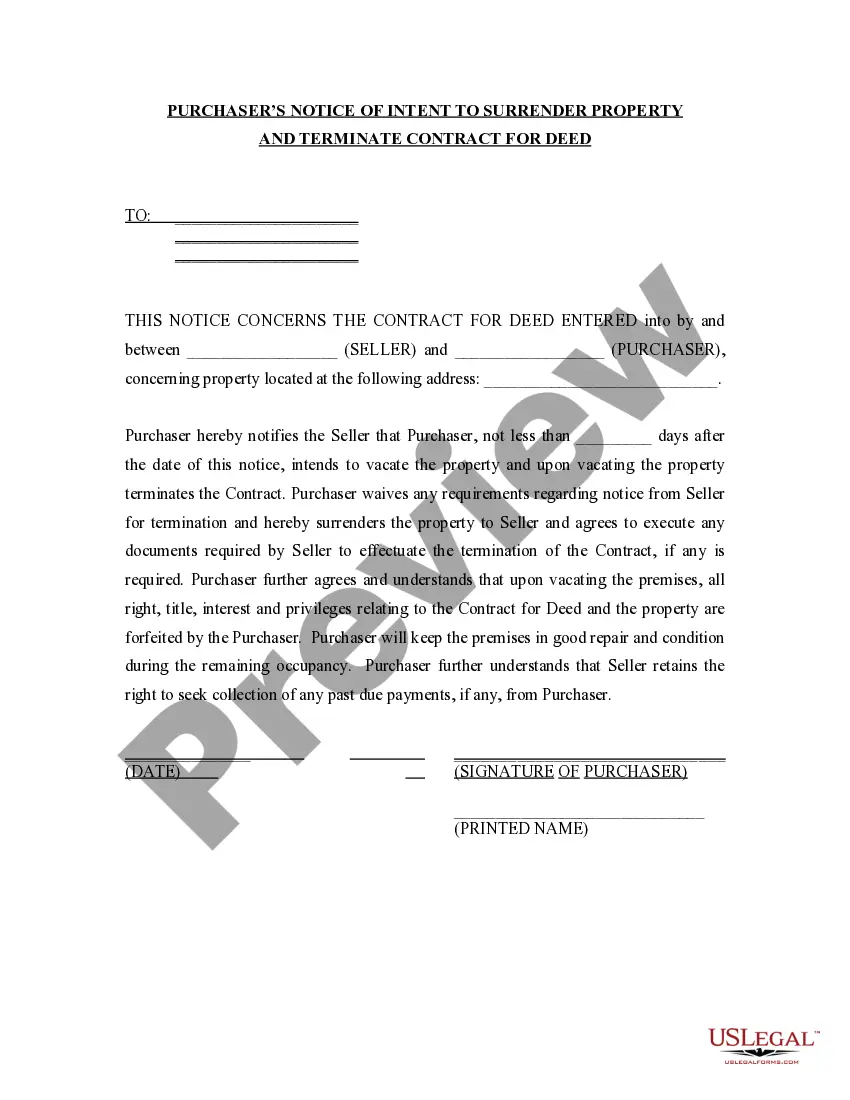
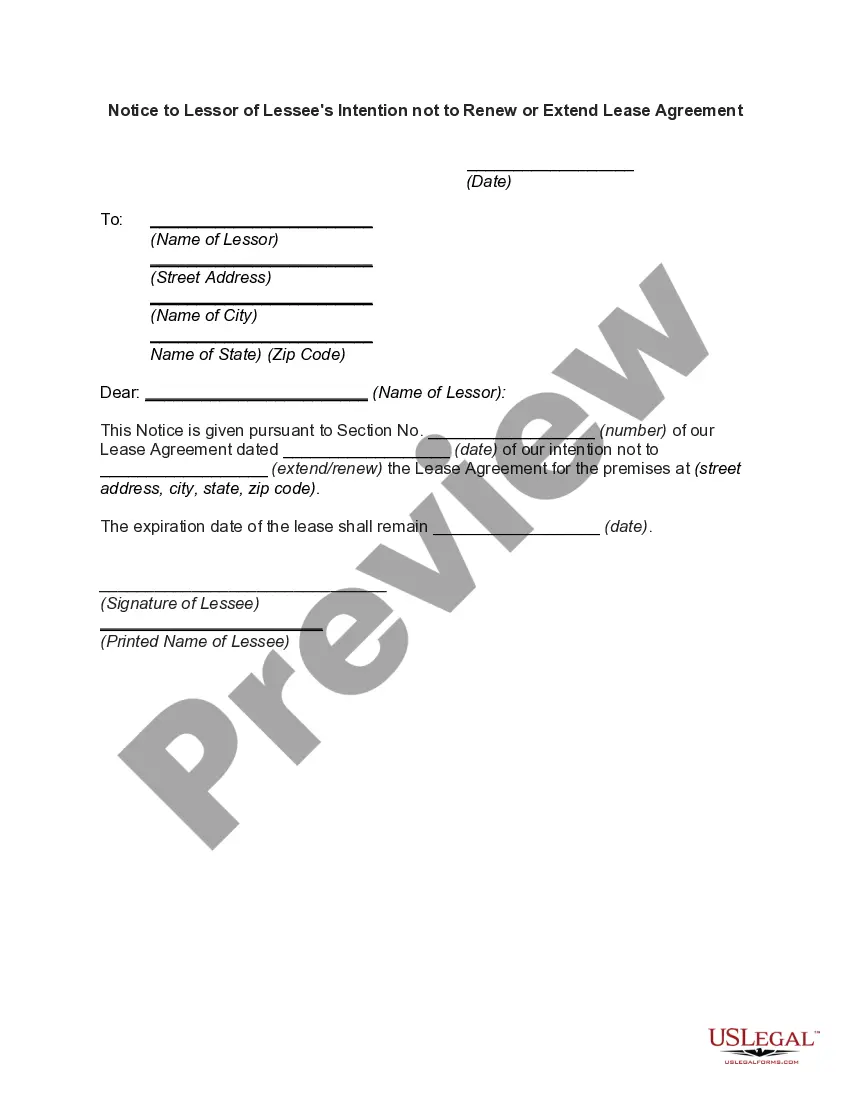
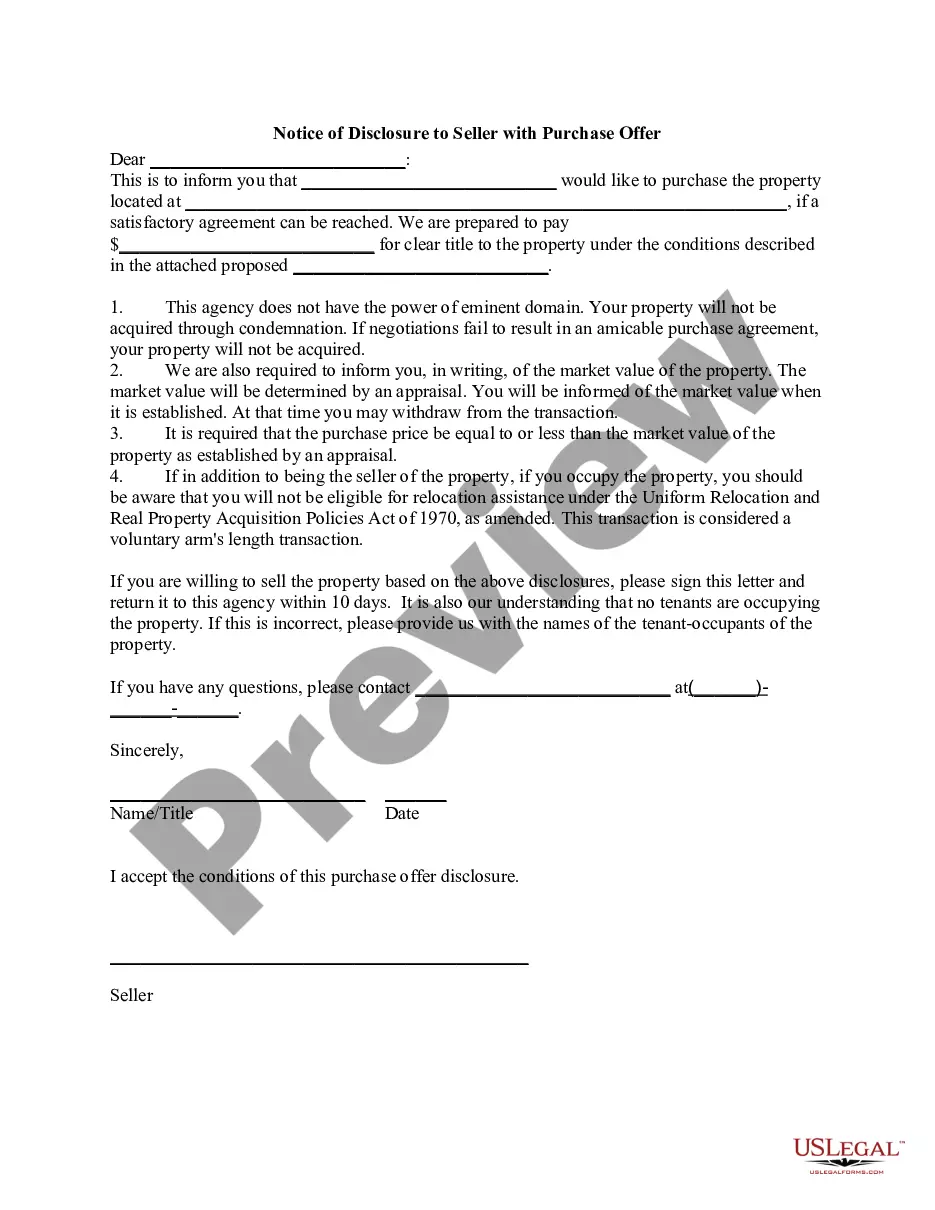
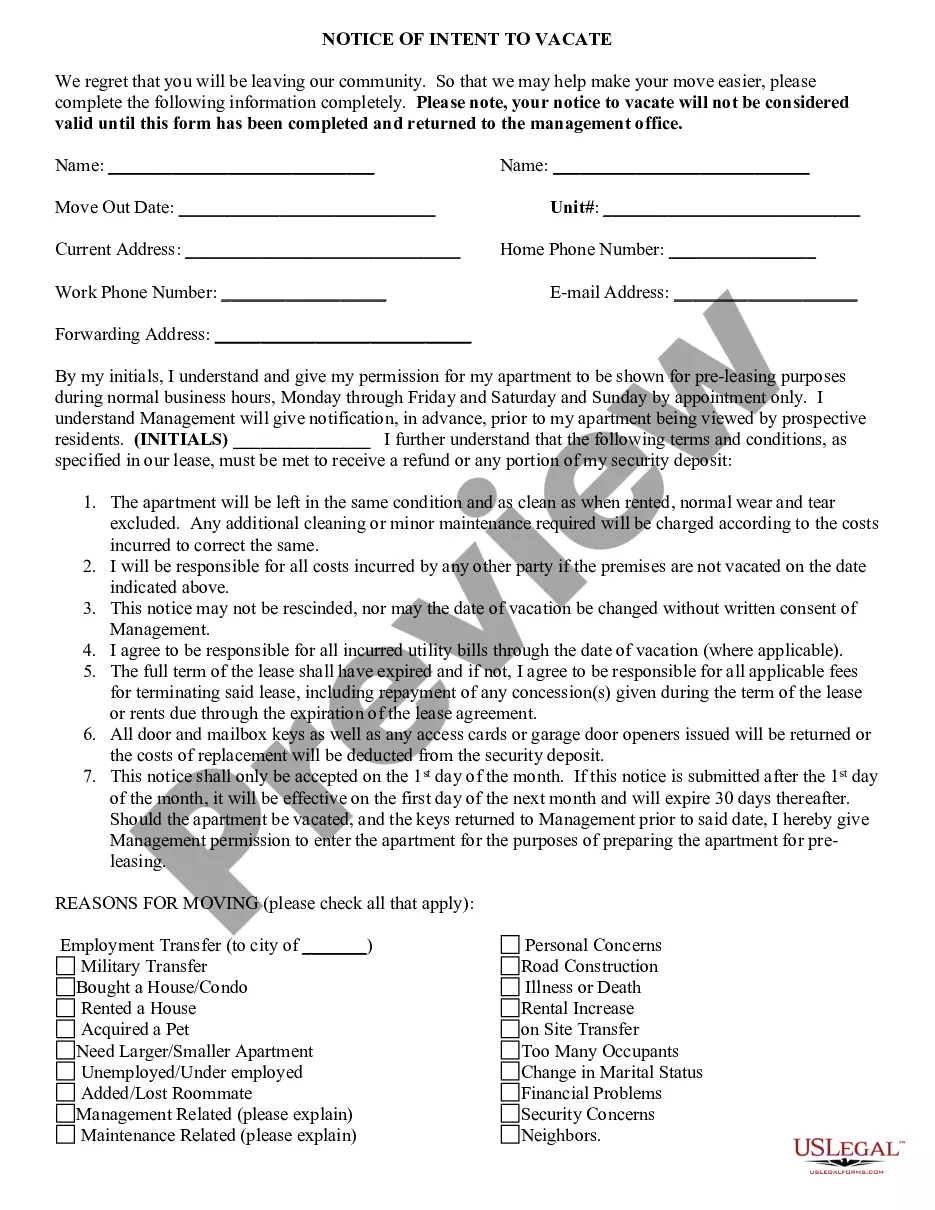
The Buyer's Notice of Intent to Vacate and Surrender Property to Seller under Contract for Deed is a legal document that notifies the seller of the buyer's decision to relinquish occupancy of a property governed by a contract for deed. This form is essential for formally ending the buyer's rights and interests in the property as stipulated in the contract, distinguishing it from other forms used in real estate transactions that may not inherently include the forfeiture of rights upon vacating.
What’s included in this form
- Identification of the buyer and seller involved in the transaction.
- Description of the property being vacated.
- Statement of the buyer's intent to vacate and surrender the property.
- Acknowledgment of forfeiture of all rights and interests under the contract for deed.
- Signature of the buyer to confirm the notice.
Common use cases
This form should be used when a buyer who has been occupying a property under a contract for deed decides to vacate and formally notify the seller of their intent to do so. It is particularly important when the buyer wishes to ensure that all rights related to the property are legally relinquished, preventing any future claims or misunderstandings regarding occupancy or ownership.
Who should use this form
This form is intended for:
- Buyers who have entered into a contract for deed and wish to vacate the property.
- Individuals who want to formally notify the seller of their intent to surrender the property.
- Parties involved in a real estate transaction under a contract for deed who require clarity on rights relinquishment.
Instructions for completing this form
- Identify the parties involved, ensuring the names of both the buyer and seller are correct.
- Specify the property being vacated by including the address and any relevant details.
- Clearly state the buyer's intent to vacate the property and surrender it back to the seller.
- Acknowledge that upon vacating, the buyer forfeits all rights under the contract for deed.
- Sign and date the form to validate the notice.
Is notarization required?
This form does not typically require notarization unless specified by local law. Always check local regulations to ensure compliance and enforceability.
Get your form ready online
Our built-in tools help you complete, sign, share, and store your documents in one place.
Make edits, fill in missing information, and update formatting in US Legal Forms—just like you would in MS Word.
Download a copy, print it, send it by email, or mail it via USPS—whatever works best for your next step.
Sign and collect signatures with our SignNow integration. Send to multiple recipients, set reminders, and more. Go Premium to unlock E-Sign.
If this form requires notarization, complete it online through a secure video call—no need to meet a notary in person or wait for an appointment.
We protect your documents and personal data by following strict security and privacy standards.

Make edits, fill in missing information, and update formatting in US Legal Forms—just like you would in MS Word.

Download a copy, print it, send it by email, or mail it via USPS—whatever works best for your next step.

Sign and collect signatures with our SignNow integration. Send to multiple recipients, set reminders, and more. Go Premium to unlock E-Sign.

If this form requires notarization, complete it online through a secure video call—no need to meet a notary in person or wait for an appointment.

We protect your documents and personal data by following strict security and privacy standards.
Avoid these common issues
- Failing to specify the complete address of the property.
- Not signing the notice, which can render it invalid.
- Assuming that verbal notifications are sufficient; always document in writing.
- Neglecting to understand the implications of forfeiting rights under the contract for deed.
Benefits of using this form online
- Immediate access to a professionally drafted legal template.
- Easy editing capabilities to customize the form for your specific situation.
- Secure download to maintain privacy and ensure that your intentions are documented.
Quick recap
- This form is essential for buyers vacating a property under a contract for deed.
- Completing the form accurately is crucial to avoid misunderstandings.
- Always check local laws regarding the notice of intent to vacate.
Looking for another form?





Form popularity
FAQ
The buyer should record the contract for deed with the county recorder where the land is located and does so normally within four months after the contract is signed, though the time may vary depending on state law.
A disadvantage to the seller is that a contract for deed is frequently characterized by a low down payment and the purchase price is paid in installments instead of one lump sum.The legal fees and time frame for this process will be more extensive than a standard Power of Sale foreclosure.
While a buyer can legally back out of a home contract, there can be consequences for doing so. For example, you can lose your earnest money, which could amount to thousands of dollars or more. That is unless your reason for pulling out of the deal is stipulated in your contract.
In the first instance, if your deed is not recorded, there is nothing in the public record to stop the seller from conveying the property to another person.The second situation could happen if your seller fails to pay his or her debts and the seller's creditors file liens or judgments against your property.
If you want out of a real estate contract and don't have any contingencies available, you can breach the contract.The seller could also decide to sue you for breach of contract. Some real estate contracts have a liquidated damages clause that states the maximum the seller can keep if the buyers breach the contract.
Failure to record a deed effectively makes it impossible for the public to know about the transfer of a property. That means the legal owner of the property appears to be someone other than the buyer, a situation that can generate serious ramifications.
The buyer receives the deed from the seller and becomes the legal owner.A contract for deed is a contract where the seller remains the legal owner of the property and the buyer makes monthly payments to the seller to buy the house. The seller remains the legal owner of the property until the contract is paid.
A disadvantage to the seller is that a contract for deed is frequently characterized by a low down payment and the purchase price is paid in installments instead of one lump sum.The legal fees and time frame for this process will be more extensive than a standard Power of Sale foreclosure.
Contact the other party and ask whether they are willing to negotiate the cancellation of the contract. Offer the other party an incentive to cancel the contract for deed.