South Carolina Mutual Wills Package with Last Wills and Testaments for Married Couple with Adult and Minor Children
Understanding this form
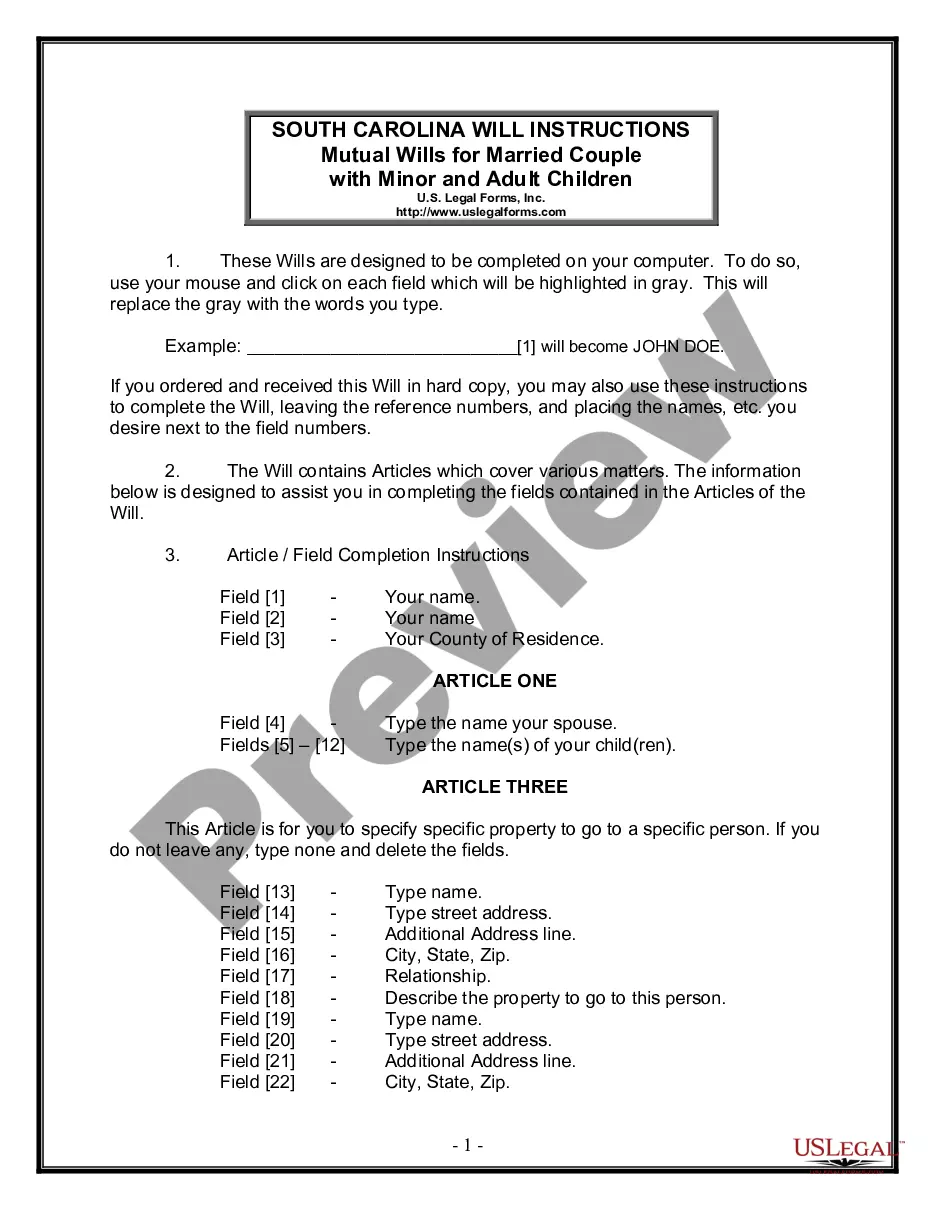
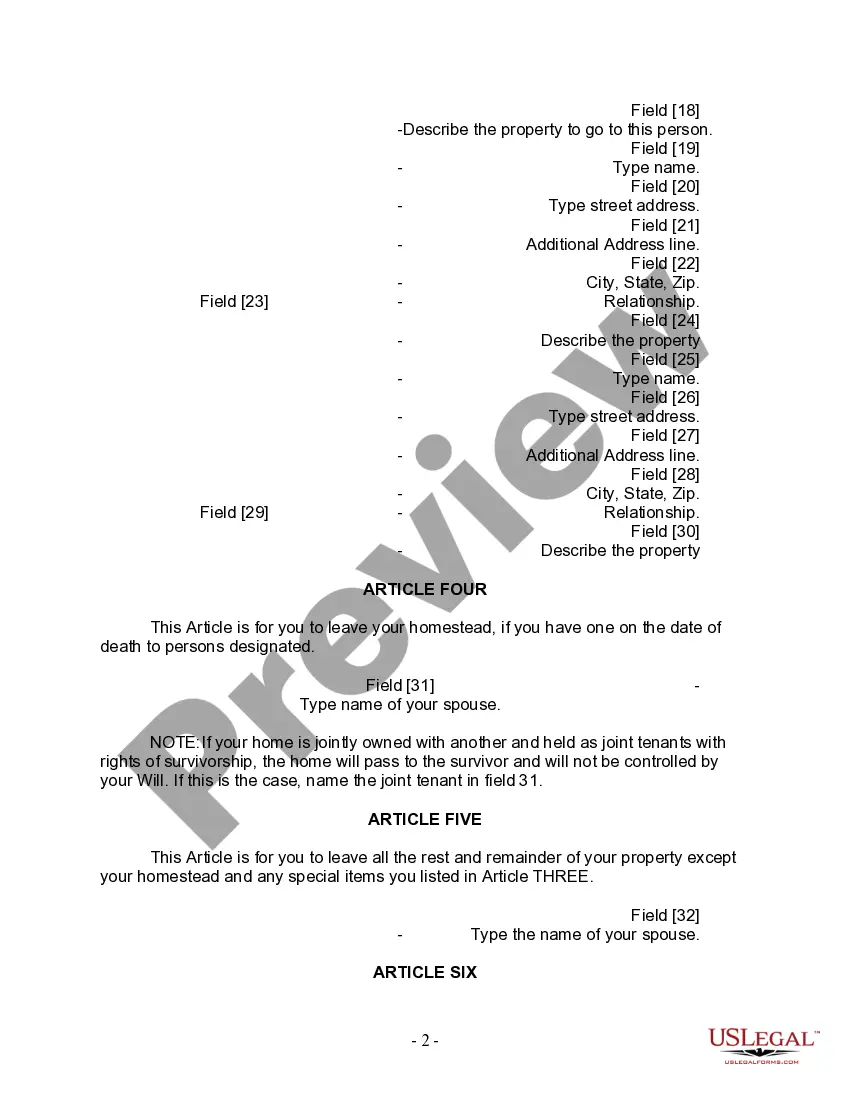
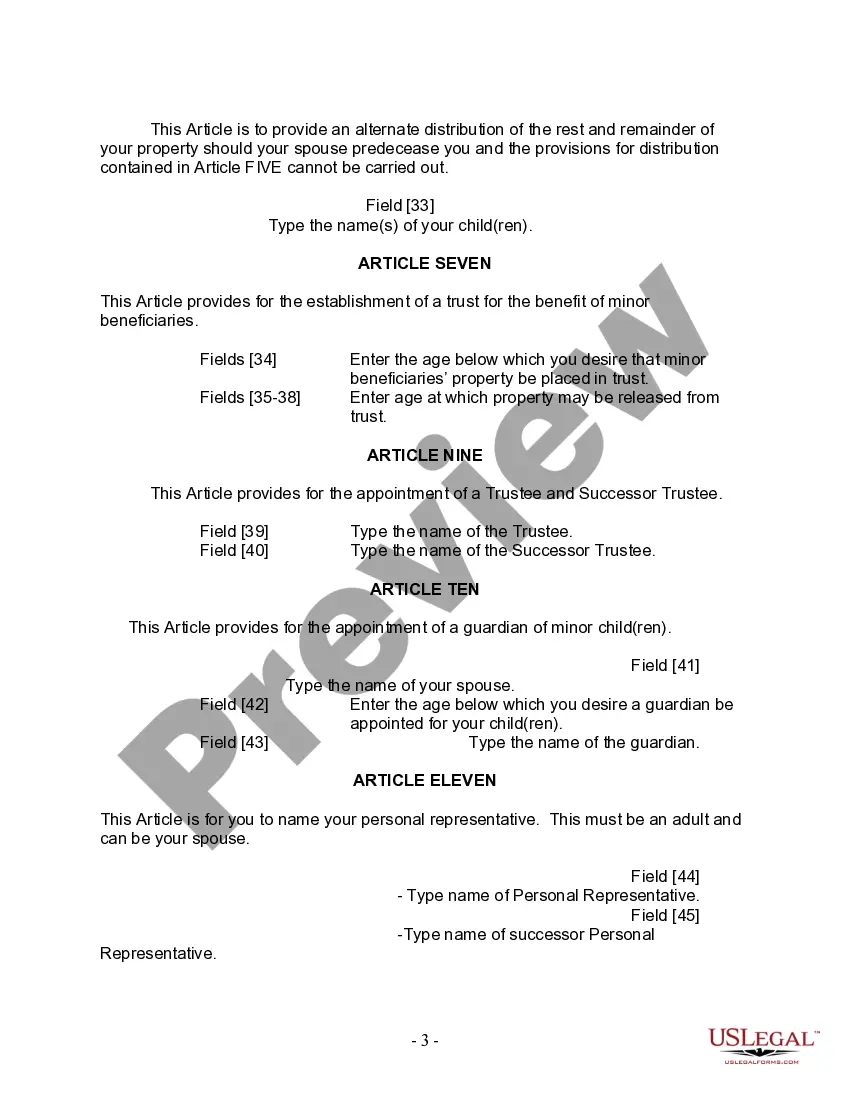
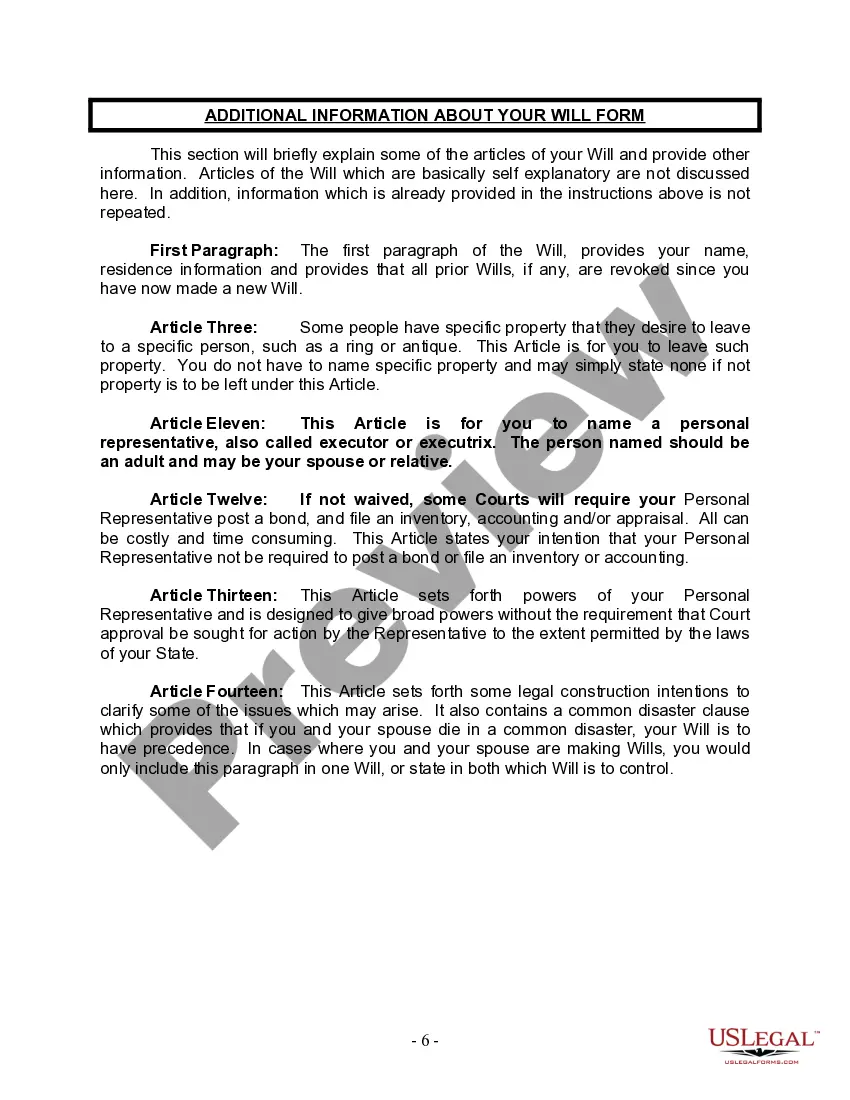
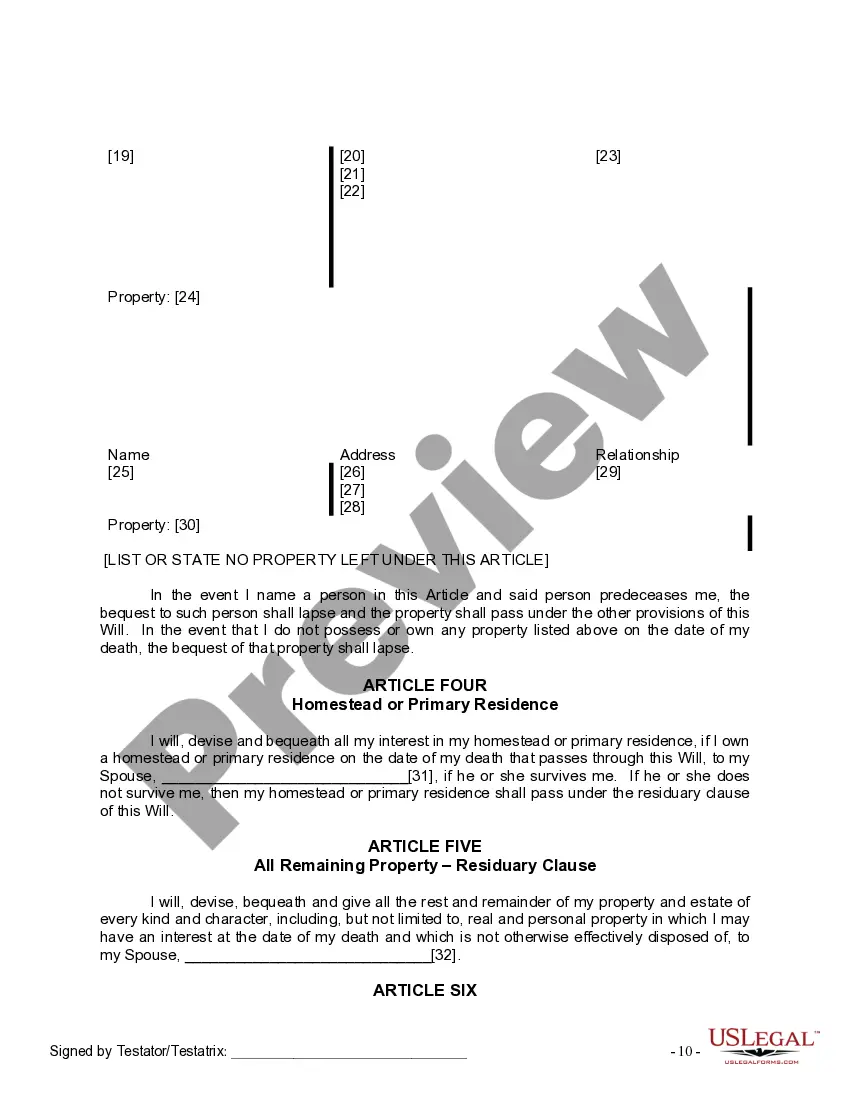
The Mutual Wills Package with Last Wills and Testaments is specifically designed for married couples with both adult and minor children. This package helps ensure that both spouses' wishes regarding property distribution are clearly documented and legally binding. Unlike single wills, this package allows couples to create complementary wills that account for their shared assets and designate a guardian for their minor children. The package also includes provisions for trusts and appoints a personal representative or executor, making it comprehensive for families with varying needs.
Main sections of this form
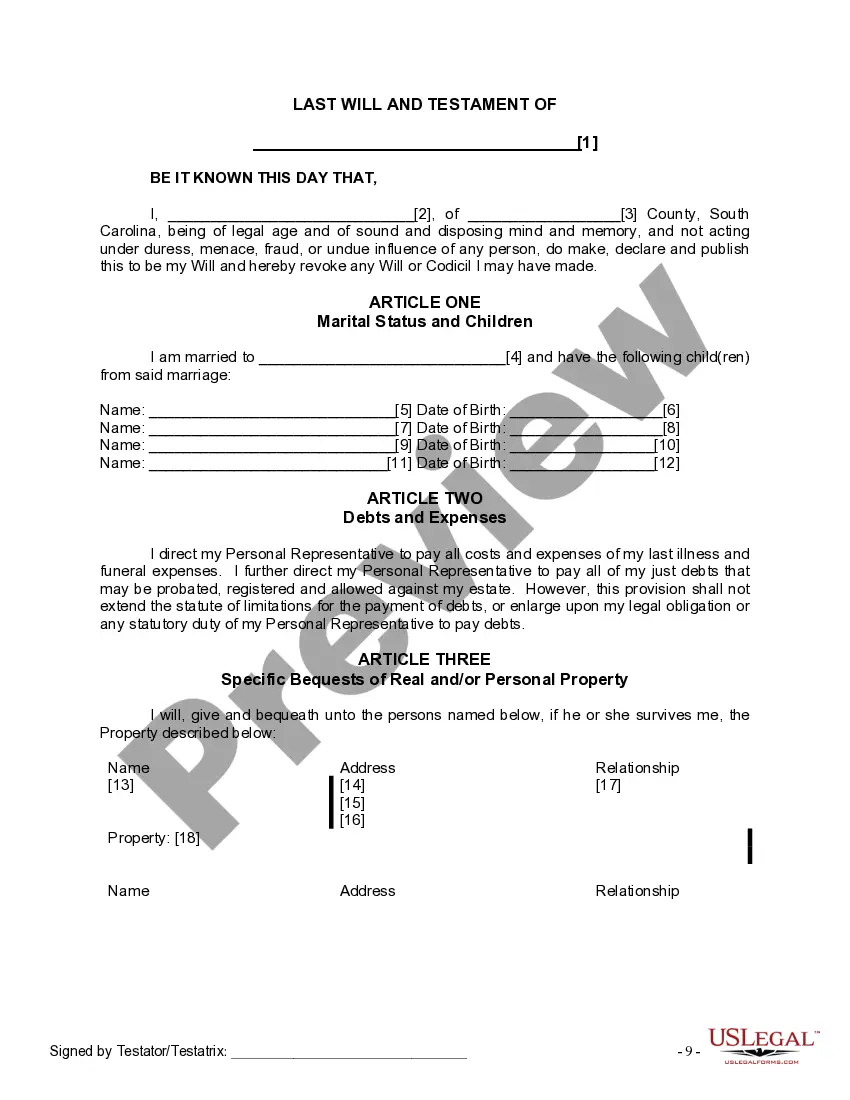
- Appointment of personal representatives for estate management.
- Specific distribution of property to designated heirs.
- Creation of trusts for minor children's inheritance.
- Designation of guardians for minor children in case of the parents' passing.
- Self-proving affidavit to simplify the probate process.






When to use this document
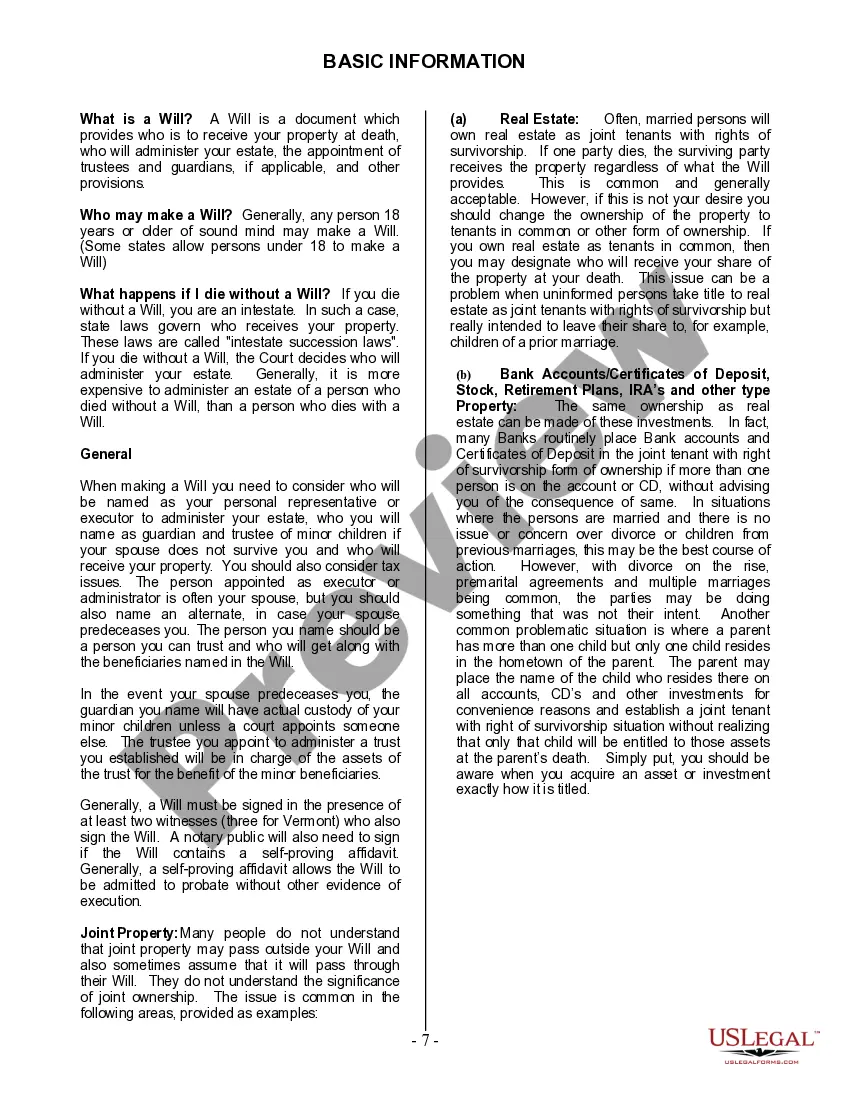
This form is essential for married couples who want to ensure their assets are distributed according to their wishes after their deaths. It is particularly useful if the couple has minor children, as it outlines guardianship and trust arrangements to protect their children's inheritance. Couples facing major life changes, such as the birth of a child or the acquisition of significant assets, should also consider using this form to update their estate plans.
Intended users of this form
- Married couples with both adult and minor children.
- Couples seeking to establish legal protections for their children.
- Individuals looking to ensure their property is distributed according to their wishes.
- Those wanting to appoint guardians for minor children in case of untimely death.
How to complete this form
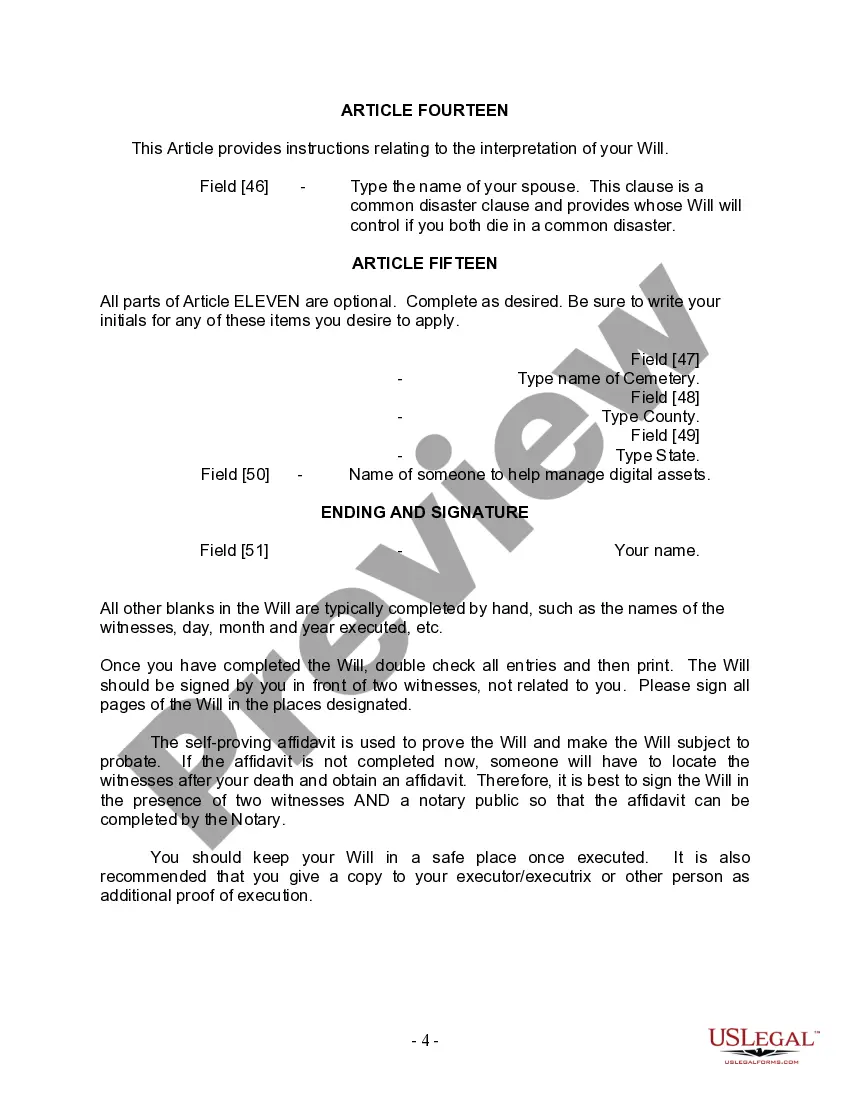
- Enter the names of both spouses and their address on the form.
- List all children, including their dates of birth.
- Specify the property, including any specific bequests intended for individuals.
- Appoint guardians for any minor children.
- Sign the wills in the presence of two unrelated witnesses.
- If required, complete the self-proving affidavit in the presence of a notary public.
Notarization requirements for this form
Yes, this form must be notarized to be legally valid. The package includes a self-proving affidavit that requires notarization, ensuring the wills are accepted in probate court without needing witnesses to appear.
Get your form ready online
Our built-in tools help you complete, sign, share, and store your documents in one place.
Make edits, fill in missing information, and update formatting in US Legal Forms—just like you would in MS Word.
Download a copy, print it, send it by email, or mail it via USPS—whatever works best for your next step.
Sign and collect signatures with our SignNow integration. Send to multiple recipients, set reminders, and more. Go Premium to unlock E-Sign.
If this form requires notarization, complete it online through a secure video call—no need to meet a notary in person or wait for an appointment.
We protect your documents and personal data by following strict security and privacy standards.

Make edits, fill in missing information, and update formatting in US Legal Forms—just like you would in MS Word.

Download a copy, print it, send it by email, or mail it via USPS—whatever works best for your next step.

Sign and collect signatures with our SignNow integration. Send to multiple recipients, set reminders, and more. Go Premium to unlock E-Sign.

If this form requires notarization, complete it online through a secure video call—no need to meet a notary in person or wait for an appointment.

We protect your documents and personal data by following strict security and privacy standards.
Avoid these common issues
- Failing to have the wills signed with the proper number of witnesses.
- Not adequately identifying all property and beneficiaries.
- Omitting the designation of a guardian for minor children.
- Not reviewing the wills regularly, especially after major life changes.
Why complete this form online
- Immediate access to professionally drafted legal documents.
- The ability to customize the wills based on your specific circumstances.
- Convenient downloading and printing options.
- Cost-effective solution compared to hiring a lawyer for simple estate planning needs.
Looking for another form?
Form popularity
FAQ
Choose an online legal services provider or locate a will template. Carefully consider your distribution wishes. Identify a personal representative/executor. Understand the requirements to make your will legal. Make sure someone else knows about your will. Consult a lawyer if you have a more complicated estate.
Find an online template or service. Make a list of your assets. Be specific about who gets what. If you have minor children, choose a guardian. Give instructions for your pet. Choose an executor. Name a 'residuary beneficiary' List your funeral preferences.
Choose an online legal services provider or locate a will template. Carefully consider your distribution wishes. Identify a personal representative/executor. Understand the requirements to make your will legal. Make sure someone else knows about your will. Consult a lawyer if you have a more complicated estate.
A will can also be declared invalid if someone proves in court that it was procured by undue influence. This usually involves some evil-doer who occupies a position of trust -- for example, a caregiver or adult child -- manipulating a vulnerable person to leave all, or most, of his property to the manipulator instead
You and your spouse may have one of the most common types of estate plans between married couples, which is a simple will leaving everything to each other. With this type of plan, you leave all of your assets outright to your surviving spouse. The kids or other beneficiaries only get something after you are both gone.
A joint will is a legal document executed by two (or more) people, which merges their individual wills into a single, combined last will and testament. Like most wills, a joint will lets the will-makers name who will get their property and assets after they die. Joint wills are usually created by married couples.
Property in a living trust. One of the ways to avoid probate is to set up a living trust. Retirement plan proceeds, including money from a pension, IRA, or 401(k) Stocks and bonds held in beneficiary. Proceeds from a payable-on-death bank account.
Bank accounts. Brokerage or investment accounts. Retirement accounts and pension plans. A life insurance policy.
An executor of a will cannot take everything unless they are the will's sole beneficiary.However, the executor cannot modify the terms of the will. As a fiduciary, the executor has a legal duty to act in the beneficiaries and estate's best interests and distribute the assets according to the will.