South Carolina Mutual Wills Package with Last Wills and Testaments for Married Couple with Minor Children
Understanding this form
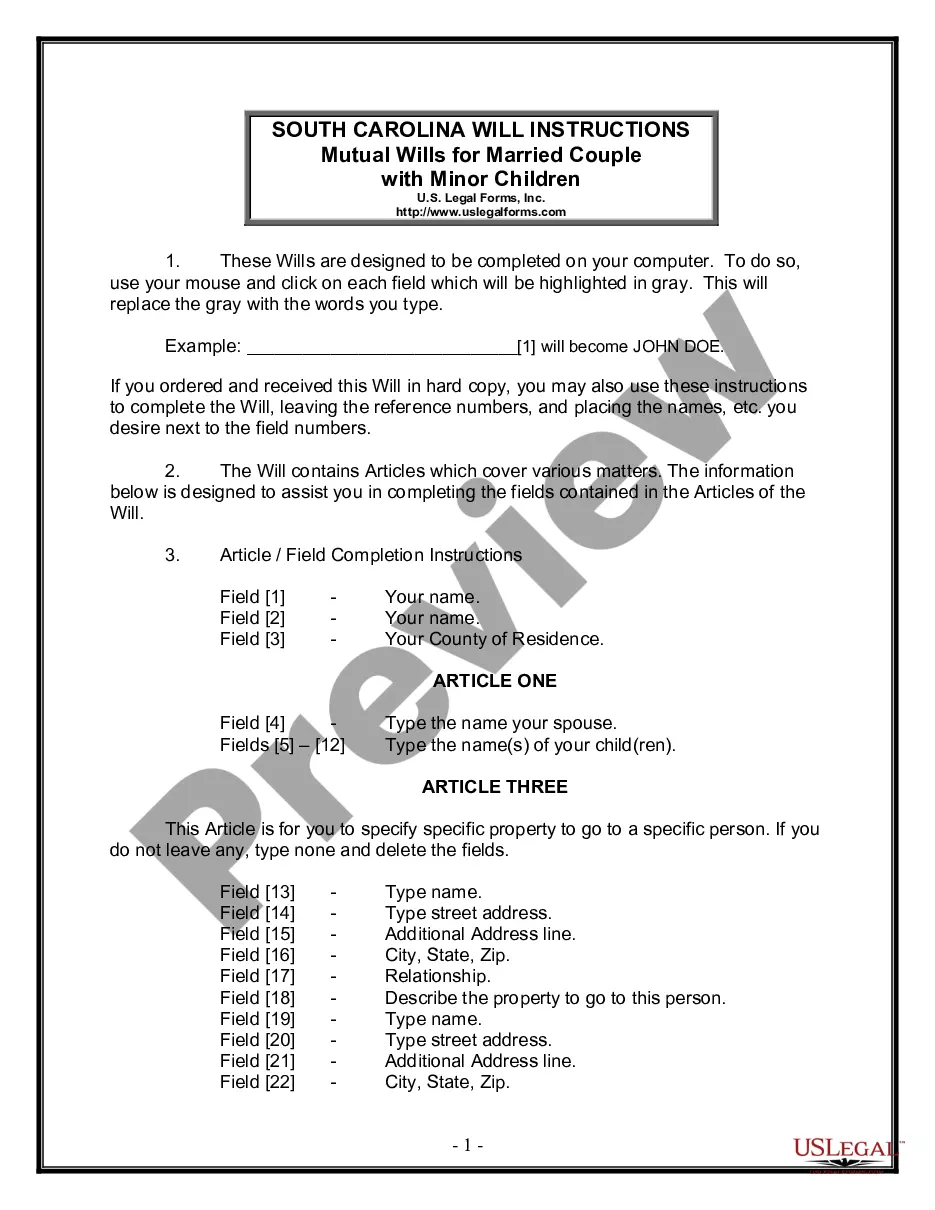
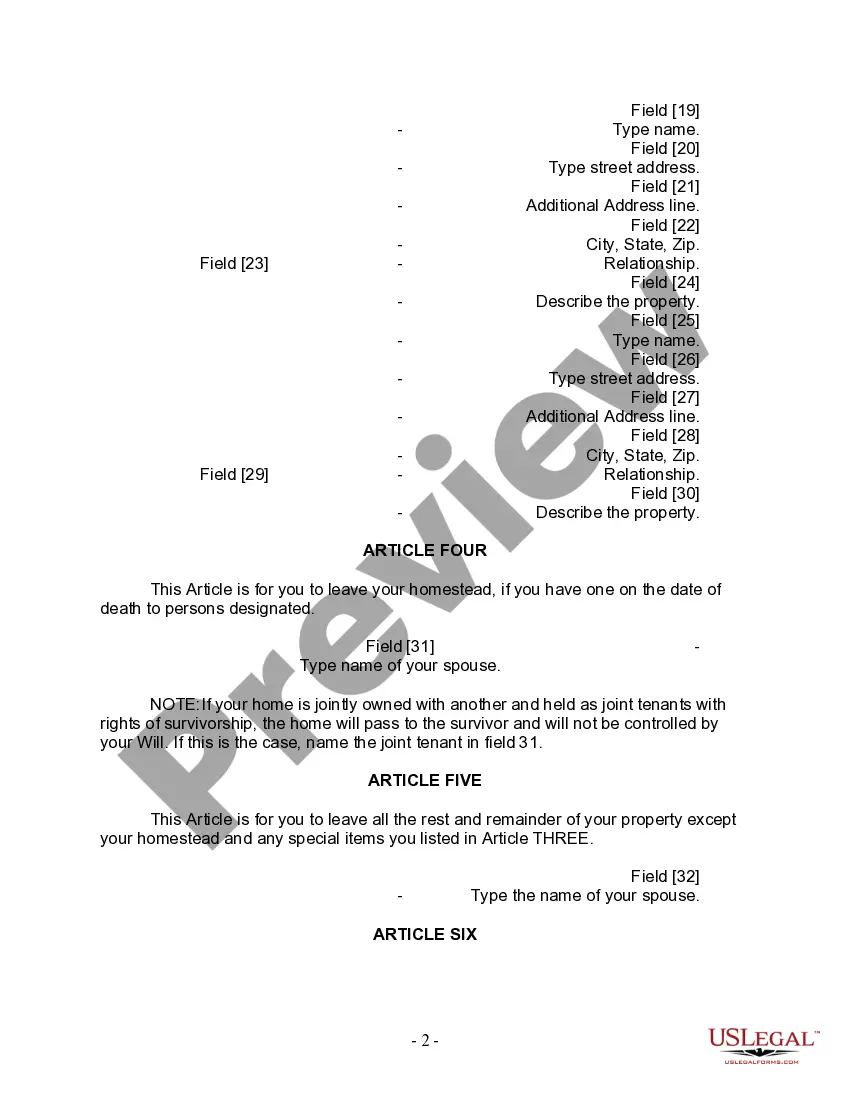
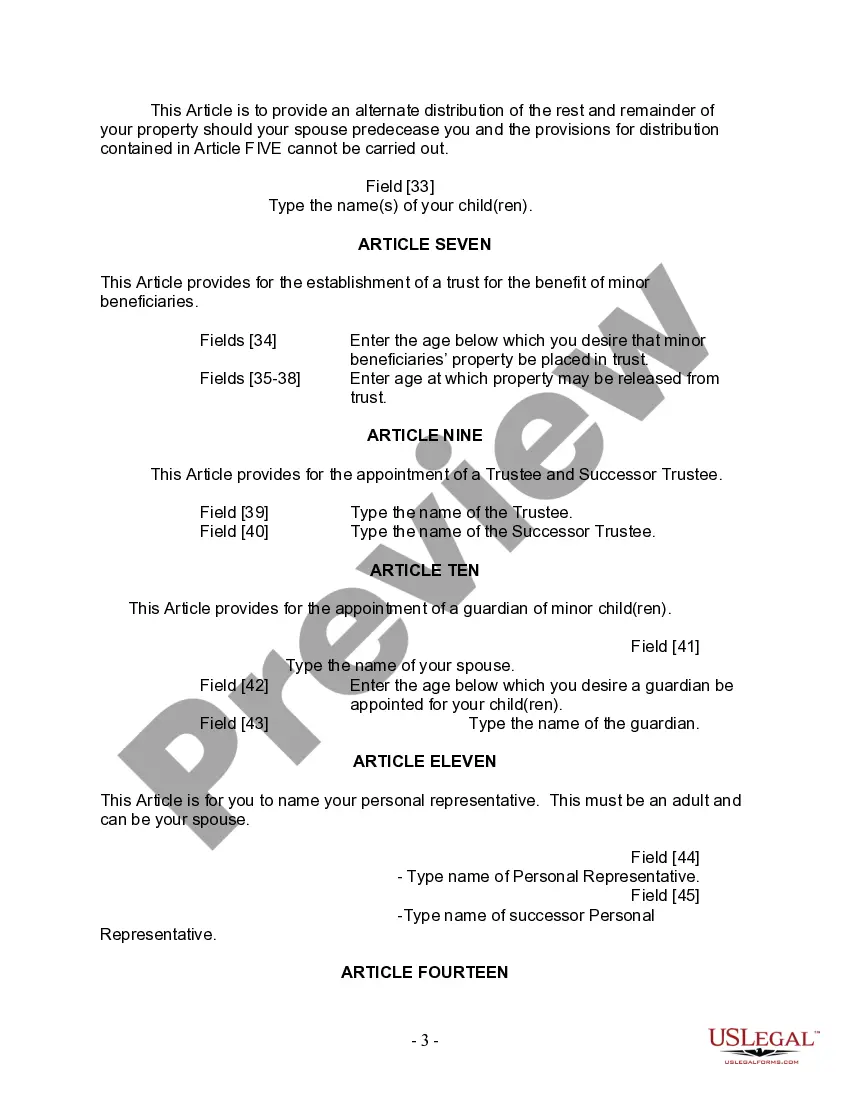
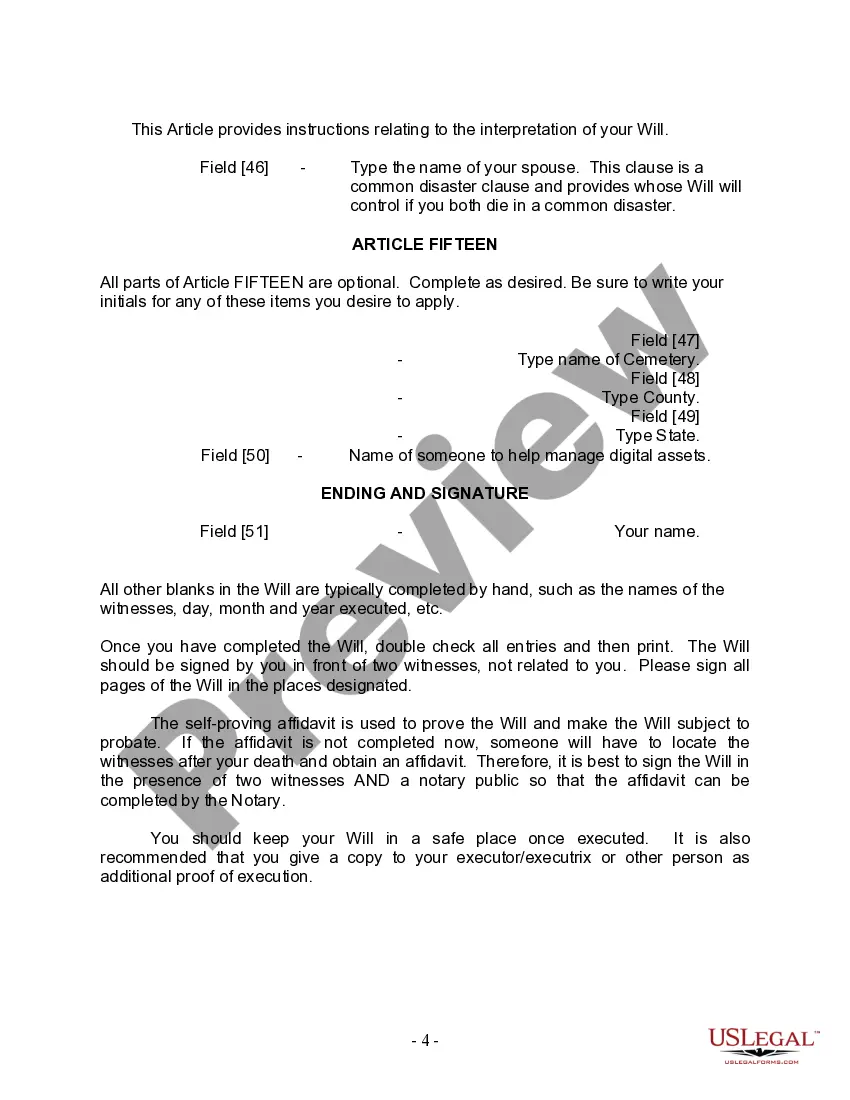
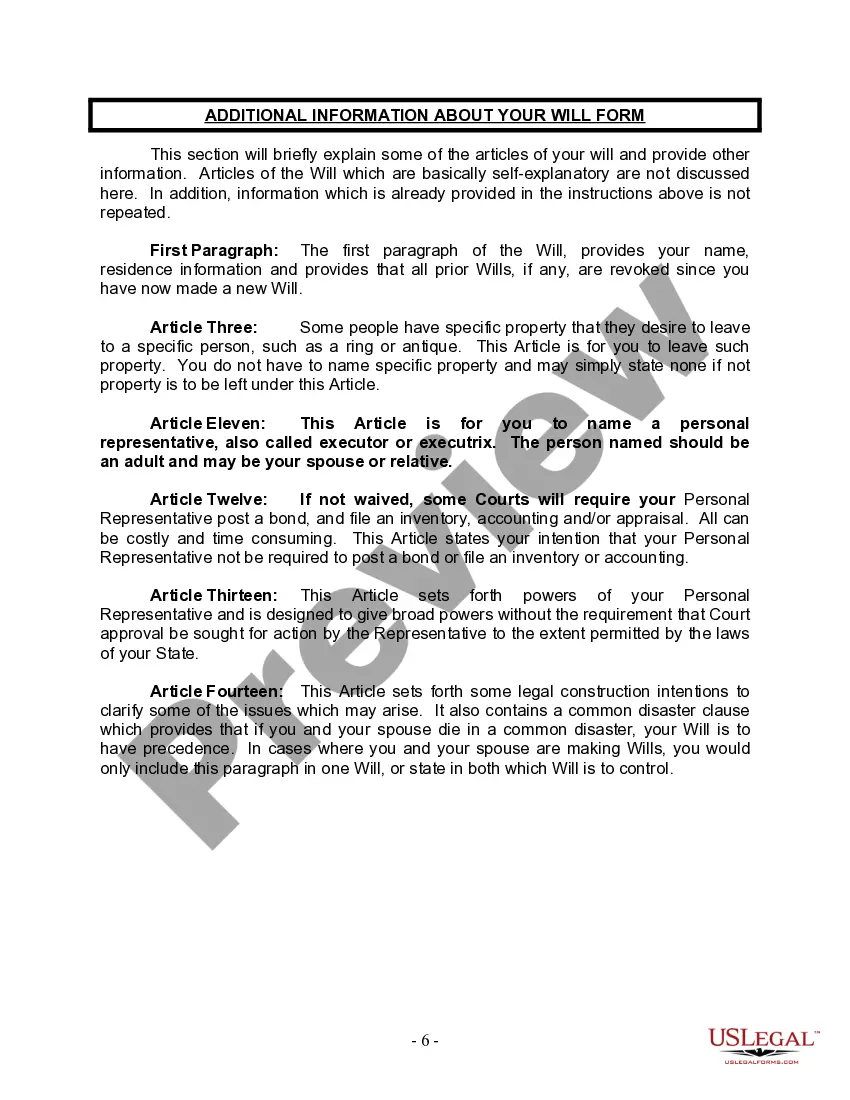
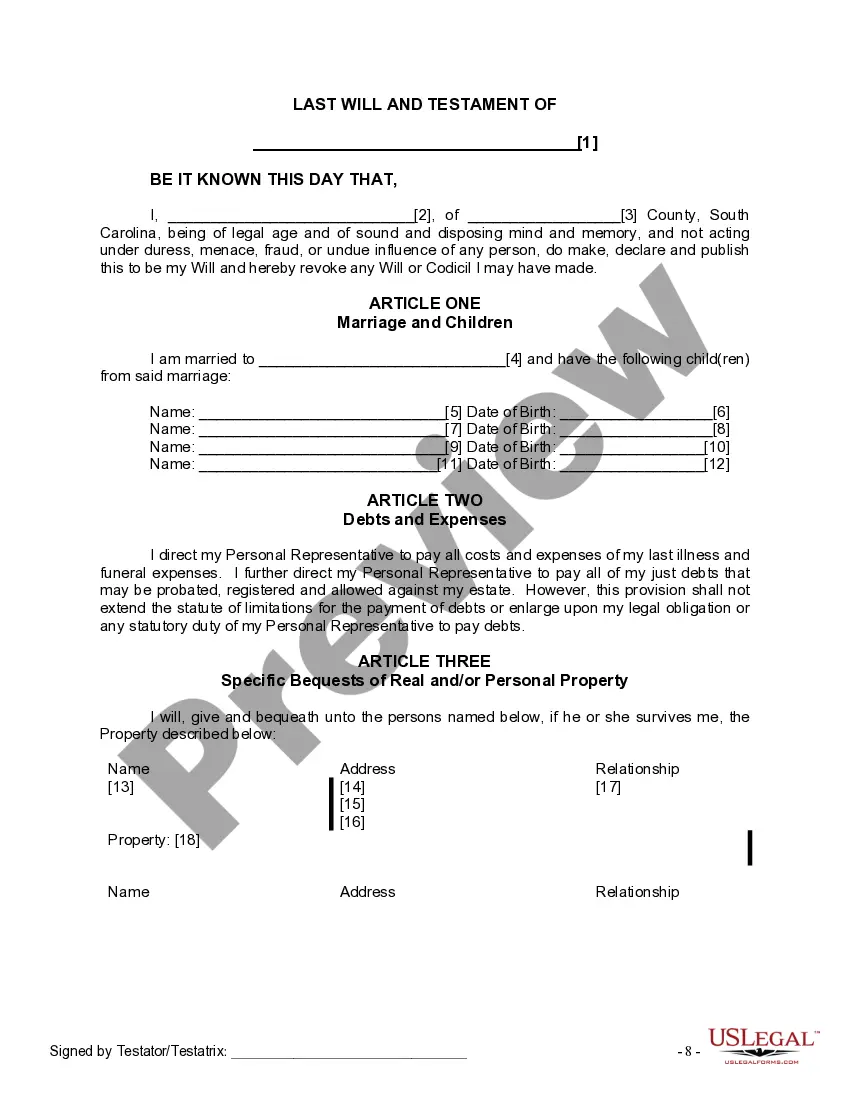
The Mutual Wills Package with Last Wills and Testaments is designed for married couples with minor children. This legal document allows you and your spouse to establish a mutual agreement on how your estate should be distributed upon death. Unlike individual wills, mutual wills create binding obligations between both spouses, ensuring that your wishes regarding your minor children's care and inheritance are clearly defined and protected. This package includes two willsâone for each spouseâalong with detailed instructions to help you through the process.
Form components explained
- Mutual Agreement: Clearly expresses both spouses' intentions regarding asset distribution and care for minor children.
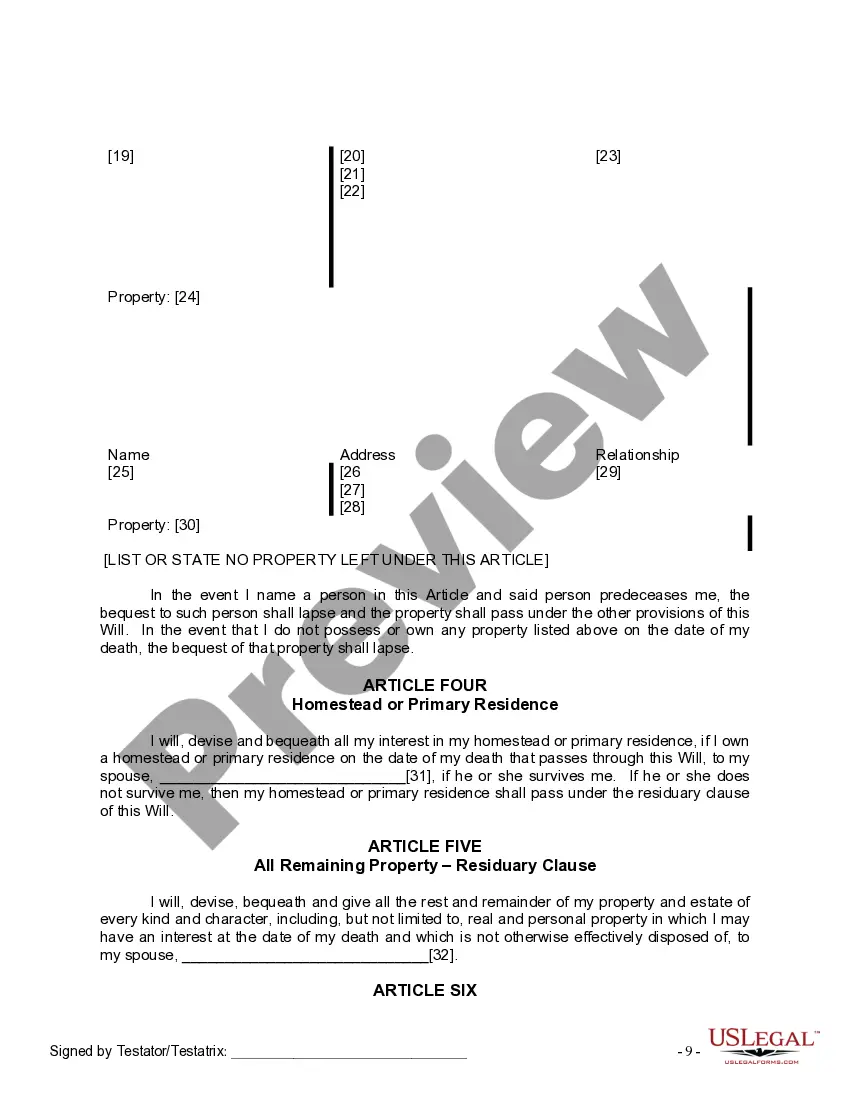
- Last Will and Testament: Each spouse creates a legally binding will outlining their specific wishes for asset distribution.
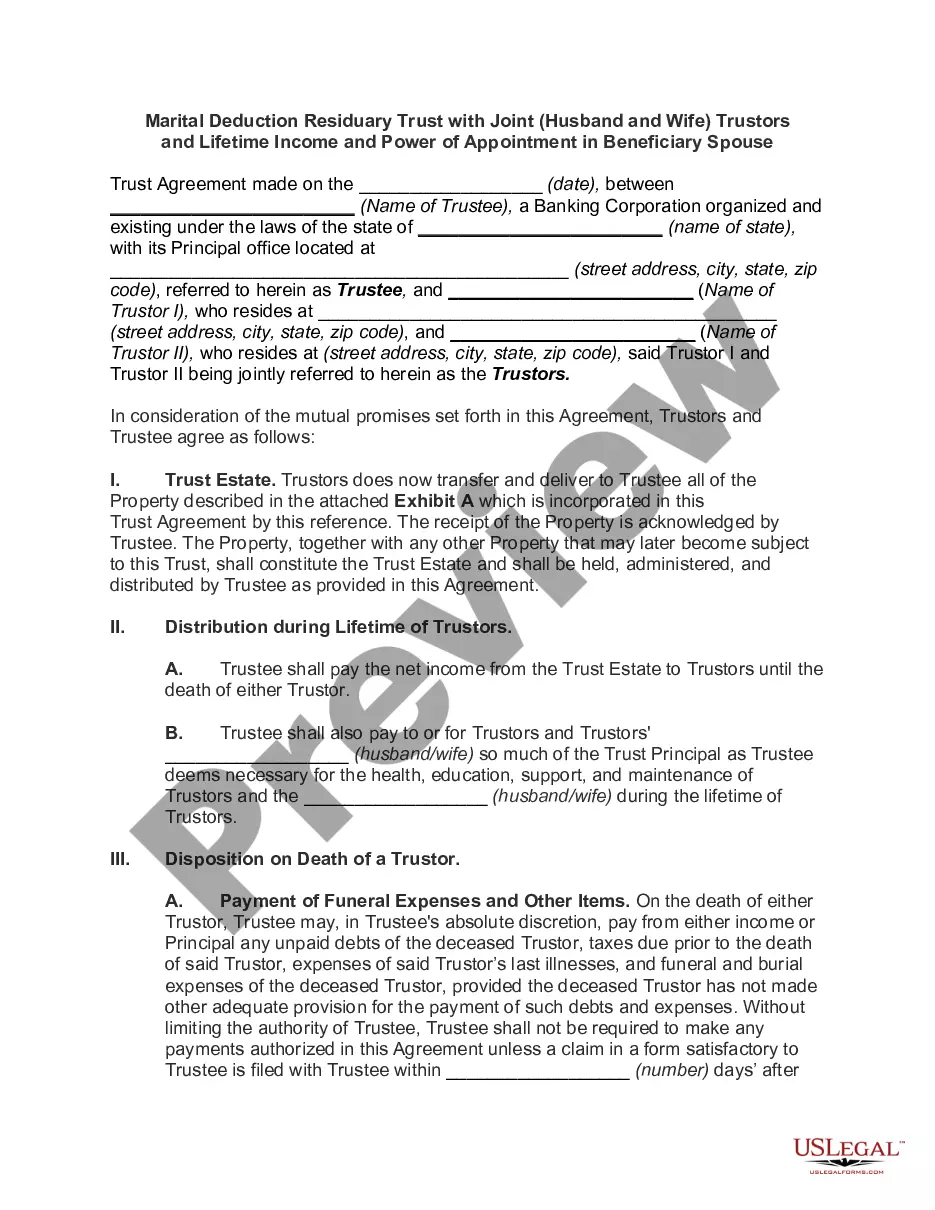
- Trust Provisions: Establishes a trust for minor children, appointing a trustee to manage the assets until the children reach maturity.
- Appointment of Guardian: Designates a guardian for minor children in the event both parents pass away.
- Self-Proving Affidavit: If applicable, includes a state-specific affidavit to simplify the probate process.






When to use this document
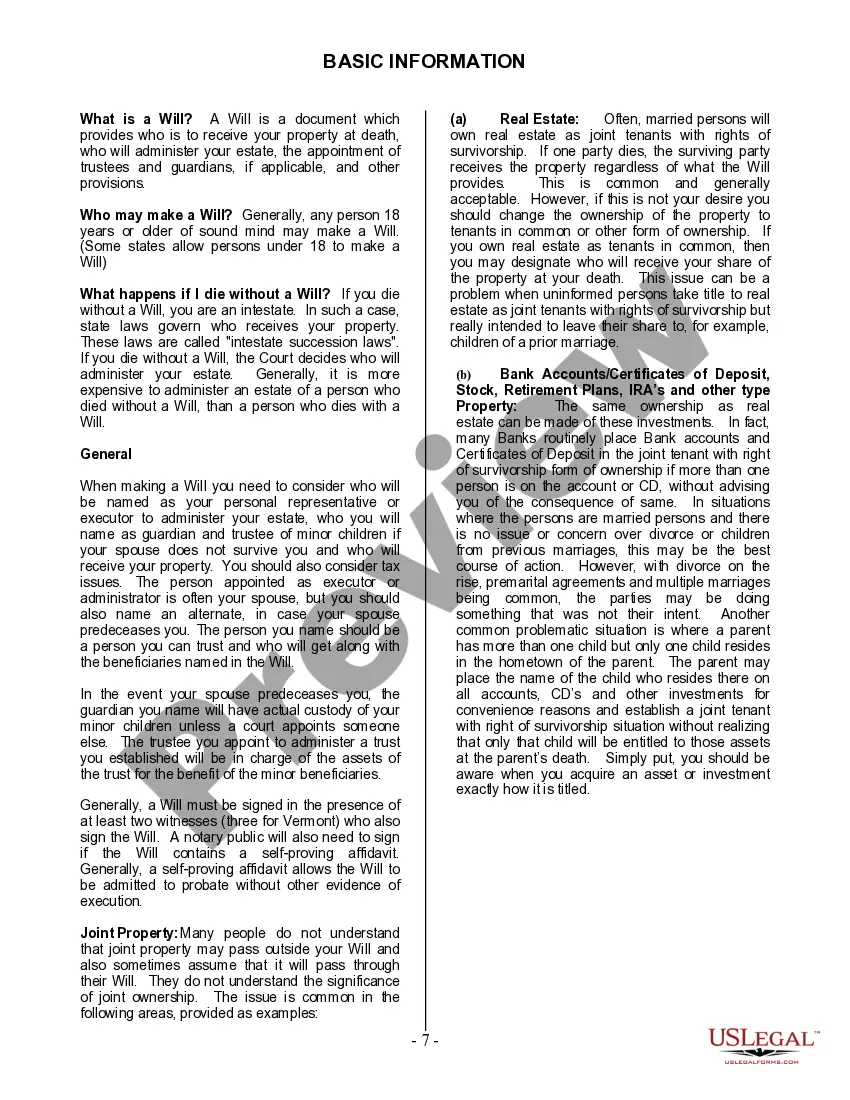
This form is essential when both spouses want to ensure their assets are managed according to their wishes after their deaths. It is particularly important for couples with minor children, as it addresses guardianship and trust arrangements, protecting their children's financial interests and welfare. Use this package to prevent potential disputes between surviving family members and to clarify your estate distribution intentions.
Who needs this form
Ideal users of this form include:
- Married couples who have minor children.
- Couples looking to ensure their assets are distributed jointly as per mutual agreement.
- Spouses wanting to establish guardianship for their children in the event of simultaneous deaths.
- Individuals seeking to simplify the estate planning process and ensure compliance with state laws.
Steps to complete this form
Follow these steps to complete the Mutual Wills Package:
- Enter the full names and addresses of both spouses at the beginning of each will.
- Fill in the names and birthdates of your minor children in the section dedicated to family information.
- Designate specific bequests, deciding who will inherit particular assets and any property.
- Identify a guardian for your minor children, should both parents pass away.
- Have both wills witnessed and notarized if required, ensuring compliance with South Carolina's signing requirements.
- Store the signed wills in a safe place and inform your appointed executor or trusted family member where they can be accessed.
Does this document require notarization?
Yes, this form must be notarized to be legally valid. Having the wills notarized ensures compliance with South Carolina laws and simplifies the probate process. US Legal Forms offers integrated online notarization services, providing secure video calls and legal equivalence without the need for in-person meetings.
Get your form ready online
Our built-in tools help you complete, sign, share, and store your documents in one place.
Make edits, fill in missing information, and update formatting in US Legal Forms—just like you would in MS Word.
Download a copy, print it, send it by email, or mail it via USPS—whatever works best for your next step.
Sign and collect signatures with our SignNow integration. Send to multiple recipients, set reminders, and more. Go Premium to unlock E-Sign.
If this form requires notarization, complete it online through a secure video call—no need to meet a notary in person or wait for an appointment.
We protect your documents and personal data by following strict security and privacy standards.

Make edits, fill in missing information, and update formatting in US Legal Forms—just like you would in MS Word.

Download a copy, print it, send it by email, or mail it via USPS—whatever works best for your next step.

Sign and collect signatures with our SignNow integration. Send to multiple recipients, set reminders, and more. Go Premium to unlock E-Sign.

If this form requires notarization, complete it online through a secure video call—no need to meet a notary in person or wait for an appointment.

We protect your documents and personal data by following strict security and privacy standards.
Common mistakes to avoid
Avoid these common mistakes when completing the Mutual Wills:
- Neglecting to name witnesses who do not have a vested interest in the will.
- Failing to include the full names and addresses of family members clearly.
- Not updating the wills after significant life events, such as the birth of additional children or marriage changes.
- Overlooking state-specific notarization and witness requirements.
- Not communicating the location of the wills to the executor or family members.
Benefits of completing this form online
Using this form online offers several advantages:
- Convenience: Download and complete the forms from the comfort of your home.
- Editability: Customize the wills to suit your family's unique needs without legal jargon.
- Affordability: Access professional legal documents at a fraction of the cost of hiring an attorney.
- Guided Instructions: Receive clear steps to ensure the forms are filled out correctly and comprehensively.
Key takeaways
Key points to remember when using this form:
- The Mutual Wills Package ensures both spouses have their wishes honored regarding their estate and minor children.
- Each spouse needs to complete their will, making it a collaborative legal document.
- Ensure witness and notarization requirements are fulfilled for legal compliance.
- This package addresses guardianship for minor children, providing peace of mind in complex family situations.
Looking for another form?
Form popularity
FAQ
You and your spouse may have one of the most common types of estate plans between married couples, which is a simple will leaving everything to each other. With this type of plan, you leave all of your assets outright to your surviving spouse. The kids or other beneficiaries only get something after you are both gone.
An executor of a will cannot take everything unless they are the will's sole beneficiary.However, the executor cannot modify the terms of the will. As a fiduciary, the executor has a legal duty to act in the beneficiaries and estate's best interests and distribute the assets according to the will.
A Last Will and Testament only takes care of your stuff (your assets). A Living Will only takes care of your self (your health care). Having either one of these documents is good it's better than nothing! But having both (or otherwise addressing both sides of estate planning) is better.
The general elements of a will are the testator's name, address and marital status; and instructions as to which property goes to which beneficiaries. The executor for the estate should also be named, as well as a guardian for any minor children. The testator and the witnesses need to sign and date the will.
There are certain types of property that legally cannot be included in a person's will. Depending on state laws, these may include: Any Property that is Co-Owned with Someone Else Through Joint-Tenancy: Married couples typically own the marital home in joint tenancy.Property being held in a living trust.
There is no difference between a testament and a will these days.A will traditionally included only instructions regarding real estate. It dealt with the disposition of land and structures on it that were owned by the testator.
Property in a living trust. One of the ways to avoid probate is to set up a living trust. Retirement plan proceeds, including money from a pension, IRA, or 401(k) Stocks and bonds held in beneficiary. Proceeds from a payable-on-death bank account.
A will can also be declared invalid if someone proves in court that it was procured by undue influence. This usually involves some evil-doer who occupies a position of trust -- for example, a caregiver or adult child -- manipulating a vulnerable person to leave all, or most, of his property to the manipulator instead
Bank accounts. Brokerage or investment accounts. Retirement accounts and pension plans. A life insurance policy.
Fraud or Undue Influence A nonfamily caregiver forcing the testator to leave them an inheritance. A family member getting the testator to sign a will by pretending it is just a general legal document that needs a signature.