South Carolina Landlord Tenant Closing Statement to Reconcile Security Deposit
Overview of this form
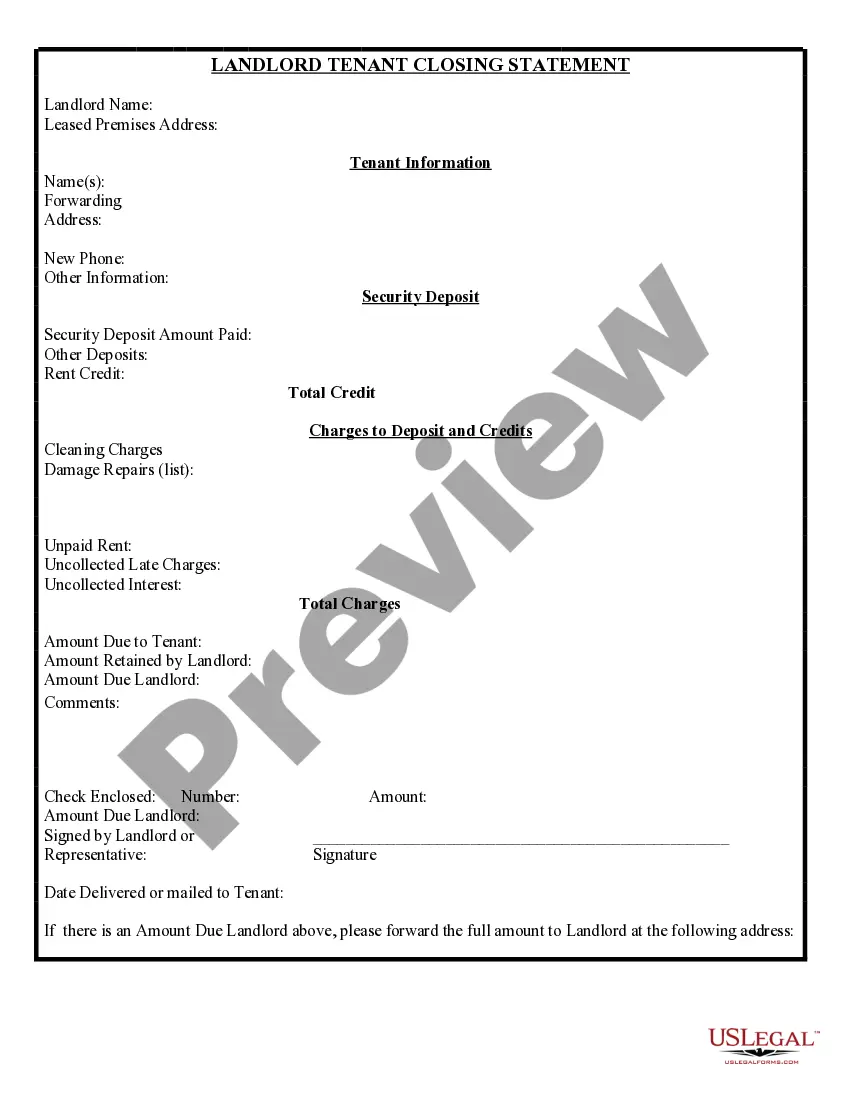
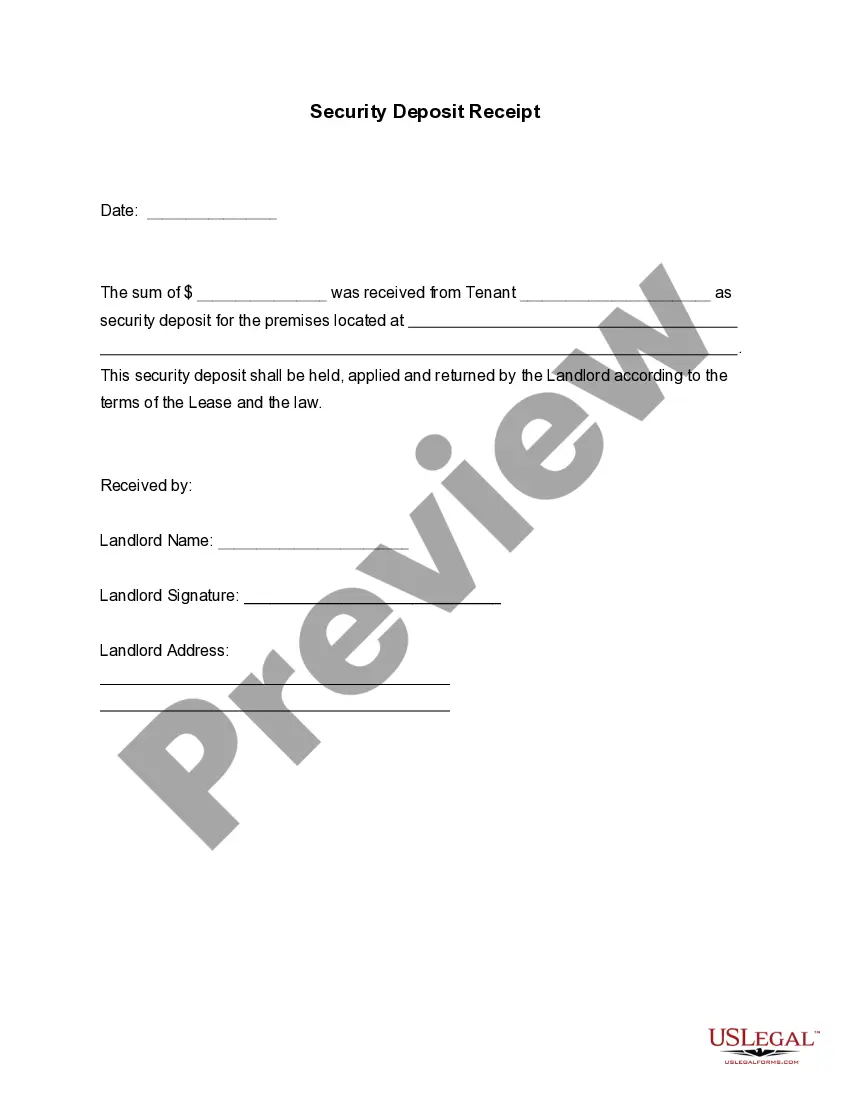
The Landlord Tenant Closing Statement to Reconcile Security Deposit is a legal document used by landlords to detail the handling of a tenant's security deposit. It outlines the deposits and credits received by the landlord, subtracting any deductions for damages or other charges due to the landlord. This form benefits both parties by ensuring transparency regarding the financial transactions related to the security deposit, which is distinct from rent payments.
Main sections of this form
- Landlord's details: Name and contact information of the landlord.
- Tenant's details: Name and contact information of the tenant.
- Property address: Location of the rental property.
- Initial security deposit: Amount received as a security deposit.
- Deductions: List of any deductions taken from the security deposit for damages or unpaid rent.
- Final balance: Calculation showing the total amount to be returned to the tenant.
Common use cases
Use this form when a tenant vacates a rental property, and the landlord needs to account for the security deposit. It is essential for summarizing the financial responsibilities related to the security deposit, especially if there are deductions for repairs beyond normal wear and tear or unpaid rent. This document helps prevent disputes by providing a clear record of how the security deposit was treated.
Who needs this form
- Landlords who manage rental properties and require a method for documenting security deposit transactions.
- Tenants who want a clear record of their security deposit, including any deductions made by their landlord.
- Property management companies handling rental agreements and security deposits on behalf of landlords.
How to prepare this document
- Identify the parties involved: Fill in the names and contact information of both the landlord and the tenant.
- Specify the property: Enter the address of the rental property subject to the security deposit.
- Document the initial security deposit: Input the amount that was paid by the tenant as a security deposit.
- List any deductions: Clearly outline any deductions for damages, cleaning, or unpaid rent, with detailed explanations.
- Calculate the final balance: Indicate the amount owed to the tenant after deductions have been made.
- Sign and date the form: Ensure both the landlord and tenant review and sign the document to acknowledge agreement.
Does this document require notarization?
This form does not typically require notarization to be legally valid. However, some jurisdictions or document types may still require it. US Legal Forms provides secure online notarization powered by Notarize, available 24/7 for added convenience.
Get your form ready online
Our built-in tools help you complete, sign, share, and store your documents in one place.
Make edits, fill in missing information, and update formatting in US Legal Forms—just like you would in MS Word.
Download a copy, print it, send it by email, or mail it via USPS—whatever works best for your next step.
Sign and collect signatures with our SignNow integration. Send to multiple recipients, set reminders, and more. Go Premium to unlock E-Sign.
If this form requires notarization, complete it online through a secure video call—no need to meet a notary in person or wait for an appointment.
We protect your documents and personal data by following strict security and privacy standards.

Make edits, fill in missing information, and update formatting in US Legal Forms—just like you would in MS Word.

Download a copy, print it, send it by email, or mail it via USPS—whatever works best for your next step.

Sign and collect signatures with our SignNow integration. Send to multiple recipients, set reminders, and more. Go Premium to unlock E-Sign.

If this form requires notarization, complete it online through a secure video call—no need to meet a notary in person or wait for an appointment.

We protect your documents and personal data by following strict security and privacy standards.
Common mistakes to avoid
- Failing to itemize deductions, which can lead to disputes.
- Not providing the tenant with a copy of the completed statement.
- Missing the required timeline for returning the deposit in accordance with state law.
- Incorrectly calculating the final balance, leading to overcharging or underpaying the tenant.
Why complete this form online
- Convenience: Easily fill out and download the form from home.
- Editability: Make necessary changes quickly without hassle.
- Reliability: Templates prepared by licensed attorneys ensure legal compliance.
- Time-saving: Access forms instantly, avoiding delays associated with traditional legal services.
Legal use & context
- This form serves as a record of the landlord's handling of the tenant's security deposit.
- Properly documenting the final reconciliation can reduce disputes between landlord and tenant.
- State laws may dictate how and when this form must be provided to the tenant post-tenancy.
What to keep in mind
- The Landlord Tenant Closing Statement helps in reconciling security deposits upon tenancy termination.
- Clear documentation can prevent future disputes over deposit returns.
- Understanding local laws is essential for both landlords and tenants regarding security deposits.
Looking for another form?


Form popularity
FAQ
The landlord can withhold from the security deposit ONLY those amounts that are necessary and reasonable, and NOT a result of ordinary and reasonable wear and tear." For example, a landlord may not make tenants pay for painting, new carpets, or curtains unless they are damaged beyond ordinary and reasonable wear and
Don't be afraid to negotiate. Know how much of a security deposit you'll need to pay. Read your lease before you sign it. Think twice before paying less than a month's rent as a security deposit. Understand any additional fees that you might be charged when you leave.
In Alberta, most landlords require a tenant to pay a security deposit or damage deposit before moving in. A security deposit is a one-time only payment and cannot be more than one month's rent.The money stays in the trust account until the tenant moves out. Landlords must pay tenants interest on security deposits.
Tenant Rights to Withhold Rent in South CarolinaTenants may withhold rent or exercise the right to repair and deduct if a landlord fails to take care of important repairs, such as a broken heater. For specifics, see South Carolina Tenant Rights to Withhold Rent or Repair and Deduct.
A landlord should keep accurate accounting records related to a rental business, including the tenant security deposit. Again, many states have rules about how to handle the money. Some of them require the landlord to keep the tenant security deposit with a local bank in an interest-bearing account.
The landlord holds the deposit as security for damage, cleaning costs, unpaid rent or other obligations the tenant may have to the landlord. A security deposit is sometimes referred to as a damage deposit. The tenant's basic obligations are to look after the residential premises and pay the rent when it is due.
You owe money for rent. you damage the property (and the landlord completes proper inspection reports). you owe the landlord money for utilities or fees.
The landlord is entitled to deduct from the rental deposit any expenses incurred repairing any damage to the property which occurred during the tenancy. The remainder of the money must then be refunded to the tenant no later than 14 days after the restoration of the property as dictated by the Act.
Under South Carolina law, a landlord must return the tenant's security deposit within 30 days after the tenant has moved out.