South Carolina Assignment of Claim of Lien - Corporation
Overview of this form
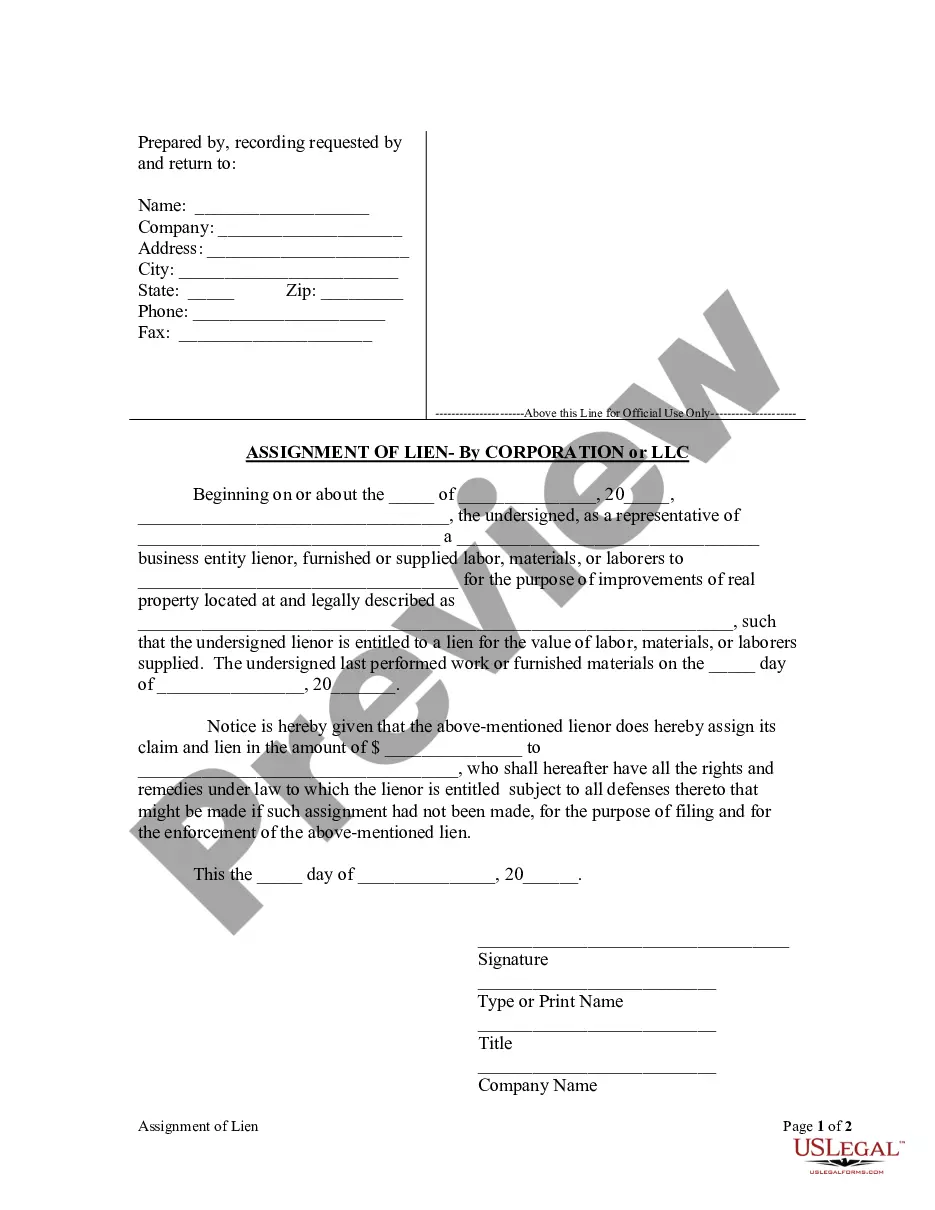
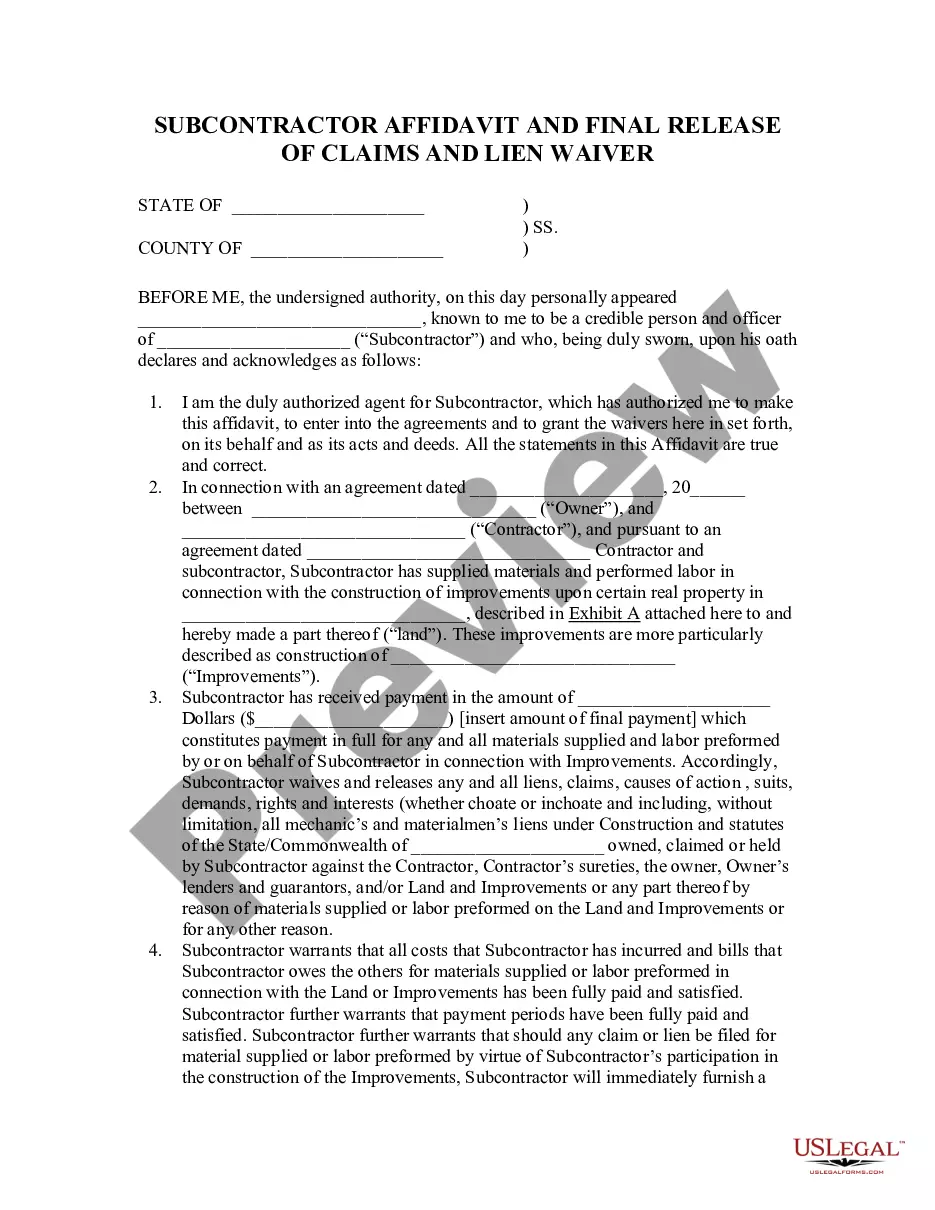
The Assignment of Claim of Lien - Corporation form allows a corporate lienor to officially assign their claim and lien for labor or materials supplied for improvements on real property. This document is crucial for lienors who wish to transfer their rights under the lien to another party, ensuring that the new assignee can enforce the lien. Unlike similar forms that may apply to individuals, this form is specifically designed for corporations, simplifying the process of enforcing a corporate lien.
Key components of this form
- Prepared by: Section for details about the person preparing the document.
- Company information: Name and contact information of the corporate lienor.
- Description of services: Details about the labor or materials supplied for property improvement.
- Assignment notice: Formal statement assigning the lien to another party.
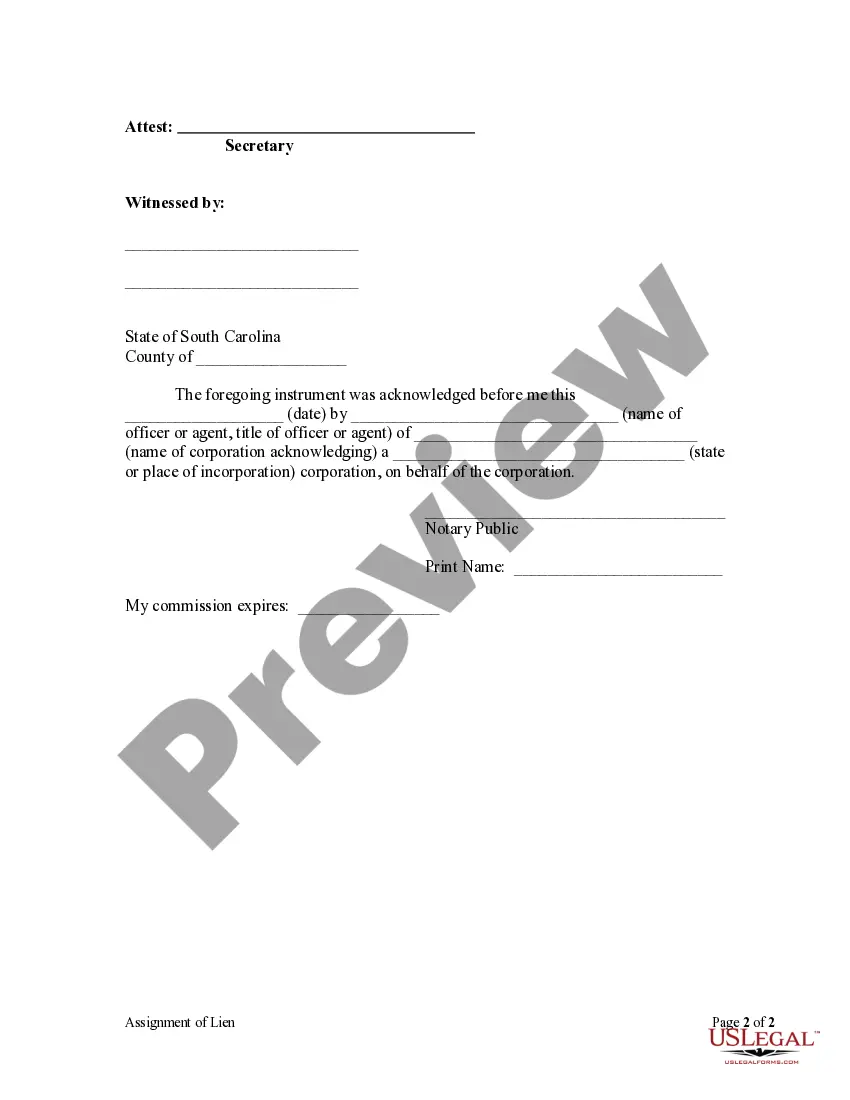
- Signature section: Spaces for signatures of the corporate representative and witnesses.
- Notary acknowledgment: Section for notarization, confirming the authenticity of the signatures.
When this form is needed
Who this form is for
This form is intended for:
- Corporations that have supplied labor or materials for improvement projects.
- Corporate representatives responsible for managing liens on behalf of their organization.
- Entities or individuals who are acquiring rights to enforce a corporate lien.
How to complete this form
- Identify the parties involved, including the corporate lienor and the assignee.
- Provide the details of the improvements made to the property, including the legal description.
- Enter the amount of the lien being assigned.
- Ensure all parties involved sign and date the form appropriately.
- Have the assignment acknowledged by a notary public as required.
Notarization requirements for this form
This form must be notarized to be legally valid. US Legal Forms provides secure online notarization powered by Notarize, allowing you to complete the process through a verified video call.
Get your form ready online
Our built-in tools help you complete, sign, share, and store your documents in one place.
Make edits, fill in missing information, and update formatting in US Legal Forms—just like you would in MS Word.
Download a copy, print it, send it by email, or mail it via USPS—whatever works best for your next step.
Sign and collect signatures with our SignNow integration. Send to multiple recipients, set reminders, and more. Go Premium to unlock E-Sign.
If this form requires notarization, complete it online through a secure video call—no need to meet a notary in person or wait for an appointment.
We protect your documents and personal data by following strict security and privacy standards.

Make edits, fill in missing information, and update formatting in US Legal Forms—just like you would in MS Word.

Download a copy, print it, send it by email, or mail it via USPS—whatever works best for your next step.

Sign and collect signatures with our SignNow integration. Send to multiple recipients, set reminders, and more. Go Premium to unlock E-Sign.

If this form requires notarization, complete it online through a secure video call—no need to meet a notary in person or wait for an appointment.

We protect your documents and personal data by following strict security and privacy standards.
Typical mistakes to avoid
- Failing to provide complete information about the property or services.
- Not having the form signed by all required parties.
- Neglecting to include the required notary acknowledgment.
- Using incorrect dates or formatting for the lien amount.
Advantages of online completion
- Convenience of immediate download and access.
- Editability allows for customization to fit specific needs.
- Access to reliable, attorney-drafted templates ensures legal soundness.
Summary of main points
- The Assignment of Claim of Lien - Corporation is essential for corporate lienors transferring their lien rights.
- Ensure all sections of the form are accurately completed and signed.
- Confirm the notary requirement based on jurisdiction to ensure legal validity.
Looking for another form?


Form popularity
FAQ
With the judgment in hand, a judgment creditor can place a judgment lien on your real estate and occasionally on personal property depending on the state in which you live.
To perfect a mechanic's lien, the contractor, subcontractor, or supplier must file a notice of mechanic's lien with the Register of Deeds or Clerk of Court of the county where the real property is located and serve the property owner with notice and a copy of the lien within 90 days of the completion of the work. S.C.
A mortgage creates a lien on your property that gives the lender the right to foreclose and sell the home to satisfy the debt. A deed of trust (sometimes called a trust deed) is also a document that gives the lender the right to sell the property to satisfy the debt should you fail to pay back the loan.
A judgment lien is created automatically on debtor property that's located in the South Carolina county where the judgment is entered. For debtor property in other South Carolina counties, the creditor files a transcript of the judgment with the clerk of the court of common pleas where the property is located.
Under South Carolina law, if this is your homestead, you can exemptor keep$53,375 in equity. And you have less than that amount, so you're golden as far as your homestead exemption goes.
When your efforts to collect a bill from a business that owes you money have been unsuccessful, you can place a lien on the assets of the business. As a lienholder, you gain legal rights to the company's property and the authority to sell the property and use the proceeds to repay what is owed to you.
A South Carolina mechanics' lien claim must be filed within 90 days after completion of the contractors work. A lawsuit to foreclose upon the South Carolina construction lien must be brought no later than 6 months after the claimant ceases to furnish labor or materials.
You must execute the judgment. A document called a writ of execution must be prepared, attested to by the clerk of court, and delivered to the sheriff. This gives the sheriff the power to take possession of any non-exempt personal property and, if necessary, real property.