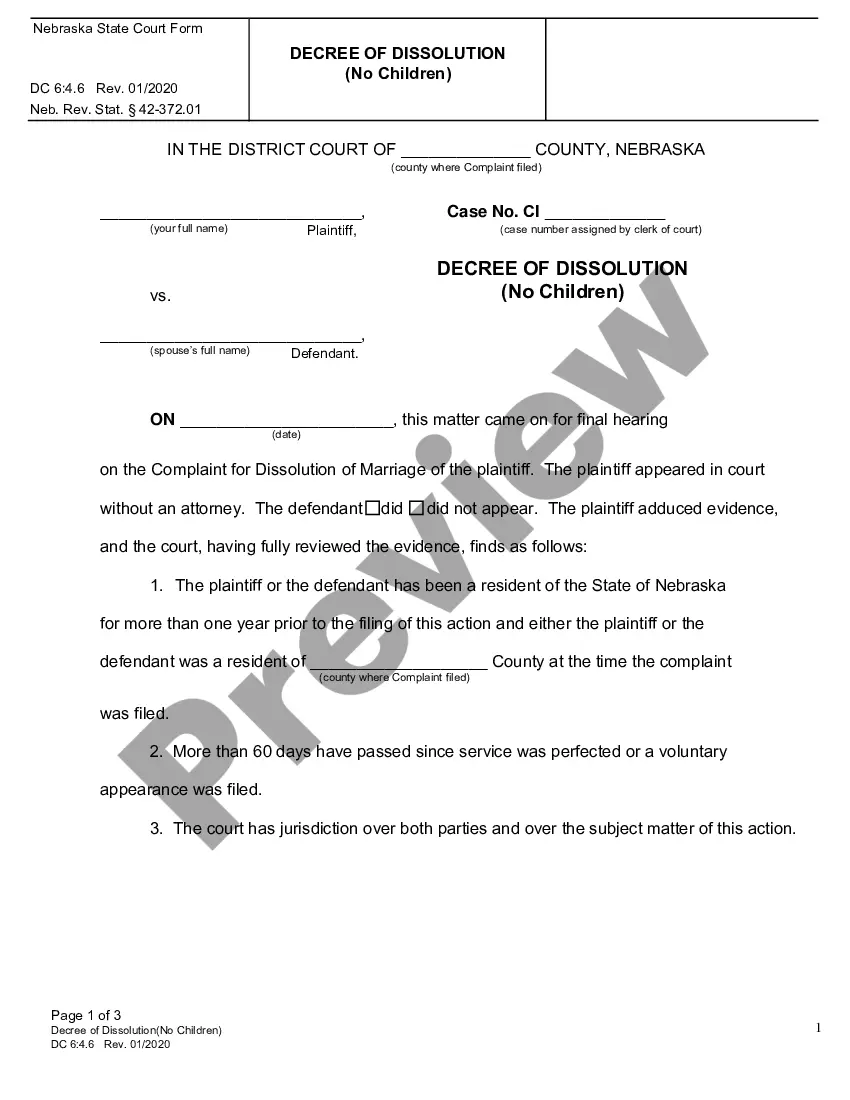
South Carolina Warranty Deed from Husband and Wife to Husband and Wife
What is this form?
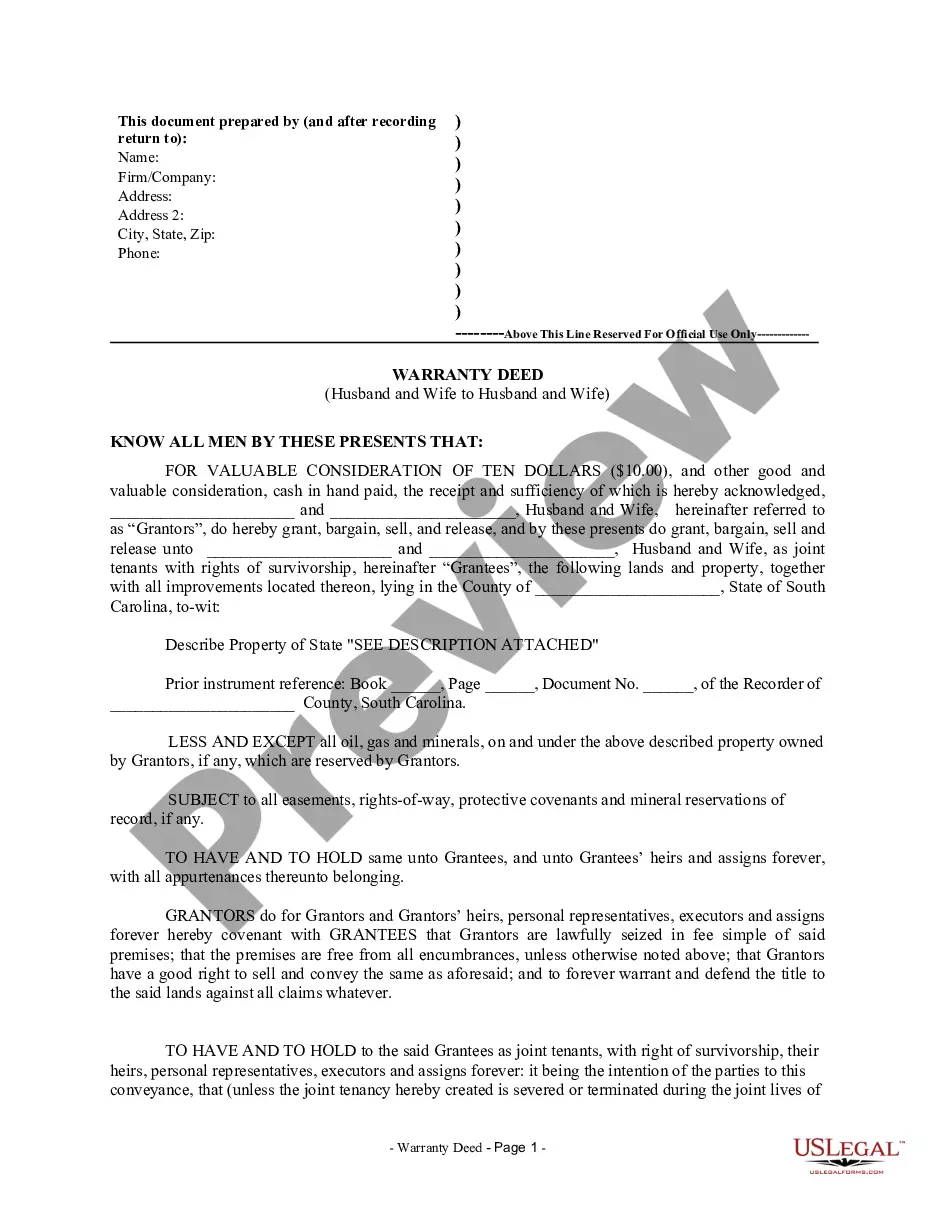
The Warranty Deed from Husband and Wife to Husband and Wife is a legal document used to transfer property ownership between two married individuals. This form ensures that the property is conveyed jointly, establishing rights of survivorship. Unlike a quitclaim deed, a warranty deed provides guarantees regarding the property's title, reassuring grantees that the property is free from liens or encumbrances, except those explicitly excluded in the deed.
Key components of this form
- Description of the property being transferred, including a reference to previous documents.
- Specific wording regarding the reservation of oil, gas, and minerals.
- Definition of the joint tenancy, explaining the rights of survivorship.
- Covenants provided by grantors about the title being free from encumbrances.
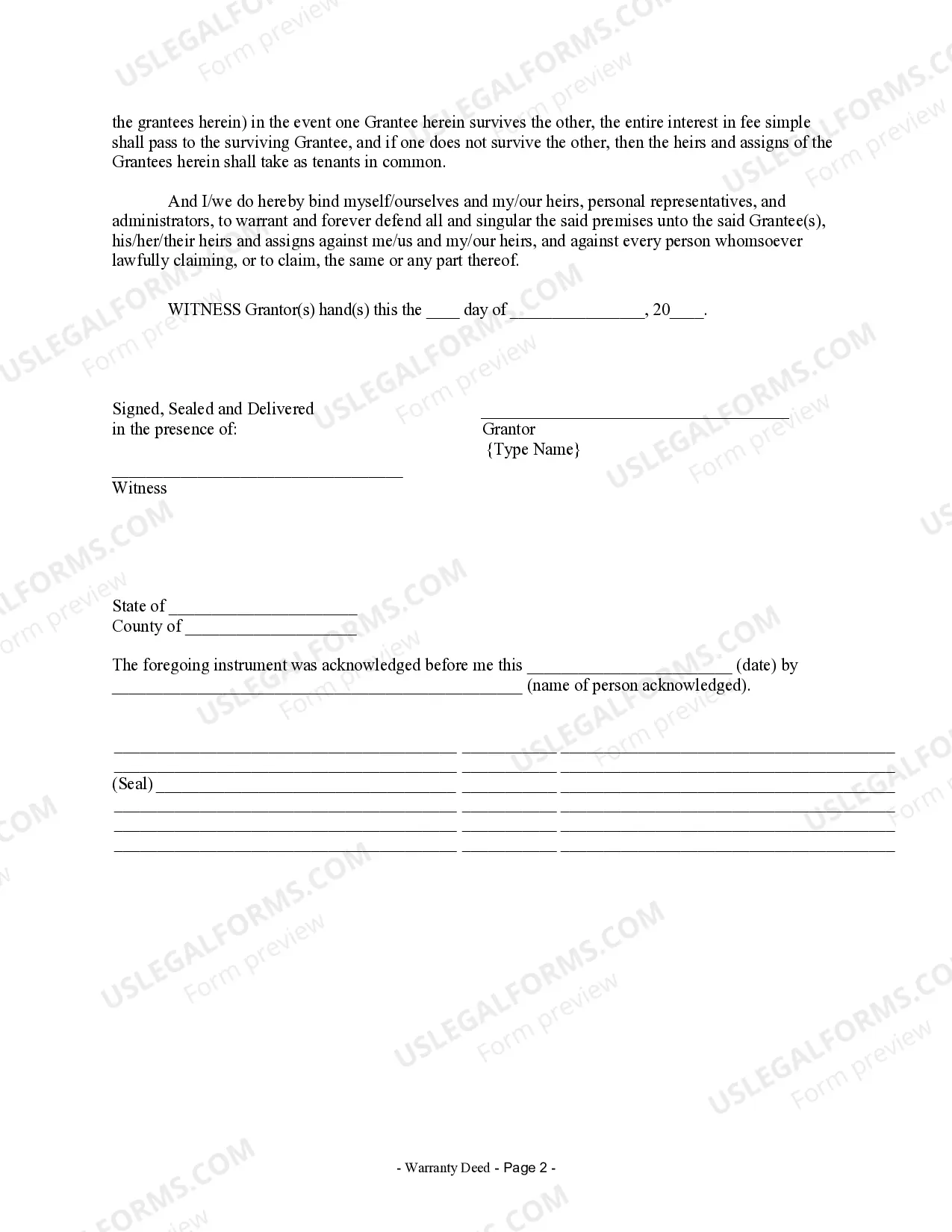
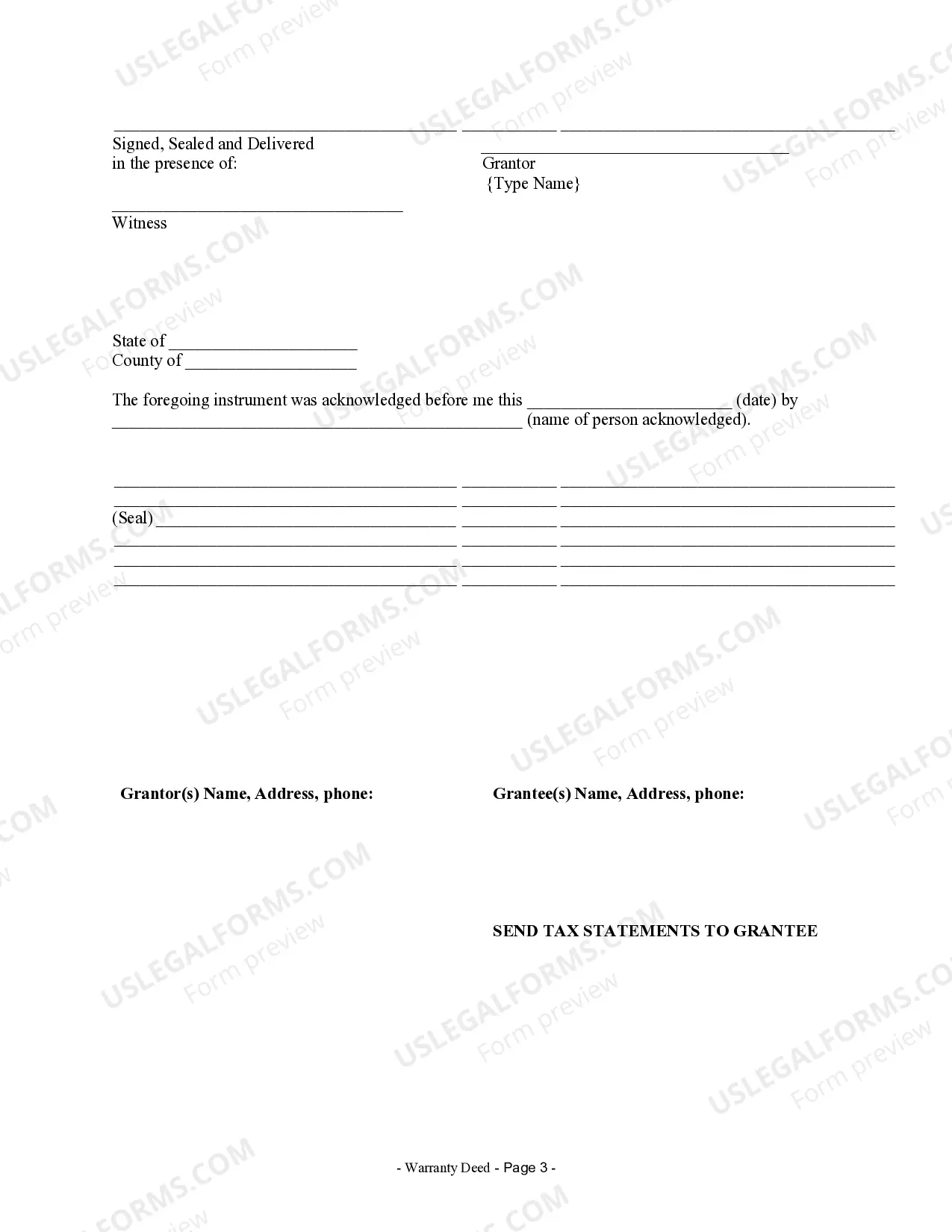
- Signatures of grantors, witnesses, and a notary public to validate the deed.



When this form is needed
This form should be used whenever a married couple wishes to transfer real estate property to each other while maintaining joint ownership. Situations may include transferring the family home into both spouses' names or securing property rights in the event of one spouse's passing. It is also relevant in estate planning to ensure seamless property transfer and avoidance of probate complications.
Intended users of this form
- Married couples who jointly own property.
- Individuals planning to solidify property transfer between spouses.
- Couples seeking to arrange property holdings for better estate planning.
Instructions for completing this form
- Identify the property being conveyed by accurately describing it and referencing prior instruments.
- Specify the names of the grantors (husband and wife) and the grantees (also husband and wife).
- Include the date of the transaction and ensure all parties sign the document in the presence of a witness and a notary public.
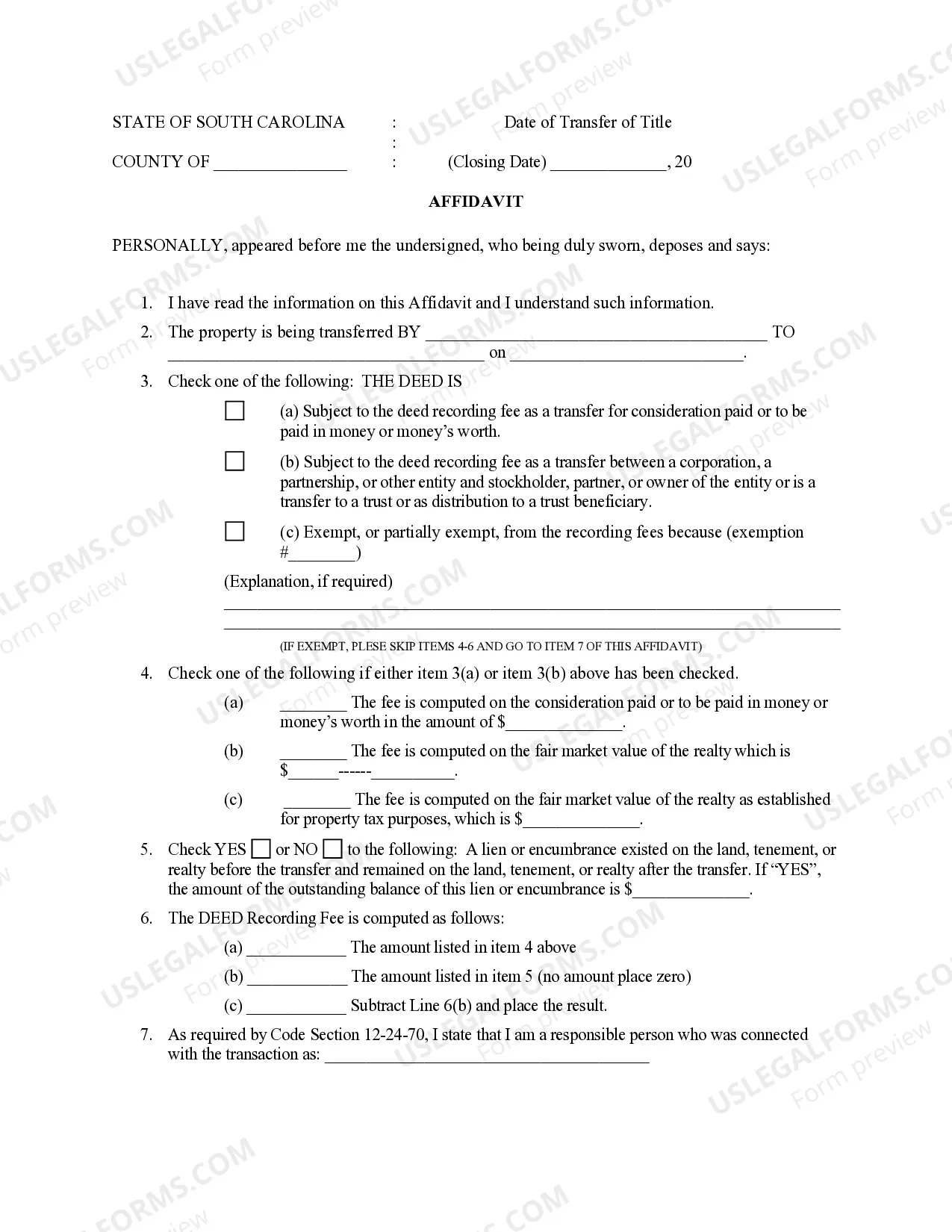
- Complete any required fields regarding exemptions from deed recording fees, if applicable.
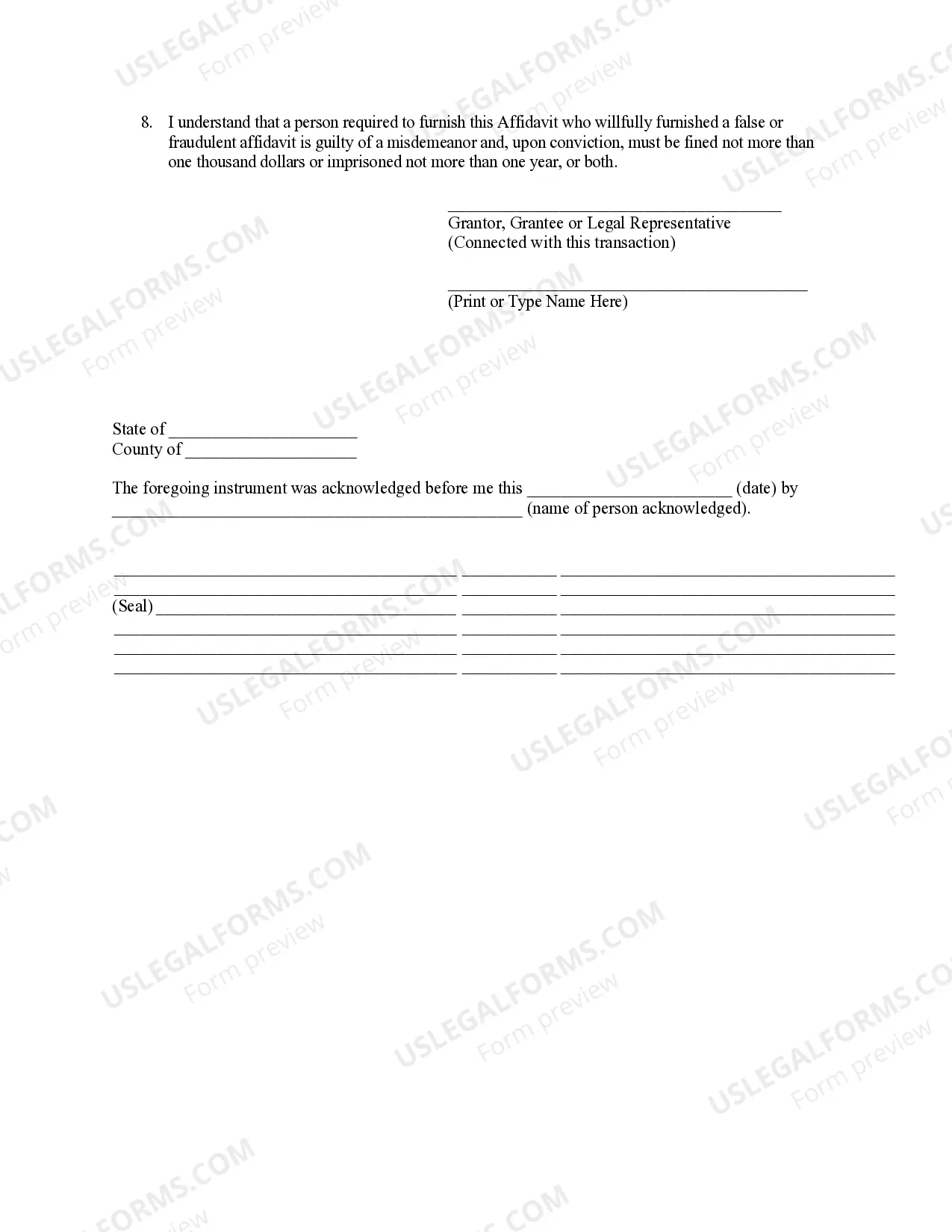
- Ensure all signatures are duly notarized to validate the deed according to state laws.
Is notarization required?
Notarization is required for this form to take effect. Our online notarization service, powered by Notarize, lets you verify and sign documents remotely through an encrypted video session, available 24/7.
Get your form ready online
Our built-in tools help you complete, sign, share, and store your documents in one place.
Make edits, fill in missing information, and update formatting in US Legal Forms—just like you would in MS Word.
Download a copy, print it, send it by email, or mail it via USPS—whatever works best for your next step.
Sign and collect signatures with our SignNow integration. Send to multiple recipients, set reminders, and more. Go Premium to unlock E-Sign.
If this form requires notarization, complete it online through a secure video call—no need to meet a notary in person or wait for an appointment.
We protect your documents and personal data by following strict security and privacy standards.

Make edits, fill in missing information, and update formatting in US Legal Forms—just like you would in MS Word.

Download a copy, print it, send it by email, or mail it via USPS—whatever works best for your next step.

Sign and collect signatures with our SignNow integration. Send to multiple recipients, set reminders, and more. Go Premium to unlock E-Sign.

If this form requires notarization, complete it online through a secure video call—no need to meet a notary in person or wait for an appointment.

We protect your documents and personal data by following strict security and privacy standards.
Mistakes to watch out for
- Failing to provide a complete and accurate description of the property.
- Not including a notary's signature, which can invalidate the deed.
- Leaving out the date of the transaction, which is essential for record-keeping.
- Not specifying exemptions from recording fees when applicable.
Advantages of online completion
- Convenience of accessing and completing the form from home.
- Editability allows for tailoring the document to your specific needs.
- Accessing forms drafted by licensed attorneys ensures legal reliability.
Main things to remember
- The Warranty Deed from Husband and Wife to Husband and Wife allows married couples to transfer property with legal protection regarding title claims.
- Proper completion of this form includes clear property description, necessary signatures, and notarization.
- Using this form supports estate planning and simplifies property transfer processes.
Looking for another form?
Form popularity
FAQ
In South Carolina, the grantor must sign the deed in front of two witnesses and in the presence of an individual authorized by the state to administer an oath. Record the completed deed at the local county Recorder's office, along with an Affidavit of True Consideration (S.C. Code Ann.
Property taxes are collected on a semi-annual basis. South Carolina charges a deed recordation tax on real estate of $2.60 per thousand for the State Deed Stamps plus $1.10 per thousand for the County Deed Stamps, for a total of $3.70 per thousand of the sales price. Deed stamps in most cases are paid by your seller.
Usually the SELLER pays 100% of this cost, but it is possible that it may have been negotiated that you only pay 50% or the BUYER pays all. ATTORNEY FEES for the SELLER will usually range between $250 and $1000, but it could be more. It is prudent to ask in advance what the fee will be.
If the consideration is $100,000, the transfer tax is $370, and paid directly to the County Register of Deeds by the closing attorney. Transfer taxes are paid at the recording of the deed only, but property taxes are paid every year by the owner of the property.
An original, wet signed document. Signature of the Party of the First Part. Two witnesses to the signature. A South Carolina Probate or Acknowledgement. A property description to include a recorded plat reference or metes and bounds description.
What Should I Know About Quitclaim Deeds in South Carolina? You are buying the least amount of protection of any deed. A quitclaim deed conveys whatever interest the grantor currently has in the property if any. The grantor only remises, releases and quitclaims his or her interest in the property to the grantee.
The South Carolina deed recording fee is imposed for the privilege of recording a deed, and is based on the transfer of real property from one person or business entity to another. The fee is generally imposed on the grantor of the real property, although the grantee may be secondarily liable for the fee.