South Carolina Quitclaim Deed from Corporation to Two Individuals
Overview of this form
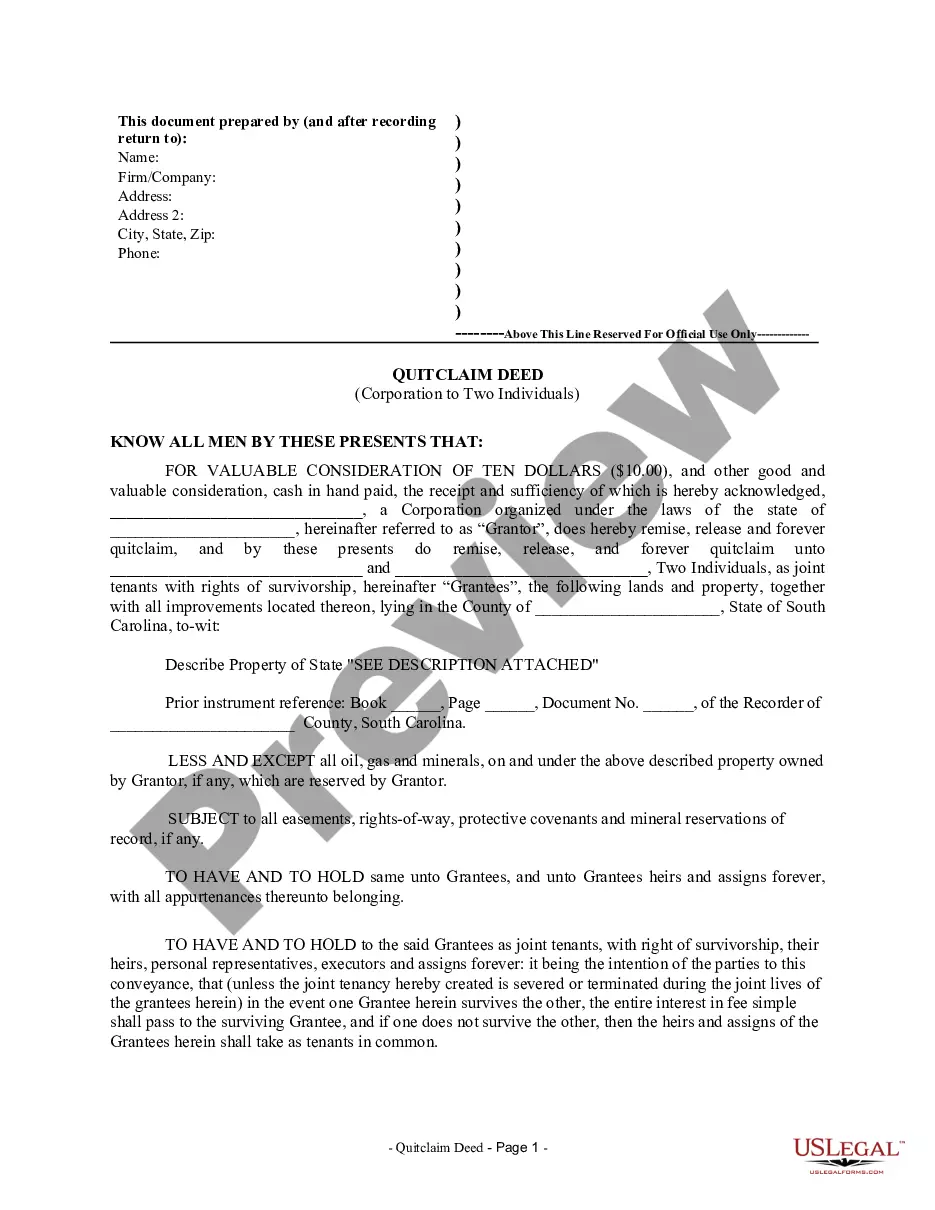
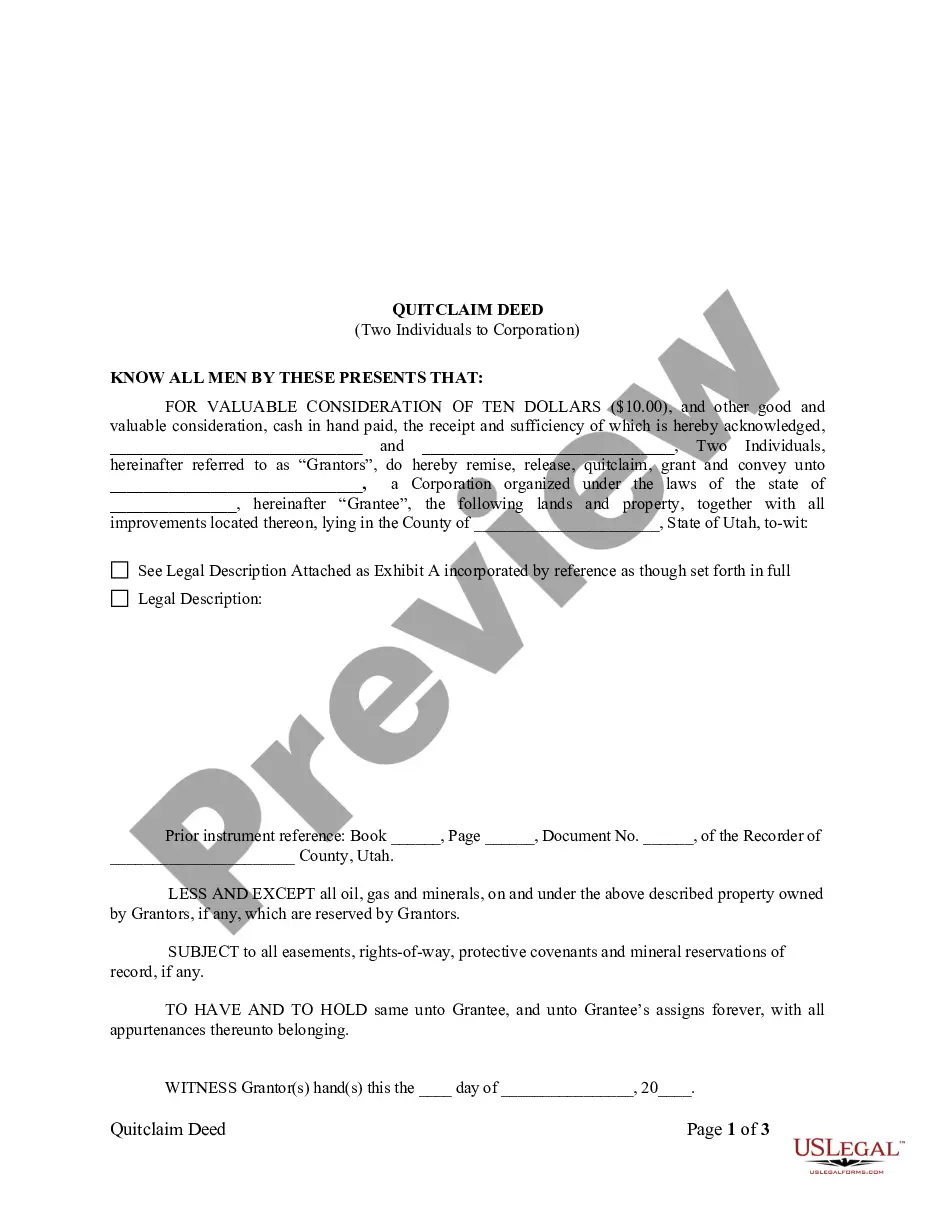
The Quitclaim Deed from Corporation to Two Individuals is a legal document that allows a corporation (the Grantor) to transfer property rights to two individuals (the Grantees) without the corporation making any guarantees about the title. This differs from other types of deeds, such as warranty deeds, as it does not confirm that the Grantor holds clear title to the property. This form is essential for situations where ownership is being transferred with minimal legal assurances regarding the property's condition or title.
Key components of this form
- Property Description: Specifies the exact property being transferred.
- Grantor Information: Includes details about the corporation making the transfer.
- Grantees Information: Identifies the two individuals receiving the property.
- Reservations: Lists any reservations including oil, gas, and minerals that remain with the Grantor.
- Easements and Rights: Indicates any existing easements or rights that affect the property.
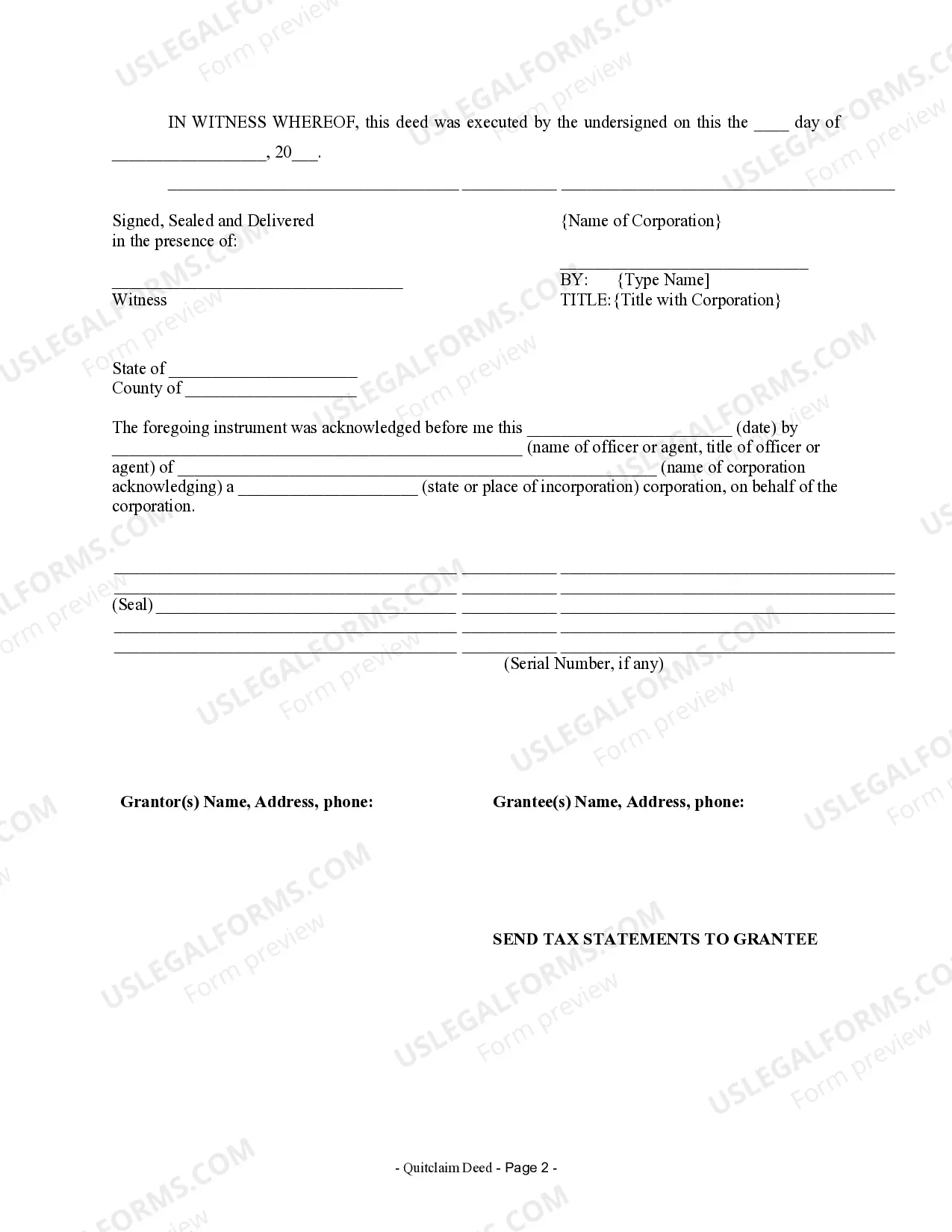
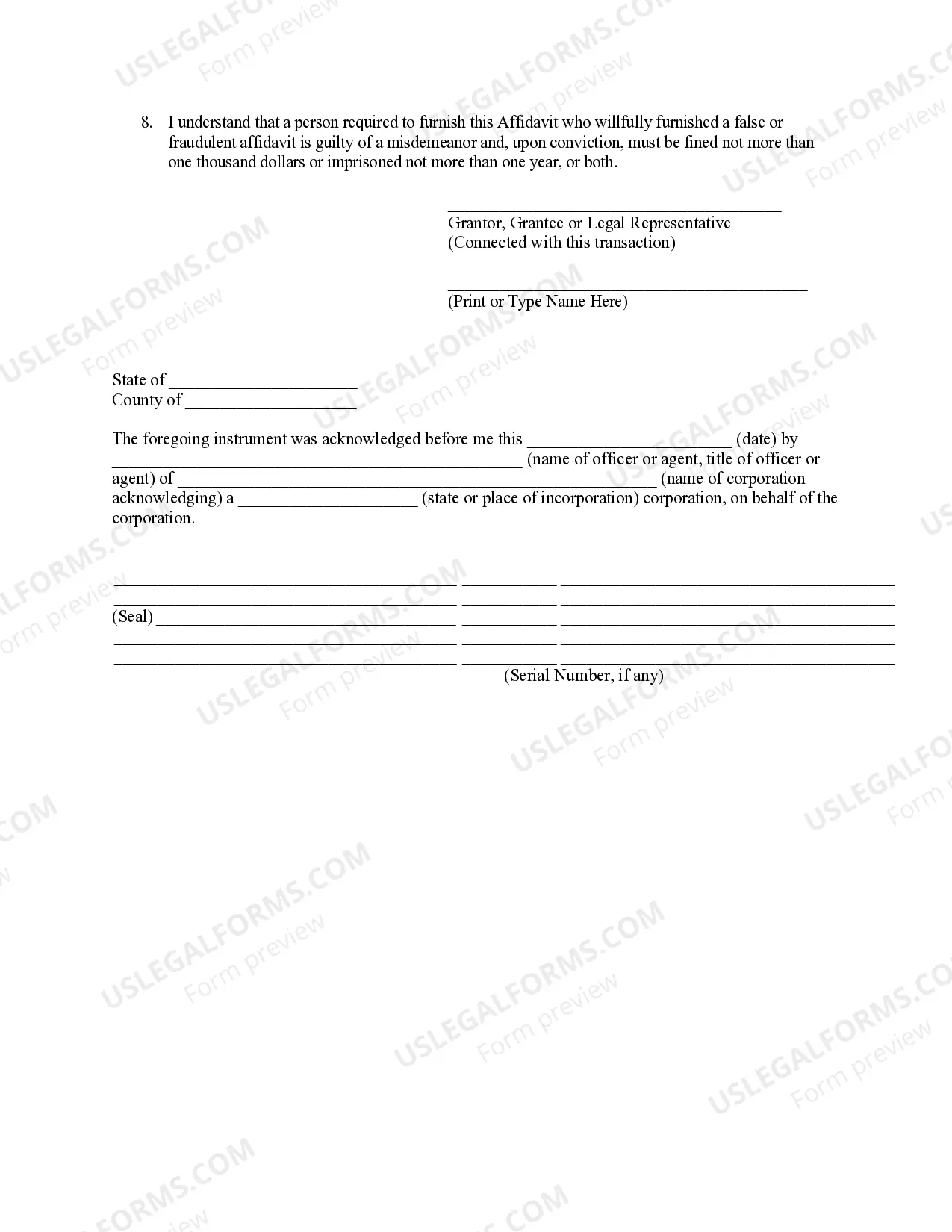
- Signatures and Notary: Requires signatures from the Grantor and possibly a witness and notary.



When to use this document
This Quitclaim Deed is typically used when a corporation needs to transfer property to individual owners without making any warranties regarding the title. Common scenarios include transferring ownership between partners, redeeming land from corporate holdings, or when a property is inherited. This form is also useful in situations where the parties involved trust each other to handle any title issues that may arise.
Who needs this form
- Corporations wishing to transfer property ownership to individual shareholders.
- Individuals receiving property as part of an estate or partnership agreement.
- Legal representatives handling property transfers for a corporation.
How to prepare this document
- Identify and list the property being transferred.
- Fill out the names and details of the Grantor and Grantees.
- Specify any reservations regarding oil, gas, and minerals under the property.
- Obtain necessary signatures from the authorized officer of the corporation and any witnesses.
- Have the form notarized to ensure it is legally valid.
Does this document require notarization?
Yes, this form must be notarized to be legally valid. US Legal Forms offers integrated online notarization, ensuring secure video calls and easy completion of the notarization process without the need for travel.
Get your form ready online
Our built-in tools help you complete, sign, share, and store your documents in one place.
Make edits, fill in missing information, and update formatting in US Legal Forms—just like you would in MS Word.
Download a copy, print it, send it by email, or mail it via USPS—whatever works best for your next step.
Sign and collect signatures with our SignNow integration. Send to multiple recipients, set reminders, and more. Go Premium to unlock E-Sign.
If this form requires notarization, complete it online through a secure video call—no need to meet a notary in person or wait for an appointment.
We protect your documents and personal data by following strict security and privacy standards.

Make edits, fill in missing information, and update formatting in US Legal Forms—just like you would in MS Word.

Download a copy, print it, send it by email, or mail it via USPS—whatever works best for your next step.

Sign and collect signatures with our SignNow integration. Send to multiple recipients, set reminders, and more. Go Premium to unlock E-Sign.

If this form requires notarization, complete it online through a secure video call—no need to meet a notary in person or wait for an appointment.

We protect your documents and personal data by following strict security and privacy standards.
Common mistakes to avoid
- Failing to accurately describe the property being transferred.
- Not including all required signatures and notarization.
- Misunderstanding the implications of transferring property without warranties.
Why complete this form online
- Easy access to legal templates drafted by licensed attorneys.
- Convenient download and editing options to fit individual needs.
- Time-saving compared to working through traditional legal channels.
Legal use & context
- Quitclaim deeds are often used to clear up title issues or to transfer property without legal warranties.
- This deed does not provide protection against claims from third parties regarding the property.
- It is essential to understand that the implications of joint tenancy can affect how property is transferred upon the death of one grantee.
Main things to remember
- The Quitclaim Deed transfers property rights from a corporation to two individuals.
- This form carries no warranties about the title of the property.
- Notarization is required for the deed to be legally binding.
Looking for another form?

Form popularity
FAQ
The drawback, quite simply, is that quitclaim deeds offer the grantee/recipient no protection or guarantees whatsoever about the property or their ownership of it. Maybe the grantor did not own the property at all, or maybe they only had partial ownership.
Laws § 27-7-20. Recording All forms must be filed at the County Recorders of Deeds. Signing (A§ 30-5-30) A quit claim deed in South Carolina is required to be authorized by a notary public and two (2) subscribing witnesses.
A Quitclaim Deed must be notarized by a notary public or attorney in order to be valid.Consideration in a Quitclaim Deed is what the Grantee will pay to the Grantor for the interest in the property.
The grantor must sign the quitclaim deed in the presence of two credible witnesses. The quitclaim deed must also be subscribed by the two witnesses. The address of the grantee is needed in order to record this type of real estate document.
A quitclaim deed transfers title but makes no promises at all about the owner's title.A person who signs a quitclaim deed to transfer property they do not own results in no title at all being transferred since there is no actual ownership interest. The quitclaim deed only transfers the type of title you own.
What Should I Know About Quitclaim Deeds in South Carolina? You are buying the least amount of protection of any deed. A quitclaim deed conveys whatever interest the grantor currently has in the property if any. The grantor only remises, releases and quitclaims his or her interest in the property to the grantee.
But you might be wondering if an owner can transfer a deed to another person without a real estate lawyer. The answer is yes. Parties to a transaction are always free to prepare their own deeds.A quitclaim deed, for example, is far simpler than a warranty deed.
A quitclaim deed affects ownership and the name on the deed, not the mortgage. Because quitclaim deeds expose the grantee to certain risks, they are most often used between family members and where there is no exchange of money.Quitclaim deeds transfer title but do not affect mortgages.