Rhode Island Revocation of Power of Attorney
About this form
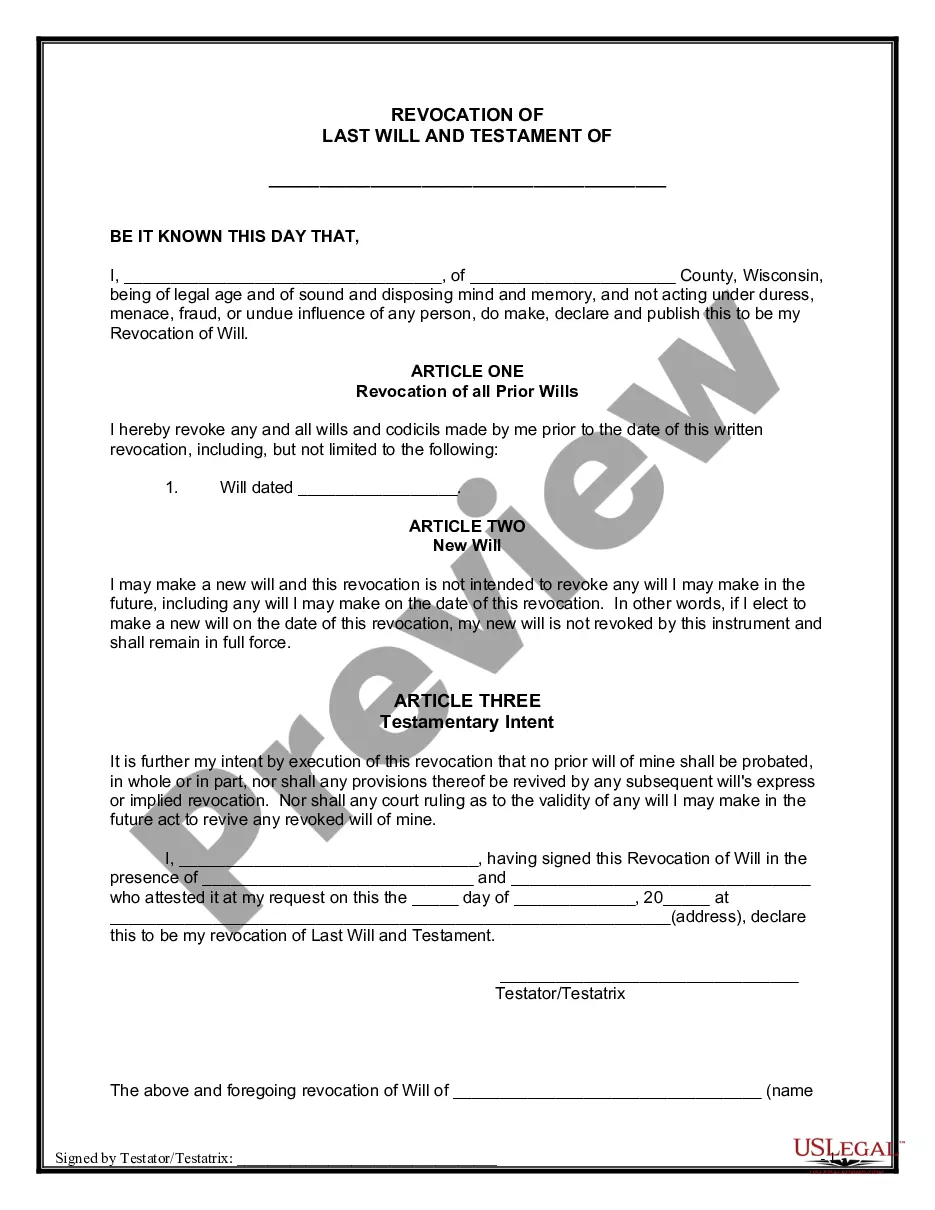
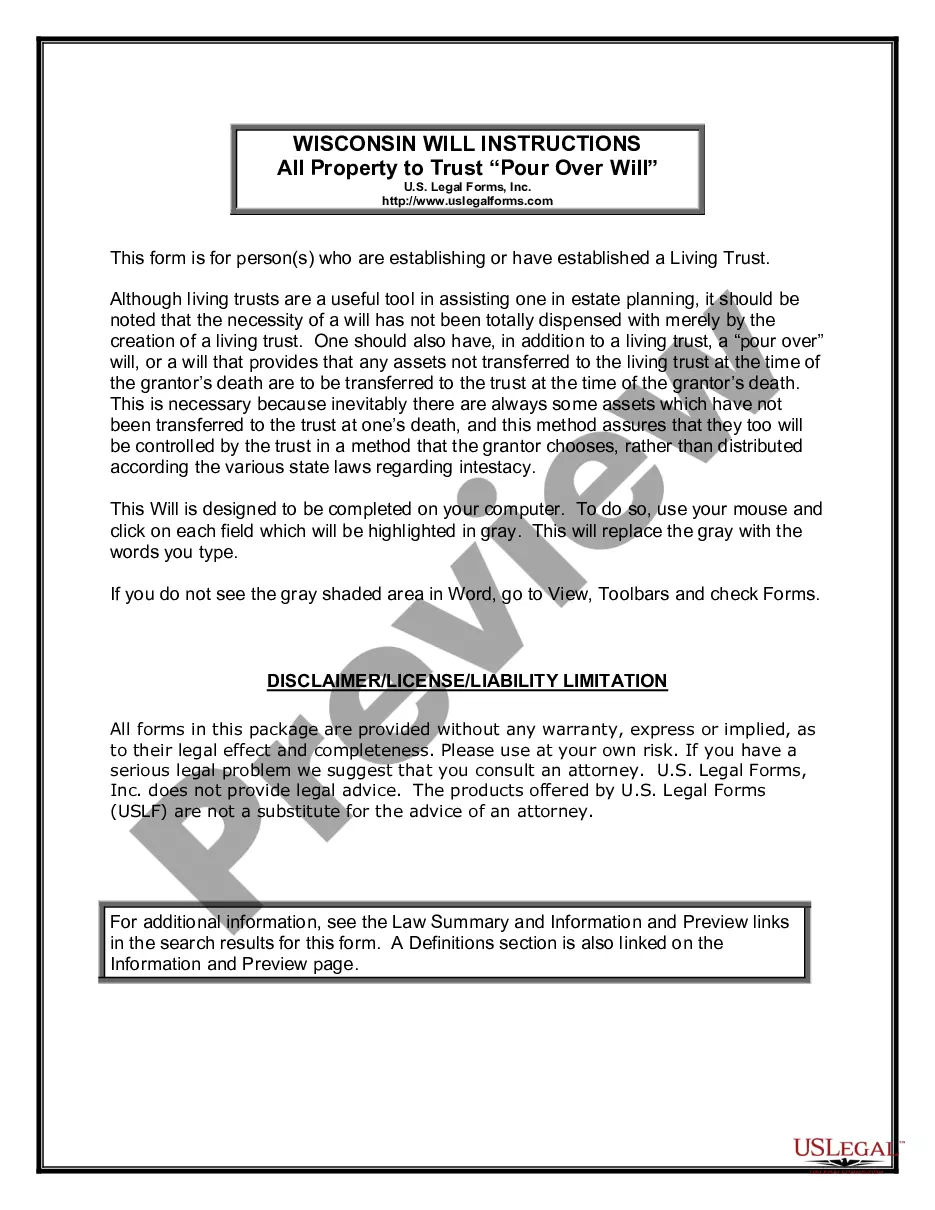
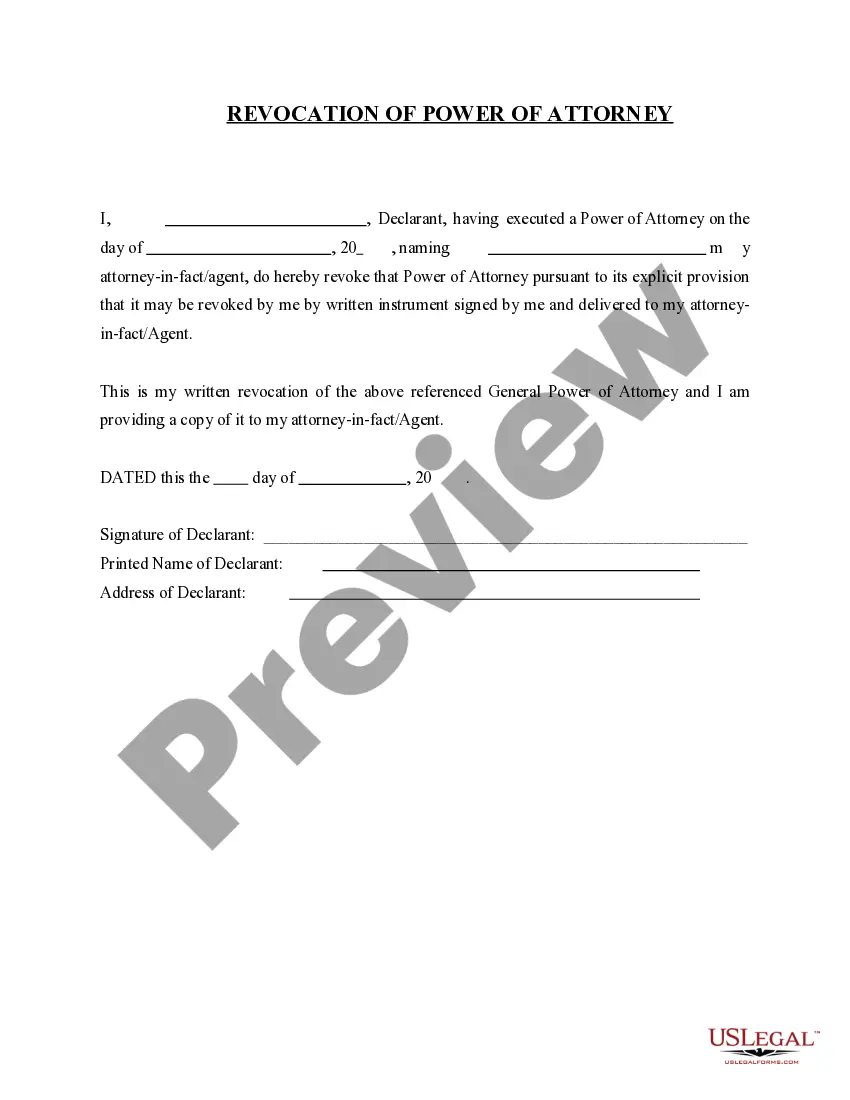
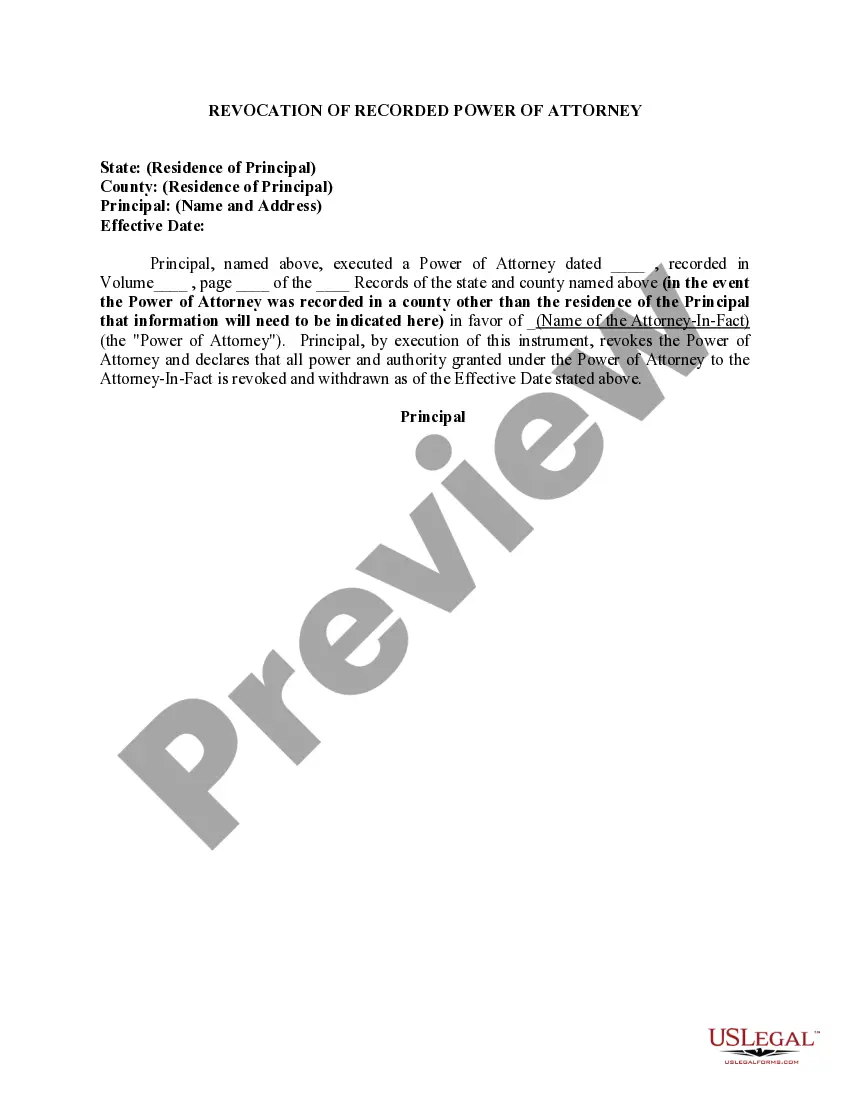
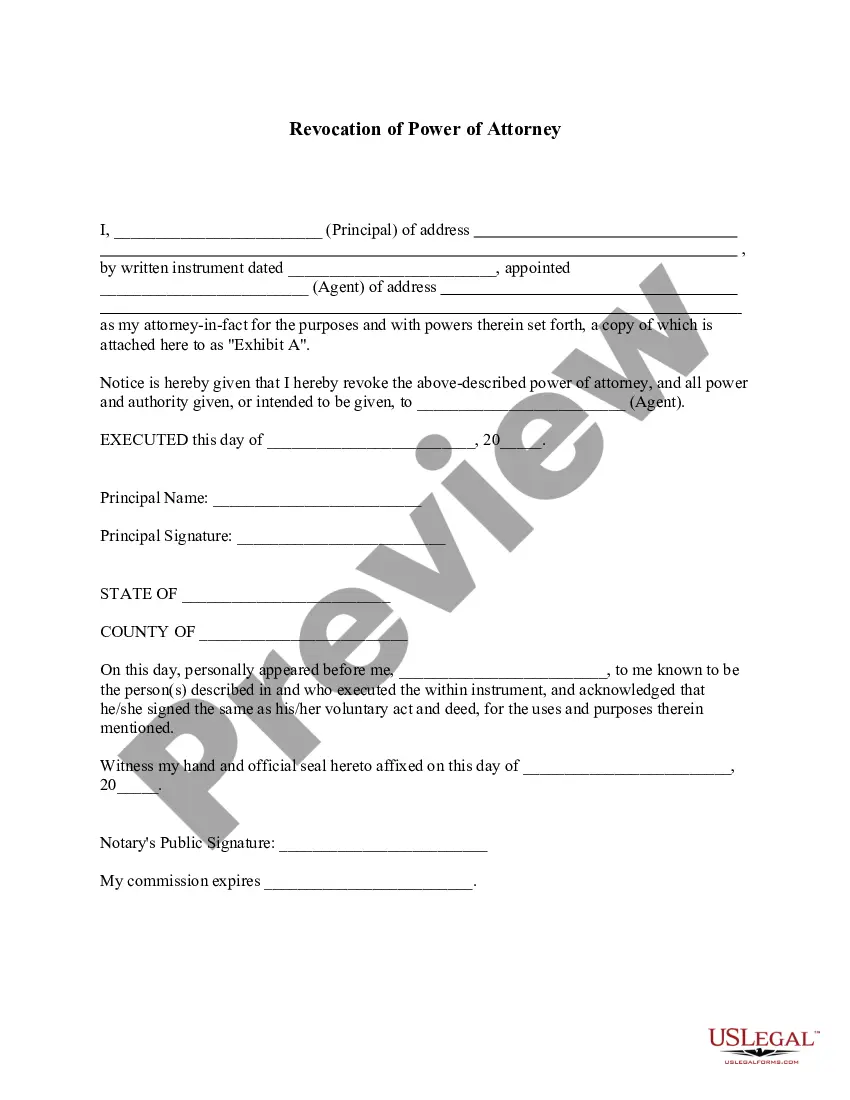
The Revocation of Power of Attorney is a legal document that officially cancels a previously granted power of attorney. This form terminates the authority of an attorney-in-fact (agent) who was allowed to make financial or legal decisions on your behalf. It is important to understand that this document differs from an original power of attorney, as it serves to revoke any decision-making power assigned to the agent, ensuring that your personal affairs are no longer managed by them.
What’s included in this form
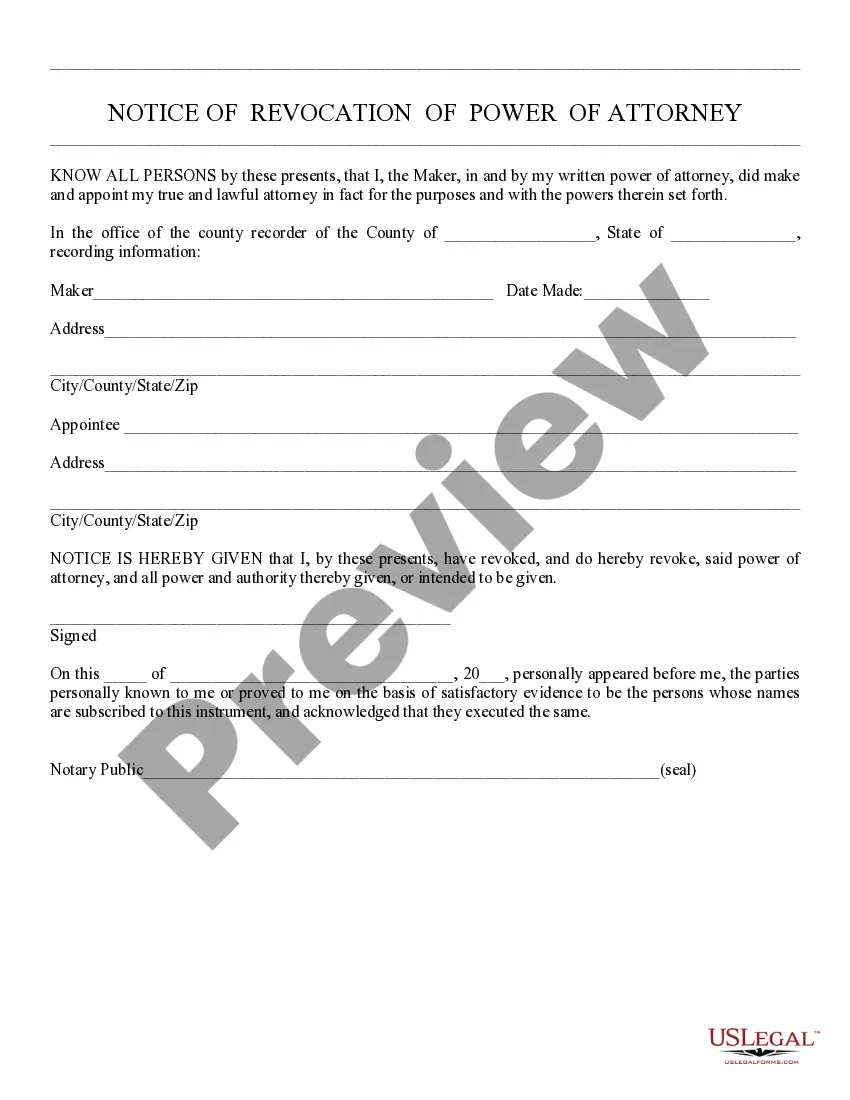
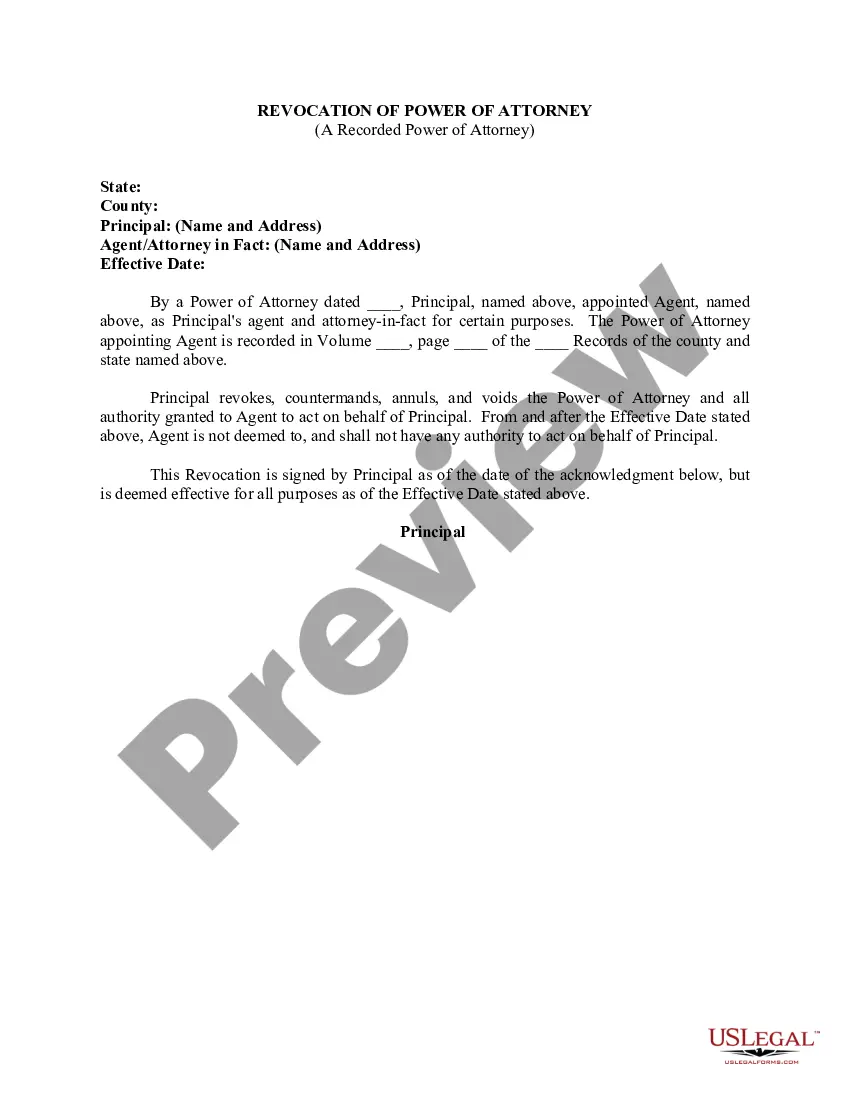
- Declaration of revocation: Clearly states the intent to revoke the power of attorney.
- Agent notification: Acknowledges the provision of this revocation to the attorney-in-fact.
- Signature and notarization: Requires your signature and, in some cases, notarization to validate the revocation.
When to use this document
Use the Revocation of Power of Attorney when you no longer want your agent to have authority over your financial or legal decisions. This could occur if your circumstances change, such as the agent no longer being trustworthy, you wish to appoint a different agent, or in case of the agentâs incapacity or death.
Who needs this form
- Individuals who have previously granted a power of attorney and wish to revoke it.
- People who want to change their designated attorney-in-fact.
- Those whose agent is no longer capable or trustworthy to manage their affairs.
Completing this form step by step
- Identify the previous power of attorney: State the specific document being revoked.
- Declare your intent: Clearly state that you are revoking the power granted to your agent.
- Provide notice: Indicate that you are providing a copy of this revocation to your attorney-in-fact.
- Sign the document: Add your signature, ensuring it is in accordance with state law.
- Obtain notarization: Have the document notarized if required by state regulations.
Notarization requirements for this form
Yes, this form must be notarized to be legally valid. Notarization ensures that your signature is verified and can help prevent potential disputes regarding the authenticity of the document. US Legal Forms offers integrated online notarization, available 24/7 via secure video call.
Get your form ready online
Our built-in tools help you complete, sign, share, and store your documents in one place.
Make edits, fill in missing information, and update formatting in US Legal Forms—just like you would in MS Word.
Download a copy, print it, send it by email, or mail it via USPS—whatever works best for your next step.
Sign and collect signatures with our SignNow integration. Send to multiple recipients, set reminders, and more. Go Premium to unlock E-Sign.
If this form requires notarization, complete it online through a secure video call—no need to meet a notary in person or wait for an appointment.
We protect your documents and personal data by following strict security and privacy standards.

Make edits, fill in missing information, and update formatting in US Legal Forms—just like you would in MS Word.

Download a copy, print it, send it by email, or mail it via USPS—whatever works best for your next step.

Sign and collect signatures with our SignNow integration. Send to multiple recipients, set reminders, and more. Go Premium to unlock E-Sign.

If this form requires notarization, complete it online through a secure video call—no need to meet a notary in person or wait for an appointment.

We protect your documents and personal data by following strict security and privacy standards.
Mistakes to watch out for
- Failing to notify the former agent about the revocation.
- Not having the document notarized if required by state law.
- Using improper language that does not clearly declare the revocation.
Why use this form online
- Convenience of downloading and completing the form at your own pace.
- Access to templates drafted by licensed attorneys, ensuring compliance with legal standards.
- Easy filing without the need for a trip to the attorney's office.
Main things to remember
- The Revocation of Power of Attorney is essential for legally terminating an agent's authority.
- Ensure proper notification and legal formalities, including notarization, are followed.
- Use this form online for convenience and reliability in managing your legal documents.
Looking for another form?

Form popularity
FAQ
Disputes are increasing over the care of a person's health and finances where a Power of Attorney is involved. You may wish to dispute a Power of Attorney if you consider the power has been granted to the wrong person or the individual did not have the necessary capacity to make the power of attorney.
Revoke Your Current Power of Attorney. To change or cancel your current power of attorney, you should complete a formal, written revocation. Notify Your Power of Attorney. Once you complete your revocation, notify your agent of the cancellation in writing. Notify Relevant Third Parties. Execute a New Power of Attorney.
The revocation should include your name, a statement that you are of sound mind, and your wish to revoke the power of attorney. You should also specify the date the original power of attorney was executed and the person selected as your agent.
Any adult may witness the principal's signature. The witness does not have to be a justice of the peace, solicitor or other 'prescribed witness'. 3. There is no requirement to register this revocation, but if the power of attorney being revoked has been registered it is advisable to do so.
The answer is Yes. If you change your mind about the person you chose to make decisions for you under a durable power of attorney, you can change it. In order to make changes to your Power of Attorney, however, you must have Legal Mental Capacity.
Until an attorney-in-fact's powers are properly revoked, they can continue to legally act for the principal. To cancel a Power of Attorney, the principal can create a document called a Revocation of Power of Attorney or create a new Power of Attorney that indicates the previous Power of Attorney is revoked.
This means that although a power of attorney can be revoked verbally, by the principal telling the attorney that their power has been revoked, it is important that the principal revokes a power of attorney in writing by completing a Revocation of Power of Attorney and providing it to the attorney so that there is a
Unless the power of attorney states otherwise, and they usually don't, a revocation of a POA must be made in writing. A verbal revocation may not be enough.A revocation will reference the existing POA and the current attorney-in-fact and revoke the document and the powers granted.
Such Power of Attorney may be revoked by the principal or the Power of Attorney holder by the procedure according to law. For revocation of irrevocable Power of Attorney, the principal is required to issue a public notice through local newspapers, without which, the revocation shall stand void.