Rhode Island Bankruptcy Guide and Forms Package for Chapters 7 or 13
About this form
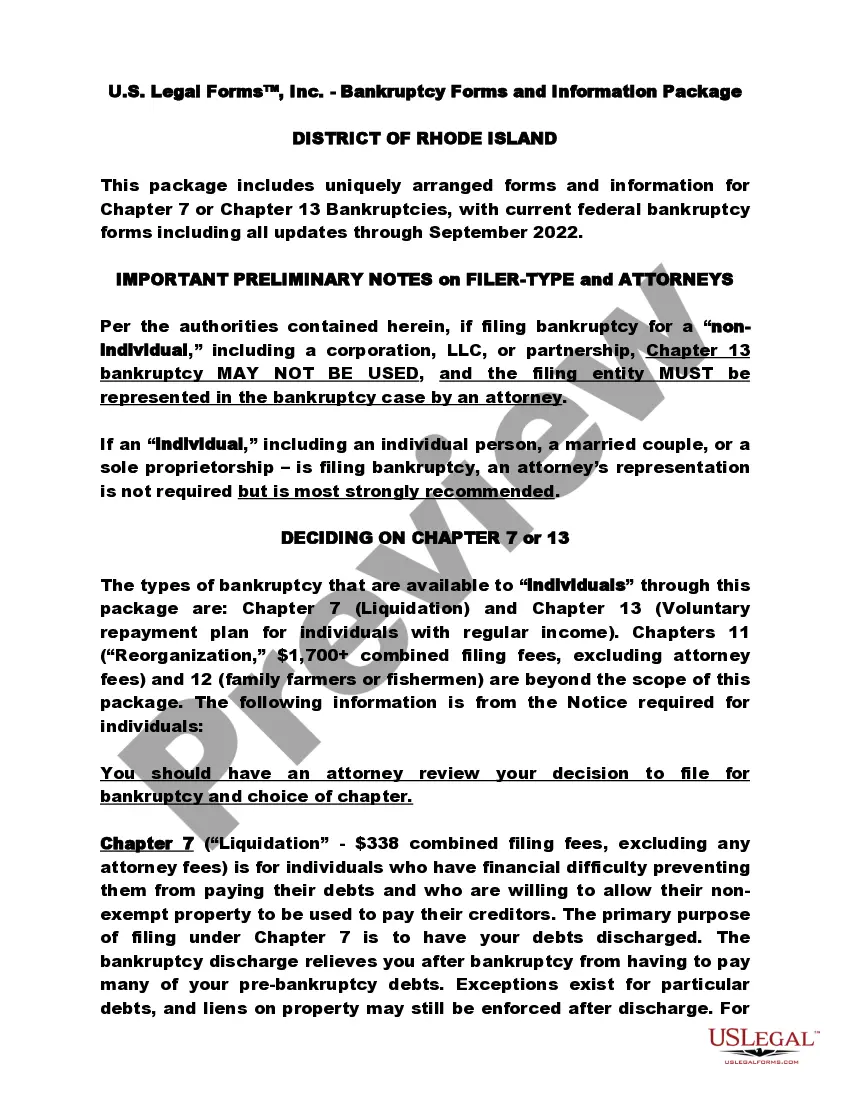
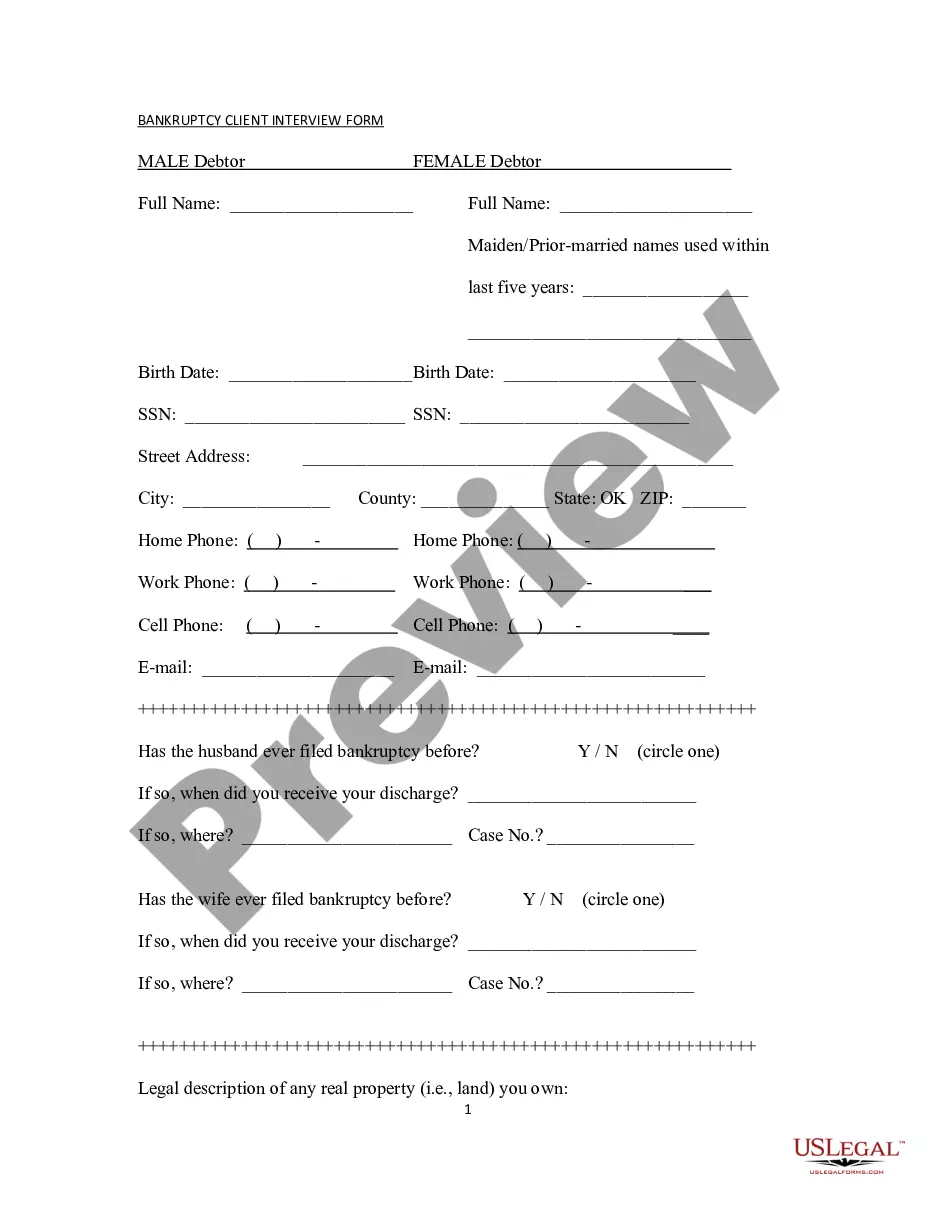
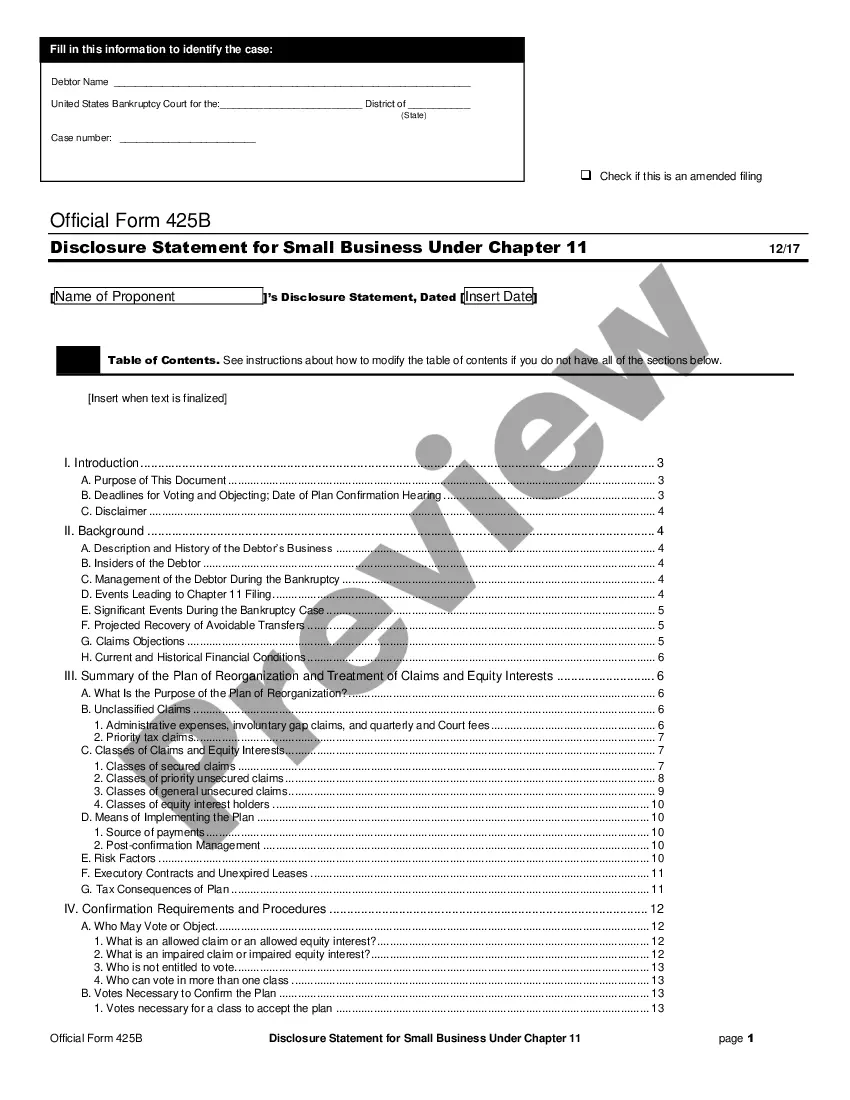
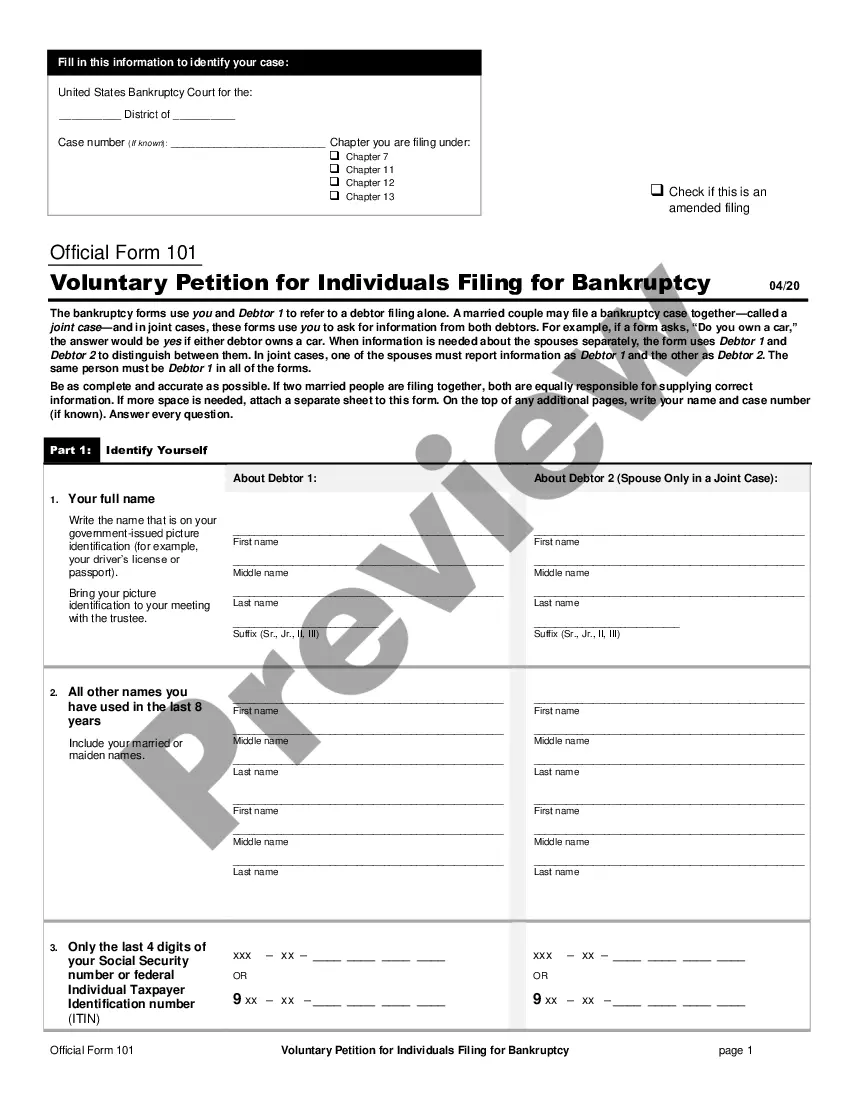
The Rhode Island Bankruptcy Guide and Forms Package is a comprehensive resource designed to assist individuals seeking bankruptcy relief under Chapters 7 or 13. It includes essential legal forms, detailed instructions, and additional resources. This package is tailored to help users understand the bankruptcy process and provides guidance on different bankruptcy chapters, which is crucial for making an informed decision based on individual financial circumstances.
Form components explained
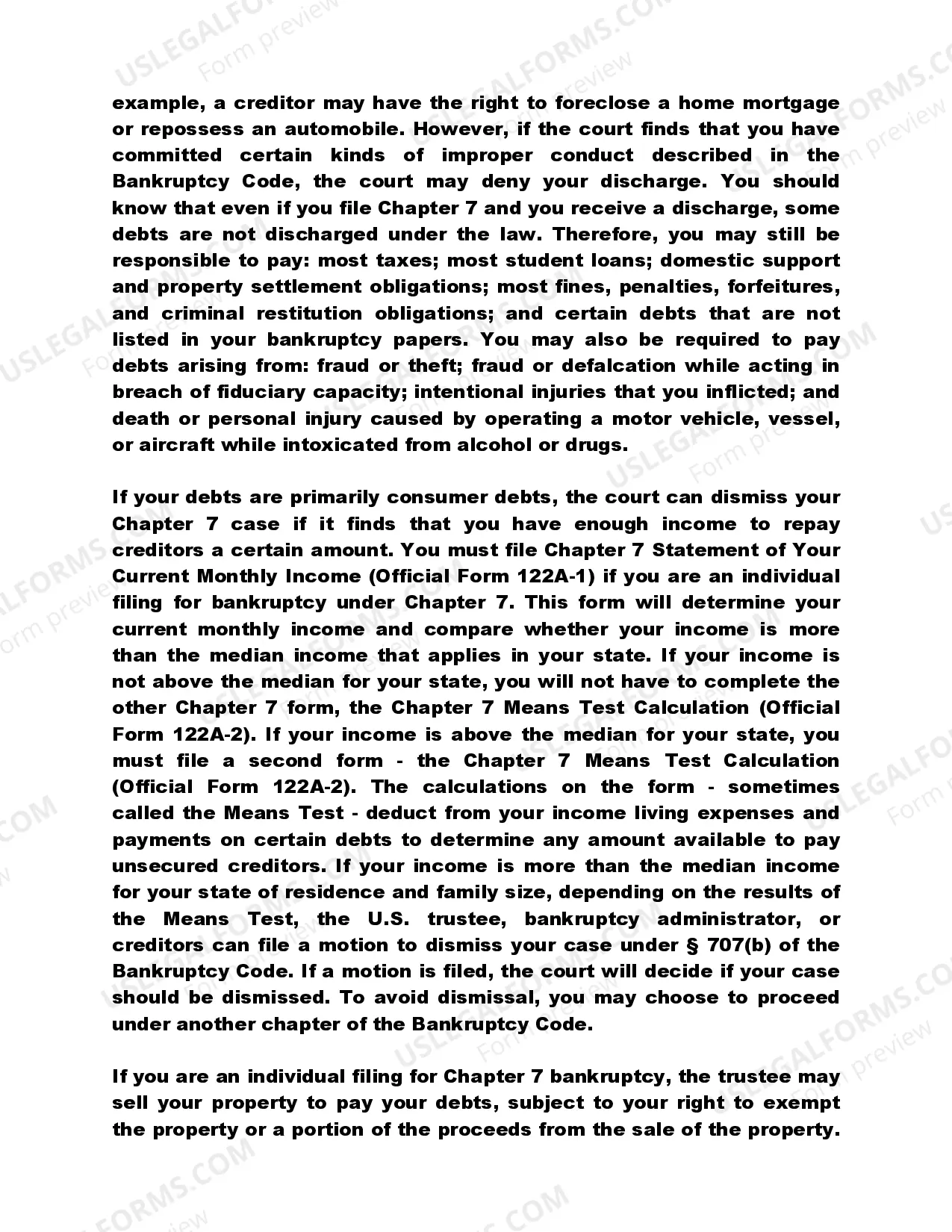
- Chapter 7 Information: Essential details about liquidation and debt discharge.
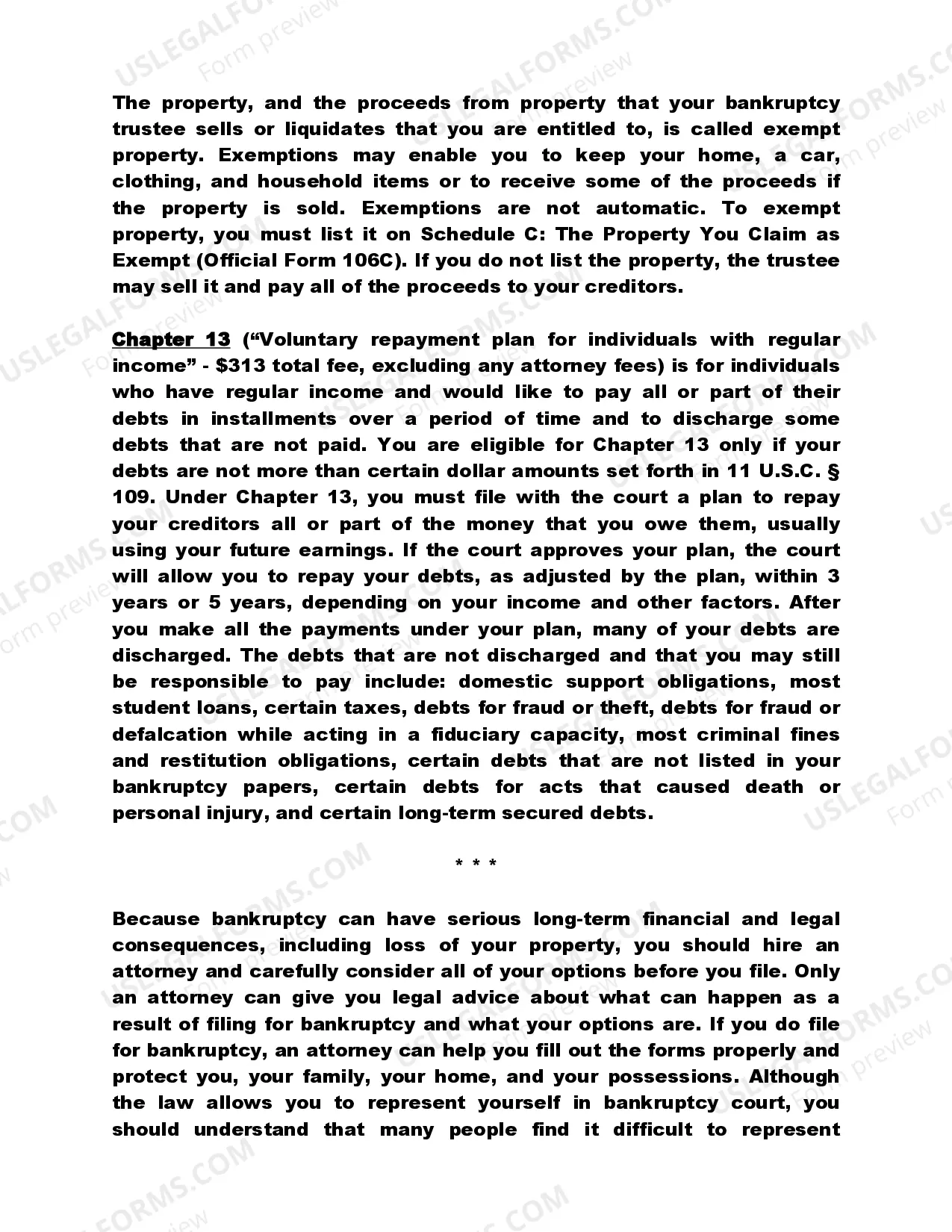
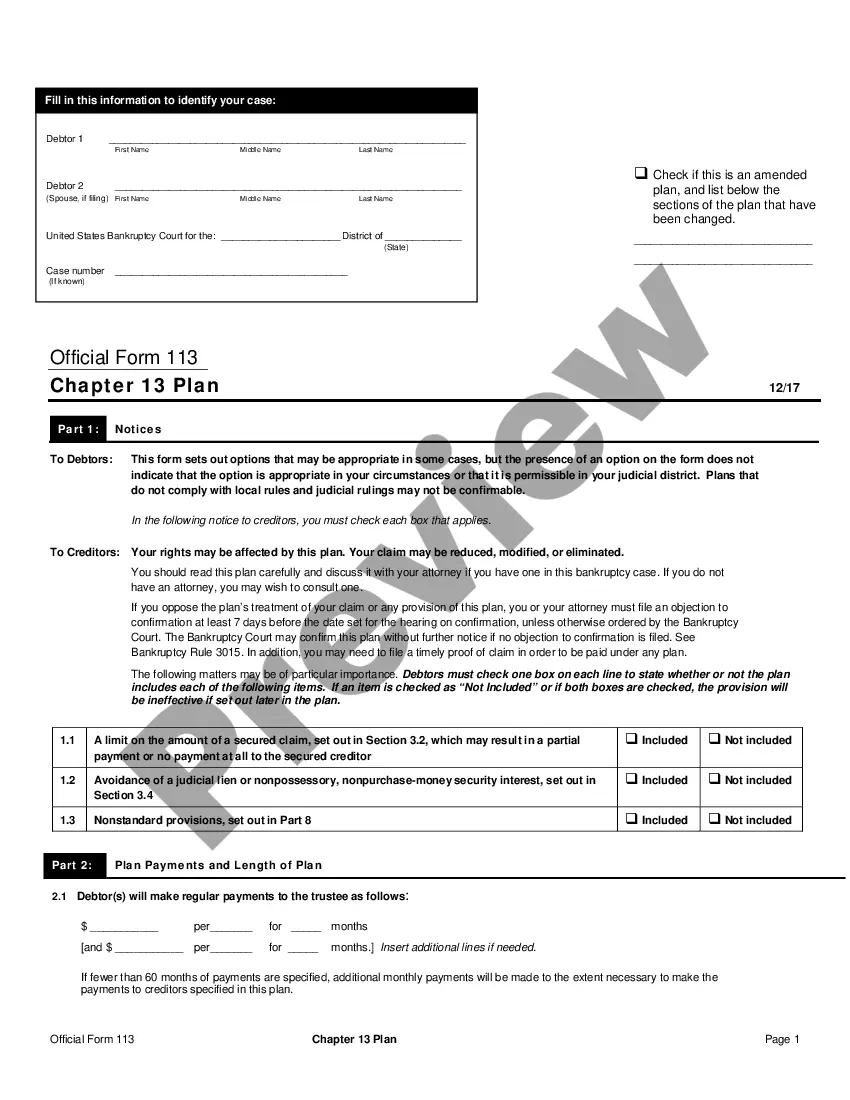
- Chapter 13 Information: Guidelines for setting up voluntary repayment plans based on future income.
- Means Test Form (Official Form 122A-1 and 122A-2): Documents to assess eligibility for Chapter 7 bankruptcy.
- Exemption Form (Official Form 106C): Instructions on claiming property exemptions when filing for bankruptcy.
- Detailed Instructions: Step-by-step guidance for completing each form and filing procedures.
When to use this document
This package should be used when an individual in Rhode Island faces insurmountable debt and seeks relief through bankruptcy. It is particularly relevant when considering whether to file for Chapter 7 or Chapter 13 bankruptcy based on personal income and asset situations. Using this package can help ensure compliance with bankruptcy laws and streamline the filing process.
Who should use this form
This form is intended for:
- Individuals considering bankruptcy in Rhode Island.
- Married couples filing jointly for bankruptcy.
- Sole proprietors facing financial difficulties.
- Anyone with a regular income considering a repayment plan under Chapter 13.
How to complete this form
- Identify your debtor type: Individual or business entity.
- Choose the appropriate chapter: Chapter 7 or Chapter 13 based on your financial goals.
- Gather necessary financial documentation, including income and expense records.
- Complete the Means Test Form if filing for Chapter 7.
- File the necessary forms with the bankruptcy court, along with the required fees.
Is notarization required?
This form does not typically require notarization to be legally valid. However, some jurisdictions or document types may still require it. US Legal Forms provides secure online notarization powered by Notarize, available 24/7 for added convenience.
Get your form ready online
Our built-in tools help you complete, sign, share, and store your documents in one place.
Make edits, fill in missing information, and update formatting in US Legal Forms—just like you would in MS Word.
Download a copy, print it, send it by email, or mail it via USPS—whatever works best for your next step.
Sign and collect signatures with our SignNow integration. Send to multiple recipients, set reminders, and more. Go Premium to unlock E-Sign.
If this form requires notarization, complete it online through a secure video call—no need to meet a notary in person or wait for an appointment.
We protect your documents and personal data by following strict security and privacy standards.

Make edits, fill in missing information, and update formatting in US Legal Forms—just like you would in MS Word.

Download a copy, print it, send it by email, or mail it via USPS—whatever works best for your next step.

Sign and collect signatures with our SignNow integration. Send to multiple recipients, set reminders, and more. Go Premium to unlock E-Sign.

If this form requires notarization, complete it online through a secure video call—no need to meet a notary in person or wait for an appointment.

We protect your documents and personal data by following strict security and privacy standards.
Common mistakes to avoid
- Failing to accurately disclose all debts and assets.
- Not completing the Means Test Form when required for Chapter 7.
- Missing deadlines for form submissions and court appearances.
- Neglecting to list exempt property on Schedule C.
Benefits of completing this form online
- Instant access to essential forms and information from the comfort of your home.
- Editable templates that can be tailored to your specific situation.
- Reliability and accuracy, as forms are drafted by licensed attorneys.
- Convenient download options, allowing for quick and easy filing.
Legal use & context
- The Rhode Island Bankruptcy Guide and Forms Package is designed to comply with federal and state bankruptcy laws.
- Responsibility for ensuring accurate and complete filing lies with the debtor.
- Use of this package does not guarantee a successful bankruptcy outcome, as it depends on individual circumstances and adherence to legal requirements.
Main things to remember
- The package provides essential forms and guidance for individuals filing Chapter 7 or Chapter 13 bankruptcies in Rhode Island.
- Choosing the correct bankruptcy chapter is critical based on personal financial situations.
- Using online forms offers convenience and ensures that users have access to attorney-drafted materials.
Looking for another form?
Form popularity
FAQ
Other reasons why a Chapter 13 bankruptcy case may be dismissed are: Failing to pay the Chapter 13 payments.Failing to propose a Chapter 13 plan that complies with bankruptcy law. Failing to submit the required documentation to the Chapter 13 trustee.
In most cases, you can only dismiss your Chapter 7 bankruptcy for cause (meaning that you must have a good reason). If you don't have any nonexempt property that the trustee can liquidate and you have a valid reason for requesting dismissal, many bankruptcy courts will allow you to voluntarily dismiss your case.
Once filed, a Chapter 7 bankruptcy typically takes about 4 - 6 months to complete. The bankruptcy discharge is granted 3 - 4 months after filing in most cases. Written by Attorney Andrea Wimmer. Most Chapter 7 bankruptcy cases take between 4 - 6 months to complete after filing the case with the court.
In the majority of cases where the court denies a chapter 13 plan, it is because a debtor did not comply with requirements outlined by your attorney or the court. In order for your chapter 13 plan to be confirmed, you must:2) Have made your first chapter 13 payment within 30 days of filing your case.
But less than 1% of bankruptcy applications are rejected by the Insolvency Service, so you need to stop worrying and find out the facts. What happens if a bankruptcy application is refused? Do you have a better alternative?
A bankruptcy dismissal closes your bankruptcy case, and if it occurs before you receive a discharge, it will mean that: you've lost the protection of the automatic stay (the order that prohibits creditors from collecting debts), and. you'll continue to be liable for your debts.
Because a chapter 7 discharge is subject to many exceptions, debtors should consult competent legal counsel before filing to discuss the scope of the discharge. Generally, excluding cases that are dismissed or converted, individual debtors receive a discharge in more than 99 percent of chapter 7 cases.
There are only a handful of reasons a chapter 7 bankruptcy will be dismissed by the court. However, what it usually boils down to is that the client didn't go to the hearing, finish the financial management course, or didn't tell the attorney about a valuable asset or stream of income..
Chapter 7 bankruptcies are most common among individuals who do not have many assets.In Chapter 7, where non-exempt property is sold, the creditors are paid from the profits by priority. In Chapter 11 or 13, the creditors are repaid according to the repayment plan, which must conform to the priority rules.