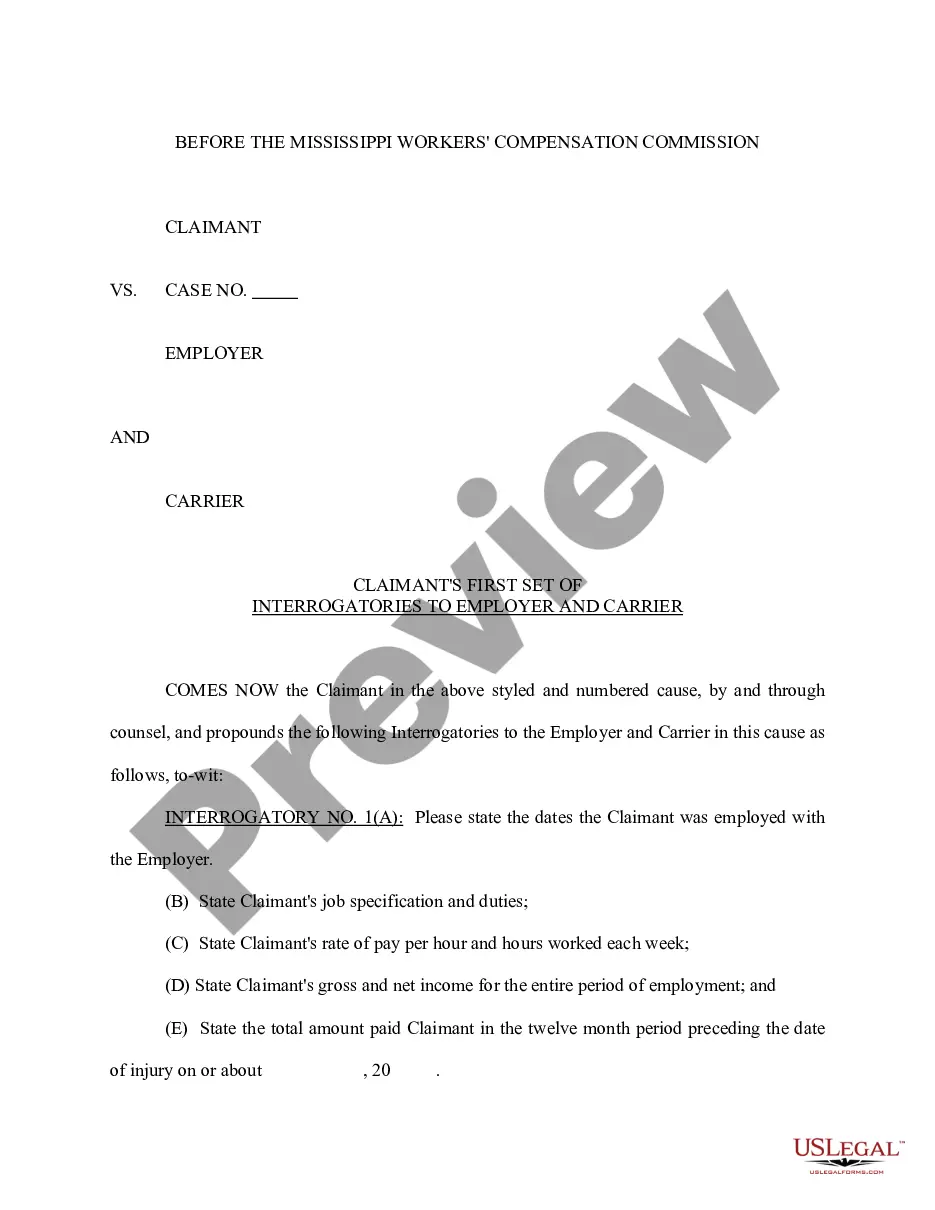
Rhode Island Quitclaim Deed from Corporation to Husband and Wife
What is this form?
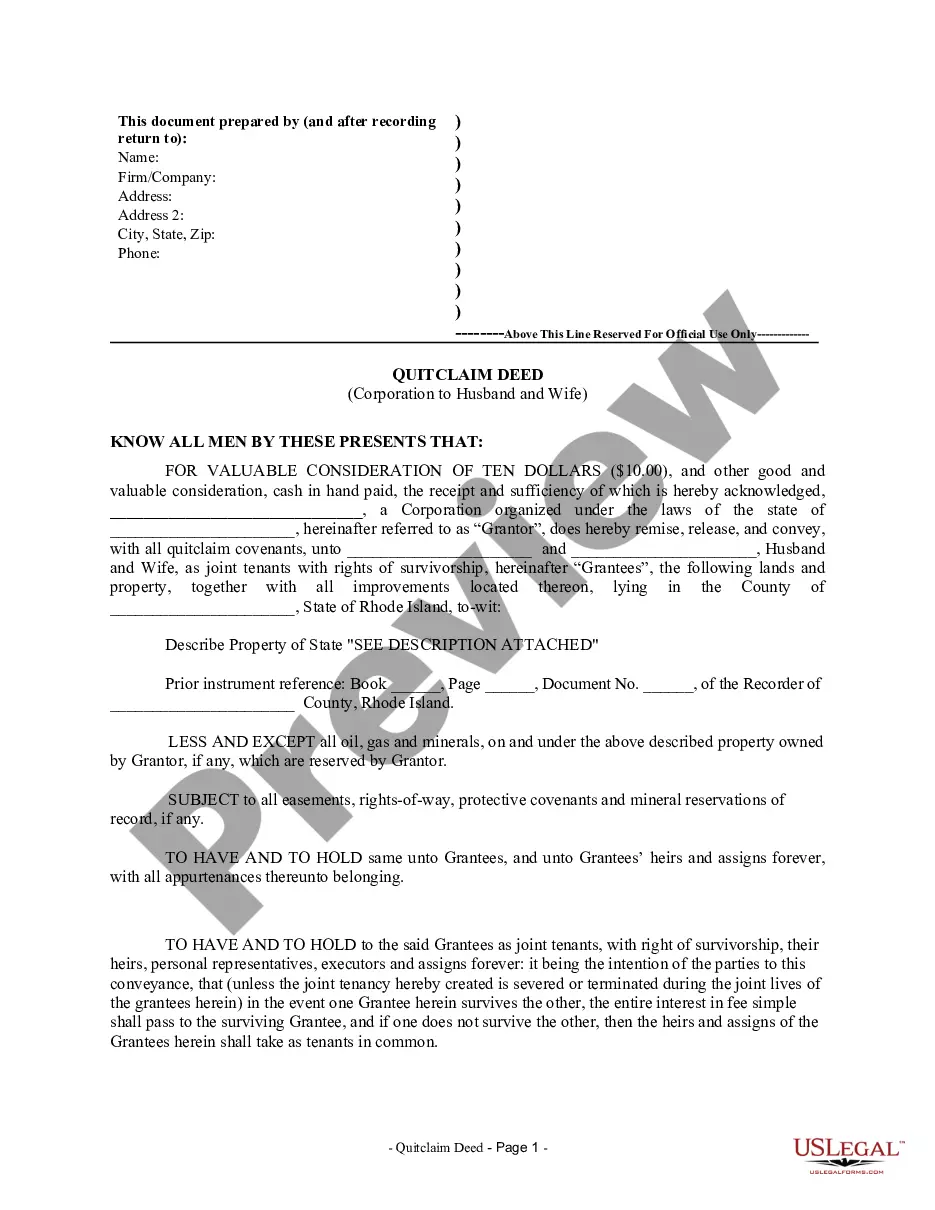
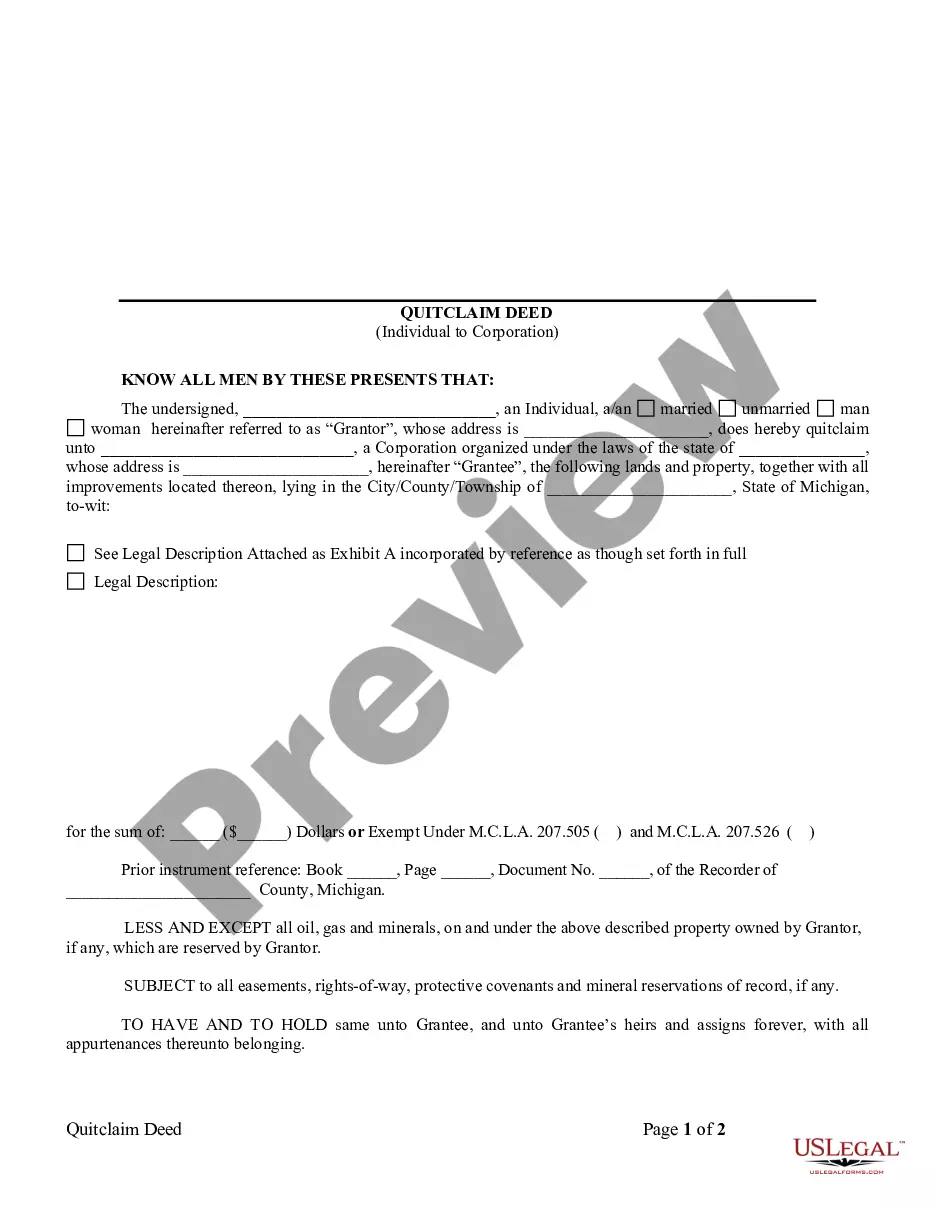
The Quitclaim Deed from Corporation to Husband and Wife is a legal document used to transfer property ownership from a corporation to a married couple. Unlike other types of deeds, this quitclaim deed does not guarantee that the property title is clear of liens or encumbrances. Instead, it simply conveys whatever interest the corporation may have in the property listed, making it essential for transferring ownership in a straightforward manner.
Main sections of this form
- Description of the property being conveyed.
- Reference to previous ownership documents.
- Reservation of oil, gas, and mineral rights by the corporation.
- Provisions about joint tenancy and survivorship rights for the grantees.
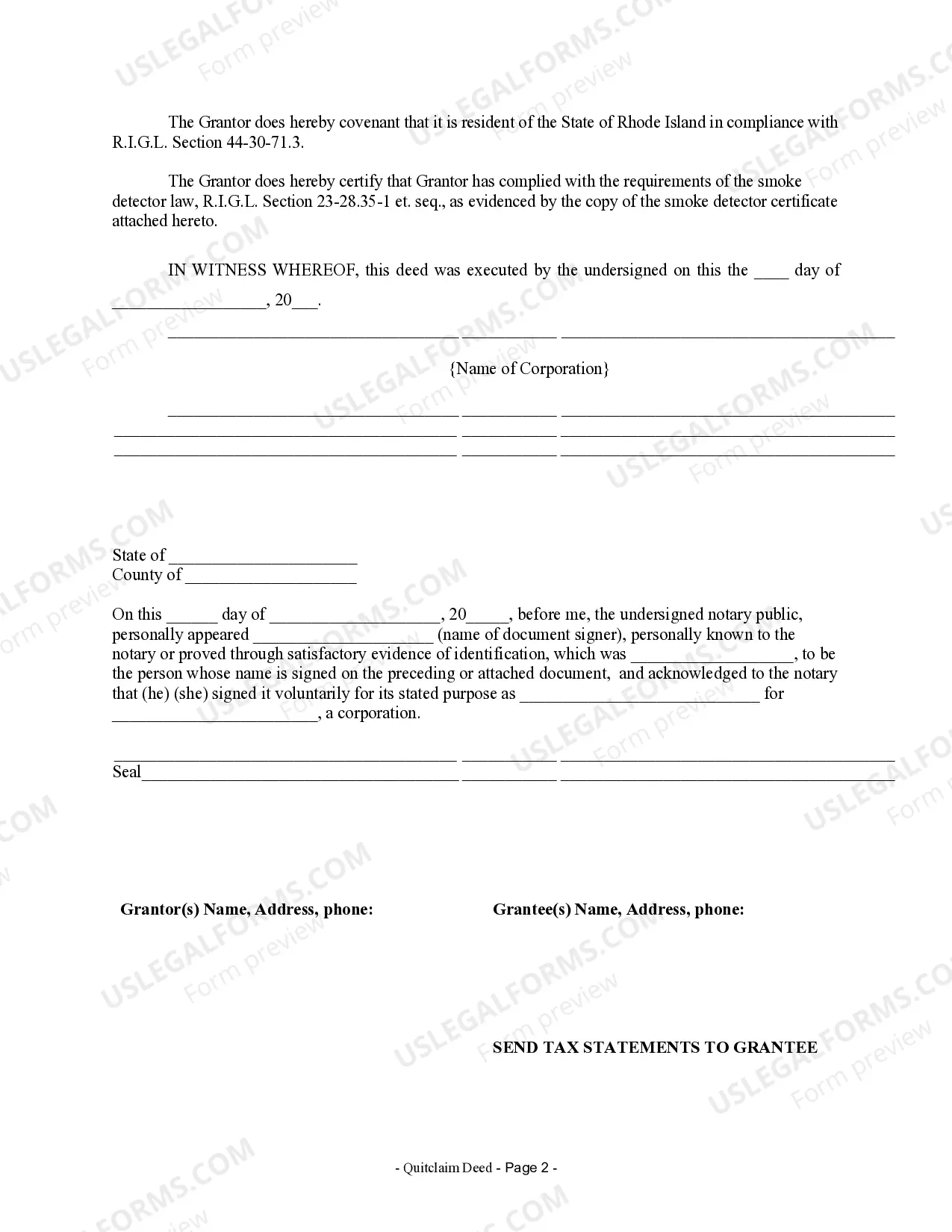
- Covenant regarding residency and compliance with local laws.
- Notary acknowledgment section to validate the deed.



Common use cases
This form is useful when a corporation wishes to transfer property ownership to a husband and wife. It is commonly used in estate planning, property consolidation, or when simplifying the transfer of property between family members. Utilizing a quitclaim deed can help avoid the complications often associated with traditional sales or transfers, particularly in instances where the full market value is not being exchanged.
Who needs this form
This form is intended for:
- Corporations looking to transfer property to married individuals.
- Husbands and wives seeking to formalize their ownership of property.
- Legal representatives or estate planners managing property transfers.
How to prepare this document
- Identify and describe the property being transferred.
- Fill in references to prior ownership documents, including book, page, and document numbers.
- Include any reservations for oil, gas, and mineral rights by the corporation.
- Specify the names of the grantees and their rights to ownership (joint tenancy).
- Complete the notary acknowledgment section to confirm execution of the deed.
- Ensure all parties sign and date the document to finalize the transfer.
Notarization guidance
To make this form legally binding, it must be notarized. Our online notarization service, powered by Notarize, lets you verify and sign documents remotely through an encrypted video session.
Get your form ready online
Our built-in tools help you complete, sign, share, and store your documents in one place.
Make edits, fill in missing information, and update formatting in US Legal Forms—just like you would in MS Word.
Download a copy, print it, send it by email, or mail it via USPS—whatever works best for your next step.
Sign and collect signatures with our SignNow integration. Send to multiple recipients, set reminders, and more. Go Premium to unlock E-Sign.
If this form requires notarization, complete it online through a secure video call—no need to meet a notary in person or wait for an appointment.
We protect your documents and personal data by following strict security and privacy standards.

Make edits, fill in missing information, and update formatting in US Legal Forms—just like you would in MS Word.

Download a copy, print it, send it by email, or mail it via USPS—whatever works best for your next step.

Sign and collect signatures with our SignNow integration. Send to multiple recipients, set reminders, and more. Go Premium to unlock E-Sign.

If this form requires notarization, complete it online through a secure video call—no need to meet a notary in person or wait for an appointment.

We protect your documents and personal data by following strict security and privacy standards.
Common mistakes
- Failing to properly describe the property, leading to potential disputes.
- Not including necessary reservation clauses for oil, gas, and mineral rights.
- Omitting notary acknowledgment, which can invalidate the deed.
- Leaving out essential details about the prior ownership references.
Advantages of online completion
- Convenient access to legally compliant forms that are easy to download and complete.
- Editability allows for quick adjustments to suit specific property transactions.
- Reliable guidance ensures all necessary legal language is included.
Looking for another form?

Form popularity
FAQ
Recording. Once the quitclaim deed is signed and notarized, it is a valid legal document.Recording serves to notify the public and the public authorities that the transaction has taken place. The grantee cannot assume legal title to the property without recording a quitclaim deed.
The drawback, quite simply, is that quitclaim deeds offer the grantee/recipient no protection or guarantees whatsoever about the property or their ownership of it. Maybe the grantor did not own the property at all, or maybe they only had partial ownership.
Your Deed will not expire or become invalid due to the mere passage of time. However, be aware that if the Deed is not recorded, it does not become public record.
Research quit claim deed requirements in your area. Obtain the proper form. Get a legal description of your property. Fill out the form. File the form with the county. When to Use a Quit Claim Deed. Questions?
Quitclaim deeds, therefore, are commonly used to transfer property within a family, such as from a parent to an adult child, between siblings, or when a property owner gets married and wants to add their spouse to the title. Married couples who own a home together and later divorce also use quitclaim deeds.
But you might be wondering if an owner can transfer a deed to another person without a real estate lawyer. The answer is yes. Parties to a transaction are always free to prepare their own deeds.A quitclaim deed, for example, is far simpler than a warranty deed.
Contesting A Quitclaim Deed Contesting the validity of a quitclaim deed must prove that one of the stipulations described above is invalid, that the deed was filed under false pretenses (e.g., the grantor's signature was forged) or that the grantor signed the deed under duress.
In California, the statute of limitations is five years. Any challenge to the quitclaim must be based on either a procedural error or on undo duress.
A quitclaim deed transfers title but makes no promises at all about the owner's title.A person who signs a quitclaim deed to transfer property they do not own results in no title at all being transferred since there is no actual ownership interest. The quitclaim deed only transfers the type of title you own.