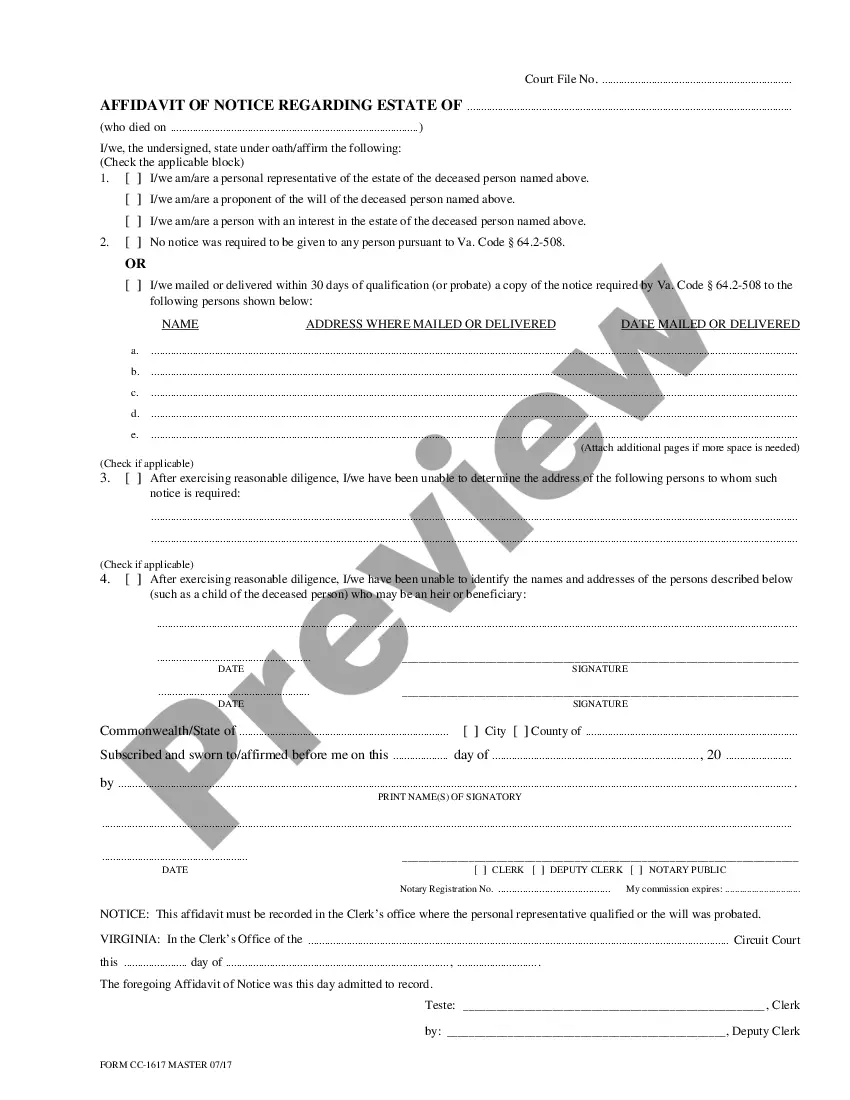
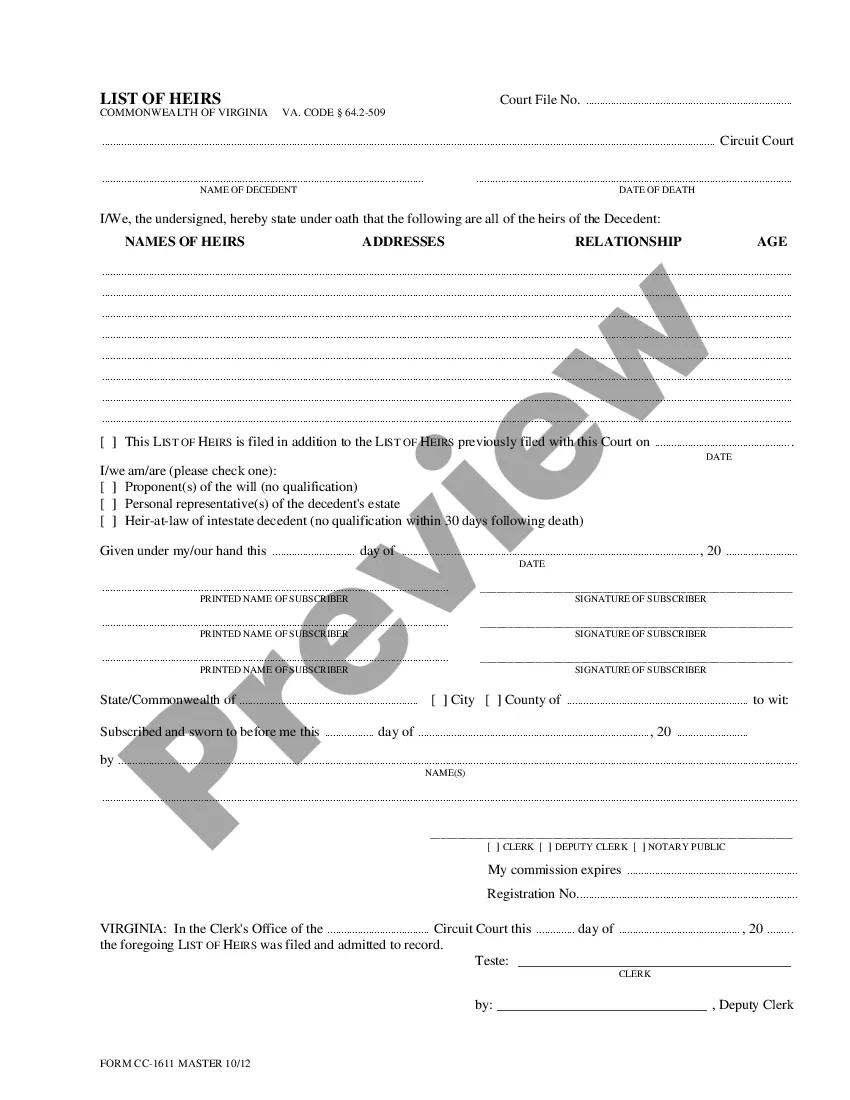
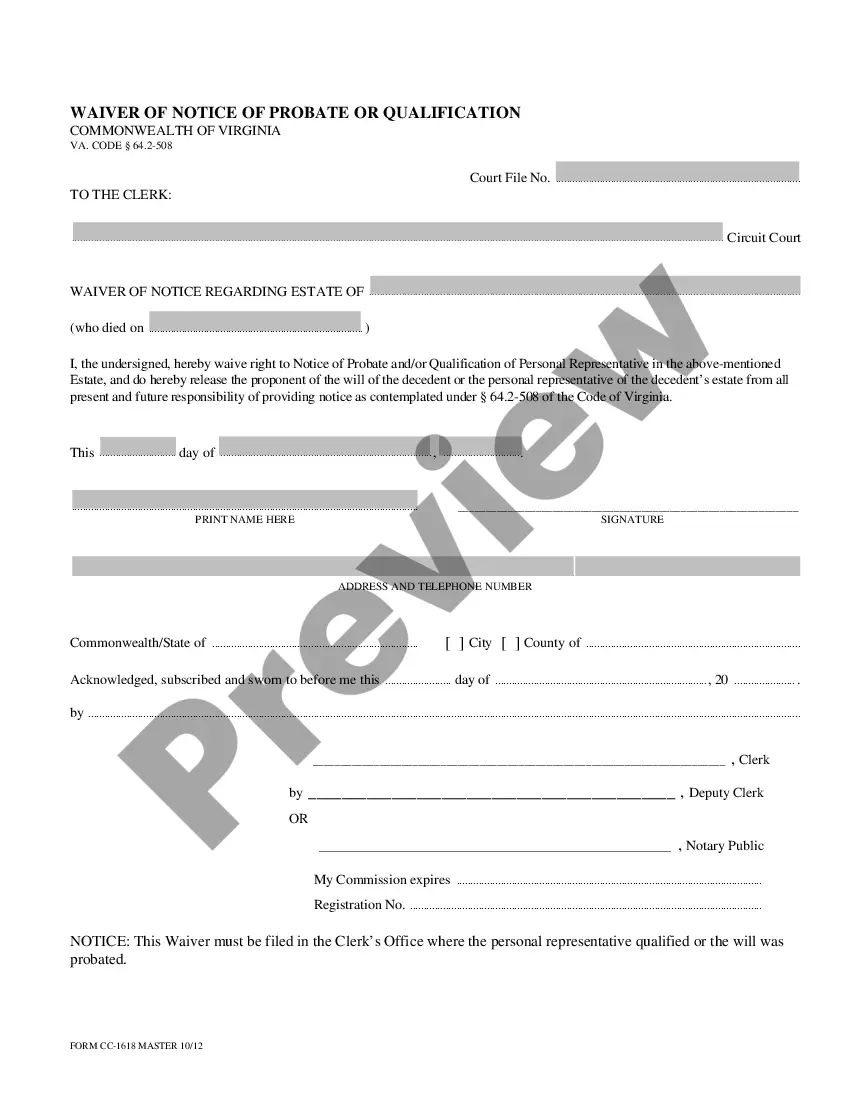
Virginia Probate
Probate documents help manage estates after death. Attorney-drafted templates are quick and user-friendly.

Similar documents: key differences
- Executor vs. Administrator — An executor manages an estate according to a will, while an administrator does so when there is no will.
- Letters Testamentary vs. Letters of Administration — Letters testamentary are for estates with a will; letters of administration apply to intestate estates.
- Probate vs. Non-Probate Assets — Probate assets go through court; non-probate assets pass directly to beneficiaries.
- Will vs. Trust — A will outlines asset distribution after death, while a trust manages assets during life and after death.
Search for more forms
Types of Probate forms
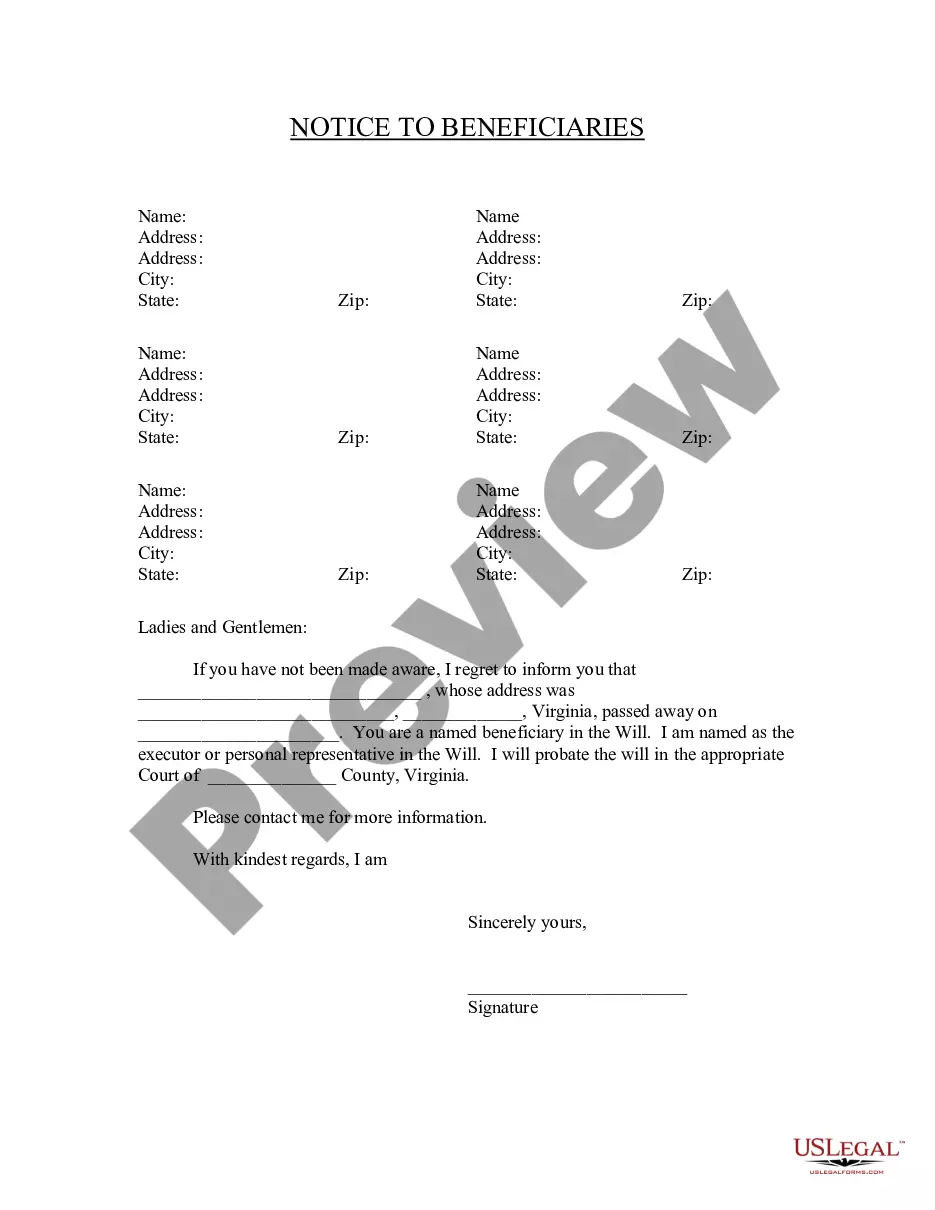
Notice to Beneficiaries of Being Named in Will
Notify beneficiaries about their status in a will and the probate process following someone's passing.
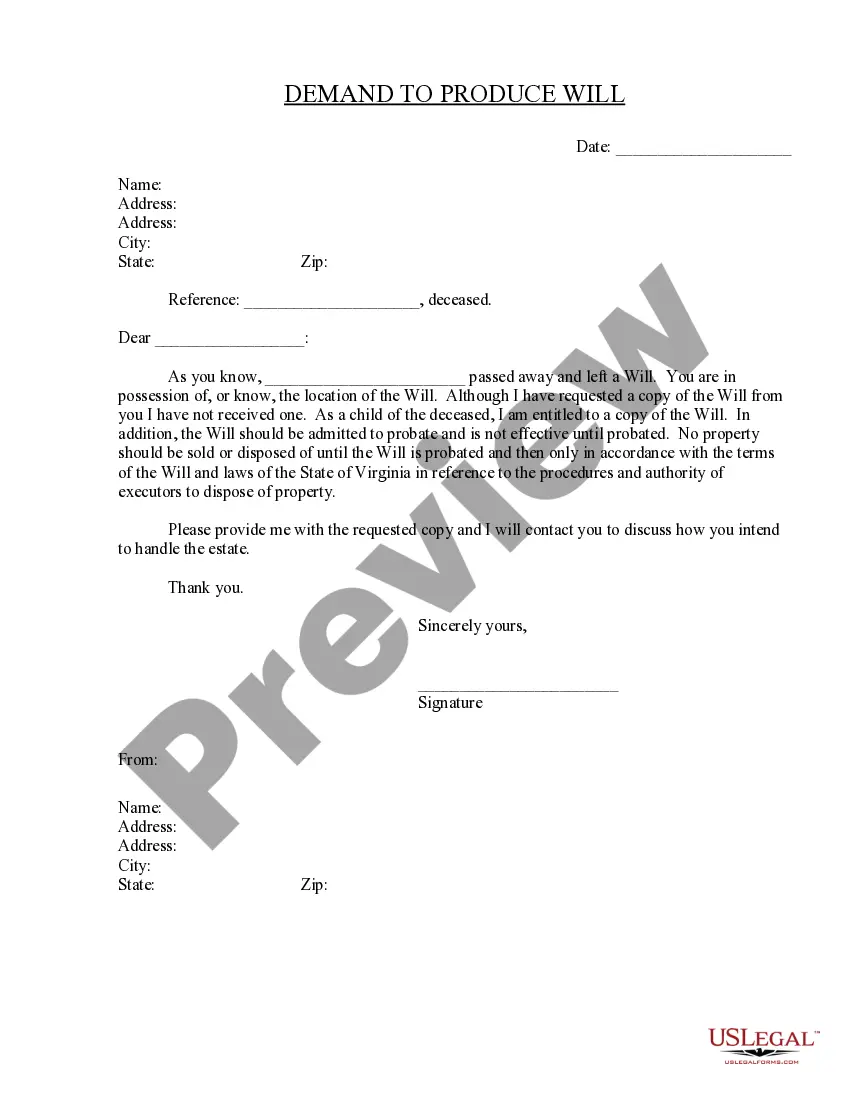
Demand to Produce Copy of Will from Heir
Request a copy of a deceased person's will from the executor or anyone in possession of it to ensure proper estate handling.
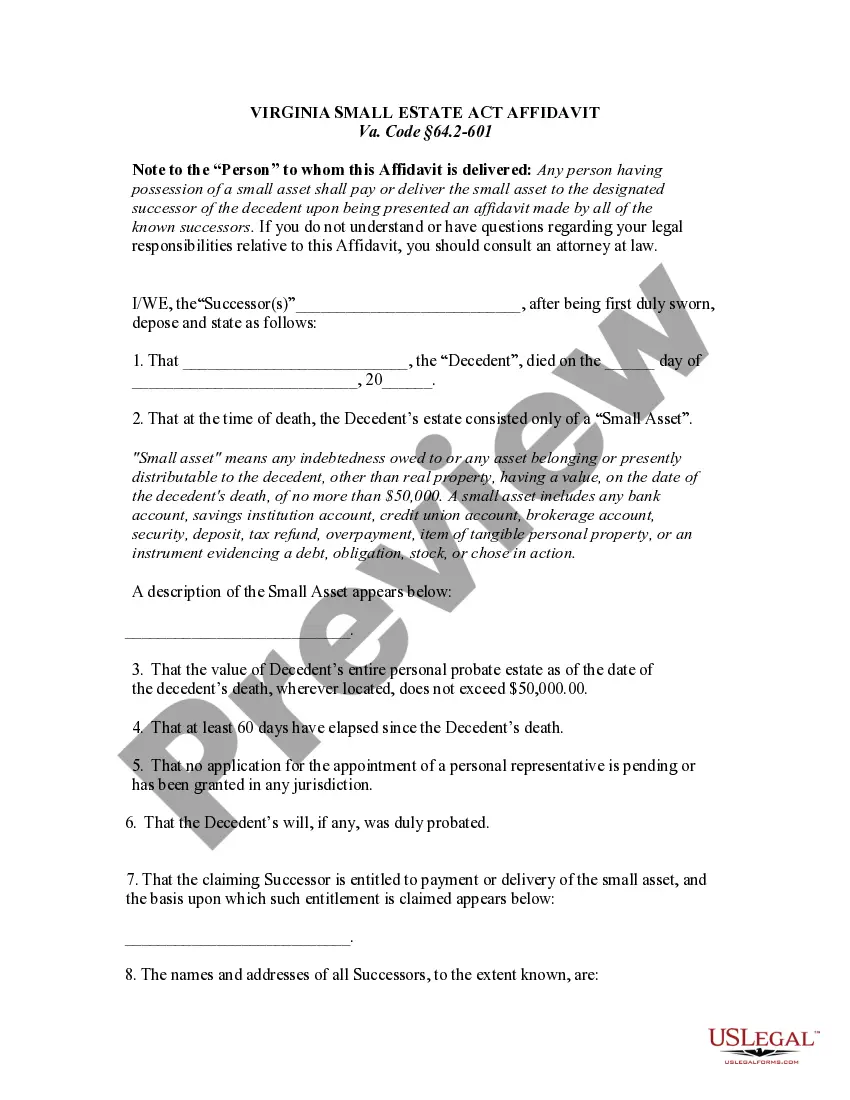
Small Estate Affidavit
Claim estate assets without formal probate, ideal for small estates under a specified value.
Inheritance Waiver: Spouses in Favor of Prior-Marriage Children
Protect your children's inheritance rights by waiving claims to each other's property in favor of children from prior marriages.
Affidavit: Attorney-In-Fact Acting as Executor
Use this document to affirm your role as an executor and validate a will after the deceased's passing.
Petition: Creditor Claim for Remaining Estate Assets
Use this petition to request the distribution of remaining estate assets among creditors after a decedent's passing.
Affidavit of Domicile
Verify your primary residence with this document, which can be crucial for legal and financial matters after a person's passing.
Common Virginia Probate documents
- Petition for Probate — Initiates the probate process and validates a will.
- Letters Testamentary — Grants authority to an executor to manage the estate.
- Letters of Administration — Appoints an administrator to handle an estate without a will.
- Inventory and Appraisement Forms — Lists and values the deceased's assets.
- Final Accounting Forms — Summarizes all financial transactions during the probate process.
FAQs
A trust can provide benefits not included in a will, like avoiding probate.
If no action is taken, the estate may be subject to state intestacy laws.
It's wise to review and update your plan after major life changes.
Beneficiary designations on accounts can override your will.
Yes, you can appoint separate agents for financial and healthcare decisions.
Key legal points
- Probate is necessary for distributing a deceased person's assets.
- Not all assets go through probate, such as those in trusts.
- Probate can vary significantly between states.
- A will must be validated by the probate court.
- Executors or administrators are responsible for managing the estate.
How to get started
Begin your probate journey in a few simple steps.
- Find a template or package that suits your needs.
- Review the template description, sample, and requirements.
- Access the templates with a subscription.
- Complete the document using our online editor.
- Export or send: download, email, mail, or request e-signature.
Practical tip
Consider naming a trusted family member as the executor to ease the process.