What is Probate?
Probate is the legal process for settling a deceased person's estate. It includes validating wills and distributing assets. Explore our state-specific templates to get started.
Probate involves managing a deceased person's estate. Our attorney-drafted templates make the process fast and easy.

Streamline the process of appointing a personal representative with everything needed for estate assignments in one convenient package.
Request a copy of a deceased person's Will to ensure estate matters are handled correctly and legally.
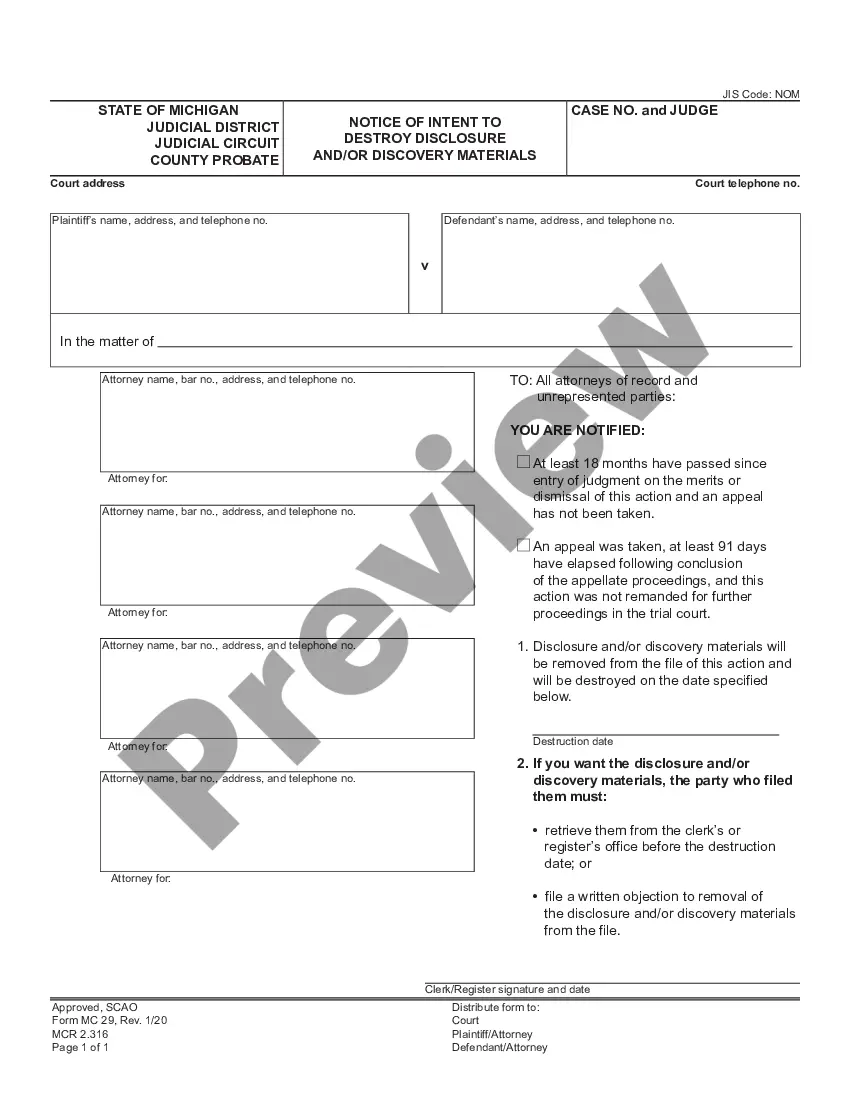
Use this notice to inform relevant parties about the impending destruction of discovery materials after a specific period has elapsed.
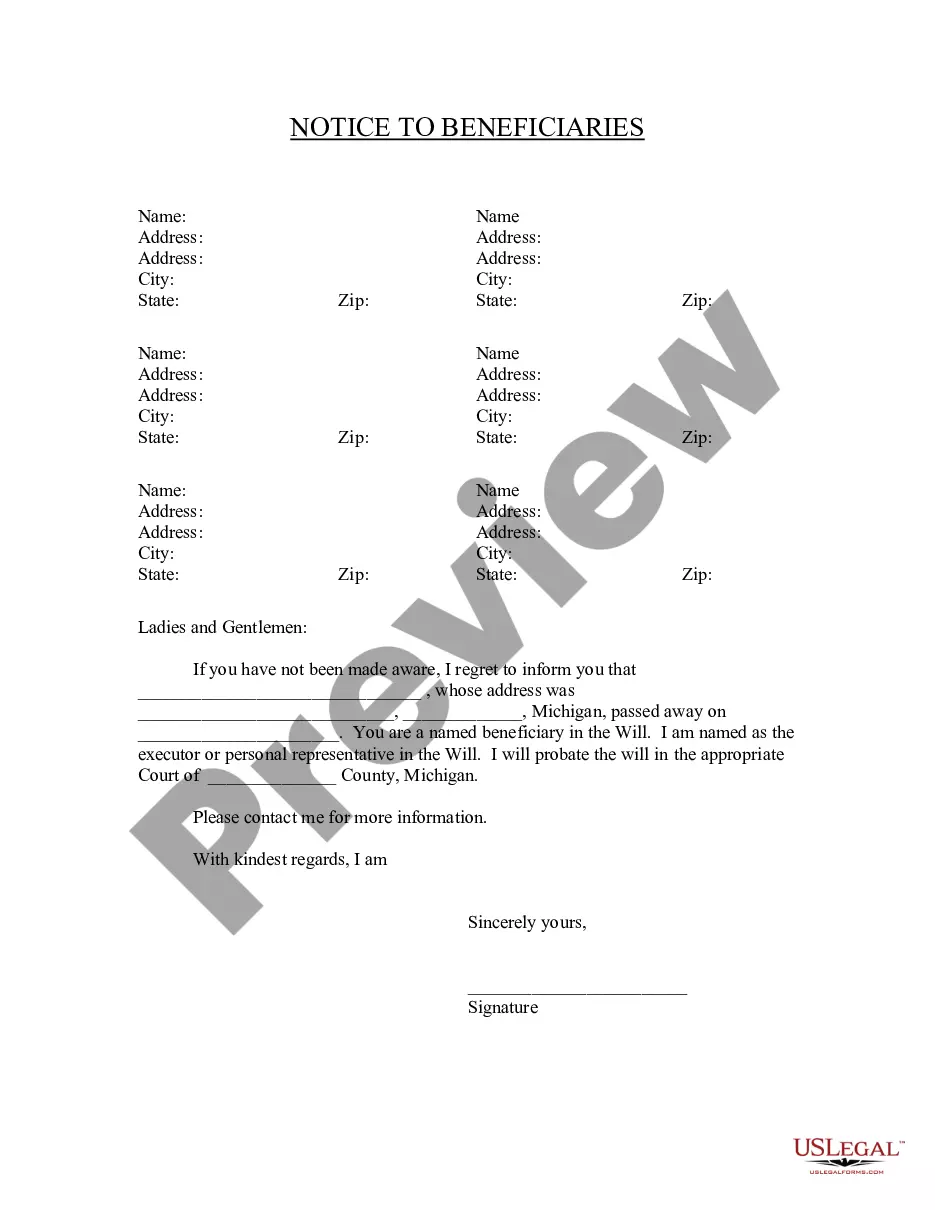
Notify beneficiaries named in a will about the deceased's passing and their entitlements.
Use this document to notify Michigan probate court of a foreign personal representative handling an estate with property in the state.
Essential for notifying parties involved in a probate case about an upcoming hearing before a judge.
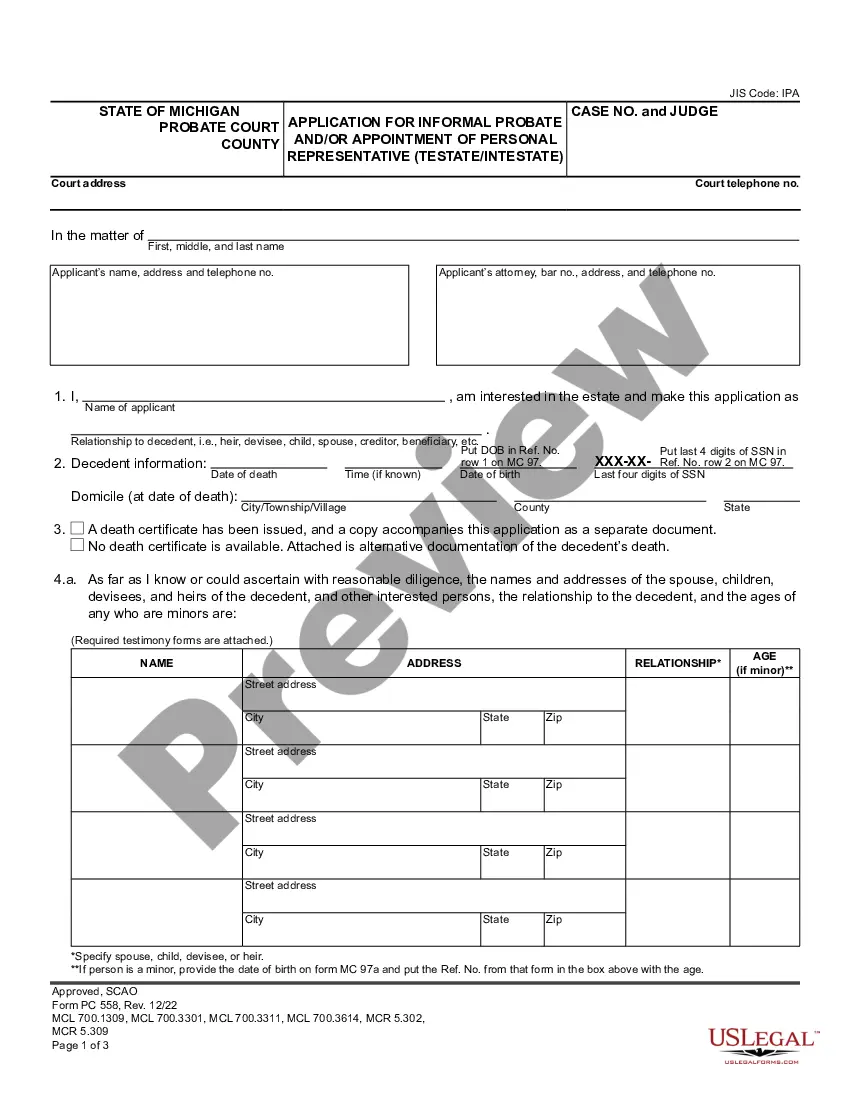
Use this form to initiate informal probate proceedings or appoint a personal representative after someone’s death, whether or not they left a will.
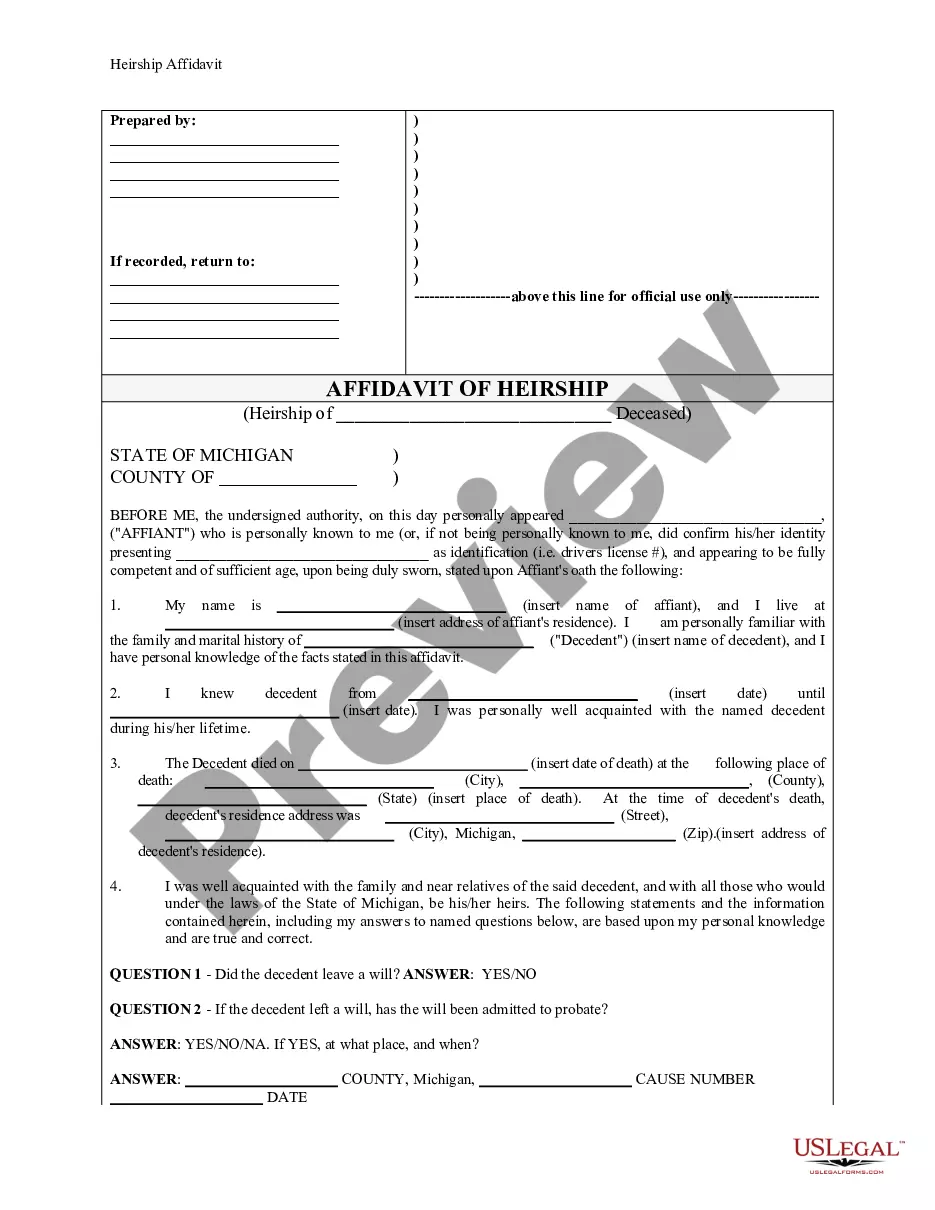
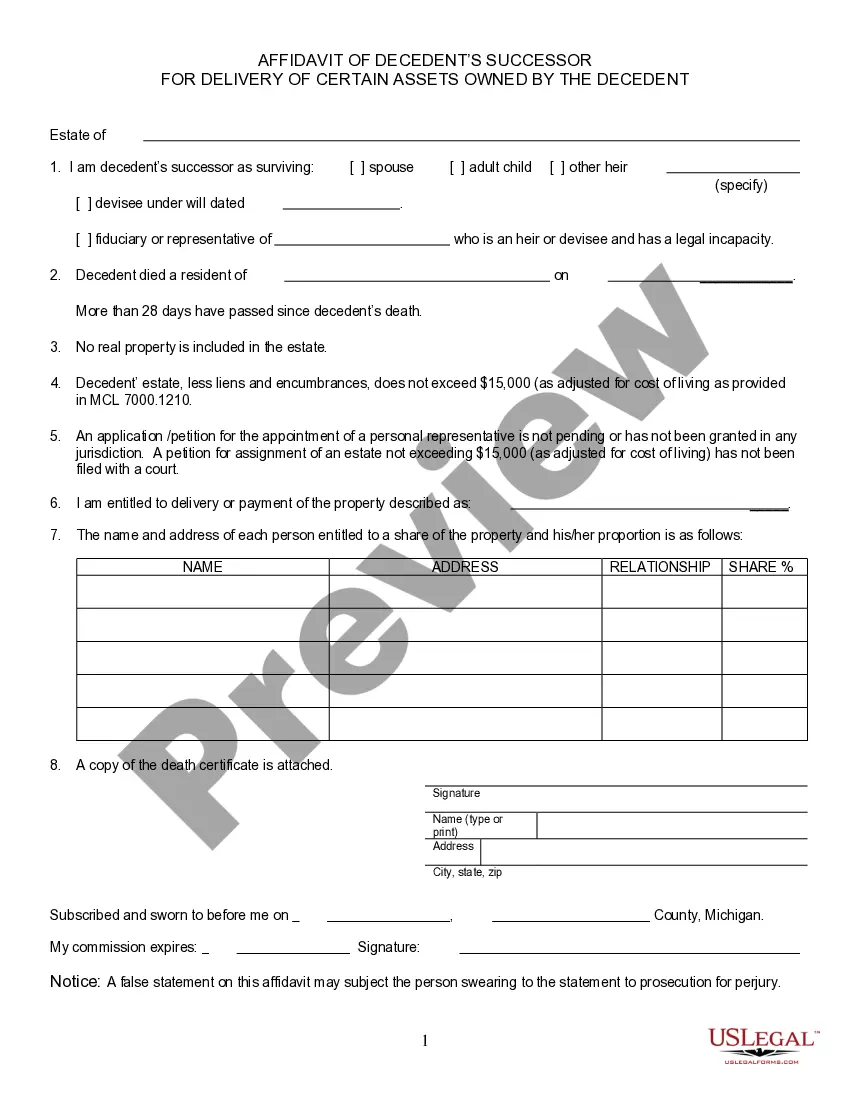
Establish the heirs of a deceased individual with this affidavit, crucial for settling estate matters without a will.
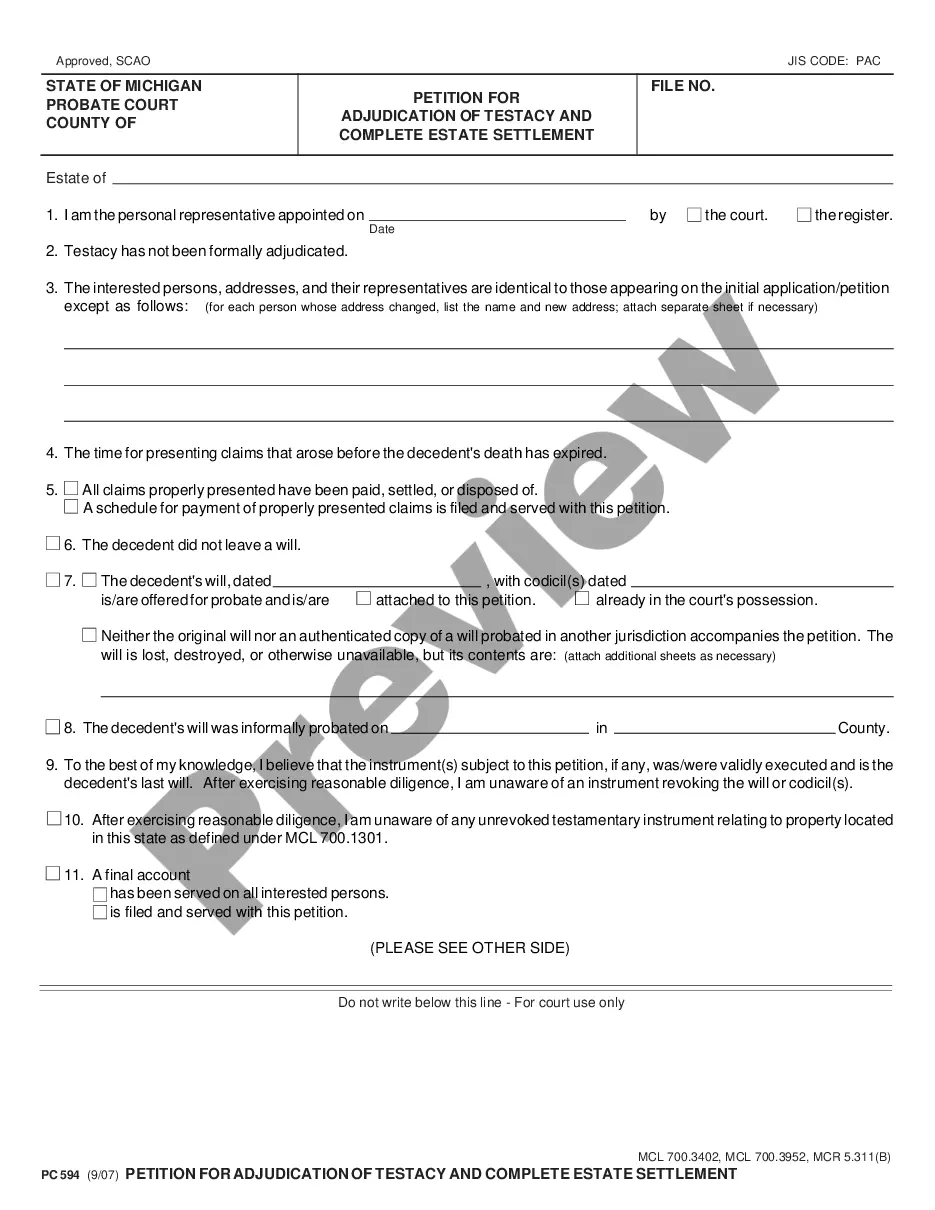
Determine heirs and settle an estate after a death with this essential legal petition.
Probate is necessary for distributing a deceased person's assets.
Wills must be validated through the probate court.
Intestate succession laws apply when no will exists.
Probate can involve both real and personal property.
Documents often require signatures from witnesses or notarization.
Begin the process easily with these steps.
A trust can provide additional control over asset distribution, but a will alone is sufficient.
If no estate plan exists, state laws will dictate asset distribution, often leading to probate.
Review your estate plan every few years or after major life changes.
Beneficiary designations typically override instructions in a will.
Yes, you can designate separate individuals for financial and health care decisions.