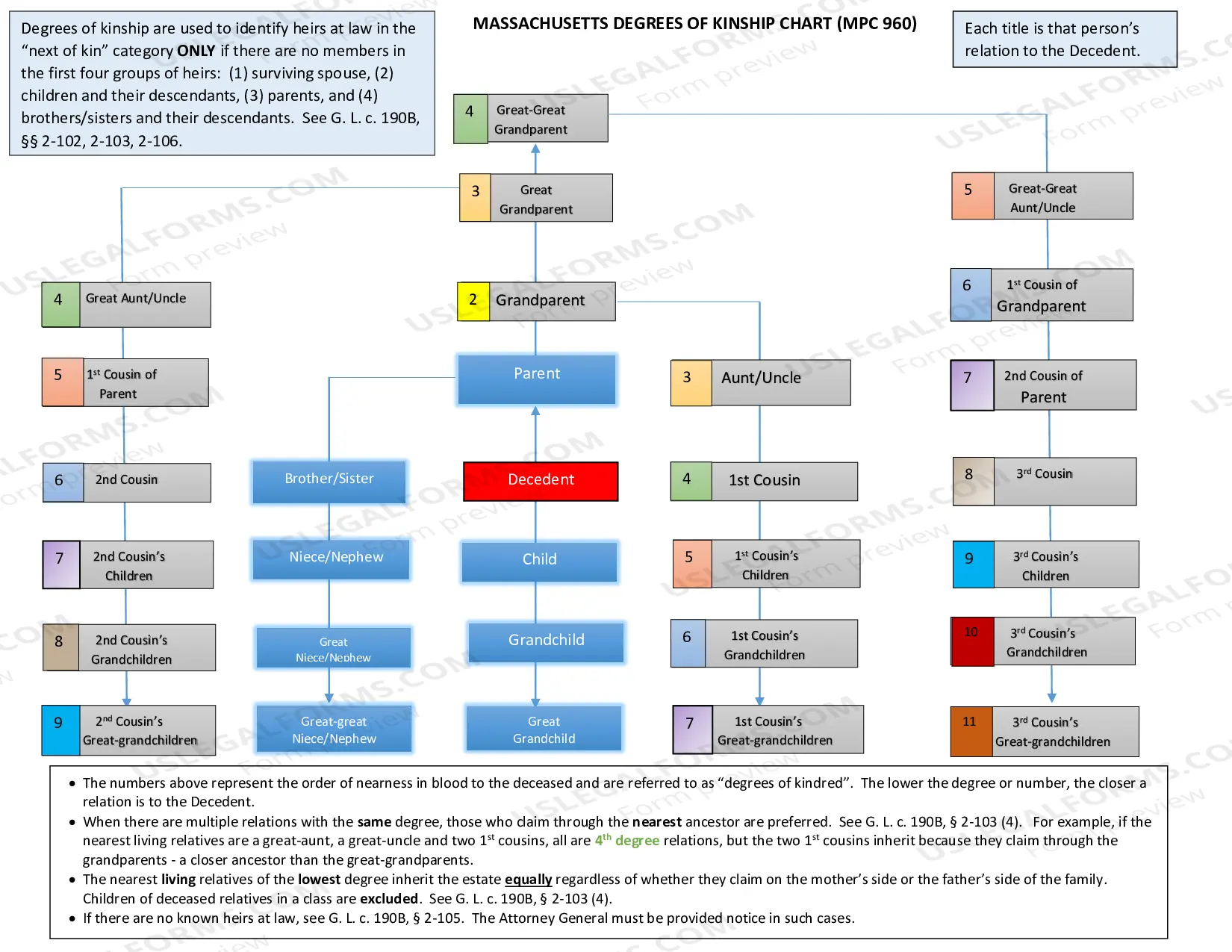
Massachusetts Probate
Probate involves managing a deceased person's estate. Attorney-drafted templates are quick and straightforward to complete.

Small Estates Summary Administration Package
PopularA state-specific probate package for small estates qualifying for simplified court administration — petition, inventory, accounting, and distribution forms.
Similar documents: key differences
- Will vs. Trust — a will outlines asset distribution after death, while a trust manages assets during life and after.
- Executor vs. Administrator — an executor is named in a will, an administrator is appointed when there’s no will.
- Letters Testamentary vs. Letters of Administration — the former is for estates with a will, the latter for those without.
- Probate vs. Non-Probate — probate involves court oversight, while non-probate transfers occur outside of court.
Search for more forms
Types of Probate forms
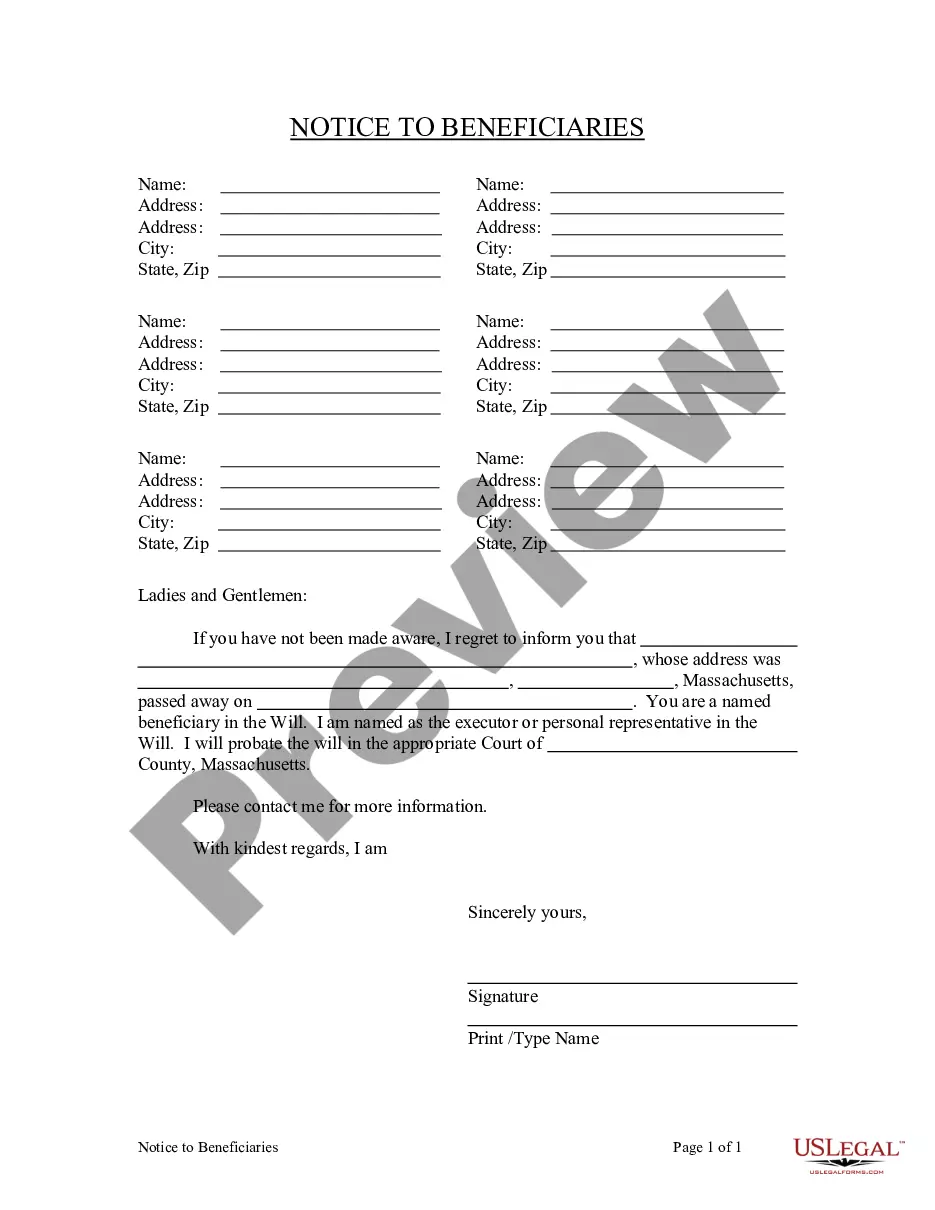
Notice to Beneficiaries of Being Named in Will
Notify beneficiaries of their involvement in a deceased person's will to ensure they understand their rights and obligations.
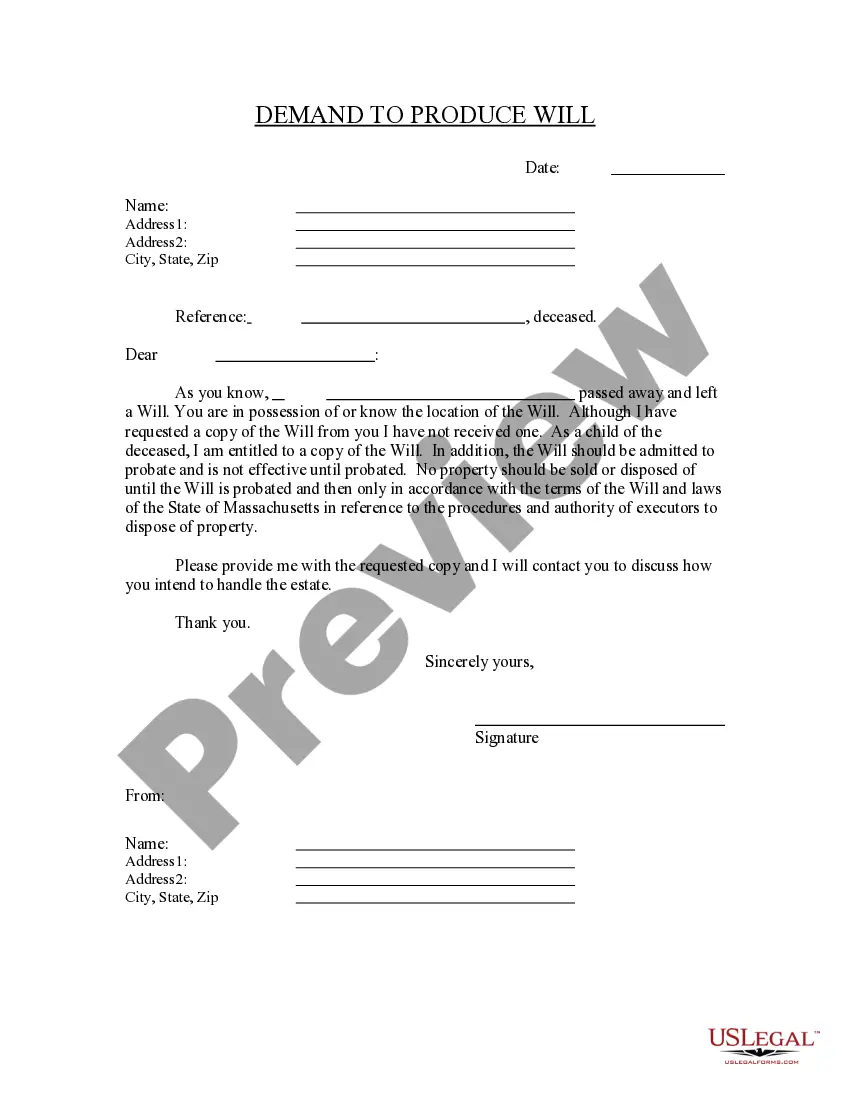
Demand to Produce Copy of Will from Heir
Request copies of a deceased person's will to clarify estate management responsibilities.
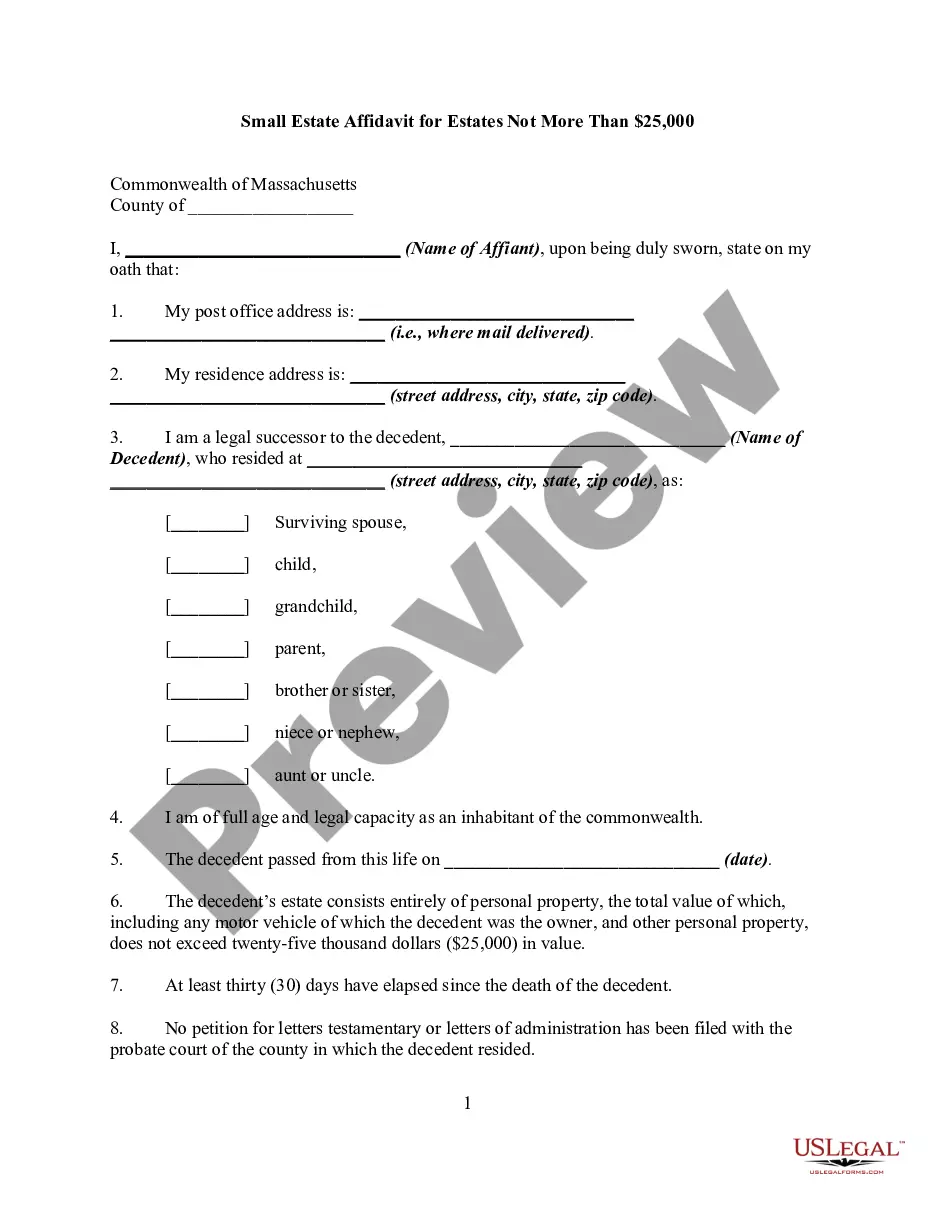
Small Estate Affidavit for Estates Under $25,000
Use this affidavit to settle small estates valued under $25,000 without formal probate, streamlining the process for heirs.
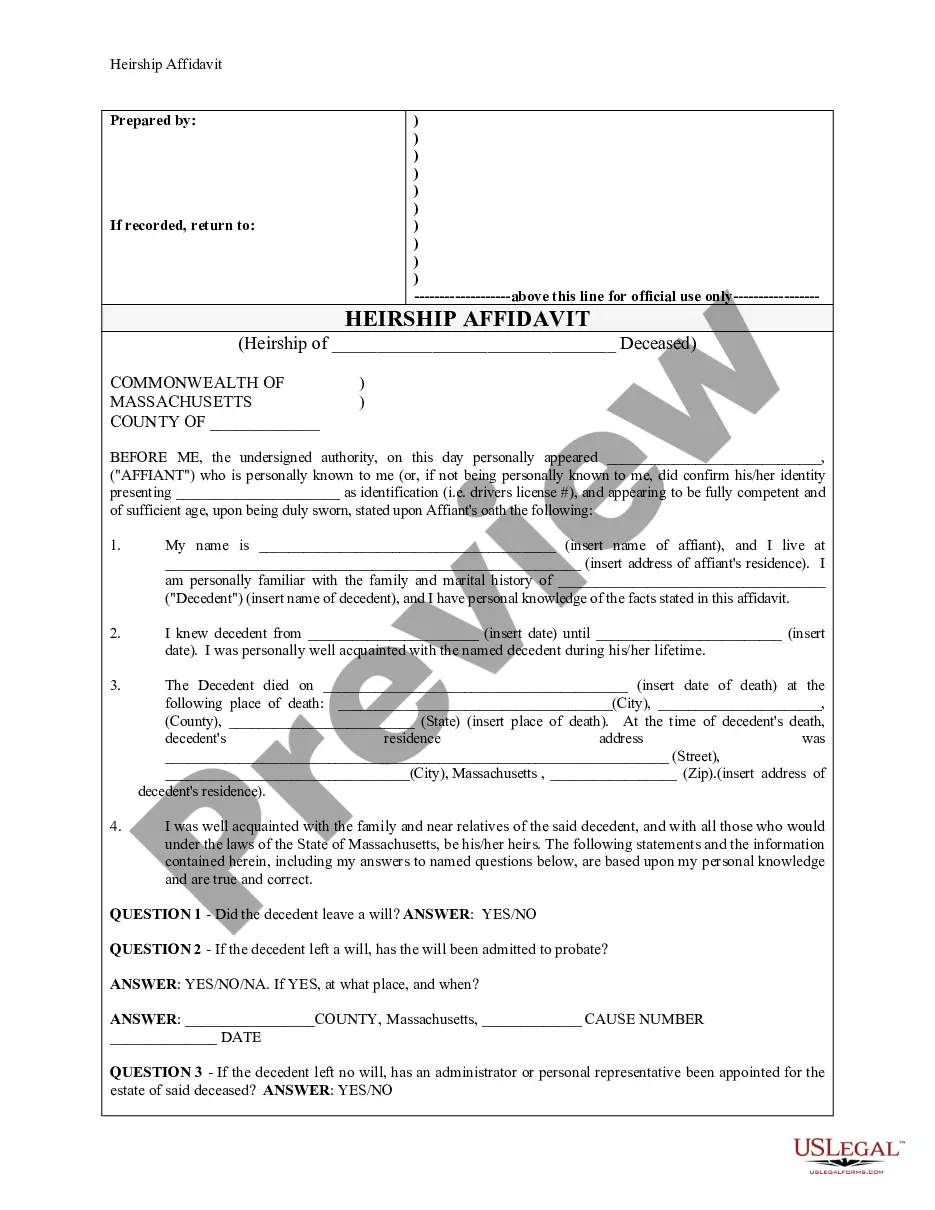
Heirship Affidavit - Descent
Establish the rightful heirs of a deceased person in Massachusetts, clarifying their legal standing in estate matters.
Affidavit: Attorney-In-Fact Acting as Executor
Use this document to affirm your role as an executor and validate a will after the deceased's passing.
Petition: Creditor Claim for Remaining Estate Assets
Use this petition to request the distribution of remaining estate assets among creditors after a decedent's passing.
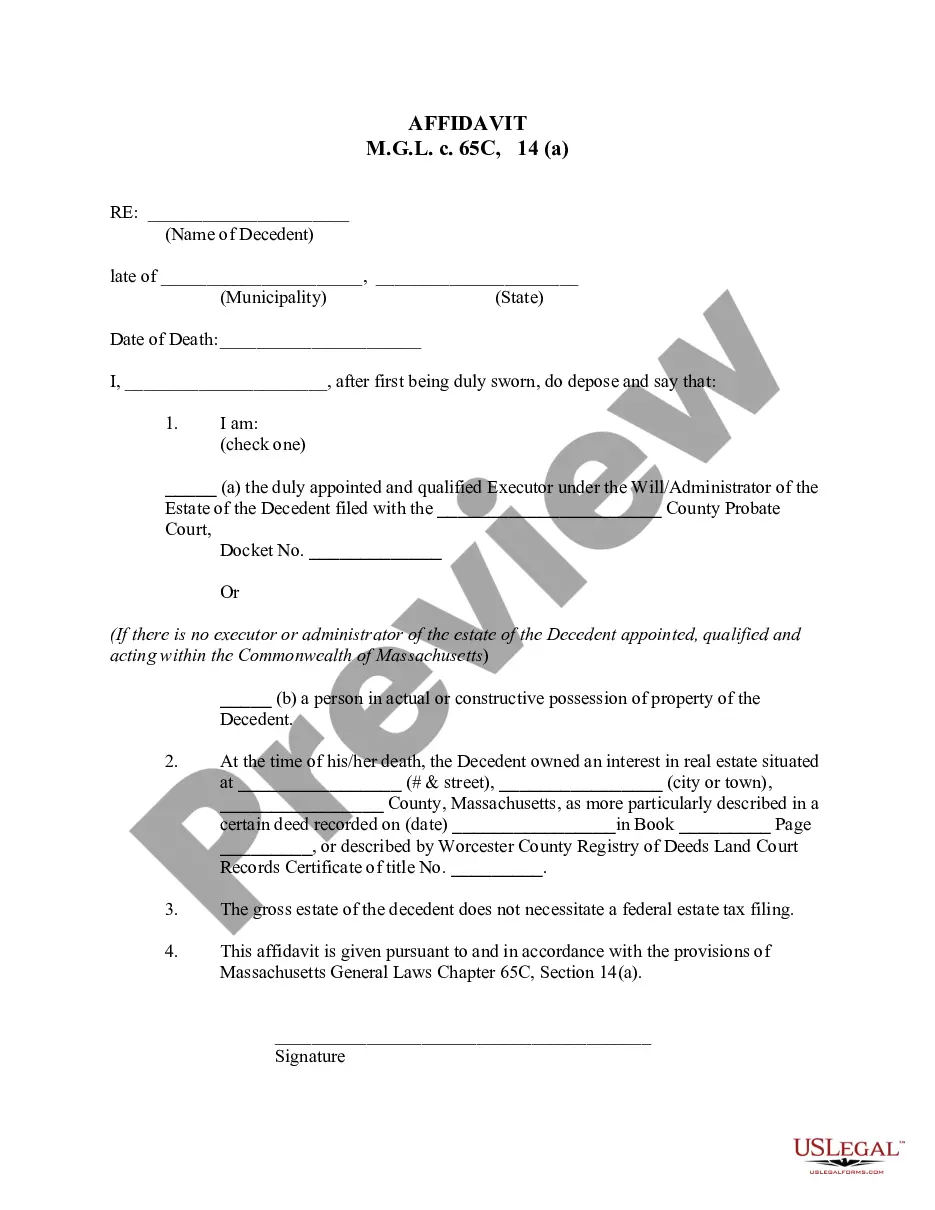
Affidavit of Executor
Complete this affidavit to affirm your role as an executor or administrator of a decedent's estate in Massachusetts, simplifying estate management.
Memorandum of Lis Pendens
Notify interested parties of an ongoing legal claim affecting real property ownership.
Common Massachusetts Probate documents
- Will — outlines how a person's assets should be distributed.
- Petition for Probate — requests the court to validate a will.
- Letters Testamentary — authorizes an executor to manage the estate.
- Inventory Form — lists the deceased's assets and their values.
- Final Accounting Form — provides an overview of estate expenses and distributions.
FAQs
A trust may offer additional benefits, such as avoiding probate.
The state will follow intestate laws to distribute assets, which may not align with your wishes.
Review your estate plan every few years or after major life events.
Beneficiary designations typically override will and trust instructions.
Yes, you can appoint separate agents for financial and healthcare decisions.
Key legal points
- Probate is required for most estates to ensure proper asset distribution.
- Wills must be filed in probate court to be valid.
- Heirs may contest a will if they believe it is invalid.
- Probate can take several months to years, depending on estate complexity.
- Certain assets may bypass probate, like joint accounts or life insurance.
How to get started
Begin your probate process with these easy steps.
- Find a template or package that matches your probate needs.
- Review the description, preview, and signing requirements.
- Obtain full access through a subscription.
- Complete the document using the online editor.
- Export or send the completed document via download, email, or mail.
Practical tip
If unsure whether to use a will or a trust, consider your estate's complexity and your wishes.