Kansas Probate

Probate involves managing a deceased person's estate. Our templates help simplify this process, making it quick and easy to complete.

intro Probate
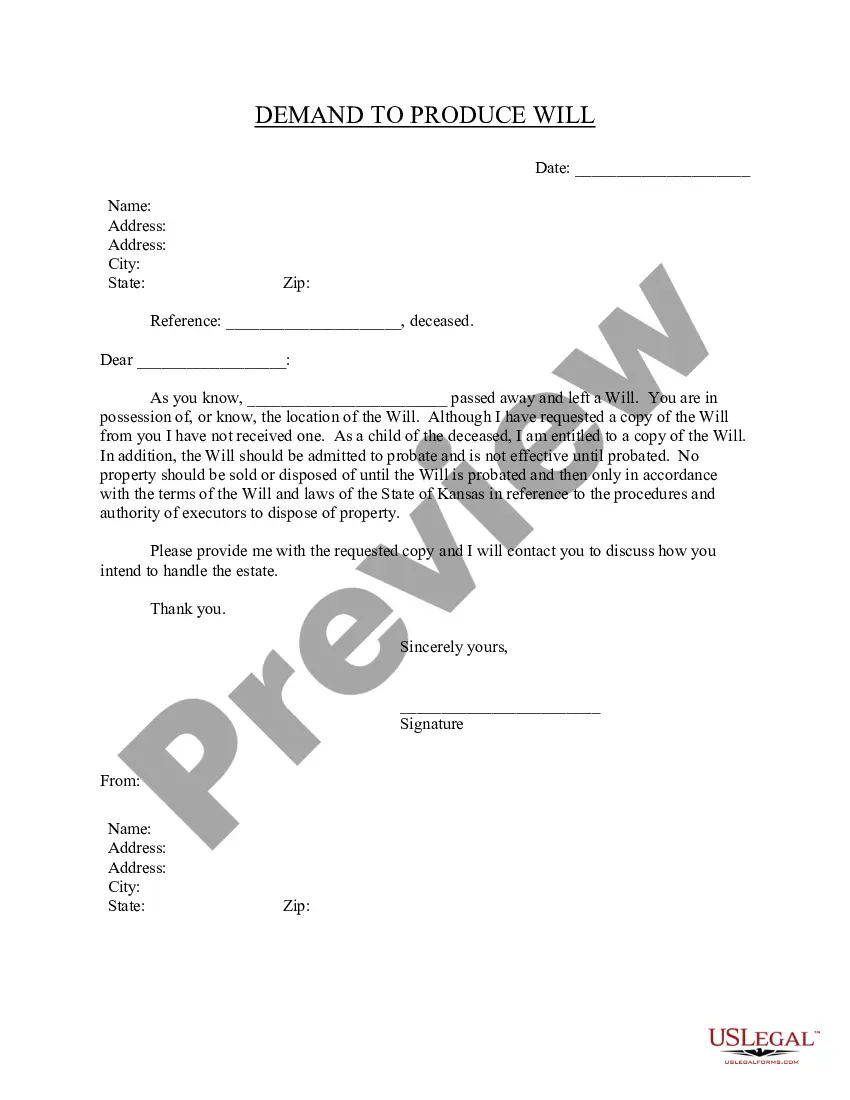
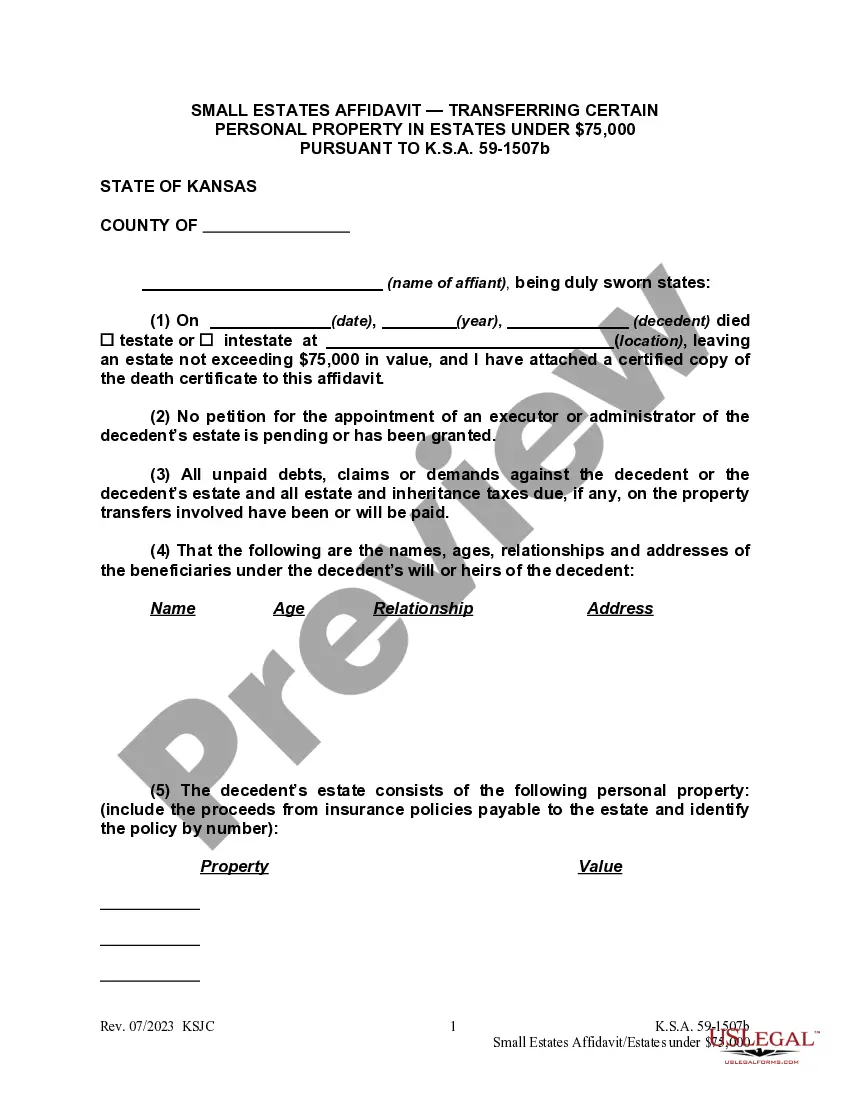
Form preview

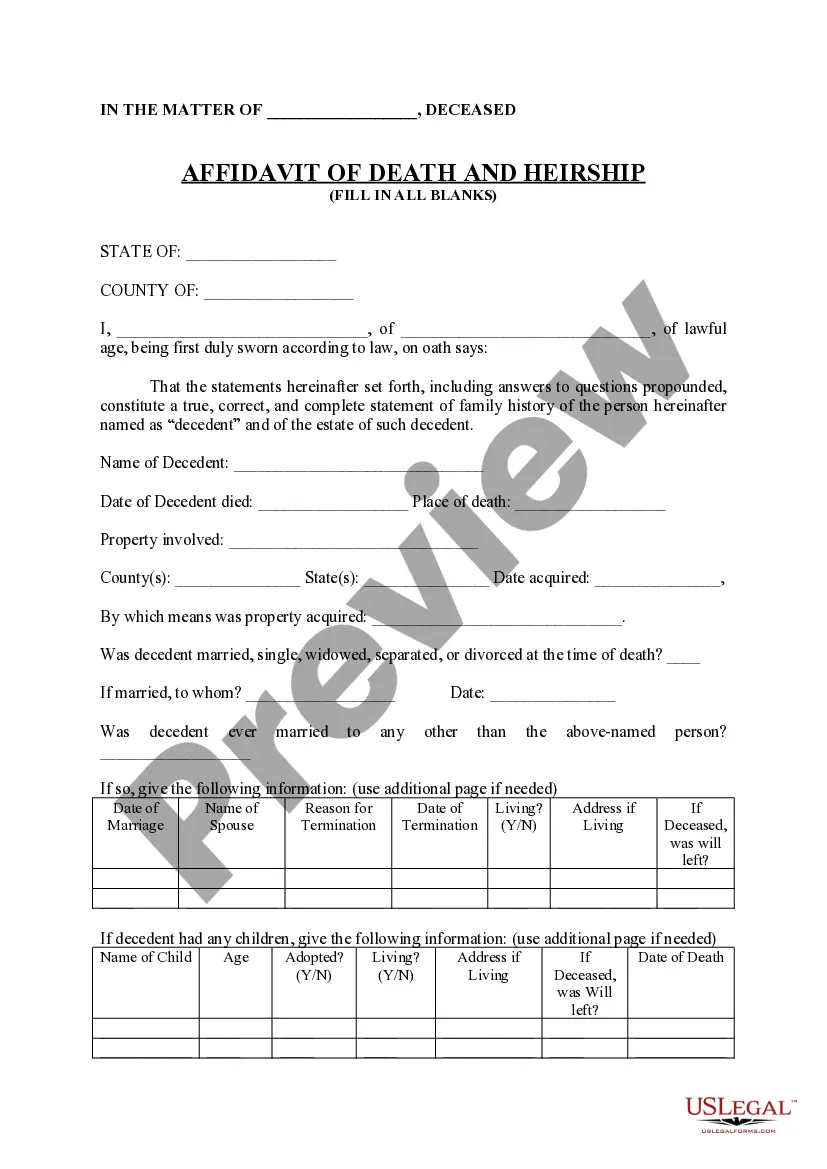
Kansas Small Estate Affidavit for estates under $75,000

Use this affidavit to transfer personal property from an estate valued under $75,000 without needing formal probate procedures.

View form

Common Kansas Probate documents

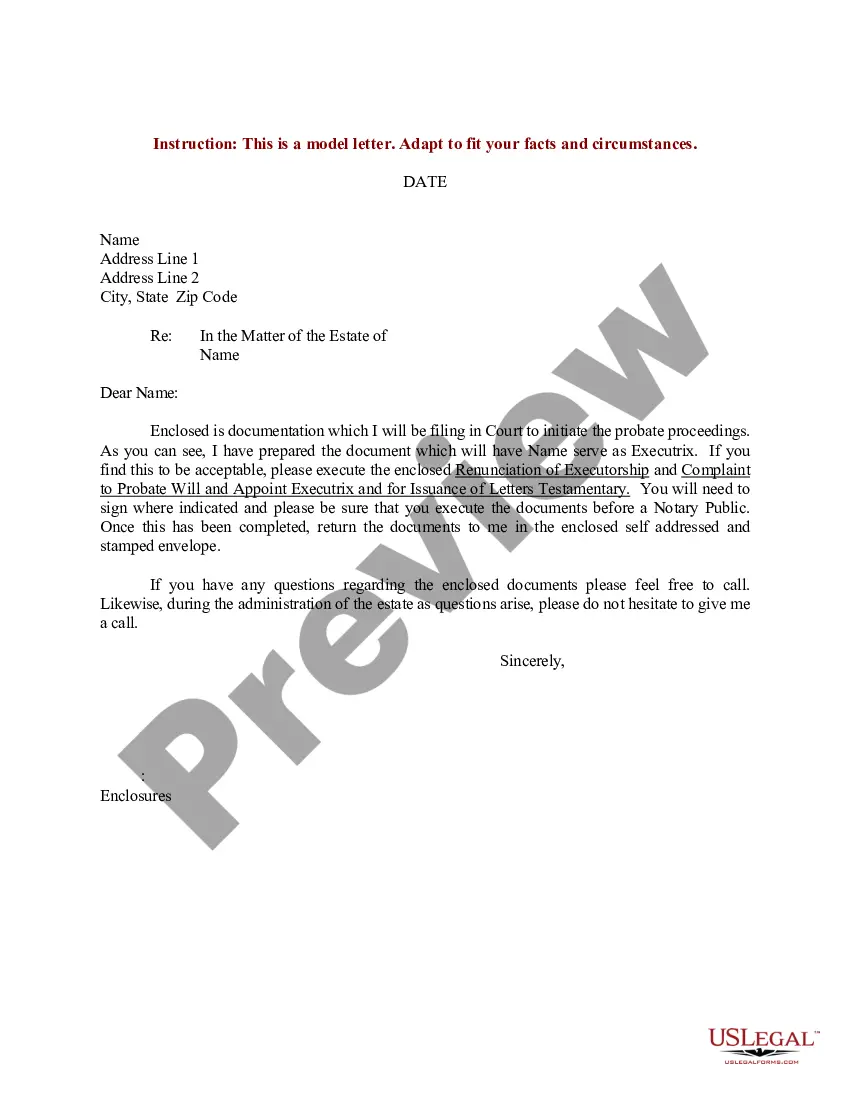
  • Petition for Probate — initiates the probate process to validate a will.
  • Letters Testamentary — grants authority to an executor to manage the estate.
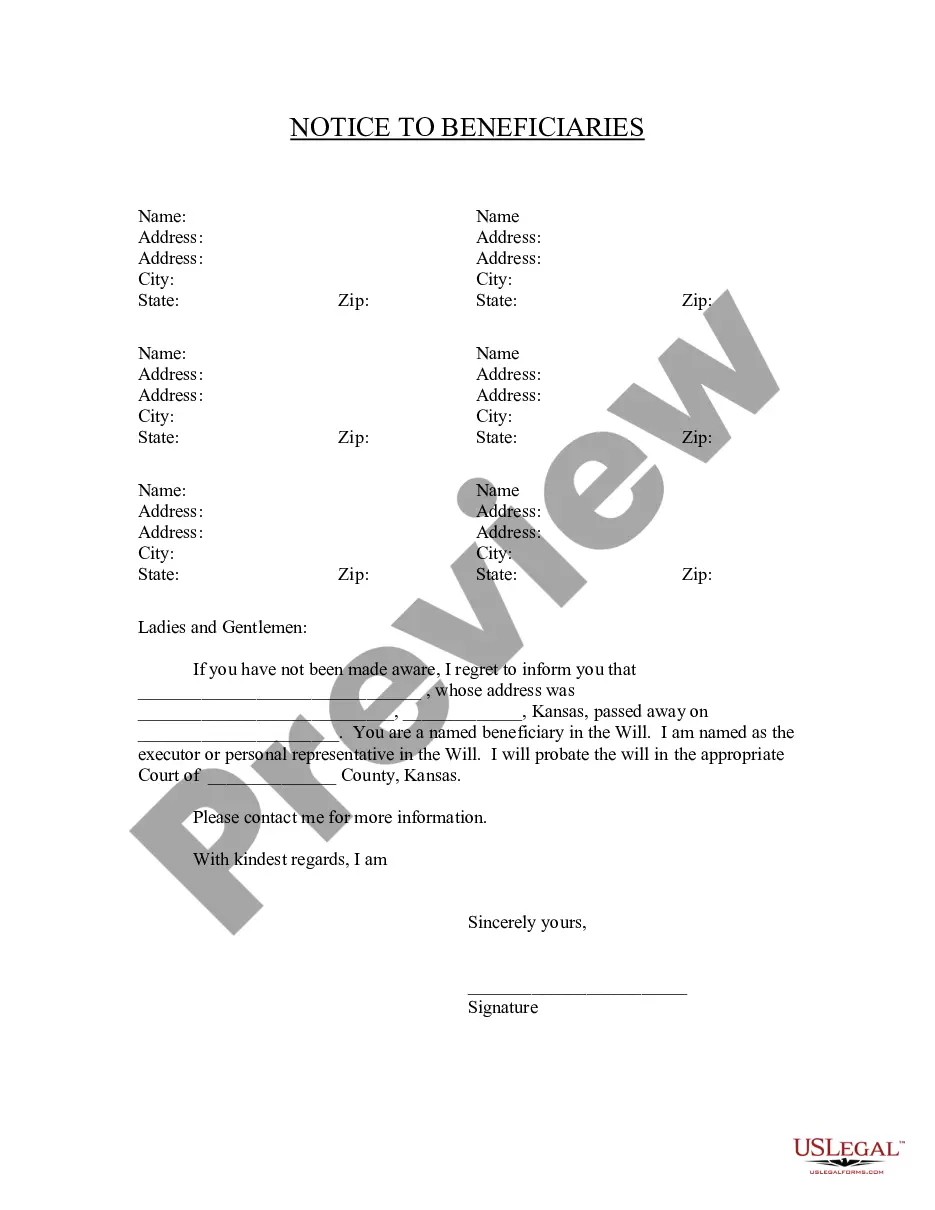
  • Notice of Probate — informs interested parties about the probate proceedings.
  • Inventory and Appraisement Forms — lists the deceased's assets and their values.
  • Final Accounting Forms — summarizes the financial activities of the estate.

Similar documents: key differences

  • Will vs. Trust — A will dictates asset distribution after death, while a trust manages assets during life.
  • Letters Testamentary vs. Letters of Administration — The former is for wills; the latter applies when there's no will.
  • Executor vs. Administrator — An executor is named in a will; an administrator is appointed by the court.
  • Petition for Letters Testamentary vs. Petition for Letters of Administration — The former requires a will; the latter does not.
  • Notice of Probate vs. Notice to Creditors — The first informs about the probate process; the second notifies creditors to claim debts.

How to get started

Begin your probate process easily with these steps.

  • Find a template or package that suits your needs.
  • Review the document description and requirements.
  • Access the document with a subscription.
  • Fill it out using the online editor.
  • Download, email, or send for e-signature once completed.

FAQs

Not necessarily. A will can effectively manage your estate, but trusts offer additional benefits.

If no action is taken, state laws will dictate how your estate is managed and distributed.

It's advisable to review your estate plan every few years or after major life changes.

Beneficiary designations can override your will, so ensure they align with your overall estate plan.

Yes, you can appoint separate agents for financial and health matters in your estate documents.

Glossary

  • Probate - The legal process for administering a deceased person's estate.
  • Executor - The person appointed to carry out the instructions of a will.
  • Administrator - The person appointed by the court to manage an estate without a will.
  • Letters Testamentary - Court documents that authorize an executor to manage an estate.
  • Will - A legal document specifying how a person's assets should be distributed.
  • Trust - A legal arrangement for holding and managing assets for beneficiaries.
  • Beneficiary - A person designated to receive assets from a will or trust.
  • Inventory - A detailed list of a deceased person's assets and their values.
  • Petition - A formal request submitted to a court for a specific action.
  • Notice of Probate - A document informing interested parties about ongoing probate proceedings.

Trusted by over 3 million people of the world’s leading companies