Illinois Probate
Probate involves managing a deceased person's estate. Attorney-drafted templates are quick and straightforward to complete.

Similar documents: key differences
- Will vs. Trust — a will directs asset distribution after death, while a trust manages assets during and after life.
- Executor vs. Administrator — an executor is named in a will; an administrator is appointed when there is no will.
- Testate vs. Intestate — testate means the deceased left a will, while intestate indicates no will exists.
- Letters Testamentary vs. Letters of Administration — the former grants authority under a will; the latter applies when there's no will.
Search for more forms
Types of Probate forms
Notice to Beneficiaries of Being Named in Will
Inform beneficiaries of their status in a will and provide essential details about the probate process.
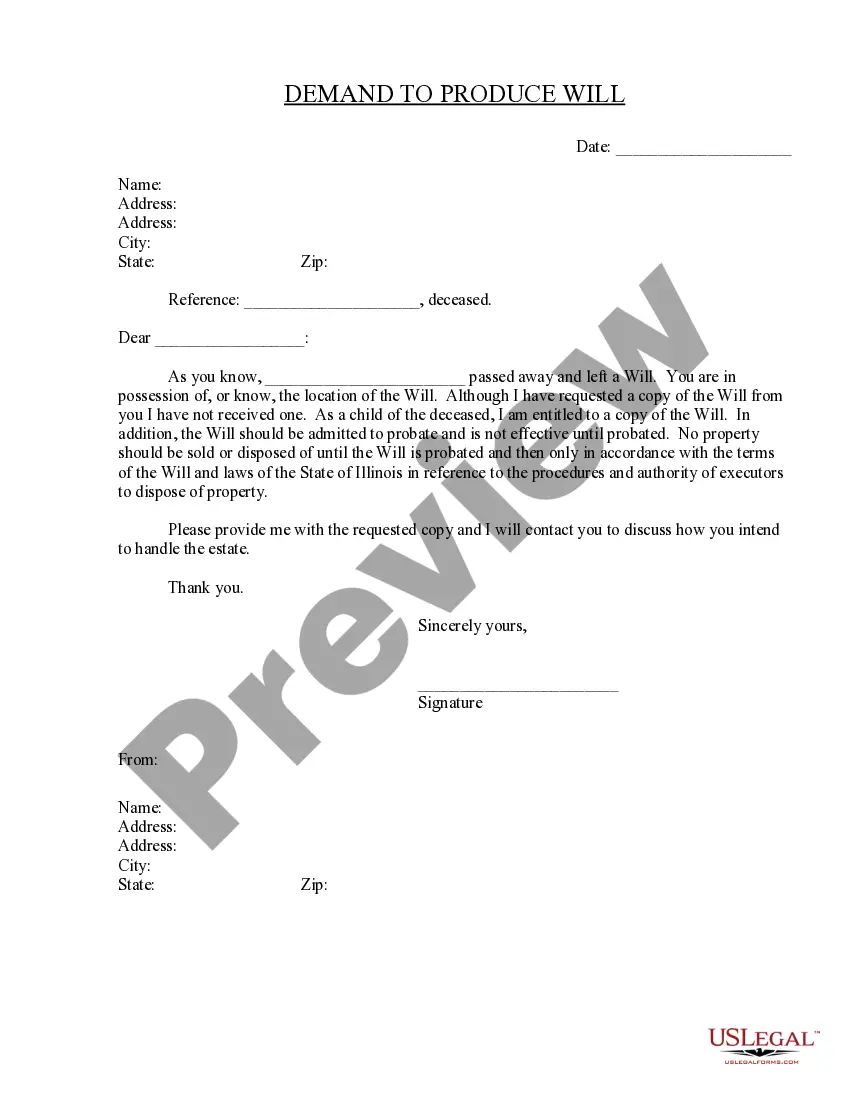
Demand to Produce Copy of Will from Heir
Request a copy of the deceased's Will to ensure proper estate administration as an heir.
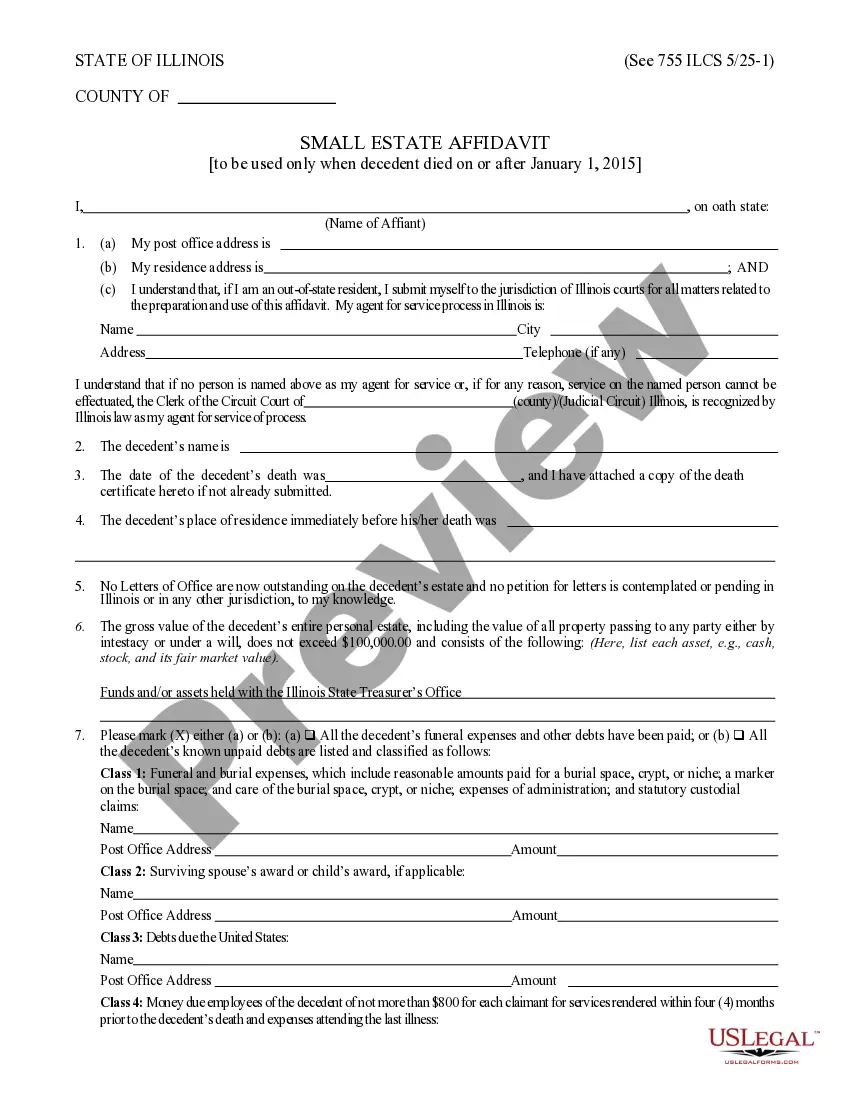
Small Estate Affidavit
Claim estate assets without formal probate, ideal for small estates under a specified value.
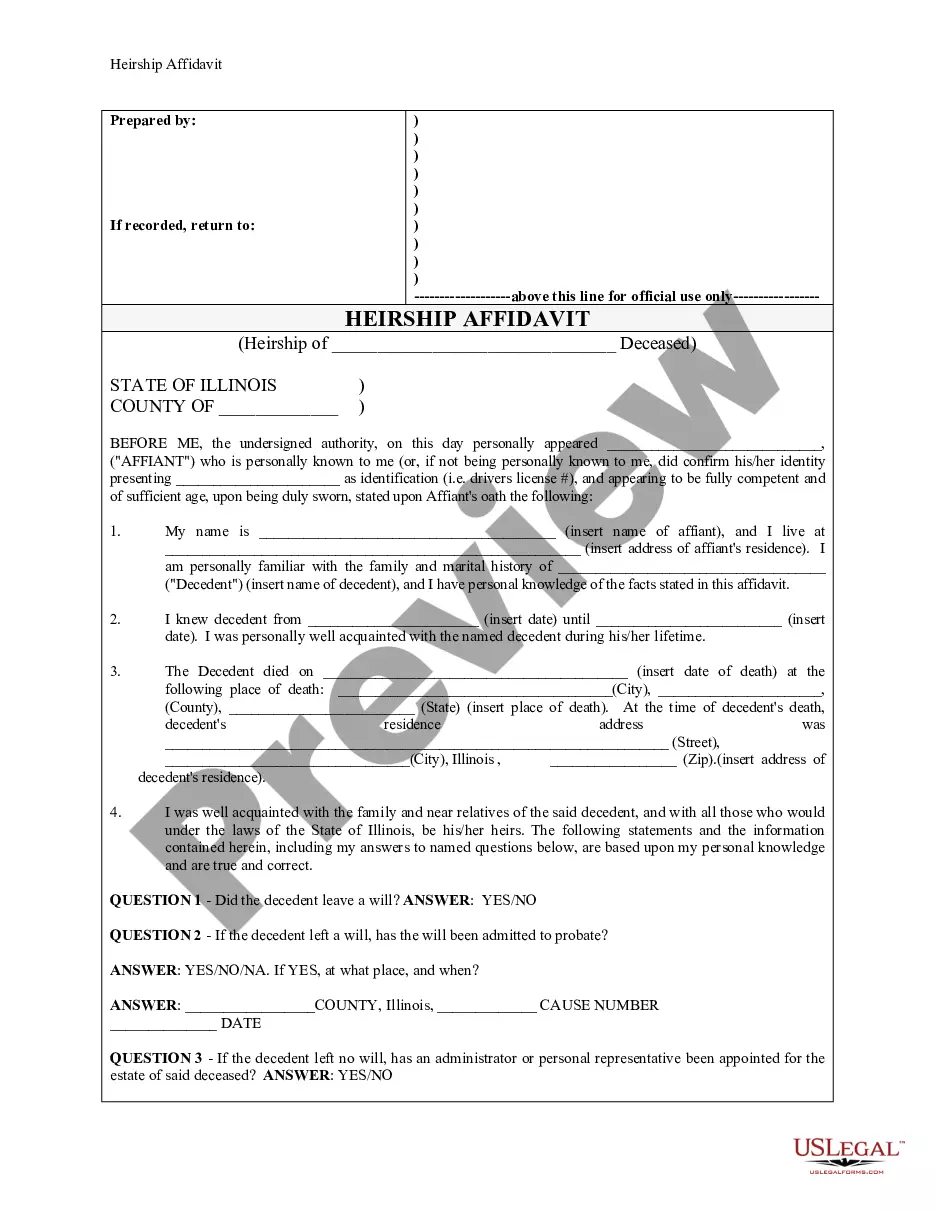
Heirship Affidavit - Descent
Use this to establish legal heirship after someone's death, especially when there's no will or probate process.
Affidavit: Attorney-In-Fact Acting as Executor
Use this document to affirm your role as an executor and validate a will after the deceased's passing.
Petition: Creditor Claim for Remaining Estate Assets
Use this petition to request the distribution of remaining estate assets among creditors after a decedent's passing.
Affidavit of Domicile
Verify your primary residence with this document, which can be crucial for legal and financial matters after a person's passing.
Common Illinois Probate documents
- Petition for Probate — initiates the probate process to validate the will.
- Letters Testamentary — authorizes the executor to manage the estate.
- Notice of Probate — informs interested parties about the probate proceedings.
- Inventory and Appraisement Forms — lists the deceased’s assets and their values.
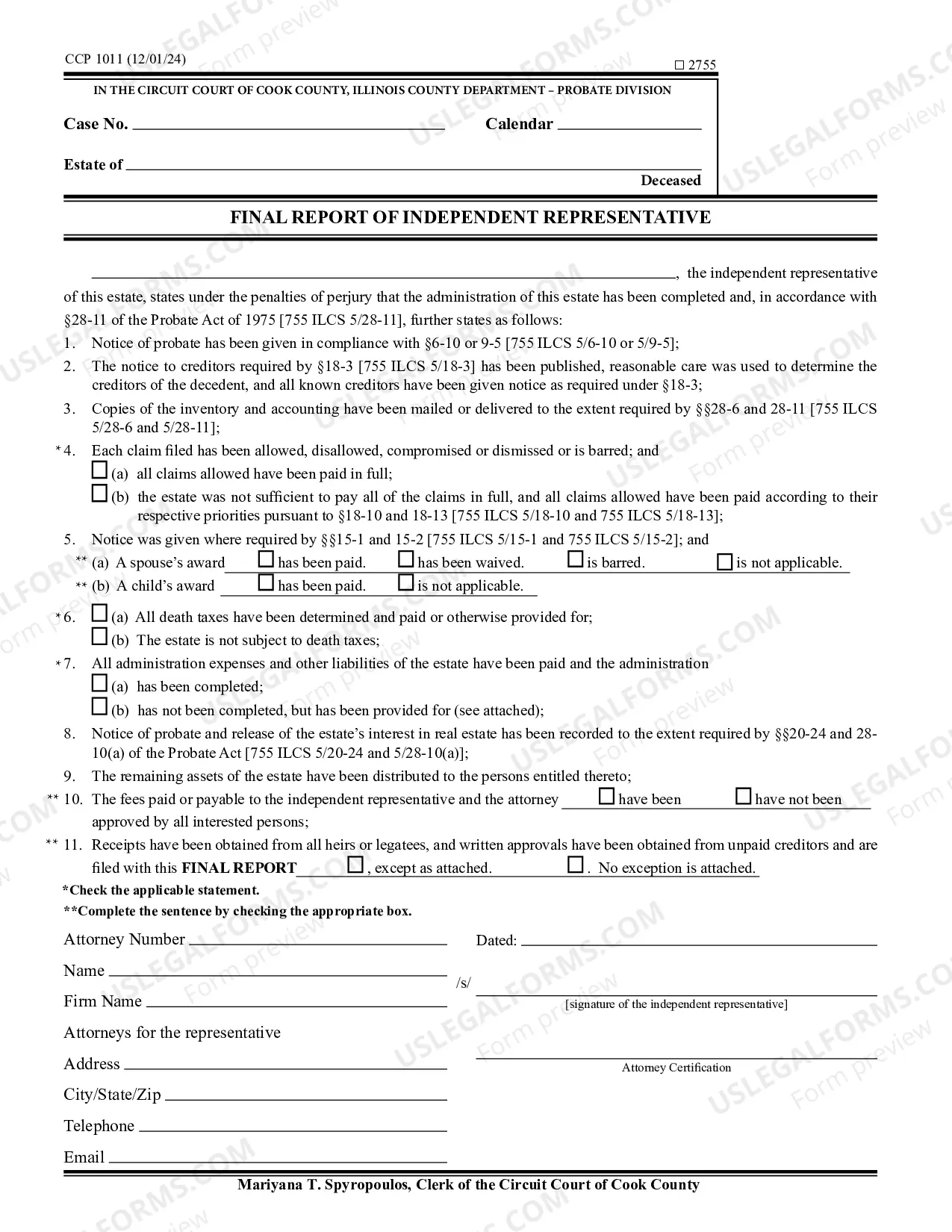
- Final Accounting Forms — summarizes the estate's financial activities before closure.
FAQs
A trust can provide additional management and privacy benefits, but a will is essential.
Ignoring estate planning can lead to intestacy, where state laws dictate asset distribution.
Update your plan whenever significant life changes occur, like marriage or the birth of a child.
Beneficiary designations typically override will instructions, so review them regularly.
Yes, you can designate separate individuals for financial and healthcare decisions.
Key legal points
- Probate is necessary to settle a deceased person's estate.
- Not all assets go through probate, especially those in trusts.
- Probate can be time-consuming and may involve court appearances.
- Debts and taxes must be settled before assets are distributed.
- Probate court oversees the process to ensure legality.
How to get started
Begin the probate process with these simple steps.
- Find a template or package that fits your situation.
- Review the description, preview, and signing requirements.
- Get full access with a subscription.
- Complete it in the online editor.
- Export or send: download, email, USPS mail, notarize online, or send for e-signature (Premium).
Practical tip
Consider establishing a will before a trust to clarify your wishes.