What is Probate?
Probate is the legal process for handling a deceased person's estate. It involves validating wills and distributing assets. Explore state-specific templates for your needs.
Probate involves managing a deceased person's estate. Our attorney-drafted templates are quick and easy to complete.

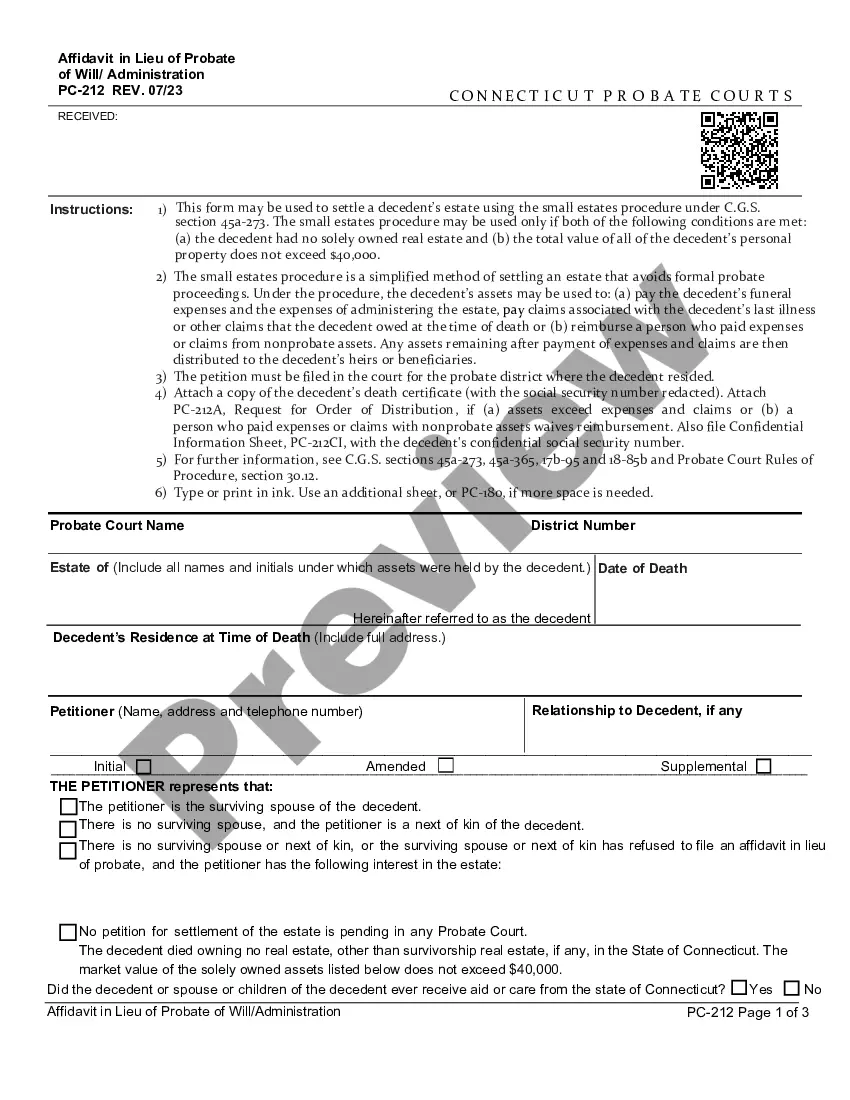
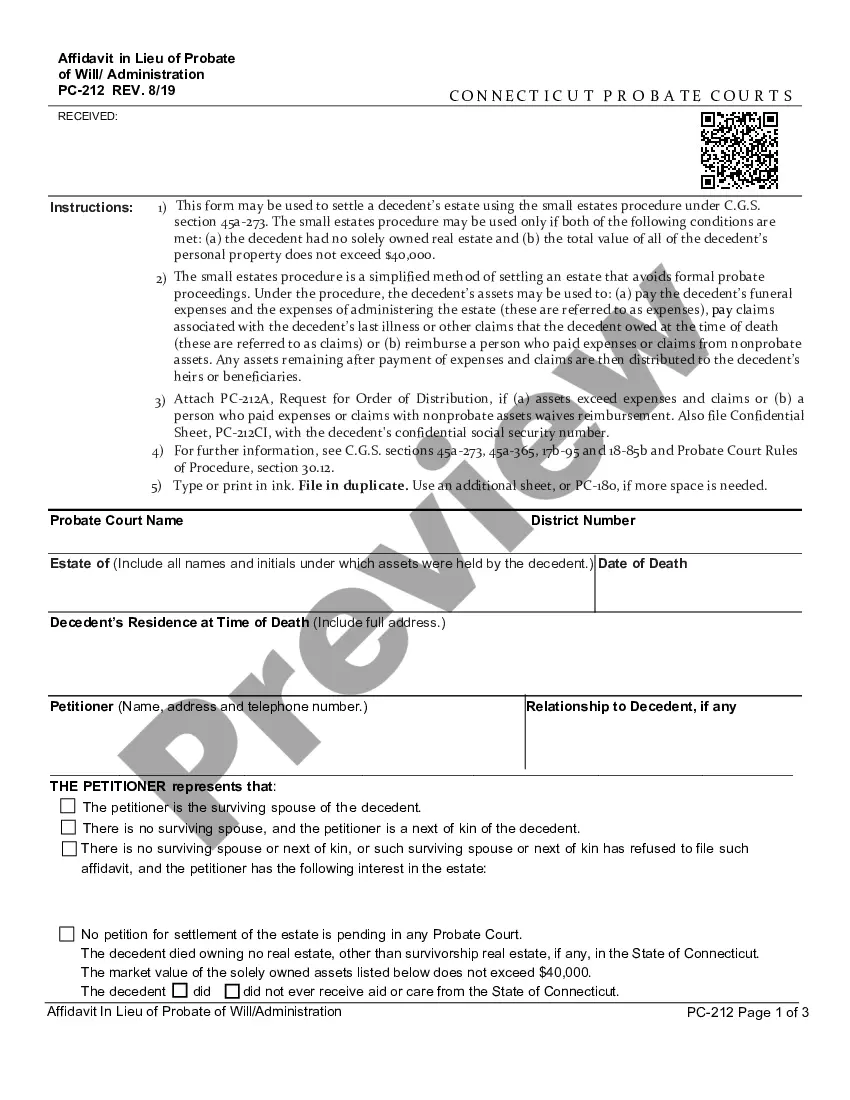
Easily transfer property from an estate valued under $40,000 without probate. Ideal for heirs and close relatives managing small estates.
Request a release of a tax lien on Connecticut real property as part of the estate settlement process.
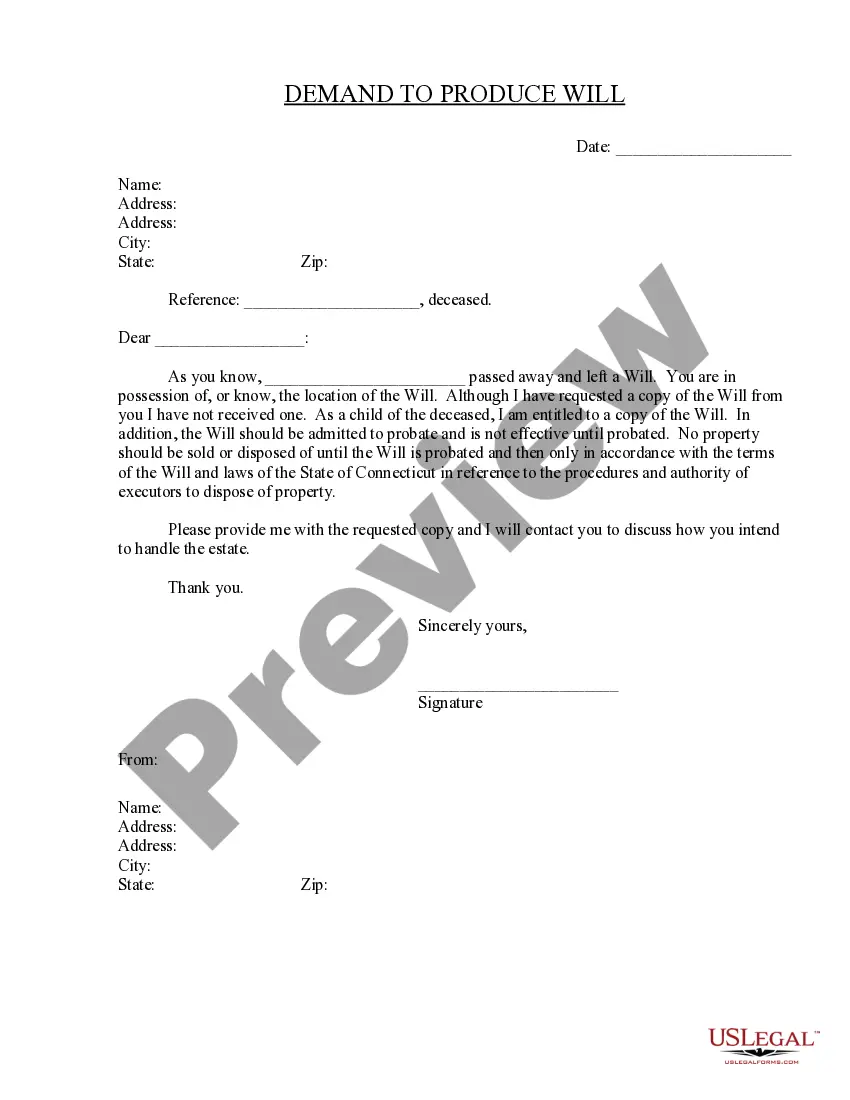
Request a copy of a deceased's will to ensure proper estate management and probating of assets.
File this petition to confirm the continuation of voluntary care for a child or youth by the Department of Children and Families.
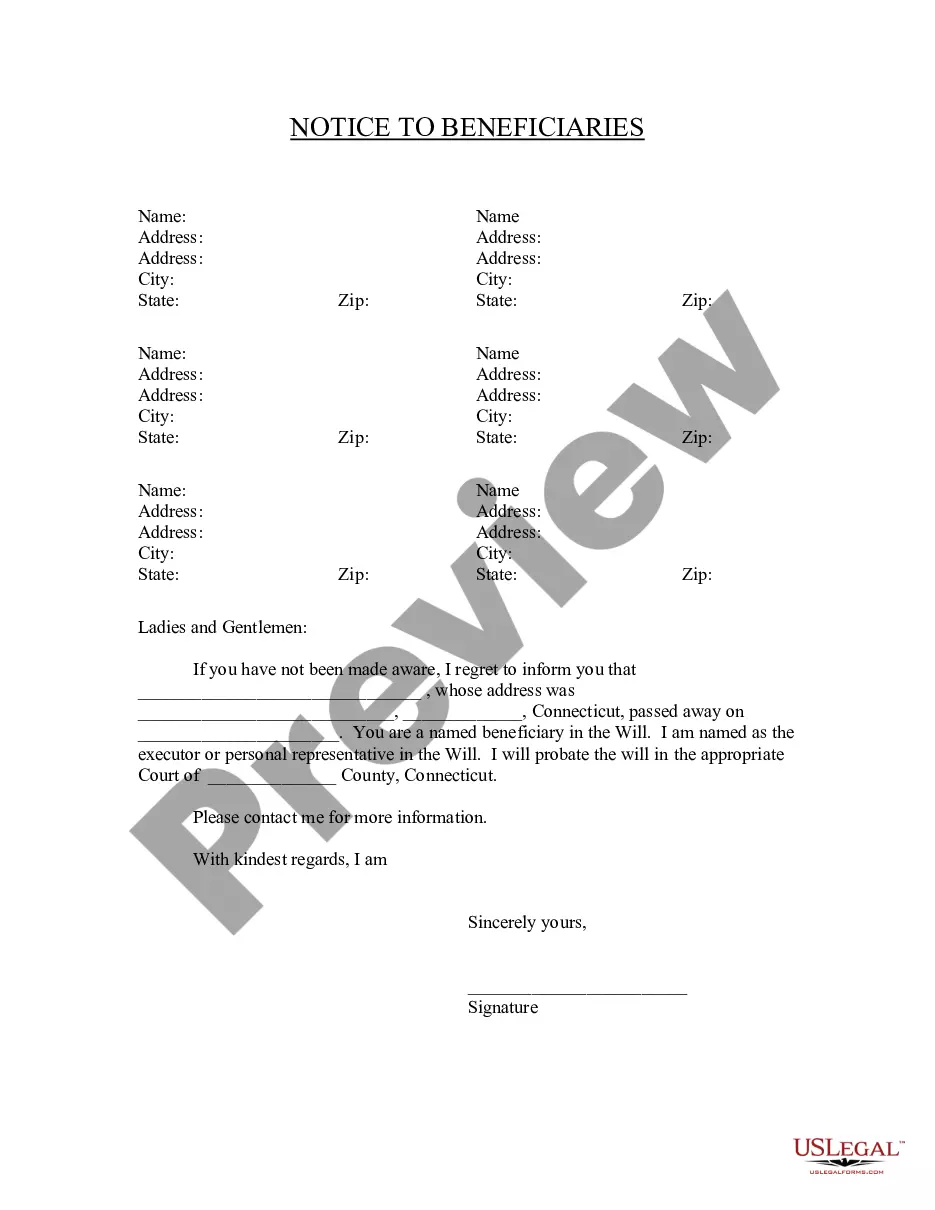
Notify beneficiaries about their inclusion in a decedent's will, ensuring they are informed of their rights and next steps.
Request to regain your firearm rights after a legal disability in Connecticut. Essential for individuals seeking to restore their ability to possess firearms.
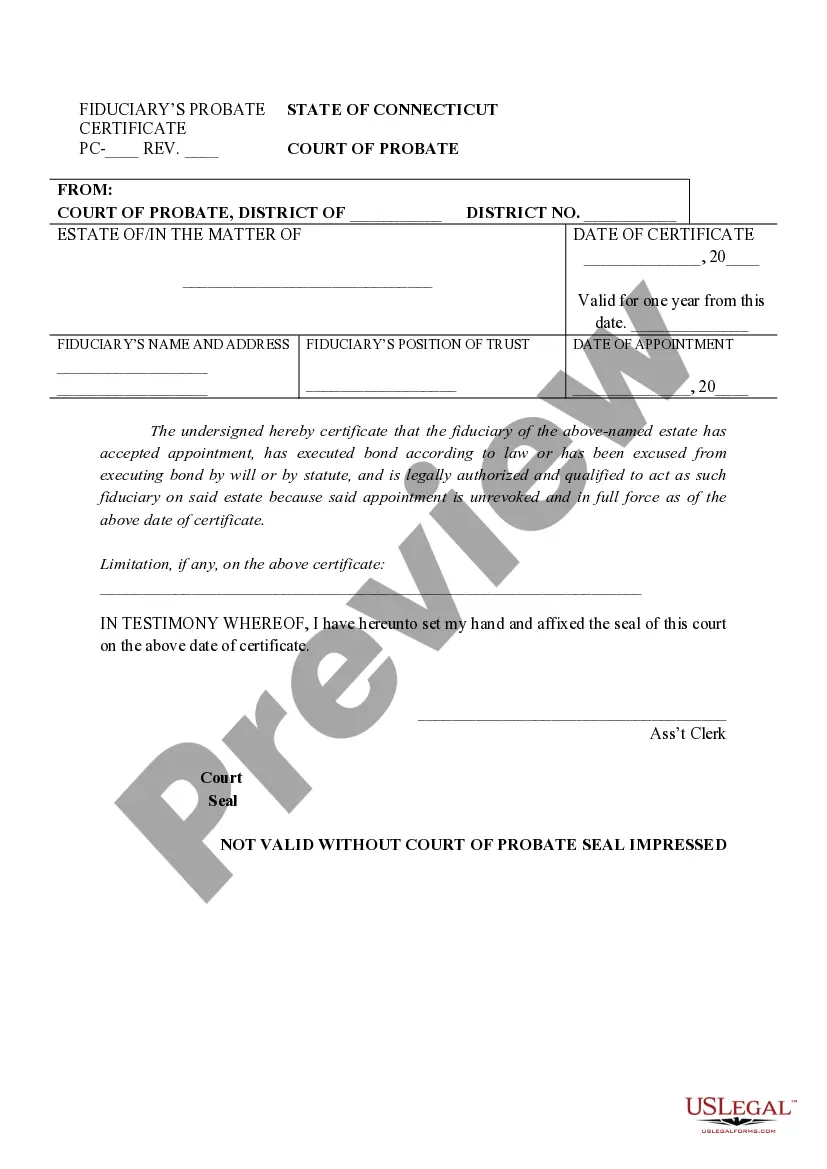
Obtain certification confirming a fiduciary's authority over an estate in Connecticut's probate process.
Ideal for settling an estate without probate, this legal form helps distribute assets when they meet specific small estate criteria.
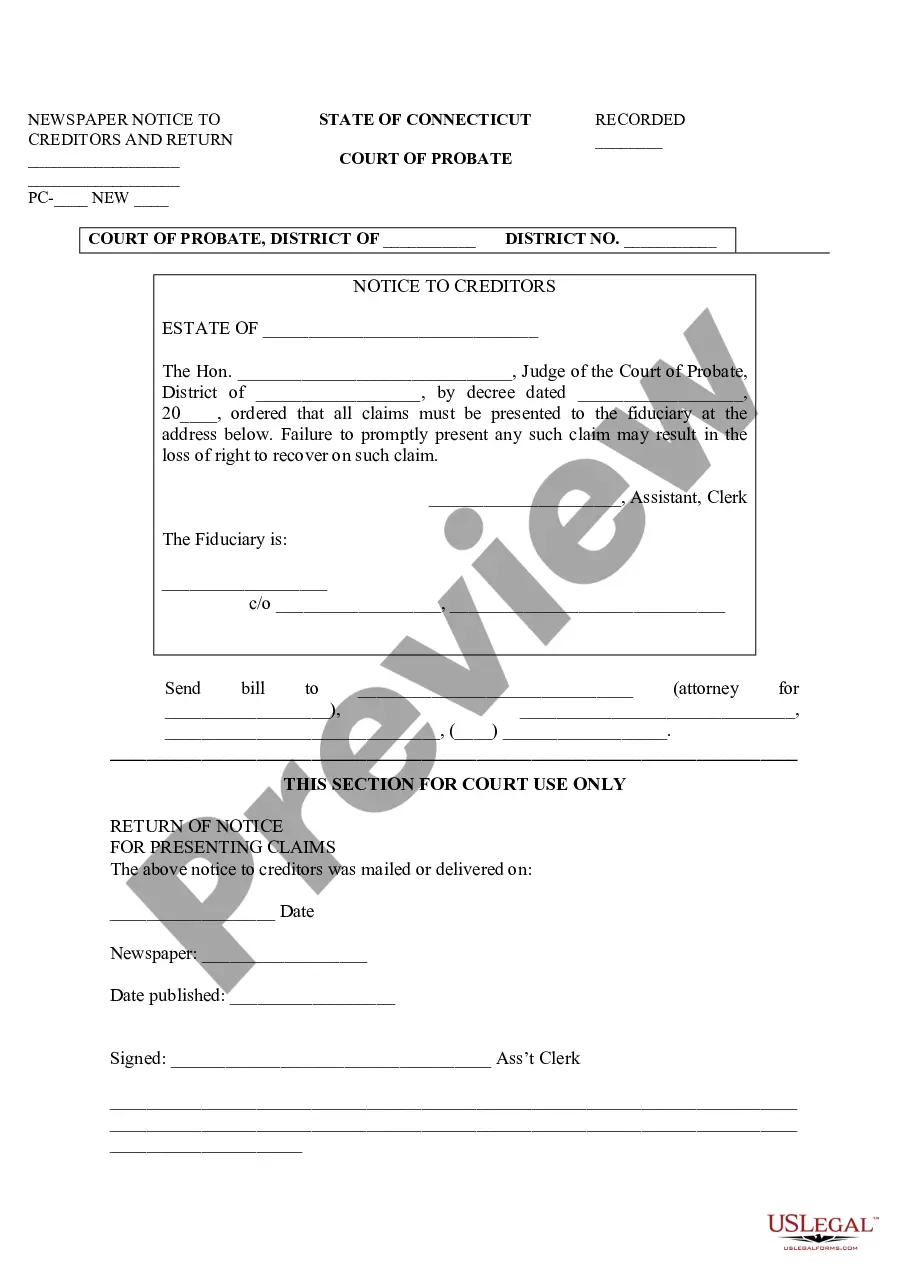
Notify creditors about claims against an estate to ensure rights are preserved and deadlines are met.
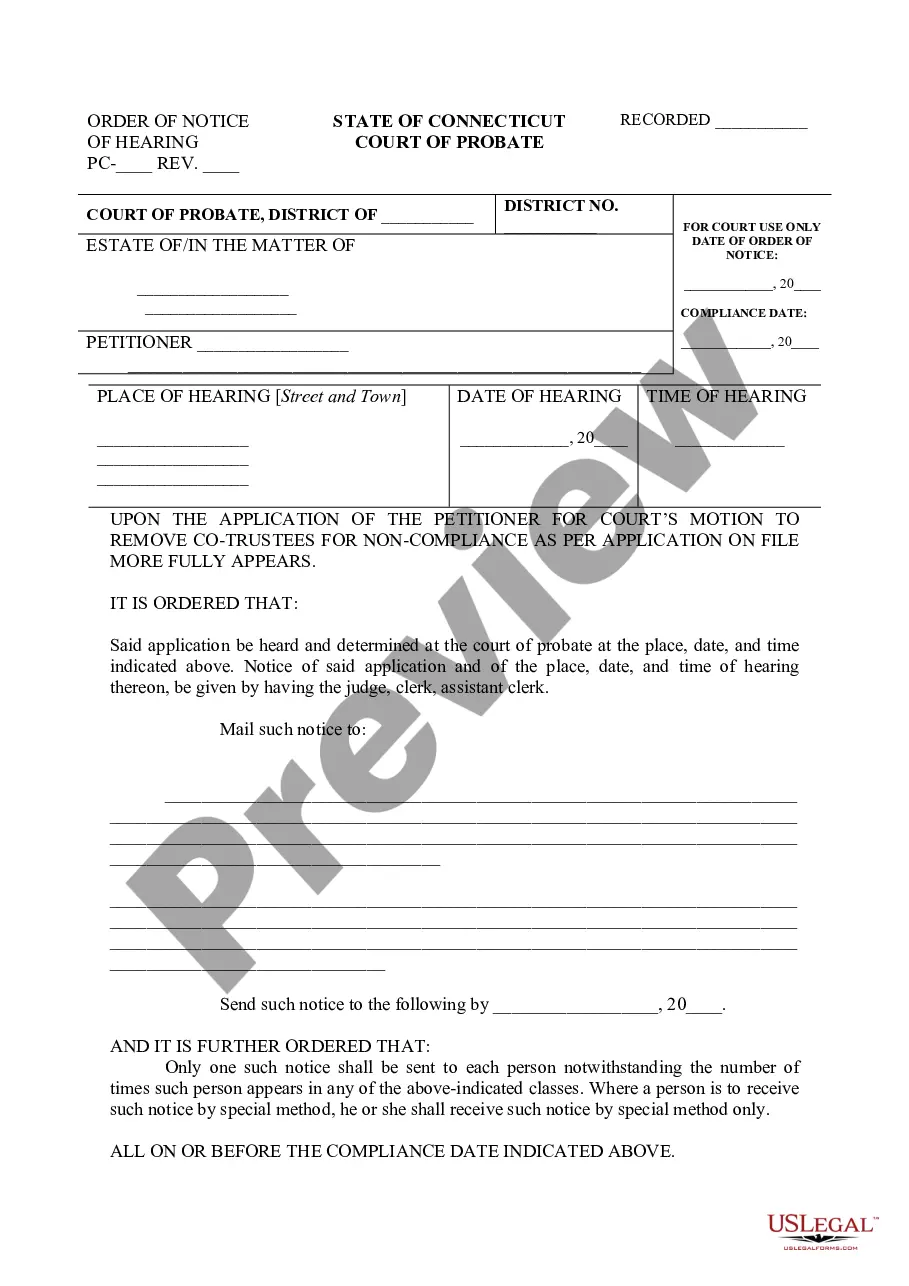
Use this form to notify relevant parties about a scheduled hearing for the removal of co-trustees due to non-compliance.
Probate generally requires court involvement to validate a will.
Not all estates go through probate; small estates may qualify for simplified processes.
Probate can take several months to years, depending on complexity.
All debts and taxes must be settled before assets can be distributed.
Beneficiaries are typically notified during the probate process.
Begin with these simple steps.
A will outlines your wishes, while a trust can help manage assets during your lifetime.
If no action is taken, the state may distribute assets according to intestacy laws.
It's wise to review your plan after major life events or changes in assets.
Beneficiary designations can override your will, so it's essential to keep them updated.
Yes, you can designate separate agents for financial and medical decisions.