Pennsylvania General Power of Attorney
About this form
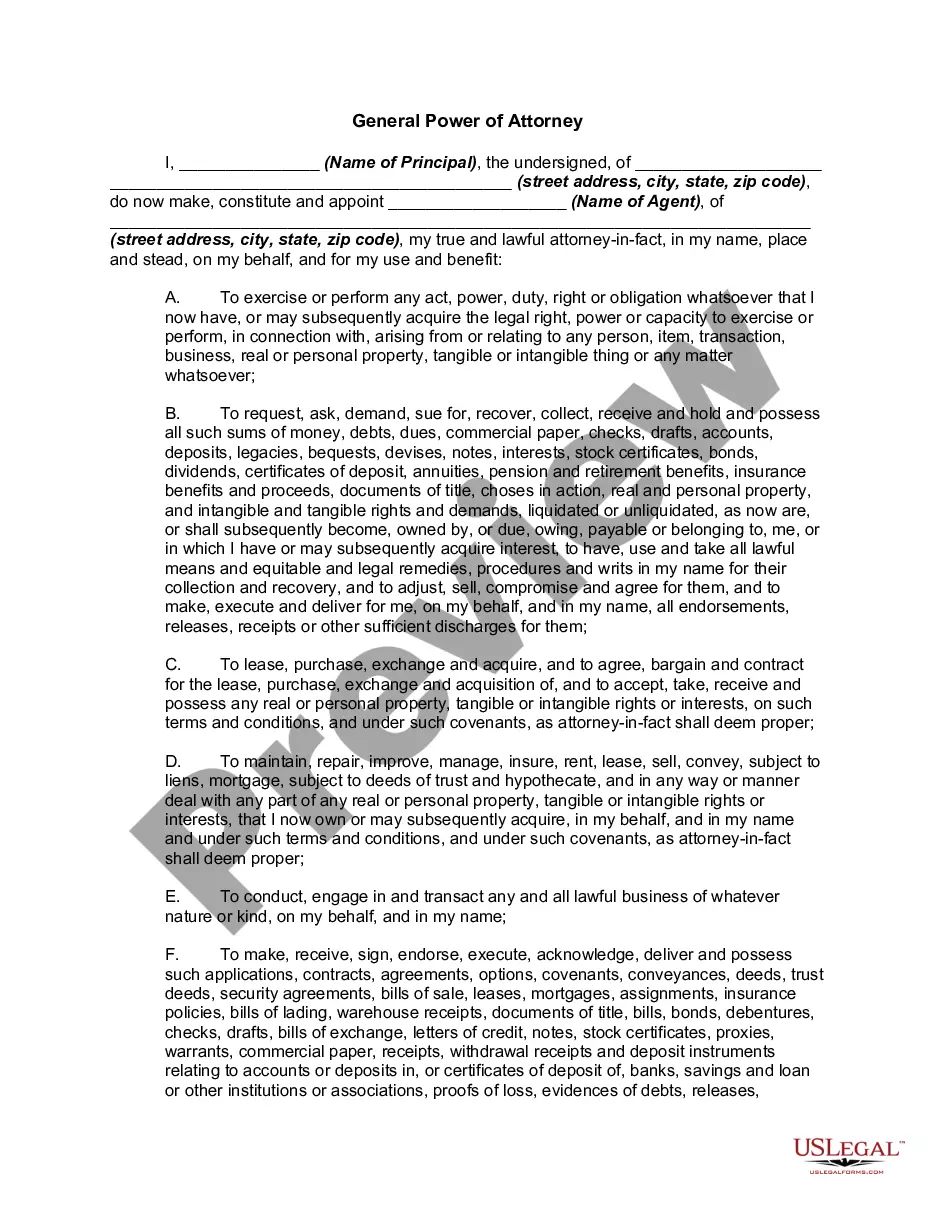
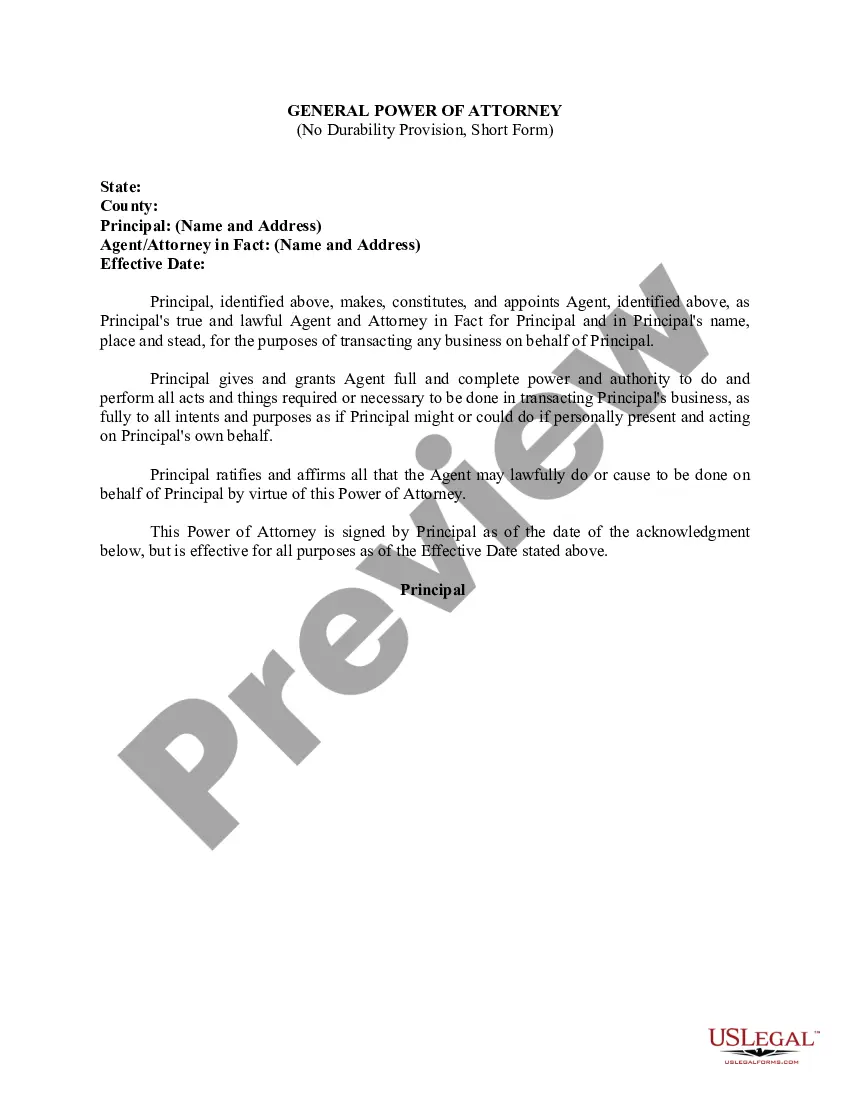
The General Power of Attorney is a legal document that allows you to designate a trusted individual, known as your agent, to make financial and legal decisions on your behalf. This includes managing your property, handling transactions, and performing various duties even if you become incapacitated. Unlike a limited power of attorney, which restricts authority to specific tasks or timeframes, a General Power of Attorney grants broader, more extensive powers, providing flexibility and convenience for your designated agent to act in your best interest.
Main sections of this form
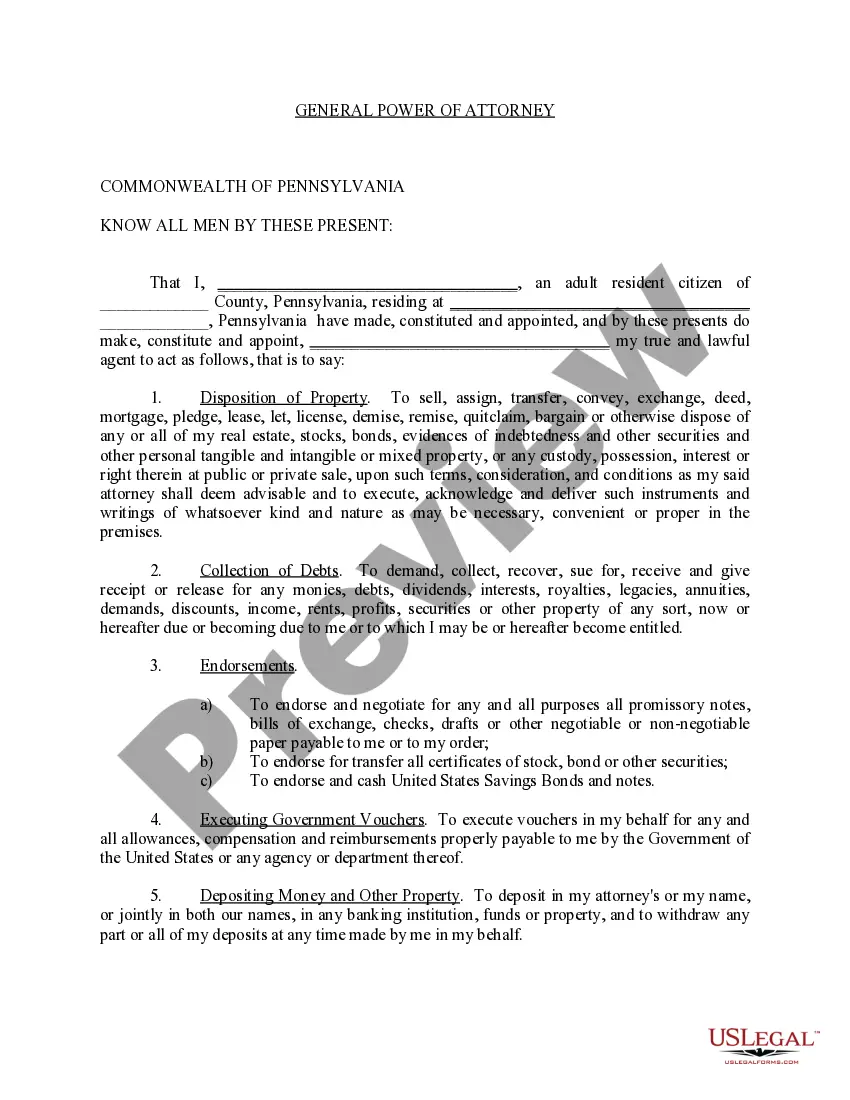
- Agent Designation: Identify the person who will act on your behalf.
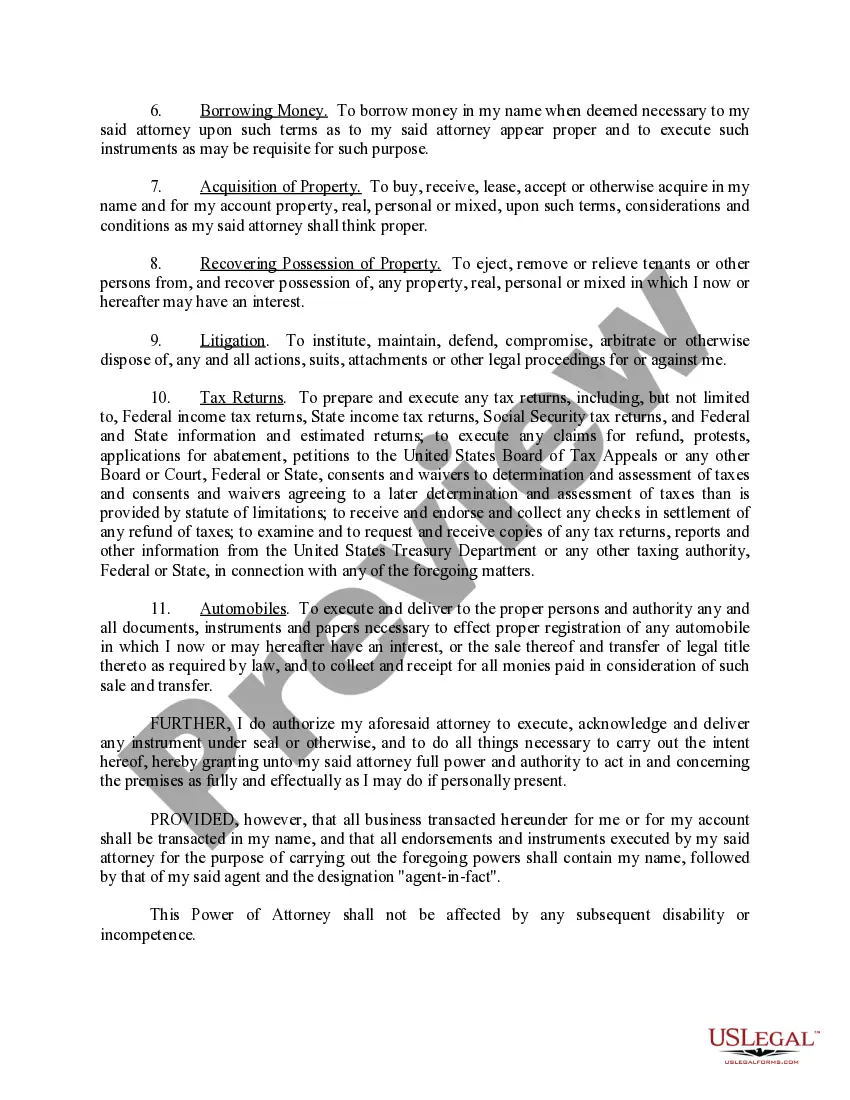
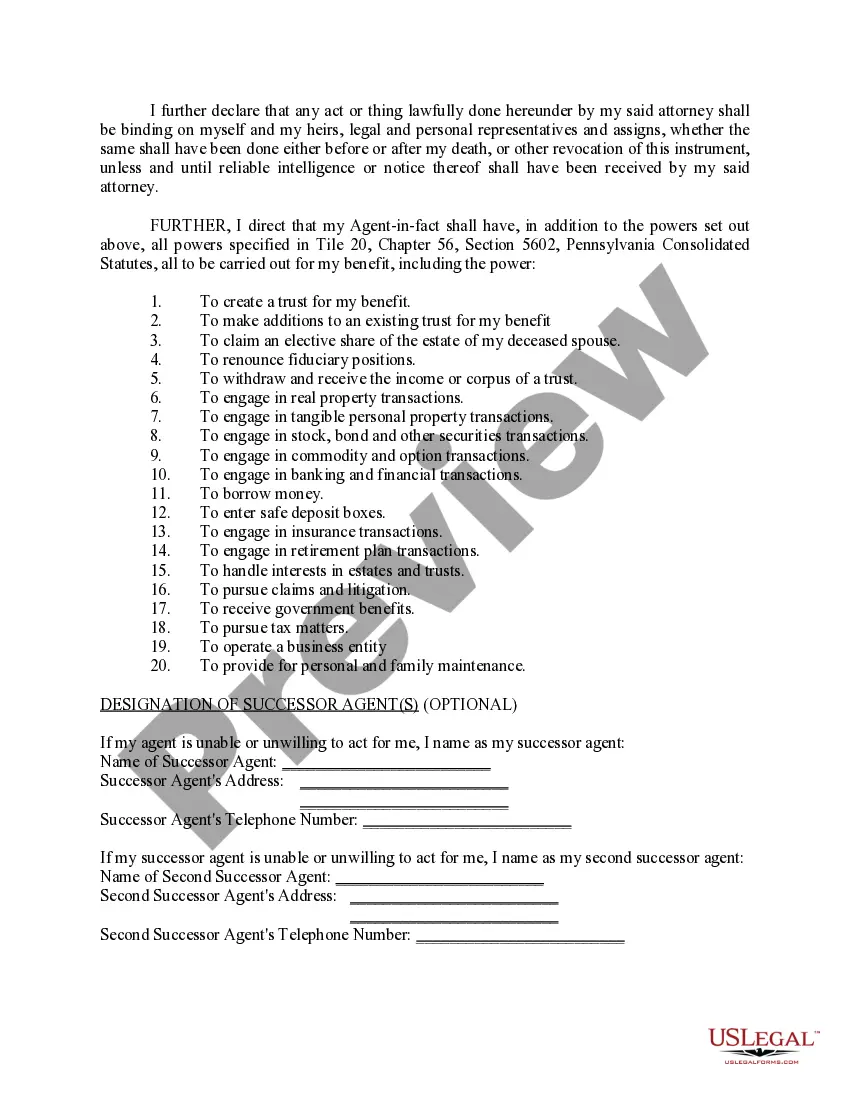
- Powers Granted: Outline the specific powers your agent can exercise, such as selling property and managing finances.
- Duration of Powers: Indicate that the authority continues even if you become incapacitated unless revoked.
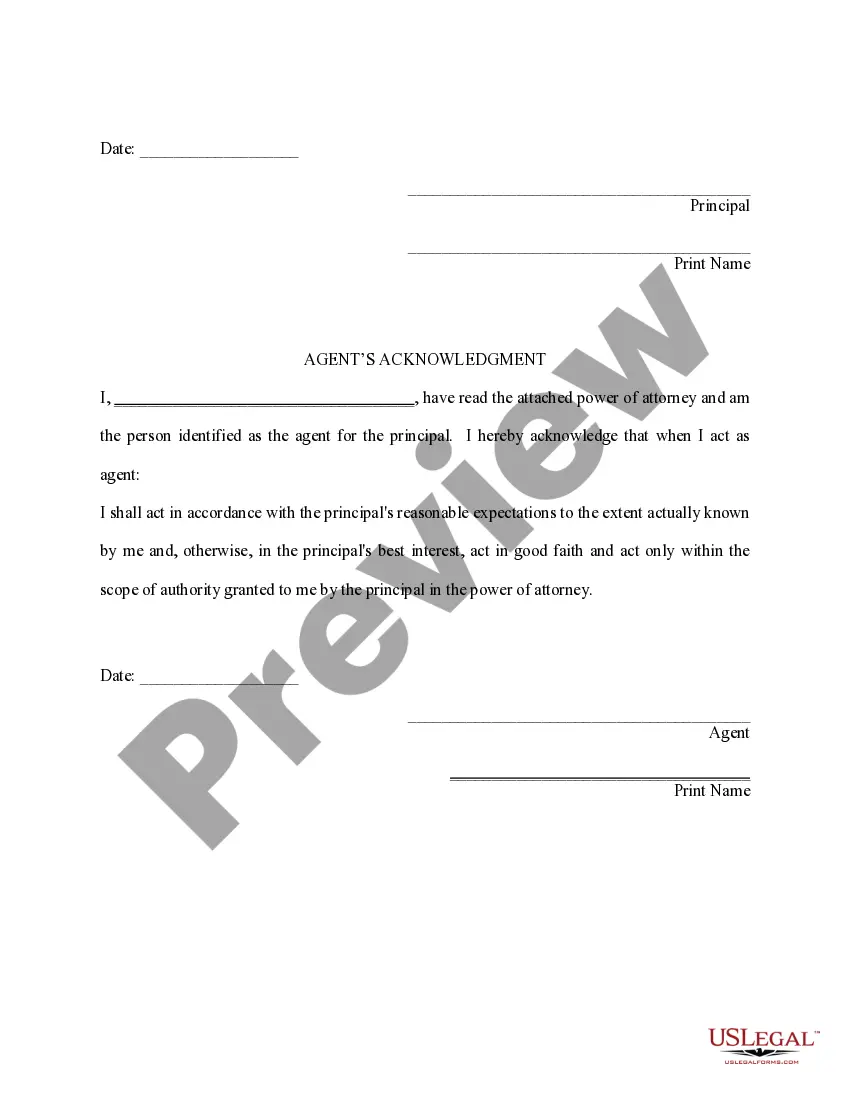
- Agent Obligations: Require the agent to act in your best interest and within the scope of their authority.
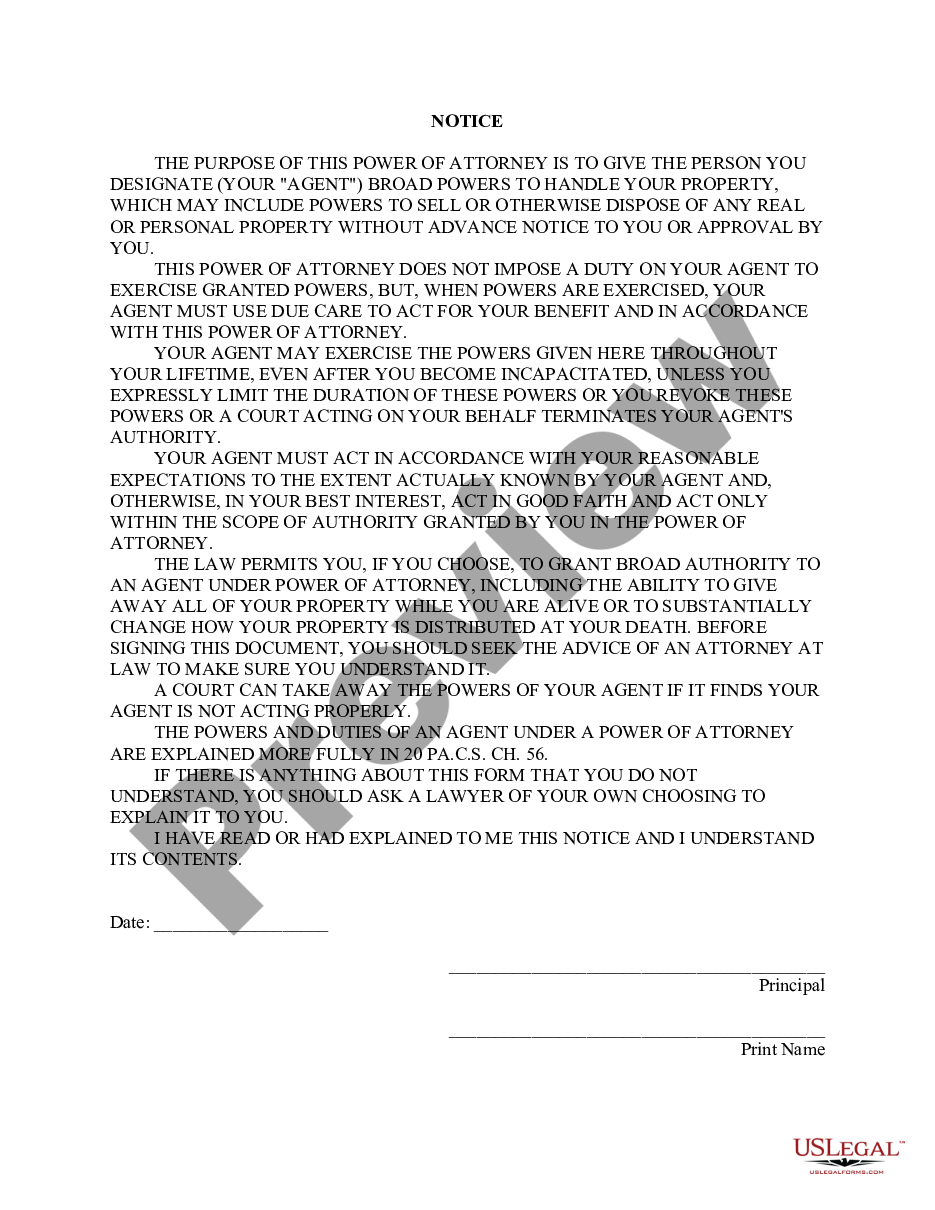
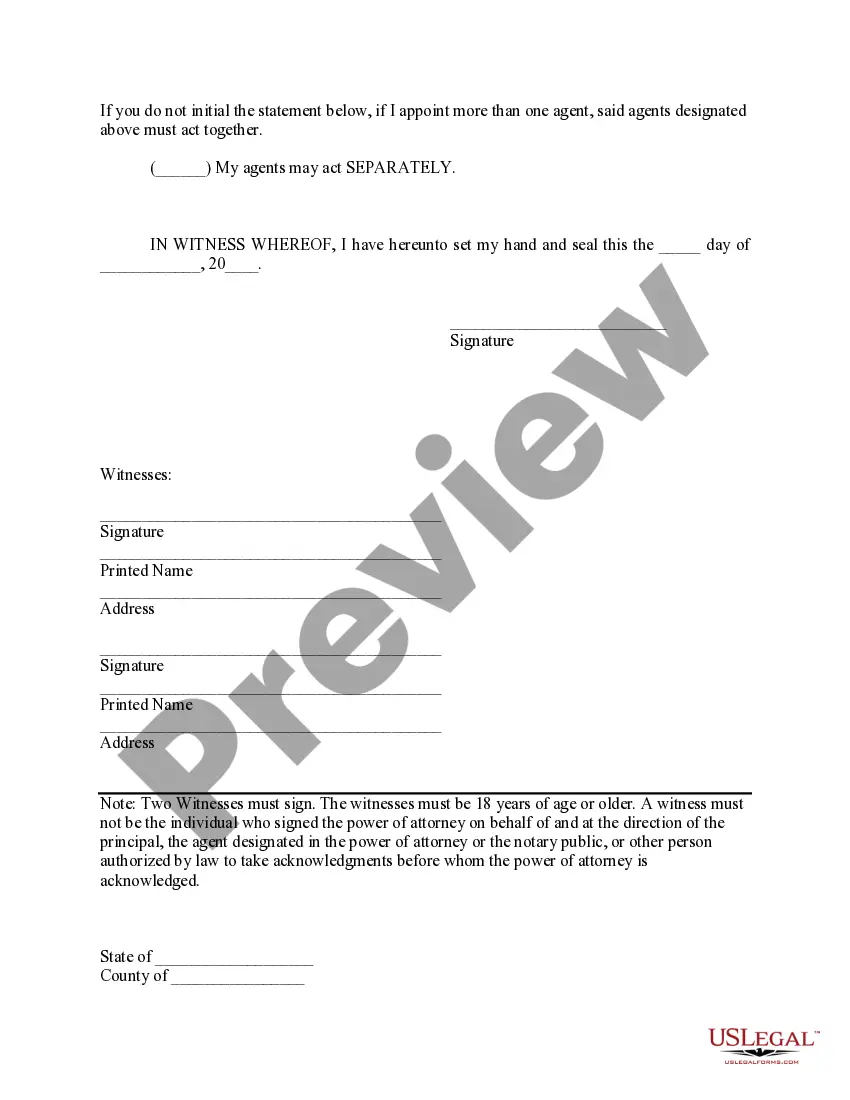
- Signature and Witnesses: Require signatures from both the principal and witnesses to validate the form.
When to use this document
You should use the General Power of Attorney when you want to ensure that someone can make decisions about your financial and legal matters if you are unavailable or cannot make those decisions yourself. This scenario may arise if you are traveling, dealing with a medical condition, or facing an unexpected life event that prevents you from managing your affairs. Additionally, it is advisable to complete this form to allow your agent to act swiftly in urgent situations without waiting for your approval.
Who should use this form
- Individuals seeking to delegate their financial responsibilities to someone trustworthy.
- People who may face potential incapacity due to illness or age.
- Those who travel frequently and want to ensure their affairs are managed while they are away.
- Anyone wanting to streamline decision-making for property and financial matters.
Completing this form step by step
- Identify and enter your name and address as the principal.
- Designate your agent by providing their name and contact information.
- Specify the powers you wish to grant to your agent, ensuring clarity on financial matters and property management.
- Sign and date the document in the presence of two witnesses.
- Provide space for the witnesses to sign and print their names and addresses.
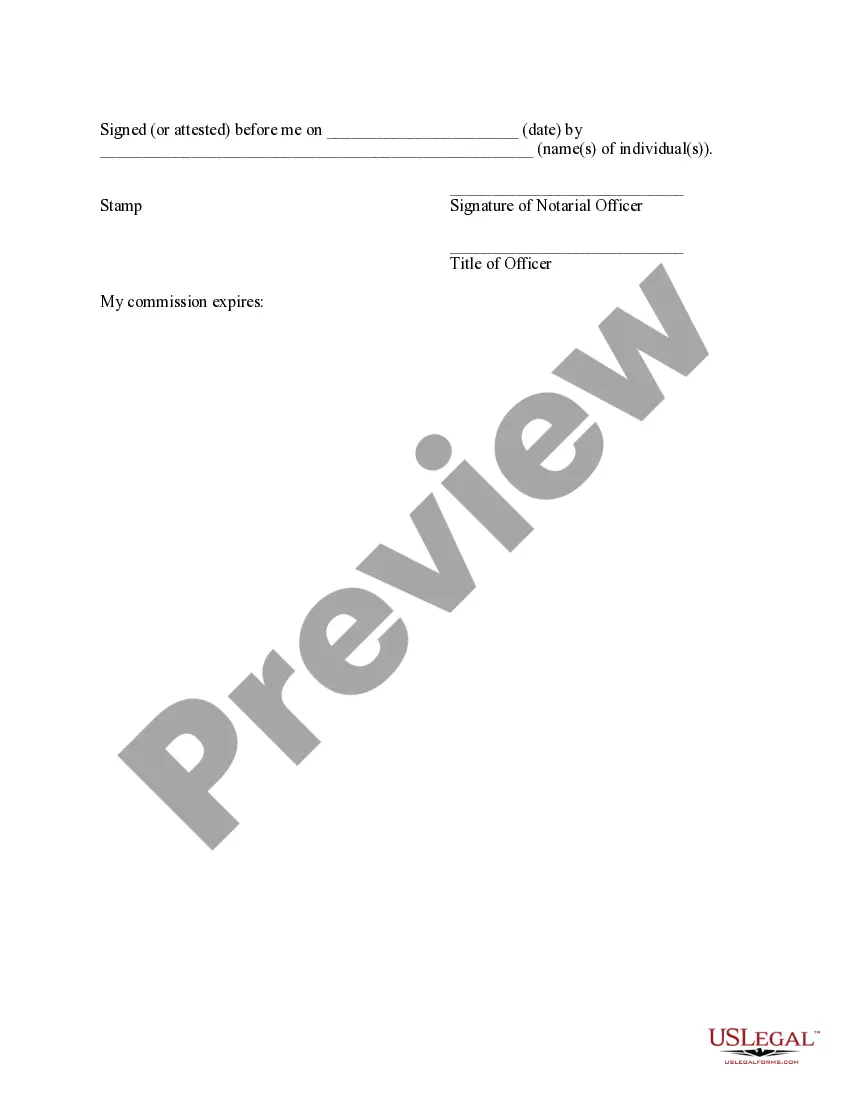
- If required, have the document notarized to enhance its legal validity.
Does this document require notarization?
This form needs to be notarized to ensure legal validity. US Legal Forms provides secure online notarization powered by Notarize, allowing you to complete the process through a verified video call, available anytime.
Get your form ready online
Our built-in tools help you complete, sign, share, and store your documents in one place.
Make edits, fill in missing information, and update formatting in US Legal Forms—just like you would in MS Word.
Download a copy, print it, send it by email, or mail it via USPS—whatever works best for your next step.
Sign and collect signatures with our SignNow integration. Send to multiple recipients, set reminders, and more. Go Premium to unlock E-Sign.
If this form requires notarization, complete it online through a secure video call—no need to meet a notary in person or wait for an appointment.
We protect your documents and personal data by following strict security and privacy standards.

Make edits, fill in missing information, and update formatting in US Legal Forms—just like you would in MS Word.

Download a copy, print it, send it by email, or mail it via USPS—whatever works best for your next step.

Sign and collect signatures with our SignNow integration. Send to multiple recipients, set reminders, and more. Go Premium to unlock E-Sign.

If this form requires notarization, complete it online through a secure video call—no need to meet a notary in person or wait for an appointment.

We protect your documents and personal data by following strict security and privacy standards.
Typical mistakes to avoid
- Failing to specify the powers clearly, which may lead to confusion for the agent.
- Not having the form signed by the required number of witnesses.
- Neglecting to regularly update the document if circumstances change.
- Not discussing the responsibilities with the agent beforehand.
Advantages of online completion
- Convenient access: Download and complete your General Power of Attorney form from anywhere.
- Editability: Easily customize the form to fit your specific needs and circumstances.
- Assured quality: The templates are drafted by licensed attorneys, ensuring reliability and compliance with state law.
Key takeaways
- The General Power of Attorney allows you to designate someone to manage your affairs.
- This document remains effective even if you become incapacitated, unless revoked.
- It's essential to clearly outline the powers granted to avoid any misunderstandings.
- Two witnesses are needed for the document to be valid in Pennsylvania.
Looking for another form?



Form popularity
FAQ
In Pennsylvania, a Power of Attorney does not need to be witnessed or notarized to be effective. However, if you own real estate, you should have it notarized so it can be recorded. Also, you can only record an original Power of Attorney. Copies cannot be used to record a Deed.
A Pennsylvania durable power of attorney is a long-term arrangement between two individuals; the principal (individual implementing the form) and an attorney-in-fact (appointed representative). This type of power of attorney form is used to transfer financial authority from the principal to the attorney-in-fact.
Most states offer simple forms to help you create a power of attorney for finances. Generally, the document must be signed, witnessed and notarized by an adult. If your agent will have to deal with real estate assets, some states require you to put the document on file in the local land records office.
Pennsylvania law requires that POAs must be signed by the principal and witnessed by two people who are ages 18 or older. The document must also be dated and notarized. If the principal cannot write, he or she is allowed to sign the document by using a mark or by asking someone else to sign the POA for him or her.
A POA in Pennsylvania must be dated, signed by the principal, witnessed by two adults, and notarized. If the principal is not able to write, he or she may sign by making a mark (such as an "X") or by directing another person to sign on his or her behalf.
In many states, notarization is required by law to make the durable power of attorney valid. But even where law doesn't require it, custom usually does. A durable power of attorney that isn't notarized may not be accepted by people with whom your attorney-in-fact tries to deal.
You can draft a durable power of attorney by writing out or typing the document, which should include the date, your full name, and speech that clearly identifies the document as a durable power of attorney that applies even in the case of your incapacitation.
What's the difference between durable and general power of attorney? A general power of attorney ends the moment you become incapacitated.A durable power of attorney stays effective until the principle dies or until they act to revoke the power they've granted to their agent.
You can draft a durable power of attorney by writing out or typing the document, which should include the date, your full name, and speech that clearly identifies the document as a durable power of attorney that applies even in the case of your incapacitation.