Pennsylvania Revocation of Statutory Living Will
About this form
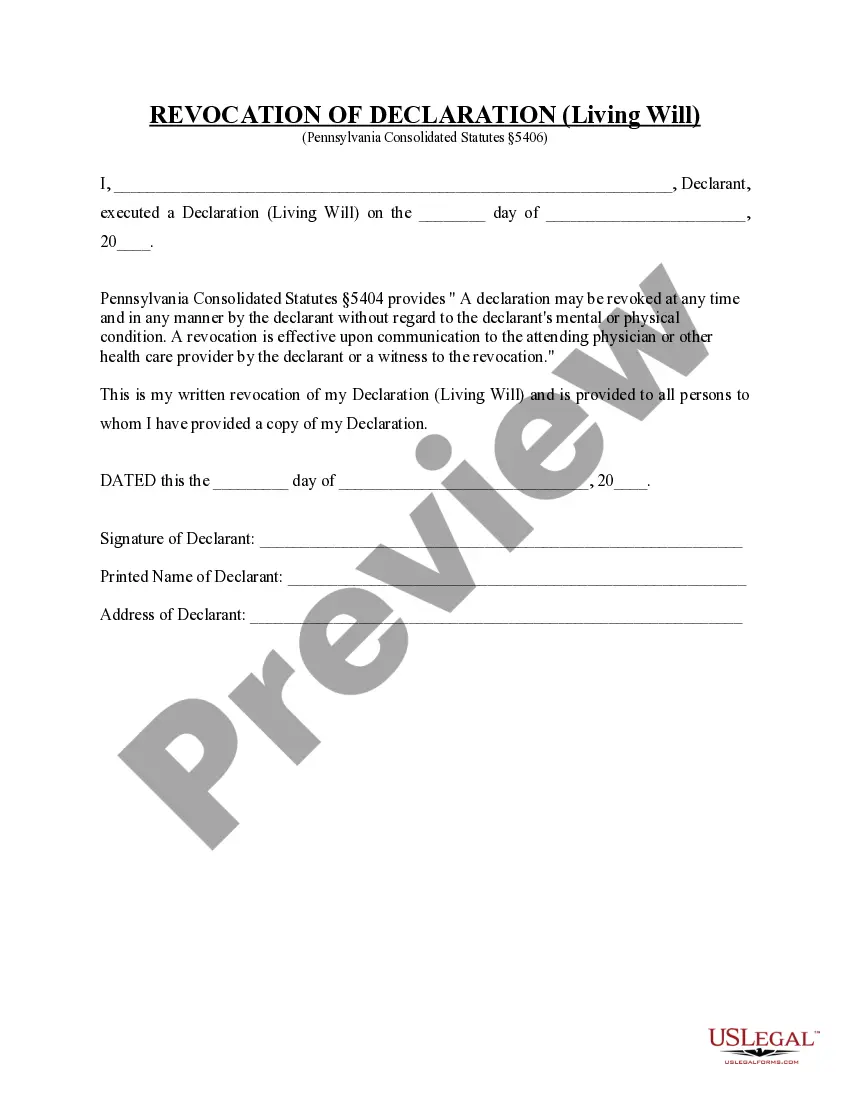
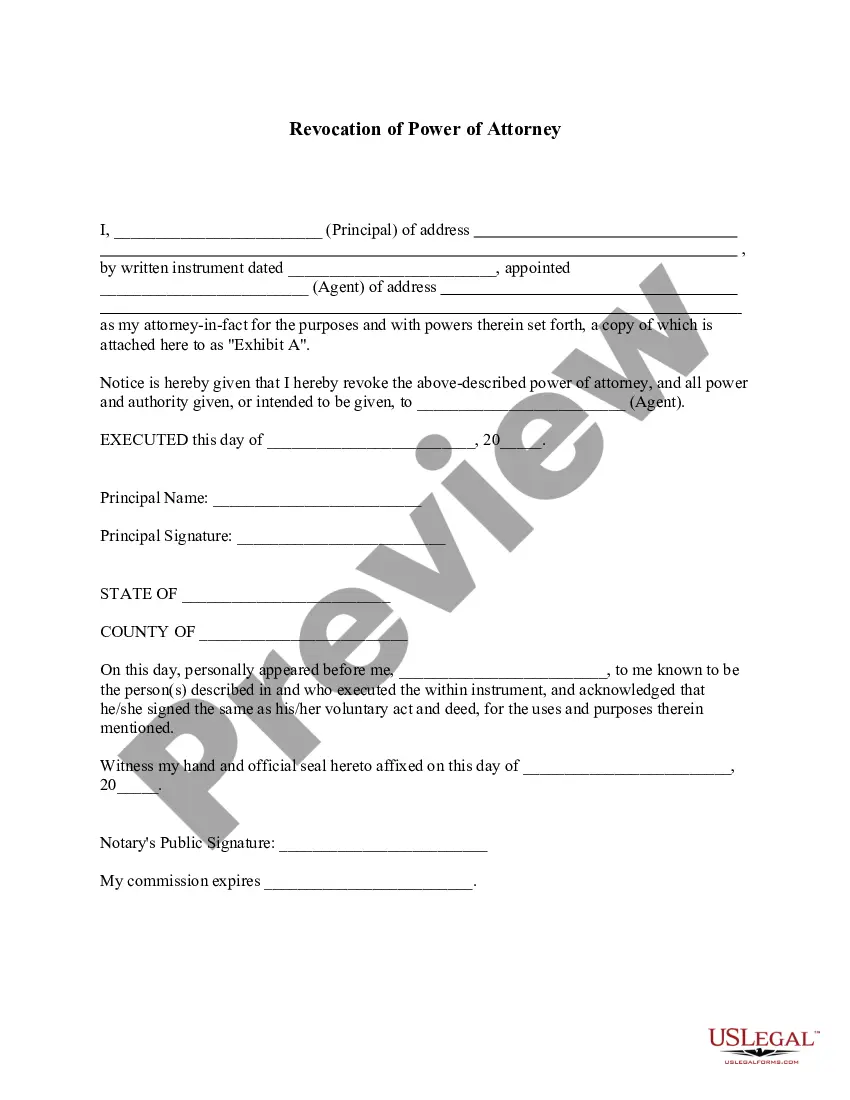
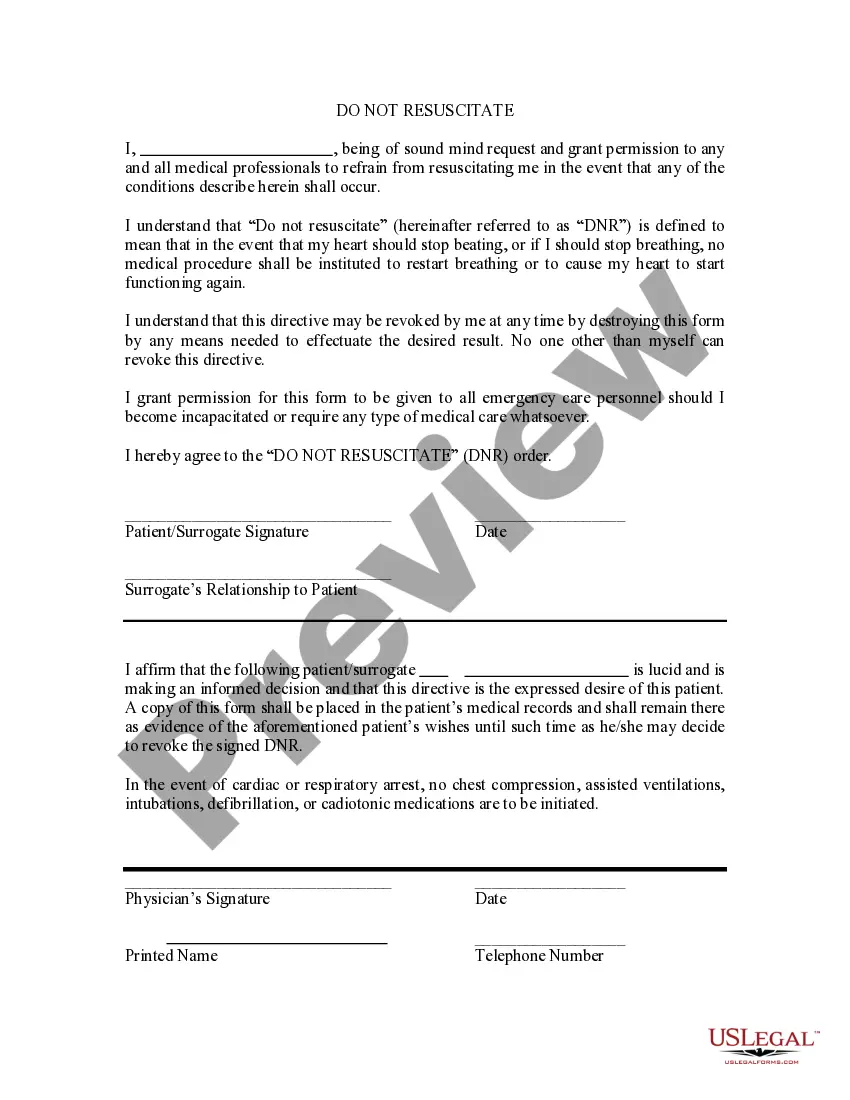
The Revocation of Statutory Living Will is a legal document that allows you to revoke a previously executed living will. A living will expresses your preferences regarding life-sustaining treatments when you are unable to communicate your wishes. This form specifically revokes the wishes outlined in Form PA-P023, ensuring that your current desires are respected and followed by healthcare providers.
Key parts of this document
- Declarant's full name and address
- Date of execution of the original Declaration (Living Will)
- Explicit statement of revocation of the living will
- Date of revocation
- Signature and printed name of the Declarant
Common use cases
This form should be used if you have previously created a living will (Form PA-P023) and you wish to change your mind about the medical treatments you want or do not want to receive. You might find yourself needing this form if your medical situation changes, if you reconsider your preferences regarding life support, or if you want to ensure that your current wishes are clearly communicated to your healthcare providers.
Who this form is for
This form is for individuals who have executed a living will in Pennsylvania and wish to revoke its terms. It's intended for any declarant who wants to ensure that their healthcare decisions reflect their latest wishes.
Completing this form step by step
- Begin by entering your full name and address as the Declarant.
- Provide the date on which you executed your original living will.
- Clearly state that you are revoking your previous Declaration.
- Fill in the date of this revocation.
- Sign the document and print your name below your signature.
Does this form need to be notarized?
In most cases, this form does not require notarization. However, some jurisdictions or signing circumstances might. US Legal Forms offers online notarization powered by Notarize, accessible 24/7 for a quick, remote process.
Get your form ready online
Our built-in tools help you complete, sign, share, and store your documents in one place.
Make edits, fill in missing information, and update formatting in US Legal Forms—just like you would in MS Word.
Download a copy, print it, send it by email, or mail it via USPS—whatever works best for your next step.
Sign and collect signatures with our SignNow integration. Send to multiple recipients, set reminders, and more. Go Premium to unlock E-Sign.
If this form requires notarization, complete it online through a secure video call—no need to meet a notary in person or wait for an appointment.
We protect your documents and personal data by following strict security and privacy standards.

Make edits, fill in missing information, and update formatting in US Legal Forms—just like you would in MS Word.

Download a copy, print it, send it by email, or mail it via USPS—whatever works best for your next step.

Sign and collect signatures with our SignNow integration. Send to multiple recipients, set reminders, and more. Go Premium to unlock E-Sign.

If this form requires notarization, complete it online through a secure video call—no need to meet a notary in person or wait for an appointment.

We protect your documents and personal data by following strict security and privacy standards.
Common mistakes to avoid
- Failing to date the revocation properly.
- Not providing a clear statement of revocation.
- Neglecting to sign the document.
- Not distributing copies of the revocation to healthcare providers or relevant parties.
Advantages of online completion
- The convenience of downloading and completing the form at your own pace.
- Access to professionally drafted templates ensured to comply with state laws.
- Easy editing options that allow you to customize the document as needed.
- Reliability in ensuring your healthcare decisions are accurately documented.
What to keep in mind
- The Revocation of Statutory Living Will is used to cancel an existing living will.
- It is important to ensure your current wishes regarding life-sustaining treatment are documented.
- This form is compliant with Pennsylvania state law.
- Proper completion and distribution of the revocation are essential for it to be effective.
Looking for another form?








Form popularity
FAQ
Advance care directives are legally enforceable in NSW. Although NSW does not have specific legislation on advance care directives, the Supreme Court has said that valid advance care directives must be respected (as an extension to a person's right to determine their own medical treatment).
An advance directive, alone, may not be sufficient to stop all forms of life-saving treatment.You retain the right to override the decisions or your representative, change the terms of your living will or POA, or completely revoke an advance directive.
A person can also revoke their Advance Directive orally, by telling their healthcare provider that they no longer want either the entire document or any parts of it enforced.
With what is known as a durable power of attorney for health care, you can designate an agent that will make decisions that weren't covered by your living will. It is important to note that your health care agent can't overrule any of the provisions of your living will.
A living will is a vital part of the estate plan.But your family cannot override your living will. They cannot take away your authority to make your own treatment and care plans. In fact, you always retain the right to override your own decisions.
A person can change an Individual Healthcare Instruction by writing a new Advance Directive with the changes in it that she wants to make.A person can also revoke their Advance Directive orally, by telling their healthcare provider that they no longer want either the entire document or any parts of it enforced.
A living will can be canceled or revoked at any time. You can cancel your living will by indicating, in writing, that it has been cancelled. Destroying your original living will may cancel the will, but revoking the will in writing is more formal.
In Pennsylvania, you are not required to have your living will notarized, however, if you are contemplating using the document in another state you should find out if the other state requires notarization.
Advance Directives are referred to by different names depending on the state where you reside: advance directive, living will, declaration, power of attorney, patient advocate designation, etc.If someone disputes the validity of your health care directive, it may be challenged in court.