Pennsylvania Revocation of Power of Attorney for Care of Child or Children
What this document covers
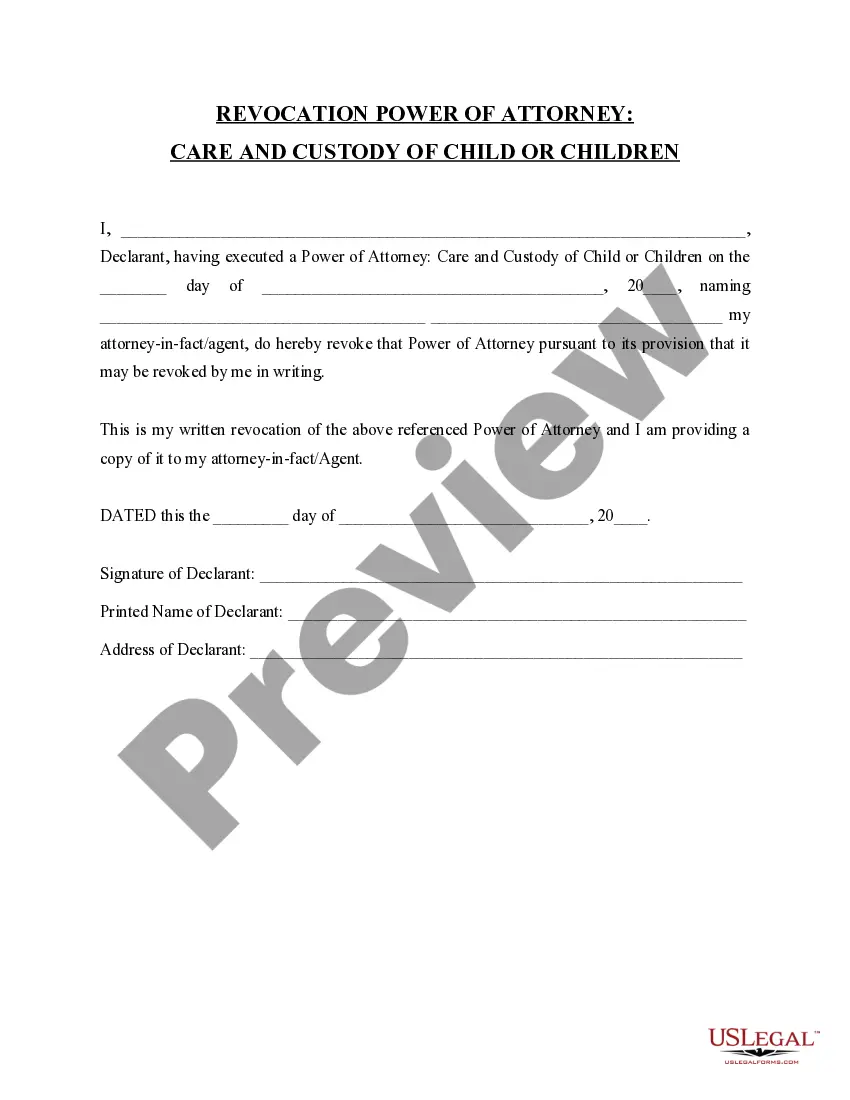
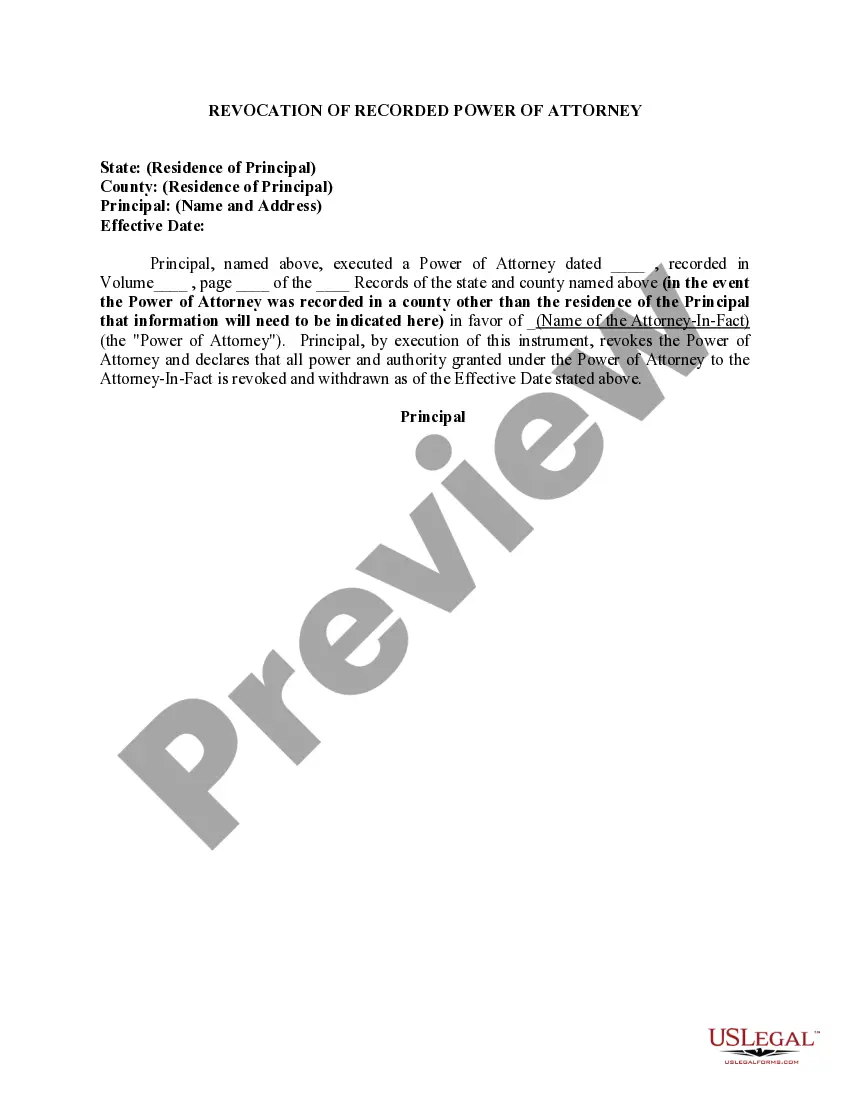
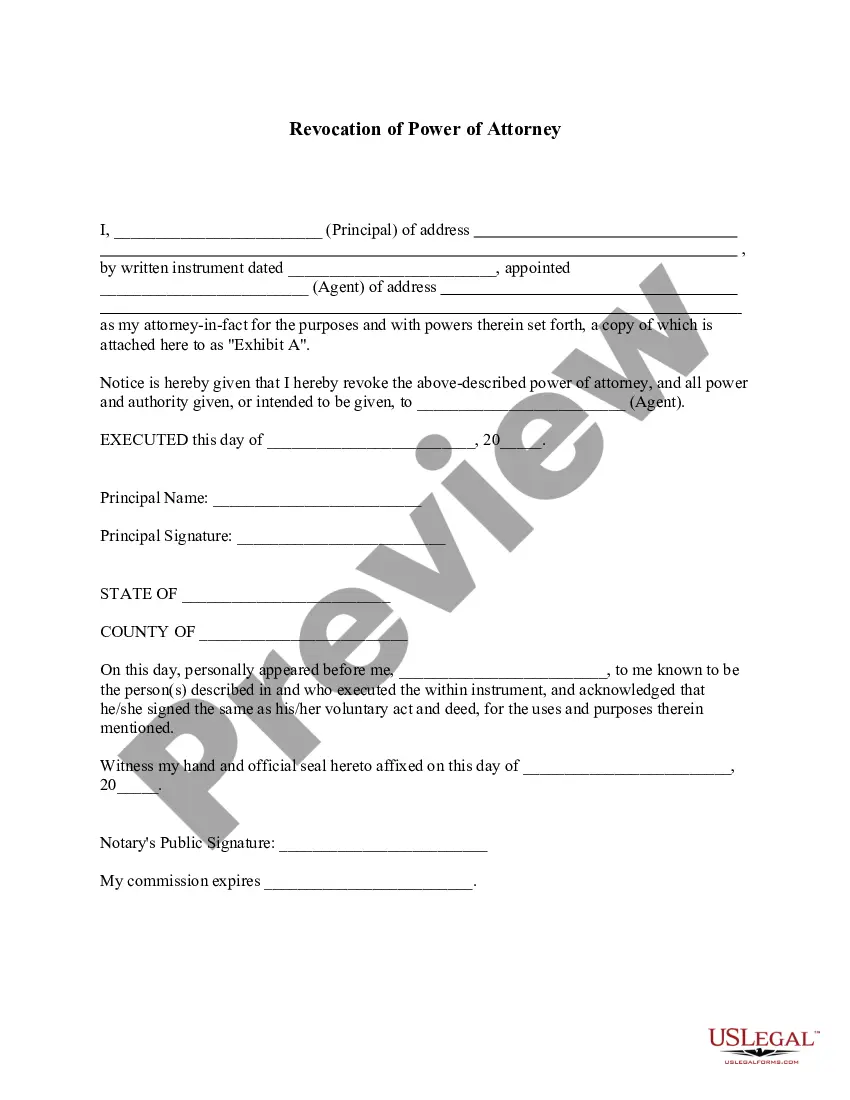
The Revocation of Power of Attorney for Care of Child or Children is a legal document that allows a parent or guardian to officially retract the authority granted to an attorney-in-fact to care for their child or children. This form is particularly important as it provides clarity regarding custody changes and ensures that the previous power of attorney is nullified. It is essential for those who no longer wish for someone else to make decisions regarding their childrenâs care.
Main sections of this form
- Declarantâs information, including name and address.
- Date of the original Power of Attorney execution.
- Name of the attorney-in-fact whose authority is being revoked.
- Statement of revocation of the original Power of Attorney.
- Date of revocation.
- Signature of the declarant.
When to use this form
This form should be used when a parent or legal guardian decides to cancel the authority previously granted to another person regarding the care and custody of their child or children. Common situations include when the child's living arrangements have changed, the guardian no longer requires assistance, or the parent feels that the designated attorney-in-fact can no longer act in their best interest.
Who this form is for
- Parents or legal guardians who wish to revoke a previously granted power of attorney for their child's care.
- Individuals who have named someone else as their attorney-in-fact concerning their children's custody.
- Those who need to ensure that their wishes regarding child care are clearly stated and legally binding.
Steps to complete this form
- Identify yourself as the declarant, and clearly fill in your name and address.
- Enter the date when the original Power of Attorney was signed.
- Provide the name of the attorney-in-fact who is being revoked.
- Complete the statement indicating your intention to revoke the Power of Attorney.
- Include the date of signing the revocation form.
- Sign and print your name to finalize the revocation.
Notarization guidance
This form does not typically require notarization unless specified by local law. However, it is advised to check local regulations to confirm the requirements for validity in your jurisdiction.
Get your form ready online
Our built-in tools help you complete, sign, share, and store your documents in one place.
Make edits, fill in missing information, and update formatting in US Legal Forms—just like you would in MS Word.
Download a copy, print it, send it by email, or mail it via USPS—whatever works best for your next step.
Sign and collect signatures with our SignNow integration. Send to multiple recipients, set reminders, and more. Go Premium to unlock E-Sign.
If this form requires notarization, complete it online through a secure video call—no need to meet a notary in person or wait for an appointment.
We protect your documents and personal data by following strict security and privacy standards.

Make edits, fill in missing information, and update formatting in US Legal Forms—just like you would in MS Word.

Download a copy, print it, send it by email, or mail it via USPS—whatever works best for your next step.

Sign and collect signatures with our SignNow integration. Send to multiple recipients, set reminders, and more. Go Premium to unlock E-Sign.

If this form requires notarization, complete it online through a secure video call—no need to meet a notary in person or wait for an appointment.

We protect your documents and personal data by following strict security and privacy standards.
Common mistakes
- Failing to provide complete contact information.
- Not including the date of the original Power of Attorney.
- Omitting the signature or printed name of the declarant.
- Not providing a copy of the revocation to the former attorney-in-fact.
Benefits of using this form online
- Convenience of downloading instantly from anywhere.
- The ability to customize the form to meet specific needs.
- Access to forms created by licensed attorneys, ensuring legal compliance.
- Secure storage of your document for future reference.
Legal use & context
- Provides a clear record of revocation, helpful in legal disputes.
- Ensures that the individualâs wishes regarding child custody are respected.
- Can be used in family court to demonstrate that authority has been revoked.
What to keep in mind
- The Revocation of Power of Attorney is essential for altering custody arrangements.
- Completing the form correctly is crucial to its legal effectiveness.
- Understanding the local laws can enhance the use of this form.
Looking for another form?
Form popularity
FAQ
In Pennsylvania, a Power of Attorney does not need to be witnessed or notarized to be effective. However, if you own real estate, you should have it notarized so it can be recorded. Also, you can only record an original Power of Attorney. Copies cannot be used to record a Deed.
The main difference between the old EPA regime and LPA's is that an LPA must be registered with the Office of the Public Guardian before it can be used whereas an EPA can be used from the moment it is signed and is only required to be registered once the Donor loses capacity.
A POA in Pennsylvania must be dated, signed by the principal, witnessed by two adults, and notarized. If the principal is not able to write, he or she may sign by making a mark (such as an "X") or by directing another person to sign on his or her behalf.
In many states, notarization is required by law to make the durable power of attorney valid. But even where law doesn't require it, custom usually does. A durable power of attorney that isn't notarized may not be accepted by people with whom your attorney-in-fact tries to deal.
Most states offer simple forms to help you create a power of attorney for finances. Generally, the document must be signed, witnessed and notarized by an adult. If your agent will have to deal with real estate assets, some states require you to put the document on file in the local land records office.
Pennsylvania law requires that POAs must be signed by the principal and witnessed by two people who are ages 18 or older. The document must also be dated and notarized. If the principal cannot write, he or she is allowed to sign the document by using a mark or by asking someone else to sign the POA for him or her.
If you want someone to look after your affairs for a long period of time, you can give them a lasting power of attorney (LPA). An LPA is different from an ordinary power of attorney because: you can make an LPA which looks after your health and care decisions and one to look after your property and financial affairs.
A Pennsylvania durable power of attorney is a long-term arrangement between two individuals; the principal (individual implementing the form) and an attorney-in-fact (appointed representative). This type of power of attorney form is used to transfer financial authority from the principal to the attorney-in-fact.
General Power of Attorney. Durable Power of Attorney. Special or Limited Power of Attorney. Springing Durable Power of Attorney.