Pennsylvania Notice to Contractor - Individual
What this document covers
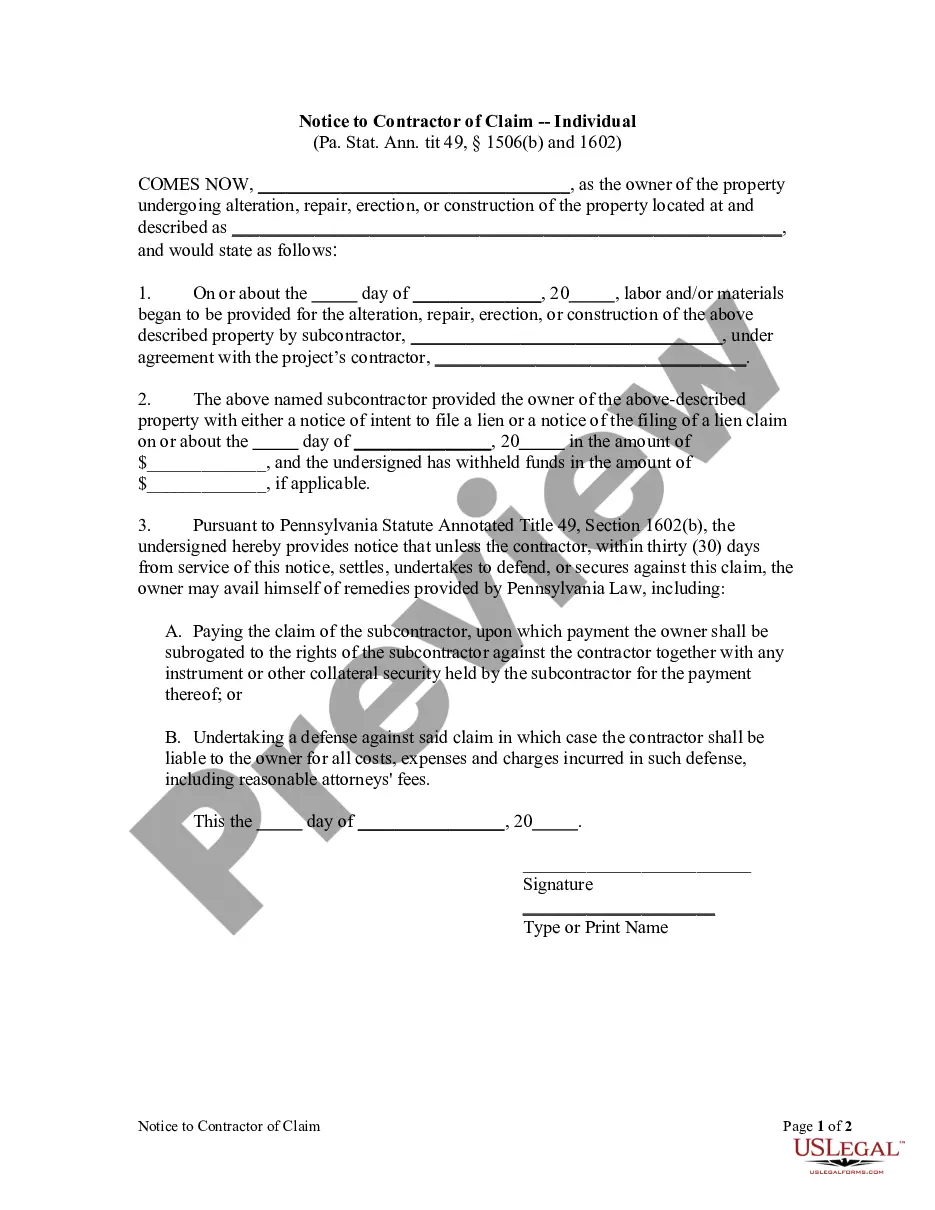
The Notice to Contractor - Individual is a legal document used by property owners to formally address claims made by subcontractors. This form allows owners to notify the principal contractor of a lien claim and request that the contractor either settle the claim or defend the owner against it. This form is essential for protecting the rights of both property owners and subcontractors, ensuring that disputes are handled in a legal manner.
Key parts of this document
- Owner's information: Identifies the property owner issuing the notice.
- Property description: Specifies the property undergoing construction or alteration.
- Claim details: Outlines the claim made by the subcontractor.
- Response options: Provides two pathways for the contractor: settlement or defense.
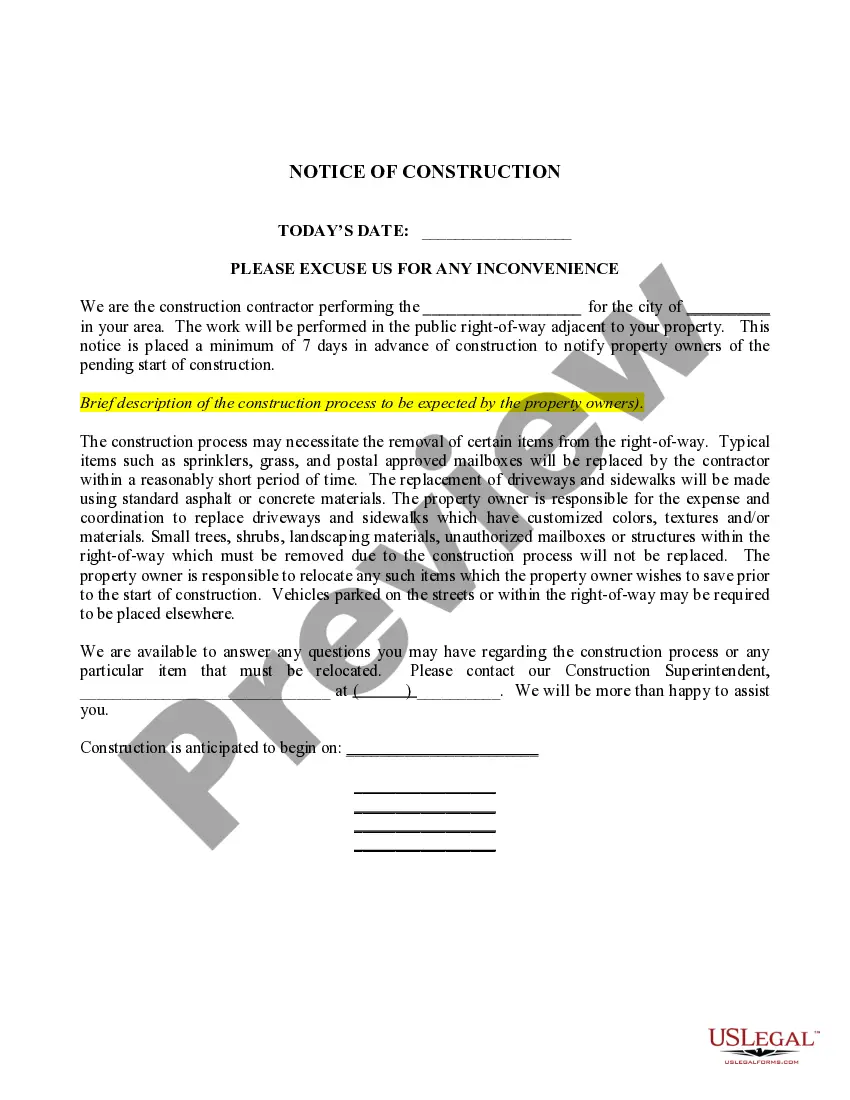
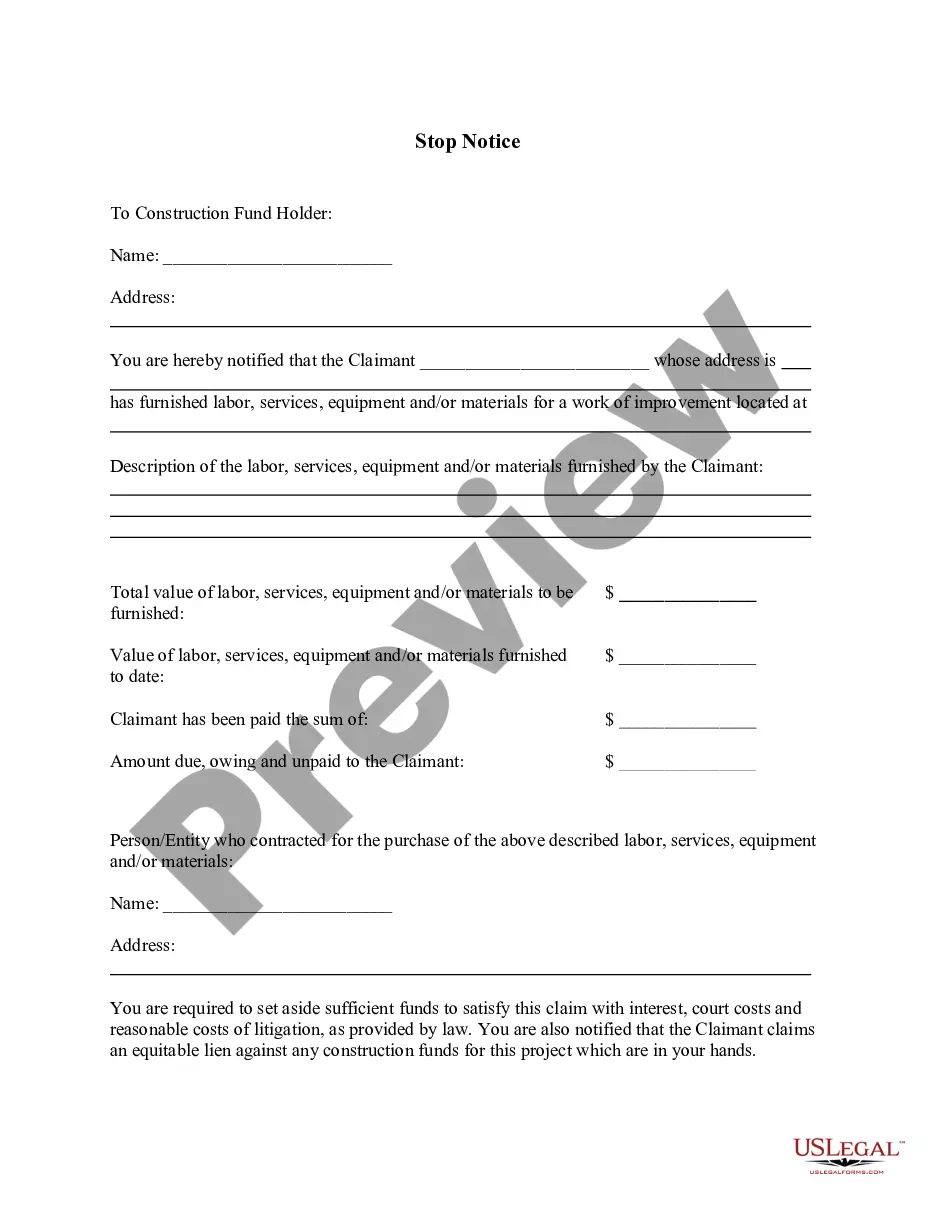
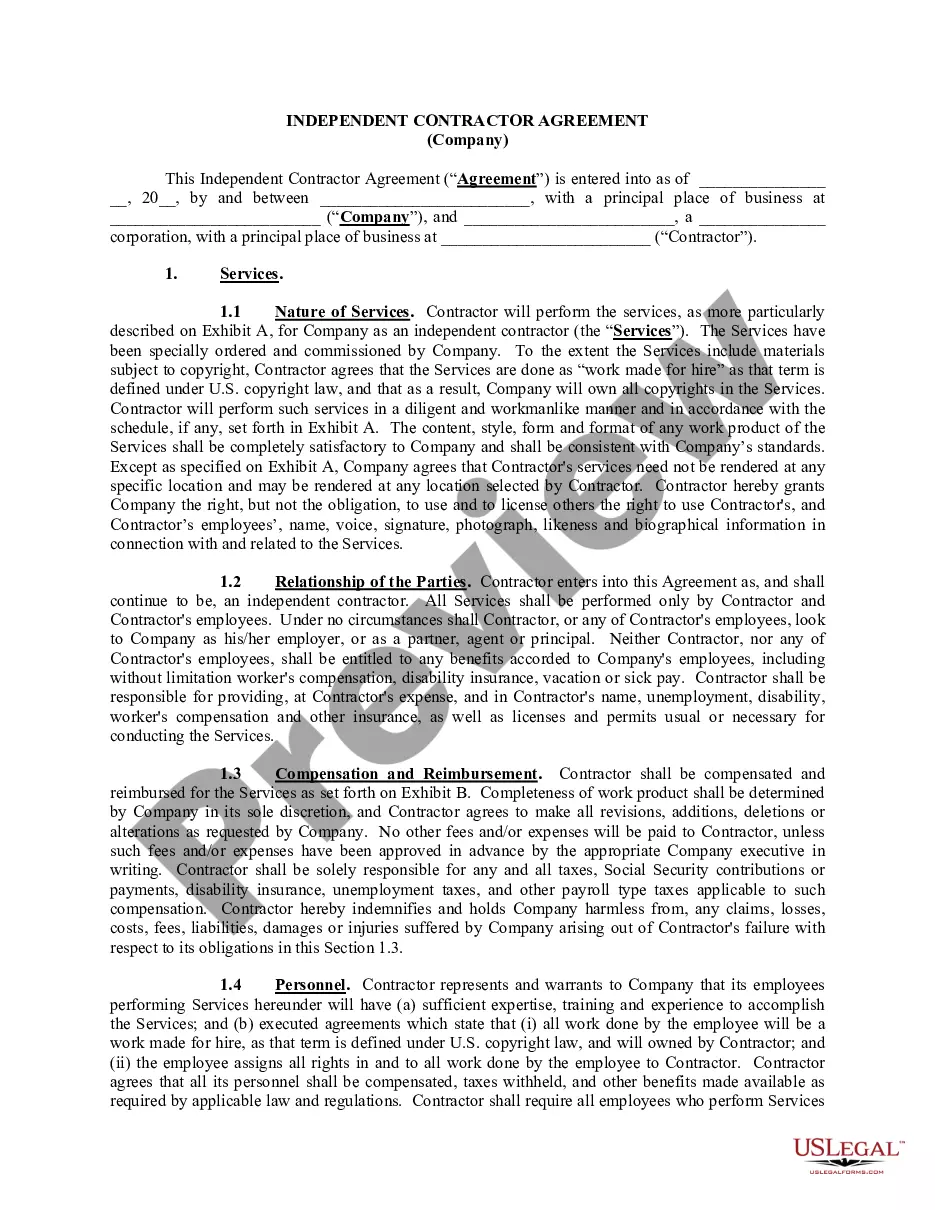
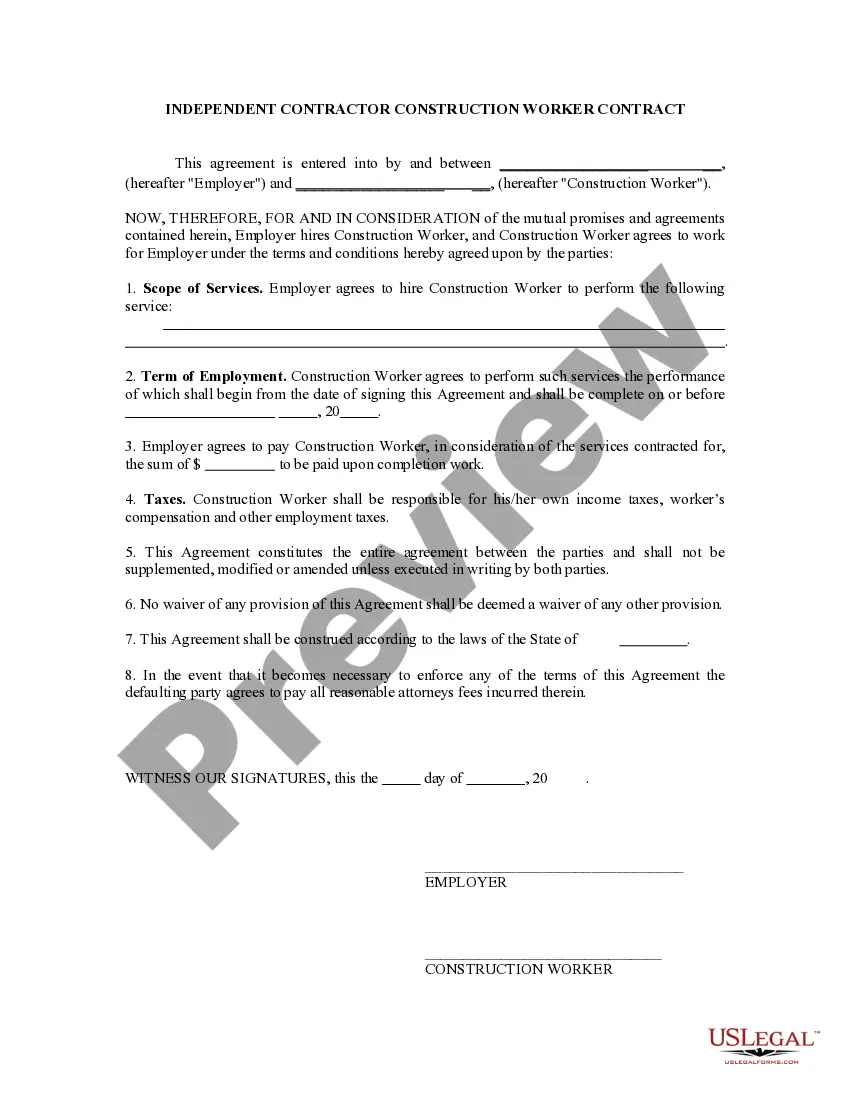
When this form is needed
This form should be used when a property owner receives a Preliminary Notice or Formal Notice of Intent to Claim Lien from a subcontractor. It is a proactive measure to ensure the contractor acknowledges the claim and takes appropriate action to either settle it or defend the owner legally.
Who can use this document
- Property owners who have engaged subcontractors for construction work.
- Subcontractors seeking to ensure their claims are taken seriously by the principal contractor.
- Legal professionals advising clients on property and construction-related matters.
Steps to complete this form
- Identify the parties involved: Fill in the ownerâs name and the subcontractorâs claim details.
- Specify the property: Clearly describe the property undergoing construction.
- State the claim: Indicate the nature of the subcontractor's claim and the relief sought.
- Choose a response option: Decide whether the contractor will settle the claim or undertake a defense.
- Sign and date the form: Ensure that all parties involved sign to validate the notice.
Does this document require notarization?
This form does not typically require notarization unless specified by local law. However, completing it accurately according to state regulations is essential for it to be legally valid.
Get your form ready online
Our built-in tools help you complete, sign, share, and store your documents in one place.
Make edits, fill in missing information, and update formatting in US Legal Forms—just like you would in MS Word.
Download a copy, print it, send it by email, or mail it via USPS—whatever works best for your next step.
Sign and collect signatures with our SignNow integration. Send to multiple recipients, set reminders, and more. Go Premium to unlock E-Sign.
If this form requires notarization, complete it online through a secure video call—no need to meet a notary in person or wait for an appointment.
We protect your documents and personal data by following strict security and privacy standards.

Make edits, fill in missing information, and update formatting in US Legal Forms—just like you would in MS Word.

Download a copy, print it, send it by email, or mail it via USPS—whatever works best for your next step.

Sign and collect signatures with our SignNow integration. Send to multiple recipients, set reminders, and more. Go Premium to unlock E-Sign.

If this form requires notarization, complete it online through a secure video call—no need to meet a notary in person or wait for an appointment.

We protect your documents and personal data by following strict security and privacy standards.
Mistakes to watch out for
- Failing to include the complete property description.
- Not properly identifying the subcontractor's claim.
- Overlooking required signatures from involved parties.
Benefits of using this form online
- Easy access: Download the form instantly from any location.
- Editability: Fill in the required fields at your convenience.
- Reliability: Forms are drafted by licensed attorneys ensuring legal compliance.
Looking for another form?
Form popularity
FAQ
A notice of completion must be served by a project owner within 10 days of the date the notice of completion is filed for recording and must be served on the following: The direct contractor(s); and. Anyone who has served the project owner with a preliminary notice.
Contractors can legally only ask for 1/3 of the contract price up front. It's considered fraud if a substantial portion of the work is not performed in the time requested, or more than 45 days go by without work being done.
A Notice of Completion Is: Other parties higher up on the payment chain, like prime contractors or general contractors, can file a Notice of Completion too. Here's the bottom line. When an owner files a Notice of Completion, the mechanics lien deadline is shortened.
Fortunately, Pennsylvania does a fairly good job of providing options to resolve your contractor dispute. Your first and least expensive option is to make a formal complaint to the Pennsylvania Attorney General's office. If you go to the website attorneygeneral.gov there is an option to File a Complaint.
Pennsylvanians who believe they have been the victim of a home improvement contractor or disreputable business practices should contact the Office of Attorney General's Bureau of Consumer Protection at 1-800-441-2555 or by email at scams@attorneygeneral.gov or visit www.attorneygeneral.gov to file a complaint.
Please refer to www.pals.pa.gov/verify to check the status of a license or permit.
The Commonwealth of Pennsylvania currently has no licensure or certification requirements for most construction contractors (or their employees).
The Commonwealth of Pennsylvania currently has no licensure or certification requirements for most construction contractors (or their employees).