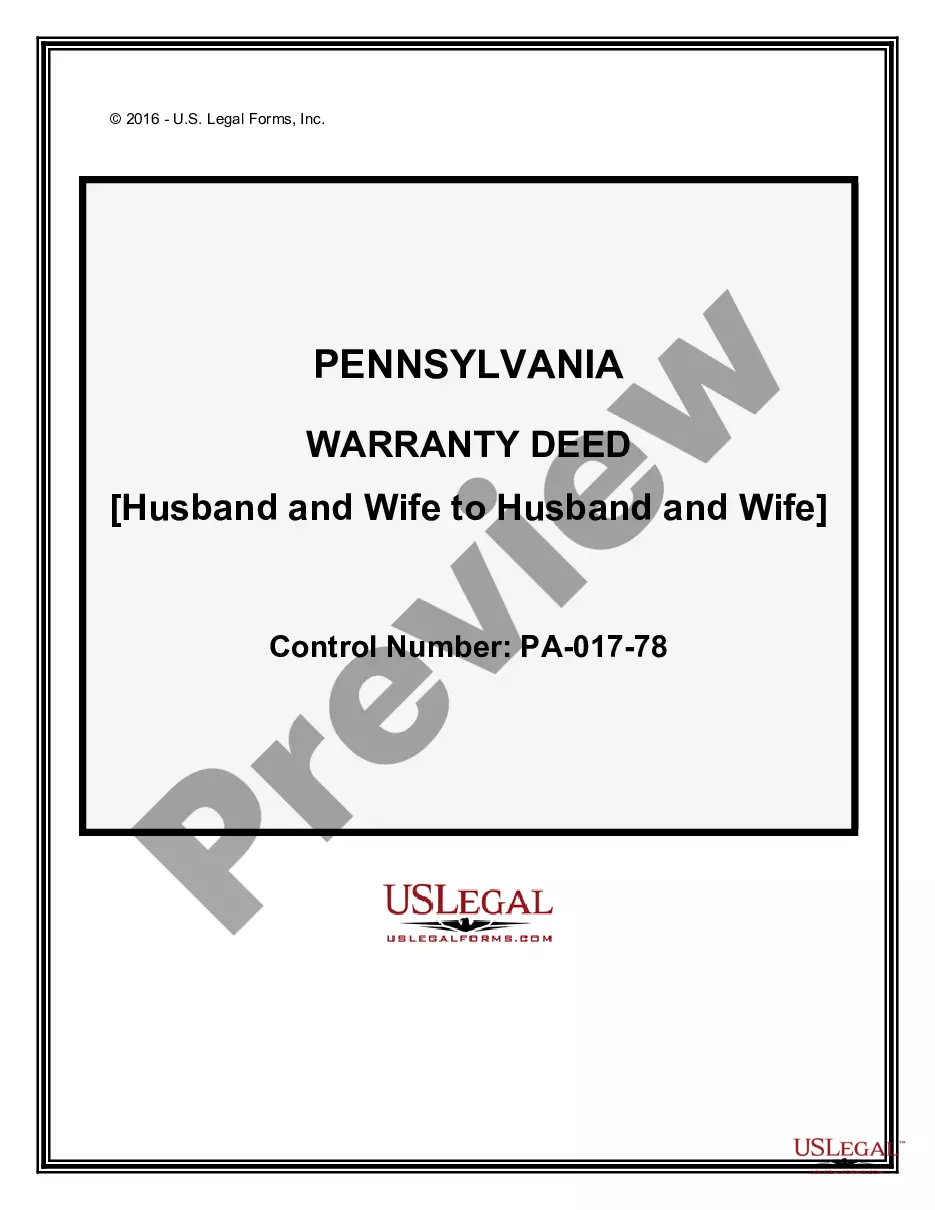
Pennsylvania Warranty Deed from Husband and Wife to Husband and Wife
What this document covers
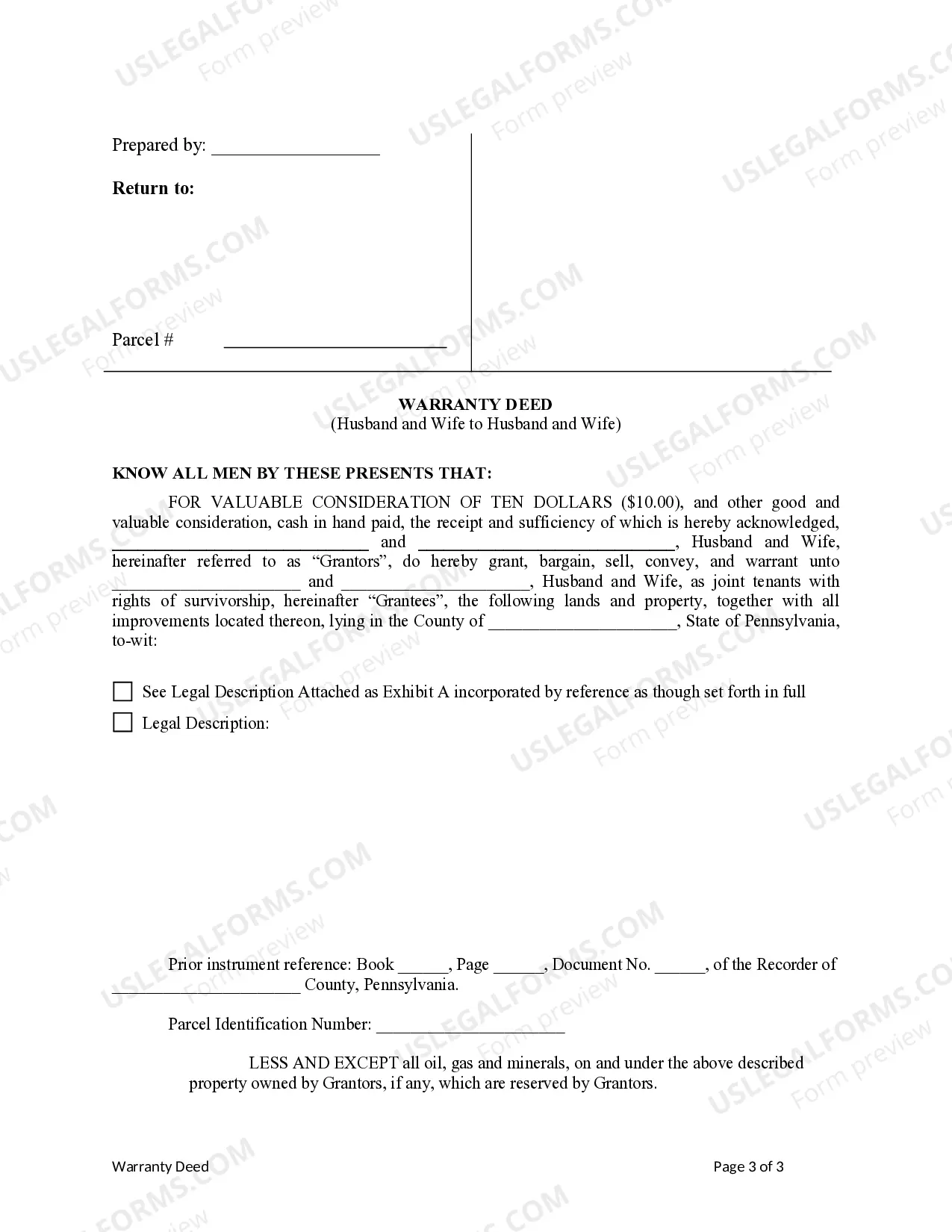
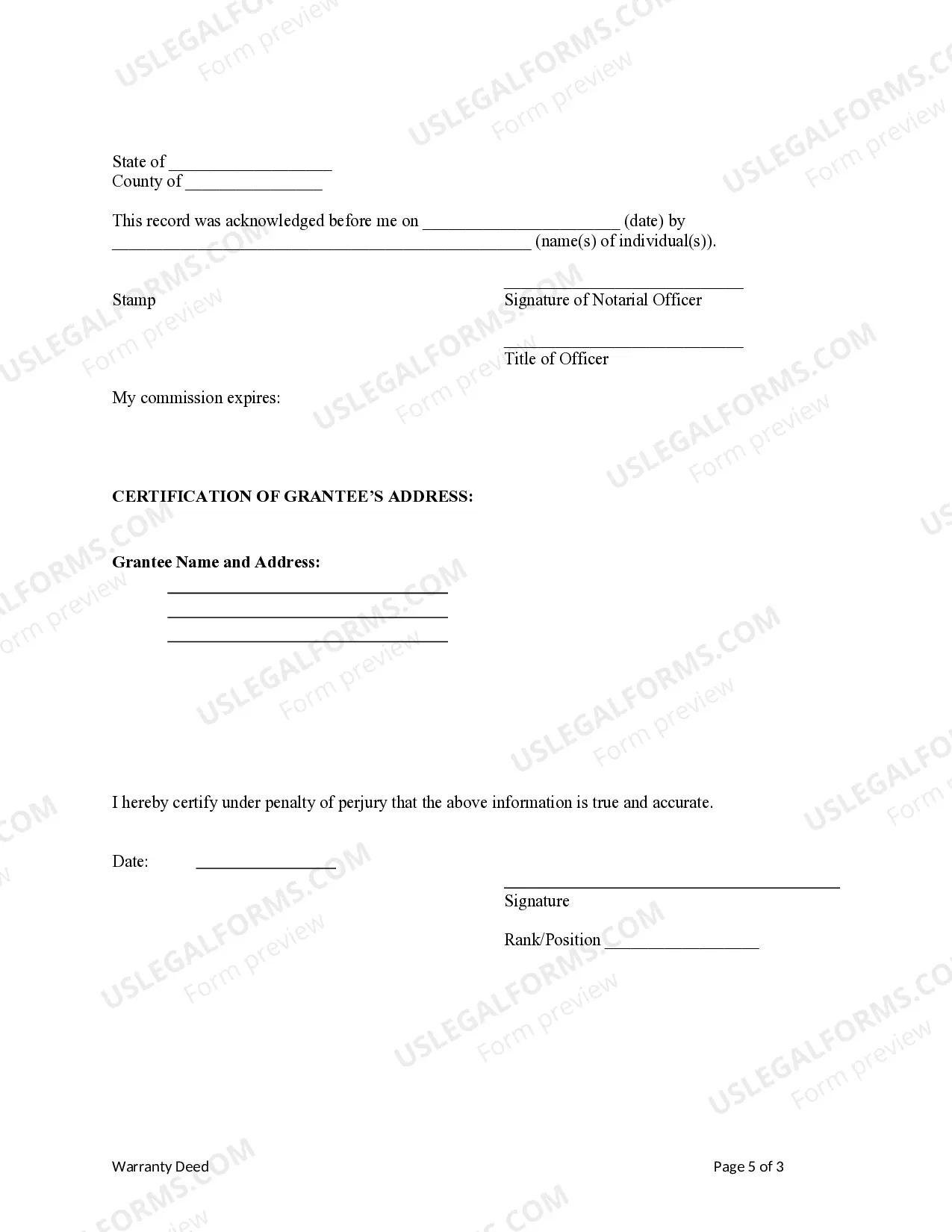
The Warranty Deed from Husband and Wife to Husband and Wife is a legal document that facilitates the transfer of property ownership between married couples. This form specifically allows both spouses, acting as grantors, to convey their interest in the property to themselves as grantees. The deed ensures that the title is clear and without encumbrances, except for specified exceptions such as oil, gas, and mineral rights. Unlike other property transfer forms, this deed emphasizes joint tenancy with rights of survivorship, ensuring seamless transfer of ownership between the spouses in the event of death.
Main sections of this form
- Parties involved: Identifies the grantors (current owners) and grantees (new owners).
- Property description: Includes detailed legal descriptions of the property being transferred.
- Reservation of rights: Specifies any reserved rights concerning oil, gas, and minerals beneath the property.
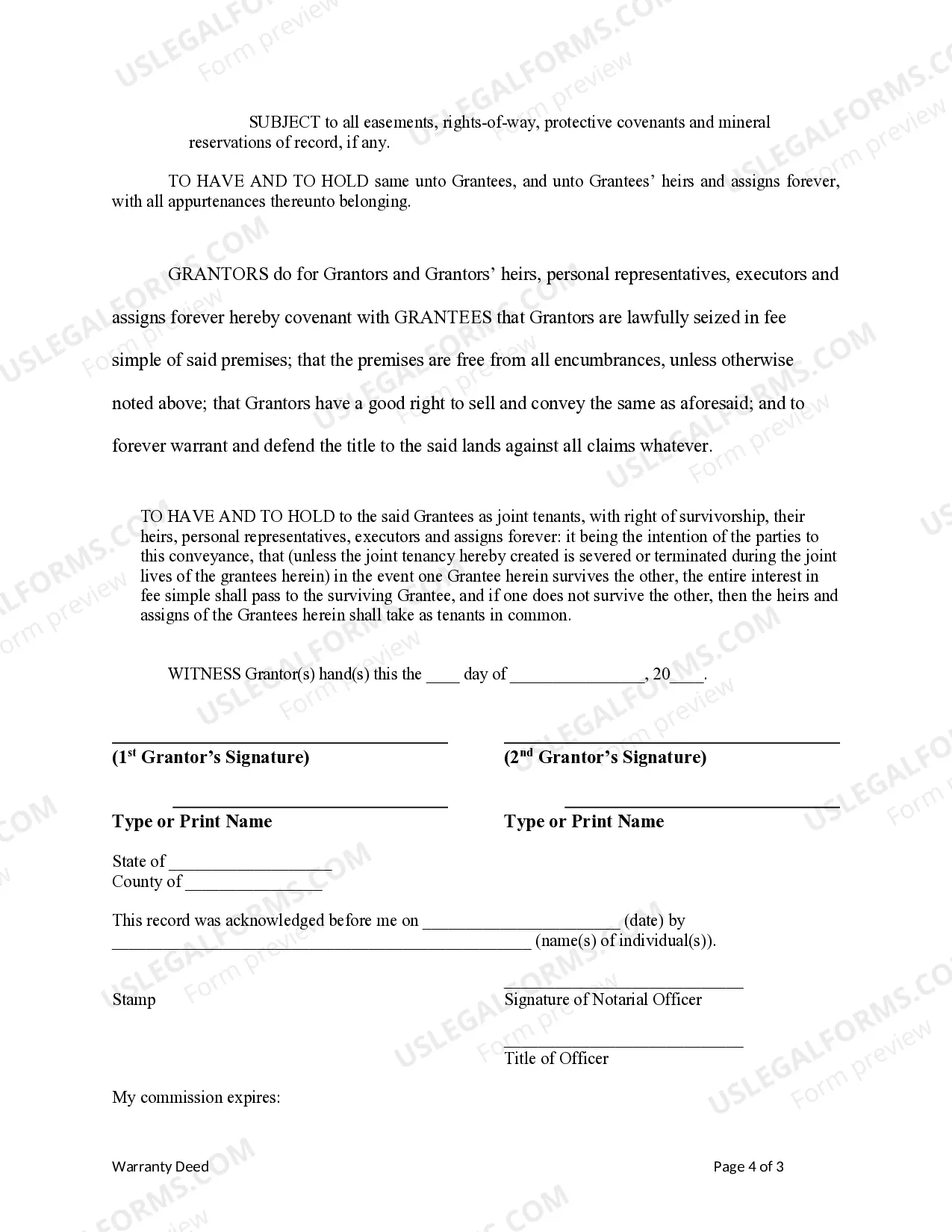
- Joint tenancy clause: Establishes joint tenancy with rights of survivorship for the grantees.
- Covenants: Outlines guarantees by the grantors regarding their ownership and the absence of encumbrances.





When this form is needed
This form is typically used when married couples wish to transfer property ownership to themselves without any change in the ownership structure. It may be applicable in various situations, such as during estate planning, to clarify ownership after marriage, or to consolidate previously separate property ownership into joint ownership.
Who can use this document
- Married couples who currently own property together.
- Spouses looking to simplify their property ownership structure.
- Couples involved in estate planning who want to ensure rights of survivorship are established.
- Individuals seeking to maintain clear legal ownership records regarding jointly owned property.
Completing this form step by step
- Identify the grantors: Enter the full names of both spouses as they currently hold title to the property.
- Specify the grantees: Enter the full names of both spouses as they will hold the title after transfer.
- Describe the property: Provide a legal description of the property being transferred, typically found on the deed or through public records.
- Indicate any reservations: Clearly note any rights reserved by the grantors, such as oil, gas, or mineral rights.
- Sign the document: Both grantors must sign in accordance with state laws, ensuring proper execution of the deed.
Does this form need to be notarized?
This document requires notarization to meet legal standards. US Legal Forms provides secure online notarization powered by Notarize, allowing you to complete the process through a verified video call, available 24/7.
Get your form ready online
Our built-in tools help you complete, sign, share, and store your documents in one place.
Make edits, fill in missing information, and update formatting in US Legal Forms—just like you would in MS Word.
Download a copy, print it, send it by email, or mail it via USPS—whatever works best for your next step.
Sign and collect signatures with our SignNow integration. Send to multiple recipients, set reminders, and more. Go Premium to unlock E-Sign.
If this form requires notarization, complete it online through a secure video call—no need to meet a notary in person or wait for an appointment.
We protect your documents and personal data by following strict security and privacy standards.

Make edits, fill in missing information, and update formatting in US Legal Forms—just like you would in MS Word.

Download a copy, print it, send it by email, or mail it via USPS—whatever works best for your next step.

Sign and collect signatures with our SignNow integration. Send to multiple recipients, set reminders, and more. Go Premium to unlock E-Sign.

If this form requires notarization, complete it online through a secure video call—no need to meet a notary in person or wait for an appointment.

We protect your documents and personal data by following strict security and privacy standards.
Common mistakes to avoid
- Failing to include accurate legal descriptions of the property.
- Not signing the document in the presence of a notary if required.
- Omitting reserved rights that may impact property ownership.
- Using outdated forms that do not comply with current state laws.
Benefits of completing this form online
- Easy accessibility: Download and complete the form at your convenience, saving time.
- Editability: Fill out the form digitally, making it easier to check for errors before printing.
- Reliability: Forms are created by licensed attorneys to ensure they meet legal standards.
Looking for another form?










Form popularity
FAQ
A warranty deed is a higher level of protection produced by the seller upon the real estate closing. It includes a full legal description of the property, and confirms the title is clear and free from all liens, encumbrances, or title defects. Most property sales make use of a warranty deed.Our title agents can help.
It's important to note that a warranty deed does not actually prove the grantor has ownership (a title search is the best way to prove that), but it is a promise by the grantor that they are transferring ownership and if it turns out they don't actually own the property, the grantor will be responsible for compensating
A: A "special warranty" deed is the type of deed used most frequently in Pennsylvania real estate sales. It essentially represents that the seller did nothing to weaken the status of title from the time that he/she received it.A "quit-claim" deed is a deed that contains no warranties at all.
DEED: A written instrument by which one party, the Grantor, conveys the title of ownership in property to another party, the Grantee. A Warranty Deed contains promises, called covenants, that the Grantor makes to the Grantee.It is even possible that the Grantor does not have any title or ownership interest at all!
A warranty deed, also known as a general warranty deed, is a legal real estate document between the seller (grantor) and the buyer (grantee). The deed protects the buyer by pledging that the seller holds clear title to the property and there are no encumbrances, outstanding liens, or mortgages against it.
A warranty deed is a document often used in real estate that provides the greatest amount of protection to the purchaser of a property. It pledges or warrants that the owner owns the property free and clear of any outstanding liens, mortgages, or other encumbrances against it.
A special warranty deed to real estate offers protection to the buyer through the seller's guarantee that the title has been free and clear of encumbrances during their ownership of the property. It does not guarantee clear title beyond their ownership.
Key Takeaways. A property deed is a legal document that transfers the ownership of real estate from a seller to a buyer.General warranty deeds give the grantee the most protection, special warranty deeds give the grantee more limited protection, and a quitclaim deed gives the grantee the least protection under the law
When a will and a deed both transfer the same piece of property, typically the deed will trump. This is not because deeds automatically override a will, but because a deed is designed to take effect immediately after the grantor delivers it to the grantee, whereas a will does not take effect immediately.