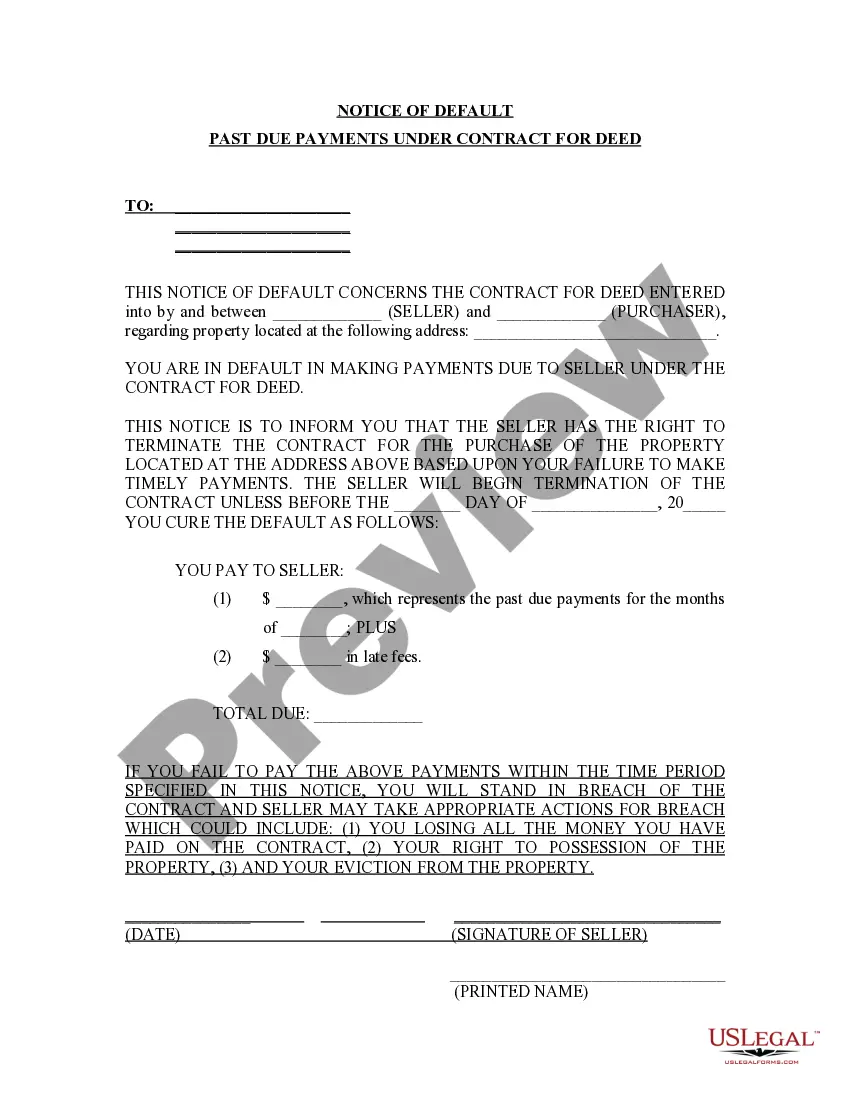
Pennsylvania Notice of Default for Past Due Payments in connection with Contract for Deed
Understanding this form
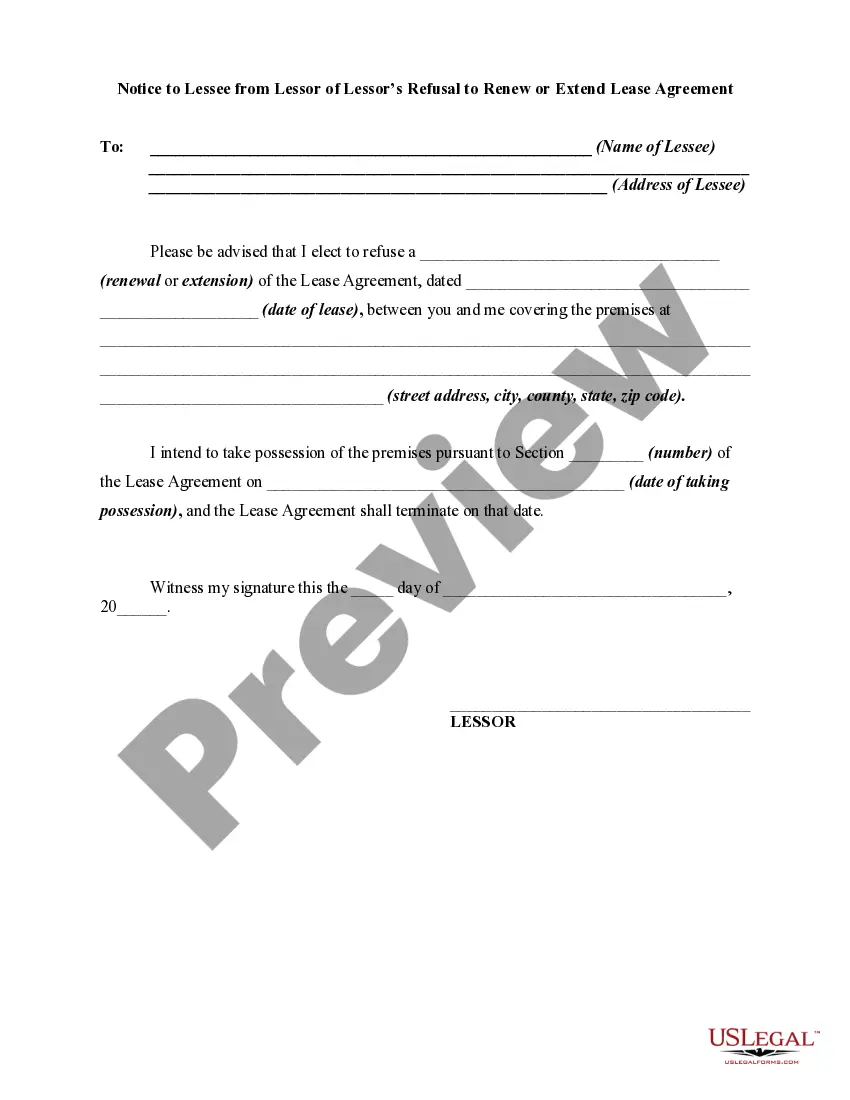
The Notice of Default for Past Due Payments in connection with Contract for Deed serves as an official notification from the Seller to the Purchaser regarding late payments on a property under a contract for deed. This form is crucial as it outlines the terms of the contract that have not been met, providing a clear warning to the Purchaser about the need to rectify the payment issue. Unlike other notices, this specific form emphasizes the consequences of non-compliance, which could result in the default of the contract.
Main sections of this form
- Identification of the Seller and Purchaser involved in the contract for deed.
- Specific details regarding the payment terms and the amount overdue.
- A statement outlining the consequences of failing to comply with the notice.
- Instructions for how the Purchaser can remedy the default situation.
- Space for the dates and signatures of both parties.

Common use cases
This form is needed when the Purchaser has failed to make timely payments as stipulated in a contract for deed. It is essential for initiating the formal process of notifying the Purchaser about the default. Use this notice if you are a Seller who has not received payment for one or more periods as agreed upon and you wish to take legal steps to address the issue.
Who should use this form
- Sellers who have entered into a contract for deed and are experiencing payment delays.
- Legal representatives acting on behalf of Sellers in property transactions.
- Individuals seeking to formally notify a Purchaser about payment defaults.
How to complete this form
- Identify the Seller and Purchaser by entering their full names and addresses.
- Specify the details of the contract for deed, including property information.
- Clearly state the overdue payment amount and the original payment terms.
- Provide a deadline for the Purchaser to correct the default.
- Sign and date the notice to validate it.
Notarization requirements for this form
This form does not typically require notarization unless specified by local law. However, checking local regulations is advised to ensure compliance for official documents.
Get your form ready online
Our built-in tools help you complete, sign, share, and store your documents in one place.
Make edits, fill in missing information, and update formatting in US Legal Forms—just like you would in MS Word.
Download a copy, print it, send it by email, or mail it via USPS—whatever works best for your next step.
Sign and collect signatures with our SignNow integration. Send to multiple recipients, set reminders, and more. Go Premium to unlock E-Sign.
If this form requires notarization, complete it online through a secure video call—no need to meet a notary in person or wait for an appointment.
We protect your documents and personal data by following strict security and privacy standards.

Make edits, fill in missing information, and update formatting in US Legal Forms—just like you would in MS Word.

Download a copy, print it, send it by email, or mail it via USPS—whatever works best for your next step.

Sign and collect signatures with our SignNow integration. Send to multiple recipients, set reminders, and more. Go Premium to unlock E-Sign.

If this form requires notarization, complete it online through a secure video call—no need to meet a notary in person or wait for an appointment.

We protect your documents and personal data by following strict security and privacy standards.
Avoid these common issues
- Failing to specify the exact amount overdue, causing confusion.
- Not providing a clear deadline for the Purchaser to make the payment.
- Omitting signatures, which can invalidate the notice.
- Providing inaccurate or incomplete information about the contract details.
Why use this form online
- Convenient access to the form anytime for quick and easy download.
- Editability allows for customization specific to your situation.
- Reliable templates crafted by licensed attorneys ensure compliance with legal standards.
Legal use & context
- This notice serves as a formal warning regarding non-payment and outlines potential consequences.
- It is advisable to keep a record of delivery of the notice for future legal proceedings.
- A properly completed Notice of Default can strengthen your position should legal actions become necessary.
Summary of main points
- The Notice of Default is essential for addressing payment issues in contracts for deed.
- Clearly state overdue amounts and deadlines to avoid confusion.
- Consult applicable state laws to ensure proper usage of the form.
Looking for another form?

Form popularity
FAQ
After the sheriff's sale, you have the right to challenge the sale under limited circumstances. If you do challenge, you must file a Motion to Set Aside the Sale before the deed is transferred by the sheriff to the buyer or the mortgage company. By law, the deed cannot be transferred for 21 days.
If a seller defaults, he must return all deposits, plus added reasonable expenses, to the buyer. The other party may also seek to compel the erring party to complete the deal under specific performance. From a buyer's point of view, it is advisable to get the sale agreement registered.
It takes several months for a lender to foreclose on a California property. If everything goes according to schedule, the process typically takes approximately 120 days about four months but the process can take as long as 200 or more days to conclude.
Monetary Damages If the Seller decides to breach the contract and keep their home, they may do so, but the court may order the Buyer receive money for the resulting breach. Generally, the money owed to Buyer may include reimbursing the Buyer with: The buyer's temporary housing costs.
The PA foreclosure process can take anywhere from several months to over a year, depending on the specific circumstances and any legal challenge to the foreclosure filing. From the first missed payment, it takes 120 days before the bank can file a foreclosure.
Among other things, Act 6 requires the holder of a residential mortgage to give the borrower notice of default before accelerating the debt, limits the rate of interest that may be charged, limits the attorneys' fees that may be charged to the borrower, and prohibits the lender from foreclosing by executing on a
Under federal law, the servicer usually can't officially begin a foreclosure until you're more than 120 days past due on payments, subject to a couple of exceptions. (12 C.F.R. § 1024.41). This 120-day period provides most homeowners with ample opportunity to submit a loss mitigation application to the servicer.
Foreclosure service Pennsylvania foreclosure proceedings require the foreclosure notice to be served along with a 20-day summons. If no response is received, the borrower must receive a second, 10-day summons. As such, borrowers may file a response to the foreclosure complaint within 30 days of receiving the complaint.
Although some states feature a post-sale right of redemption period during which a borrower may regain ownership even after a sale is made, Pennsylvania offers no right of redemption.