Oregon Last Will and Testament with All Property to Trust called a Pour Over Will
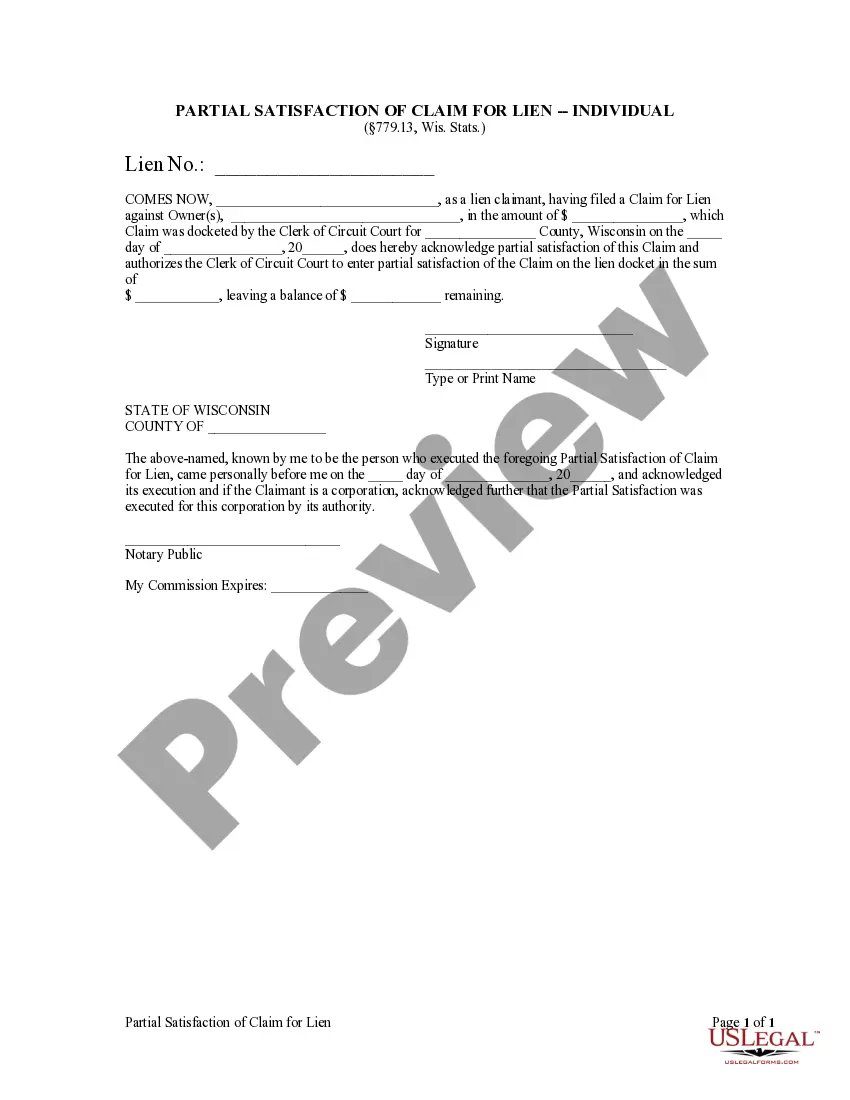
About this form
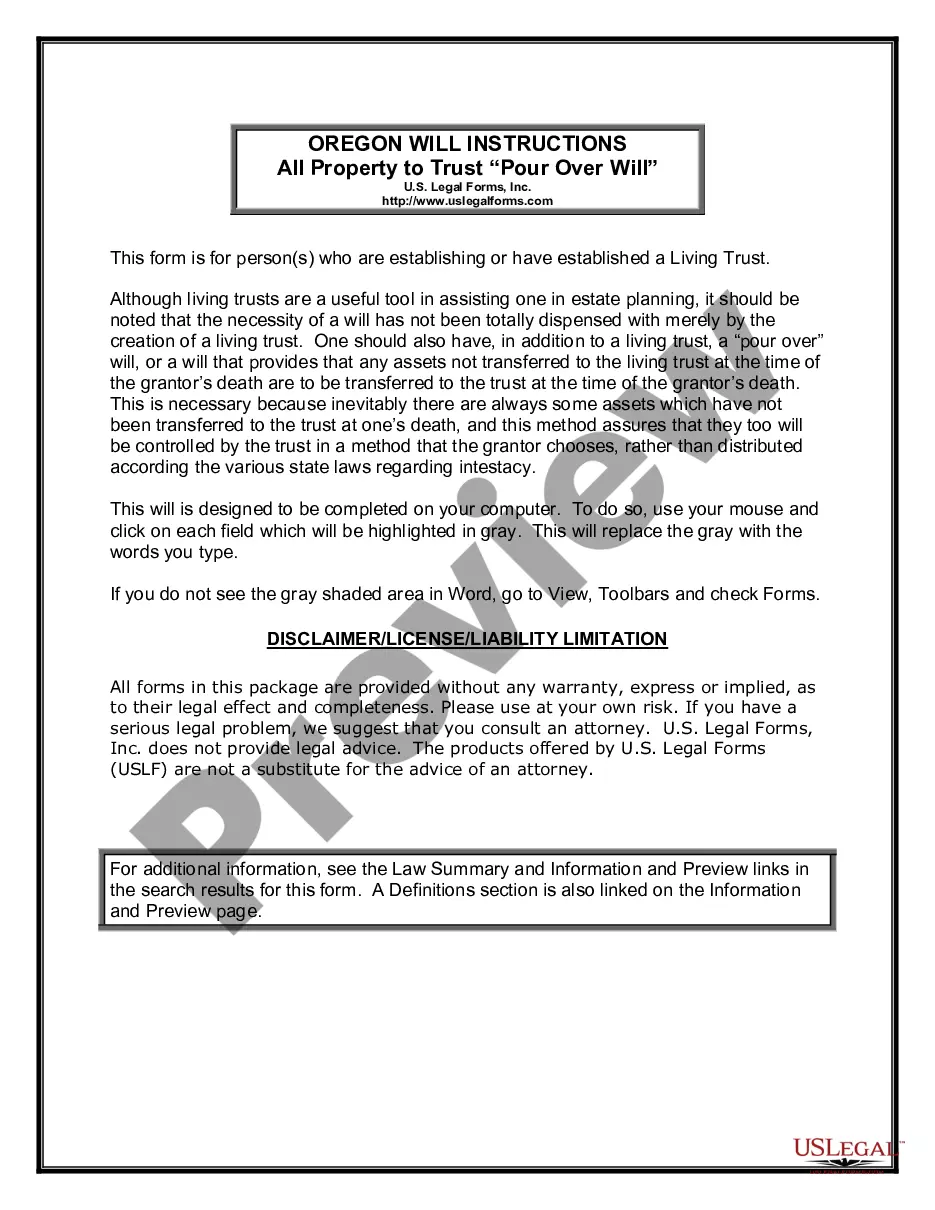
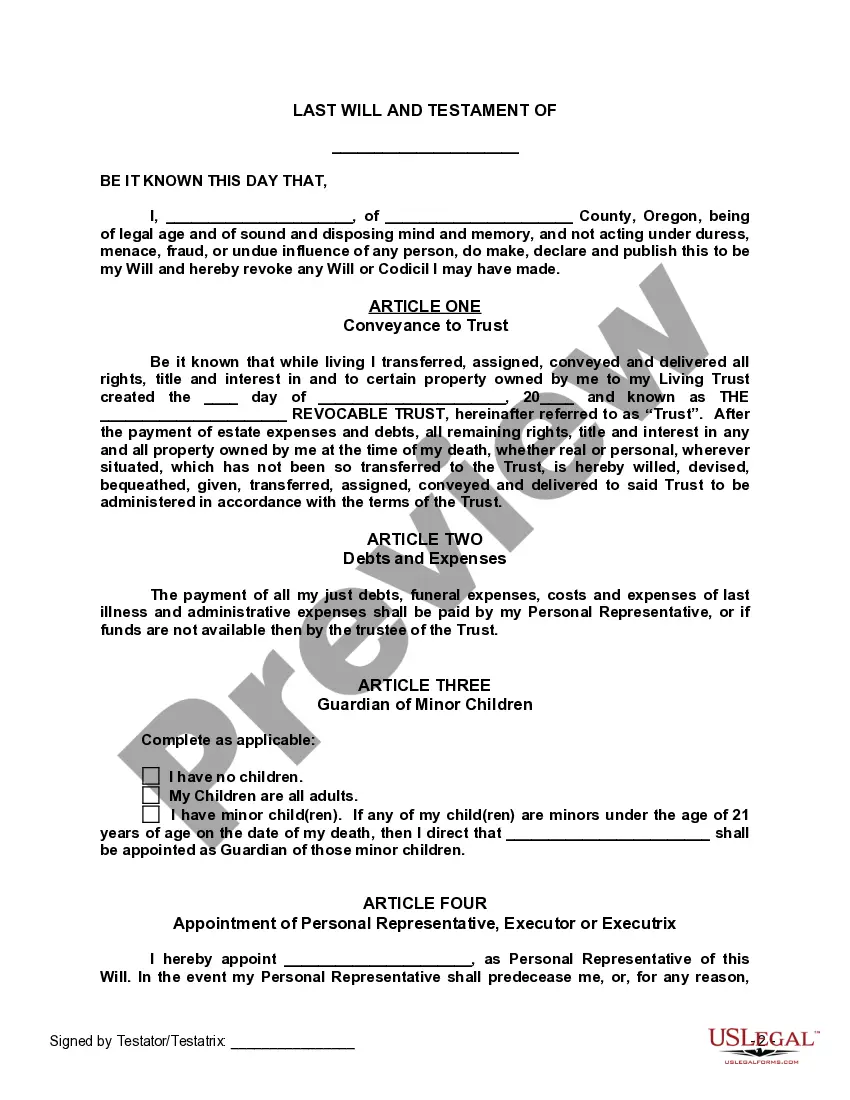
The Last Will and Testament with All Property to Trust, commonly referred to as a Pour Over Will, is a legal document that directs how your assets should be handled after your death. This form is specifically designed for individuals who are establishing or have already established a Living Trust. Unlike a traditional will, a Pour Over Will ensures that any property not placed into the trust during your lifetime will "pour over" into your existing trust upon your death, streamlining the distribution of your estate according to your wishes.
Form components explained
- Conveyance to Trust: Specifies that all assets not transferred to the trust during the grantor's lifetime are transferred to the trust after death.
- Debts and Expenses: Outlines how debts, funeral expenses, and administrative costs will be paid from the estate.
- Guardian of Minor Children: Allows for the appointment of guardians for any minor children if applicable.
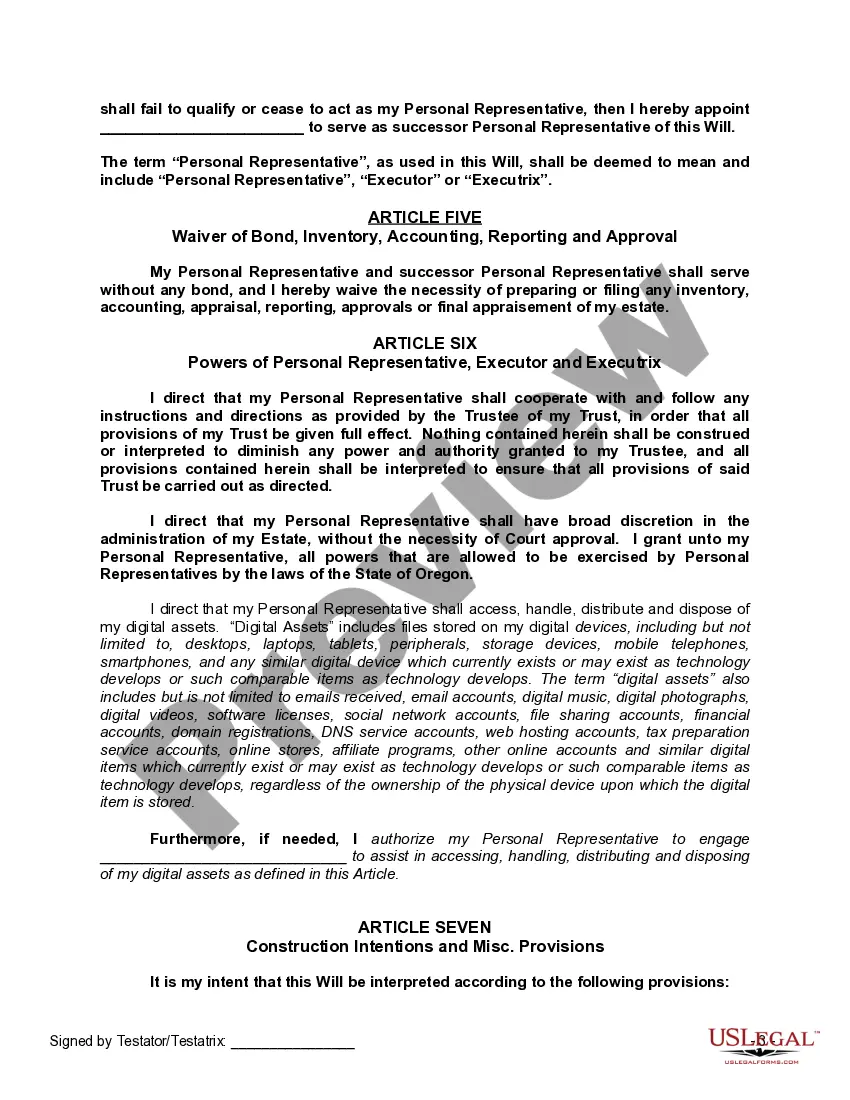
- Appointment of Personal Representative: Names the individual responsible for executing the terms of the will and managing the estate.
- Waiver of Bond: Indicates that the Personal Representative will serve without the requirement of a bond.
- Powers of Personal Representative: Grants the Personal Representative authority to administer the estate according to the trust's instructions.
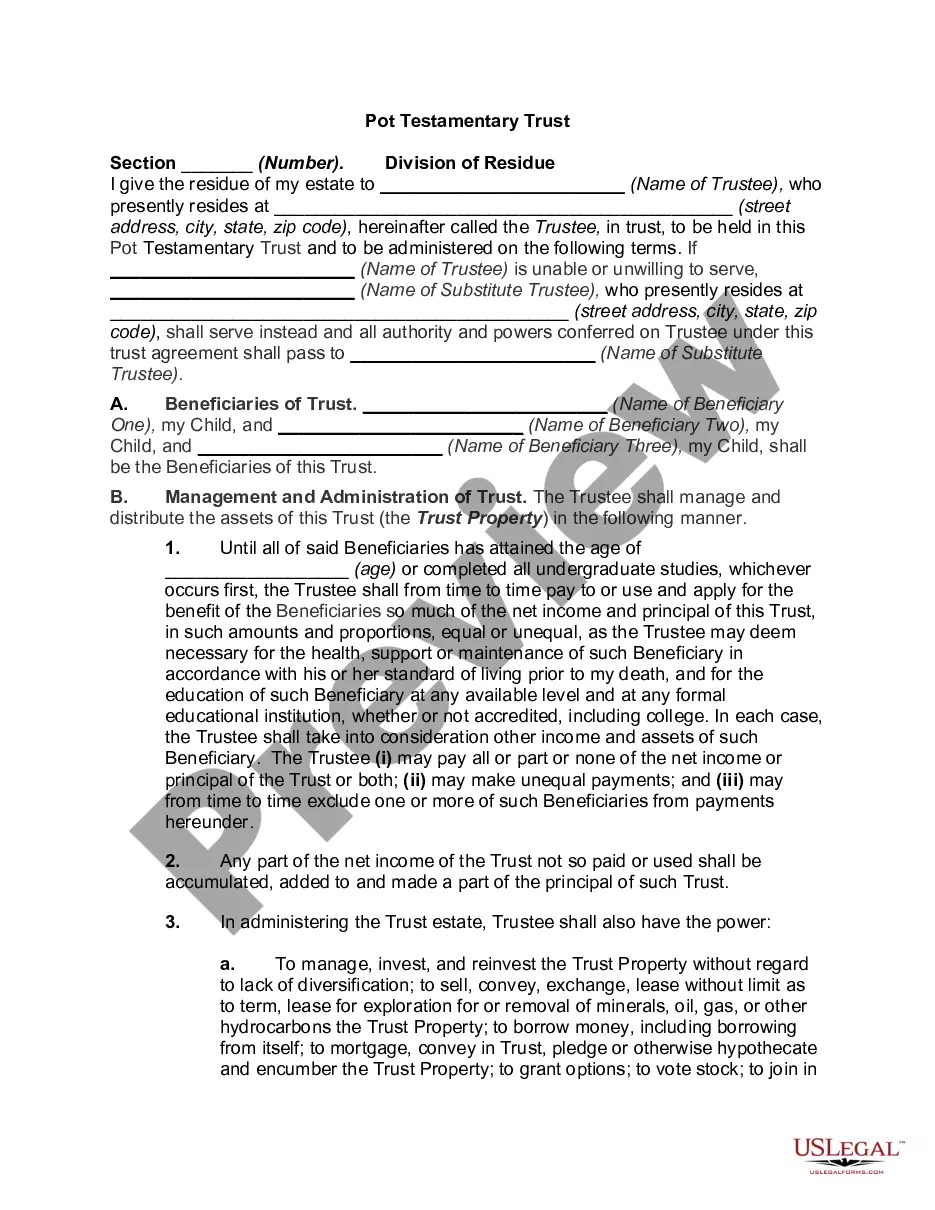
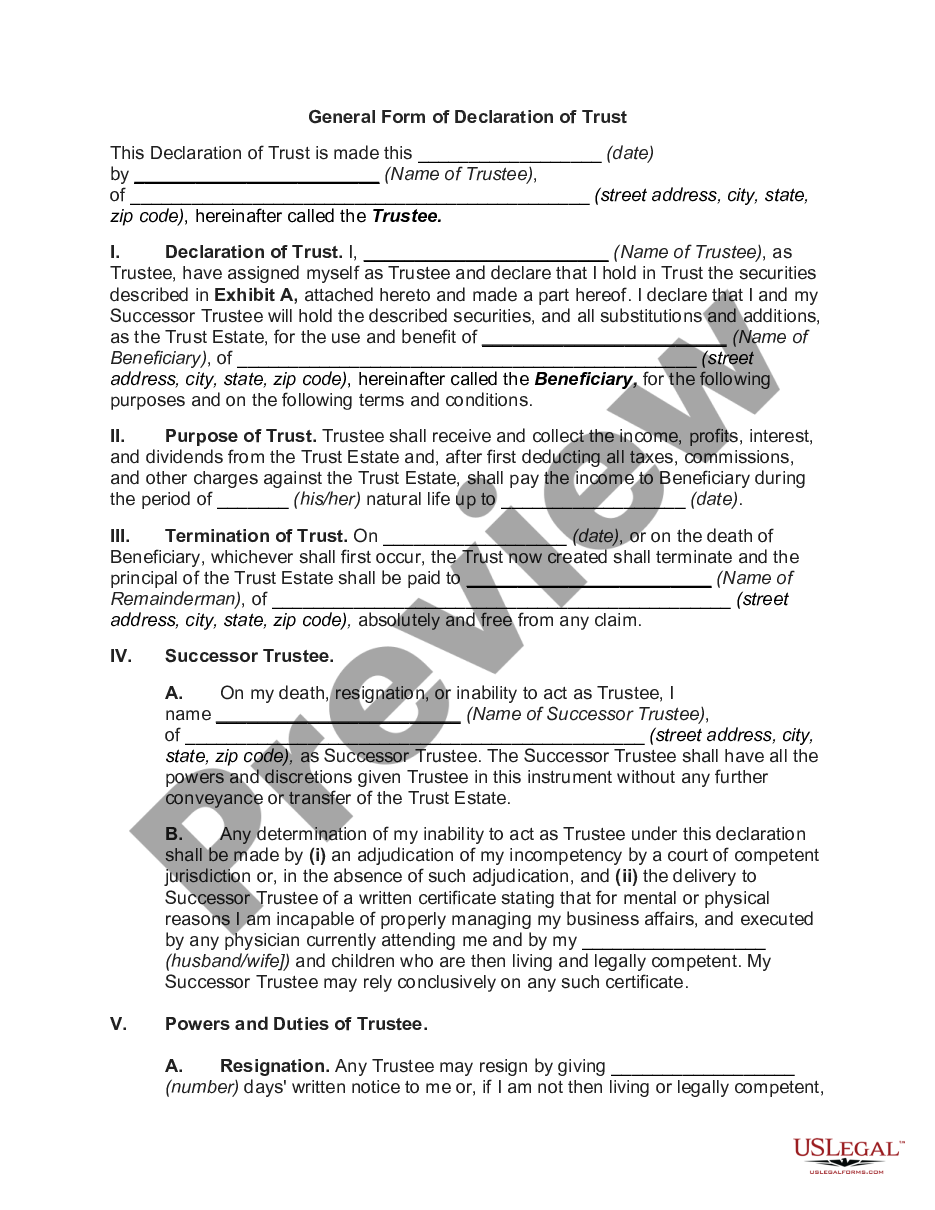


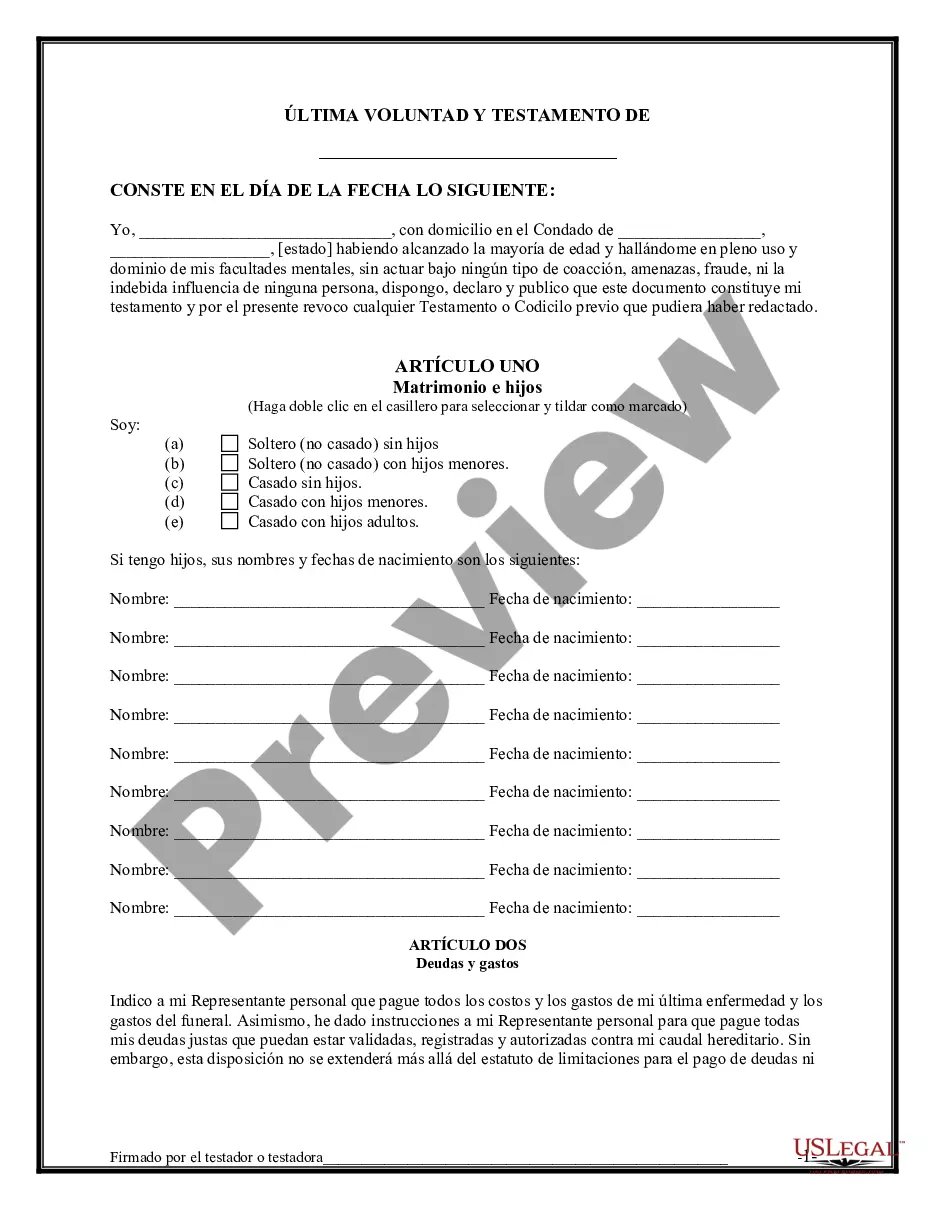
When to use this form
You should use this Last Will and Testament with All Property to Trust when you have established or are planning to establish a Living Trust. This form is essential if you wish to ensure that all assets not placed in the trust prior to your death are still managed according to your intent, rather than under state intestacy laws. It is particularly useful in scenarios where you have children, own significant assets, or want to maintain control over how your estate will be distributed among beneficiaries.
Who this form is for
- Individuals establishing or who have established a Living Trust.
- People who wish to ensure all unreported assets are addressed posthumously.
- Parents with minor children who want to designate a guardian.
- Anyone looking for a straightforward will to complement their estate plan.
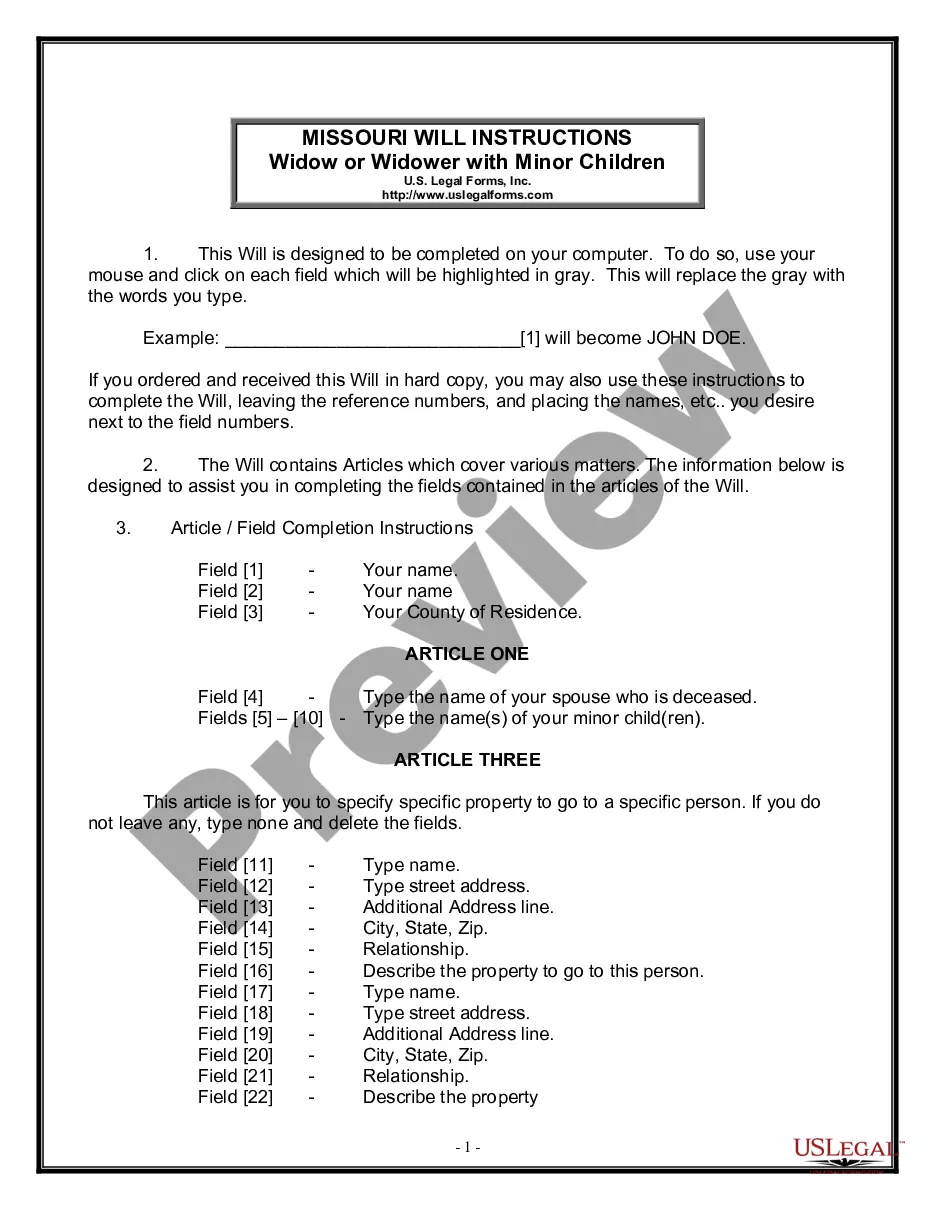
How to complete this form
- Identify the parties involved, including the testator and the Personal Representative.
- Detail the Living Trust into which the assets will pour over, including its name and creation date.
- Specify any minor children and appoint guardians as necessary.
- List all debts and expenses that should be paid from the estate before asset distribution.
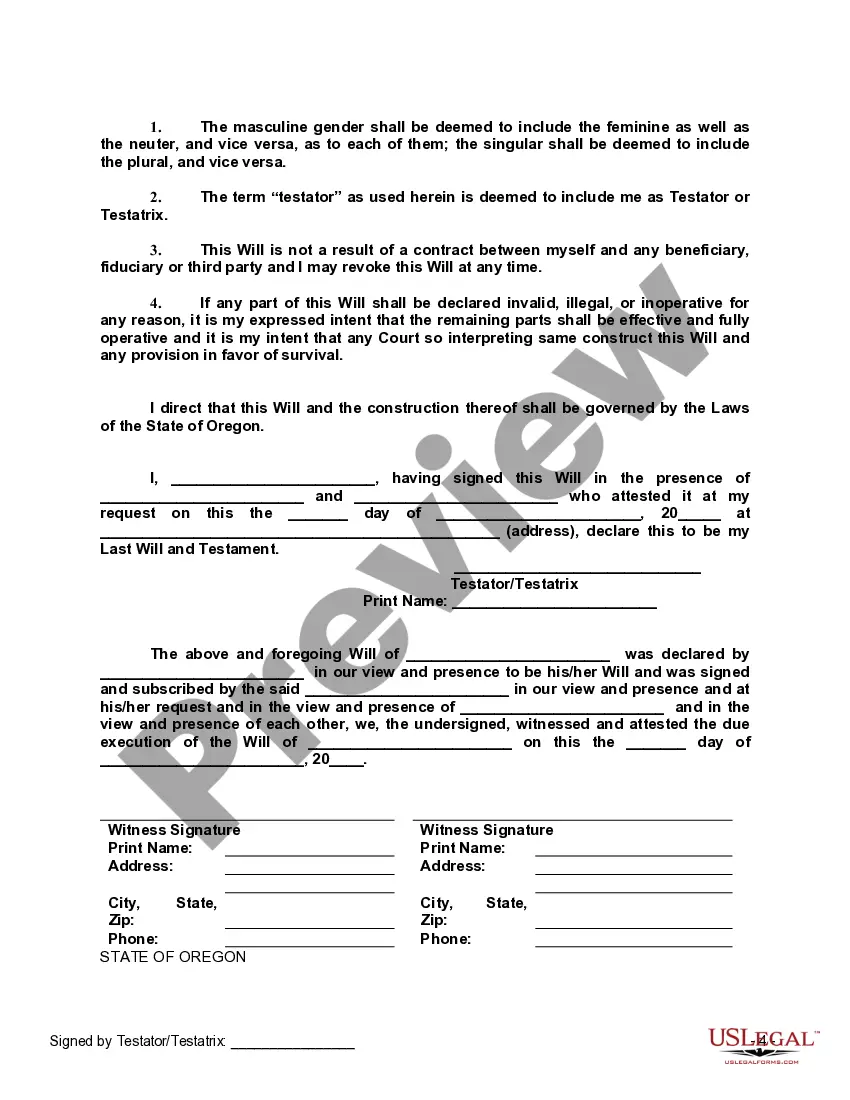
- Sign the will in the presence of witnesses, ensuring they also sign to validate the document.
Notarization guidance
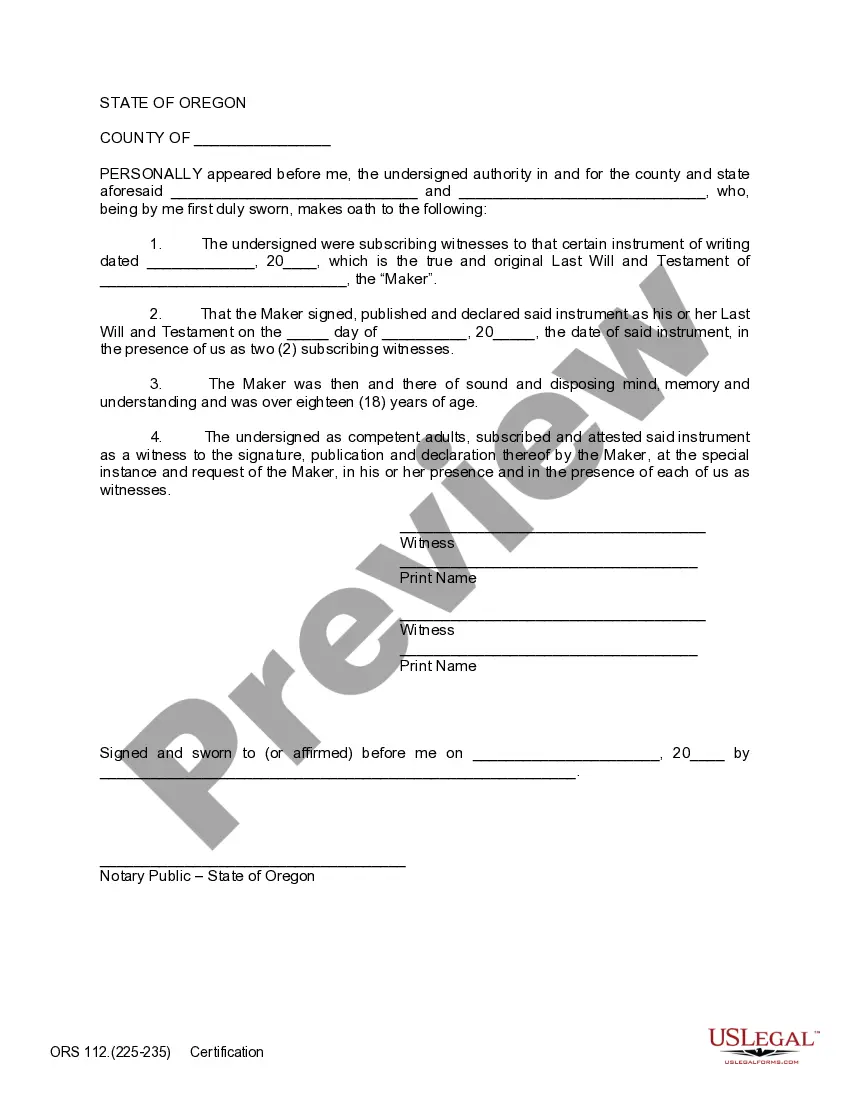
This form needs to be notarized to ensure legal validity. US Legal Forms provides secure online notarization powered by Notarize, allowing you to complete the process through a verified video call, available anytime.
Get your form ready online
Our built-in tools help you complete, sign, share, and store your documents in one place.
Make edits, fill in missing information, and update formatting in US Legal Forms—just like you would in MS Word.
Download a copy, print it, send it by email, or mail it via USPS—whatever works best for your next step.
Sign and collect signatures with our SignNow integration. Send to multiple recipients, set reminders, and more. Go Premium to unlock E-Sign.
If this form requires notarization, complete it online through a secure video call—no need to meet a notary in person or wait for an appointment.
We protect your documents and personal data by following strict security and privacy standards.

Make edits, fill in missing information, and update formatting in US Legal Forms—just like you would in MS Word.

Download a copy, print it, send it by email, or mail it via USPS—whatever works best for your next step.

Sign and collect signatures with our SignNow integration. Send to multiple recipients, set reminders, and more. Go Premium to unlock E-Sign.

If this form requires notarization, complete it online through a secure video call—no need to meet a notary in person or wait for an appointment.

We protect your documents and personal data by following strict security and privacy standards.
Common mistakes
- Failing to transfer all intended assets into the trust before death.
- Not appointing a guardian for minor children.
- Omitting necessary signatures or witnesses, which can invalidate the will.
- Using outdated forms that do not comply with current laws.
Benefits of using this form online
- Convenient access allows you to complete the form from anywhere at any time.
- Editable fields make it easy to customize the document to fit your specific needs.
- Reliable templates are drafted by licensed attorneys to ensure legal compliance.
- Immediate download means you can get your legal documents quickly without waiting for mail delivery.
Looking for another form?
Form popularity
FAQ
Combining a Will and Trust Together: Should You Use Both? The use of a living trust and a will together as part of your estate planning is acceptable under California law. The benefit of this approach is that you can address separate issues on each document.
No a will does not override a deed. A will only acts on death. The deed must be signed during the life of the owner. The only assets that pass through the will are assets that are in the name of the decedent only.
Important: Although a revocable trust supersedes a will, the trust only controls those assets that have been placed into it. Therefore, if a revocable trust is formed, but assets are not moved into it, the trust provisions have no effect on those assets, at the time of the grantor's death.
While a will determines how your assets will be distributed after you die, a trust becomes the legal owner of your assets the moment the trust is created.
An estate plan that includes a trust costs $1,000 to $3,000, versus $300 or less for a simple will. What a living-trust promoter may not tell you: You don't need a trust to protect assets from probate. You can arrange for most of your valuable assets to go to your heirs outside of probate.
A revocable trust becomes irrevocable at the death of the person that created the trust.The Trust becomes its own entity and needs a tax identification number for filing of returns. 2. The Grantor (also called the Trustor) of the Trust becomes incapacitated.
One main difference between a will and a trust is that a will goes into effect only after you die, while a trust takes effect as soon as you create it. A will is a document that directs who will receive your property at your death and it appoints a legal representative to carry out your wishes.
When people make revocable living trusts to avoid probate, it's common for them to also make what's called a "pour-over will." The will directs that if any property passes through the will at the person's death, it should be transferred to (poured into) the trust, and then distributed to the beneficiaries of the trust.
Make a List of All Your Assets. Be sure to include make a list of your assets that includes everything you own. Find the Paperwork for Your Assets. Choose Beneficiaries. Choose a Successor Trustee. Choose a Guardian for Your Minor Children.