Oregon Last Will for a Widow or Widower with no Children
What is this form?
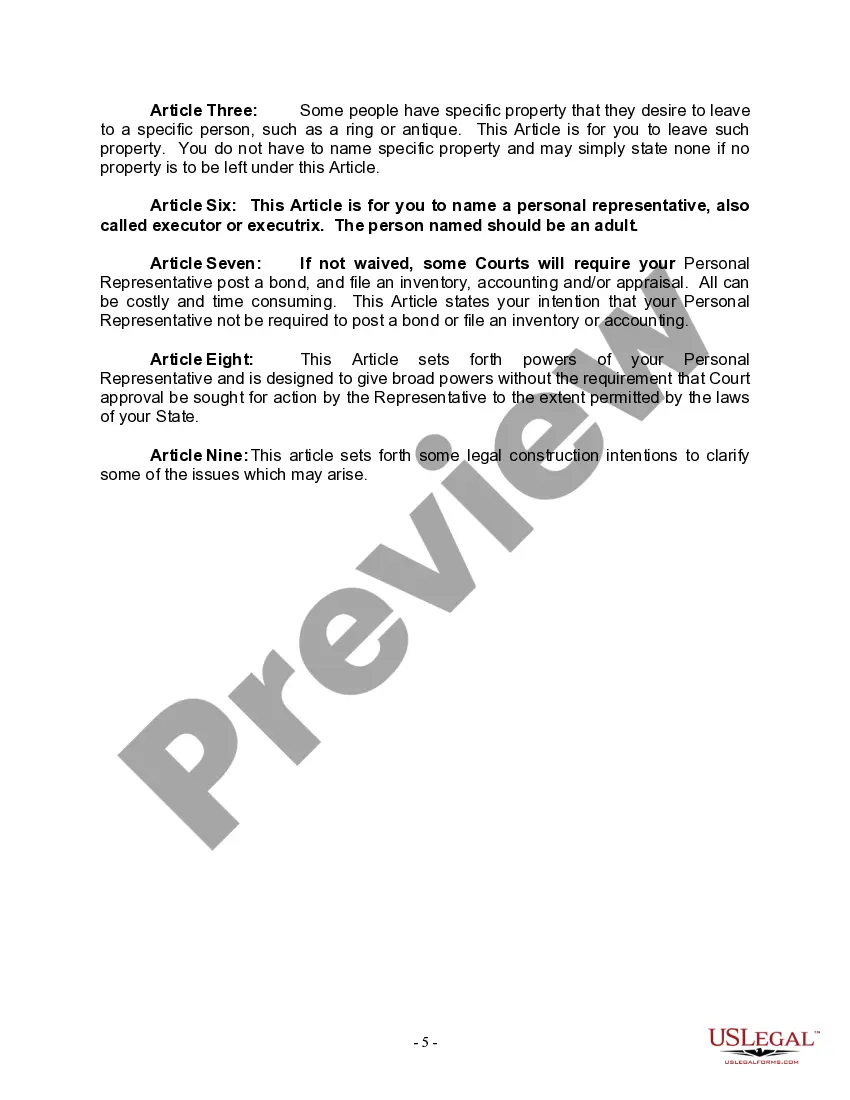
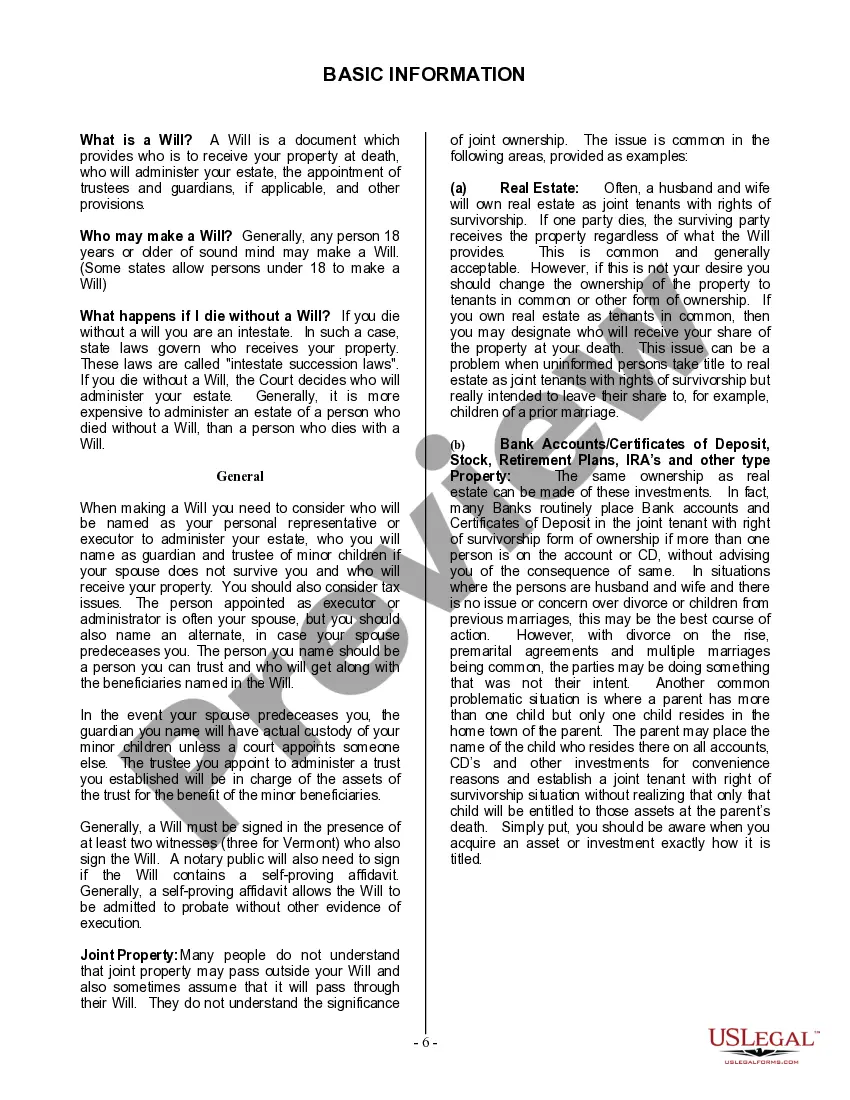
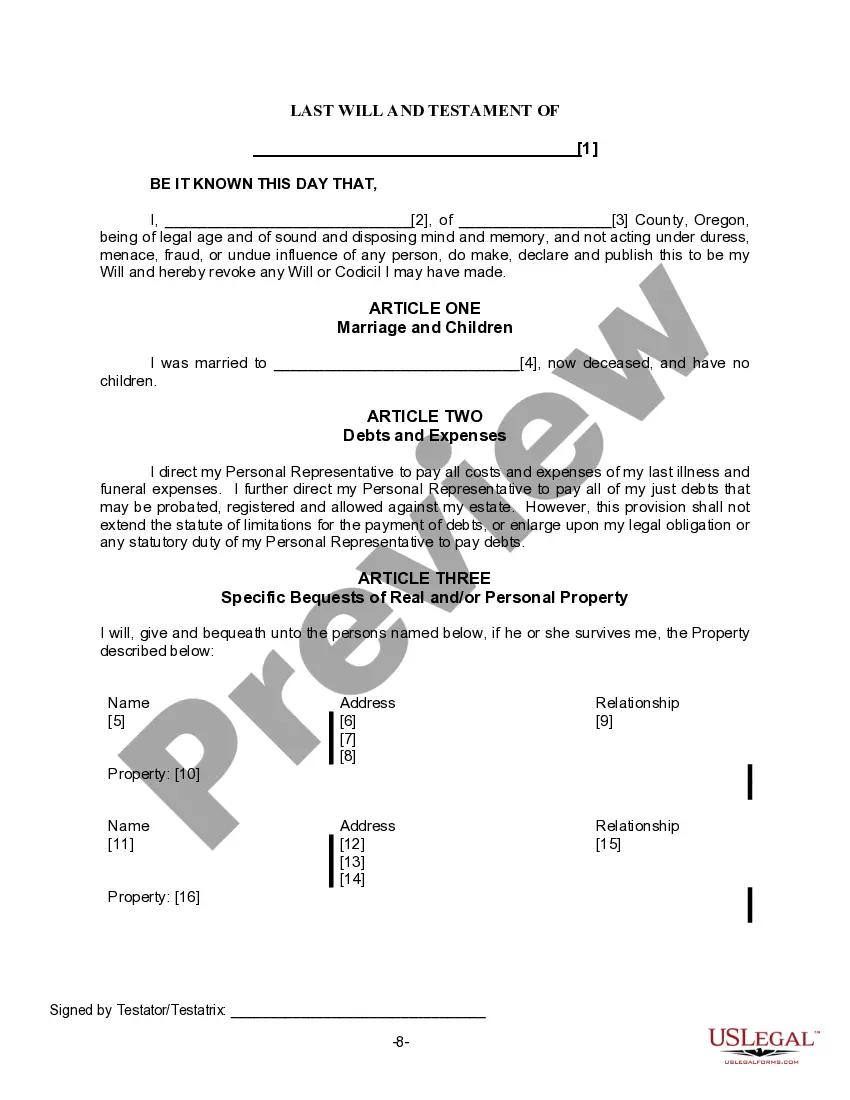
This form is a Last Will for a Widow or Widower with no Children, specifically designed to outline how your assets will be distributed after your passing. Unlike other wills, this form caters to those who have lost a spouse and do not have dependent children. It allows you to appoint a personal representative, specify beneficiaries, and lay out any additional provisions you wish to include regarding your estate.
Form components explained
- Personal details: Your name and county of residence.
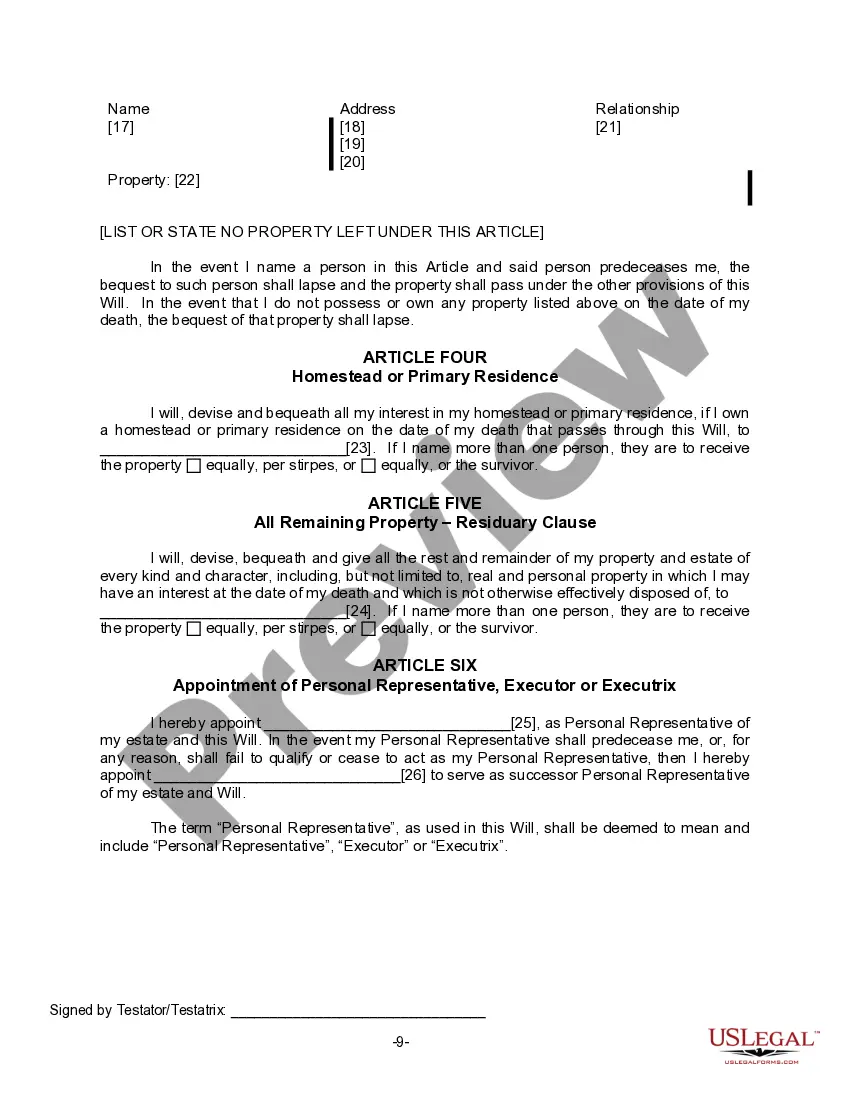
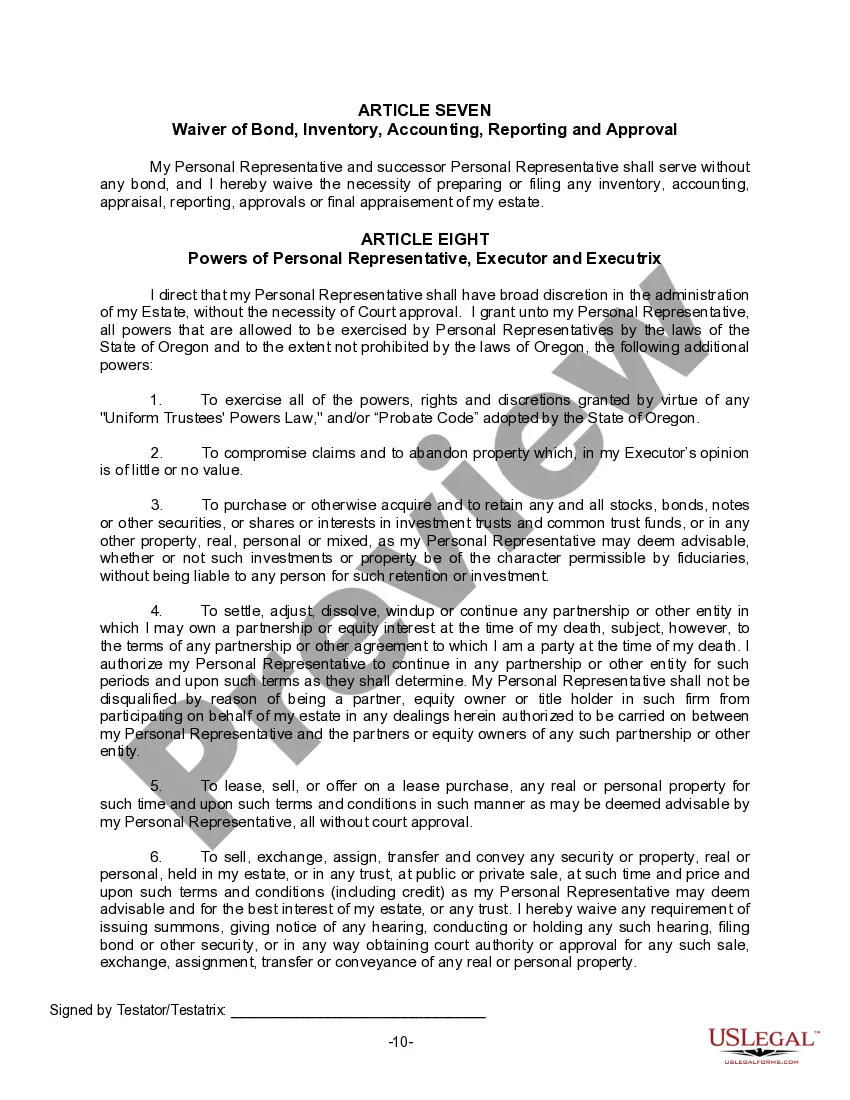
- Appointment of personal representative: Designate an executor for your estate.
- Specific bequests: Specify individuals to receive particular items or assets.
- Homestead: Instructions on who will inherit your primary residence.
- Residuary clause: State who receives the remainder of your estate.
- Signature requirements: Must be signed in front of two witnesses.




When this form is needed
This form is ideal for a widow or widower who wishes to ensure their estate is handled as per their desires. Use this Last Will if you want to clarify how your assets should be distributed, avoid intestacy laws, and confirm who will manage your affairs after your passing.
Who should use this form
This form is intended for:
- Individuals who have lost a spouse and have no children.
- Widows or widowers seeking to secure their estate and clarify their wishes.
- Those needing a clear legal framework to manage their assets posthumously.
How to complete this form
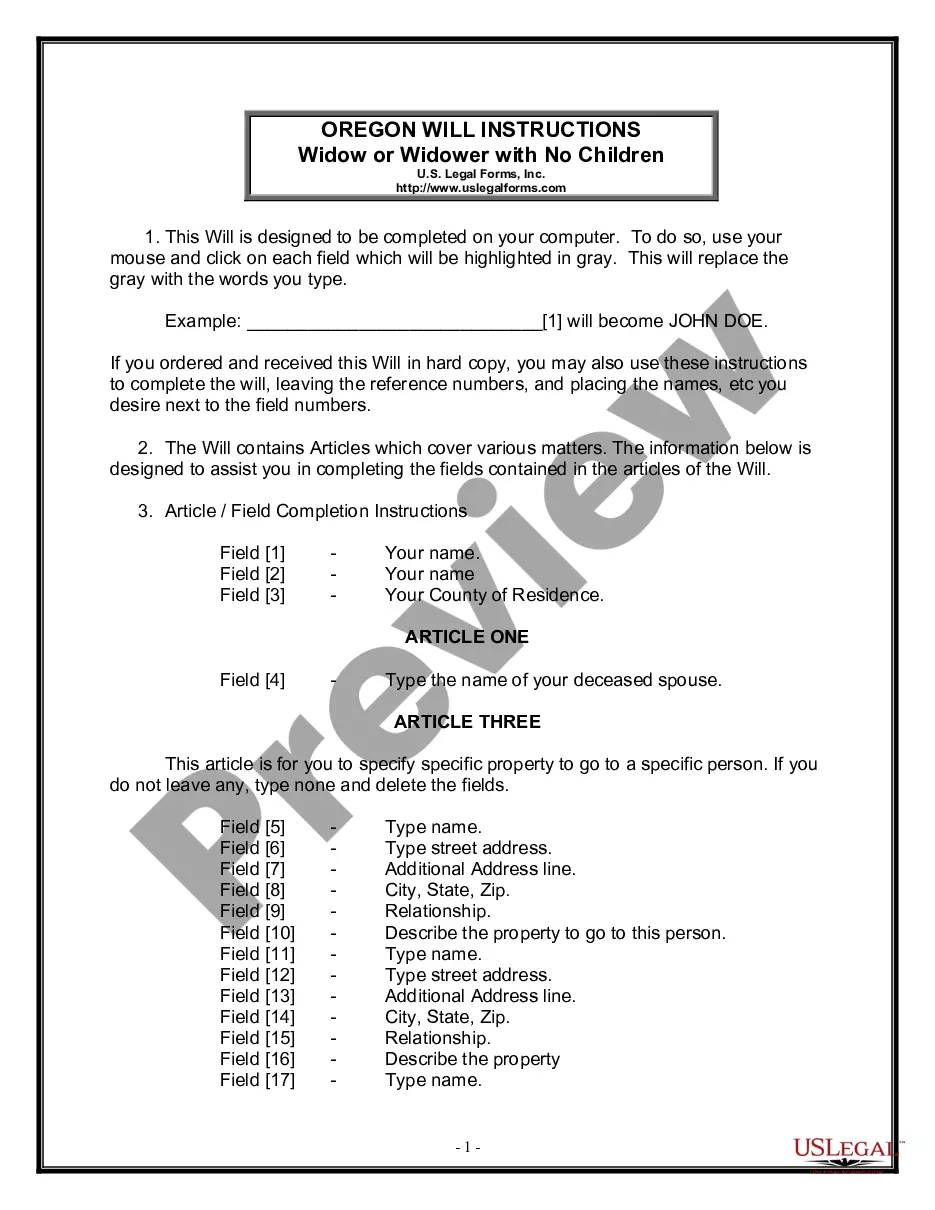
- Begin by entering your name and county of residence in the designated fields.
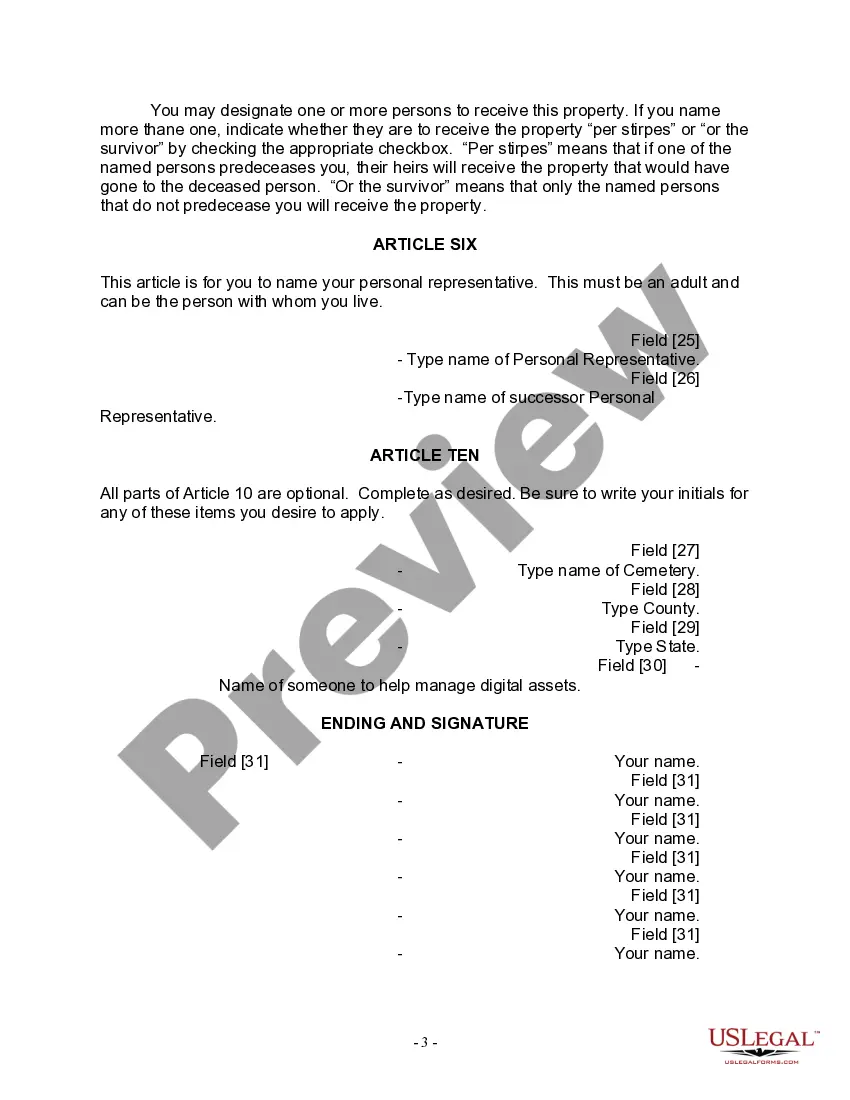
- Appoint a personal representative by entering their name and details.
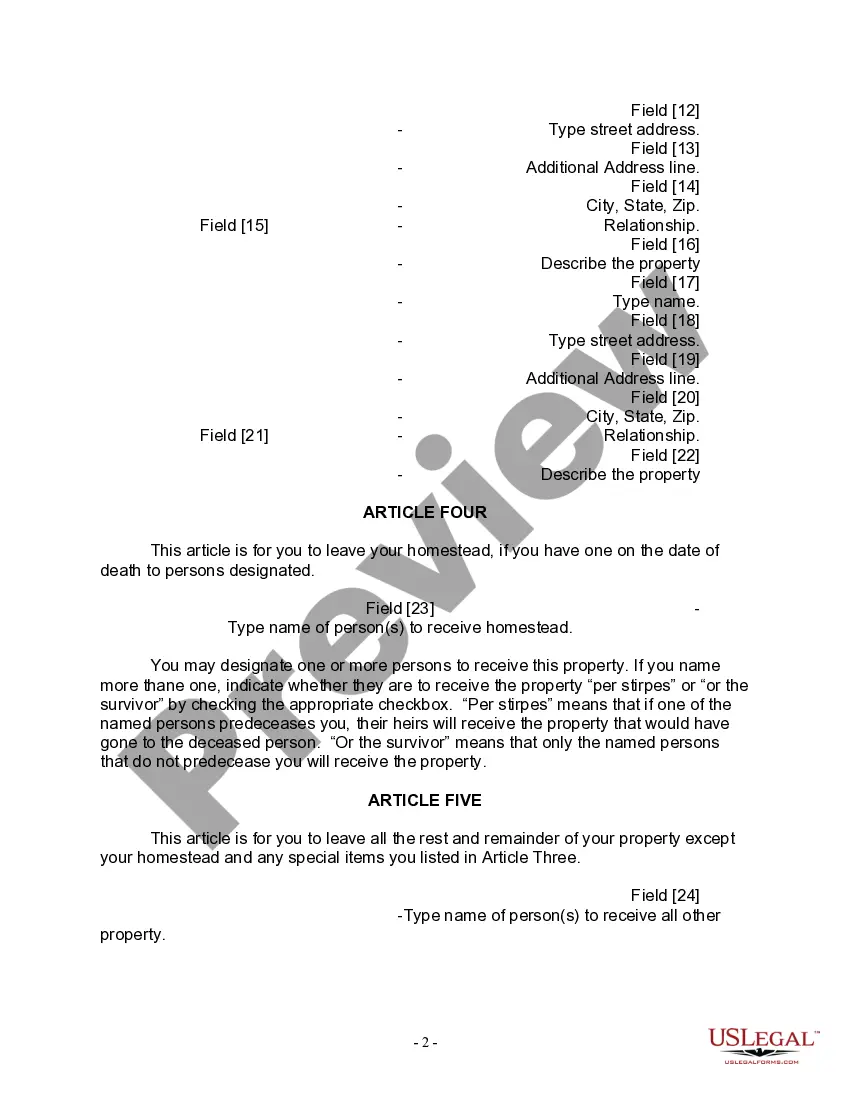
- Specify any specific bequests you wish to make to individuals, including the property description.
- Designate who will inherit your homestead or primary residence, if applicable.
- Fill out the residuary clause to allocate any remaining property.
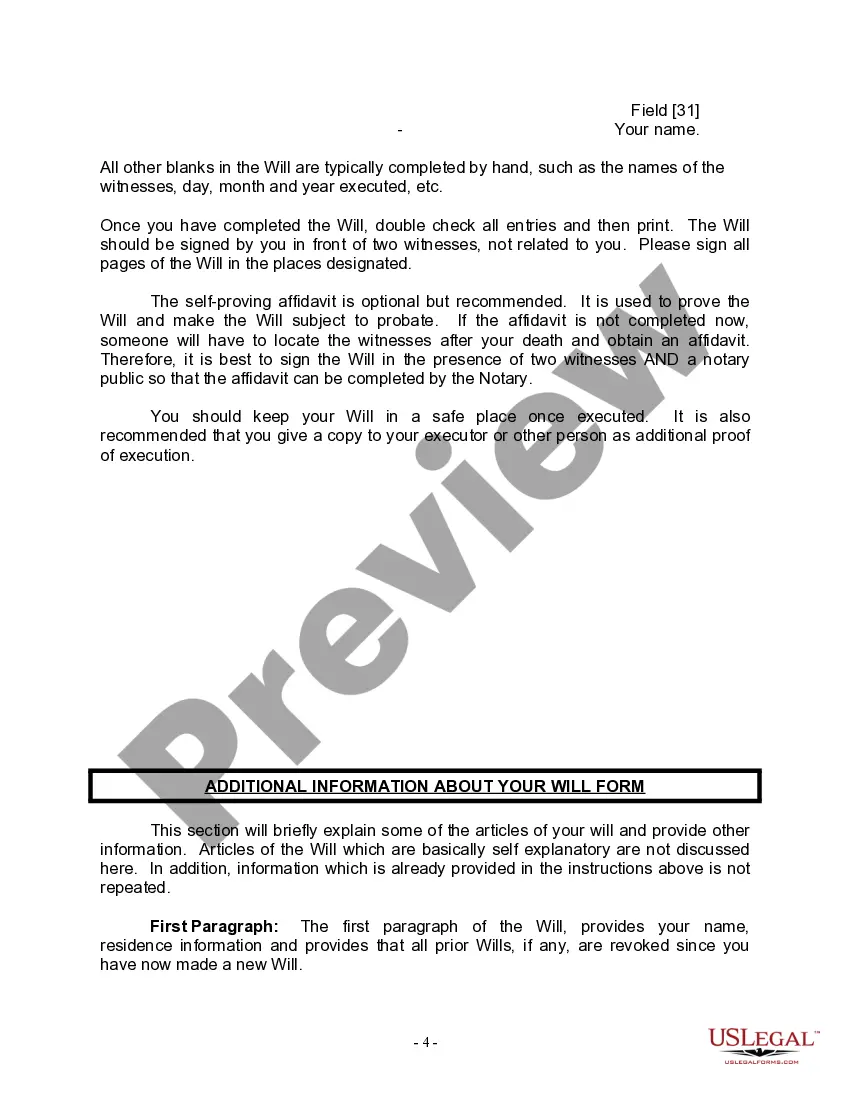
- Once completed, sign the document in front of two witnesses and ensure it is notarized if required.
Does this document require notarization?
This form needs to be notarized to ensure legal validity. US Legal Forms provides secure online notarization powered by Notarize, allowing you to complete the process through a verified video call, available anytime.
Get your form ready online
Our built-in tools help you complete, sign, share, and store your documents in one place.
Make edits, fill in missing information, and update formatting in US Legal Forms—just like you would in MS Word.
Download a copy, print it, send it by email, or mail it via USPS—whatever works best for your next step.
Sign and collect signatures with our SignNow integration. Send to multiple recipients, set reminders, and more. Go Premium to unlock E-Sign.
If this form requires notarization, complete it online through a secure video call—no need to meet a notary in person or wait for an appointment.
We protect your documents and personal data by following strict security and privacy standards.

Make edits, fill in missing information, and update formatting in US Legal Forms—just like you would in MS Word.

Download a copy, print it, send it by email, or mail it via USPS—whatever works best for your next step.

Sign and collect signatures with our SignNow integration. Send to multiple recipients, set reminders, and more. Go Premium to unlock E-Sign.

If this form requires notarization, complete it online through a secure video call—no need to meet a notary in person or wait for an appointment.

We protect your documents and personal data by following strict security and privacy standards.
Typical mistakes to avoid
- Failing to have the will signed in front of two witnesses.
- Omitting to appoint a successor personal representative.
- Not specifying a homestead if applicable.
- Overlooking the need for notarization depending on state laws.
Advantages of online completion
- Convenience of filling out the form at your own pace in a comfortable setting.
- Editability allows you to make changes easily as your circumstances change.
- Access to professionally drafted forms ensures all necessary legal elements are covered.
Key takeaways
- This form is geared toward widows or widowers with no children.
- Proper execution includes witness signatures and, where applicable, notarization.
- Clarifies your wishes for asset distribution and personal representation post-death.
Looking for another form?
Form popularity
FAQ
No, in Oregon, you do not need to notarize your will to make it legal.A self-proving will speeds up probate because the court can accept the will without contacting the witnesses who signed it.
In most situations, a will template is an easy and inexpensive way to make sure your wishes are known and carried out. Most people can get everything they need by using a will template, with little cost or hassle.
In Oregon, you must be at least 18 years old and of sound mind to make a will. If you are married or emancipated, you can make a will before you turn 18. Your will must be in writing and must be signed by you and two witnesses.It is important to make sure that all of Oregon's legal formalities are carefully observed.
Signature: The will must be signed by the testator or by someone else in the testator's name in his presence, by his direction. Witnesses: An Oregon will must be signed by at least two individuals who saw the testator sign the will or heard him acknowledge the signature. Writing: An Oregon will must be in writing.
Include personal identifying information. Include a statement about your age and mental status. Designate an executor. Decide who will take care of your children. Choose your beneficiaries. List your funeral details. Sign and date your Last Will and Testament.
The Free Last Will and Testament Template for Word is compatible with Word 2003 or later versions.
Contrary to popular belief, you do not need to have an attorney draft a will for you. Anyone can write this document on their own, and as long as it meets all of the legal requirements of the state, courts will recognize one you wrote yourself.
No, in Oregon, you do not need to notarize your will to make it legal. However, Oregon allows you to make your will "self-proving" and you'll need to go to a notary if you want to do that. A self-proving will speeds up probate because the court can accept the will without contacting the witnesses who signed it.
The short answer is no. Wills that are handwritten and not witnessed are not recognized as valid in Oregon. A handwritten will that is witnessed by two individuals will be considered valid.