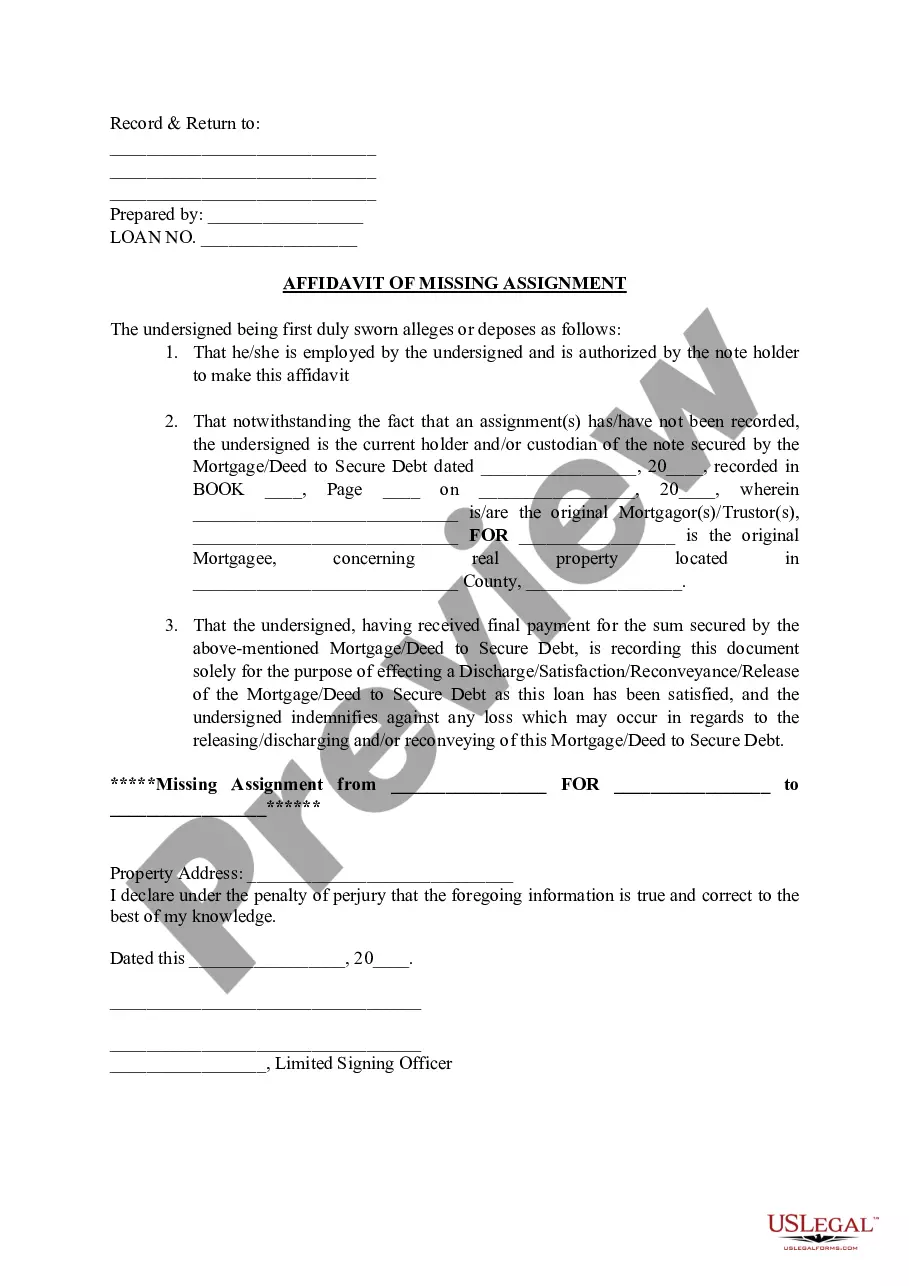
Oregon Last Will and Testament for a Married Person with No Children
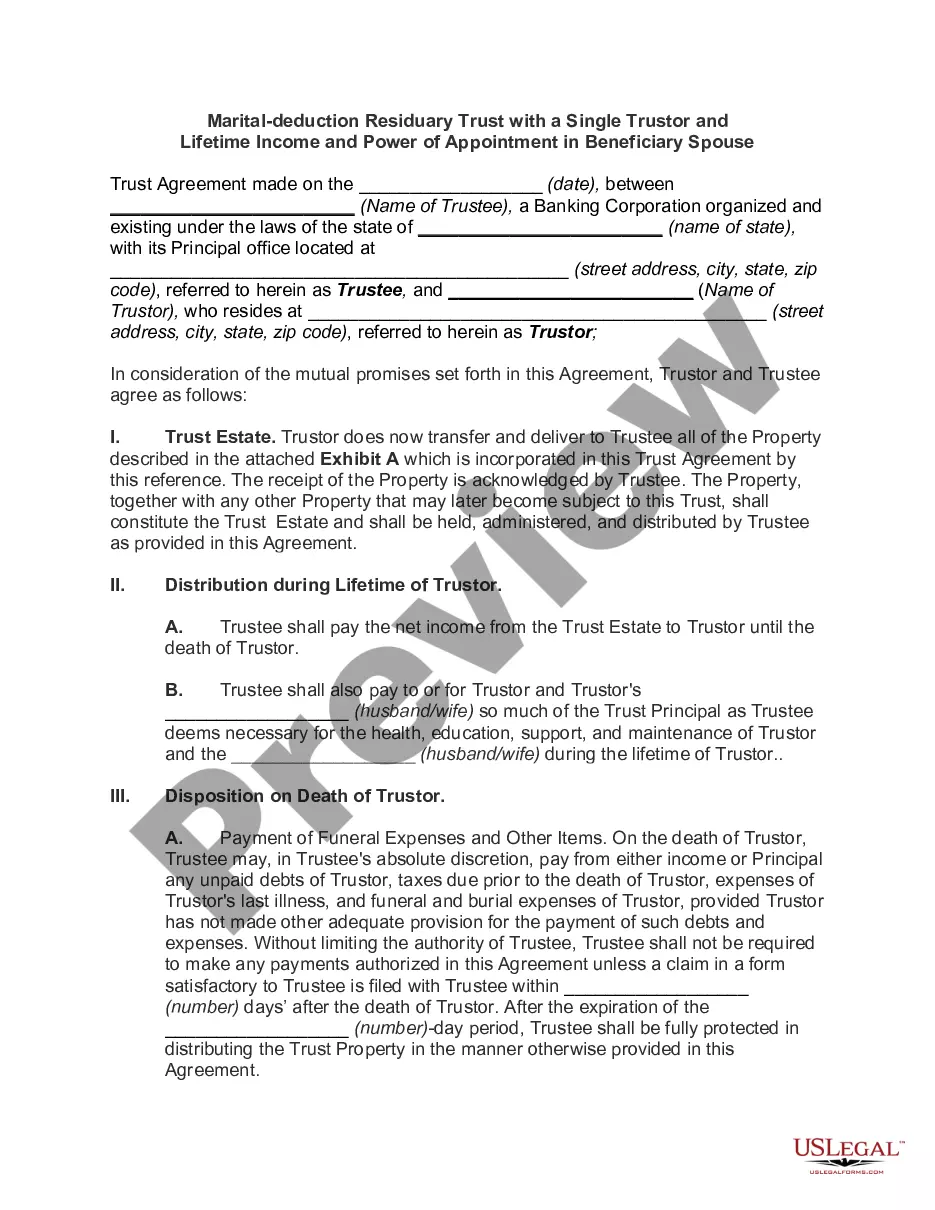
What is this form?
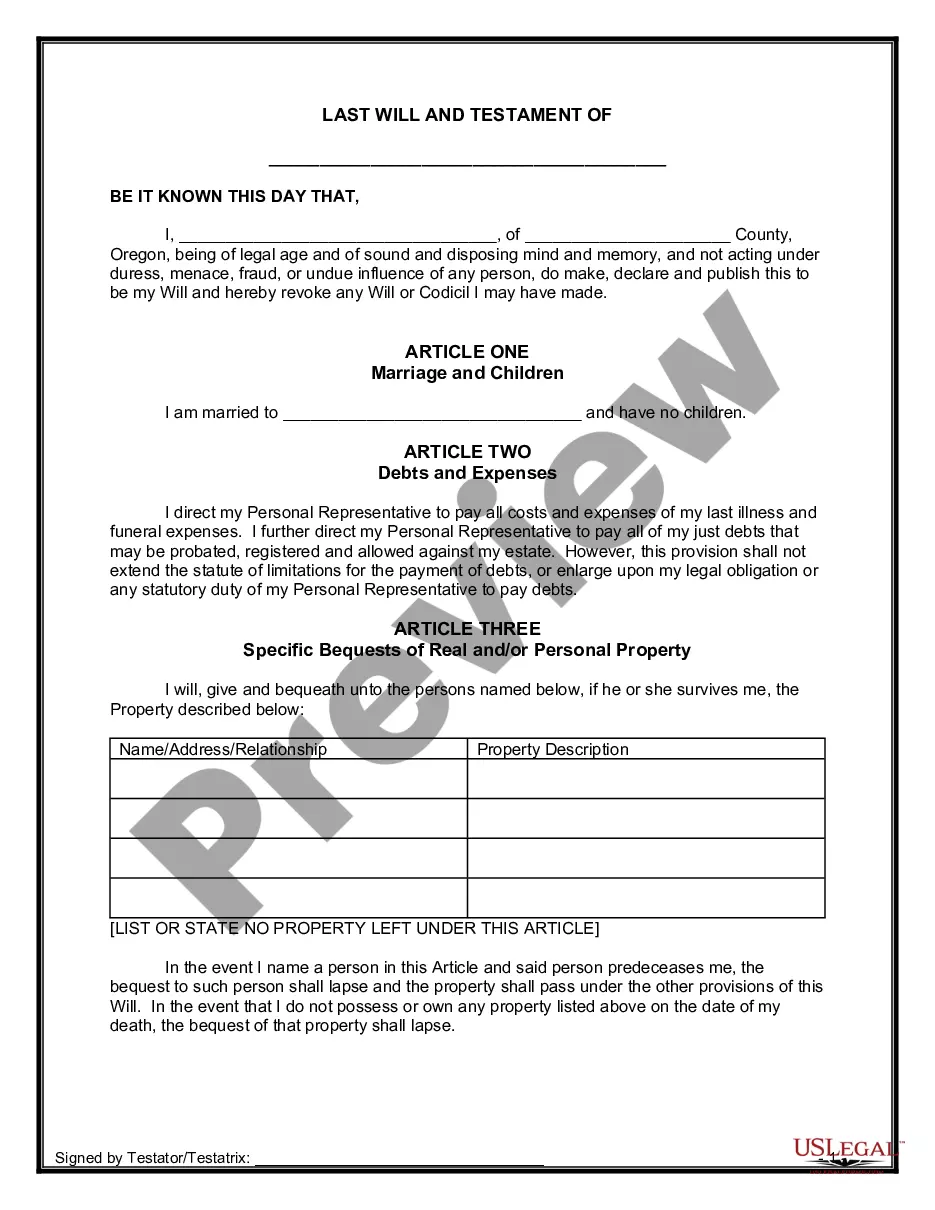
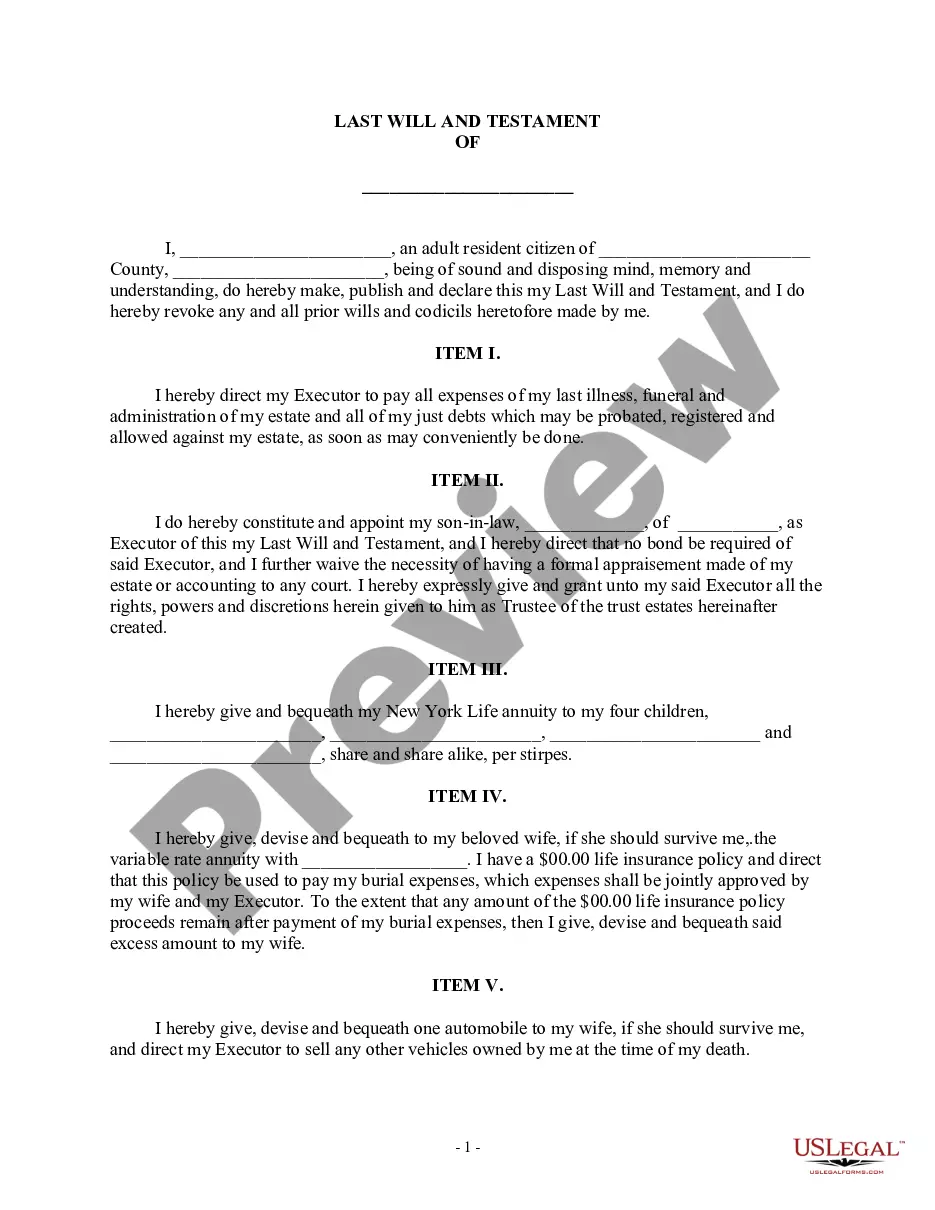
This Last Will and Testament for a Married Person with No Children is a legal document that outlines how your assets and properties will be distributed upon your death. It specifically caters to individuals who are married and do not have children, providing provisions for your spouse and other beneficiaries. This form allows you to appoint a personal representative, designate heirs, and give instructions for the payment of debts and funeral expenses. It differs from other wills by focusing on the unique circumstances of married individuals without children.
Key parts of this document
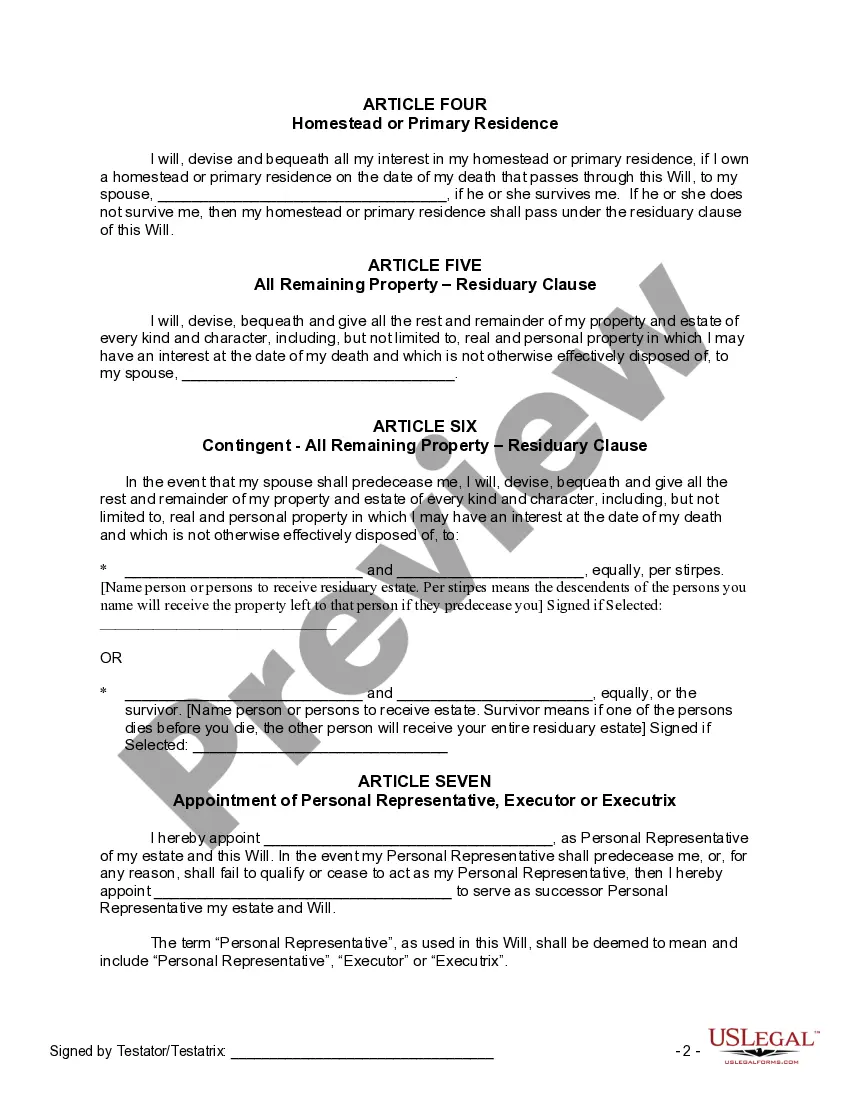
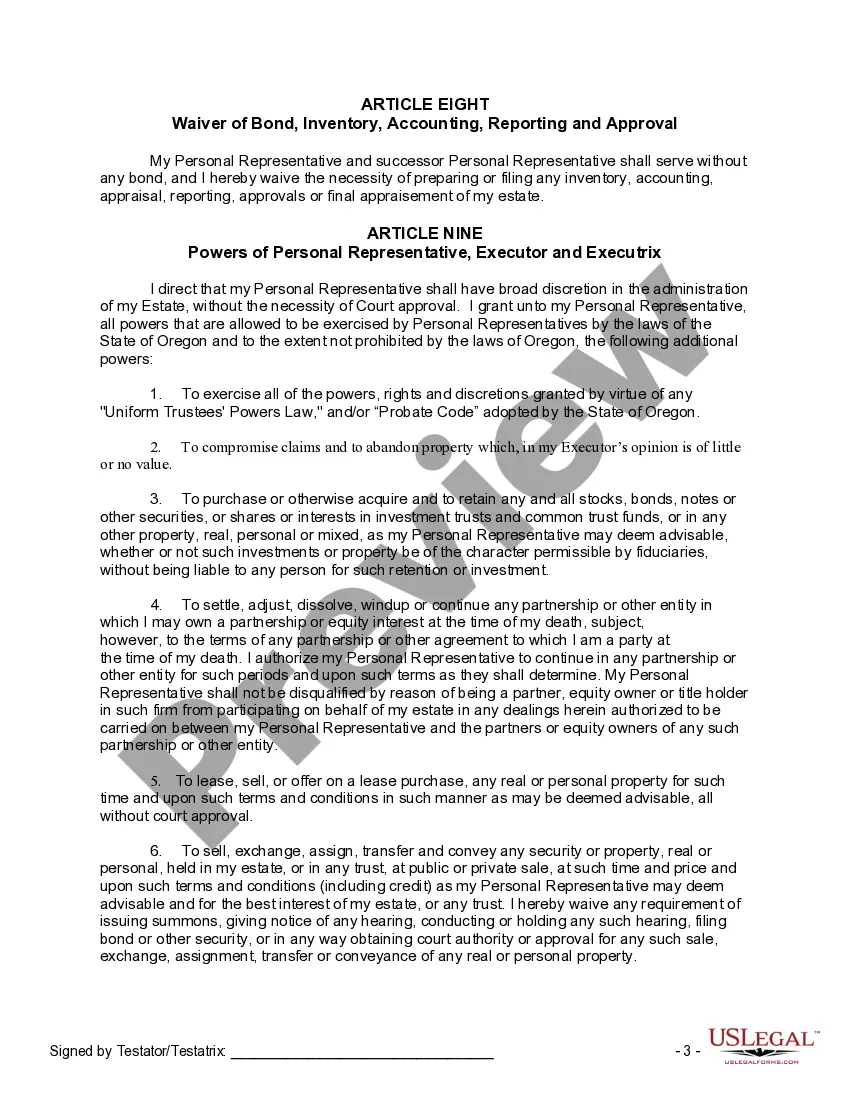
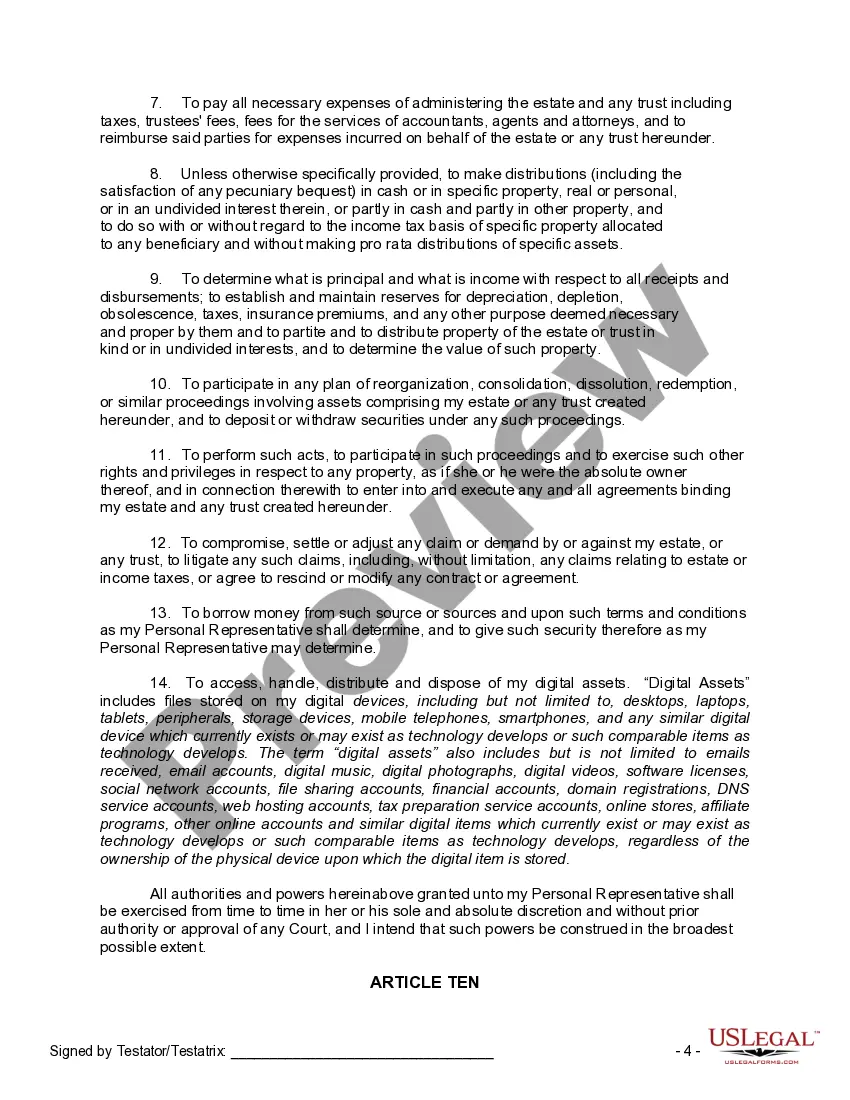
- Appointment of a personal representative or executor to manage your estate.
- Instructions for paying debts and funeral expenses.
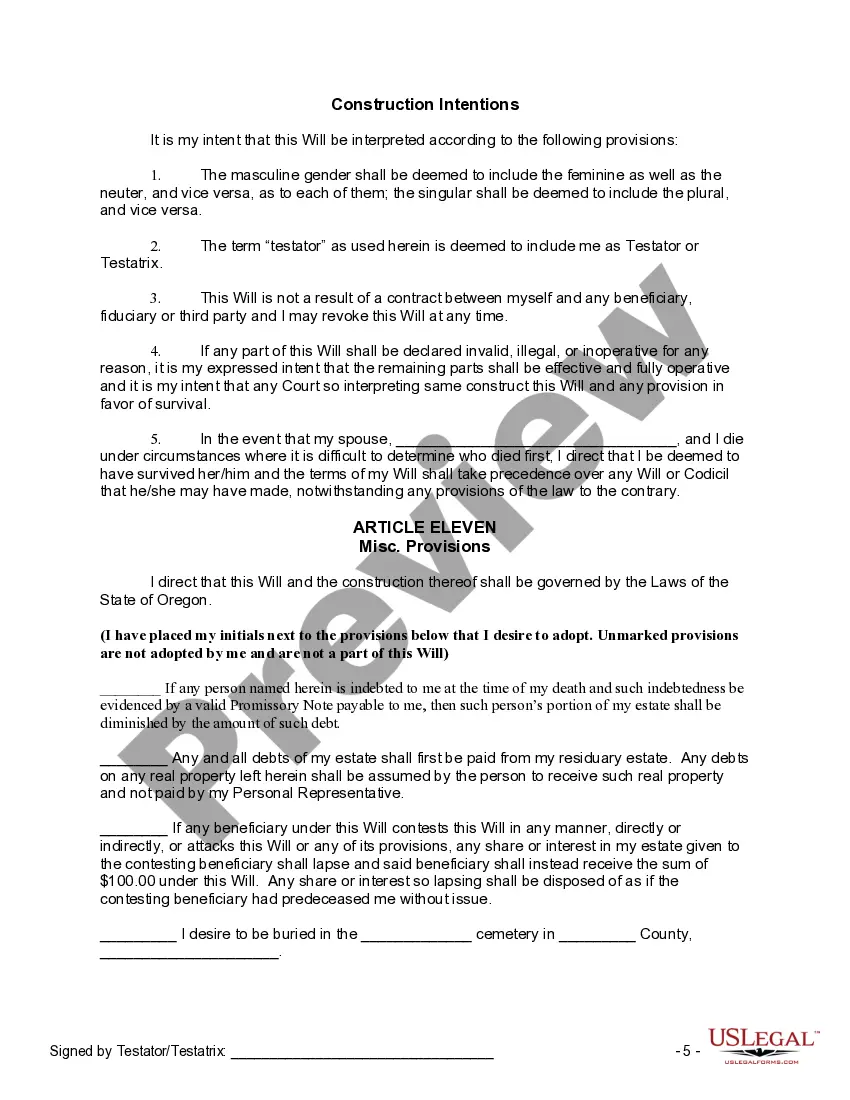
- Designation of specific bequests to individuals of your choosing.
- Devise of your primary residence to your spouse.
- Residuary clause detailing how the remaining property should be distributed.
- Provisions regarding the waiver of bond and specific powers of the personal representative.



When to use this document
You should use this Last Will and Testament when you are a married person without children and wish to clearly outline your wishes regarding the distribution of your estate. This form is particularly important if you want to ensure that your spouse is taken care of after your passing and that any debts are settled appropriately. It can also be utilized to specify particular items or properties you wish to bequeath to loved ones.
Intended users of this form
- Married individuals without children who want to establish a clear plan for their estate.
- Those looking to appoint a personal representative to manage their affairs after death.
- Anyone wishing to make specific bequests to loved ones or charities.
Instructions for completing this form
- Identify yourself as the testator and provide your personal information.
- Designate your spouse as the beneficiary and list any specific bequests.
- Appoint a personal representative to handle your estate.
- Clearly outline your wishes regarding debts and funeral expenses.
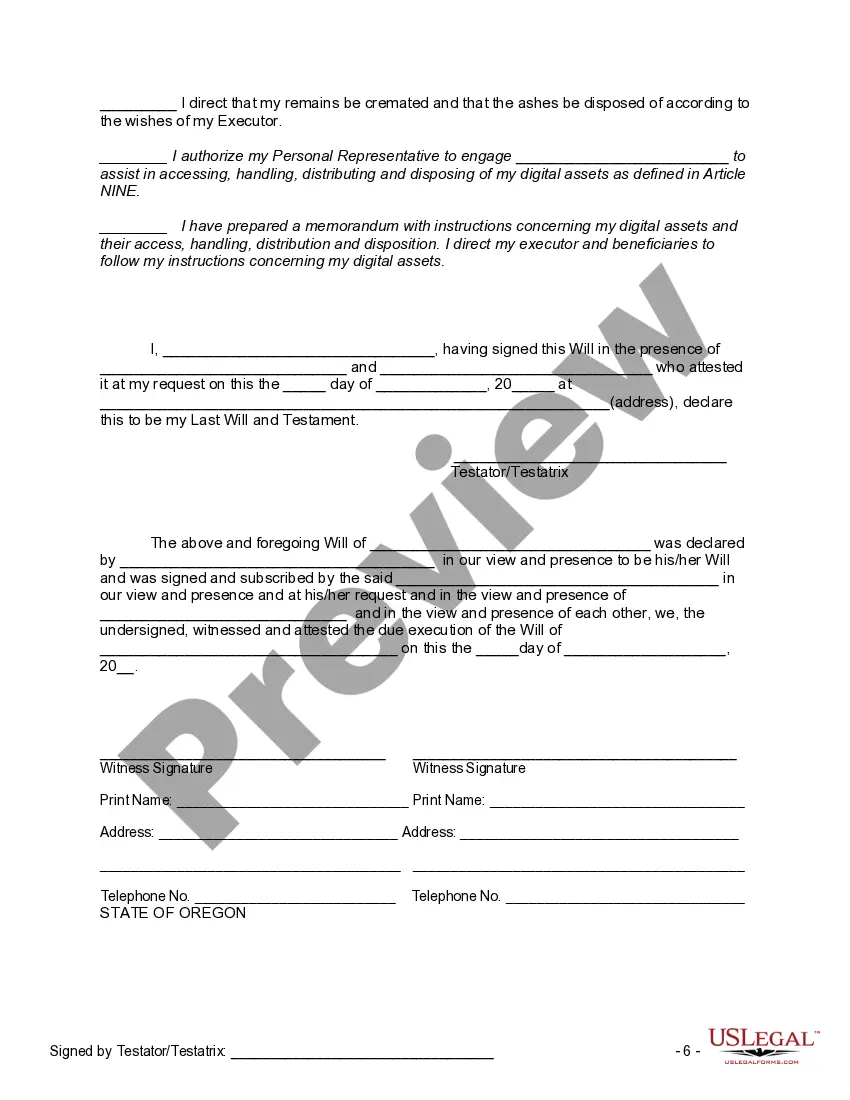
- Sign the document in the presence of two witnesses, who are not beneficiaries.
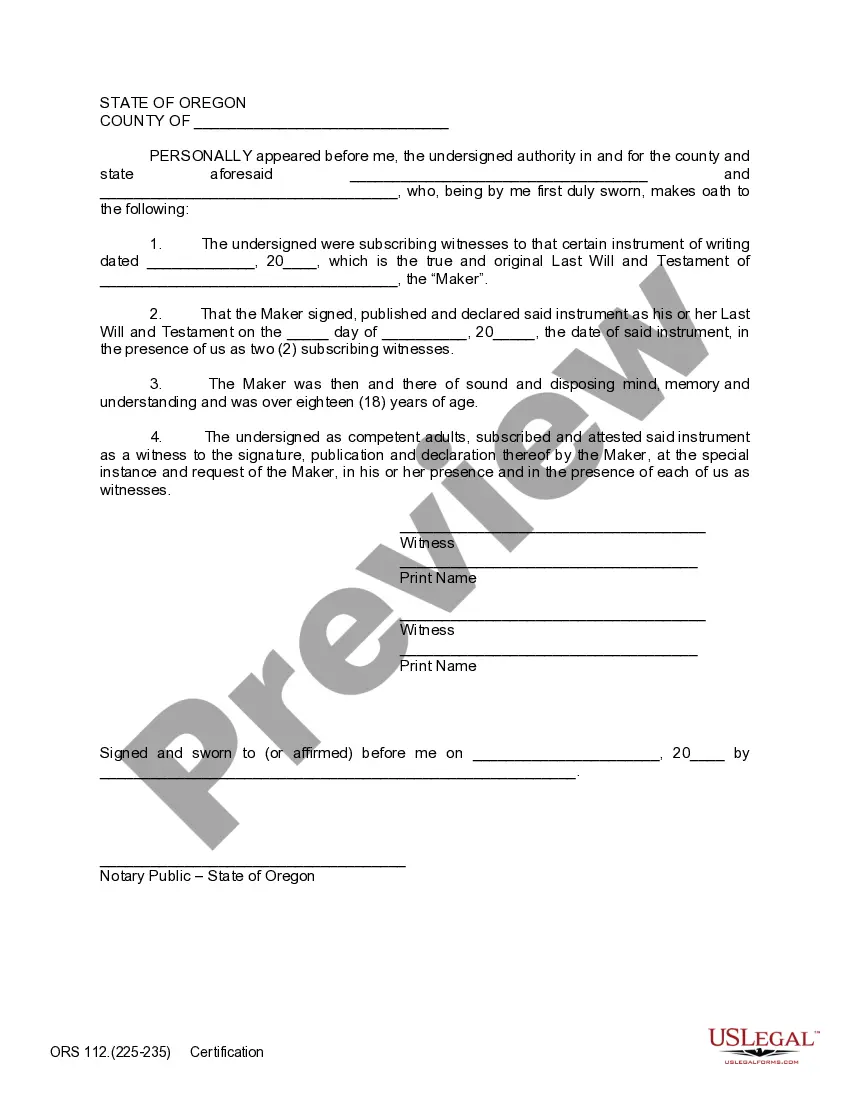
- If desired, complete the self-proving affidavit for added validity.
Notarization requirements for this form
This form must be notarized to be legally valid. US Legal Forms provides secure online notarization powered by Notarize, allowing you to complete the process through a verified video call.
Get your form ready online
Our built-in tools help you complete, sign, share, and store your documents in one place.
Make edits, fill in missing information, and update formatting in US Legal Forms—just like you would in MS Word.
Download a copy, print it, send it by email, or mail it via USPS—whatever works best for your next step.
Sign and collect signatures with our SignNow integration. Send to multiple recipients, set reminders, and more. Go Premium to unlock E-Sign.
If this form requires notarization, complete it online through a secure video call—no need to meet a notary in person or wait for an appointment.
We protect your documents and personal data by following strict security and privacy standards.

Make edits, fill in missing information, and update formatting in US Legal Forms—just like you would in MS Word.

Download a copy, print it, send it by email, or mail it via USPS—whatever works best for your next step.

Sign and collect signatures with our SignNow integration. Send to multiple recipients, set reminders, and more. Go Premium to unlock E-Sign.

If this form requires notarization, complete it online through a secure video call—no need to meet a notary in person or wait for an appointment.

We protect your documents and personal data by following strict security and privacy standards.
Common mistakes
- Failing to have the will signed in the presence of two witnesses.
- Not specifying all debts or expenses, which may lead to confusion later.
- Overlooking the necessity to update the will after major life changes.
Why complete this form online
- Convenient access to a legally drafted document anytime you need it.
- Editable format allows you to customize the will to your specific needs.
- Peace of mind knowing the document is prepared according to legal standards.
Quick recap
- This will is specifically designed for married individuals without children.
- It outlines important details on property distribution, personal representatives, and legal requirements in Oregon.
- Proper completion and notarization ensure your wishes are followed and help reduce family disputes after death.
Looking for another form?









Form popularity
FAQ
Can a will be contested? Yes, although the person contesting the will must be a spouse, child, cohabitee or a person who is expressly mentioned in the will, or a previous will. The person must also ensure they have valid legal grounds to contest a last will and testament successfully.
A trust does not pass through the court for the probate process and cannot be contested in most cases. Revocable living trusts remain private, so if someone is not listed in it, they are not privy to the details of it.
No, in Oregon, you do not need to notarize your will to make it legal. However, Oregon allows you to make your will "self-proving" and you'll need to go to a notary if you want to do that. A self-proving will speeds up probate because the court can accept the will without contacting the witnesses who signed it.
A will can also be declared invalid if someone proves in court that it was procured by undue influence. This usually involves some evil-doer who occupies a position of trust -- for example, a caregiver or adult child -- manipulating a vulnerable person to leave all, or most, of his property to the manipulator instead
In Oregon, you must be at least 18 years old and of sound mind to make a will. If you are married or emancipated, you can make a will before you turn 18. Your will must be in writing and must be signed by you and two witnesses.It is important to make sure that all of Oregon's legal formalities are carefully observed.
A will is a set of instructions that explains how you want your property distributed after your death. In Oregon, you must be at least 18 years old and of sound mind to make a will.Your will must be in writing and must be signed by you and two witnesses. Some people cannot serve as witnesses to your will.
The short answer is no. Wills that are handwritten and not witnessed are not recognized as valid in Oregon. A handwritten will that is witnessed by two individuals will be considered valid.
If you are not family and were never named in a previous will, you have no standing to contest the will. If the testator (the deceased) discussed an inheritance with you previously, write down as much as you can remember. Using this, estimate the dollar value (whether money or possessions).
Signature: The will must be signed by the testator or by someone else in the testator's name in his presence, by his direction. Witnesses: An Oregon will must be signed by at least two individuals who saw the testator sign the will or heard him acknowledge the signature. Writing: An Oregon will must be in writing.