Oregon Revocation of Power of Attorney for Care of Child or Children
What this document covers
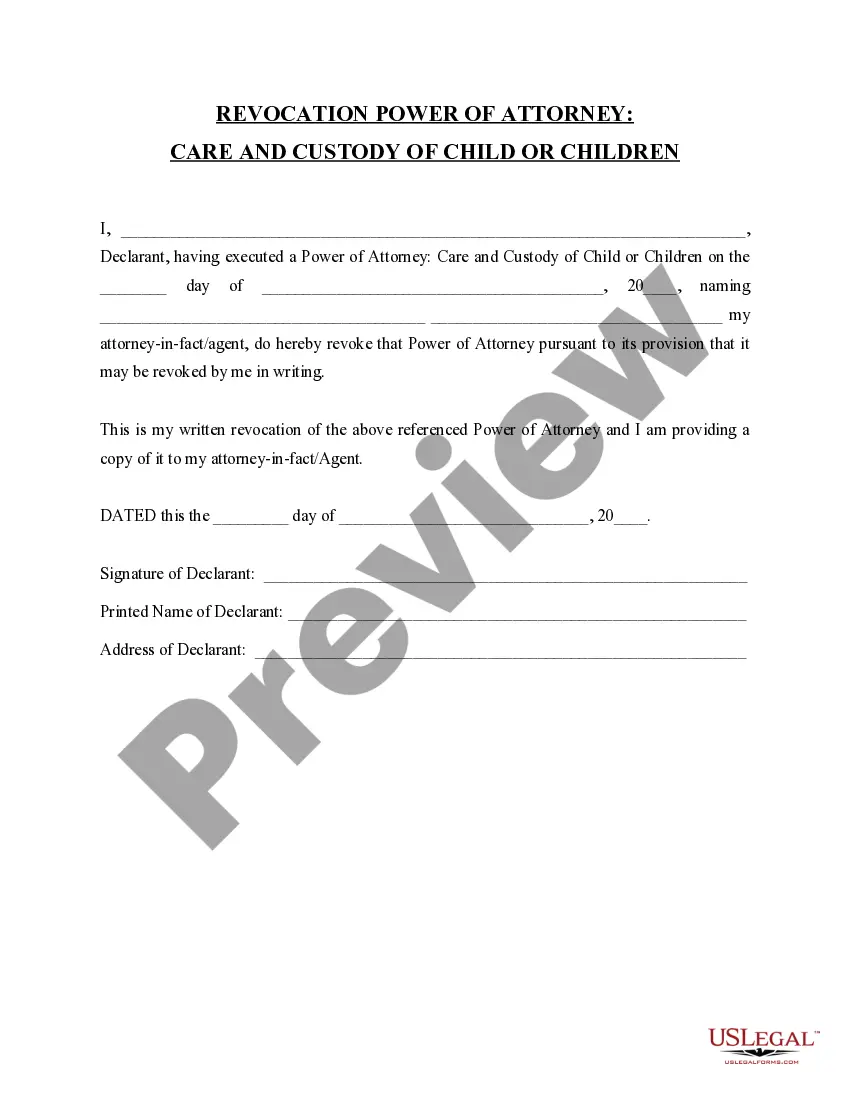
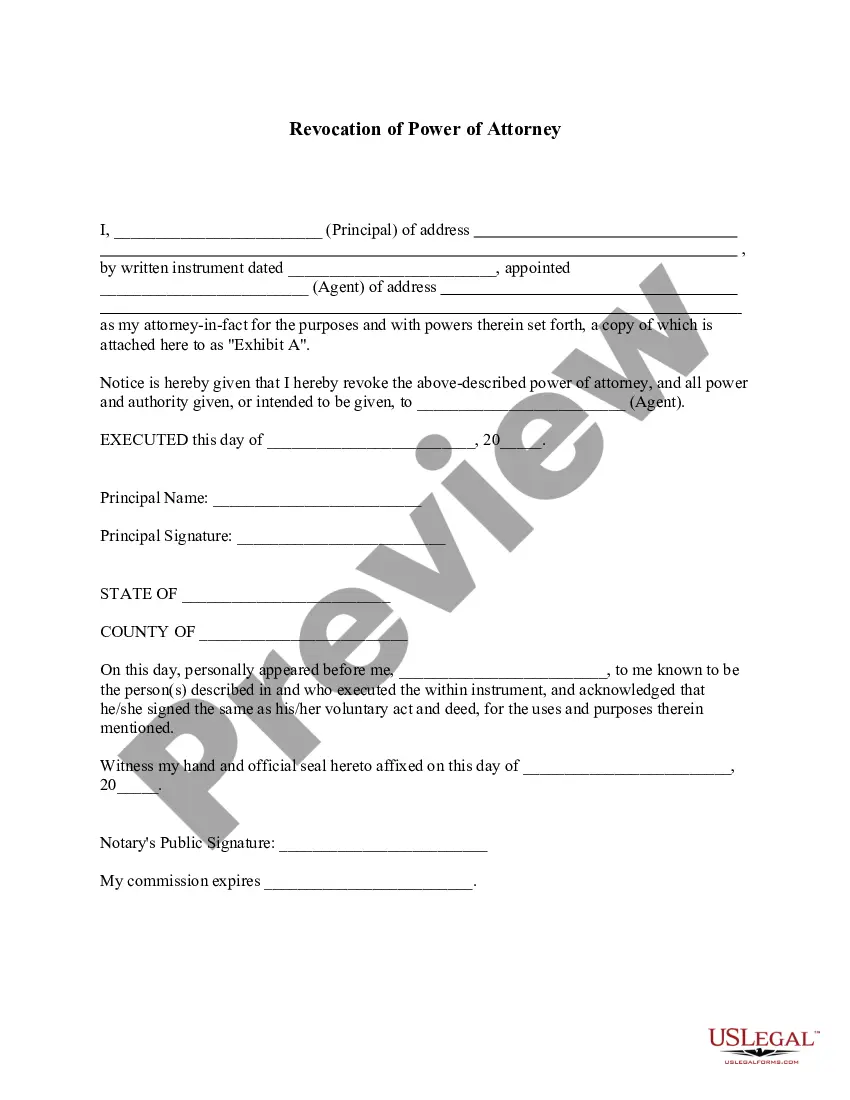
The Revocation of Power of Attorney for Care of Child or Children is a legal document used to formally cancel a previously granted power of attorney. This form allows you, the principal, to revoke the authority you've given to an appointed attorney-in-fact regarding the care and custody of your child or children. Unlike similar forms that establish power of attorney, this document specifically serves to terminate that authority, ensuring your wishes are clearly communicated and legally recognized.
Main sections of this form
- Declarant's information, including name and address.
- Details of the original power of attorney being revoked, including date and names involved.
- A clear statement of revocation.
- The signature and printed name of the declarant.
- Date of execution of the revocation notice.
Situations where this form applies
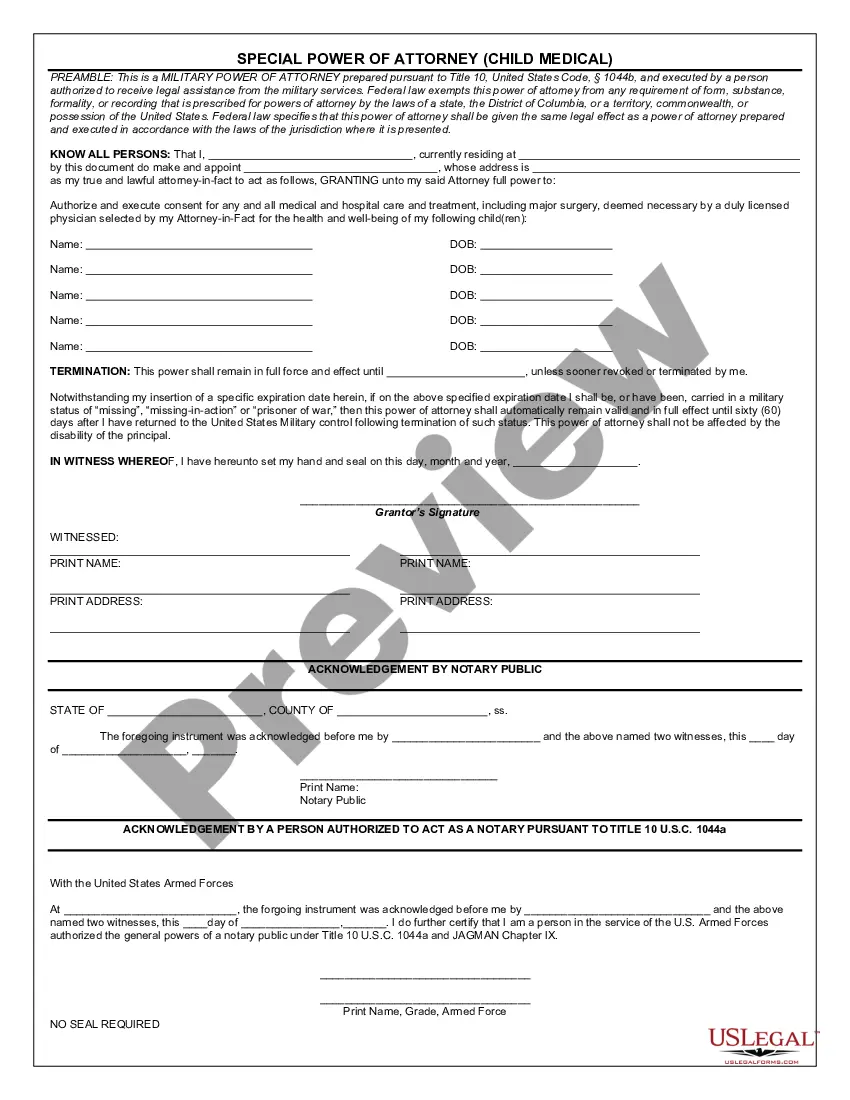
You should use the Revocation of Power of Attorney for Care of Child or Children when you wish to withdraw the legal authority from an individual who has been designated to make decisions about your child or children. Common scenarios involve changes in personal circumstances, such as a shift in custody arrangements, a change in relationships, or a desire to appoint a new representative for caregiving decisions.
Who this form is for
- Parents or legal guardians who have previously granted power of attorney for child care.
- Individuals seeking to modify care arrangements for their children.
- Anyone wishing to ensure their childrenâs care aligns with their current preferences.
How to prepare this document
- Provide your full name and address as the declarant.
- Identify the original power of attorney by including the date it was signed and the name of the attorney-in-fact.
- Clearly state your intent to revoke the power of attorney.
- Sign and print your name to finalize the revocation.
- Date the document when you complete it.
Notarization guidance
This form does not typically require notarization unless specified by local law. Check your stateâs requirements to ensure it meets all legal standards for validity.
Get your form ready online
Our built-in tools help you complete, sign, share, and store your documents in one place.
Make edits, fill in missing information, and update formatting in US Legal Forms—just like you would in MS Word.
Download a copy, print it, send it by email, or mail it via USPS—whatever works best for your next step.
Sign and collect signatures with our SignNow integration. Send to multiple recipients, set reminders, and more. Go Premium to unlock E-Sign.
If this form requires notarization, complete it online through a secure video call—no need to meet a notary in person or wait for an appointment.
We protect your documents and personal data by following strict security and privacy standards.

Make edits, fill in missing information, and update formatting in US Legal Forms—just like you would in MS Word.

Download a copy, print it, send it by email, or mail it via USPS—whatever works best for your next step.

Sign and collect signatures with our SignNow integration. Send to multiple recipients, set reminders, and more. Go Premium to unlock E-Sign.

If this form requires notarization, complete it online through a secure video call—no need to meet a notary in person or wait for an appointment.

We protect your documents and personal data by following strict security and privacy standards.
Typical mistakes to avoid
- Failing to date the revocation notice.
- Not providing the full details of the original power of attorney.
- Neglecting to deliver a copy of the revocation to the former attorney-in-fact.
- Using incorrect terminology or outdated forms.
Why use this form online
- Convenience of completing the form at your own pace.
- Editable templates that adapt to your specific needs.
- Access to forms drafted by licensed attorneys, ensuring legal compliance.
- Immediate download and easy storage options.
Legal use & context
- The revocation form legally ensures that no one else can make decisions for the child after the revocation is effective.
- Compliance with state laws regarding custody and care for children is essential for enforceability.
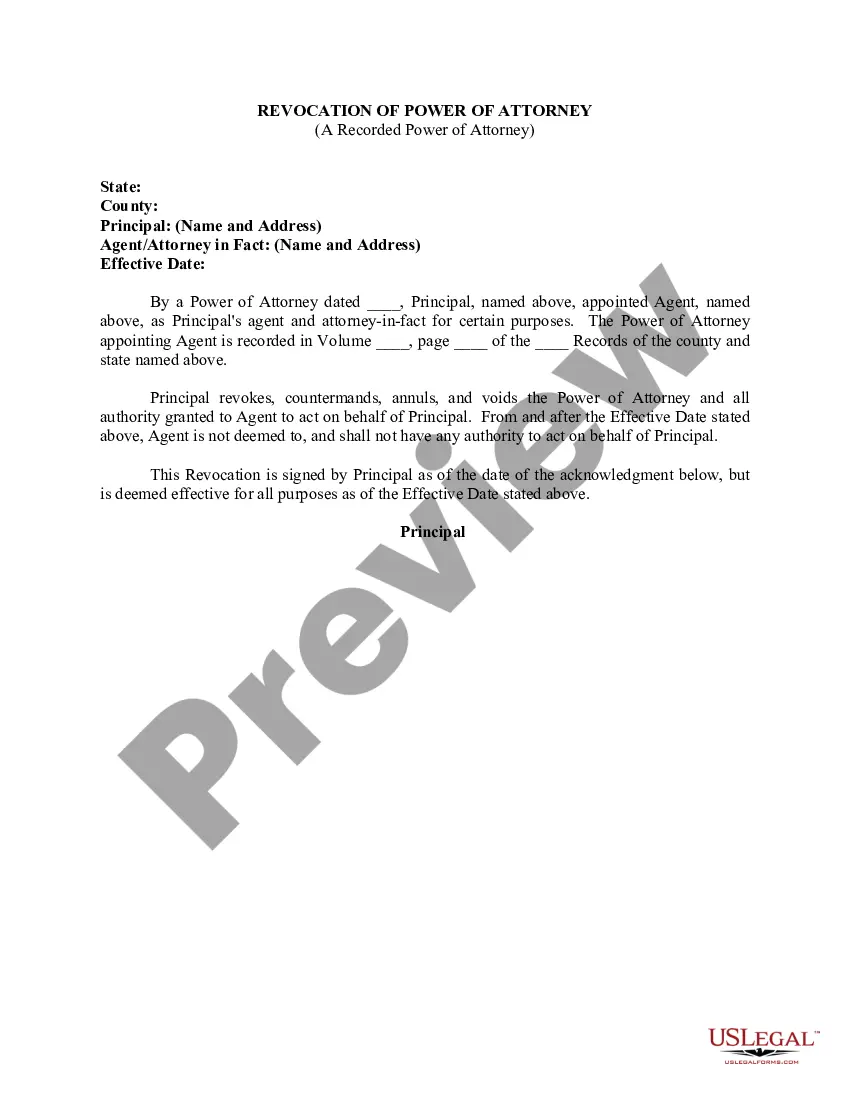
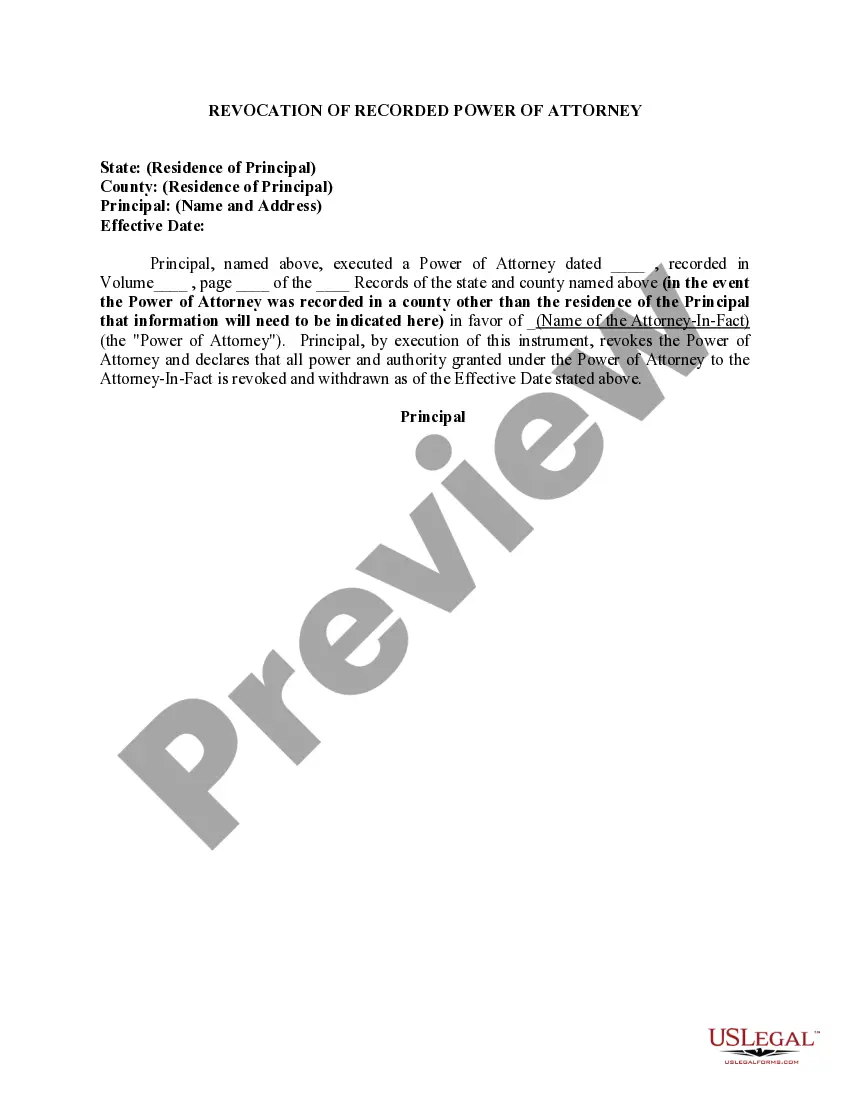
- This form serves as a formal notice of termination of authority and can be used in court if disputes arise.
Summary of main points
- The Revocation of Power of Attorney for Care of Child or Children is vital for regaining custody authority.
- Completing the form correctly helps prevent disputes regarding the rights of guardianship.
- Online access to the form provides convenience and ensures immediate legal protection.
Looking for another form?

Form popularity
FAQ
For these, the rule is to add an apostrophe then an S: men's, women's, children's. But the plural of kid does end in S: kids. So the plural possessive is kids', breaking ranks with men's and women's.
The apostrophe has three uses: 1) to form possessive nouns; 2) to show the omission of letters; and 3) to indicate plurals of letters, numbers, and symbols.
Twinkle, twinkle, little star, how I wonder what you are. ( O holy night! Then come, sweet death, and rid me of this grief. ( O, pardon me, thou bleeding piece of earth. ( Roll on, thou deep and dark blue Ocean roll! ( Welcome, O life!
"Children's" means belonging or relating to children. For example 'children's clothes' or 'children's literature. ' The form "childrens' " does not exist. The word 'children' is already plural, so you cannot add an 's' to it.
Twinkle, twinkle, little star, how I wonder what you are. ( O holy night! Then come, sweet death, and rid me of this grief. ( O, pardon me, thou bleeding piece of earth. ( Roll on, thou deep and dark blue Ocean roll! ( Welcome, O life!
Use an apostrophe + S ('s) to show that one person/thing owns or is a member of something. Use an apostrophe after the "s" at the end of a plural noun to show possession. If a plural noun doesn't end in "s," add an apostrophe + "s" to create the possessive form.
Children is an irregular plural, not a regular one. Therefore, the suffix is 's , and the possessive form is children's.
Otherwise, if the plural noun is irregular, like 'children' or 'women', you add apostrophe s ('s), as you would for singular nouns: 'The children's party was cancelled because so many were away on holiday. '
The answer is the 'child' - therefore the apostrophe goes immediately after the word 'child' before the 's'. The correct statement should read: The child's toys. Whom do the books belong to? The answer is the 'students' - therefore the apostrophe goes immediately after the word 'students', after the 's'.