Oklahoma Quitclaim Deed from Husband and Wife to an Individual

What this document covers
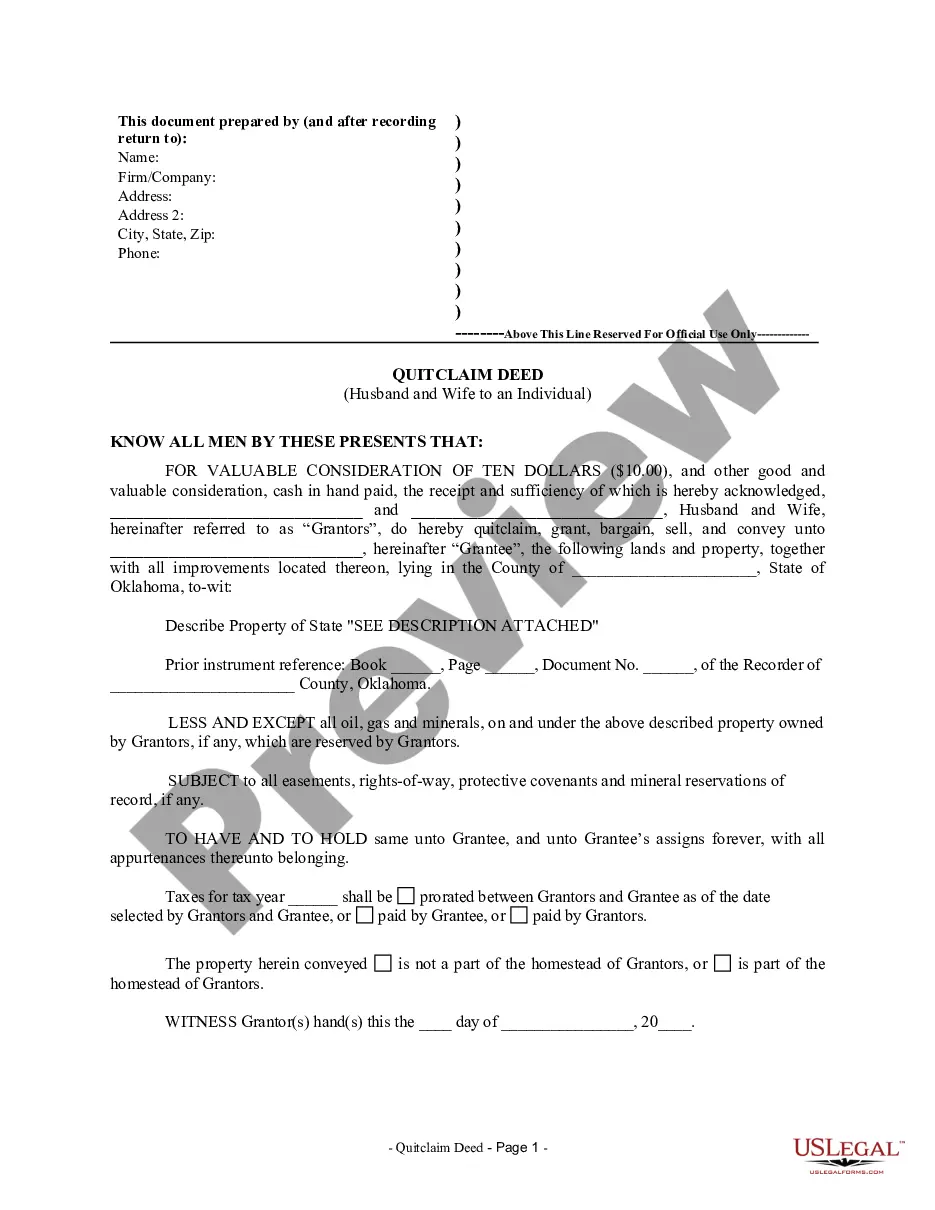
The Quitclaim Deed from Husband and Wife to an Individual is a legal document that allows a married couple to transfer their ownership interest in a property to another individual. This form differs from a warranty deed as it does not provide any guarantees about the property's title, only conveying whatever interest the grantors may have. By using this quitclaim deed, the couple can efficiently transfer property while reserving rights to any underlying minerals or resources.
Form components explained
- Identification of the grantors (husband and wife) and the grantee (individual).
- Description of the property being conveyed, including any reference to prior instruments.
- Reservation of rights to all oil, gas, and minerals beneath the property.
- Details on how taxes will be prorated between the parties.
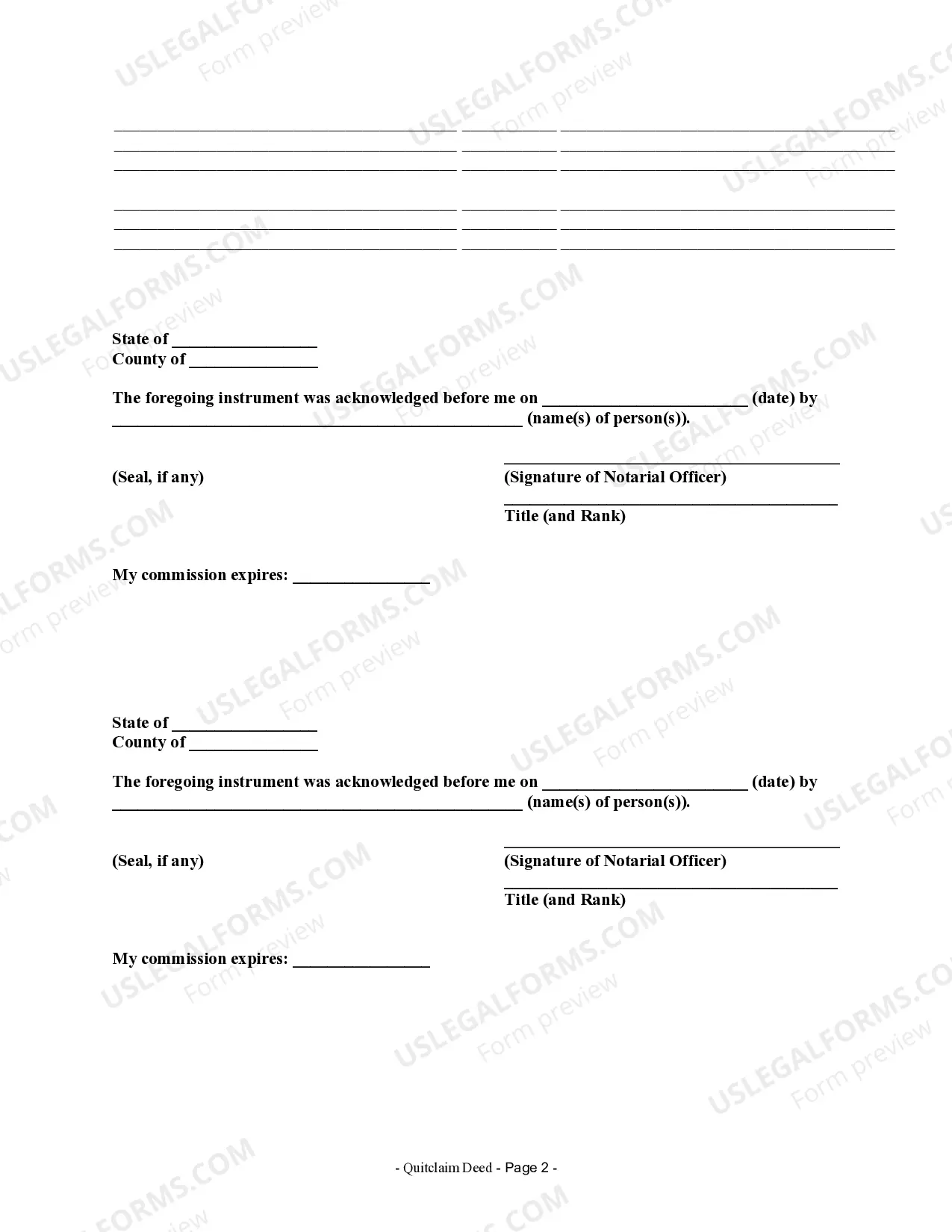
- Notary acknowledgment section to validate the deed.





Situations where this form applies
This Quitclaim Deed is used when a husband and wife wish to transfer their property ownership to an individual. This could be necessary in various situations such as changes in family structure, estate planning, or selling property to a family member or friend. Since it does not guarantee the title, it is typically employed when the parties know each other and trust that the transfer will proceed without disputes.
Who needs this form
- Married couples looking to transfer property to an individual.
- Individuals who may want to receive real property through a quitclaim deed.
- Estate planners advising clients on property transfers within families.
How to complete this form
- Identify the parties involved: list the husband and wife as grantors and the individual as grantee.
- Clearly describe the property being transferred, referencing any prior deed records.
- Indicate any reservations on the minerals and resources associated with the property.
- Specify how property taxes will be handled between the grantors and the grantee.
- Complete the signature section, including a notary acknowledgment.
Does this form need to be notarized?
This document requires notarization to meet legal standards. US Legal Forms provides secure online notarization powered by Notarize, allowing you to complete the process through a verified video call, available 24/7.
Get your form ready online
Our built-in tools help you complete, sign, share, and store your documents in one place.
Make edits, fill in missing information, and update formatting in US Legal Forms—just like you would in MS Word.
Download a copy, print it, send it by email, or mail it via USPS—whatever works best for your next step.
Sign and collect signatures with our SignNow integration. Send to multiple recipients, set reminders, and more. Go Premium to unlock E-Sign.
If this form requires notarization, complete it online through a secure video call—no need to meet a notary in person or wait for an appointment.
We protect your documents and personal data by following strict security and privacy standards.

Make edits, fill in missing information, and update formatting in US Legal Forms—just like you would in MS Word.

Download a copy, print it, send it by email, or mail it via USPS—whatever works best for your next step.

Sign and collect signatures with our SignNow integration. Send to multiple recipients, set reminders, and more. Go Premium to unlock E-Sign.

If this form requires notarization, complete it online through a secure video call—no need to meet a notary in person or wait for an appointment.

We protect your documents and personal data by following strict security and privacy standards.
Mistakes to watch out for
- Failing to accurately describe the property being transferred.
- Omitting the required notary signature, which may render the deed invalid.
- Not specifying how taxes will be prorated or handled during the transfer.
Why use this form online
- Convenience of downloading and completing the form at any time.
- Editable fields allow easy customization to fit specific needs.
- Reliability from using templates drafted by licensed attorneys.
Legal use & context
- A quitclaim deed conveys interests in property but does not guarantee clear title.
- This form is a common tool for property transfers between known parties.
- Recommended for familial or informal transfers rather than commercial transactions.
What to keep in mind
- A quitclaim deed transfers ownership without guarantees, ideal for known parties.
- Complete and accurate property descriptions are essential for validity.
- Notarization is required, which can be easily achieved online.
Looking for another form?

Form popularity
FAQ
One of the simplest ways to add your wife to the home title is by using an interspousal deed. You can transfer the property from your sole and separate property to mutual tenancy, such as joint tenants with right of survivorship, with your wife.
Fill out the quit claim deed form, which can be obtained online, or write your own using the form as a guide. The person giving up the interest in the property is the grantor, and the person receiving the interest is the grantee.
Two of the most common ways to transfer property in a divorce are through an interspousal transfer deed or quitclaim deed. When spouses own property together, but then one spouse executes an interspousal transfer or a quitclaim deed, this is known as transmutation.
If the quitclaim deed requires the signature of all co-owners, the deed is invalid unless all co-owners have signed it and the deed is then delivered to the grantee.If one individual owns real estate and desires to add a co-owner such as a spouse, a quitclaim deed might be used.
But you might be wondering if an owner can transfer a deed to another person without a real estate lawyer. The answer is yes. Parties to a transaction are always free to prepare their own deeds.A quitclaim deed, for example, is far simpler than a warranty deed.
In California, all property bought during the marriage with income that was earned during the marriage is deemed "community property." The law implies that both spouses own this property equally, regardless of which name is on the title deed.
You usually do this by filing a quitclaim deed, in which your ex-spouse gives up all rights to the property. Your ex should sign the quitclaim deed in front of a notary. One this document is notarized, you file it with the county. This publicly removes the former partner's name from the property deed and the mortgage.
It is possible to be named on the title deed of a home without being on the mortgage. However, doing so assumes risks of ownership because the title is not free and clear of liens and possible other encumbrances.If a mortgage exists, it's best to work with the lender to make sure everyone on the title is protected.
No law forbids adding someone to your mortgaged home's deed or in signing your home over to others through one. Mortgage lenders understand deeds, though, and use loan due-on-sale clauses to prevent unauthorized property sales or transfers.