Oklahoma Warranty Deed from Husband and Wife to Husband and Wife
Overview of this form
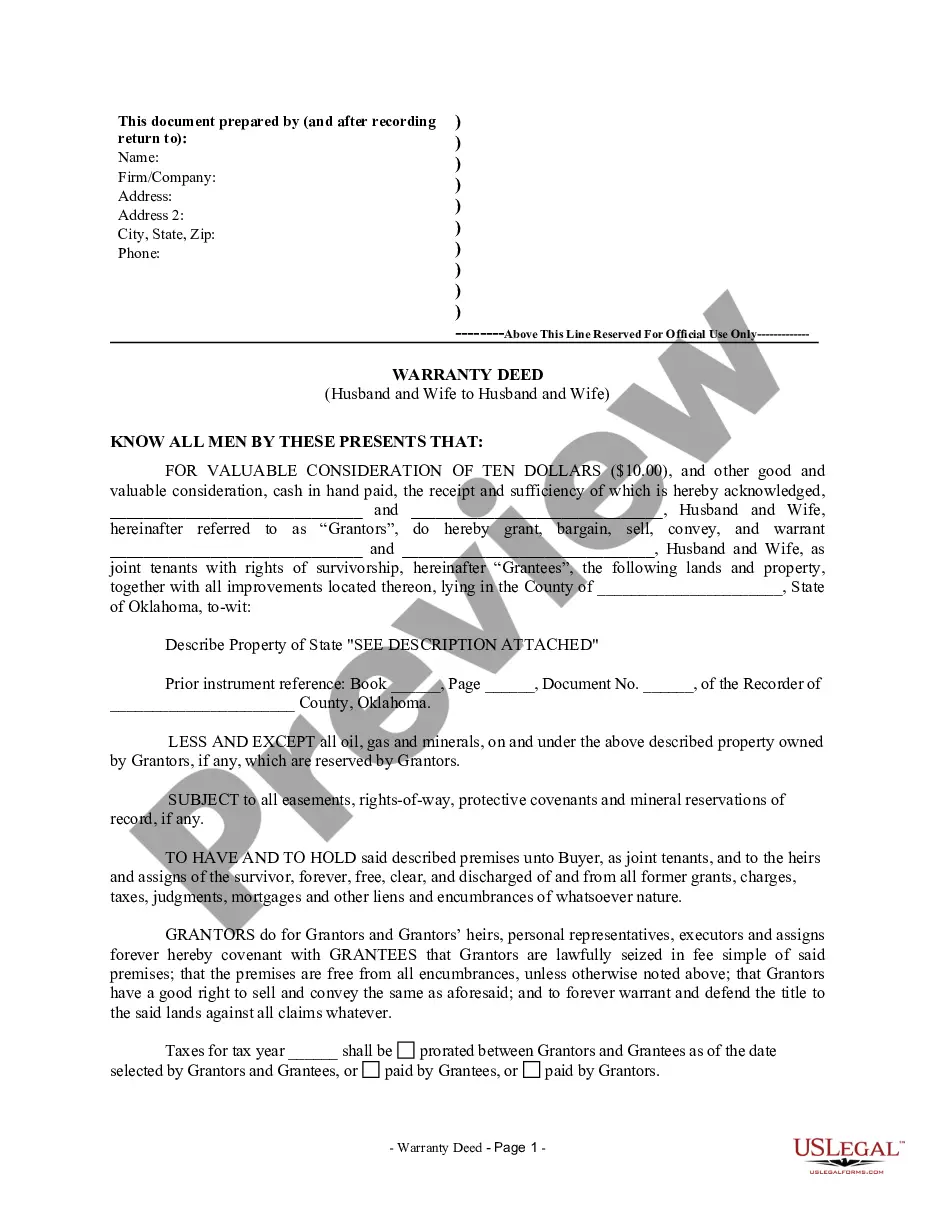
This Warranty Deed from Husband and Wife to Husband and Wife is a legal document used to transfer property ownership between spouses. Unlike other deeds, it specifically indicates that both the grantors and grantees are a married couple, ensuring joint tenancy with right of survivorship. This means that if one spouse passes away, the surviving spouse automatically inherits the property without the need for probate, provided the joint tenancy is maintained.
Form components explained
- Identification of the property being transferred, including a reference to previous documentation.
- Statement of ownership and warranty of title by the grantors.
- Clause reserving rights to oil, gas, and minerals, if applicable.
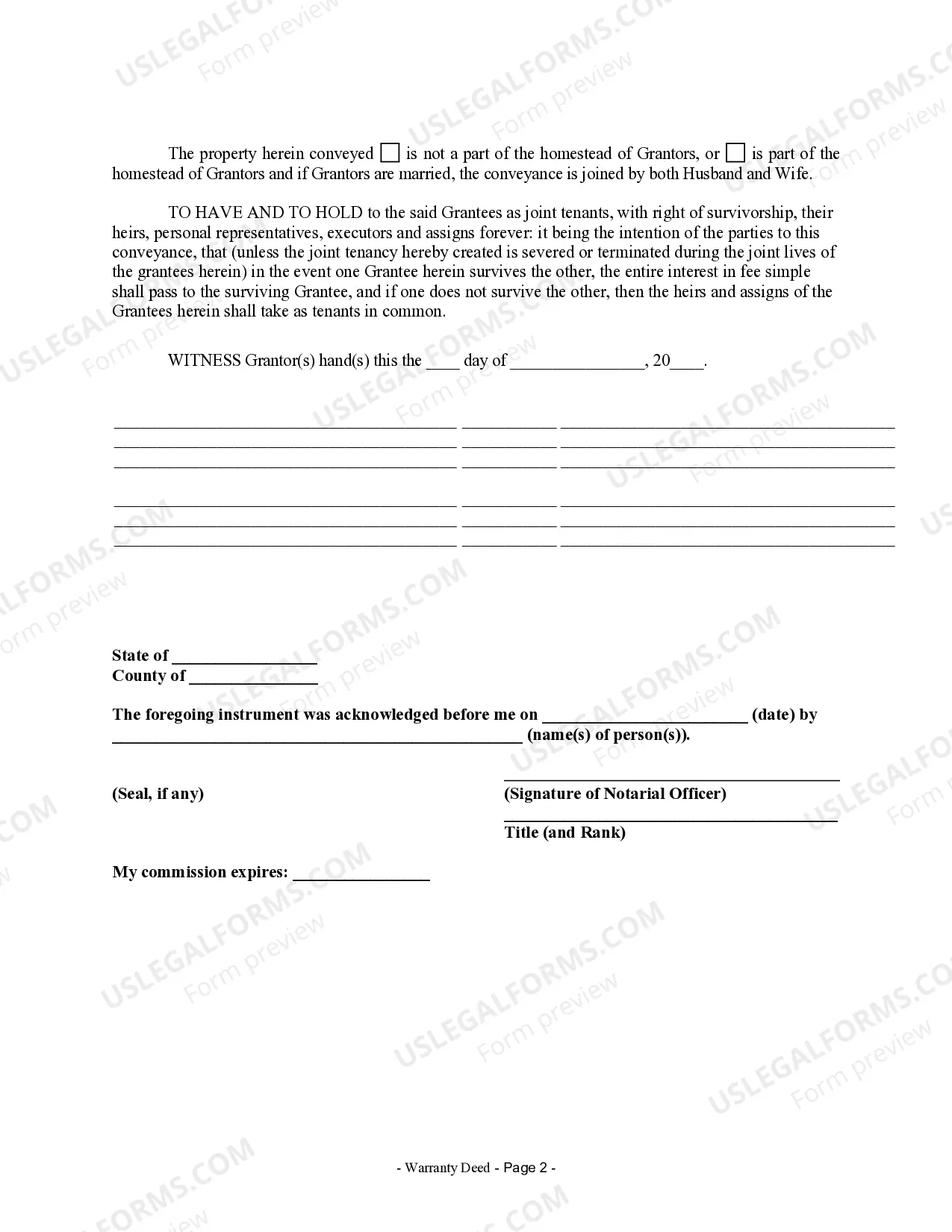
- Provisions for handling taxes and whether the property is part of the homestead.
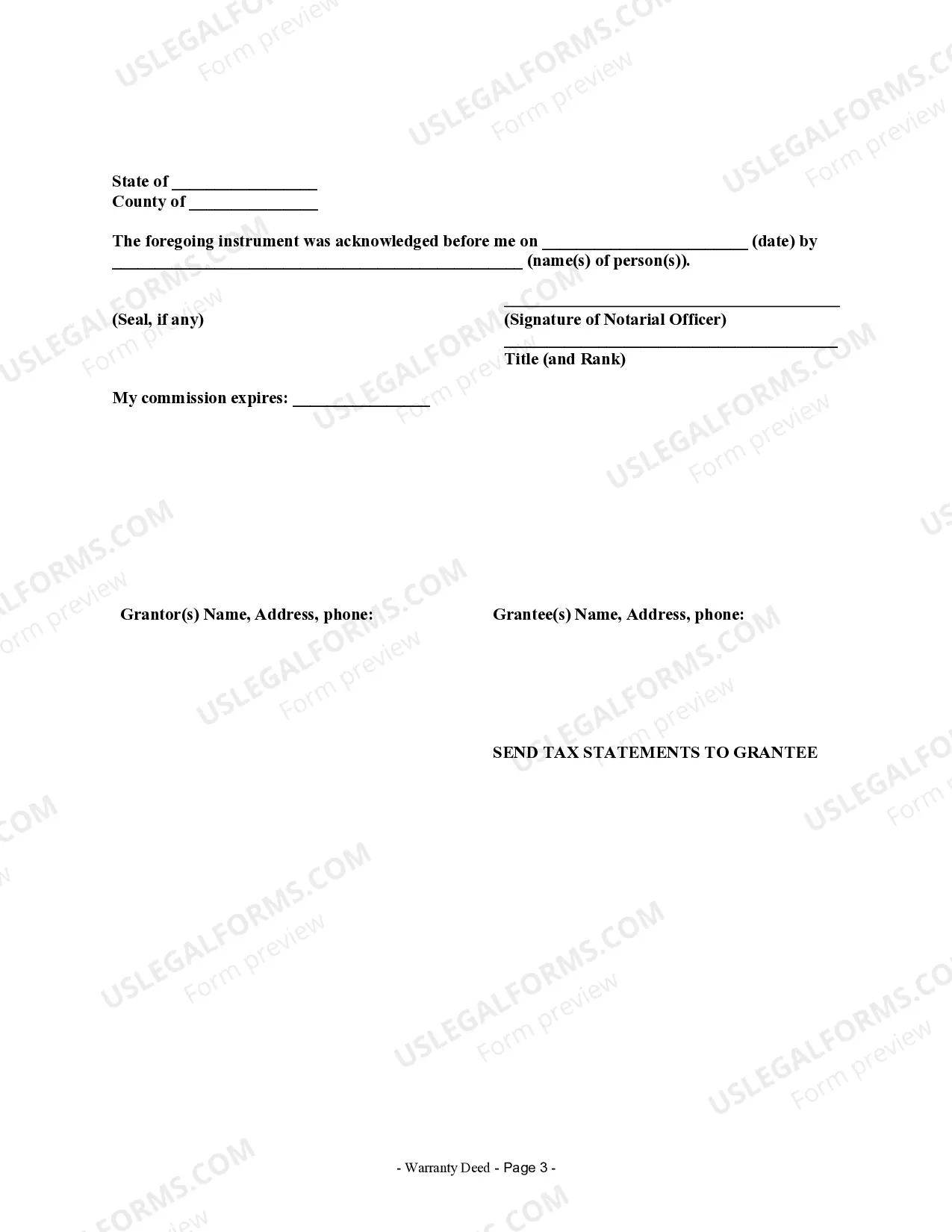
- Signatures of both grantors and the required notarization section.




When this form is needed
This form is essential when a husband and wife wish to transfer property between themselves. It is commonly used in cases such as consolidating joint ownership, transferring property as part of an estate plan, or addressing changes in asset management when couples separate or divorce. Additionally, this deed can be used for transferring property to simplify ownership structures or clarify title in case of death.
Who can use this document
This warranty deed is intended for:
- Married couples looking to transfer real estate between themselves.
- Individuals who wish to ensure that property rights pass seamlessly to the surviving spouse.
- Spouses who need a formal document to clarify property ownership in legal situations.
How to complete this form
- Identify the property by describing it accurately and referencing previous documents.
- Fill in the names of the grantors (husband and wife) and grantees (husband and wife).
- Specify any reserved rights to minerals or other resources, if applicable.
- Enter the date of the transaction and ensure both spouses sign the deed.
- Have the document notarized to ensure its legal validity, if required.
Does this form need to be notarized?
This document requires notarization to meet legal standards. US Legal Forms provides secure online notarization powered by Notarize, allowing you to complete the process through a verified video call, available 24/7.
Get your form ready online
Our built-in tools help you complete, sign, share, and store your documents in one place.
Make edits, fill in missing information, and update formatting in US Legal Forms—just like you would in MS Word.
Download a copy, print it, send it by email, or mail it via USPS—whatever works best for your next step.
Sign and collect signatures with our SignNow integration. Send to multiple recipients, set reminders, and more. Go Premium to unlock E-Sign.
If this form requires notarization, complete it online through a secure video call—no need to meet a notary in person or wait for an appointment.
We protect your documents and personal data by following strict security and privacy standards.

Make edits, fill in missing information, and update formatting in US Legal Forms—just like you would in MS Word.

Download a copy, print it, send it by email, or mail it via USPS—whatever works best for your next step.

Sign and collect signatures with our SignNow integration. Send to multiple recipients, set reminders, and more. Go Premium to unlock E-Sign.

If this form requires notarization, complete it online through a secure video call—no need to meet a notary in person or wait for an appointment.

We protect your documents and personal data by following strict security and privacy standards.
Mistakes to watch out for
- Failing to accurately describe the property, leading to future disputes.
- Not reserving rights or easements that may apply to the property.
- Omitting signatures from both spouses, which can invalidate the deed.
- Not notarizing the document when required by state law.
Why complete this form online
- Convenience of downloading and completing the form from home.
- Editability allows for customization to fit specific needs.
- Assurance that the form complies with current legal standards.
- Access to legal guidance through straightforward instructions.
Main things to remember
- This Warranty Deed facilitates the transfer of property between spouses, ensuring joint ownership.
- Understanding the document's key components is crucial for accurate completion.
- Notarization is required to ensure the deed's legal enforceability.
- Proper recording with county authorities is necessary for establishing public ownership records.
Looking for another form?
Form popularity
FAQ
Two of the most common ways to transfer property in a divorce are through an interspousal transfer deed or quitclaim deed. When spouses own property together, but then one spouse executes an interspousal transfer or a quitclaim deed, this is known as transmutation.
In states like California and Florida, the spouses may use a quitclaim deed to transfer the property without warranting title. Other stateslike Texasrecognize a similar type of deed called a deed without warranty.
Step 1 Fill in the grantor's name and address along with indicating whether or not the grantor is married. Step 2 Enter the consideration to be paid for the property. Step 3 Write in the grantee's name and address and check the box showing how they intend to hold the property.
The Oklahoma general warranty deed is a type of legal document whereby an owner of a piece of property can sell his or her interest to another person.Once deeds are properly filled out and acknowledged by a notary, they are filed with the registrar of deeds in the county in which the property is located.
Fill out the "grantor" section of the warranty deed. The grantors are the givers, or current owners, of the property. Use the legal name of each grantor and insert current addresses after each grantor's name.
The easiest way to grant your spouse title to your home is via a quitclaim deed (Californians generally use an interspousal grant deed). With a quitclaim deed, you can name your spouse as the property's joint owner. The quitclaim deed must include the property's description, including its boundary lines.
Contrary to normal expectations, the Deed DOES NOT have to be recorded to be effective or to show delivery, and because of that, the Deed DOES NOT have to be signed in front of a Notary Public. However, if you plan to record it, then it does have to be notarized as that is a County Recorder requirement.
Retrieve your original deed. Get the appropriate deed form. Draft the deed. Sign the deed before a notary. Record the deed with the county recorder. Obtain the new original deed.
If you've recently married and already own a home or other real estate, you may want to add your new spouse to the deed for your property so the two of you own it jointly. To add a spouse to a deed, all you have to do is literally fill out, sign and record a new deed in your county recorder's office.