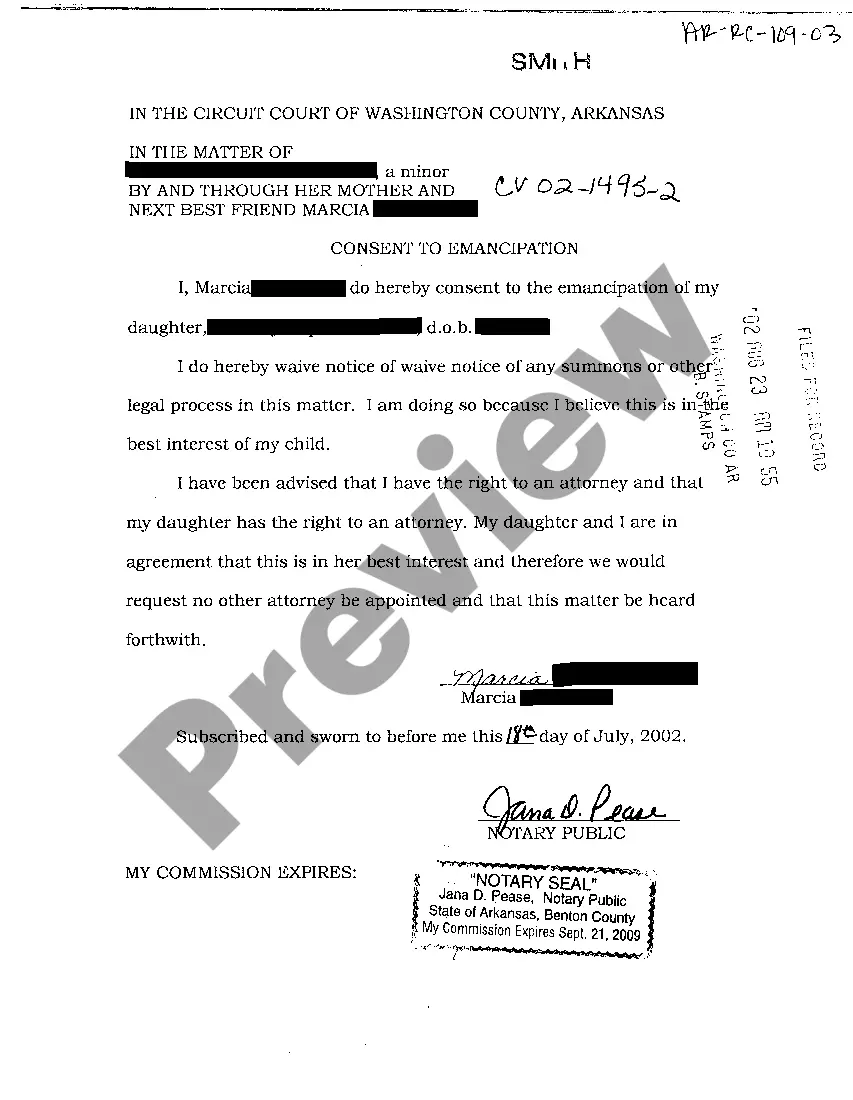
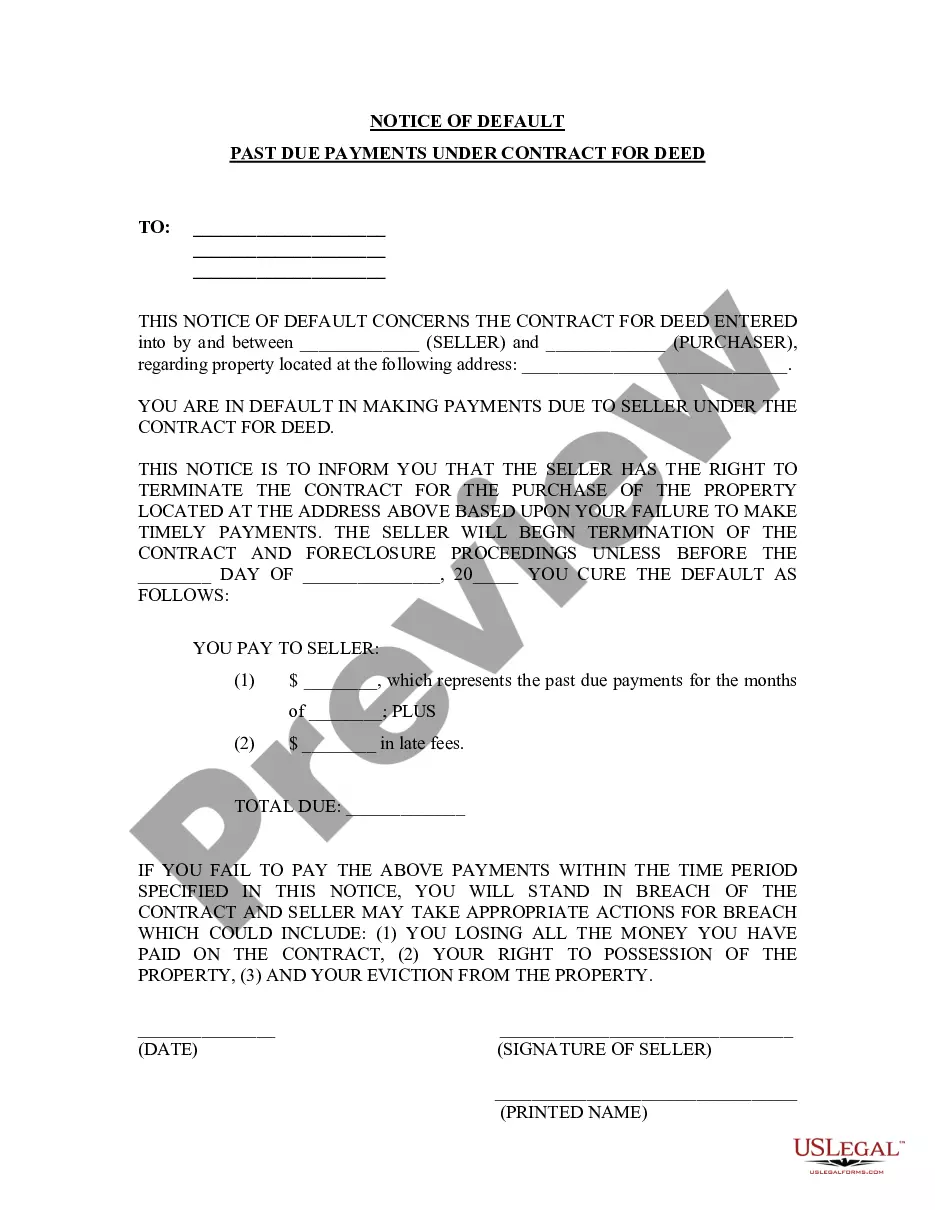
Oklahoma Notice of Default for Past Due Payments in connection with Contract for Deed
About this form
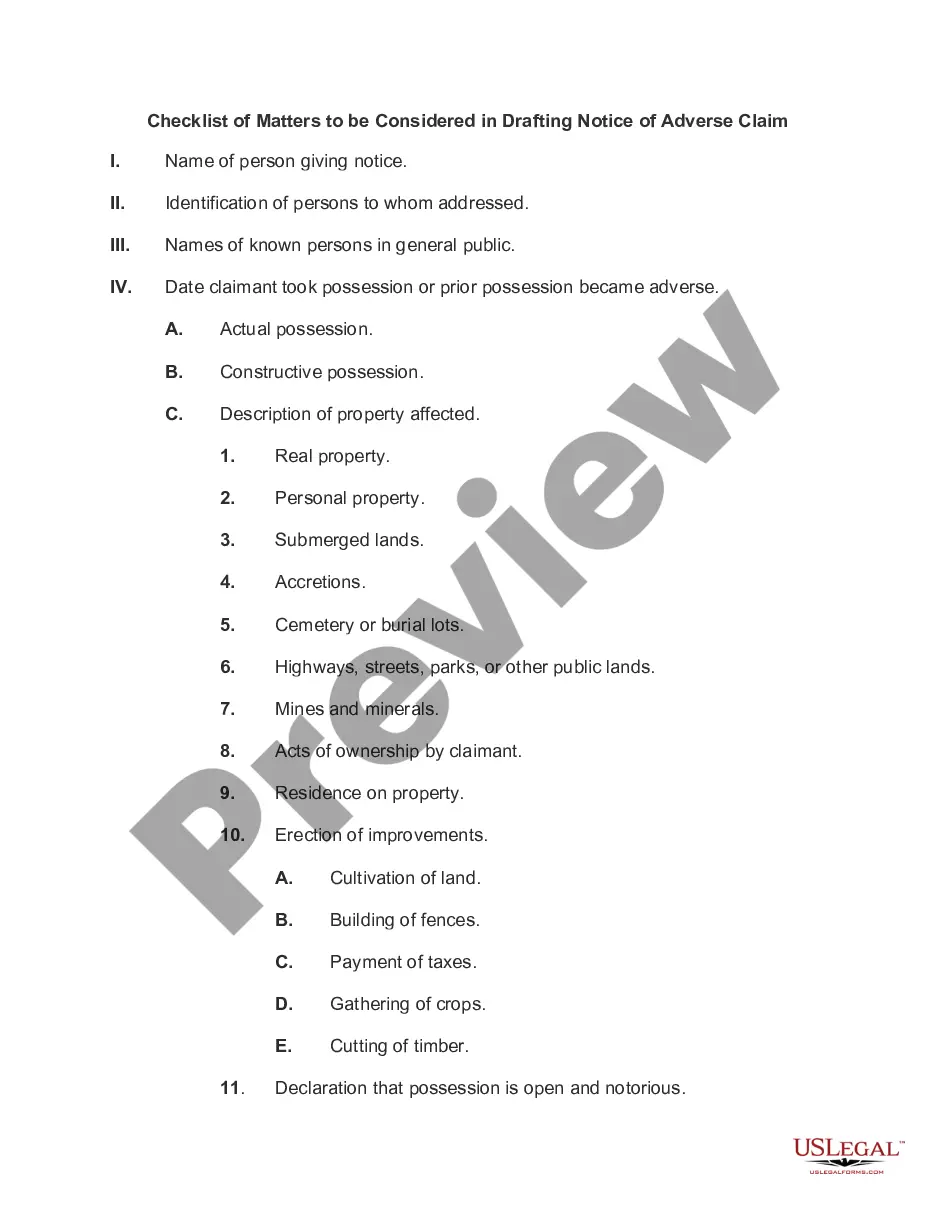
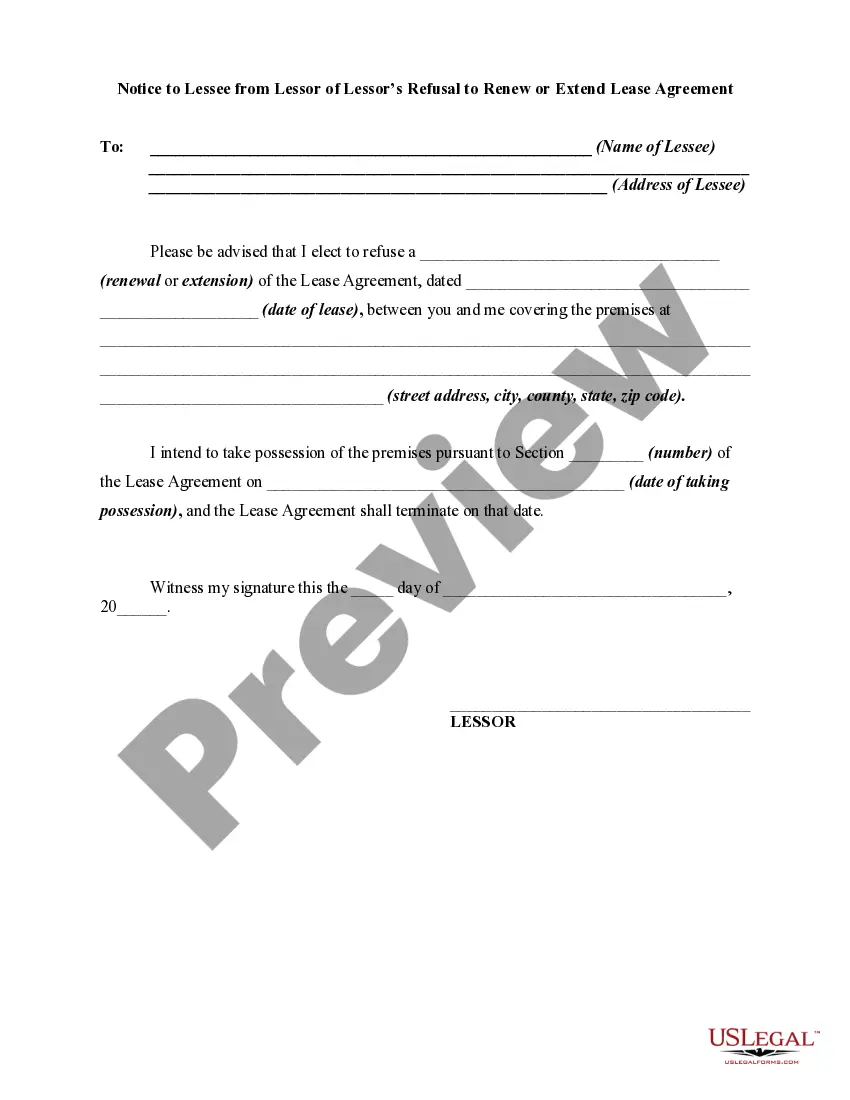
The Notice of Default for Past Due Payments in connection with Contract for Deed is a legal document that serves as the Seller's formal notice to the Purchaser regarding late payments on a contract for deed. This notice is crucial to inform the Purchaser that they have failed to meet the payment terms specified in the contract. By issuing this notice, the Seller is able to initiate the process of declaring the contract in default, outlining potential consequences for non-compliance.
Main sections of this form
- Identification of the Seller and Purchaser involved in the contract.
- Details regarding the property subject to the contract for deed.
- Clear statement of the payment terms that have not been met.
- Notification of the late payment and any necessary actions required from the Purchaser.
- Consequences of failure to remedy the default as per the contract terms.


When this form is needed
This form is used when a Seller has not received payments as stipulated in a contract for deed. It is essential in situations where the Seller needs to formally alert the Purchaser of their delinquency and to provide a chance to rectify the situation before further legal actions are taken. It may also be utilized prior to seeking legal remedies or when initiating foreclosure proceedings.
Who this form is for
The following parties may find this form applicable:
- Property Sellers who have engaged in a contract for deed with a Buyer.
- Buyers who have fallen behind on payments related to the purchase of property.
- Attorneys representing Sellers or Buyers in real estate transactions.
Steps to complete this form
- Identify and enter the names of the Seller and Purchaser.
- Specify the property address covered under the contract for deed.
- Detail the payment terms, including the amount and frequency of payments.
- Indicate the specific date of non-payment and any grace periods, if applicable.
- Conclude with a signature from the Seller or their representative.
Notarization guidance
This form does not typically require notarization unless specified by local law. Always check local regulations to confirm whether notarization is necessary for this document to be legally valid.
Get your form ready online
Our built-in tools help you complete, sign, share, and store your documents in one place.
Make edits, fill in missing information, and update formatting in US Legal Forms—just like you would in MS Word.
Download a copy, print it, send it by email, or mail it via USPS—whatever works best for your next step.
Sign and collect signatures with our SignNow integration. Send to multiple recipients, set reminders, and more. Go Premium to unlock E-Sign.
If this form requires notarization, complete it online through a secure video call—no need to meet a notary in person or wait for an appointment.
We protect your documents and personal data by following strict security and privacy standards.

Make edits, fill in missing information, and update formatting in US Legal Forms—just like you would in MS Word.

Download a copy, print it, send it by email, or mail it via USPS—whatever works best for your next step.

Sign and collect signatures with our SignNow integration. Send to multiple recipients, set reminders, and more. Go Premium to unlock E-Sign.

If this form requires notarization, complete it online through a secure video call—no need to meet a notary in person or wait for an appointment.

We protect your documents and personal data by following strict security and privacy standards.
Common mistakes to avoid
- Failing to specify the correct property details.
- Not including a clear description of the defaulted payment terms.
- Omitting signature lines or necessary dates.
- Not providing sufficient time for the Purchaser to respond, if required by state law.
Benefits of using this form online
- Convenient access to downloadable templates any time.
- Editable fields allow customization specific to the transaction.
- Access to forms drafted by licensed attorneys ensures legal validity.
- Easy storage and retrieval for future reference.
What to keep in mind
- The Notice of Default serves to alert purchasers of past due payments.
- Timely communication is crucial to avoid default on the contract.
- Proper completion can prevent legal complications and ensure clarity between parties.
Looking for another form?








Form popularity
FAQ
Entry of default refers to the process where the person making a claim in a case makes a request before a court of law stating that the party against whom they have made a claim have failed to furnish any meaningful response to the claimant's pleadings within the time allowed for that.
The danger of allowing a default judgment against you is once this occurs the debt buyer can garnish your wages and your bank accounts.If you don't submit a written answer to the lawsuit the court can enter a default judgment giving the debt buyer everything they are asking for.
The foreclosure process is defined by California civil code 2924 and begins with the filing of a Notice of Default (NOD) with the county recorder. Once a borrower is at least 90 days behind in making mortgage payments, the lender will file a Notice of Default with the court of the county where the property is located.
To do this, you must contact the clerk's office, family law intake staff, or judicial assistant to schedule a hearing and file a Notice of Hearing (General), Florida Supreme Court Approved Family Law Form 12.923, with the clerk.
(1) Defendant must be served with Summons and Complaint. (2) The time for responding to the Summons and Complaint must have passed. (3) Defendant must have failed to file a responsive pleading to the Complaint. (4) Defendant must be served with a Statement of Damages.
Generally, if a defendant fails to respond to a complaint you can get a default judgment after 45 days. However, the court system is very slow these days and it can take several months to get the court to issue the default judgment.
After you notify the defendant of the judgment, you can begin to enforce the judgment. Your judgment might be for money, repossession, eviction, foreclosure, or any number of things. In any case, your rights at this point would be the same as if you had gone to trial and won.
When a default is entered, the party who requested the entry of default must obtain a default judgment against the defaulting party within 45 days after the default was entered, unless the court has granted an extension of time.
Once a default is entered, the person against whom it was entered cannot have his/her side of the story heard in court without filing special papers seeking relief from the default.