Ohio General Warranty Deed for Corporation to Corporation
What this document covers
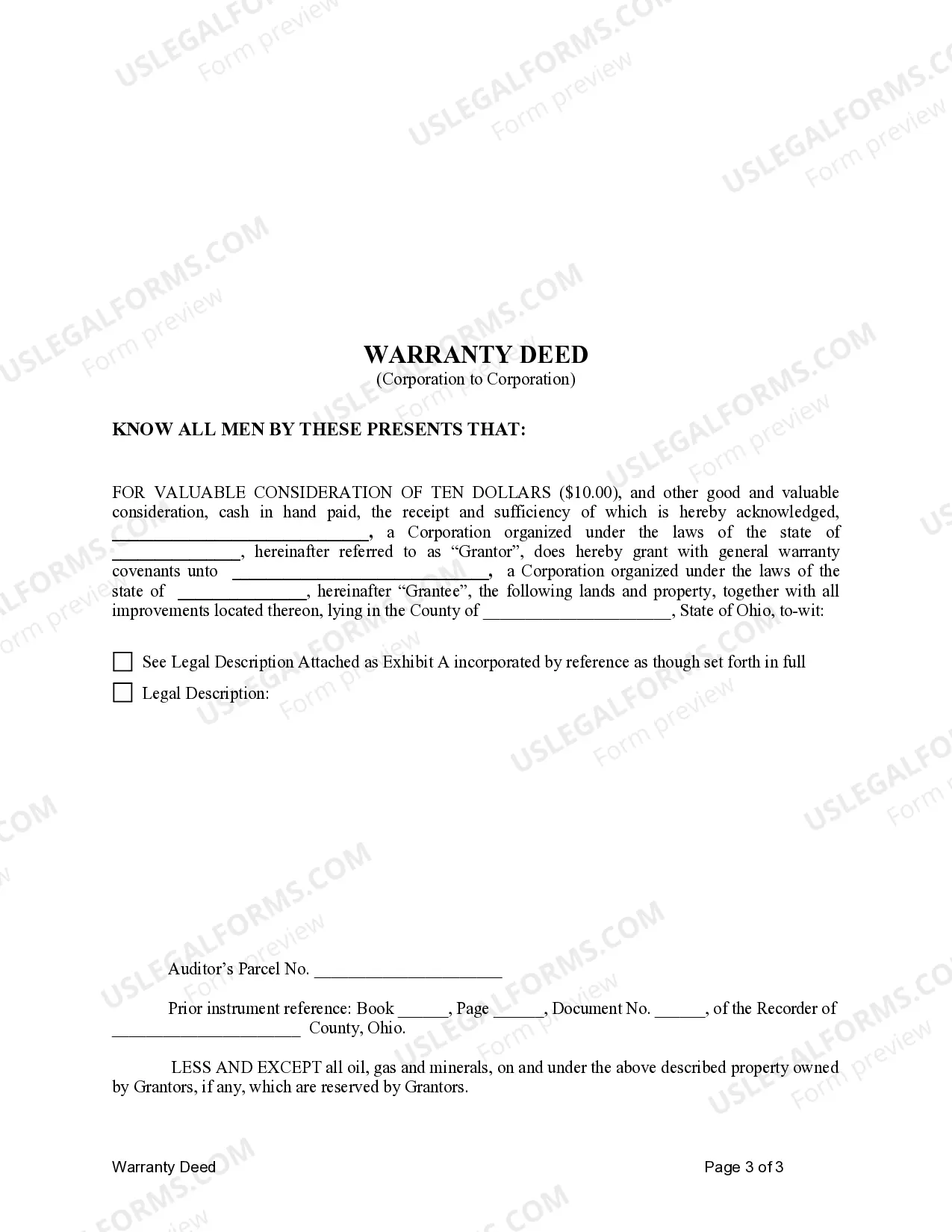
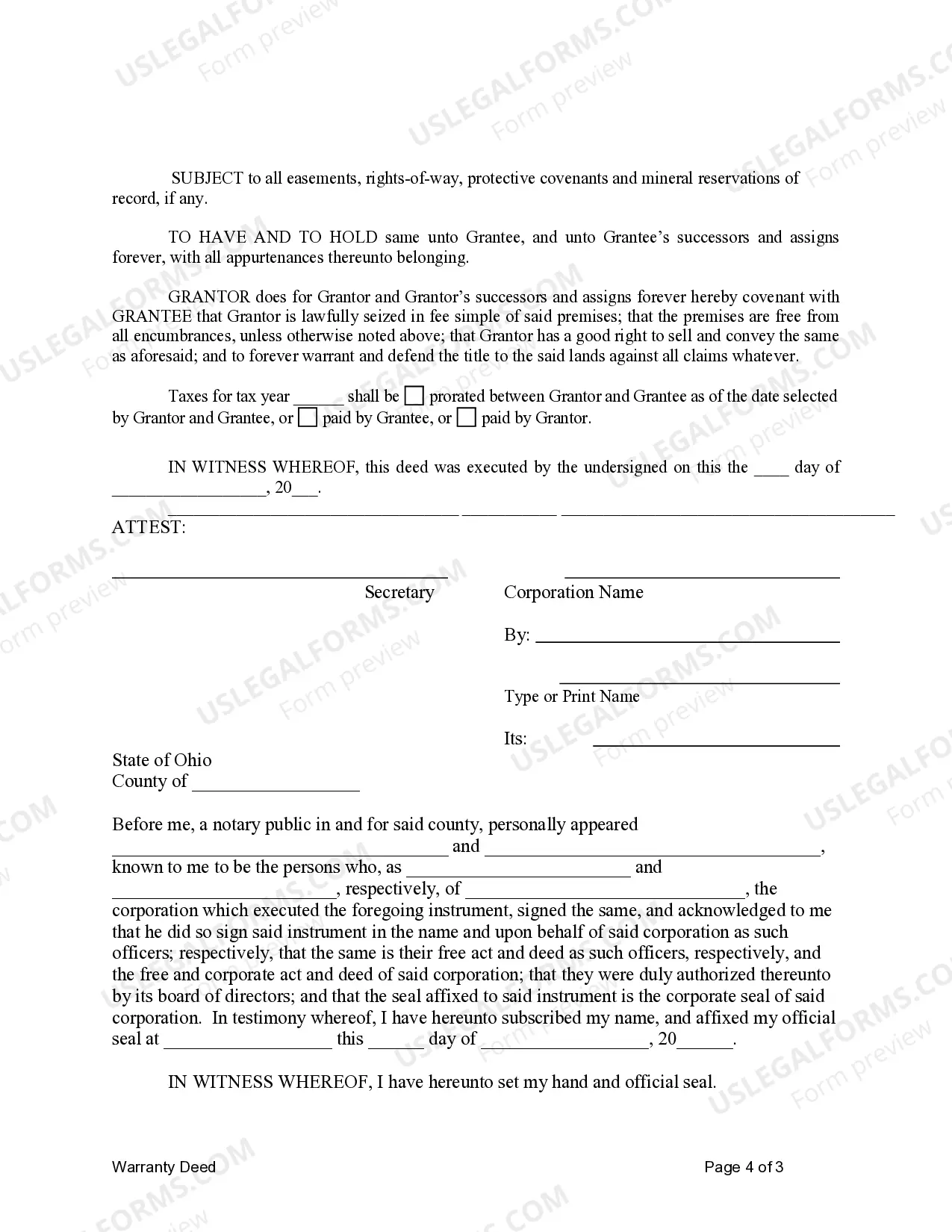
The General Warranty Deed for Corporation to Corporation is a legal document used to transfer property ownership from one corporation to another. This deed provides the grantee (the receiving corporation) with a guarantee that the grantor (the transferring corporation) holds clear title to the property and has the right to convey it. Unlike other types of deeds, a General Warranty Deed offers the highest level of protection to the grantee against any claims against the property, both during the grantor's ownership and before it.
What’s included in this form
- Identification of the grantor and grantee corporations.
- Description of the property being transferred.
- Covenant of ownership and warranty against claims or encumbrances.
- Conditions regarding property taxes and their prorating.
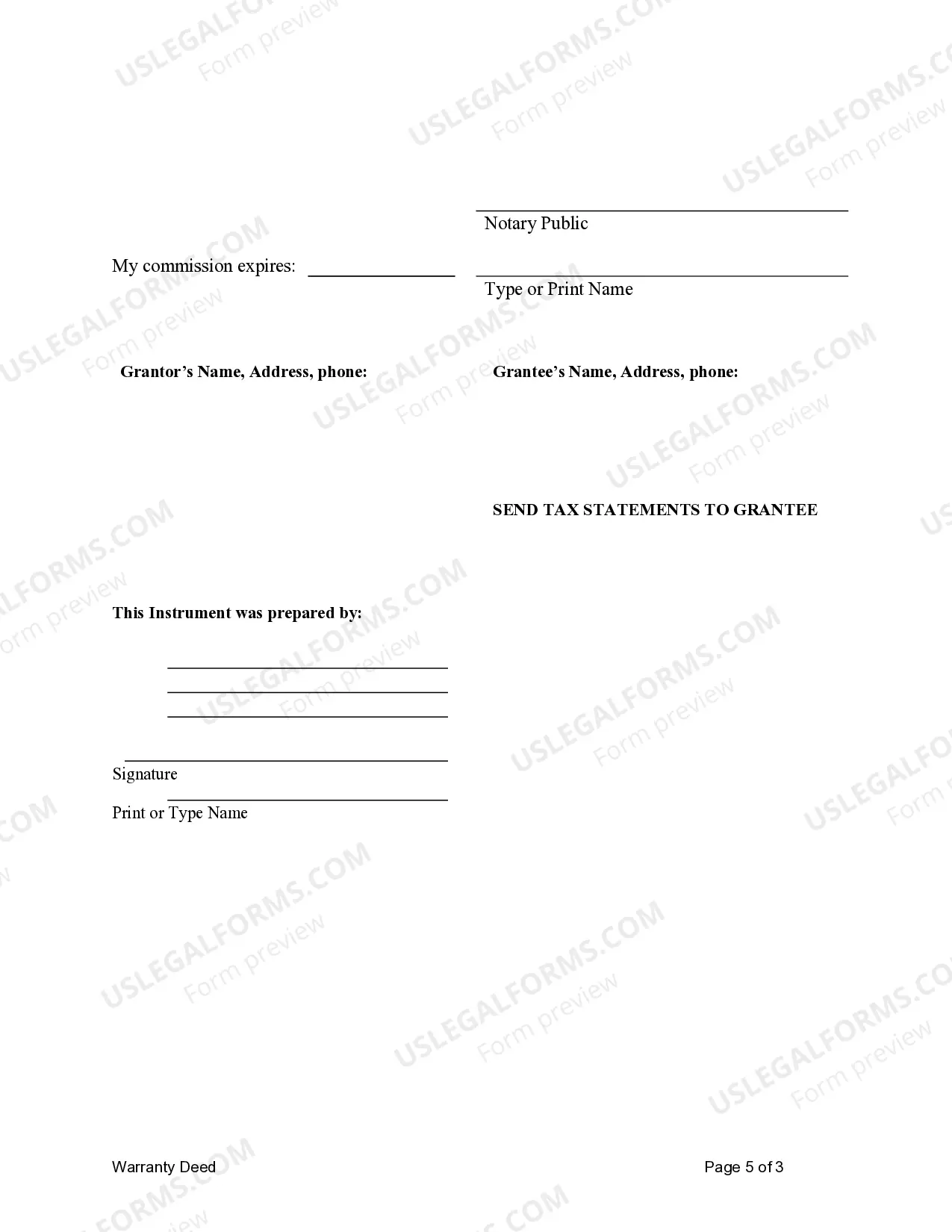
- Signatures of the authorized representatives of both corporations.


Situations where this form applies
This form should be used when a corporation intends to transfer its property interest to another corporation. Common scenarios include business mergers, asset sales, or when one corporation is selling property to another. It provides a formal way to document the transaction and ensures legal protections for the acquiring corporation by warranting clear title to the property.
Who this form is for
This form is intended for:
- Corporations that are selling or transferring real property.
- Corporations acquiring real property from another corporate entity.
- Legal professionals representing corporate entities in real estate transactions.
How to prepare this document
- Identify the full legal names of both the grantor and grantee corporations.
- Clearly describe the property being transferred, including any relevant identifying information.
- Include the necessary details regarding any easements or encumbrances associated with the property.
- Specify any arrangements regarding property taxes for the current tax year.
- Have authorized representatives of both corporations sign and date the form, ensuring the signature lines are properly filled out.
Notarization guidance
This form must be notarized to be legally valid. US Legal Forms provides secure online notarization powered by Notarize, allowing you to complete the process through a verified video call.
Get your form ready online
Our built-in tools help you complete, sign, share, and store your documents in one place.
Make edits, fill in missing information, and update formatting in US Legal Forms—just like you would in MS Word.
Download a copy, print it, send it by email, or mail it via USPS—whatever works best for your next step.
Sign and collect signatures with our SignNow integration. Send to multiple recipients, set reminders, and more. Go Premium to unlock E-Sign.
If this form requires notarization, complete it online through a secure video call—no need to meet a notary in person or wait for an appointment.
We protect your documents and personal data by following strict security and privacy standards.

Make edits, fill in missing information, and update formatting in US Legal Forms—just like you would in MS Word.

Download a copy, print it, send it by email, or mail it via USPS—whatever works best for your next step.

Sign and collect signatures with our SignNow integration. Send to multiple recipients, set reminders, and more. Go Premium to unlock E-Sign.

If this form requires notarization, complete it online through a secure video call—no need to meet a notary in person or wait for an appointment.

We protect your documents and personal data by following strict security and privacy standards.
Mistakes to watch out for
- Failing to accurately describe the property being transferred.
- Neglecting to have the form signed by an authorized representative of each corporation.
- Overlooking the need to properly date the document before submitting.
- Not prorating property taxes as agreed upon by both parties.
Advantages of online completion
- Easily customizable and editable to fit specific needs.
- Convenient downloading for immediate use, saving time.
- Access to attorney-drafted documents ensuring legal accuracy.
- Forms can be completed electronically, minimizing errors.
Looking for another form?









Form popularity
FAQ
A general warranty deed is the most common type of deed used for transferring real estate. It basically promises that: not only does the seller have good and proper title to sell the property, but all the prior owners also had good title, thus making a complete chain of ownership; and.
A general warranty deed covers the property's entire history. It guarantees the property is free-and-clear from defects or encumbrances, no matter when they happened or under whose ownership.With a special warranty deed, the guarantee covers only the period when the seller held title to the property.
A warranty deed is a type of deed where the grantor (seller) guarantees that he or she holds clear title to a piece of real estate and has a right to sell it to the grantee (buyer).A general warranty deed protects the grantee against title defects arising at any point in time, extending back to the property's origins.
Quitclaim Deed. Deed of Trust. Warranty Deed. Grant Deed. Bargain and Sale Deed. Mortgage Deed.
Limited Warranty Deeds In a Limited Warranty Deed, the seller usually gives two warranties. The seller only warrants to the buyer that: The seller personally has not done anything to the title that the seller received.
Corporate warranty deeds offer the seller's guarantee to the buyer in regards to the validity of the chain of title. Generally, special warranty deeds only protect against problems occurring since the seller purchased the property.
Typically, the lender will provide you with a copy of the deed of trust after the closing. The original warranty deeds are often mailed to the grantee after they are recorded. These are your original copies and should be kept in a safe place, such as a fireproof lockbox or a safe deposit box at a financial institution.
A warranty deed is a document often used in real estate that provides the greatest amount of protection to the purchaser of a property. It pledges or warrants that the owner owns the property free and clear of any outstanding liens, mortgages, or other encumbrances against it.
While a general warranty deed guarantees against all encumbrances and claims to title, a limited warranty deed protects only against claims made after the seller obtained title to the property. A limited warranty deed therefore makes no guarantees about anything that occurred before the seller owned the property.