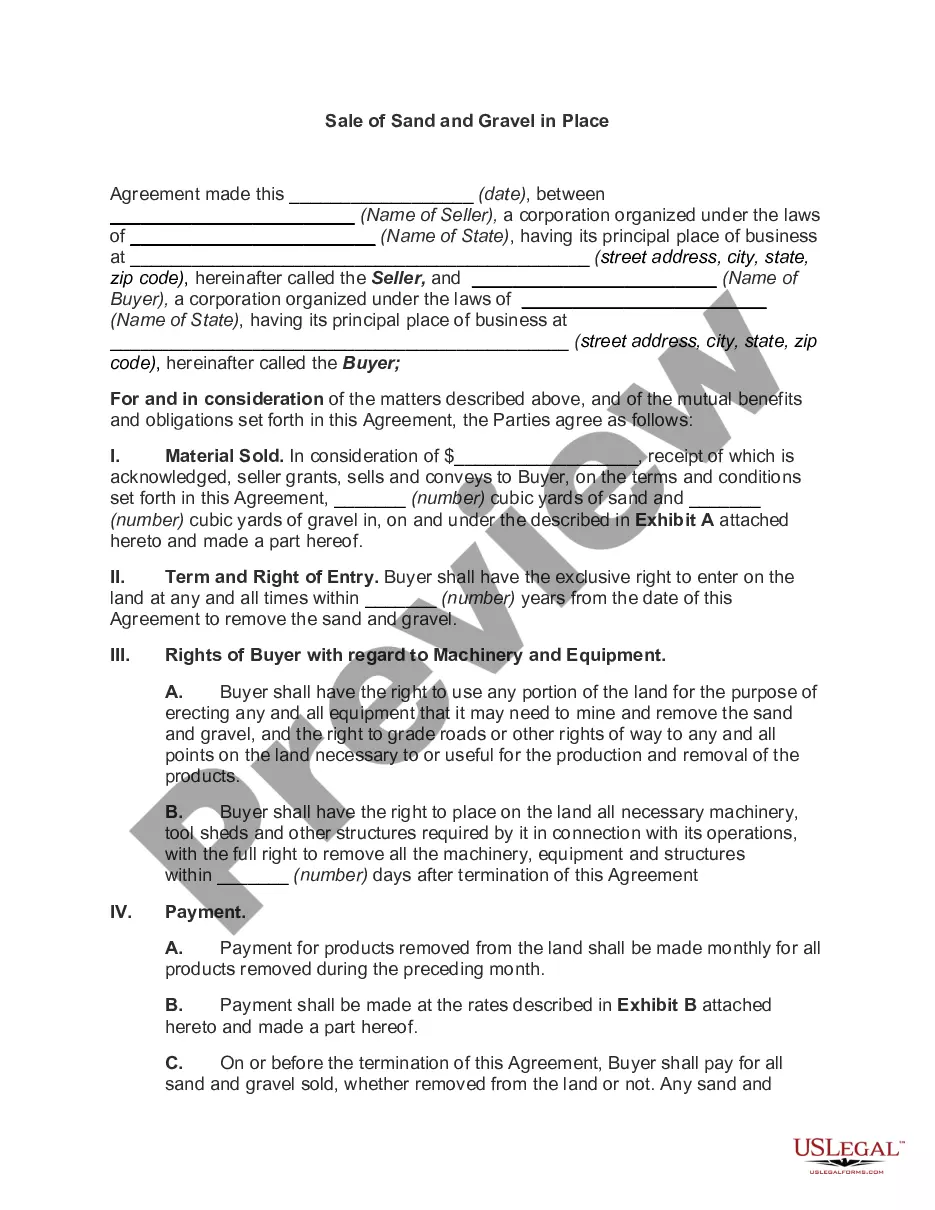
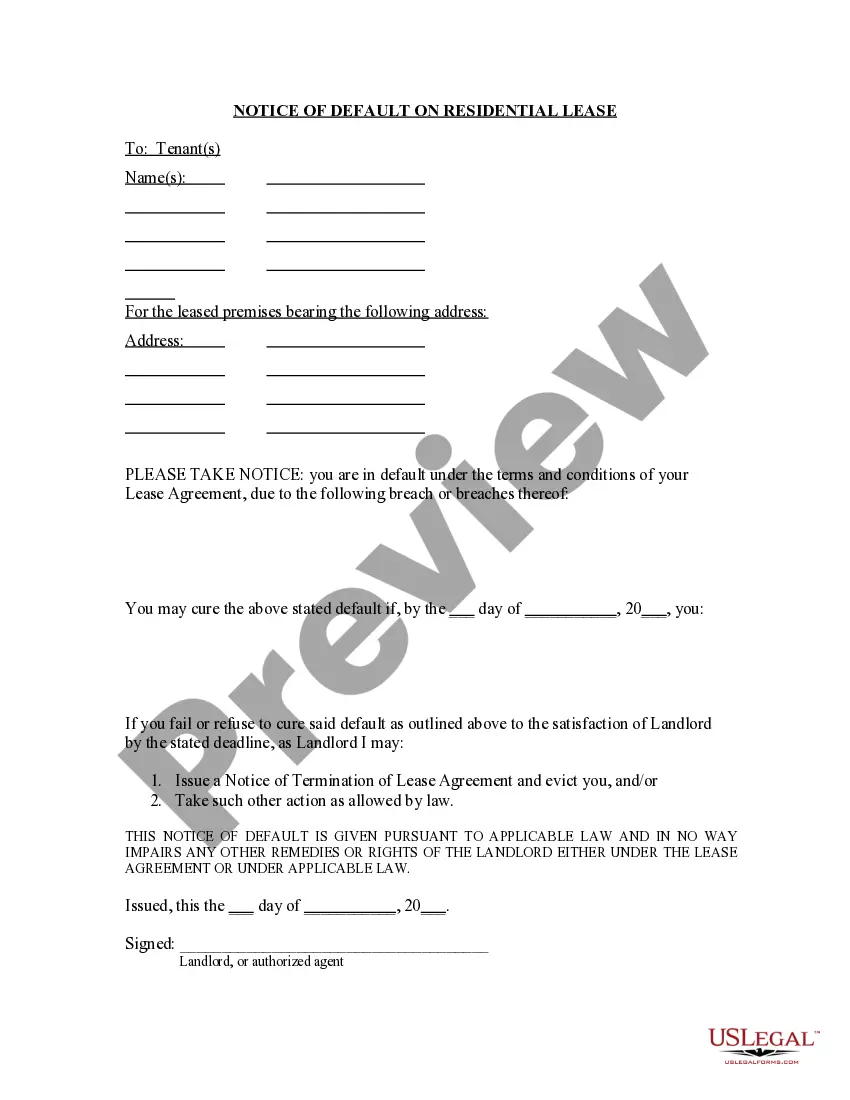
New York Notice of Default on Residential Lease
What is this form?
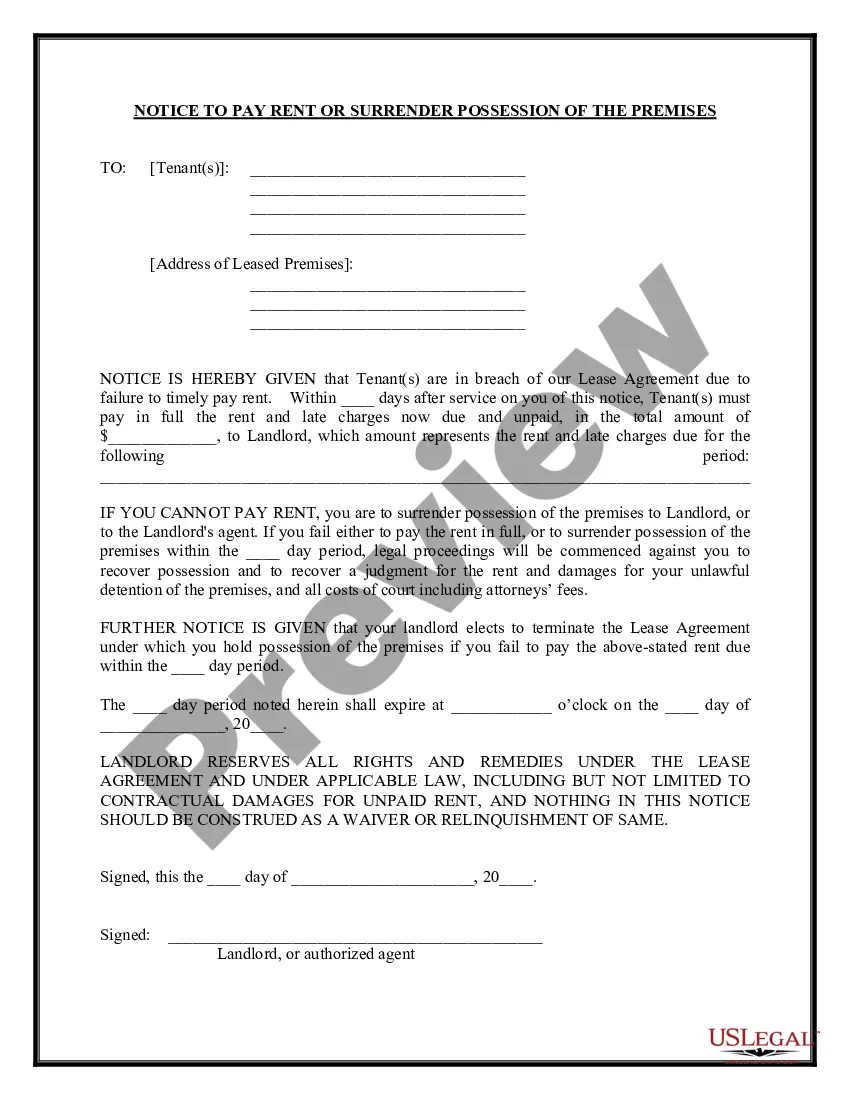
The Notice of Default on Residential Lease is a formal document used by landlords to notify tenants of a failure to meet obligations under the lease agreement, typically relating to unpaid rent. This form specifically outlines the default, provides a deadline for the tenant to address the issue, and complies with applicable legal requirements, allowing landlords to potentially initiate eviction proceedings if the tenant does not remedy the situation. Unlike other rental forms, this document focuses specifically on notifying tenants of their default status.
Key parts of this document
- Identification of the landlord and tenant
- Specific reasons for the default stated
- Deadline date to cure the default
- Statement of potential actions the landlord may take if the default is not cured
- Signature section for the landlord or authorized agent
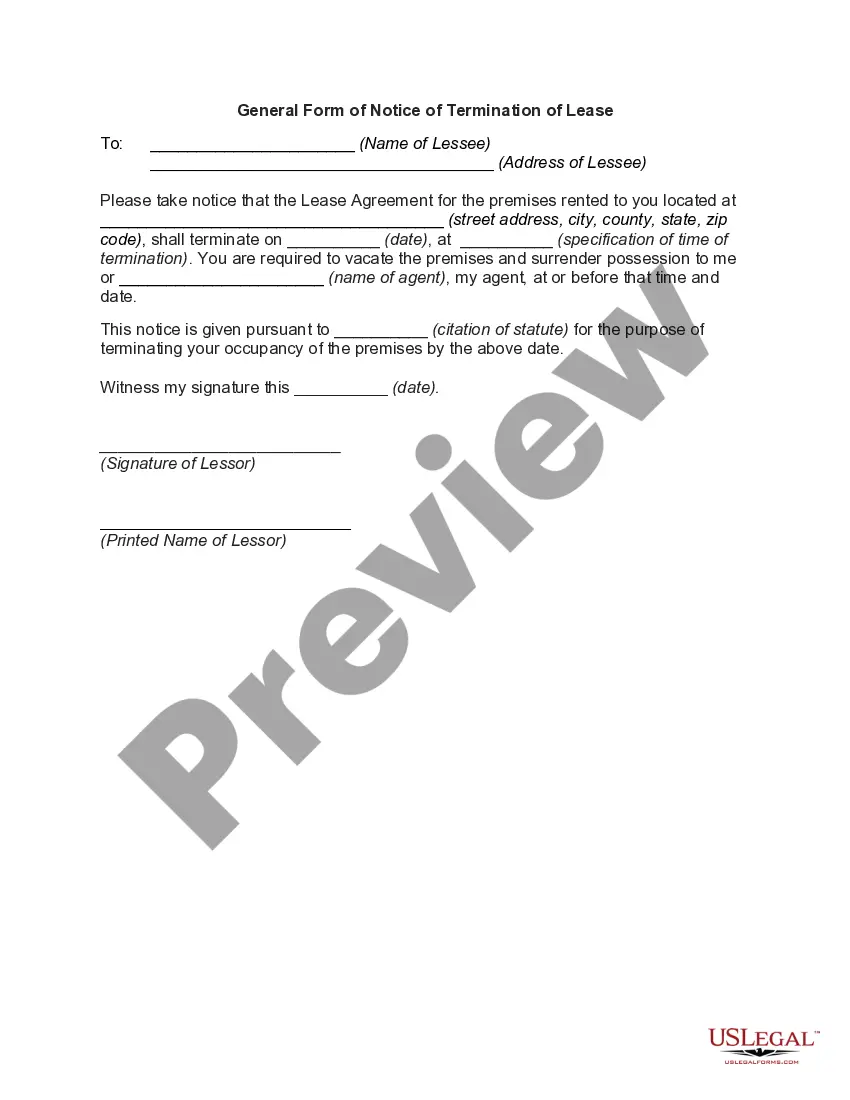

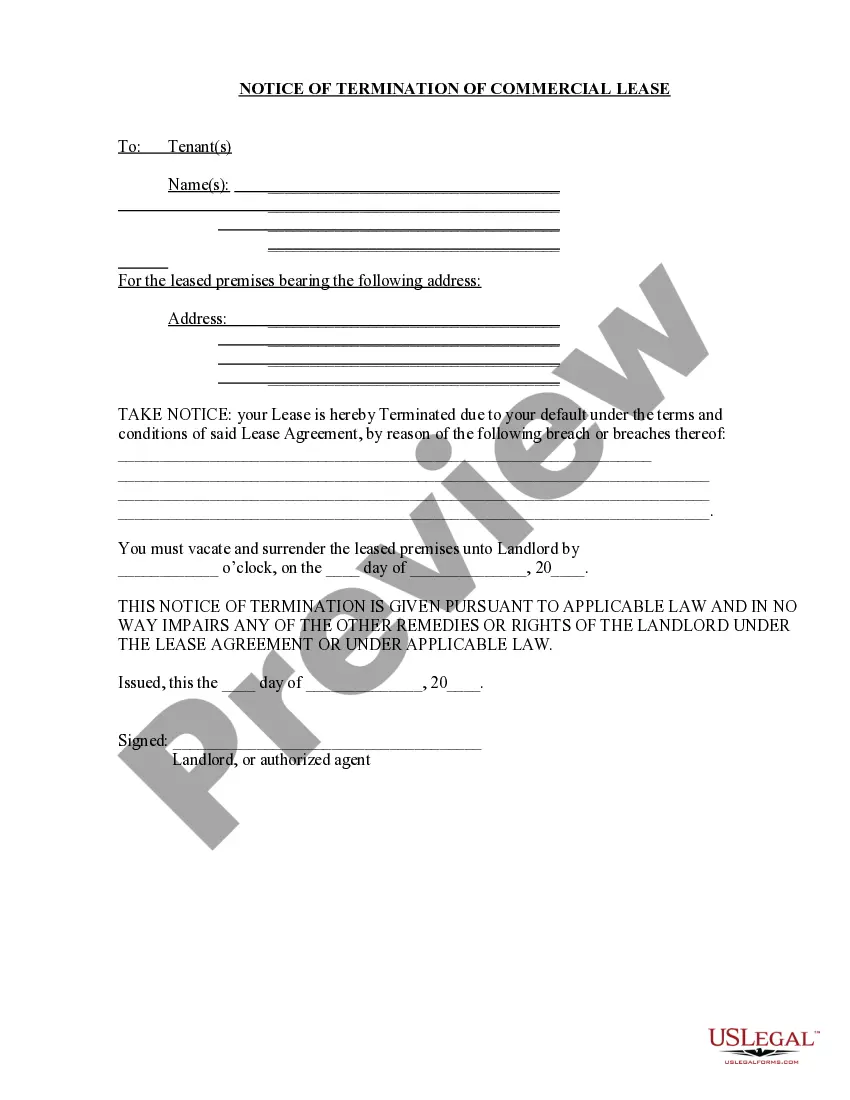

When to use this form
This form should be used when a tenant fails to pay their rent or otherwise breaches the terms of the lease agreement. It is important to formally notify the tenant of the specific default and provide them with a deadline to resolve the issue. This notice is a critical step before proceeding with eviction proceedings or applying any security deposit to past due amounts.
Who needs this form
- Landlords who manage residential rental properties
- Property managers acting on behalf of landlords
- Landlords facing payment issues with tenants
- Individuals who are unfamiliar with landlord-tenant law but need to assert their rights
Completing this form step by step
- Identify the landlord and tenant by entering their names and contact information.
- Specify the exact reasons for the default, such as non-payment of rent.
- Enter the deadline date by which the tenant must cure the default.
- Include any actions that the landlord may take if the tenant fails to cure the default.
- Sign and date the form as the landlord or authorized agent.
Does this document require notarization?
This form does not typically require notarization to be legally valid. However, some jurisdictions or document types may still require it. US Legal Forms provides secure online notarization powered by Notarize, available 24/7 for added convenience.
Get your form ready online
Our built-in tools help you complete, sign, share, and store your documents in one place.
Make edits, fill in missing information, and update formatting in US Legal Forms—just like you would in MS Word.
Download a copy, print it, send it by email, or mail it via USPS—whatever works best for your next step.
Sign and collect signatures with our SignNow integration. Send to multiple recipients, set reminders, and more. Go Premium to unlock E-Sign.
If this form requires notarization, complete it online through a secure video call—no need to meet a notary in person or wait for an appointment.
We protect your documents and personal data by following strict security and privacy standards.

Make edits, fill in missing information, and update formatting in US Legal Forms—just like you would in MS Word.

Download a copy, print it, send it by email, or mail it via USPS—whatever works best for your next step.

Sign and collect signatures with our SignNow integration. Send to multiple recipients, set reminders, and more. Go Premium to unlock E-Sign.

If this form requires notarization, complete it online through a secure video call—no need to meet a notary in person or wait for an appointment.

We protect your documents and personal data by following strict security and privacy standards.
Common mistakes
- Failing to specify clear reasons for the default.
- Not providing a reasonable deadline for the tenant to respond.
- Neglecting to sign the notice, which can render it ineffective.
Why use this form online
- Convenience of immediate access to a legally sound document.
- Editability allows for customization to specific situations.
- Assurance that the form is drafted based on up-to-date legal standards.
Quick recap
- The Notice of Default is crucial for landlords managing late or unpaid rent issues.
- Properly completing the form helps ensure legal protection and clarity in landlord-tenant relationships.
- Always check state-specific requirements to comply with local laws.
Looking for another form?

Form popularity
FAQ
Be in writing; Say the full name of the tenant or tenants; Have the address of the rental property; Say everything that the tenant did to break the lease or deserve a 3-day notice to leave, and include details and dates; and. Say clearly that the tenant has to move out as soon as the 3 days are up.
Your landlord can enter your apartment at any time and without notice in an emergency, and at a reasonable time after providing appropriate notice if the entry is either: To provide necessary or agreed upon repairs or services, or. In accordance with the lease, or.
Once the notice is mailed or delivered, your tenancy will terminate 30 days after the date that rent is next due, even if that date is several months before your lease expires.
The name of the tenant. The lease start and end date. The reason for the termination of the lease. A copy of the original lease agreement. A request of the tenant's new address. Instructions on how the tenant should complete the move-out process. Date set for final inspection.
Dear (Name of landlord or manager), This letter constitutes my written (number of days' notice that you need to give based on your lease agreement)-day notice that I will be moving out of my apartment on (date), the end of my current lease. I am leaving because (new job, rent increase, etc.)
Explain the Situation Tell your tenant in straightforward terms what the problem is, and explain that they cannot stay on the property any longer. Describe the Consequences Calmly explain that they will be evicted with necessary court orders if they remain on the property.
If you want to evict a month-to-month renter with no lease in place, you must give 30-days notice before you ask for eviction.
If you have lived there less than one year, the landlord must provide at least 30 days' notice. If you have lived there more than one year, but less than two years, the landlord must provide at least 60 days' notice. If you have lived there more than two years, the landlord must provide at least 90 days' notice.
A month-to-month tenancy in New York may be terminated by either party by giving at least one month's notice before the expiration of the tenancy. On the other hand, because a fixed lease term expires at the end of the term, no notice is needed.