New York Letter from Tenant to Landlord containing Notice to landlord to cease retaliatory threats to evict or retaliatory eviction
What this document covers
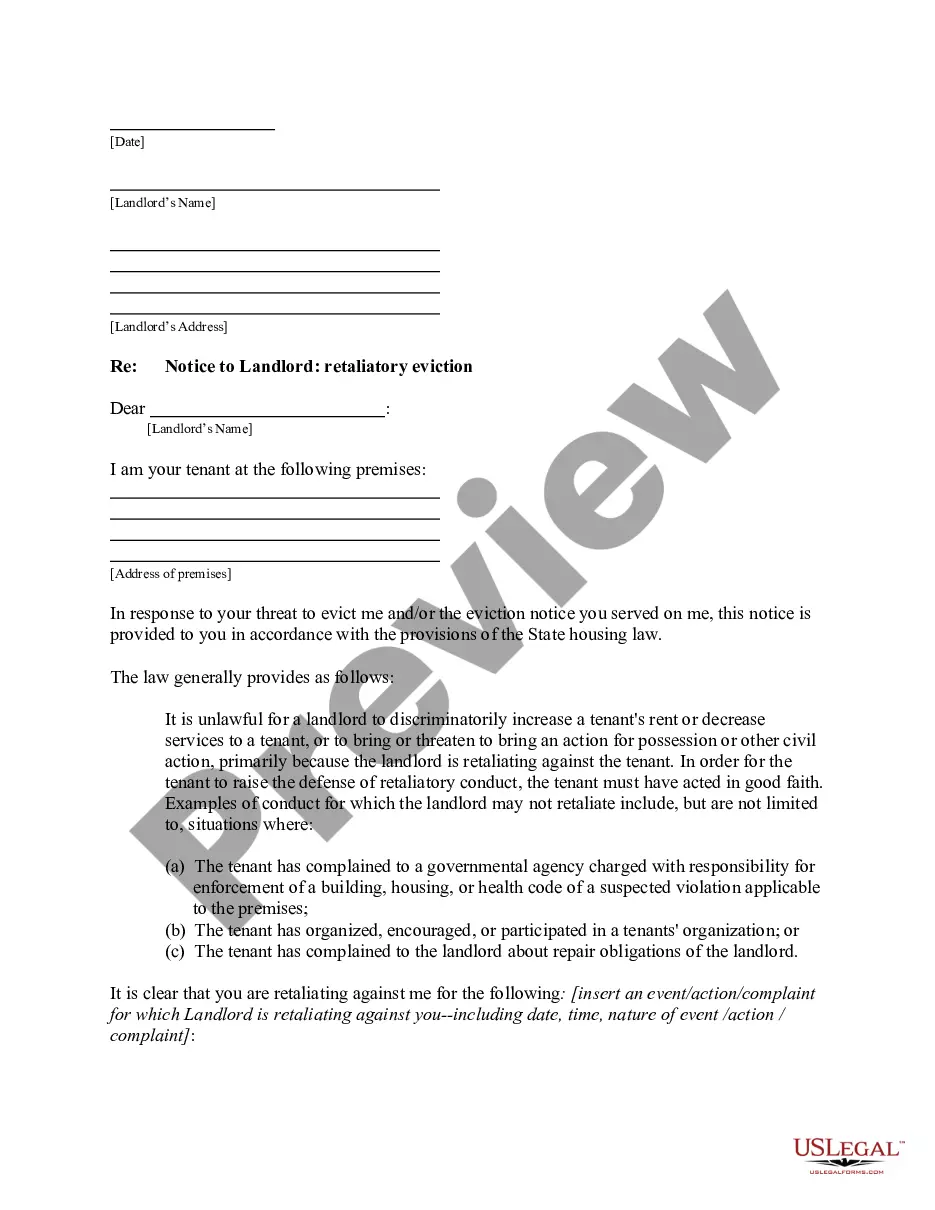
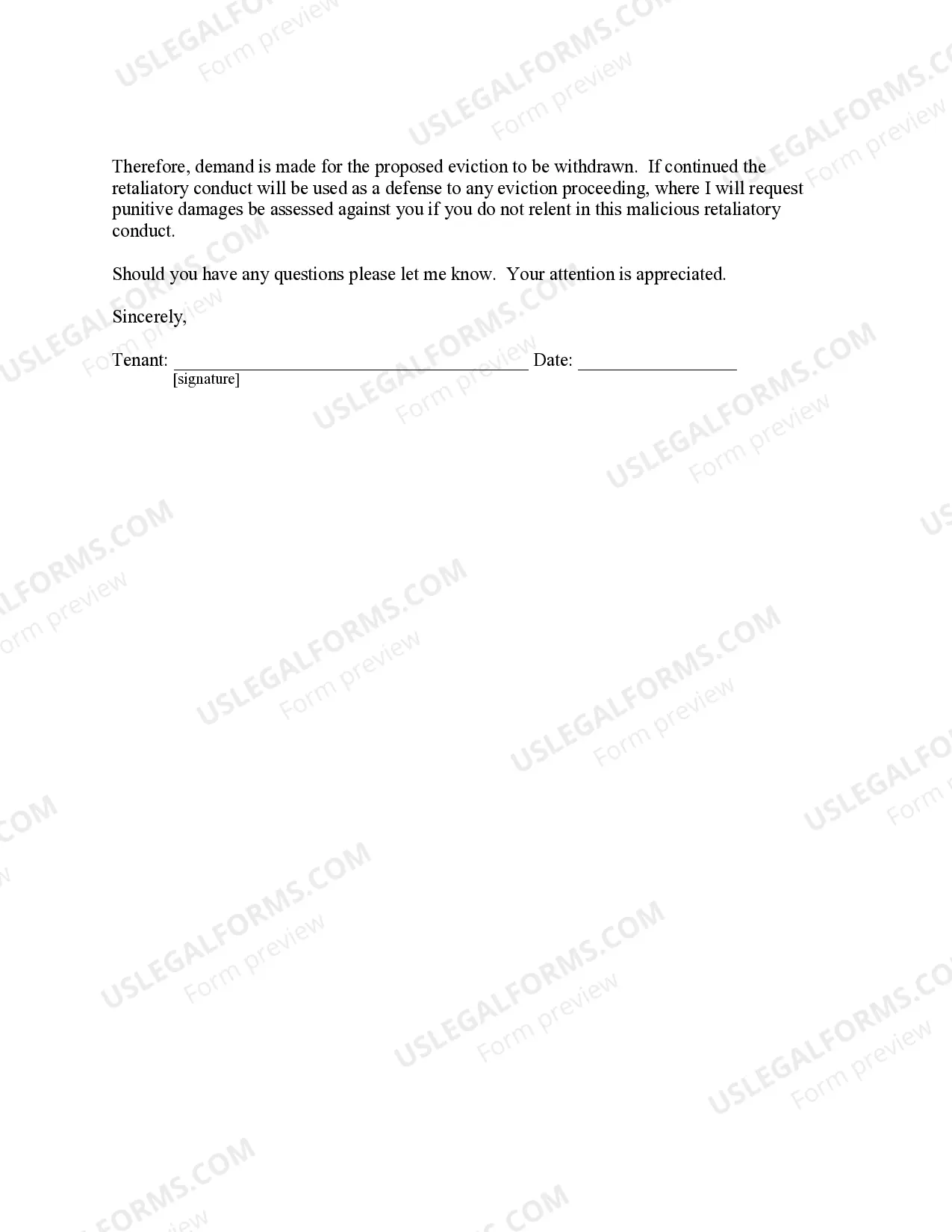
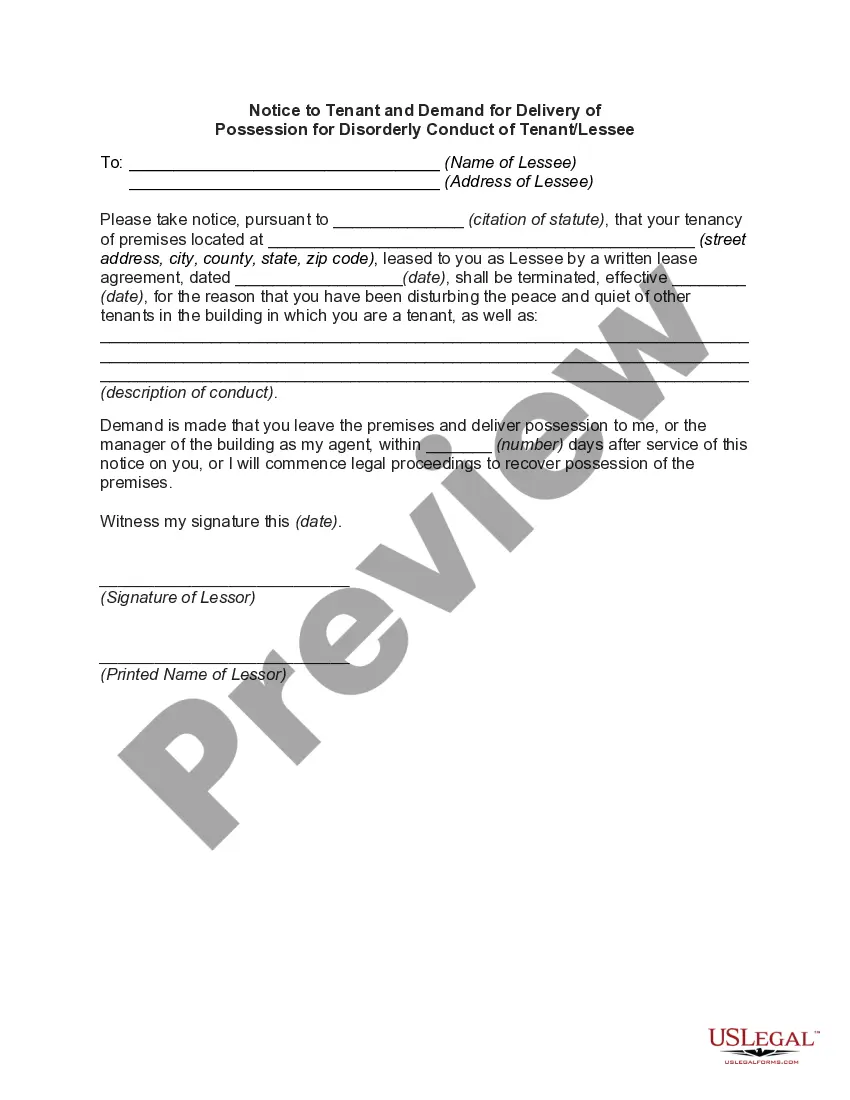
This form is a Letter from Tenant to Landlord that serves as a formal notice to the landlord to cease any retaliatory threats of eviction. It is specifically designed for tenants who believe that their landlord's threat is in retaliation for actions such as reporting repairs or organizing tenant groups. This form helps tenants assert their rights under state housing laws, providing clear documentation for their claims against wrongful eviction attempts.
Key components of this form
- Identification of the tenant and landlord involved in the dispute.
- Specification of the retaliatory actions taken by the landlord.
- Evidence of tenant's good faith actions that prompted the landlord's response.
- Request for the landlord to cease any further retaliatory behavior.
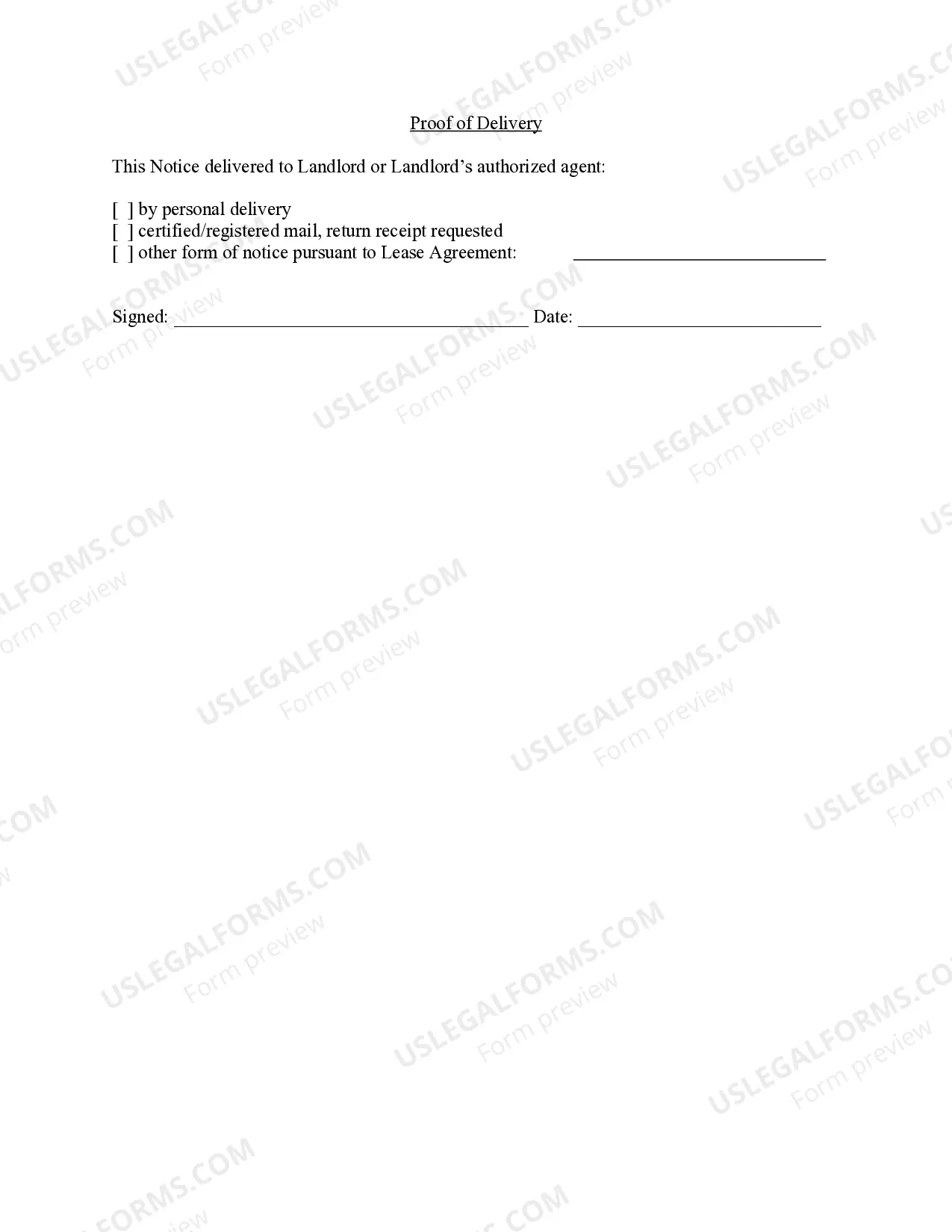
- Proof of delivery details to officially notify the landlord.


When to use this document
This form should be used when a tenant receives threats of eviction that they believe are retaliatory in nature. Common scenarios include situations where a tenant has reported health and safety concerns to authorities, requested necessary repairs, or engaged with other tenants regarding housing issues. Whenever a tenant feels their housing stability is compromised due to unfair landlord actions, this form can be an essential tool for addressing those threats formally.
Who needs this form
- Tenants who have received eviction threats believed to be retaliatory.
- Individuals seeking to assert their rights under state housing laws.
- Those who have recently engaged in activities that may have triggered landlord retaliation.
Instructions for completing this form
- Identify and enter the names and addresses of both the tenant and landlord.
- Clearly state the nature of the landlord's retaliatory action.
- Describe the tenant's good faith actions that led to the landlord's response.
- Specify the date of the letter and include the tenant's signature.
- Deliver the letter personally or via an authorized agent and document the method of delivery.
Notarization guidance
This form usually doesn’t need to be notarized. However, local laws or specific transactions may require it. Our online notarization service, powered by Notarize, lets you complete it remotely through a secure video session, available 24/7.
Get your form ready online
Our built-in tools help you complete, sign, share, and store your documents in one place.
Make edits, fill in missing information, and update formatting in US Legal Forms—just like you would in MS Word.
Download a copy, print it, send it by email, or mail it via USPS—whatever works best for your next step.
Sign and collect signatures with our SignNow integration. Send to multiple recipients, set reminders, and more. Go Premium to unlock E-Sign.
If this form requires notarization, complete it online through a secure video call—no need to meet a notary in person or wait for an appointment.
We protect your documents and personal data by following strict security and privacy standards.

Make edits, fill in missing information, and update formatting in US Legal Forms—just like you would in MS Word.

Download a copy, print it, send it by email, or mail it via USPS—whatever works best for your next step.

Sign and collect signatures with our SignNow integration. Send to multiple recipients, set reminders, and more. Go Premium to unlock E-Sign.

If this form requires notarization, complete it online through a secure video call—no need to meet a notary in person or wait for an appointment.

We protect your documents and personal data by following strict security and privacy standards.
Avoid these common issues
- Failing to specify details about the retaliatory actions clearly.
- Not providing sufficient evidence of the tenant's good faith actions.
- Neglecting to keep a copy of the notice for personal records.
- Delivering the notice without proper documentation of delivery.
Benefits of completing this form online
- Convenient and quick access to essential legal form templates.
- Edit and personalize the letter according to your specific situation.
- Reliable templates drafted by licensed attorneys to ensure legal compliance.
Legal use & context
- Used legally to assert a tenant's rights against wrongful eviction threats.
- Serves as a formal record of the tenant's claim against the landlord's actions.
- Enhances the tenant's position in potential legal proceedings regarding eviction disputes.
Looking for another form?





Form popularity
FAQ
Review Your Lease Before You Sign. Research Local Laws. Keep Records. Pay Your Rent. Maintain Respectful Communication. Seek an Agreeable Solution. Request Repairs in Writing. What Do You Think?
Detail the issue that you're experiencing in your rental (include pictures if helpful) propose a reasonable solution. mention possible consequences, such as health problems, a fire, or a burglary or assault, of not dealing with the issue promptly, and.
Dear (Name of landlord or manager), I am writing to request repairs to the (appliance, heating/air conditioning, plumbing issue be specific!) due to (reason for repair; this could include things such as broken handle, leaky sink hose, even normal wear-and-tear that would necessitate replacement).
Harassment can be anything a landlord does, or fails to do, that makes you feel unsafe in the property or forces you to leave. Harassment can include: stopping services, like electricity.anti-social behaviour by a landlord's agent, for example a friend of the landlord moves in next door and causes problems.
Write a letter to your landlord stating that you are aware of your rights as a tenant, that s/he is in clear violation of the law, and that you want the situation remedied with no further harassment. Keep a copy of the letter; it will be good evidence if you have to take the landlord to court later.
Sue the landlord and whoever for up to $10,000 in small claims court for trespassing, breach of contract, invasion of privacy, and breach of quiet enjoyment; if you are two or more tenants, each can separately sue them for up to $10,000, and a joint action is not required.
To give you an idea, it's in good taste to start your letter "Dear Mr./Ms. Insert Name Here," as is the case with any polite letter. No matter how much you might want to give your landlord a piece of your mind, do yourself a favor and refrain from calling him a slumlord.
If you're seeking damages for emotional distress caused by a landlord's discrimination, or punitive damages for especially blatant and intentional discrimination, a lawsuit may well be your best bet. Understand what's involved in suing your landlord. You may file a lawsuit in either federal or state court.