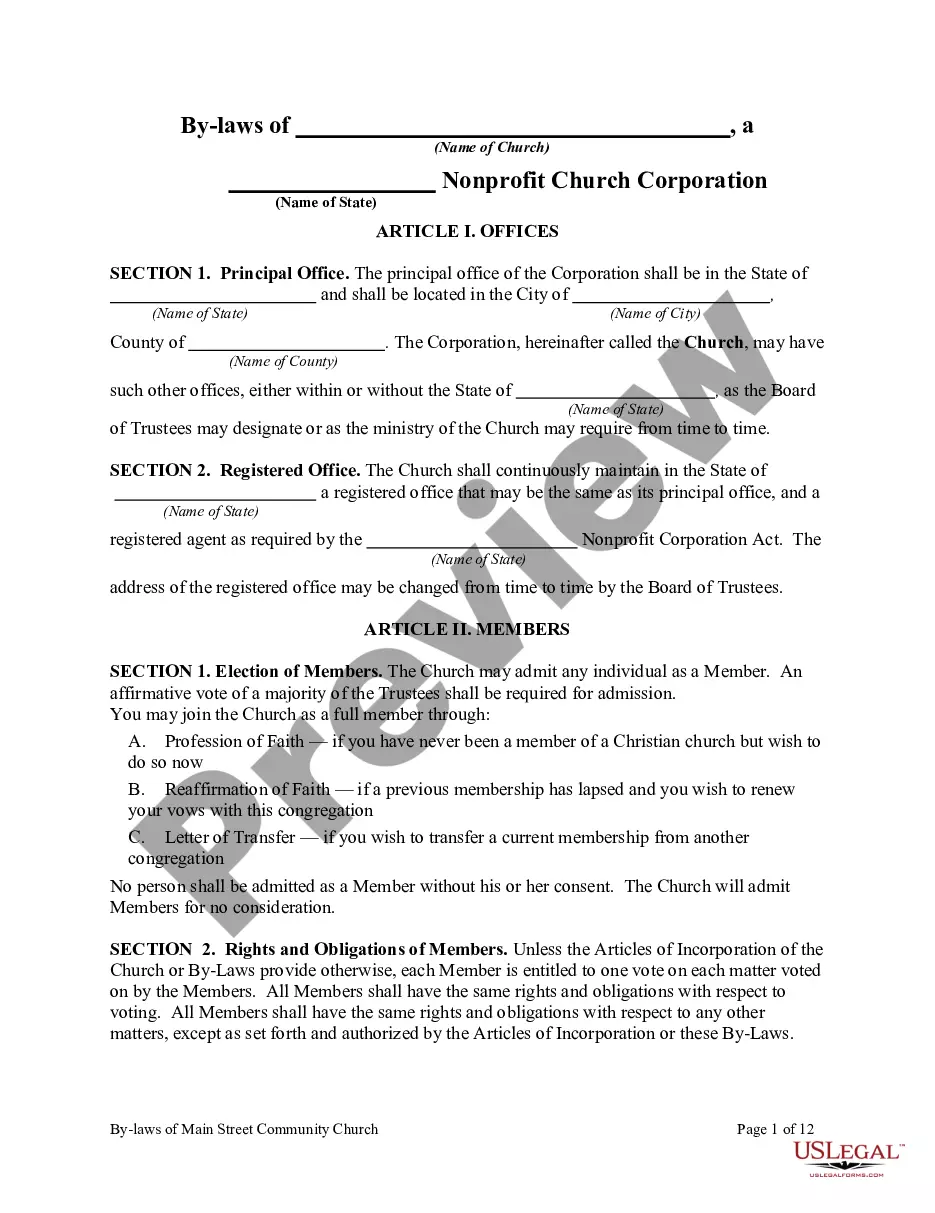
New York Quitclaim Deed from Husband and Wife to Husband and Wife
What is this form?
A Quitclaim Deed from Husband and Wife to Husband and Wife is a legal document that transfers ownership of real property between spouses, ensuring that both parties hold the title as joint tenants with right of survivorship. This form is distinct in that it conveys property without warranties, meaning the grantors are merely transferring their interest, if any, without guarantees about the property's title.
Form components explained
- Grantors and grantees are identified as the husband and wife involved in the transaction.
- Legal description of the property being conveyed is included, often as an attached Exhibit A.
- Provisions regarding the rights of survivorship for the grantees are established.
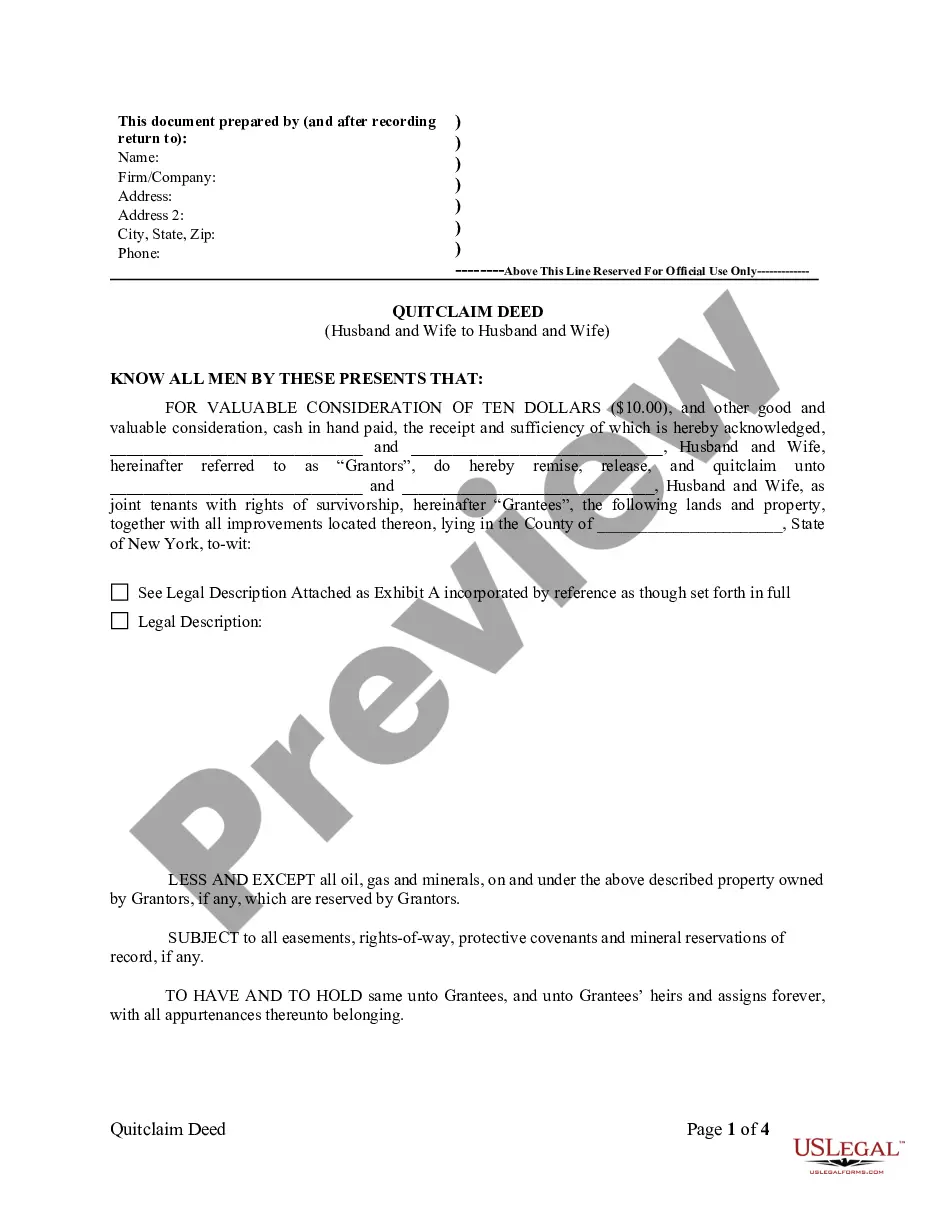
- Signature lines for both grantors, confirming their consent to the transfer.
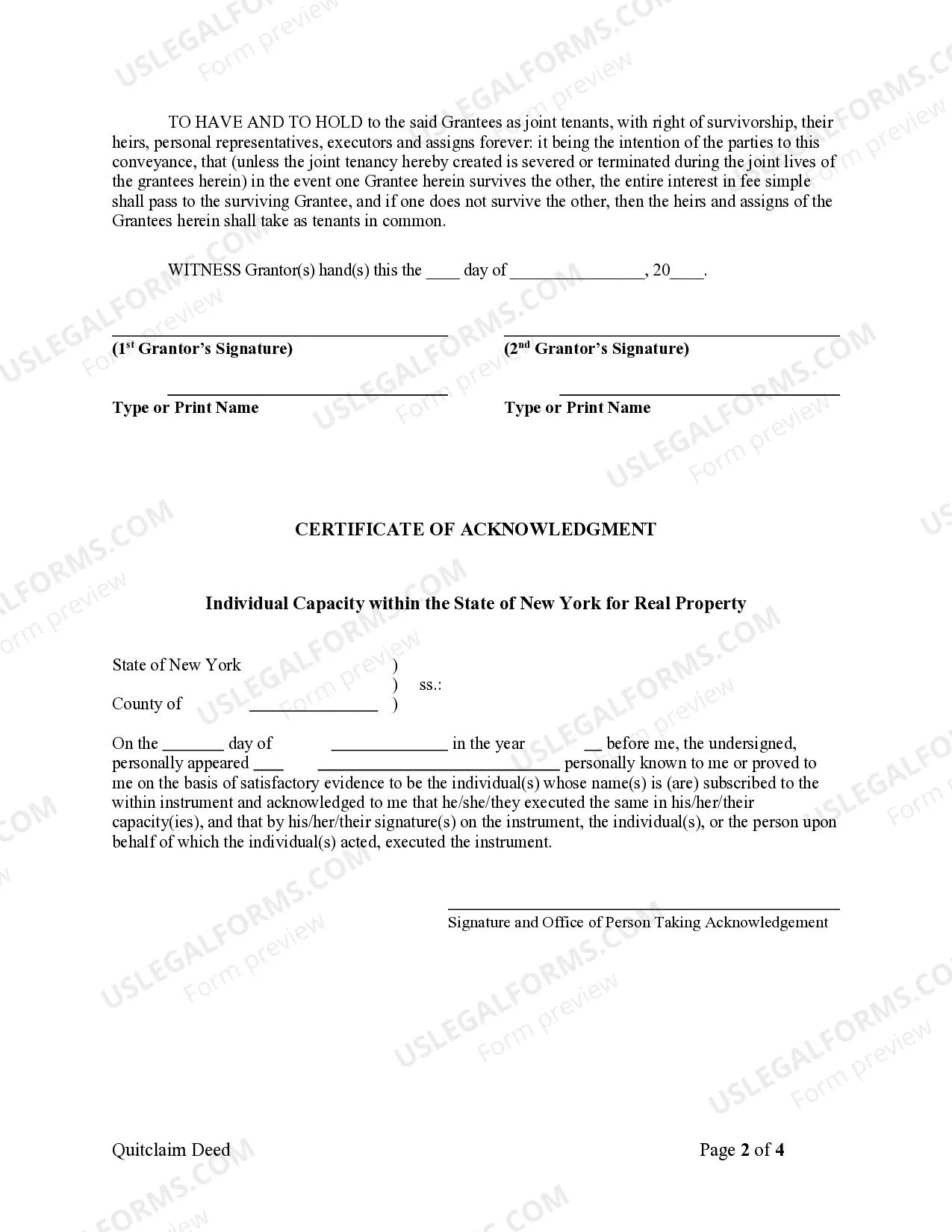
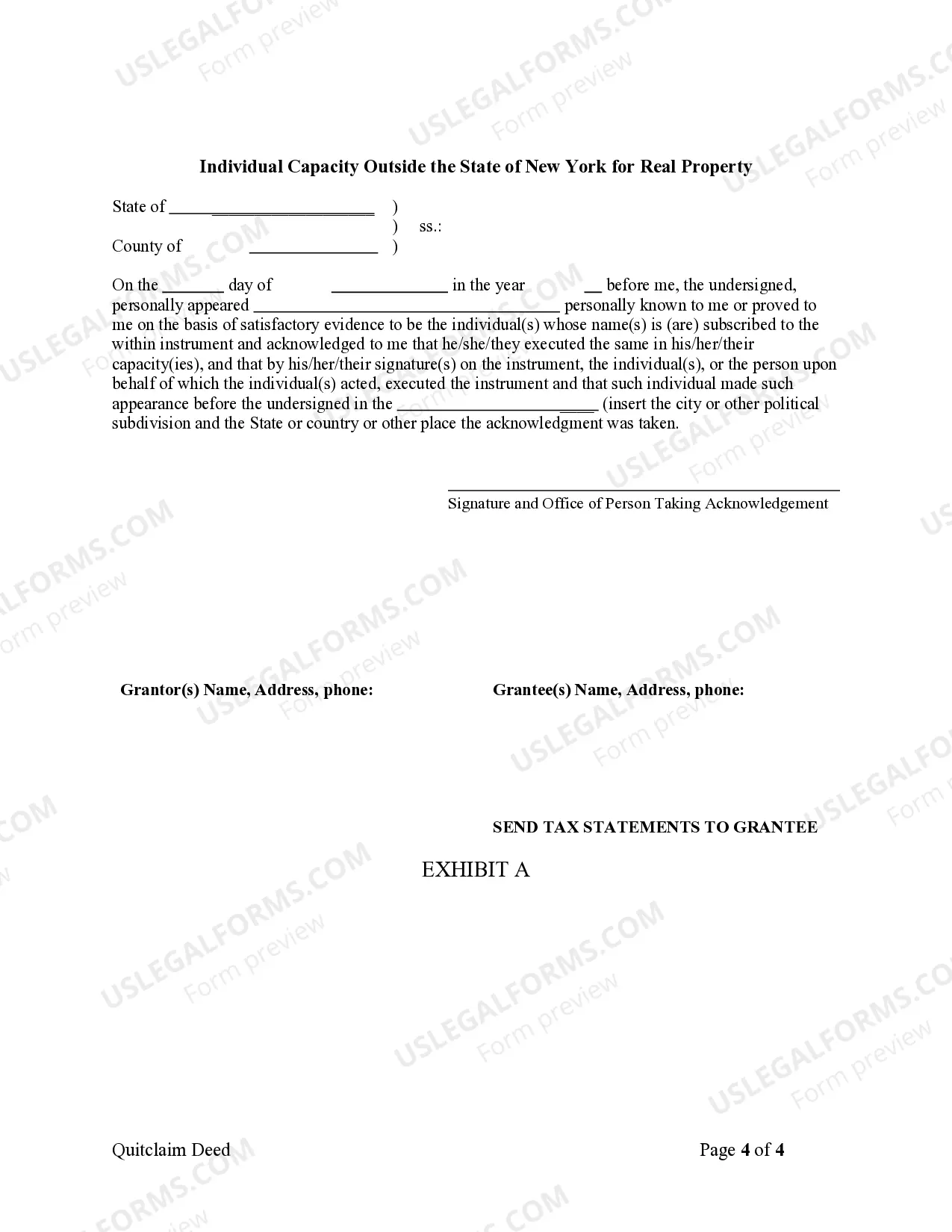
- Notary acknowledgment section that may be required for validity.






When to use this document
This form is typically used when a married couple wishes to transfer ownership of a property to one another without changing the title structure. Scenarios might include refinancing, asset protection strategies, or simplifying estate planning. It is also beneficial in cases of divorce or separation where one spouse wishes to relinquish property claims to the other.
Intended users of this form
This form is intended for:
- Married couples wishing to transfer property ownership between themselves.
- Individuals who want to assure joint rights to property without a need for a warranty deed.
- Couples involved in marital agreements where property transfer is necessary.
Completing this form step by step
- Identify the grantors (husband and wife) who are transferring the property.
- Specify the grantees (husband and wife) who will receive the property.
- Enter the legal description of the property being conveyed, referencing Exhibit A if needed.
- Fill in the date of transfer.
- Have both grantors sign the document in the designated signature area.
- Consider obtaining a notary acknowledgment if required by your state.
Does this form need to be notarized?
This form does not typically require notarization unless specified by local law. However, it is recommended to have the signatures notarized for added legal security and to comply with title companies and banks if issues arise during a transaction.
Get your form ready online
Our built-in tools help you complete, sign, share, and store your documents in one place.
Make edits, fill in missing information, and update formatting in US Legal Forms—just like you would in MS Word.
Download a copy, print it, send it by email, or mail it via USPS—whatever works best for your next step.
Sign and collect signatures with our SignNow integration. Send to multiple recipients, set reminders, and more. Go Premium to unlock E-Sign.
If this form requires notarization, complete it online through a secure video call—no need to meet a notary in person or wait for an appointment.
We protect your documents and personal data by following strict security and privacy standards.

Make edits, fill in missing information, and update formatting in US Legal Forms—just like you would in MS Word.

Download a copy, print it, send it by email, or mail it via USPS—whatever works best for your next step.

Sign and collect signatures with our SignNow integration. Send to multiple recipients, set reminders, and more. Go Premium to unlock E-Sign.

If this form requires notarization, complete it online through a secure video call—no need to meet a notary in person or wait for an appointment.

We protect your documents and personal data by following strict security and privacy standards.
Common mistakes
- Failing to include the legal description of the property.
- Not having both spouses sign the document.
- Neglecting to check state-specific requirements that may apply.
Benefits of completing this form online
- Immediate access to customizable legal templates created by licensed attorneys.
- Convenience of filling out the form from any location without physical visits to a lawyer.
- Ability to save and edit the document easily before finalizing.
- Affordability compared to hiring legal counsel for standard forms.
Quick recap
- A Quitclaim Deed is used for transferring property ownership between spouses.
- This form conveys property without warranties, focusing on transferring interests.
- Ensure all necessary information is accurately filled in to avoid complications.
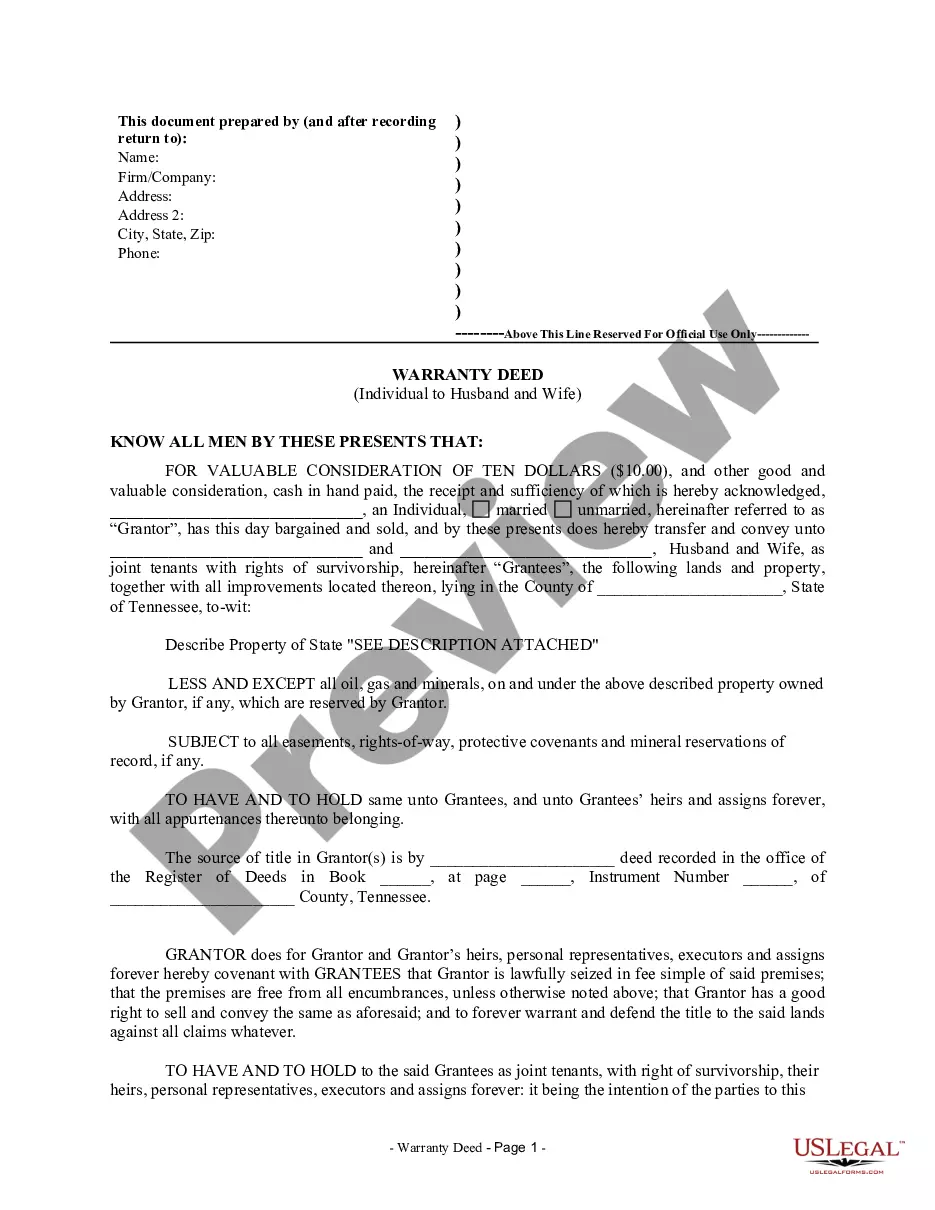
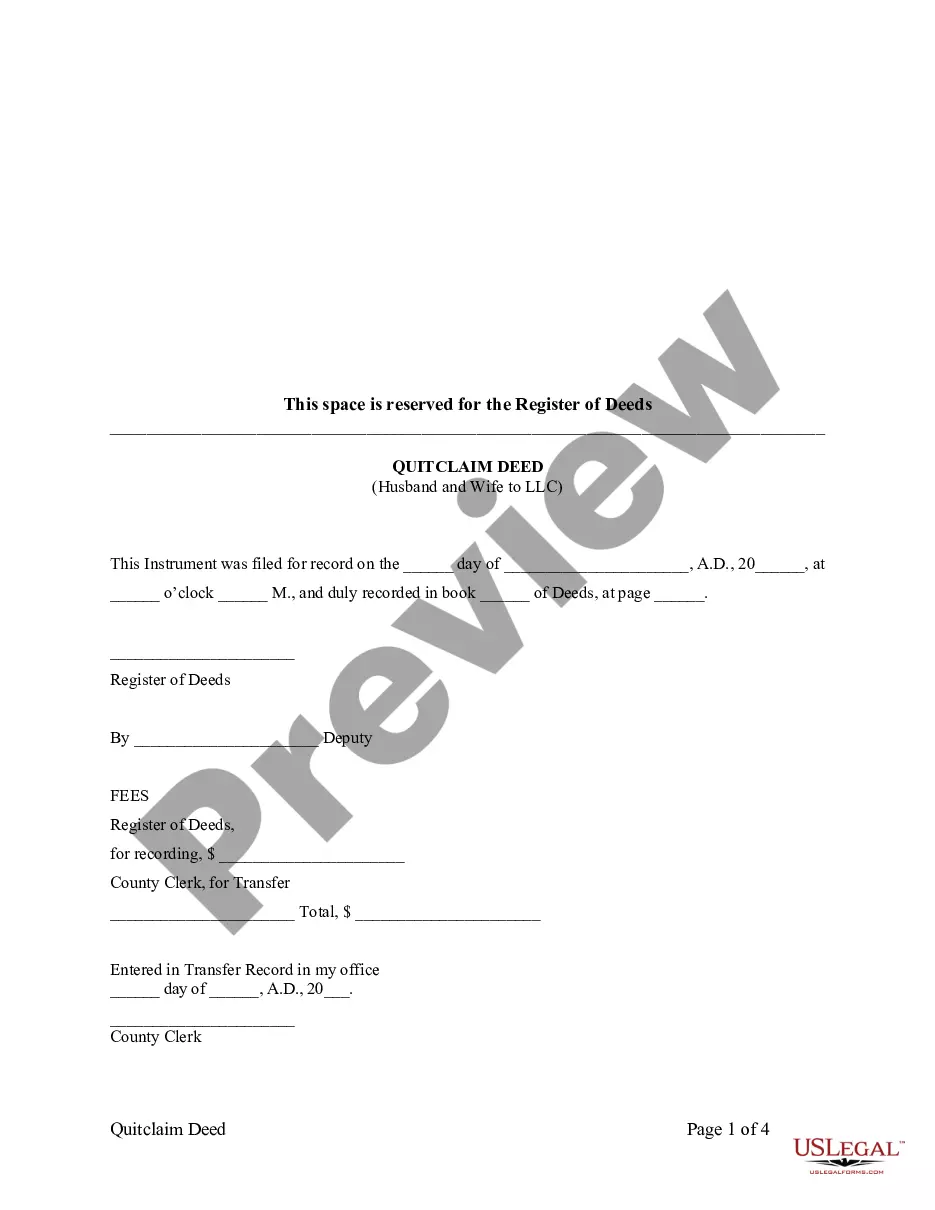
Looking for another form?
Form popularity
FAQ
You may be able to transfer your interest in the property through a quitclaim deed, where you relinquish all ownership of the property to someone else. Your lender may also agree to add another name to the mortgage. In this case, someone else would be able to legally make payments on the mortgage.
In states like California and Florida, the spouses may use a quitclaim deed to transfer the property without warranting title. Other stateslike Texasrecognize a similar type of deed called a deed without warranty.
In order to transfer ownership of the marital home pursuant to a divorce, one spouse is going to need to sign a quitclaim deed, interspousal transfer deed, or a grant deed, in order to convey the title to the property.
But you might be wondering if an owner can transfer a deed to another person without a real estate lawyer. The answer is yes. Parties to a transaction are always free to prepare their own deeds.A quitclaim deed, for example, is far simpler than a warranty deed.
It is also crucial that a spouse know about the loan, even if he or she is not on the mortgage. In general, the spouse must sign a deed of trust, the Truth in Lending and Right to Cancel documents. By signing these documents, they are simply acknowledging the existence of the mortgage.
Fees to File a Quitclaim Deed in New York As of 2018, the basic fee for filing a quitclaim deed of residential or farm property is $125, while the fee for all other property is $250. These fees are for the RP-5217 form.
Two of the most common ways to transfer property in a divorce are through an interspousal transfer deed or quitclaim deed. When spouses own property together, but then one spouse executes an interspousal transfer or a quitclaim deed, this is known as transmutation.
You can gift property to spouse, child or any relative and register the same. Under section 122 of the Transfer of Property Act, 1882, you can transfer immovable property through a gift deed. The deed should contain your details as well as those of the recipient.
Identify the donee or recipient. Discuss terms and conditions with that person. Complete a change of ownership form. Change the title on the deed. Hire a real estate attorney to prepare the deed. Notarize and file the deed.