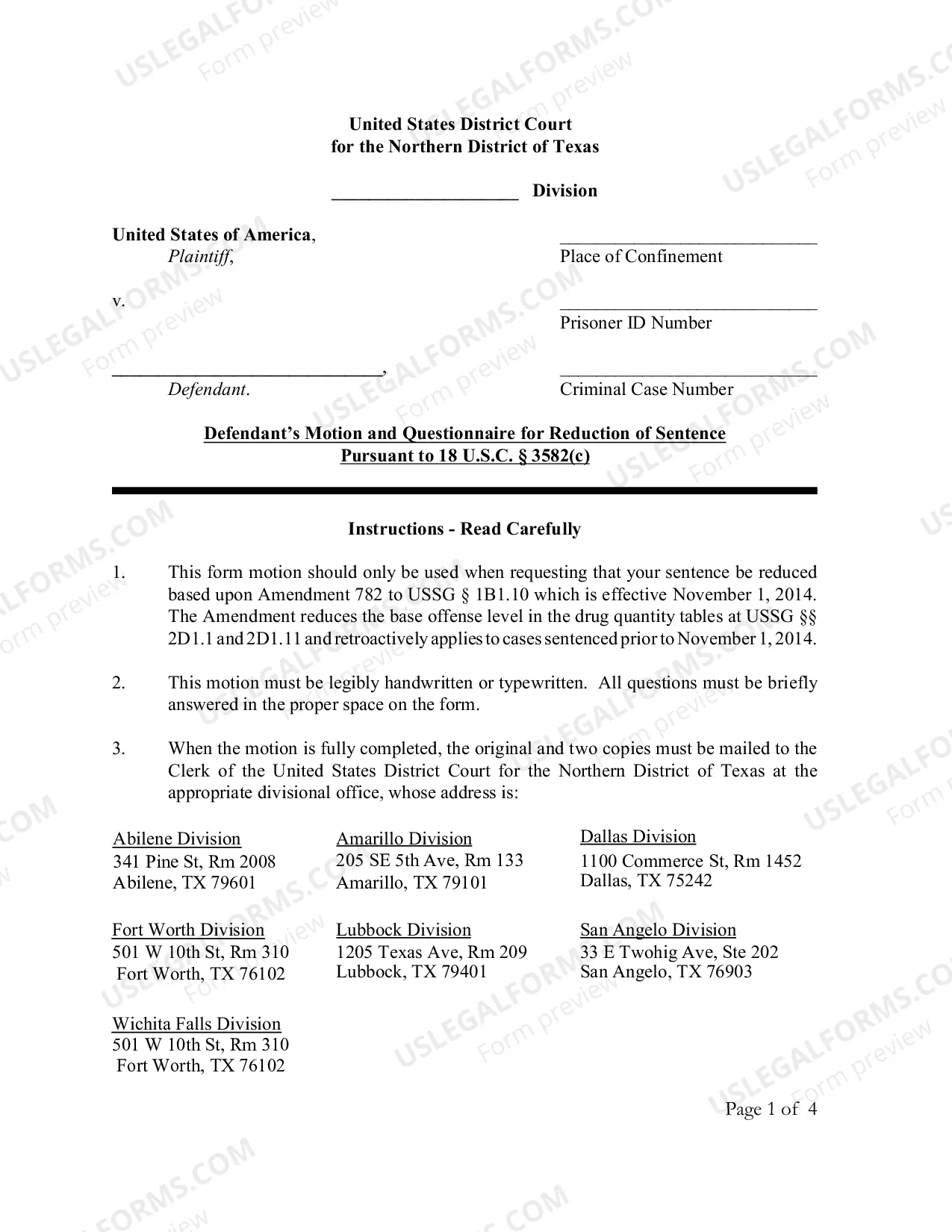
Nevada Letter from Landlord to Tenant for Failure to keep premises as clean and safe as condition of premises permits - Remedy or lease terminates
Overview of this form
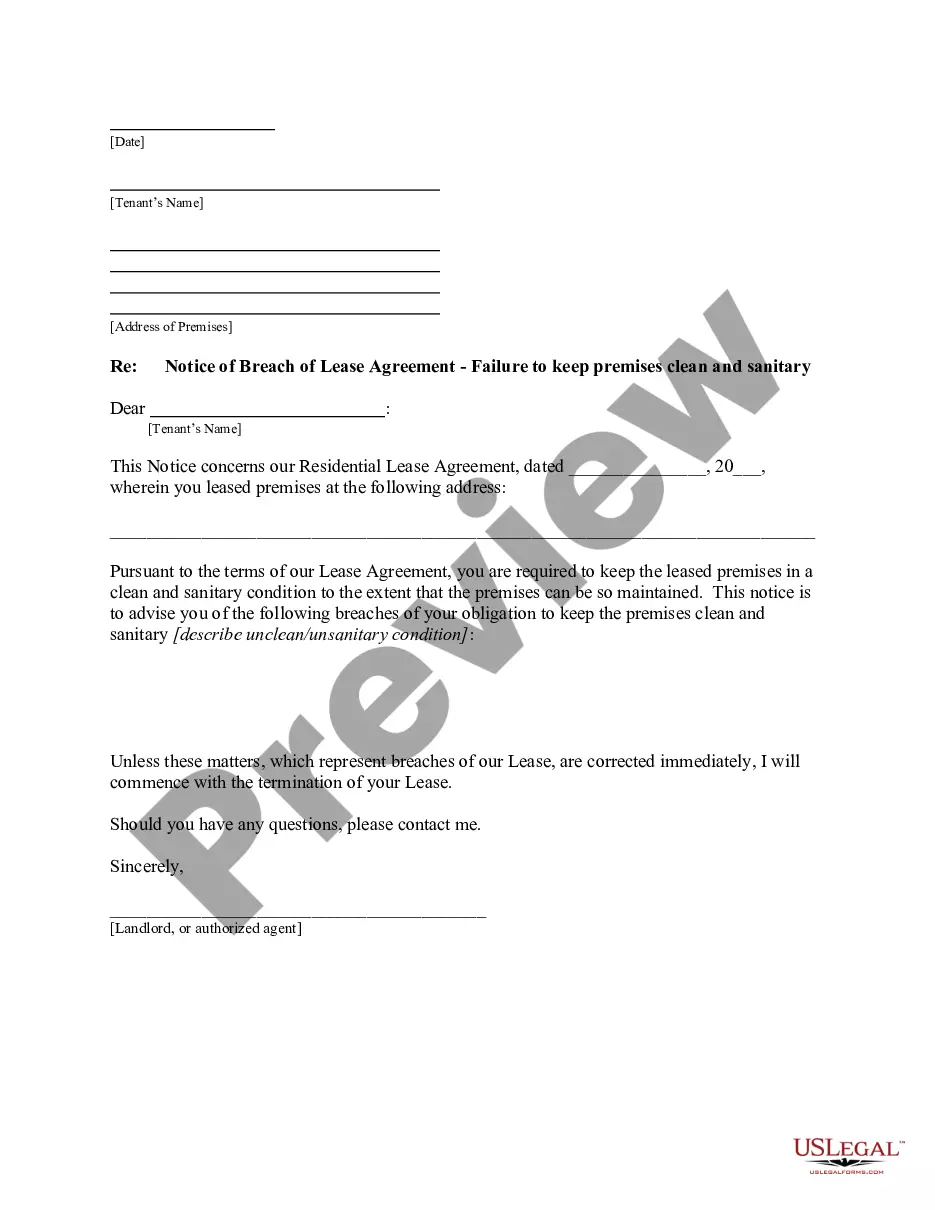
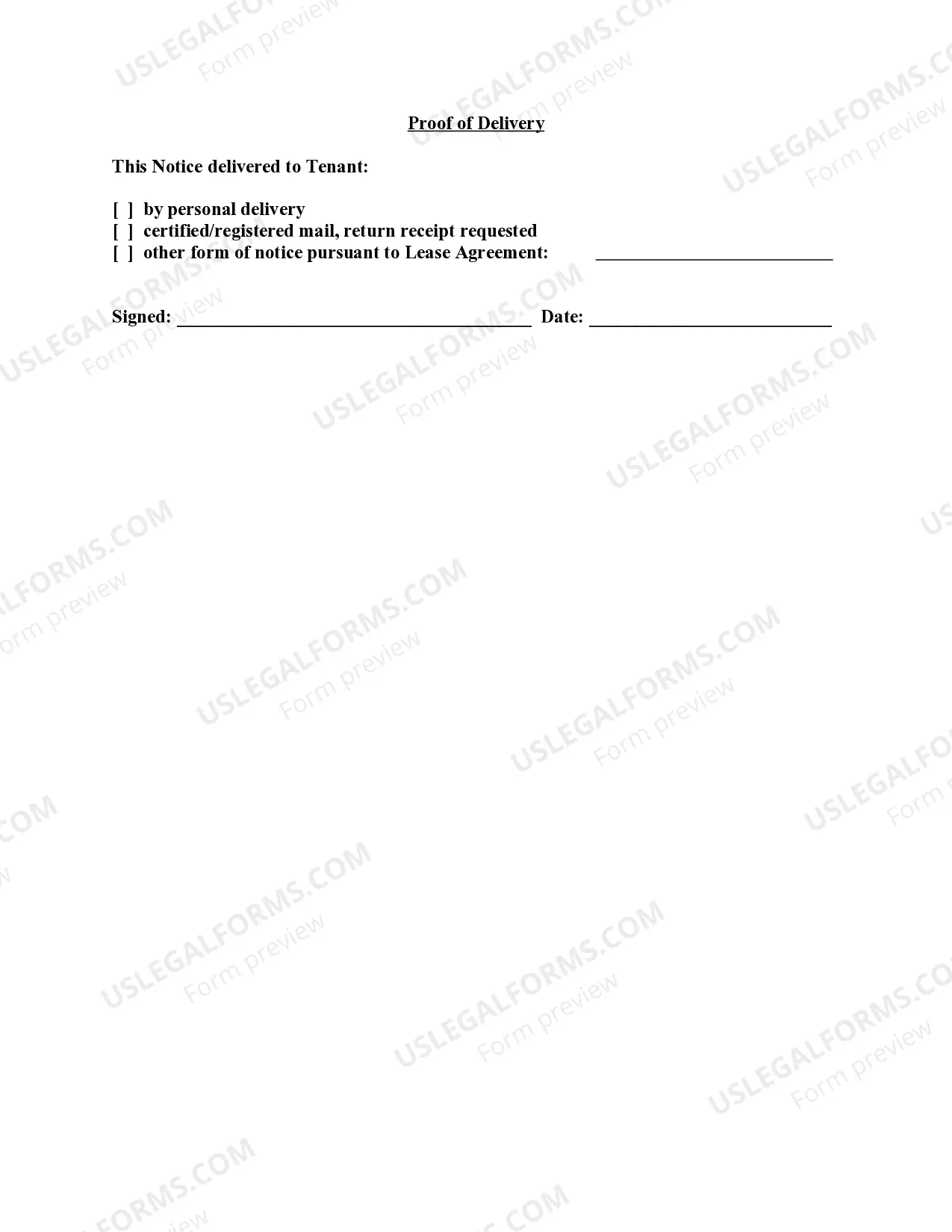
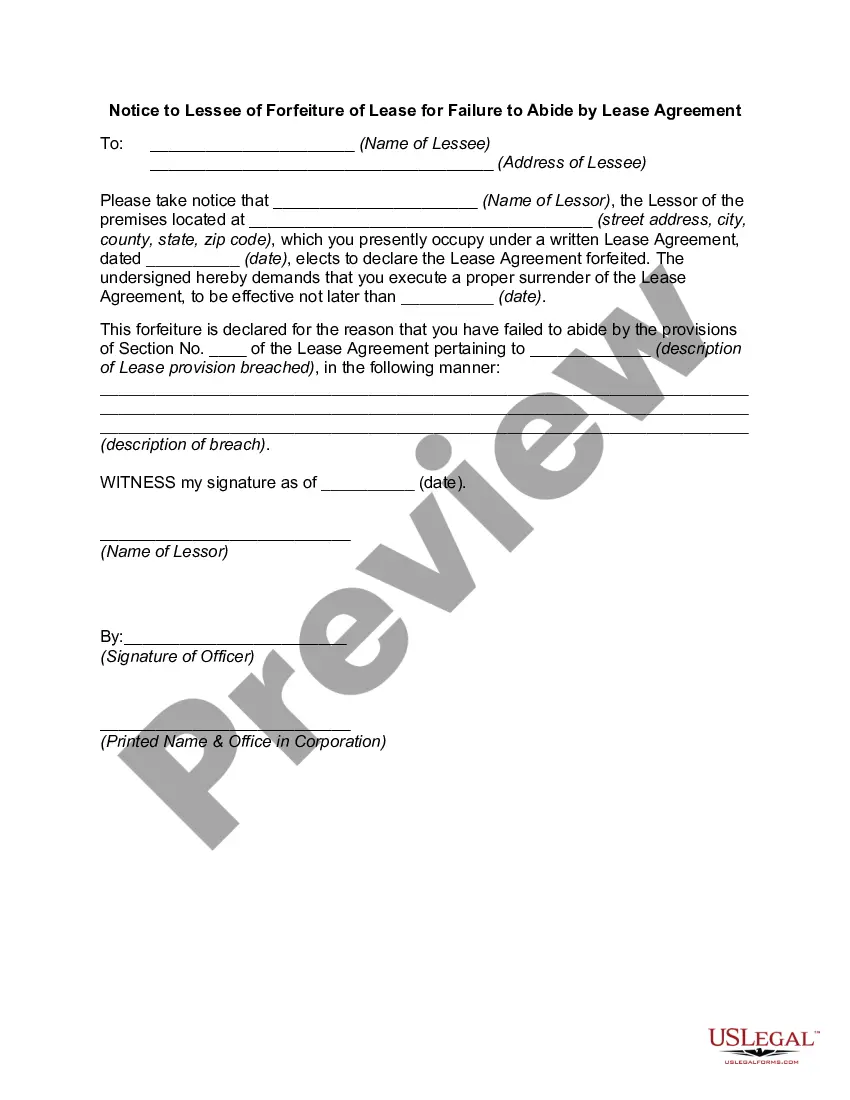
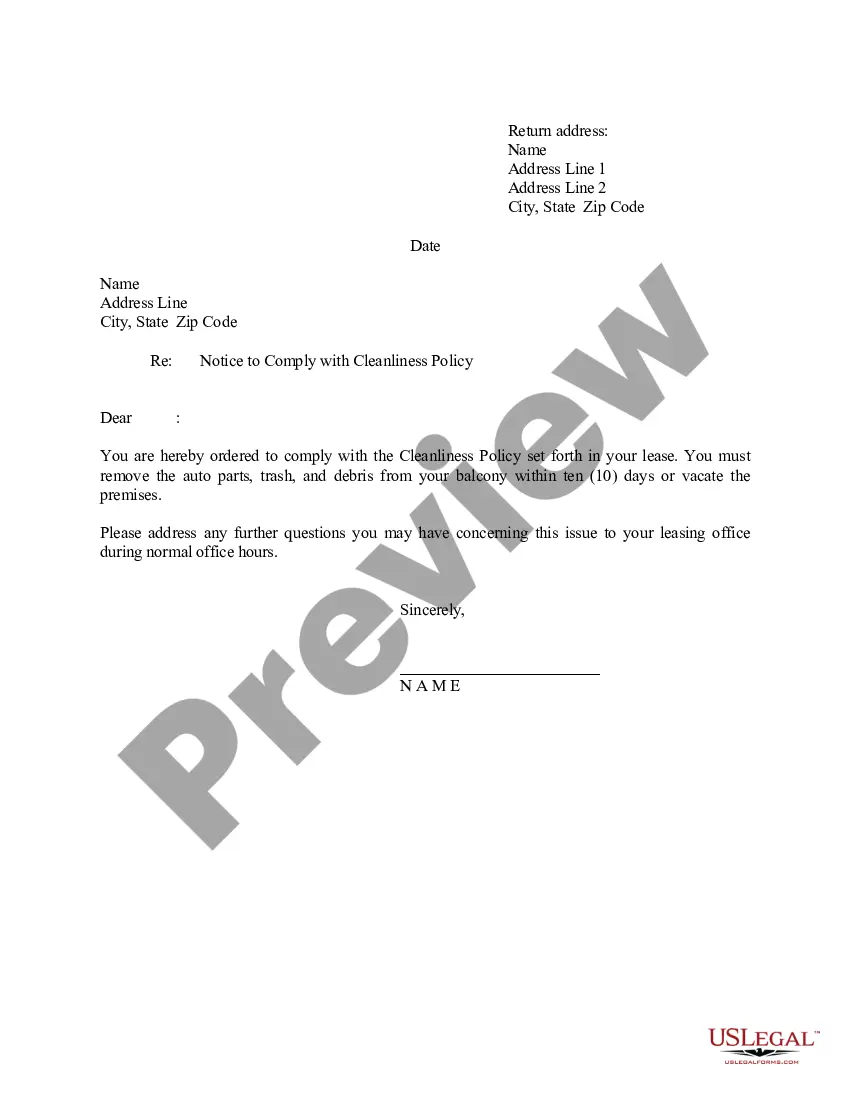
This form is a notice from a landlord to a tenant regarding the tenant's failure to maintain the premises in a clean and sanitary condition. It serves as a formal reminder of the tenant's obligations under the lease agreement and provides details about specific breaches. Unlike general notices, this document specifically addresses cleanliness issues and outlines potential remedies or consequences for the tenant's non-compliance.
Key components of this form
- Identification of the landlord and tenant
- Description of the lease agreement terms related to cleanliness
- Details of the specific unclean or unsanitary conditions observed
- Explanation of the tenant's obligations to maintain the property
- Notice of potential actions, including remedies or lease termination


Common use cases
This form should be used when a landlord identifies that a tenant is not keeping the leased premises clean and safe, as required by the lease. It is appropriate to issue this notice after the landlord has observed unclean or unsanitary conditions that may pose risks to health or safety. Use this form to formally communicate these issues to the tenant, allowing them an opportunity to remedy the situation before taking further action, such as lease termination.
Who should use this form
- Landlords managing residential properties
- Property managers acting on behalf of the landlord
- Tenants who have received such a notice and need to understand their obligations
Completing this form step by step
- Identify the parties involved: fill in the landlord's and tenant's names.
- Specify the property: include the address of the leased premises.
- Describe the unclean and unsanitary conditions noted.
- State the obligations of the tenant as per the lease agreement.
- Detail the actions the landlord may take if the issues are not remedied.
Is notarization required?
This form does not typically require notarization unless specified by local law. It is advised to check state regulations for any specific requirements regarding notice forms.
Get your form ready online
Our built-in tools help you complete, sign, share, and store your documents in one place.
Make edits, fill in missing information, and update formatting in US Legal Forms—just like you would in MS Word.
Download a copy, print it, send it by email, or mail it via USPS—whatever works best for your next step.
Sign and collect signatures with our SignNow integration. Send to multiple recipients, set reminders, and more. Go Premium to unlock E-Sign.
If this form requires notarization, complete it online through a secure video call—no need to meet a notary in person or wait for an appointment.
We protect your documents and personal data by following strict security and privacy standards.

Make edits, fill in missing information, and update formatting in US Legal Forms—just like you would in MS Word.

Download a copy, print it, send it by email, or mail it via USPS—whatever works best for your next step.

Sign and collect signatures with our SignNow integration. Send to multiple recipients, set reminders, and more. Go Premium to unlock E-Sign.

If this form requires notarization, complete it online through a secure video call—no need to meet a notary in person or wait for an appointment.

We protect your documents and personal data by following strict security and privacy standards.
Avoid these common issues
- Failing to provide specific details about the unclean conditions.
- Not sending the notice with sufficient time for tenant response.
- Neglecting to follow state-specific requirements for tenant notifications.
Advantages of online completion
- Convenience of immediate download and customization.
- Editability allows landlords to specify conditions easily.
- Reliability of templates drafted by licensed attorneys.
Legal use & context
- This letter serves as evidence of the landlord addressing tenant maintenance obligations.
- Failure to use this form appropriately may affect the landlord's ability to enforce lease terms.
- Local laws may dictate specific procedures for notice and lease termination, which should be researched.
Summary of main points
- This form is essential for notifying tenants of cleanliness issues in a legally sound manner.
- It provides landlords with a clear path to remedy or potential lease termination.
- Understanding and following the specific state requirements is crucial for enforceability.
Looking for another form?



Form popularity
FAQ
Nevada Revised Statutes require a seven-day notice to the tenant, instructing the tenant to either pay the rent or "quit" (leave) the rental property. To evict a tenant for nonpayment of rent, the landlord must "serve" (deliver) a Seven-Day Notice to Pay Rent or Quit to the tenant.
State law regulates several rent-related issues, including late and bounced-check fees, the amount of notice (at least 45 days in Nevada) landlords must give tenants to raise the rent, and how much time (five days in Nevada) a tenant has to pay overdue rent or move before a landlord can file for eviction.
Nevada was named the 11th most renter-friendly state in America in the study that looked at landlord-tenant laws in all 50 states and Washington, D.C. The study did not consider rent prices, but instead examined laws that regulate renting terms such as security deposits, rent increases, warranty of habitability, repair
No Cause Notices Under Nevada law, NRS 40.251, the landlord can serve a No Cause Eviction Notice after your lease has expired. This Notice does not have to provide you with any reason for the eviction. If you rent by the week, the landlord must serve a 7 day notice.
Under Nevada law, a landlord must return the tenant's security deposit within 30 days after the tenant has moved out.
In Colorado, evictions are sometimes referred to as forcible entry & detainer (FED). Before you can file for eviction, you must generally provide 10 days' notice (increased from 3 days prior) for tenants to correct a deficiency or leave the property, except in certain circumstances.
Indiana. Indiana laws allow landlords to hold on to security deposits for 45 days to give them time to determine any damages caused by tenants. Colorado. Colorado is one of few states that allow landlords to access the rental property without an advance notice requirement. Georgia.
A no-cause eviction is when a tenant hasn't done anything wrong and the landlord does not want to renew a lease. A landlord cannot use a no-cause eviction before a lease is up. Currently, property owners have to give tenants a 30-days notice for normal renters.