Nevada Notice of Default for Past Due Payments in connection with Contract for Deed
What is this form?
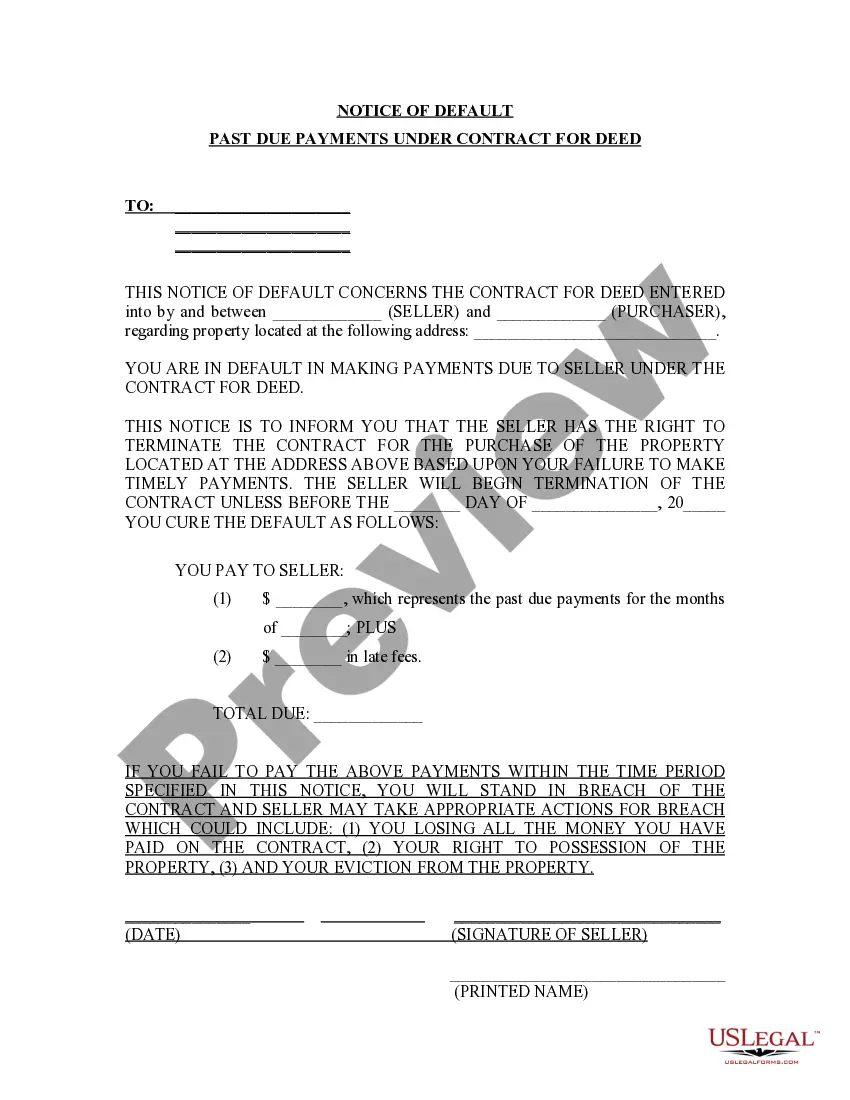
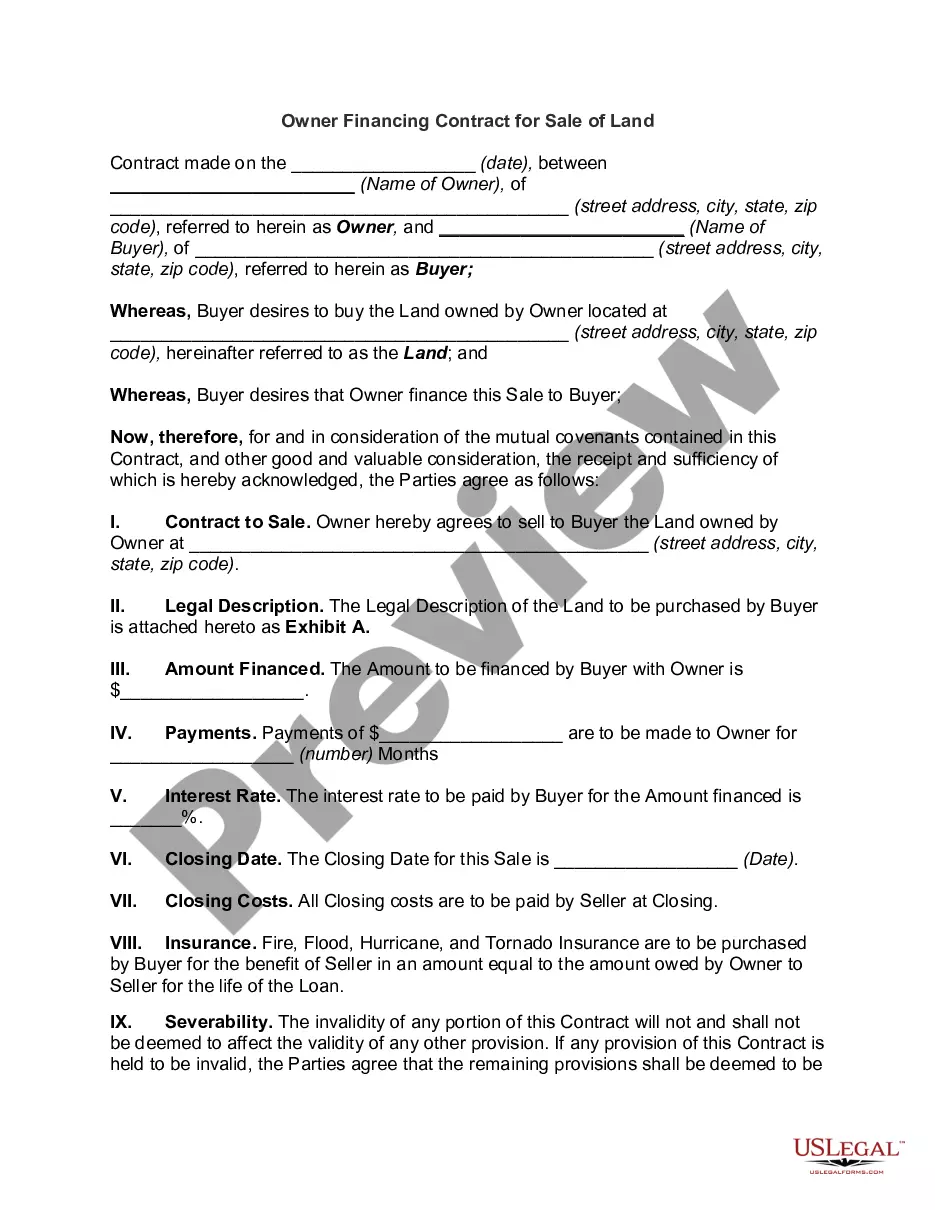
The Notice of Default for Past Due Payments in connection with Contract for Deed serves as an initial notification from the Seller to the Purchaser regarding late payment under a contract for deed. This form is crucial for formally alerting the Purchaser that they have not met the payment terms outlined in the contract. If the Purchaser fails to respond or rectify the payment issue, it may lead to a default on the contract.
Main sections of this form
- Identification of the parties involved: Seller and Purchaser
- Description of the property tied to the contract for deed
- Details of the past due payment including amounts and due dates
- Specific demands for payment and timeframes for compliance
- Consequences of noncompliance, potentially leading to default
When to use this document
You should use the Notice of Default for Past Due Payments when a payment under a contract for deed is late, and you need to formally notify the Purchaser of their missed obligations. This form is essential for maintaining proper legal documentation before taking further actions, such as initiating a potential foreclosure or other legal remedies.
Who this form is for
- Sellers who have entered into a contract for deed
- Purchasers who have missed a payment under said contract
- Real estate professionals assisting clients with contract for deed transactions
How to complete this form
- Identify the parties involved, including full names and addresses of both Seller and Purchaser.
- Provide a detailed description of the property that is the subject of the contract for deed.
- Clearly state the amount of payment due and the specific dates these payments were missed.
- Outline the demands for payment, including the deadline for the Purchaser to respond.
- Add a warning about the consequences of failing to respond or remedy the default, which could lead to the cancellation of the contract.
Notarization guidance
To make this form legally binding, it must be notarized. Our online notarization service, powered by Notarize, lets you verify and sign documents remotely through an encrypted video session.
Get your form ready online
Our built-in tools help you complete, sign, share, and store your documents in one place.
Make edits, fill in missing information, and update formatting in US Legal Forms—just like you would in MS Word.
Download a copy, print it, send it by email, or mail it via USPS—whatever works best for your next step.
Sign and collect signatures with our SignNow integration. Send to multiple recipients, set reminders, and more. Go Premium to unlock E-Sign.
If this form requires notarization, complete it online through a secure video call—no need to meet a notary in person or wait for an appointment.
We protect your documents and personal data by following strict security and privacy standards.

Make edits, fill in missing information, and update formatting in US Legal Forms—just like you would in MS Word.

Download a copy, print it, send it by email, or mail it via USPS—whatever works best for your next step.

Sign and collect signatures with our SignNow integration. Send to multiple recipients, set reminders, and more. Go Premium to unlock E-Sign.

If this form requires notarization, complete it online through a secure video call—no need to meet a notary in person or wait for an appointment.

We protect your documents and personal data by following strict security and privacy standards.
Mistakes to watch out for
- Failing to properly identify all parties involved.
- Not including specific payment details or dates.
- Omitting the consequences of not complying with the notice.
- Using vague language that may lead to confusion about obligations.
Why use this form online
- Convenience of downloading and completing the form at your own pace.
- Editability allows for adjustments to fit your specific situation.
- Reliability of forms drafted by licensed attorneys ensures legal compliance.
Legal use & context
- This notice is an important part of the legal process in enforcing payment terms under a contract for deed.
- A properly completed form can serve as evidence in legal proceedings if the default escalates.
- Timely issuance of this notice can protect the Seller's rights under the law.
Summary of main points
- The Notice of Default is essential for notifying the Purchaser of their payment failures.
- Follow the detailed steps to complete the form accurately and effectively.
- Understanding state-specific requirements is crucial for proper legal action.
Looking for another form?

Form popularity
FAQ
A contract for deed, also called a land contract or contract for sale, is a financing option for buyers who do not qualify for a mortgage loan to purchase property. In a contract for deed, the seller finances the purchase of the property, much like a mortgage company in a more traditional mortgage situation.
Should I record the contract? The seller must record the contract or a memorandum of the contract within 10 days of the date of sale. They must do this at the county recorder of deeds where the property is located.
In the first instance, if your deed is not recorded, there is nothing in the public record to stop the seller from conveying the property to another person.The second situation could happen if your seller fails to pay his or her debts and the seller's creditors file liens or judgments against your property.
Usually the contract requires the buyer to make payments over time with interest payable on the unpaid balance. Once a buyer pays all of the payments called for under the contract, the owner transfers to the buyer a deed to the property.
A disadvantage to the seller is that a contract for deed is frequently characterized by a low down payment and the purchase price is paid in installments instead of one lump sum.The legal fees and time frame for this process will be more extensive than a standard Power of Sale foreclosure.
A real estate deal can take a turn for the worst if the contract is not carefully written to include all the legal stipulations for both the buyer and seller.You can write your own real estate purchase agreement without paying any money as long as you include certain specifics about your home.
Contract for Deed Seller Financing. A contract for deed is used by some sellers who finance the sale of their homes. Seller's Ownership Liability. Buyer Default Risk. Seller Performance. Property Liens Could Hinder Purchase.
A contract for deed is an agreement for buying property without going to a mortgage lender. The buyer agrees to pay the seller monthly payments, and the deed is turned over to the buyer when all payments have been made.
A contract for deed is a legal agreement for the sale of property in which a buyer takes possession and makes payments directly to the seller, but the seller holds the title until the full payment is made.