New Mexico Last Will and Testament for Married person with Minor Children from Prior Marriage
Overview of this form
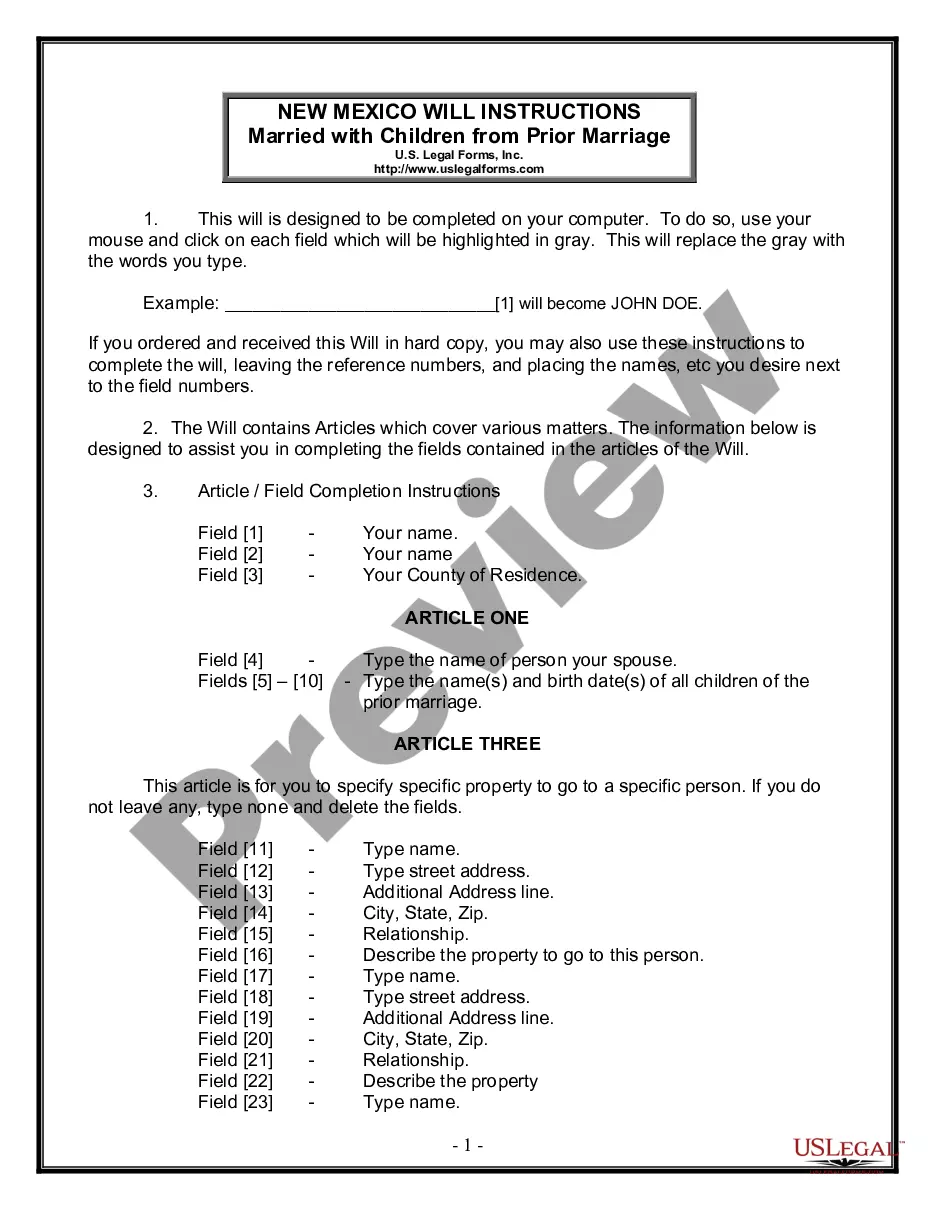
The Last Will and Testament for Married Person with Minor Children from Prior Marriage is a legal document that allows a married individual with children from a previous relationship to specify how their assets should be distributed after their death. This form is tailored to outline the appointment of an executor, the distribution of property, and the care of minor children, ensuring that the individual's wishes are clearly documented and legally binding.
Main sections of this form
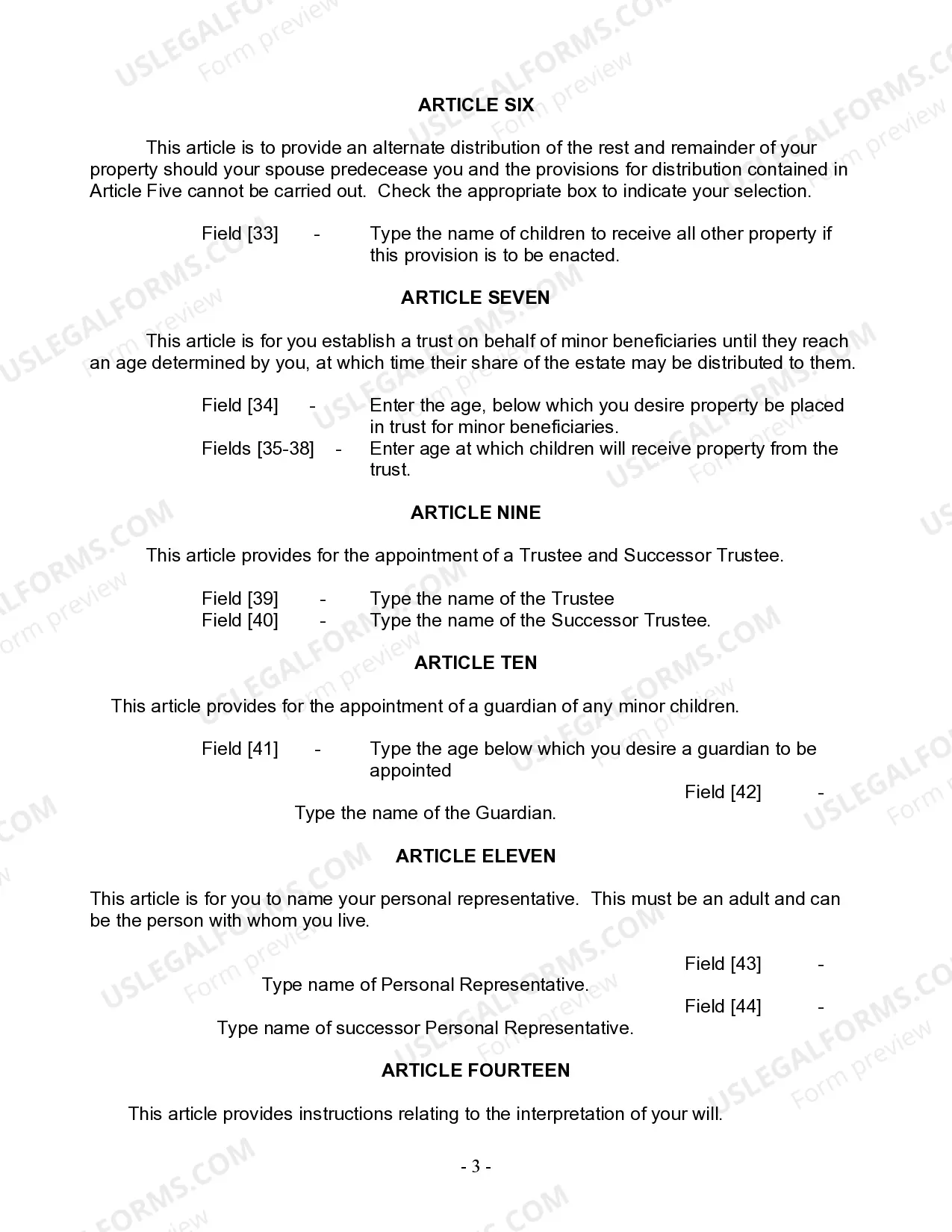
- Appointment of Personal Representative: Designates an executor to manage the estate.
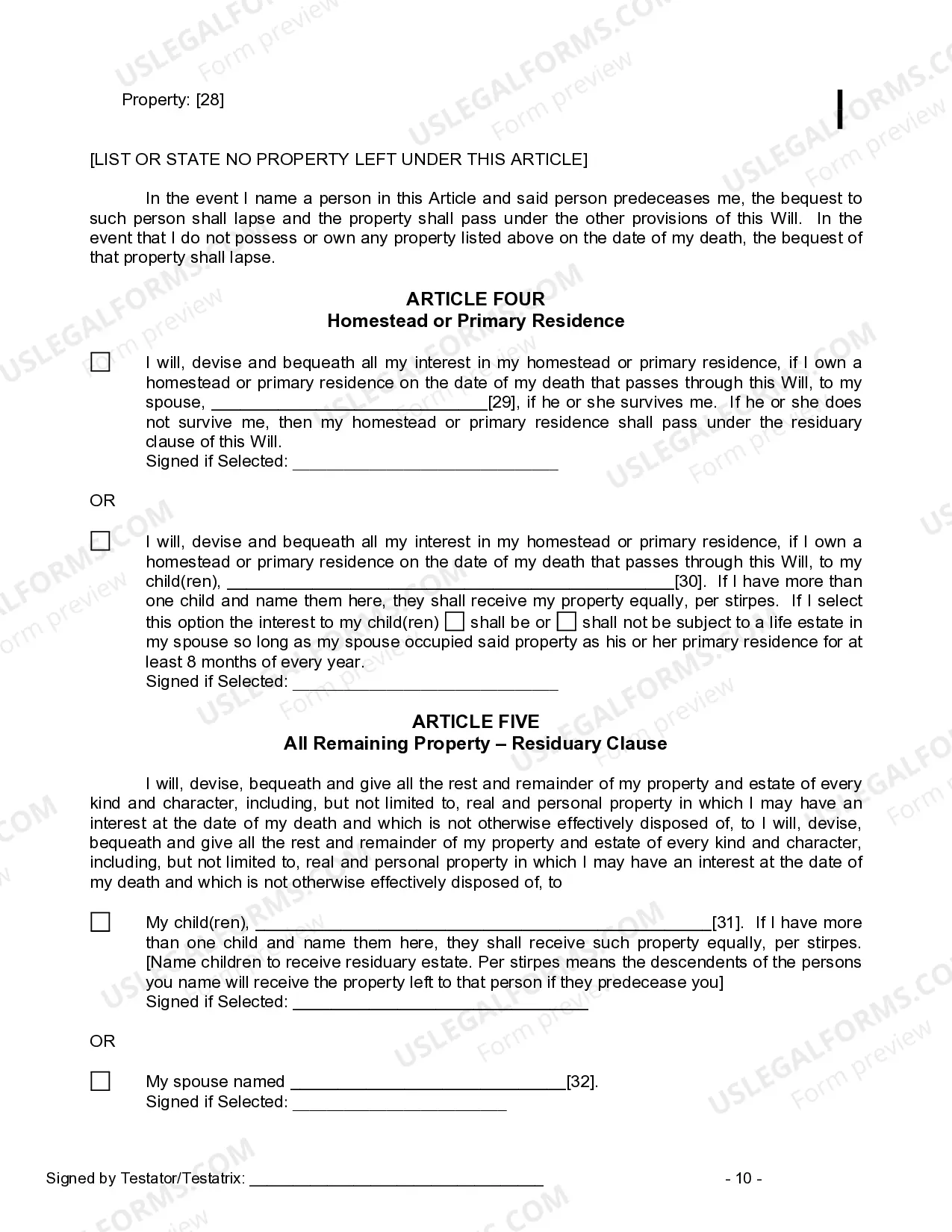
- Distribution of Property: Specifies who will inherit assets, including specific bequests.
- Trustee Appointment: Establishes a trustee to manage assets for minor children.
- Provisions for Debts and Expenses: Directs payment of funeral and other required expenses.
- Guardian Designation: Appoints a guardian for minor children if needed.








Situations where this form applies
This form is essential for married individuals who have minor children from a previous marriage. It is useful in situations regarding estate planning, particularly when there are concerns about the distribution of assets and the well-being of children. If you want to ensure that your assets are passed on according to your wishes and that your minor children are cared for in your absence, this will is necessary.
Intended users of this form
- Married individuals with minor children from prior marriages.
- Anyone looking to define how their estate will be managed and distributed after death.
- Individuals wanting to appoint guardians for their minor children.
- People who wish to clarify provisions for a spouse and children regarding property and assets.
Steps to complete this form
- Enter your full name and address at the beginning of the will.
- List your spouse's name and any children from prior relationships.
- Specify how you want your debts and final expenses to be handled.
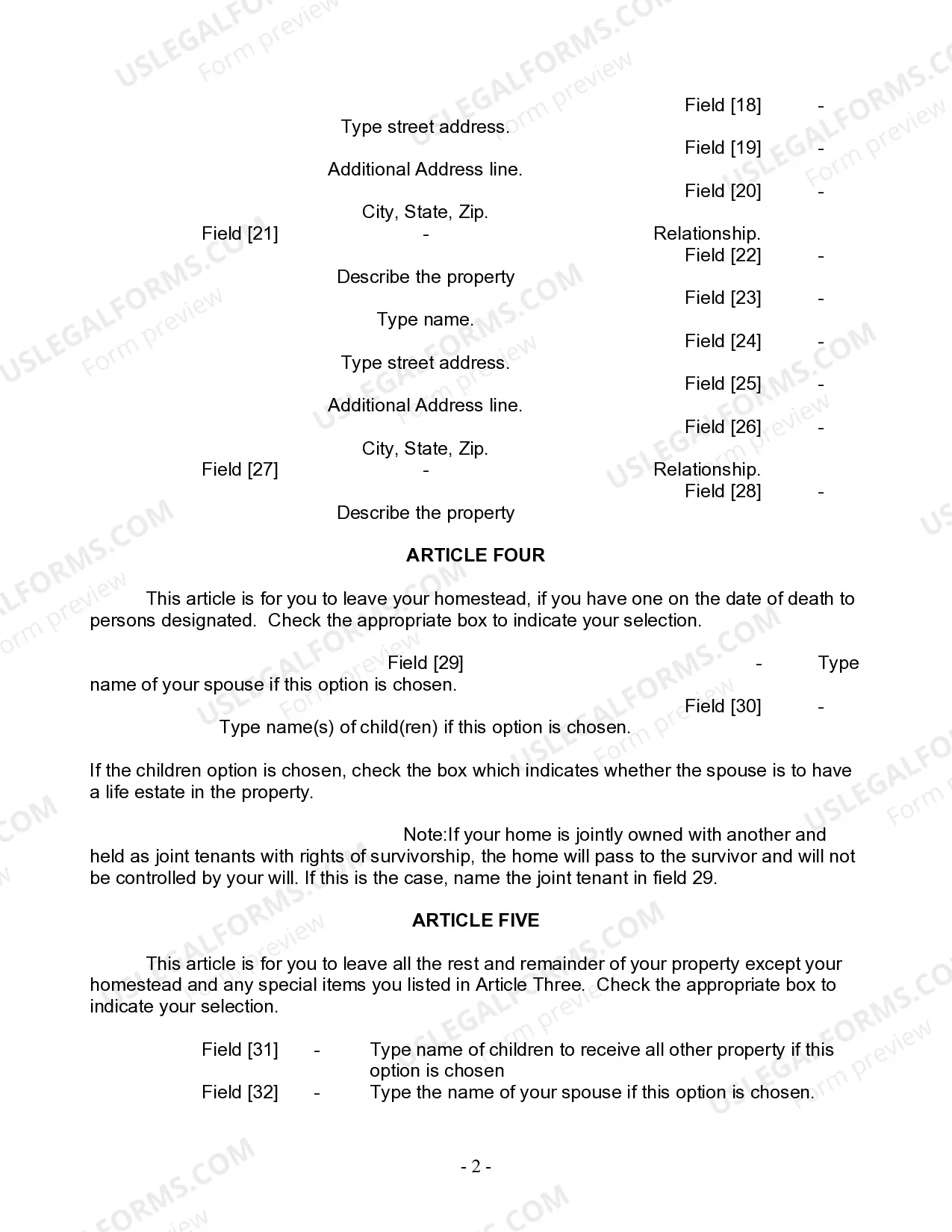
- Designate who will inherit specific property or assets.
- Appoint a guardian for your minor children and a trustee if needed.
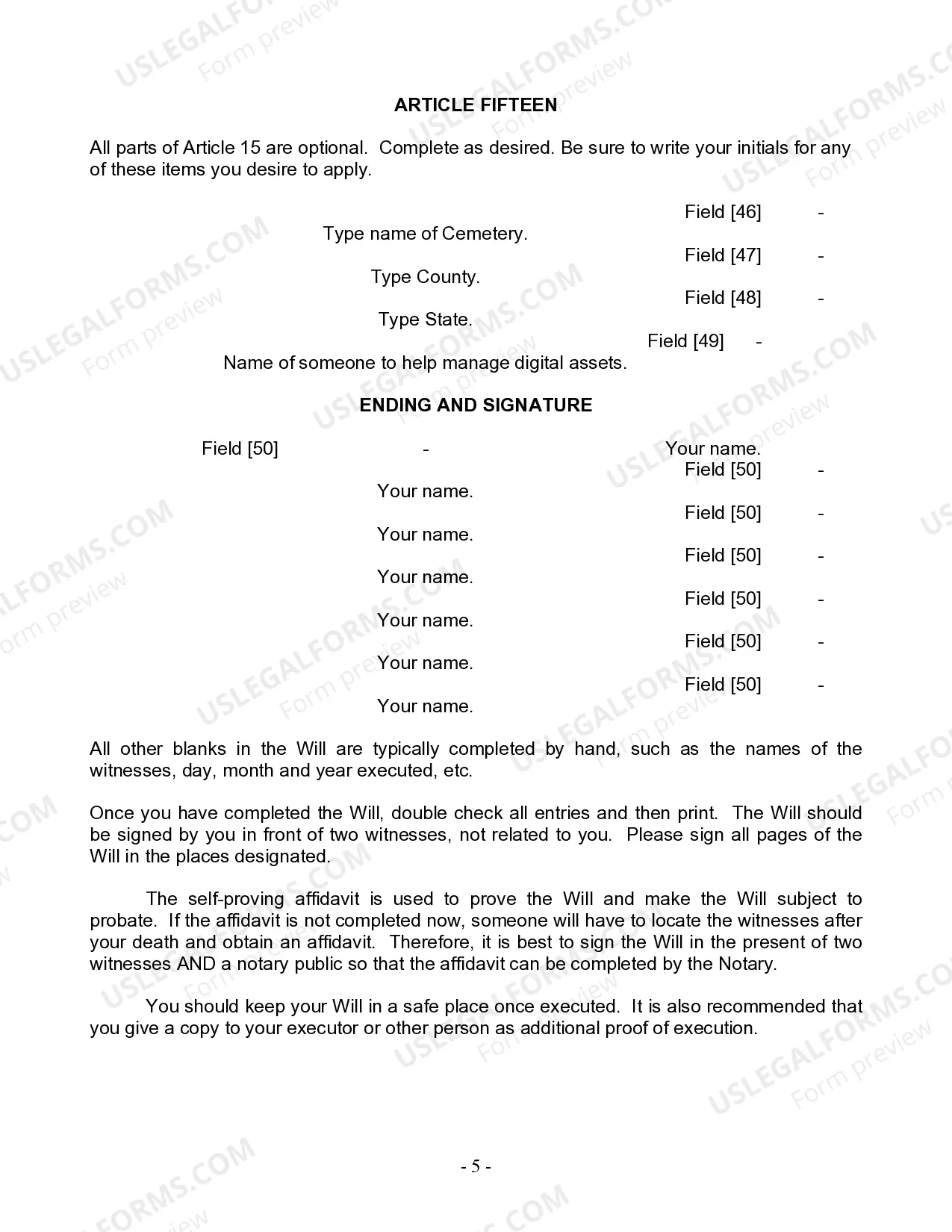
- Sign the document in the presence of two witnesses and a notary public if required.
Notarization requirements for this form
Yes, this form must be notarized to be legally valid. Notarization helps verify the authenticity of the signatures and ensures the will is executed according to state laws. US Legal Forms provides integrated online notarization, allowing you to complete this step securely through a video call.
Get your form ready online
Our built-in tools help you complete, sign, share, and store your documents in one place.
Make edits, fill in missing information, and update formatting in US Legal Forms—just like you would in MS Word.
Download a copy, print it, send it by email, or mail it via USPS—whatever works best for your next step.
Sign and collect signatures with our SignNow integration. Send to multiple recipients, set reminders, and more. Go Premium to unlock E-Sign.
If this form requires notarization, complete it online through a secure video call—no need to meet a notary in person or wait for an appointment.
We protect your documents and personal data by following strict security and privacy standards.

Make edits, fill in missing information, and update formatting in US Legal Forms—just like you would in MS Word.

Download a copy, print it, send it by email, or mail it via USPS—whatever works best for your next step.

Sign and collect signatures with our SignNow integration. Send to multiple recipients, set reminders, and more. Go Premium to unlock E-Sign.

If this form requires notarization, complete it online through a secure video call—no need to meet a notary in person or wait for an appointment.

We protect your documents and personal data by following strict security and privacy standards.
Common mistakes
- Failing to have the will signed by two credible witnesses.
- Not including a self-proving affidavit where required by state law.
- Omitting important information about family relationships or assets.
- Not specifying alternate beneficiaries in case the primary ones predecease the testator.
Why complete this form online
- Convenient access to legal templates tailored for specific needs.
- Edit and customize the document easily from any device.
- Reliable and legally vetted forms drafted by licensed attorneys.
What to keep in mind
- This will is specifically for married individuals with minor children from prior marriages.
- Ensure to follow state laws regarding witnesses and notarization.
- Customize the form to reflect your wishes regarding asset distribution and guardianship.
- A properly executed will can provide peace of mind and clarity for your family during difficult times.
Looking for another form?
Form popularity
FAQ
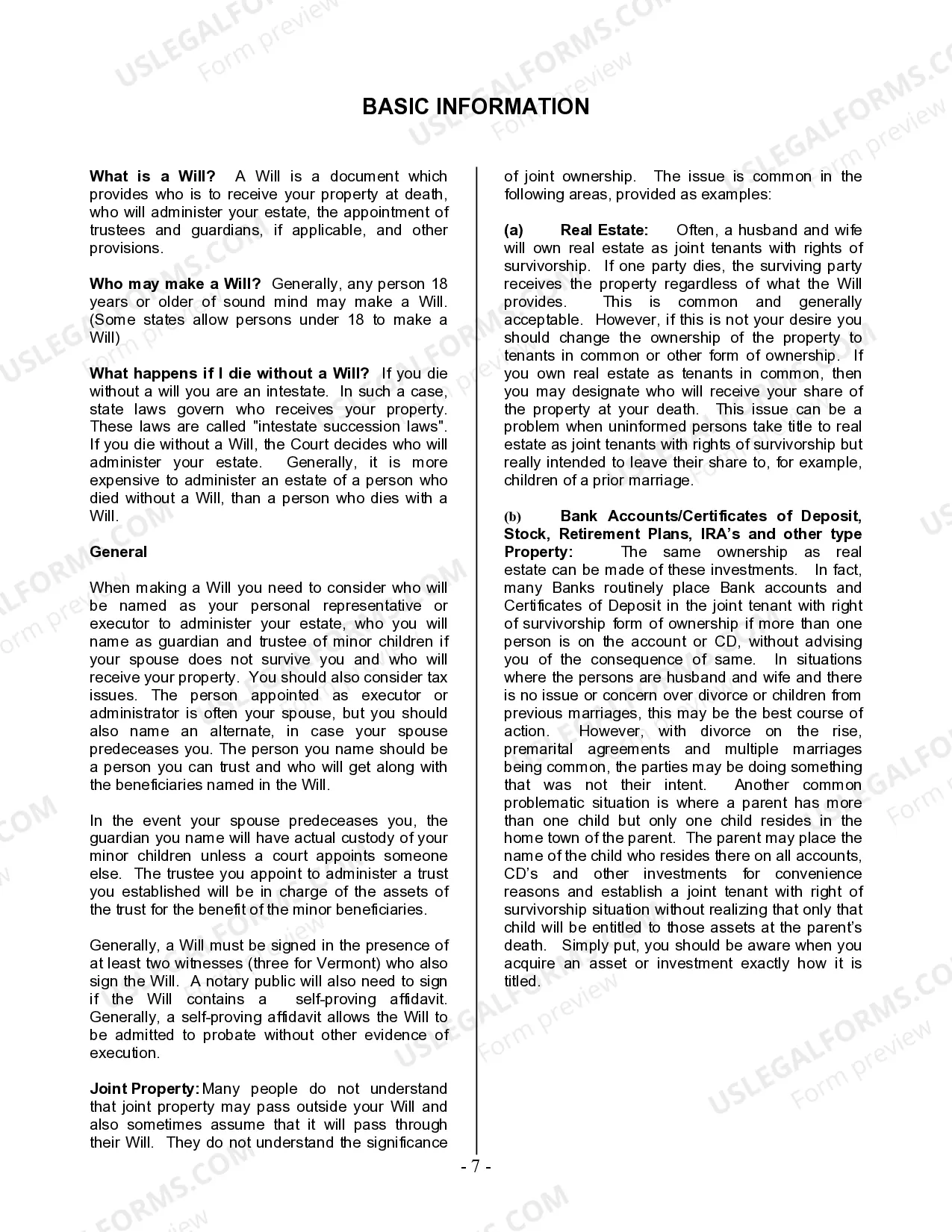
No, in New Mexico, you do not need to notarize your will to make it legal. However, New Mexico allows you to make your will "self-proving" and you'll need to go to a notary if you want to do that. A self-proving will speeds up probate because the court can accept the will without contacting the witnesses who signed it.
A handwritten will can be used in New Mexico, but only if it comports with other statutory requirements to create a valid will. Some states also require that the will be dated.
The will must be administered through probate once the will has been submitted. Probate also is necessary if a person dies without a will or a living trust. In this situation, the assets of the decedent are distributed based on a priority established under New Mexico intestate succession law.
To make a will self-proved in New Mexico, the testator and witnesses must sign a self proving affidavit before a notary public. An affidavit is a sworn statement, and a notary public is an officer of the court. Therefore, an affidavit before a notary public is like making a statement in court.
Age: The testator must be at least 18 years old. Capacity: The testator must be of sound mind. Signature: The will must be signed by the testator or by someone else in the testator's name in his conscious presence, by his direction.