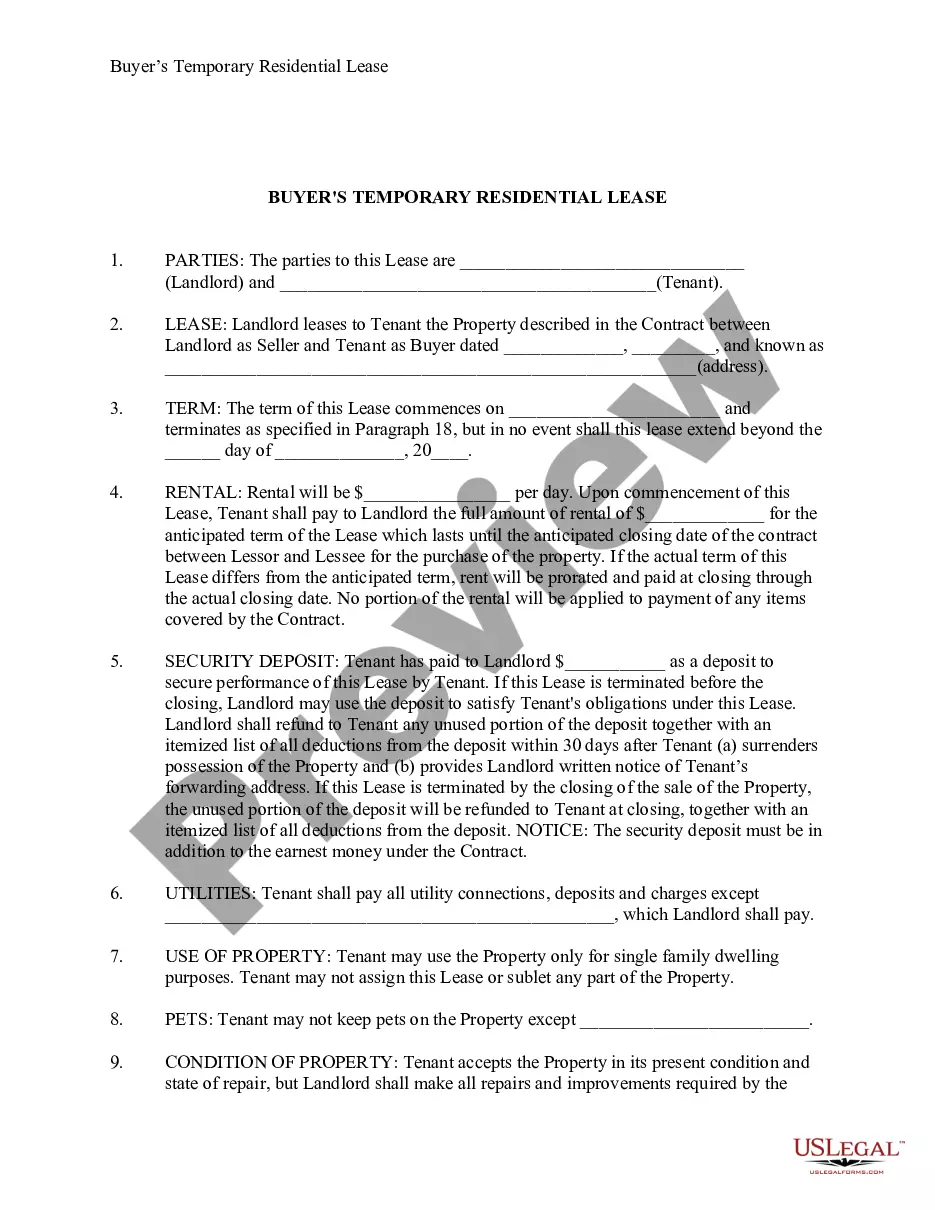
New Jersey Mutual Wills Package with Last Wills and Testaments for Married Couple with Minor Children
What is this form?
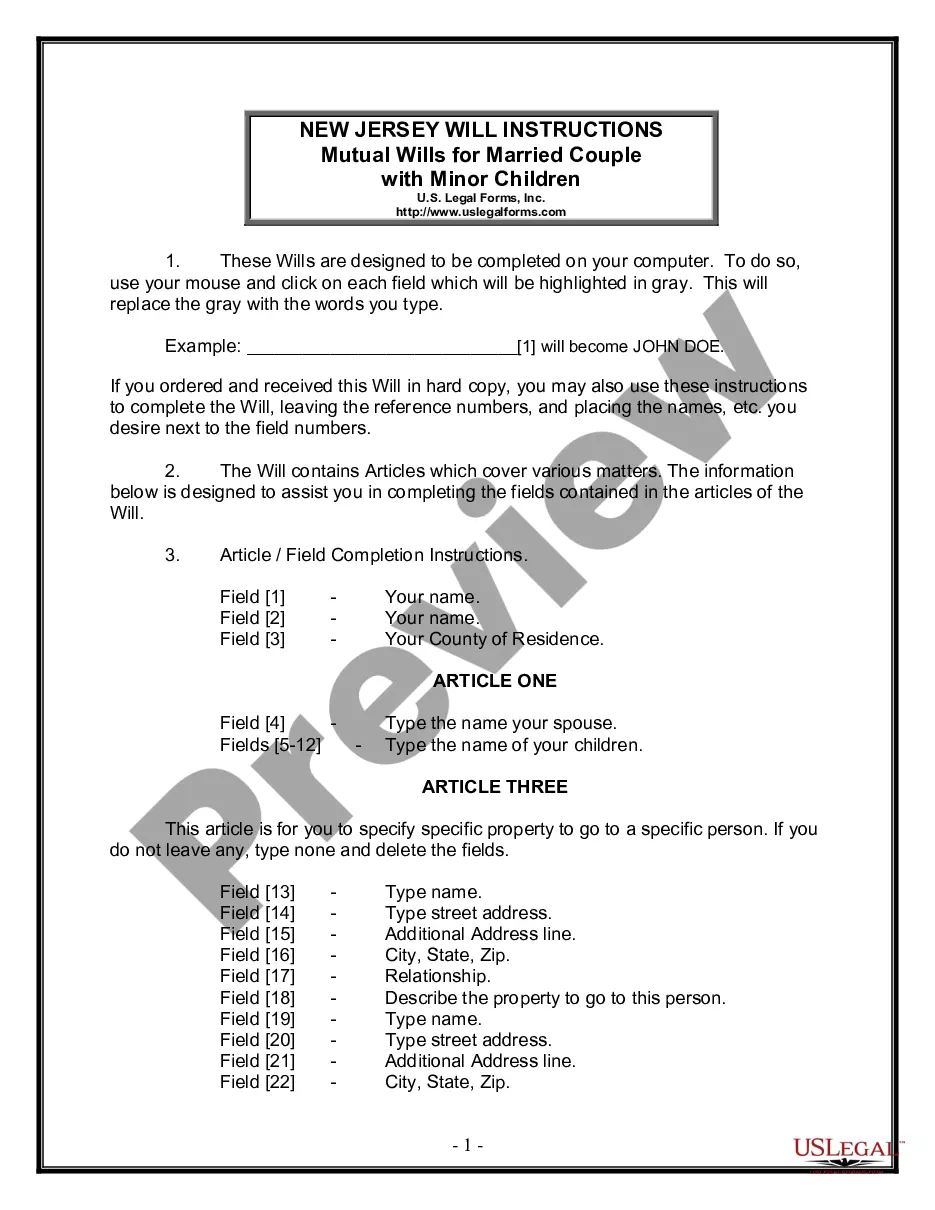
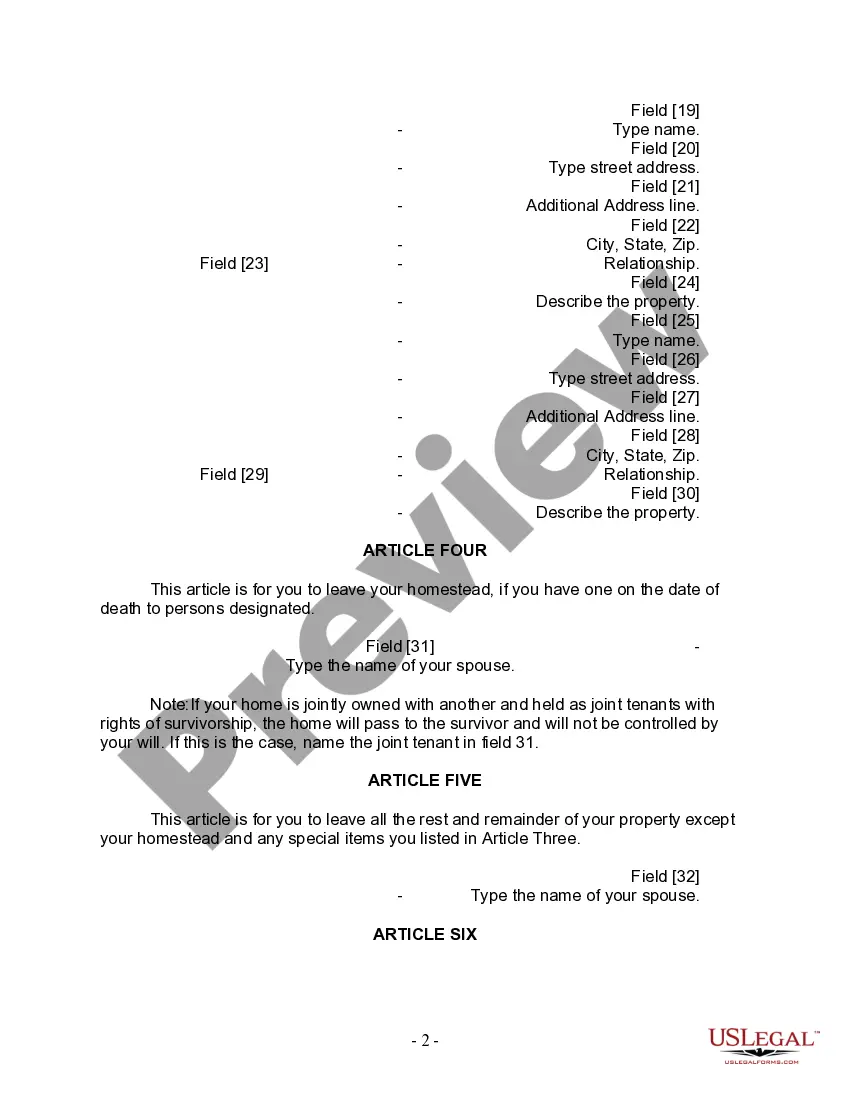
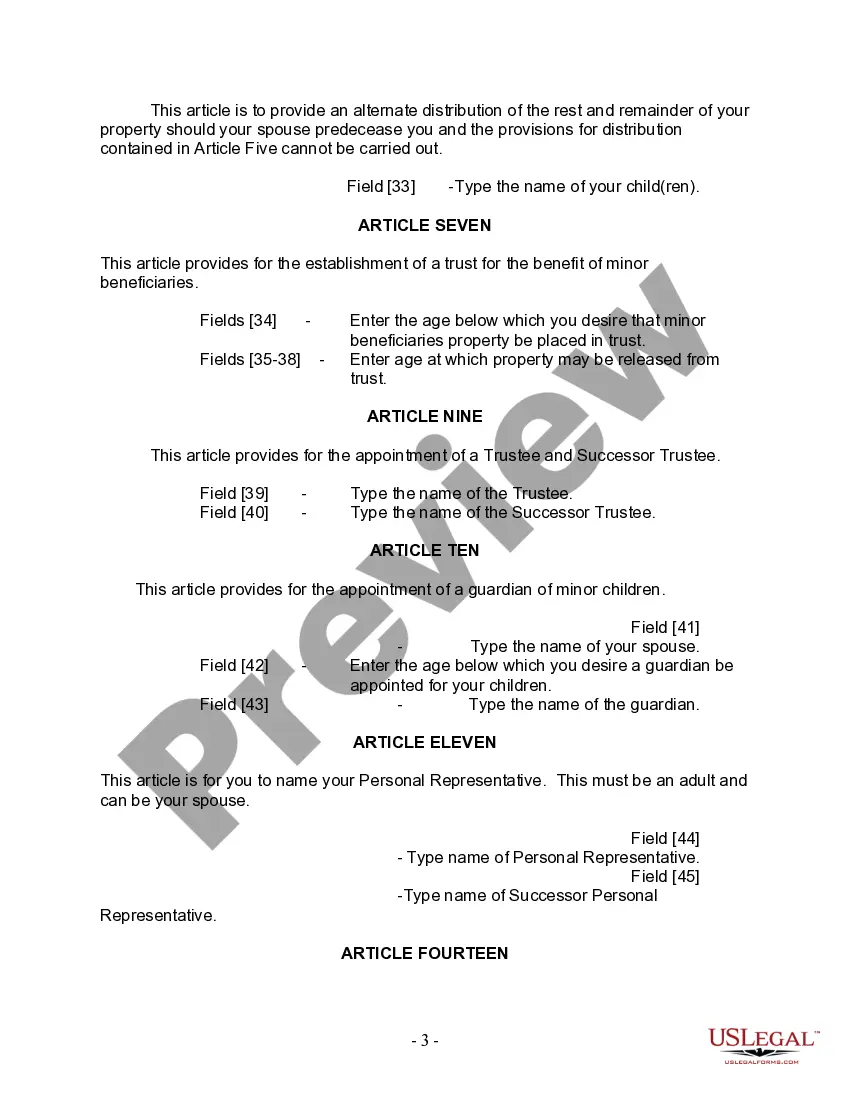
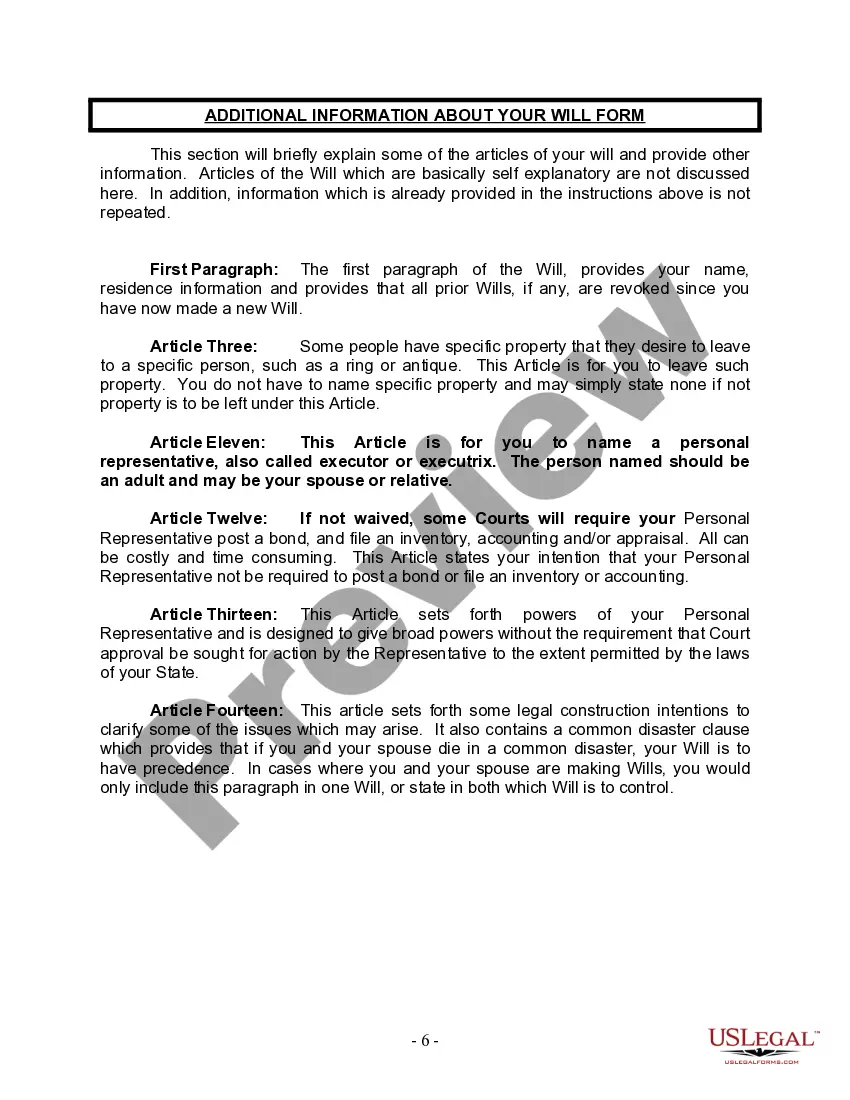
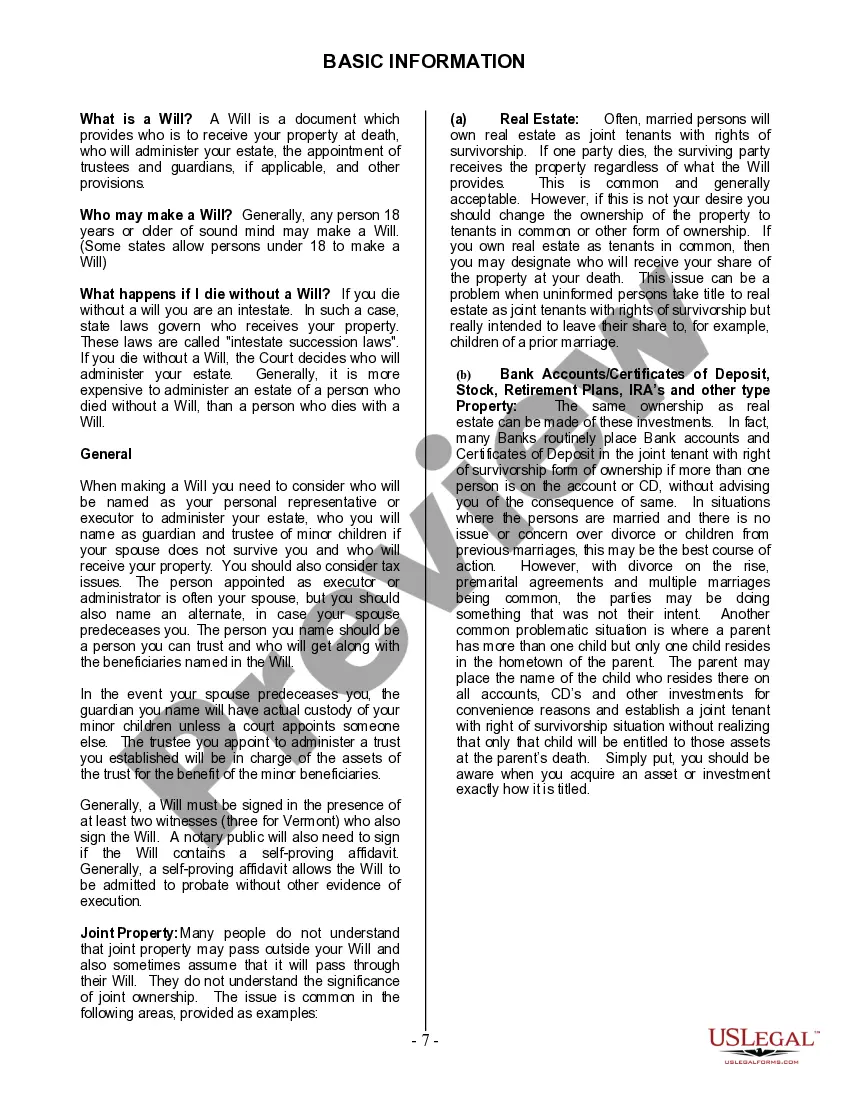
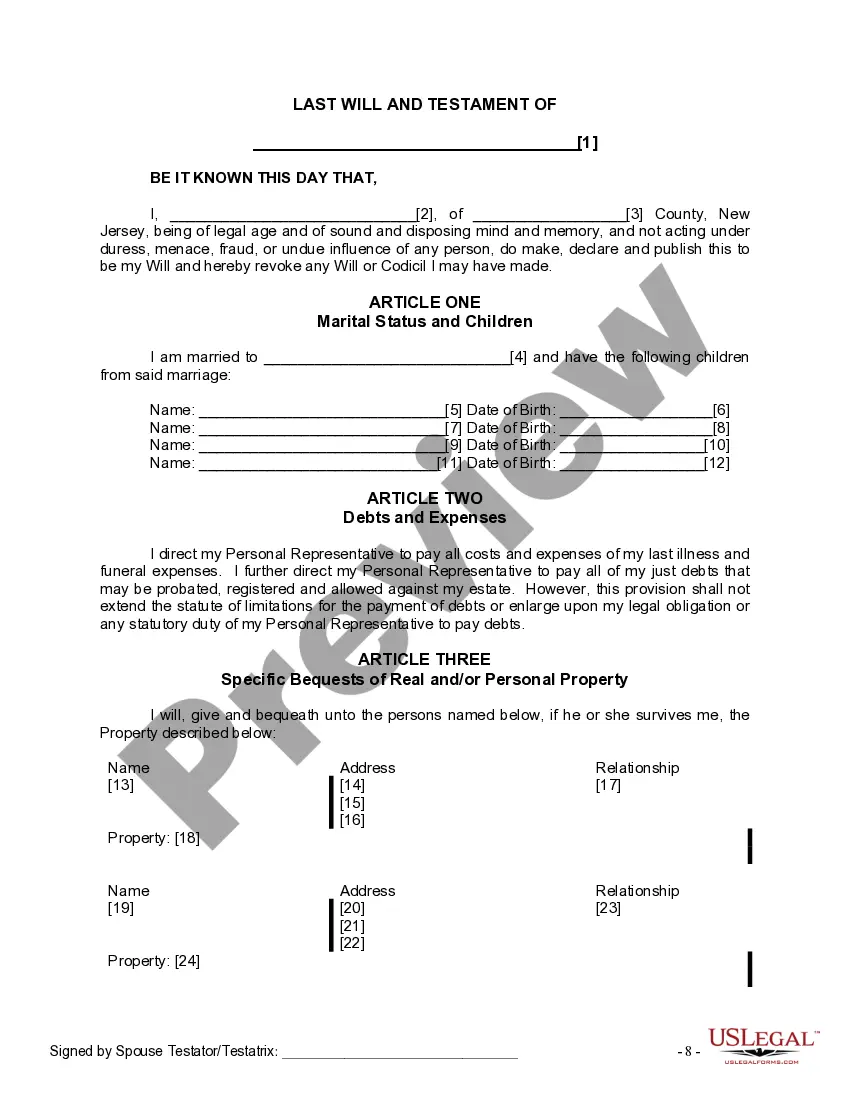
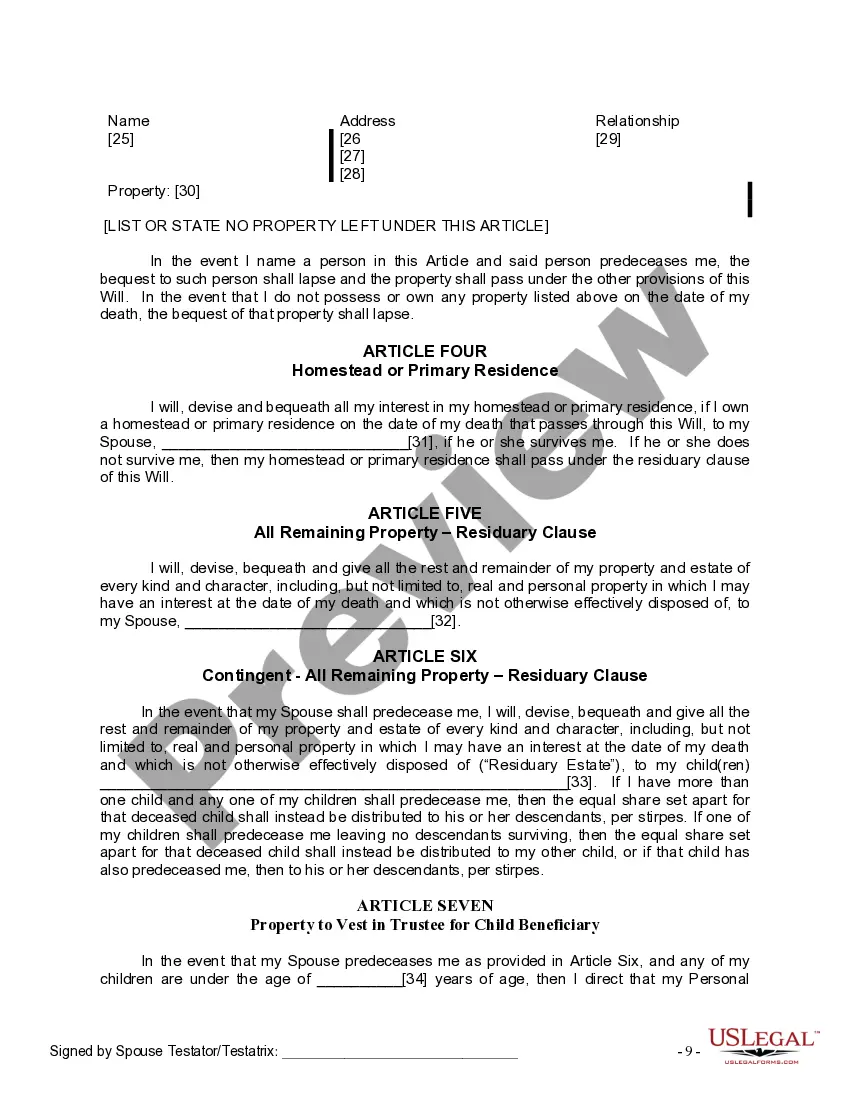
The Mutual Wills Package with Last Wills and Testaments is a legal document designed for married couples with minor children. It allows both spouses to detail how their assets will be distributed upon their deaths, appoint guardians for their children, and establish trusts for minor beneficiaries. This package includes two individual wills, one for each spouse, and provides essential instructions on how to complete and execute them legally.
Form components explained
- Appointment of a personal representative or executor for the estate.
- Designation of property beneficiaries, including specific bequests.
- Establishment of a trust for minor childrenâs interests.
- Appointment of a guardian for minor children.
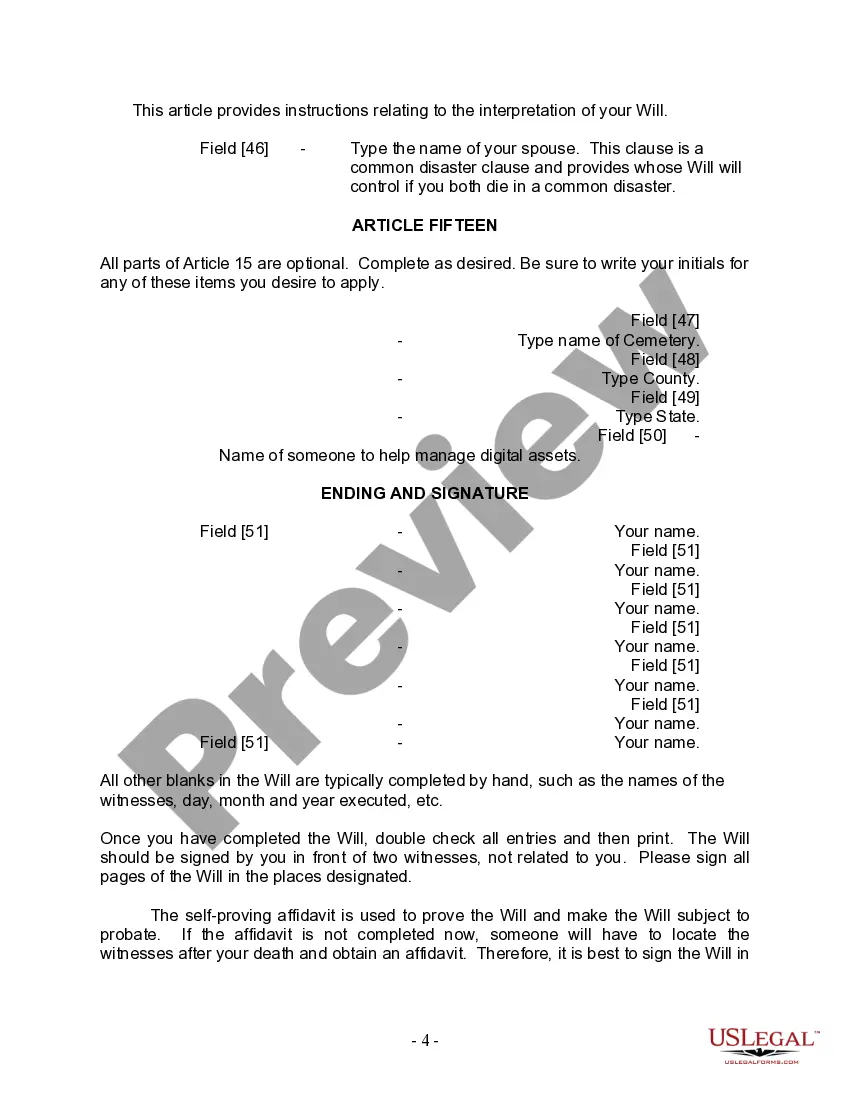
- Instructions on signing, witnessing, and notarization of wills.





When to use this document
This form is ideal for married couples who wish to ensure that their wishes regarding asset distribution and guardianship of their minor children are clearly documented. It is especially applicable in situations where both spouses want to create mutual, binding agreements on how their estates will be handled, making it an important legal tool for estate planning.
Intended users of this form
- Married couples wanting to establish mutual wills.
- Couples with minor children who need to appoint a guardian.
- Individuals looking to set up trusts for their children's inheritance.
- Those wishing to clarify their wishes regarding the distribution of their property after death.
Steps to complete this form
- Enter each spouse's name and county of residence in the designated fields.
- Specify the names and details of minor children, including appointing a guardian.
- Detail any specific bequests of property to individuals or entities.
- Complete the trust establishment for minor children, specifying terms and ages.
- Review and double-check all entries before signing the wills in the presence of witnesses.
Does this document require notarization?
Yes, this form must be notarized to be legally valid in many jurisdictions. Notarization helps ensure that the wills can be admitted to probate without additional evidence of execution, safeguarding your wishes effectively.
Get your form ready online
Our built-in tools help you complete, sign, share, and store your documents in one place.
Make edits, fill in missing information, and update formatting in US Legal Forms—just like you would in MS Word.
Download a copy, print it, send it by email, or mail it via USPS—whatever works best for your next step.
Sign and collect signatures with our SignNow integration. Send to multiple recipients, set reminders, and more. Go Premium to unlock E-Sign.
If this form requires notarization, complete it online through a secure video call—no need to meet a notary in person or wait for an appointment.
We protect your documents and personal data by following strict security and privacy standards.

Make edits, fill in missing information, and update formatting in US Legal Forms—just like you would in MS Word.

Download a copy, print it, send it by email, or mail it via USPS—whatever works best for your next step.

Sign and collect signatures with our SignNow integration. Send to multiple recipients, set reminders, and more. Go Premium to unlock E-Sign.

If this form requires notarization, complete it online through a secure video call—no need to meet a notary in person or wait for an appointment.

We protect your documents and personal data by following strict security and privacy standards.
Typical mistakes to avoid
- Not having the wills signed in front of the required number of witnesses.
- Failing to appoint an alternative guardian or trustee in case the primary option is unavailable.
- Leaving out specific property descriptions when making bequests.
- Not updating the wills after major life changes, such as divorce or the birth of additional children.
Why use this form online
- Convenient access to legal documents from home without the need for in-person consultations.
- Editable templates that allow personalization to fit individual needs.
- Clear instructions on completing and executing the wills.
- Cost-effective compared to hiring an attorney for document preparation.
Looking for another form?

Form popularity
FAQ
There is no requirement that spouses leave assets to each other when they die.
Under New Jersey law, a handwritten Will can be valid as a writing intended as a Will if the material portions of the document are in the handwriting of the decedent and signed by the decedent.
Yes, and no. Yes, a spouse can be disinherited.The laws vary from state to state, but in a community property state like California, your spouse will have a legal right to one-half of the estate assets acquired during the marriage, otherwise known as community property.
In New Jersey, the will must be in writing. You must sign your own will, witnessed by two individuals over 18 (You must be at least age 18 as well.)Notarized wills are not required, but they do help speed the process, since a probate court doesn't have to track down the two witnesses.
In New Jersey, the will must be in writing. You must sign your own will, witnessed by two individuals over 18 (You must be at least age 18 as well.)Notarized wills are not required, but they do help speed the process, since a probate court doesn't have to track down the two witnesses.
What makes a will valid in New Jersey? A person must be at least 18 years old and mentally competent to create a valid will. Generally, this means they understand the purpose of the will and know what they wish to happen to their property. The testator, as well as two witnesses, must sign a typed will.
In most states, if you have a will while you are married and then end the marriage, the will is automatically revoked. It's possible to leave an inheritance to your ex, but you have to write a new will that specifically states you are doing so. Disinheriting your spouse.
In New Jersey, there is only one family member that you cannot disinherit, a spouse, unless the spouse consents to being disinherited.In other words, even if you disinherit your spouse, he or she can make a claim for one-third of your estate.