New Jersey Last Will and Testament for Divorced person not Remarried with Minor Children
Overview of this form
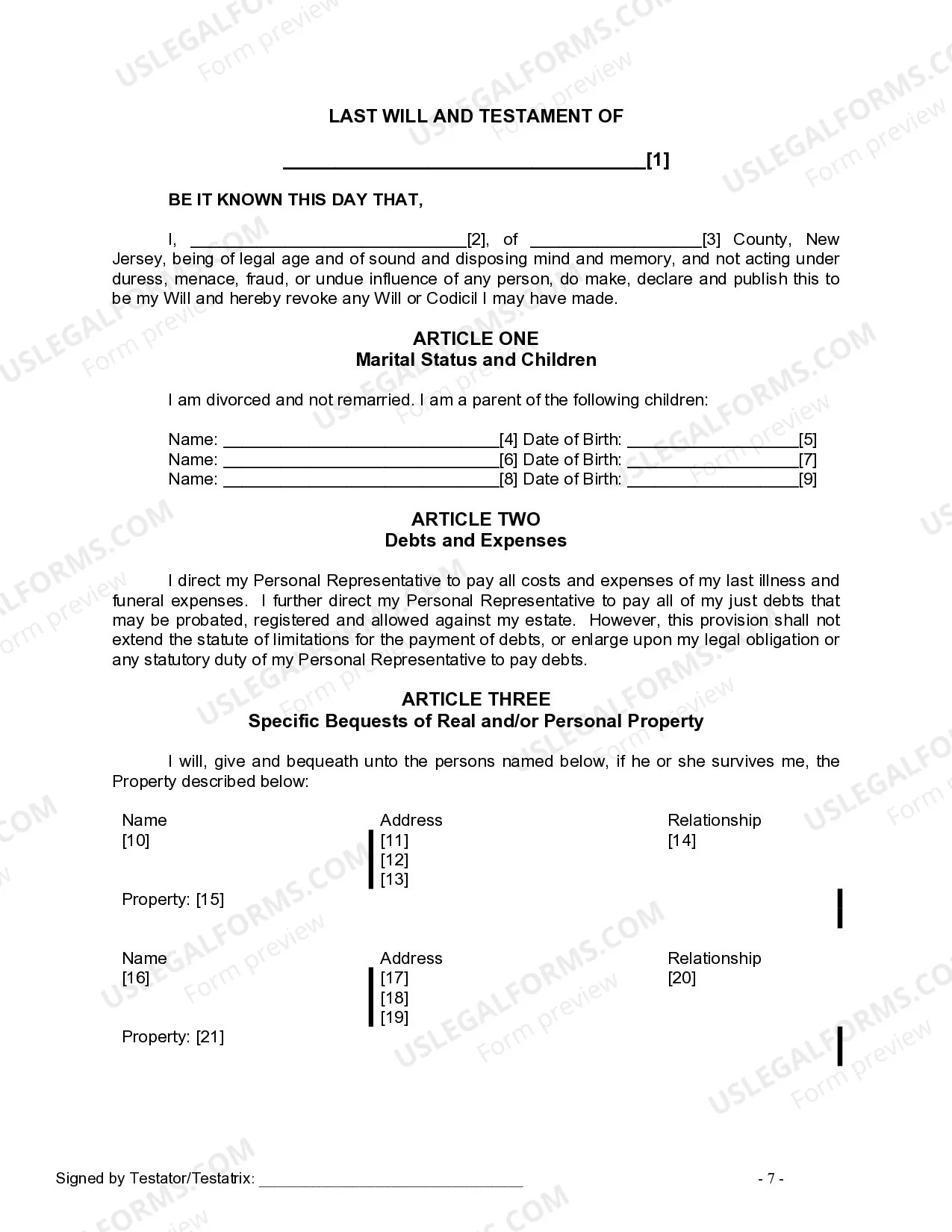
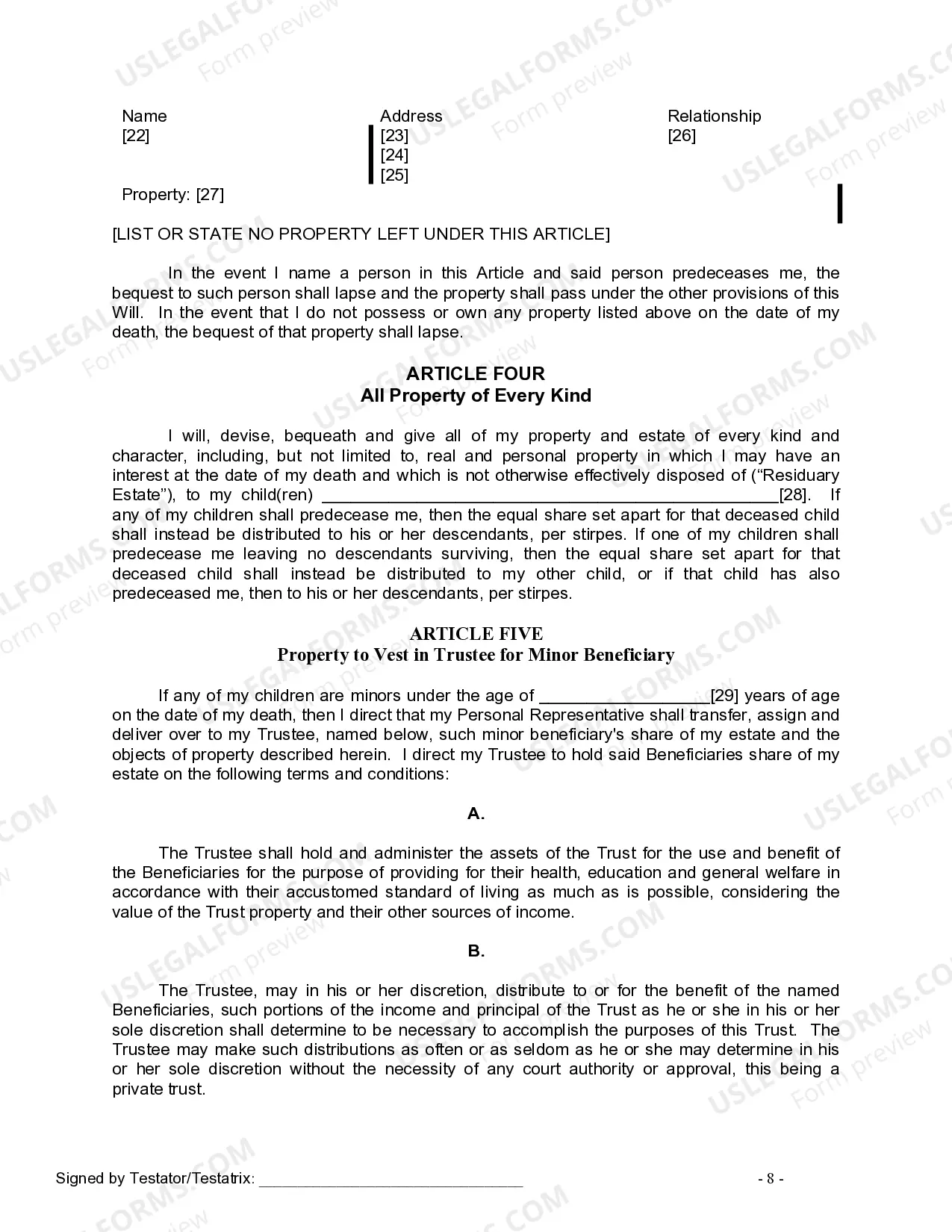
This Last Will and Testament is specifically designed for individuals who are divorced, have minor children, and are not remarried. It serves to appoint a personal representative or executor, detailing how your property will be distributed among your heirs. Unlike other wills, this form accommodates the unique needs of divorced parents, ensuring that provisions are in place for the care of minor children upon your passing.
Key parts of this document
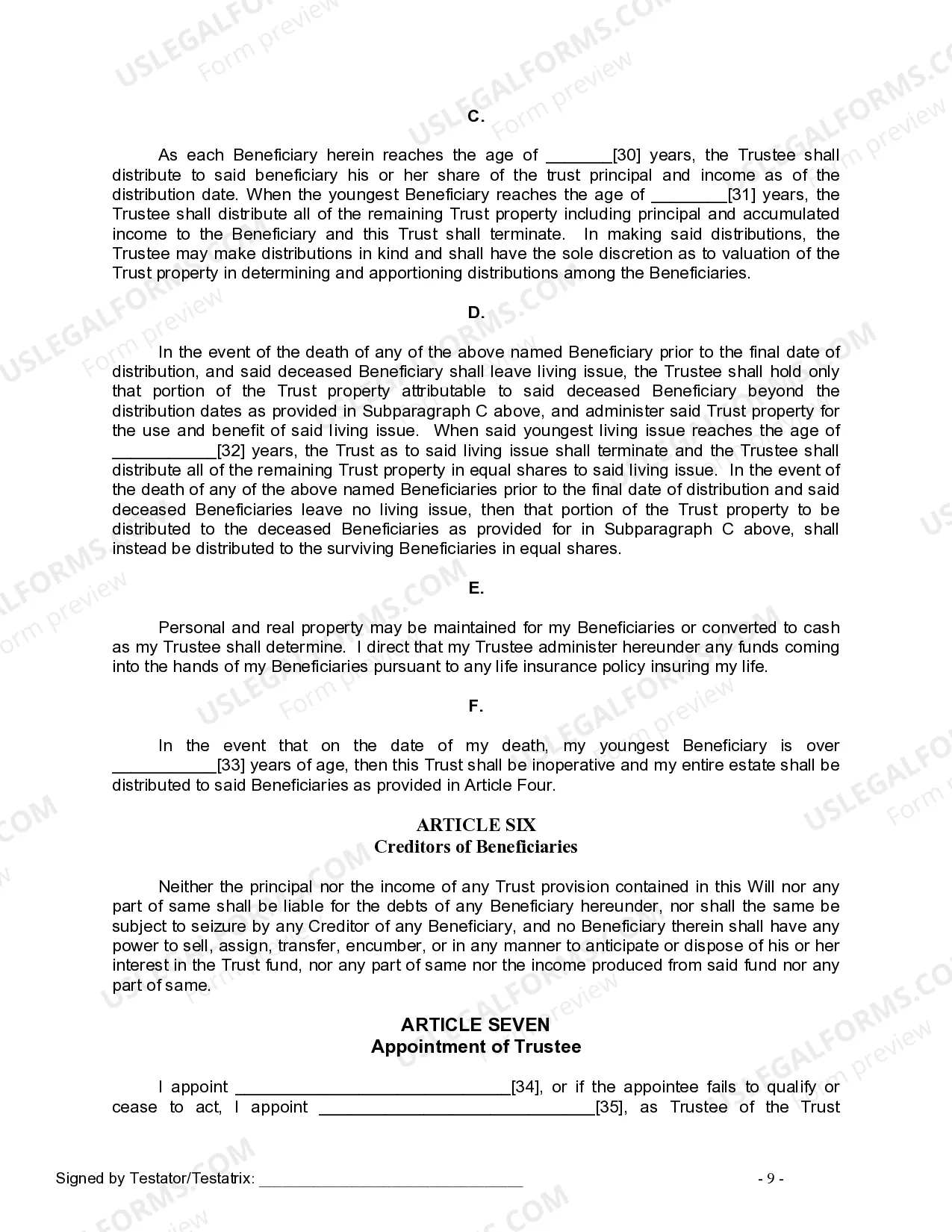
- Personal representative appointment: Designate someone to manage your estate.
- Property distribution clauses: Specify who receives your assets.
- Guardian designation: Assign a guardian for your minor children.
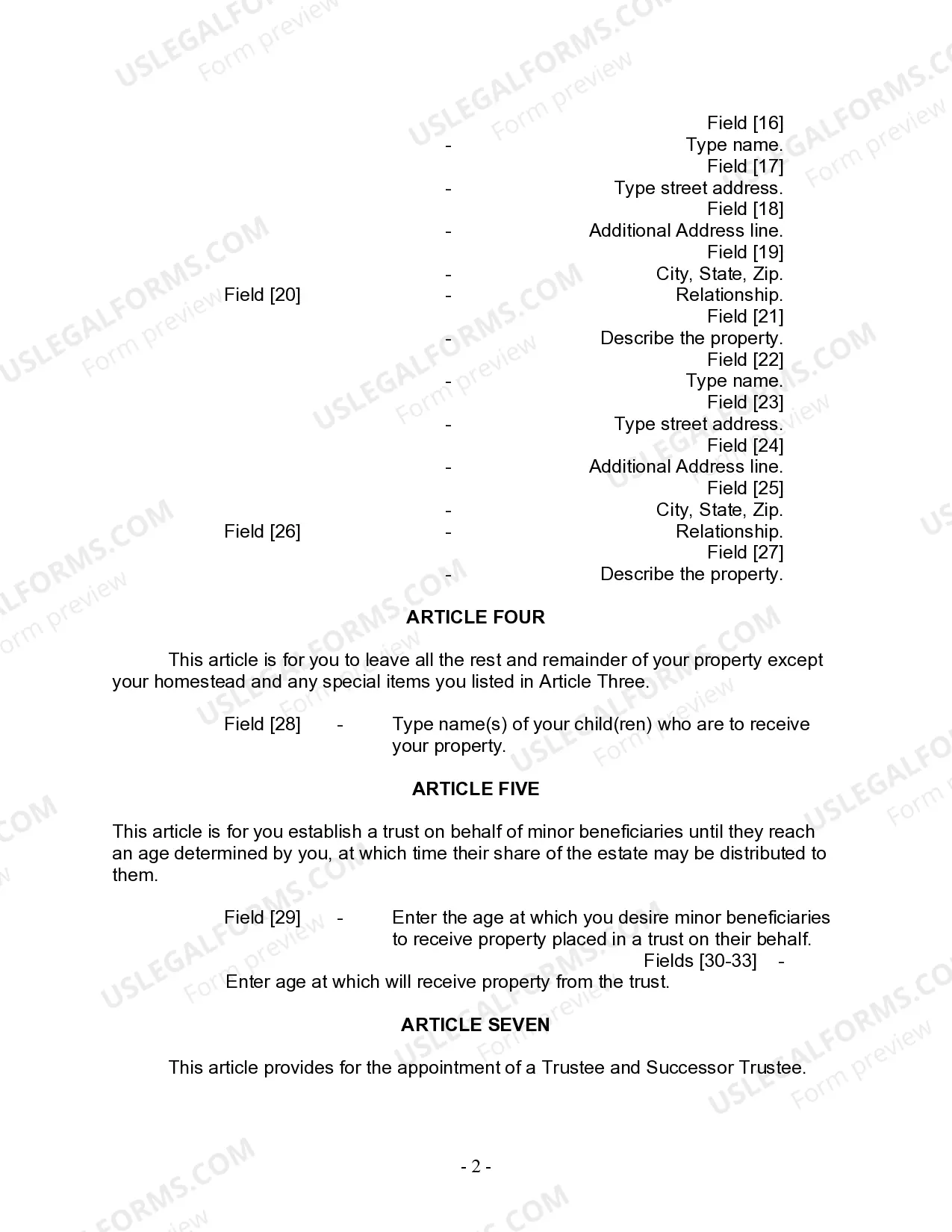
- Trust establishment: Set up a trust for minor beneficiaries until they reach a specified age.
- Witness and notarization requirements: Ensure lawful execution of the will.




When to use this document
This form should be utilized when you wish to clearly outline your last wishes regarding your estate, especially if you have children from a previous marriage and want to ensure they are cared for. If you are divorced and have not remarried, this will helps prevent potential disputes and confusion regarding your assets after your death.
Who can use this document
This form is intended for:
- Individuals who are divorced and not currently remarried.
- Parents with minor children who require a guardian appointment.
- Individuals wanting to dictate specific distributions of their property.
- Anyone looking to create a formal will to avoid intestacy.
How to complete this form
To complete this form, follow these steps:
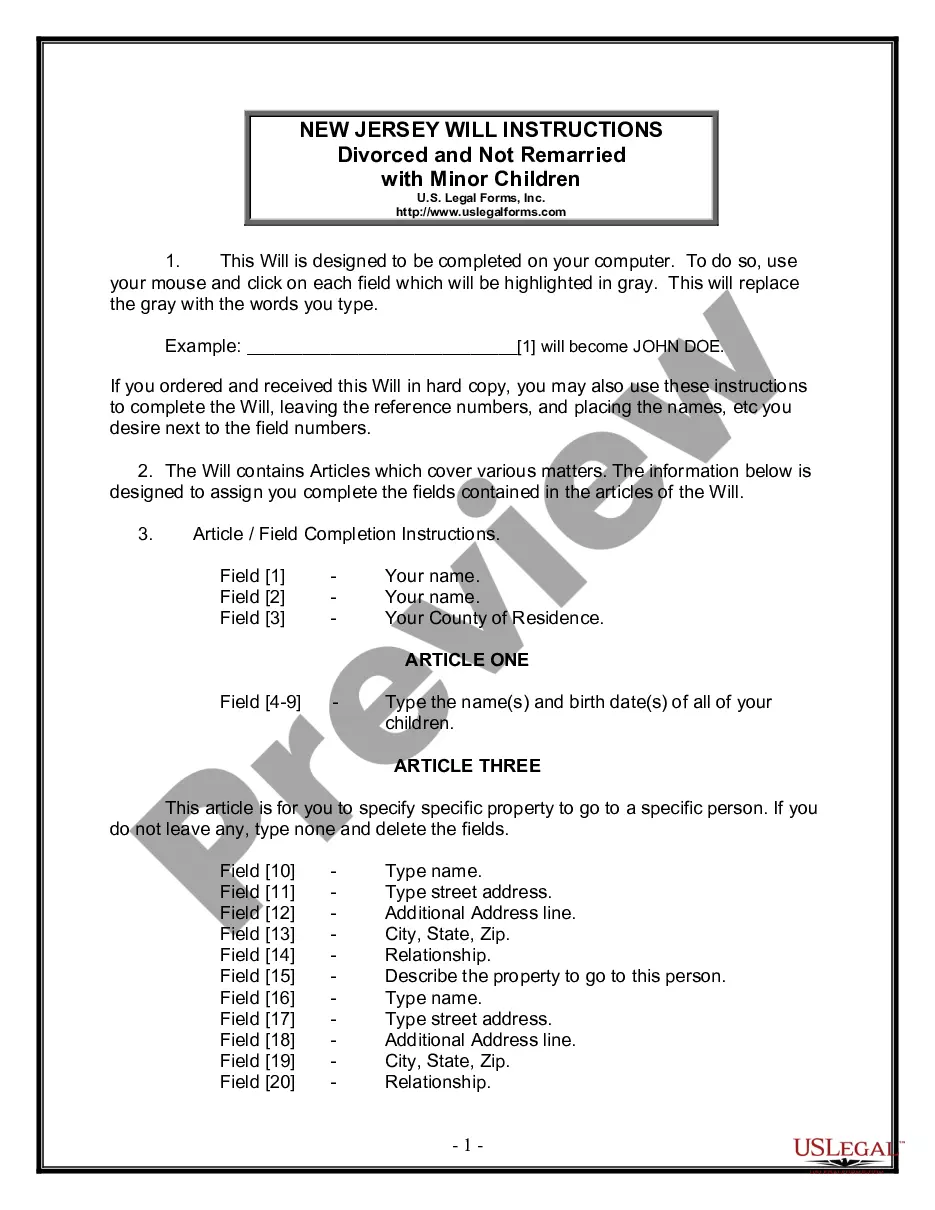
- Enter your personal information, including your name and county of residence.
- List all children along with their birth dates.
- Designate specific beneficiaries for particular properties you wish to bequeath.
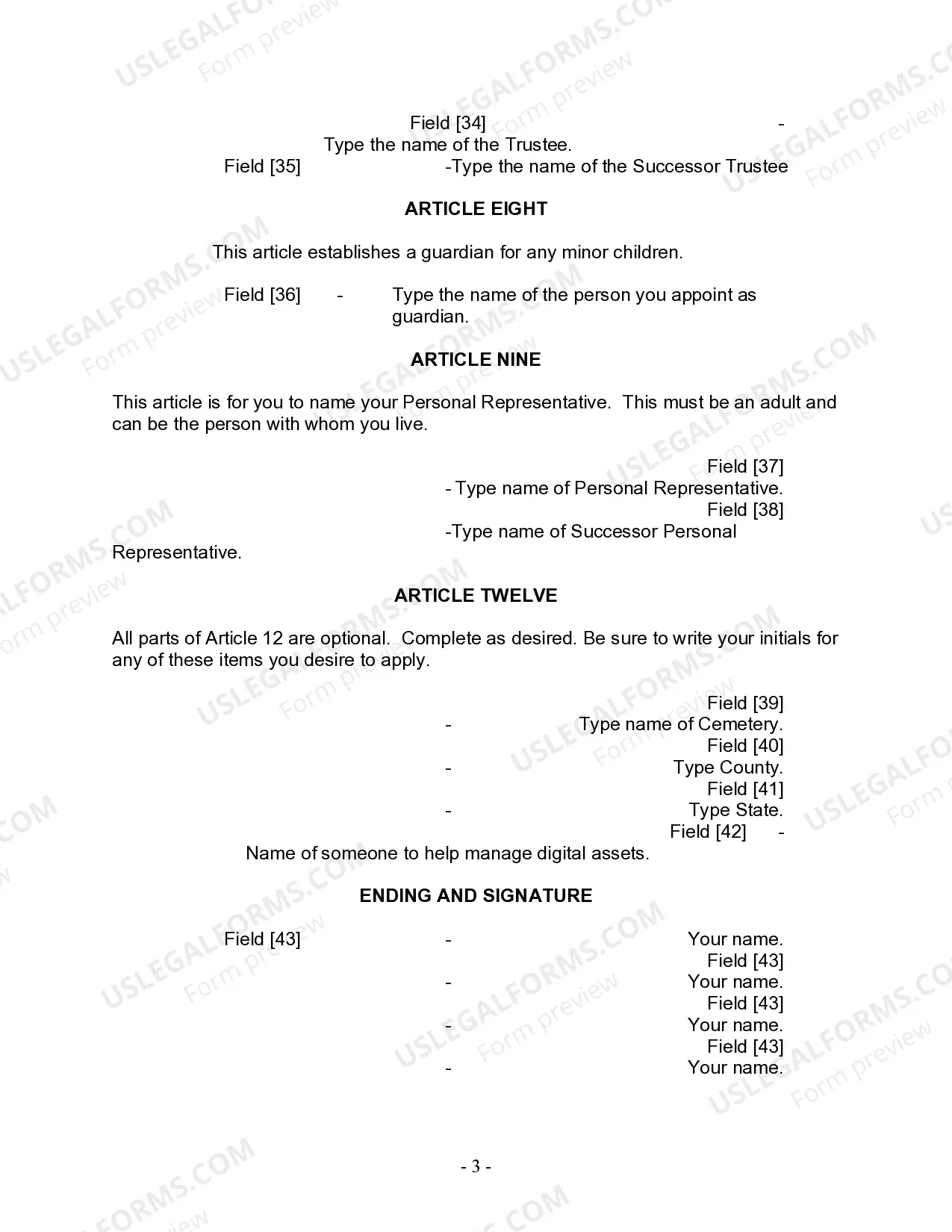
- Assign a guardian for your minor children in the designated section.
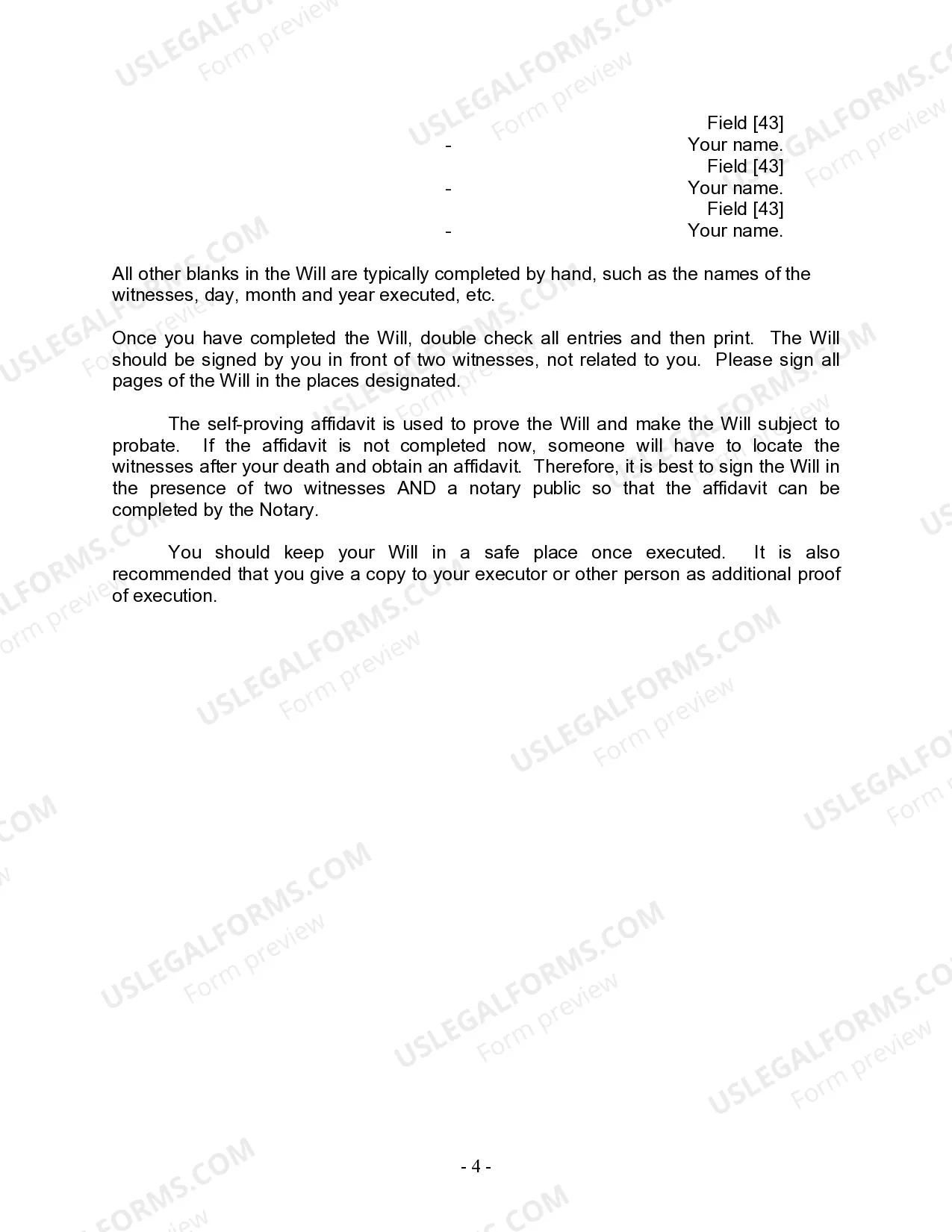
- Ensure the will is signed in the presence of two witnesses who are not named beneficiaries.
Notarization requirements for this form
Yes, this form must be notarized to be legally valid. It should also be signed in the presence of at least two witnesses who are not related to you. US Legal Forms offers integrated online notarization services, available 24/7, allowing you to notarize your document via a secure video call.
Get your form ready online
Our built-in tools help you complete, sign, share, and store your documents in one place.
Make edits, fill in missing information, and update formatting in US Legal Forms—just like you would in MS Word.
Download a copy, print it, send it by email, or mail it via USPS—whatever works best for your next step.
Sign and collect signatures with our SignNow integration. Send to multiple recipients, set reminders, and more. Go Premium to unlock E-Sign.
If this form requires notarization, complete it online through a secure video call—no need to meet a notary in person or wait for an appointment.
We protect your documents and personal data by following strict security and privacy standards.

Make edits, fill in missing information, and update formatting in US Legal Forms—just like you would in MS Word.

Download a copy, print it, send it by email, or mail it via USPS—whatever works best for your next step.

Sign and collect signatures with our SignNow integration. Send to multiple recipients, set reminders, and more. Go Premium to unlock E-Sign.

If this form requires notarization, complete it online through a secure video call—no need to meet a notary in person or wait for an appointment.

We protect your documents and personal data by following strict security and privacy standards.
Common mistakes to avoid
- Failing to update the will when life circumstances change, such as another divorce or birth of a child.
- Not having the will signed by witnesses, making it invalid.
- Forgetting to appoint a backup personal representative or guardian.
- Neglecting to follow state-specific laws regarding the execution and witnessing of the will.
Why complete this form online
- Convenience of completing the form online, allowing for easy edits and downloads.
- Reliability ensured by using templates drafted by licensed attorneys.
- Immediate access to your will anywhere you have internet access.
- Easy storage of your document in a safe digital format.
Quick recap
- This will is specifically designed for divorced individuals with minor children.
- It includes provisions for asset distribution, guardianship, and trusts.
- Proper execution includes witnessing and notarization to meet state regulations.
Looking for another form?


Form popularity
FAQ
No, in New Jersey, you do not need to notarize your will to make it legal. However, New Jersey allows you to make your will "self-proving" and you'll need to go to a notary if you want to do that. A self-proving will speeds up probate because the court can accept the will without contacting the witnesses who signed it.
Under New Jersey law, a handwritten Will can be valid as a writing intended as a Will if the material portions of the document are in the handwriting of the decedent and signed by the decedent.
What makes a will valid in New Jersey? A person must be at least 18 years old and mentally competent to create a valid will. Generally, this means they understand the purpose of the will and know what they wish to happen to their property. The testator, as well as two witnesses, must sign a typed will.
Anyone who is an immediate family member of the deceased, whether or not he or she is listed in the will, is legally entitled to view a copy.Those are the primary parties who may request access to a will, but there are other less groups of people that also have a legal right to view and receive copies of the document.
New Jersey requires that a person is at least 18 years old in order to execute a valid will.New Jersey requires that a typed will be signed by at least two people who witnessed the testator sign the will, or witnessed the testator acknowledge their signature on the will or the will itself.
As long as it was properly signed and witnessed by two adult independent witnesses who are present at the time you sign your will, it should be legally binding.Using the wrong wording could mean that your instructions aren't followed, or even that your will isn't valid.
In New Jersey, the will must be in writing. You must sign your own will, witnessed by two individuals over 18 (You must be at least age 18 as well.)Notarized wills are not required, but they do help speed the process, since a probate court doesn't have to track down the two witnesses.
The Probate process is required by the state of NJ whenever someone dies. It is the government's way of making sure the assets of the deceased pass properly to their decedents. And of course to insure that any taxes or lien's owed to the state or other parties are fully paid.You still have to go through probate.
In New Jersey, the will must be in writing. You must sign your own will, witnessed by two individuals over 18 (You must be at least age 18 as well.)Notarized wills are not required, but they do help speed the process, since a probate court doesn't have to track down the two witnesses.