New Jersey Last Will and Testament for a Single Person with Minor Children
Overview of this form
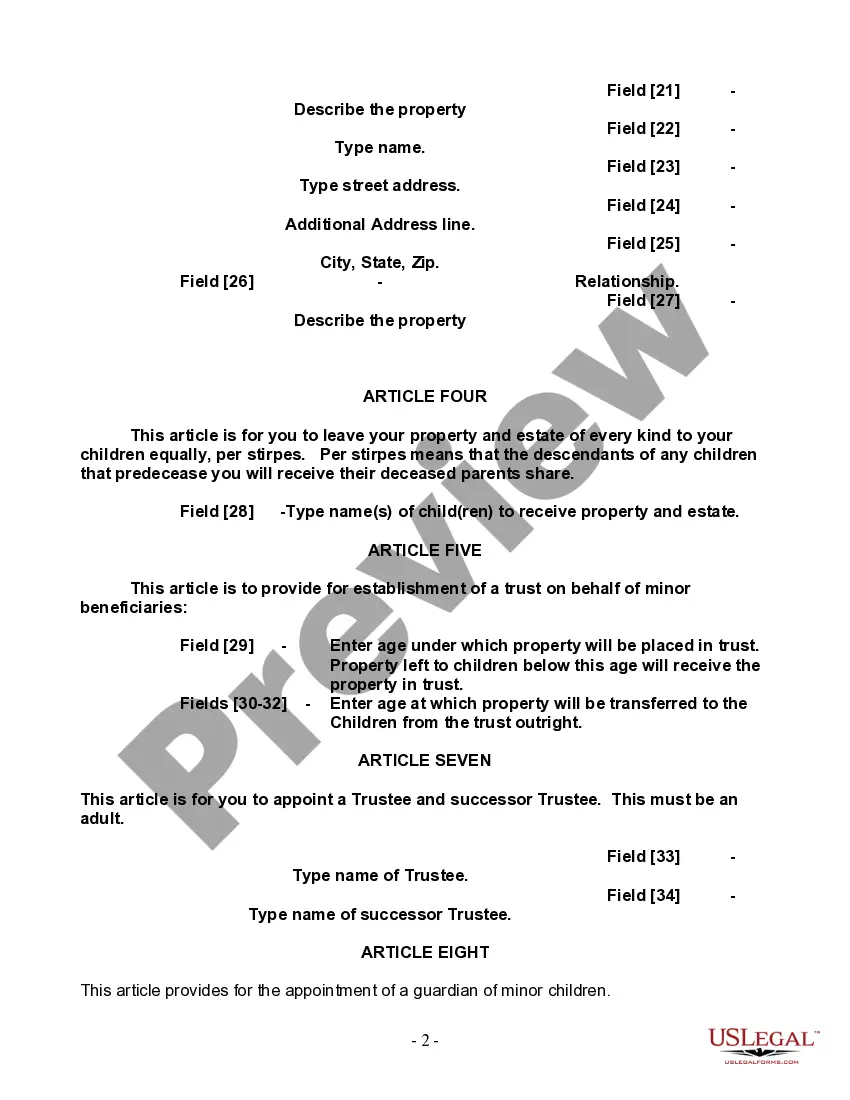
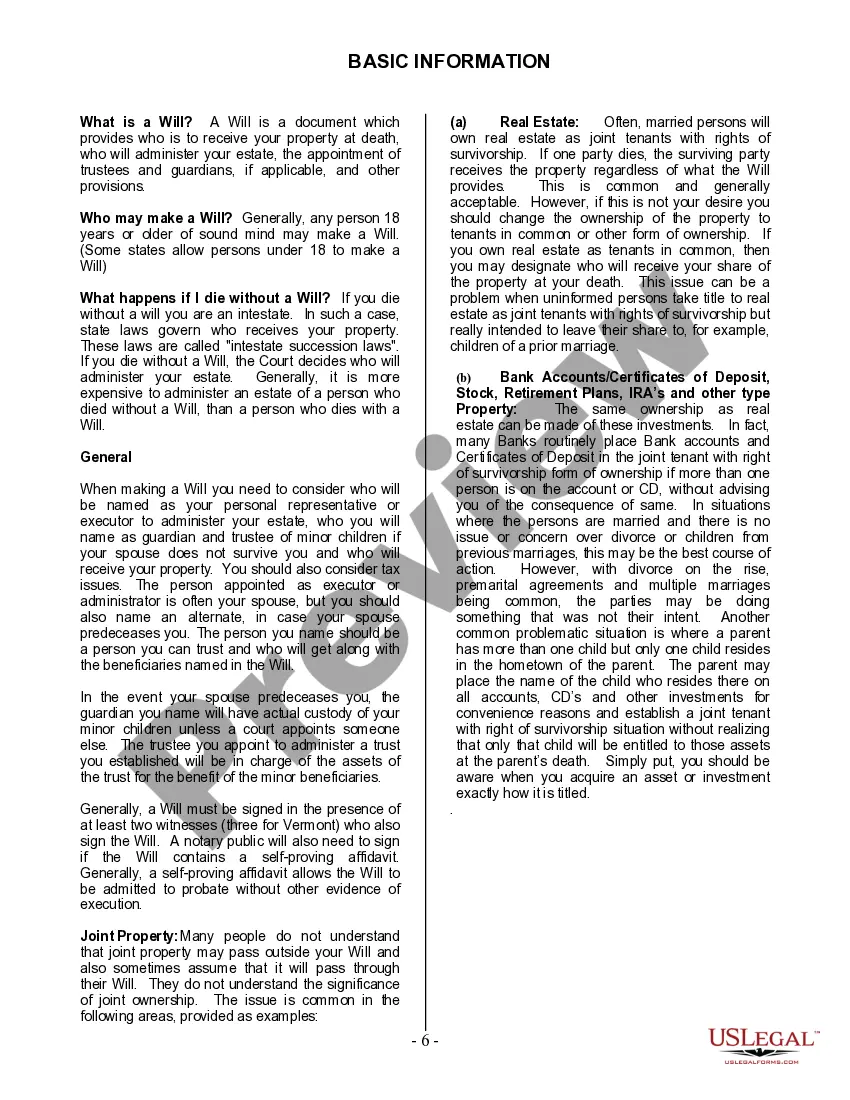
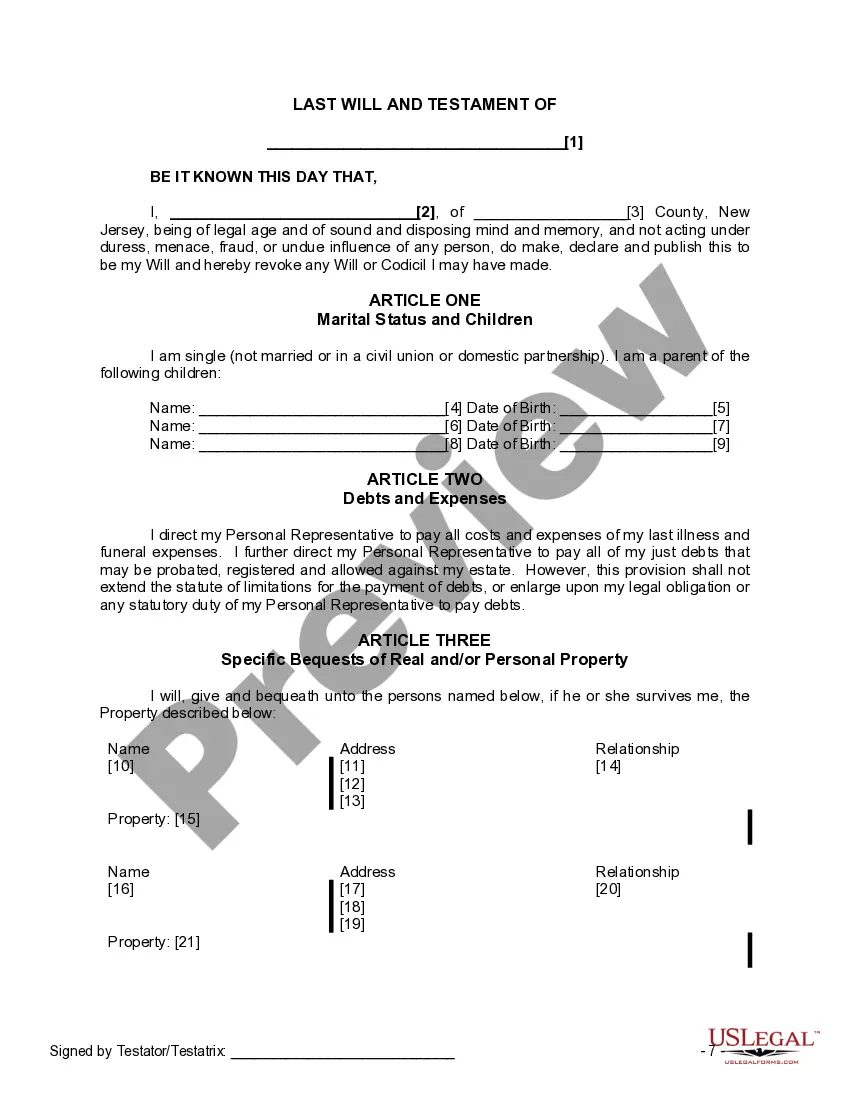
The Last Will and Testament for a Single Person with Minor Children is a legal document that outlines how a single parent wishes to manage and distribute their assets after death, particularly concerning their minor children. This form specifically accommodates the unique needs of individuals who are not married and want to ensure their children are cared for and provided for through guardianship and trusts.
Key parts of this document
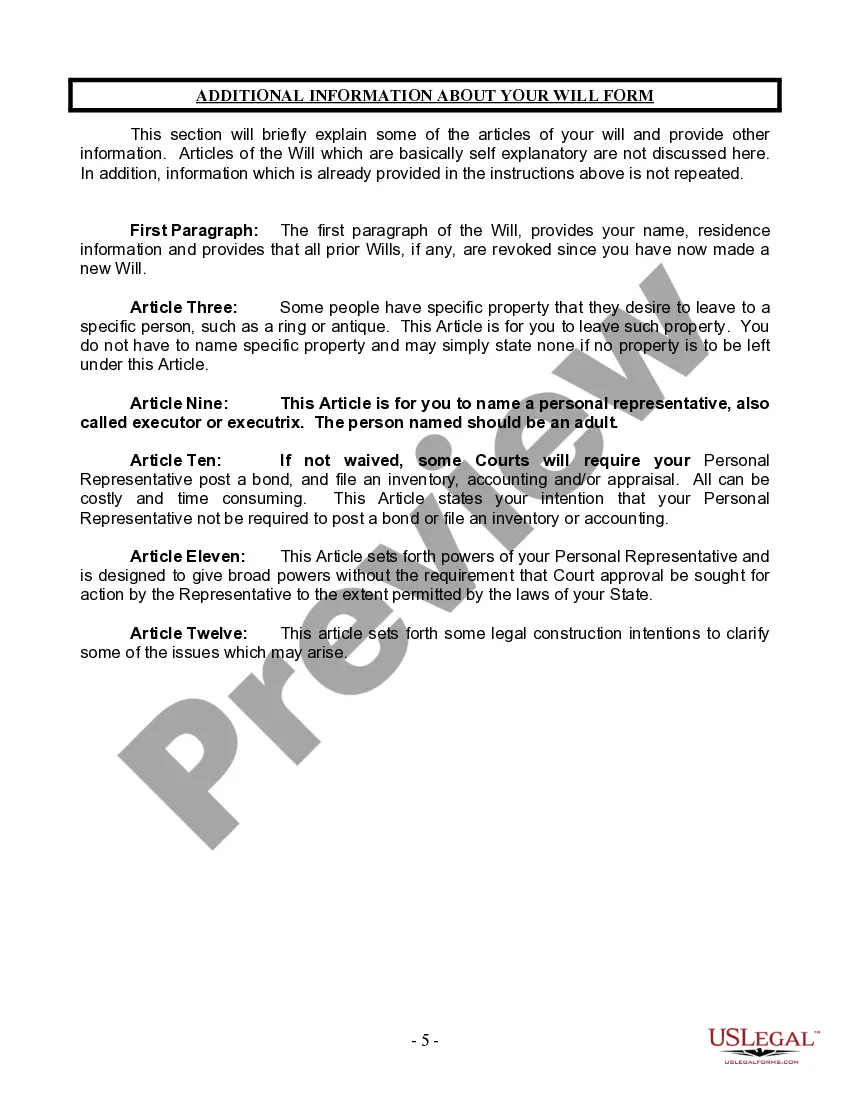
- Appointment of a personal representative or executor to manage the estate.
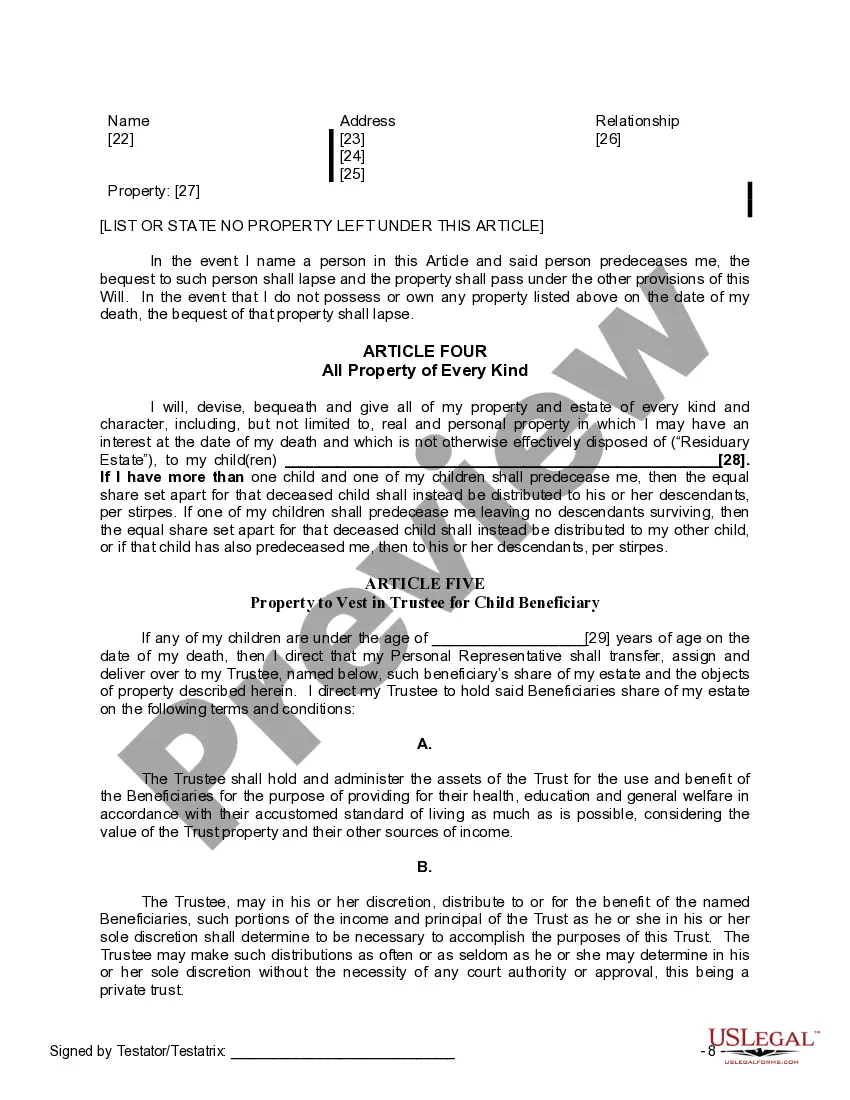
- Designations of who receives specific assets and the distribution of the estate to minor children.
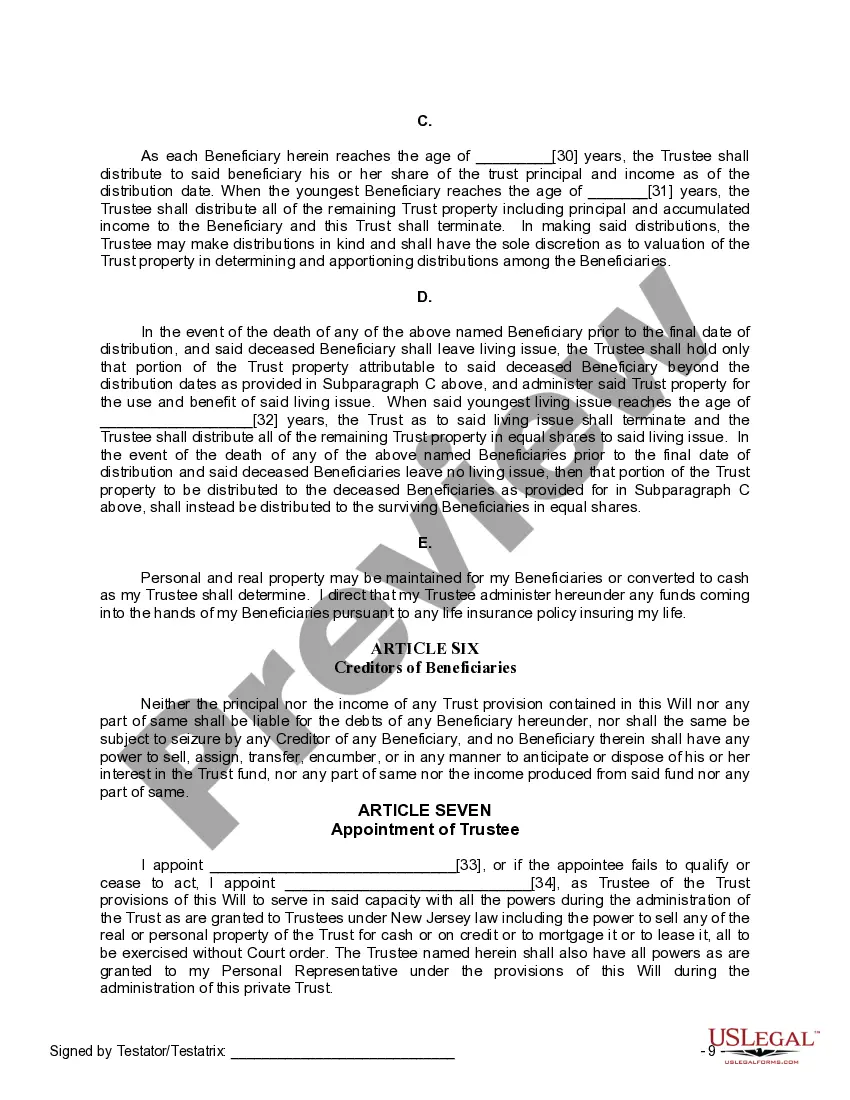
- Provisions for establishing a trust to manage assets for minor beneficiaries.
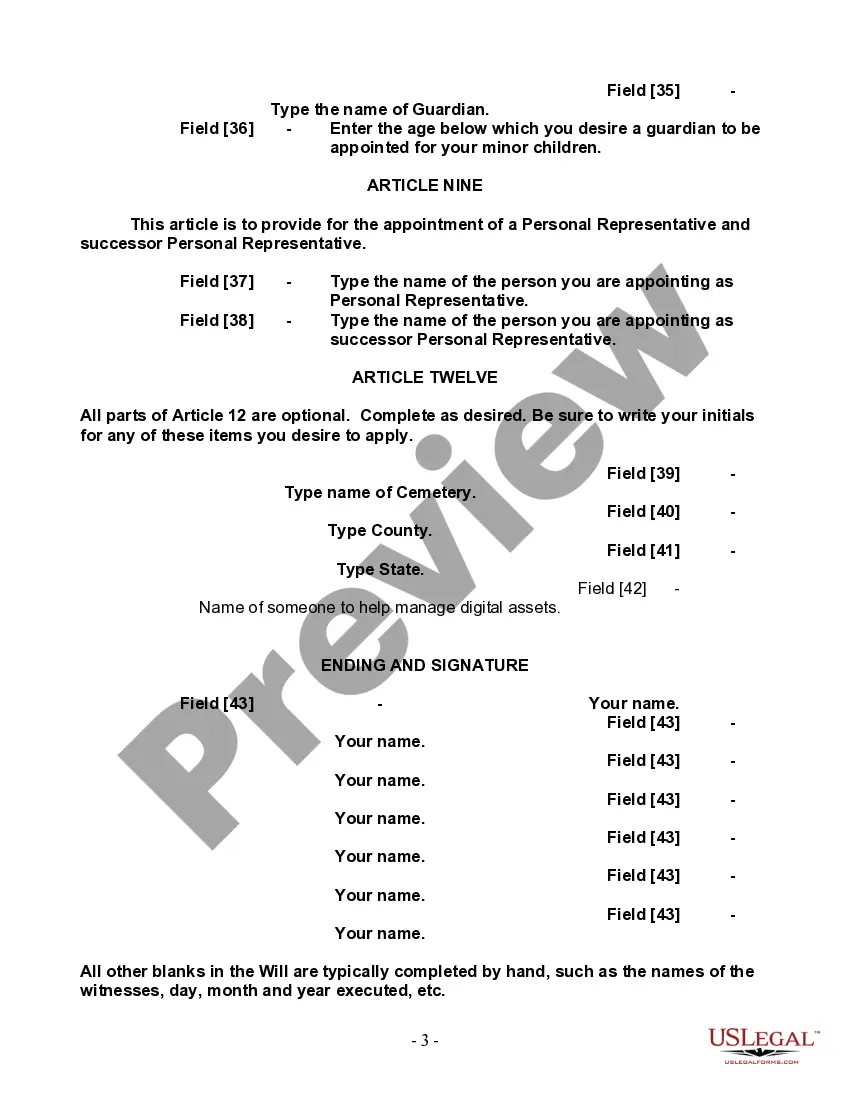
- Appointment of a guardian for minor children.
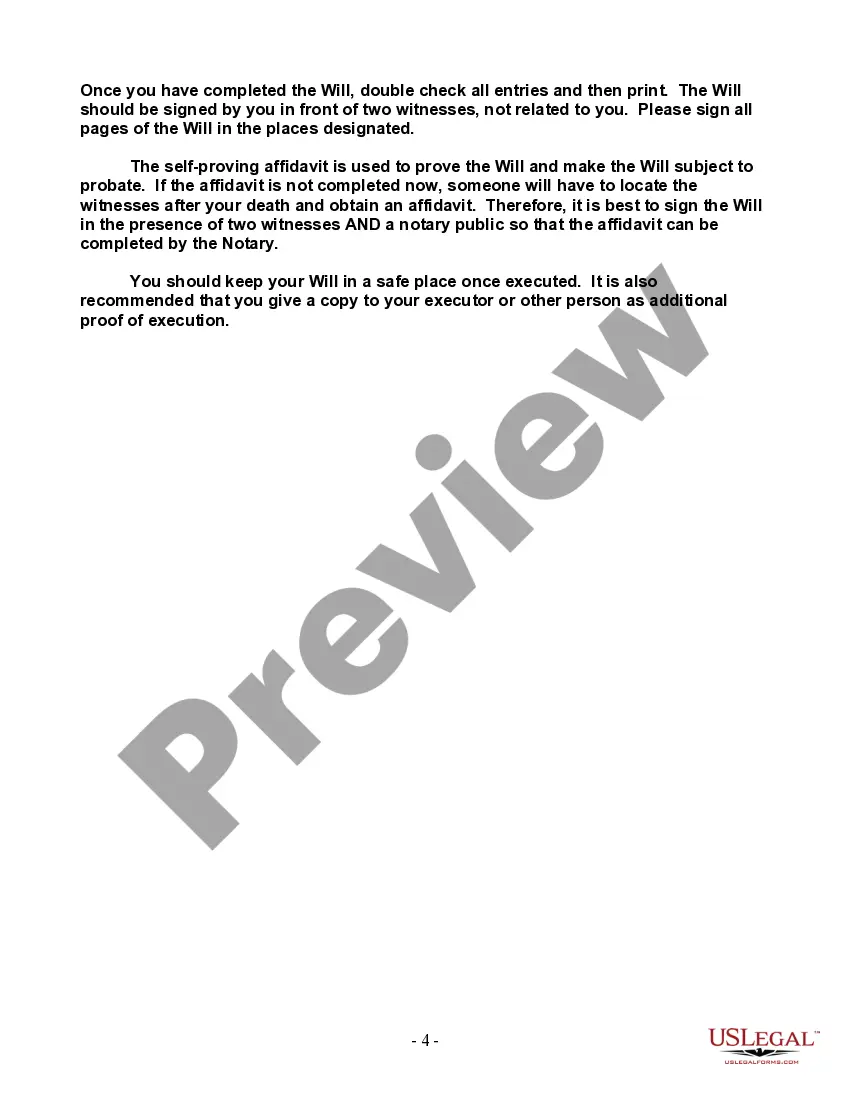
- Instructions for signing and witnessing the will, including notarization requirements.





When to use this document
This form is appropriate for single parents who wish to specify their wishes regarding the guardianship of their minor children and the distribution of their assets in the event of their death. It is particularly useful when parents want to ensure that their children are financially supported and cared for in a manner they determine.
Who can use this document
- Single individuals with dependent minor children.
- Parents who want to ensure their children are taken care of in their absence.
- Individuals looking to specify guardianship and property distribution.
- Parents wanting to create a trust for their minor children's inheritance.
How to prepare this document
- Identify yourself by entering your name and county of residence.
- List your childrenâs names and their birth dates.
- Designate specific individuals to receive certain properties and detail those properties.
- Appoint a trustee for any assets intended for minor beneficiaries and specify the age at which they will gain access to those assets.
- Sign the will in the presence of two witnesses and ensure it is notarized if required.
Notarization guidance
Yes, this form must be notarized to be legally valid. It includes a self-proving affidavit that should be signed by the testator and witnesses in the presence of a notary public. US Legal Forms offers integrated online notarization with 24/7 availability, ensuring a secure and efficient process without the need for travel.
Get your form ready online
Our built-in tools help you complete, sign, share, and store your documents in one place.
Make edits, fill in missing information, and update formatting in US Legal Forms—just like you would in MS Word.
Download a copy, print it, send it by email, or mail it via USPS—whatever works best for your next step.
Sign and collect signatures with our SignNow integration. Send to multiple recipients, set reminders, and more. Go Premium to unlock E-Sign.
If this form requires notarization, complete it online through a secure video call—no need to meet a notary in person or wait for an appointment.
We protect your documents and personal data by following strict security and privacy standards.

Make edits, fill in missing information, and update formatting in US Legal Forms—just like you would in MS Word.

Download a copy, print it, send it by email, or mail it via USPS—whatever works best for your next step.

Sign and collect signatures with our SignNow integration. Send to multiple recipients, set reminders, and more. Go Premium to unlock E-Sign.

If this form requires notarization, complete it online through a secure video call—no need to meet a notary in person or wait for an appointment.

We protect your documents and personal data by following strict security and privacy standards.
Avoid these common issues
- Failing to sign the will in front of the required witnesses.
- Neglecting to update the will after major life events such as marriage or the birth of additional children.
- Not specifying alternate guardians or beneficiaries.
- Using vague language that could lead to confusion during the will's execution.
Advantages of online completion
- Convenient access to legal form templates from anywhere at any time.
- Edit the form easily to customize it according to personal preferences.
- Legal templates prepared by licensed attorneys for reliability.
- Save time and reduce stress by having a structured format for your Last Will and Testament.
Looking for another form?


Form popularity
FAQ
In New Jersey, the will must be in writing. You must sign your own will, witnessed by two individuals over 18 (You must be at least age 18 as well.)Notarized wills are not required, but they do help speed the process, since a probate court doesn't have to track down the two witnesses.
No, in New Jersey, you do not need to notarize your will to make it legal. However, New Jersey allows you to make your will "self-proving" and you'll need to go to a notary if you want to do that. A self-proving will speeds up probate because the court can accept the will without contacting the witnesses who signed it.
Most single people should have a will. A will can help you determine who will get your property (including your home, business, pets, and digital assets), name guardians for your children, and name an executor. A will also puts your wishes in writing so there's no confusion about your intentions.
Include personal identifying information. Include a statement about your age and mental status. Designate an executor. Decide who will take care of your children. Choose your beneficiaries. List your funeral details. Sign and date your Last Will and Testament.
Under New Jersey law, a handwritten Will can be valid as a writing intended as a Will if the material portions of the document are in the handwriting of the decedent and signed by the decedent.
Create the initial document. Start by titling the document Last Will and Testament" and including your full legal name and address. Designate an executor. Appoint a guardian. Name the beneficiaries. Designate the assets. Ask witnesses to sign your will. Store your will in a safe place.
As long as it was properly signed and witnessed by two adult independent witnesses who are present at the time you sign your will, it should be legally binding.Using the wrong wording could mean that your instructions aren't followed, or even that your will isn't valid.
New Jersey requires that a person is at least 18 years old in order to execute a valid will.New Jersey requires that a typed will be signed by at least two people who witnessed the testator sign the will, or witnessed the testator acknowledge their signature on the will or the will itself.
Contrary to popular belief, you do not need to have an attorney draft a will for you. Anyone can write this document on their own, and as long as it meets all of the legal requirements of the state, courts will recognize one you wrote yourself.