New Jersey Designation of Standby Guardian - Statutory
What is this form?
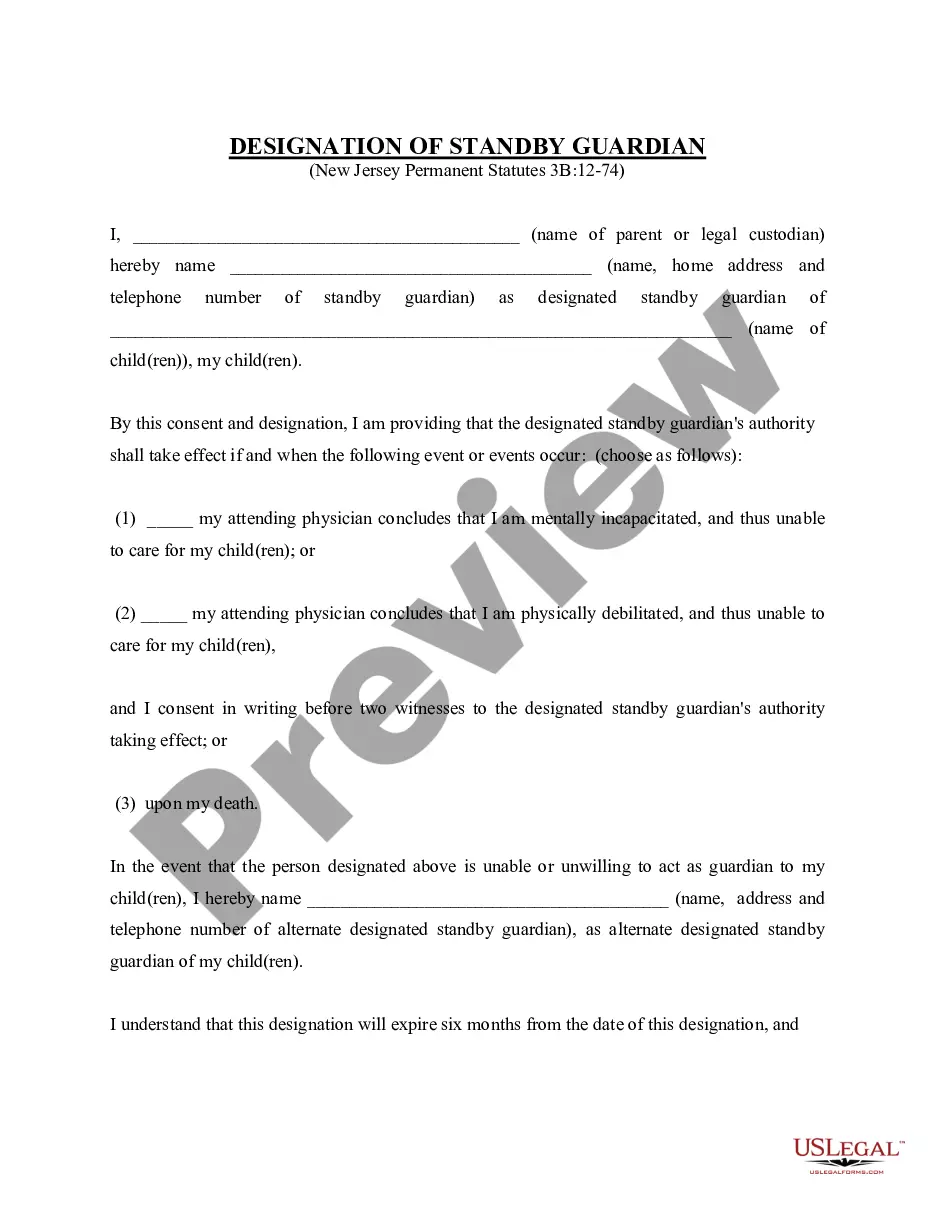
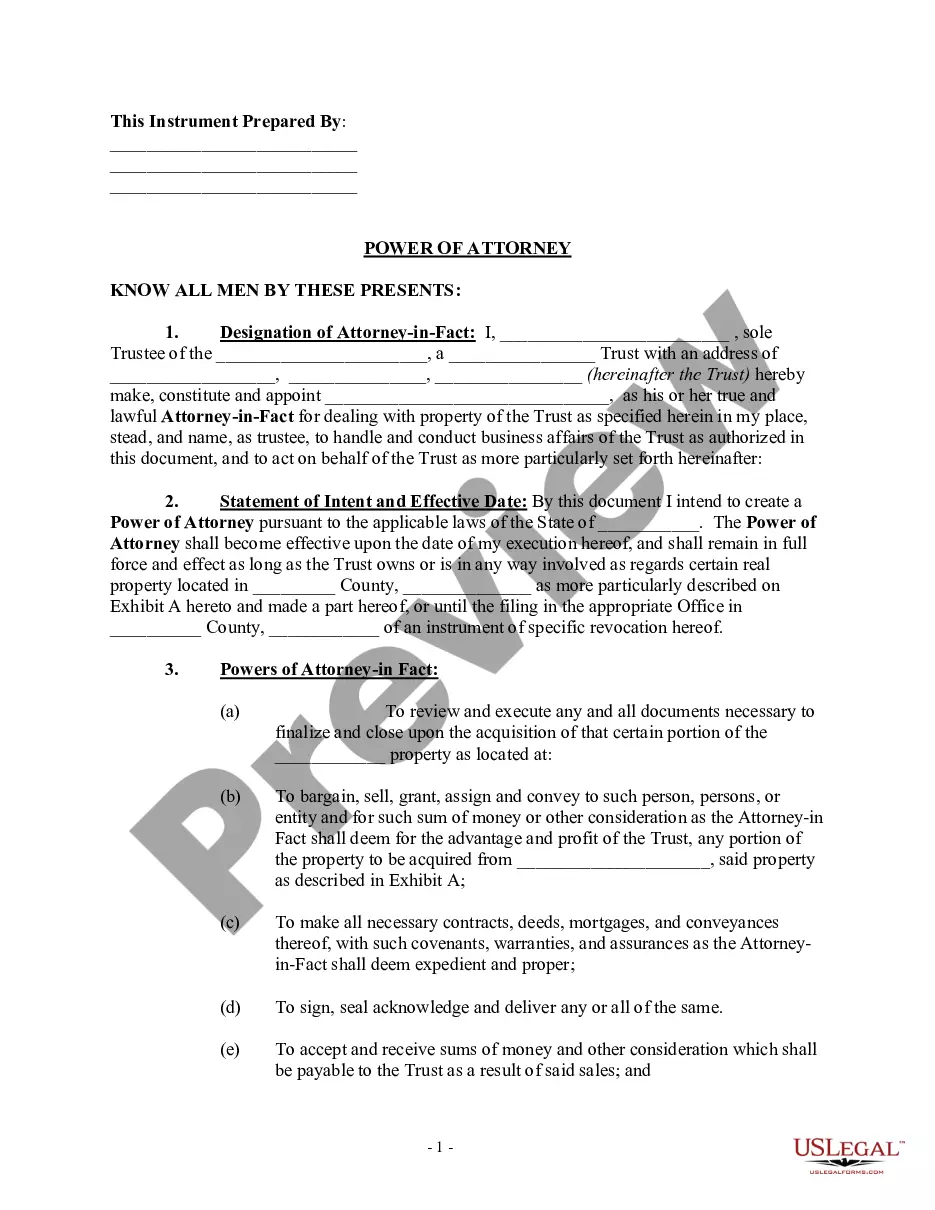
The Designation of Standby Guardian - Statutory is a legal document that allows a parent or legal guardian to appoint an individual to care for their minor child or children if the parent is unable to do so due to physical or mental incapacity. This form is essential for ensuring that your children will have a designated guardian to provide care during emergencies. Unlike other guardianship forms, this document specifically addresses temporary incapacity and provides clear conditions under which the guardianâs authority takes effect.
Key components of this form
- Name of the parent or legal custodian.
- Name and contact information of the designated standby guardian.
- Name of the child or children covered by the designation.
- Conditions under which the guardian's authority becomes effective.
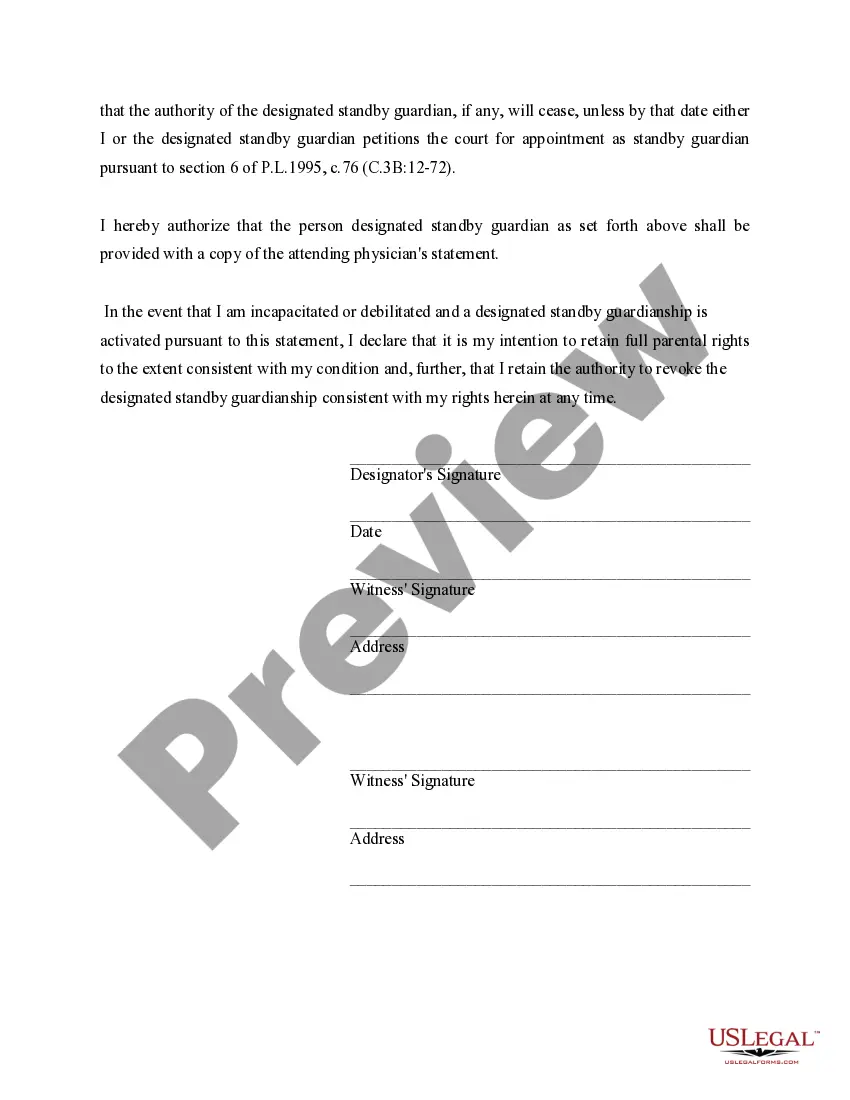
- Authorization for the guardian to receive information from the attending physician.
- Signature of the designating parent and witnesses.
When to use this document
This form should be used when a parent or legal custodian anticipates a situation where they may become physically or mentally incapacitated and unable to care for their children. This could include medical emergencies, serious illness, or other unforeseen circumstances that would prevent them from fulfilling their parental responsibilities. By preparing this document in advance, parents can ensure that their children are cared for by a trusted individual.
Intended users of this form
- Parents or legal custodians of minor children.
- Individuals seeking to designate a standby guardian in case of potential incapacity.
- Anyone wanting to ensure the care of their children during emergencies.
Steps to complete this form
- Identify and enter the name of the parent or legal custodian.
- Provide the name, home address, and phone number of the designated standby guardian.
- List the names of the minor child or children for whom guardianship is being designated.
- Specify the conditions under which the standby guardianâs authority will take effect.
- Include an alternate standby guardian if desired, along with their contact details.
- Ensure the form is signed and dated by the designator and witnessed by two witnesses.
Notarization requirements for this form
This form does not typically require notarization unless specified by local law. However, having it notarized can enhance its credibility and may be preferred in some situations. It is advisable to check state requirements or consult with a legal professional if in doubt.
Get your form ready online
Our built-in tools help you complete, sign, share, and store your documents in one place.
Make edits, fill in missing information, and update formatting in US Legal Forms—just like you would in MS Word.
Download a copy, print it, send it by email, or mail it via USPS—whatever works best for your next step.
Sign and collect signatures with our SignNow integration. Send to multiple recipients, set reminders, and more. Go Premium to unlock E-Sign.
If this form requires notarization, complete it online through a secure video call—no need to meet a notary in person or wait for an appointment.
We protect your documents and personal data by following strict security and privacy standards.

Make edits, fill in missing information, and update formatting in US Legal Forms—just like you would in MS Word.

Download a copy, print it, send it by email, or mail it via USPS—whatever works best for your next step.

Sign and collect signatures with our SignNow integration. Send to multiple recipients, set reminders, and more. Go Premium to unlock E-Sign.

If this form requires notarization, complete it online through a secure video call—no need to meet a notary in person or wait for an appointment.

We protect your documents and personal data by following strict security and privacy standards.
Mistakes to watch out for
- Failing to name an alternate standby guardian, which can lead to complications.
- Not specifying the conditions under which the guardianship takes effect clearly.
- Omitting required signatures or witnesses, rendering the document invalid.
- Forgetting to state the expiration date of the designation.
Advantages of online completion
- Convenient access: Download and complete the form from the comfort of your home.
- Editability: Tailor the form to your specific situation easily.
- Reliability: Attorney-drafted forms ensure compliance with legal standards.
Legal use & context
The Designation of Standby Guardian is a legally binding document that clarifies who will care for minor children in specific scenarios. It is crucial to follow the legal requirements of New Jersey to ensure the document is enforceable.
Key takeaways
- The Designation of Standby Guardian - Statutory allows parents to designate caregivers for their children during incapacity.
- Ensure completion includes all required details for clarity and legality.
- Choose trusted individuals for guardianship to ensure children's safety and well-being.
Looking for another form?




Form popularity
FAQ
What's the procedure to establish guardianship of a child? You can establish guardianship of a child by filing papers in court. Initially, file a petition stating your interest in obtaining guardianship along with a filing fee. You'll also want to file a letter of consent from the child's parents.
All applications for guardianship require an up-to-date assessment from either a psychologist or a psychiatrist licensed in the State of New Jersey, or from a licensed medical doctor. A guardian can be a family member, another interested person, or an agency such as the Bureau of Guardianship Services.
Powers of Attorney and Guardianships. Impact of a Power of Attorney. Arranging a Psychological and Neurological Examination.
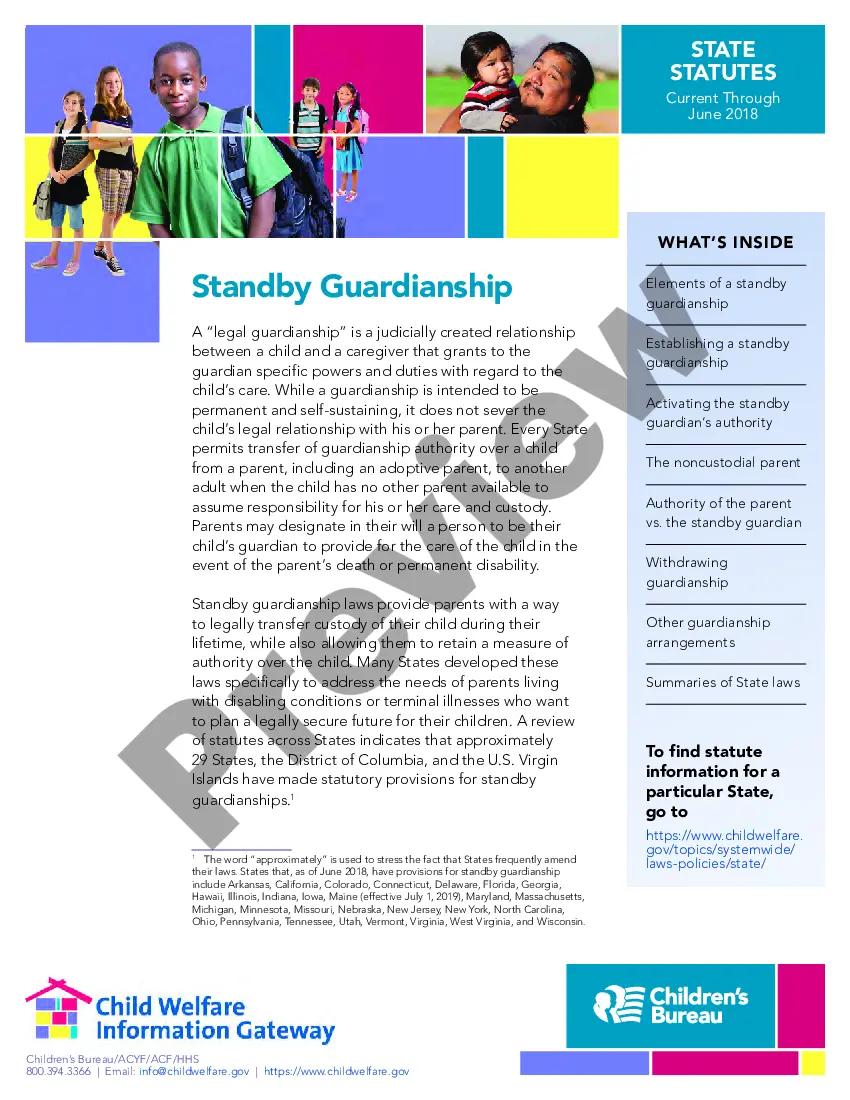
A standby guardianship can be accomplished by parental designation where a parent signs a document entitled Parental Designation and Consent to Beginning the Standby Guardianship (Designation Form) in the presence of two witnesses, which announces the parent's intention to appoint the standby guardian.
Decide Who Will Administer Your Estate. Someone needs to wrap up your affairs after you pass away. Decide How You Want to Distribute Your Assets. Choose One or More Guardians. Write and Sign Your Will.
A. A guardian can be appointed by court (in case of parents death or parents have abandoned their child) after following proper procedure in court of law or by way of will (testamentary guardian) where parents want someone to act as guardian of their children after their death.
You start the process of declaring a person mentally incompetent by filing an official petition with the local district of your state's probate court. At the same time that you are filing to have someone declared mentally incompetent, you are also filing to become their legal guardian.
As guardian of the person, you are entitled to compensation for your time, upon court approval. The compensation cannot exceed five percent of the ward's gross income. Attorney fees and other costs can and should be paid out of the ward's income, upon court approval.
In general, a legal guardian has the right to make legal decisions on behalf of their ward.The guardian's responsibilities are also vast, as the guardian typically also has both legal and physical custody of the ward. As such, they must fulfill duties similar to those a parent would fulfill for their child.