New Jersey Bill of Sale without Warranty by Corporate Seller
About this form
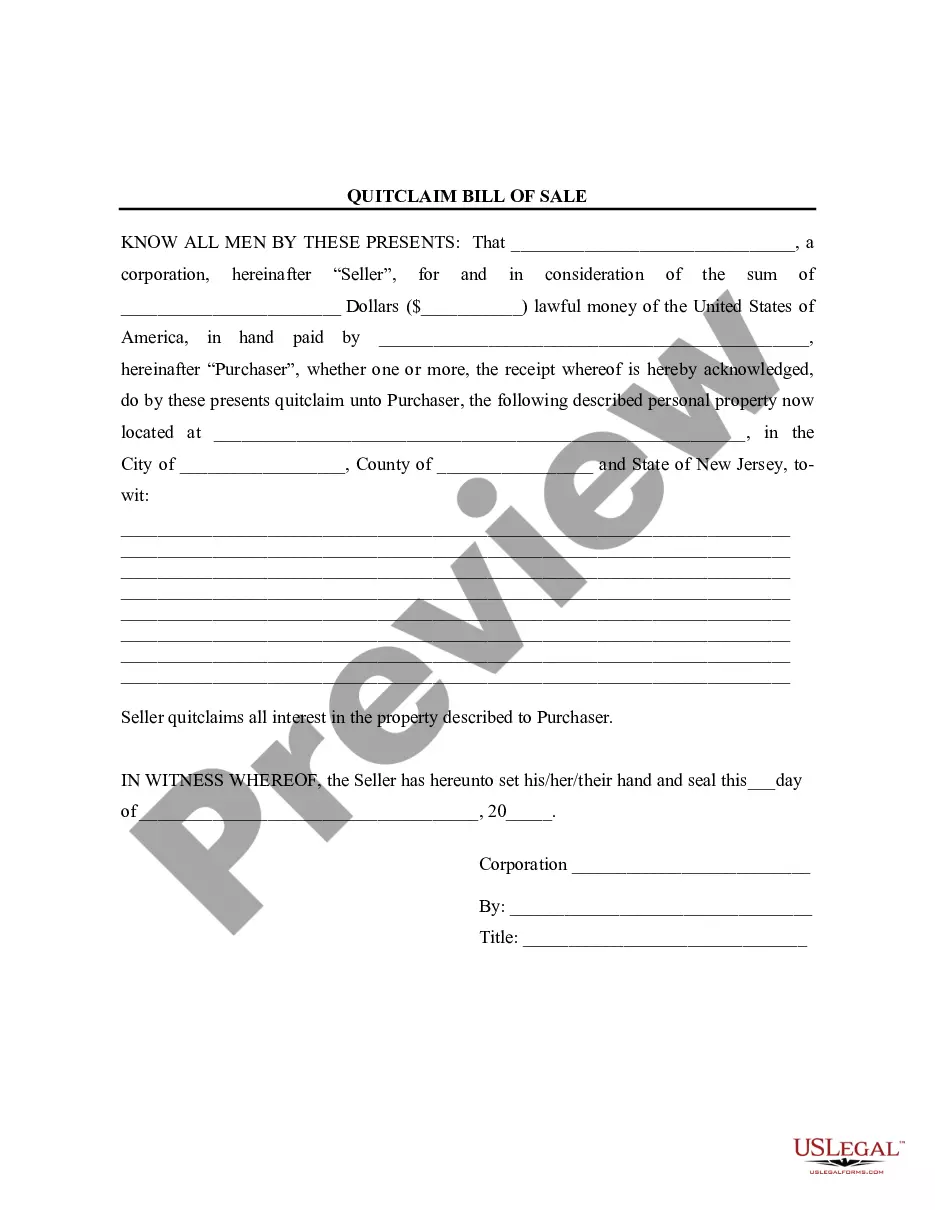
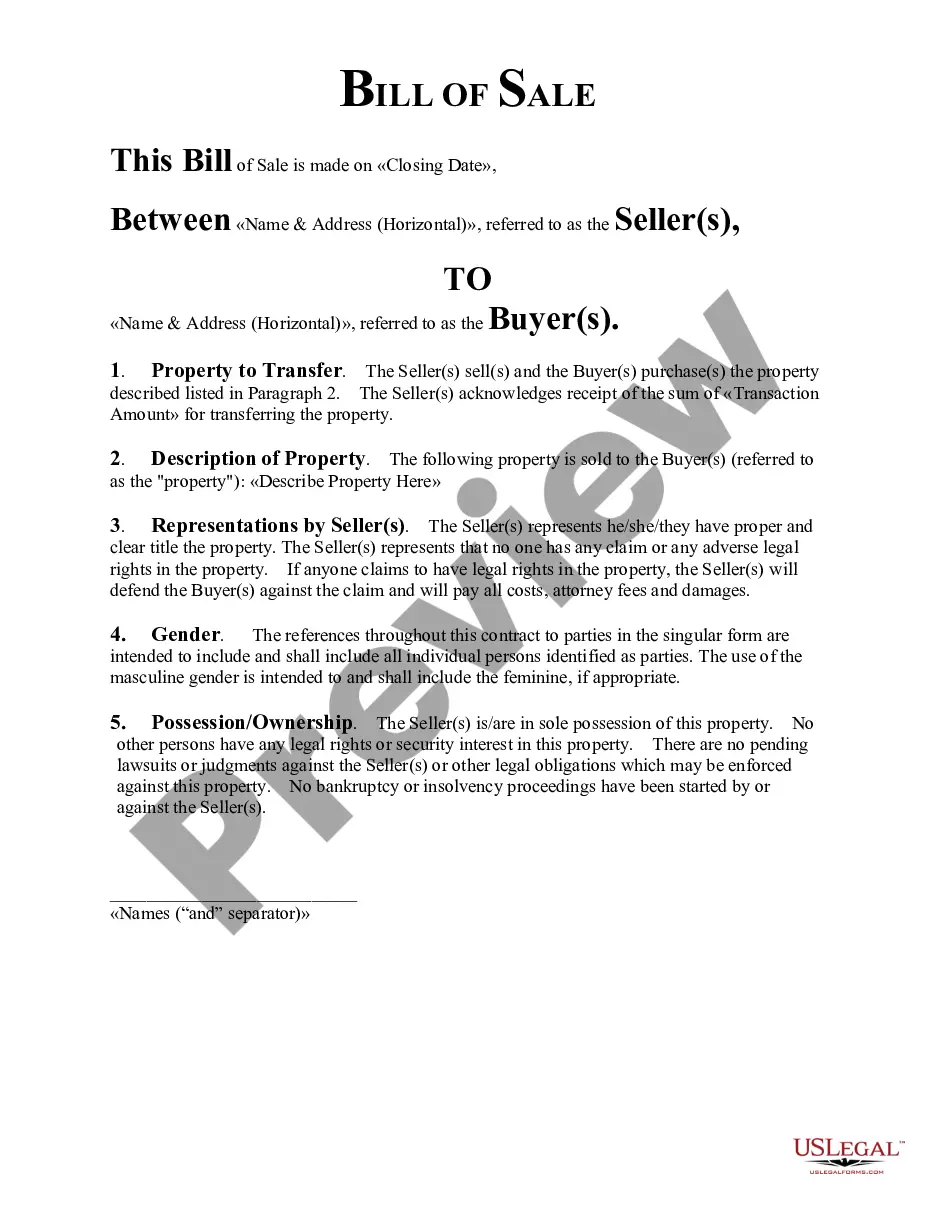
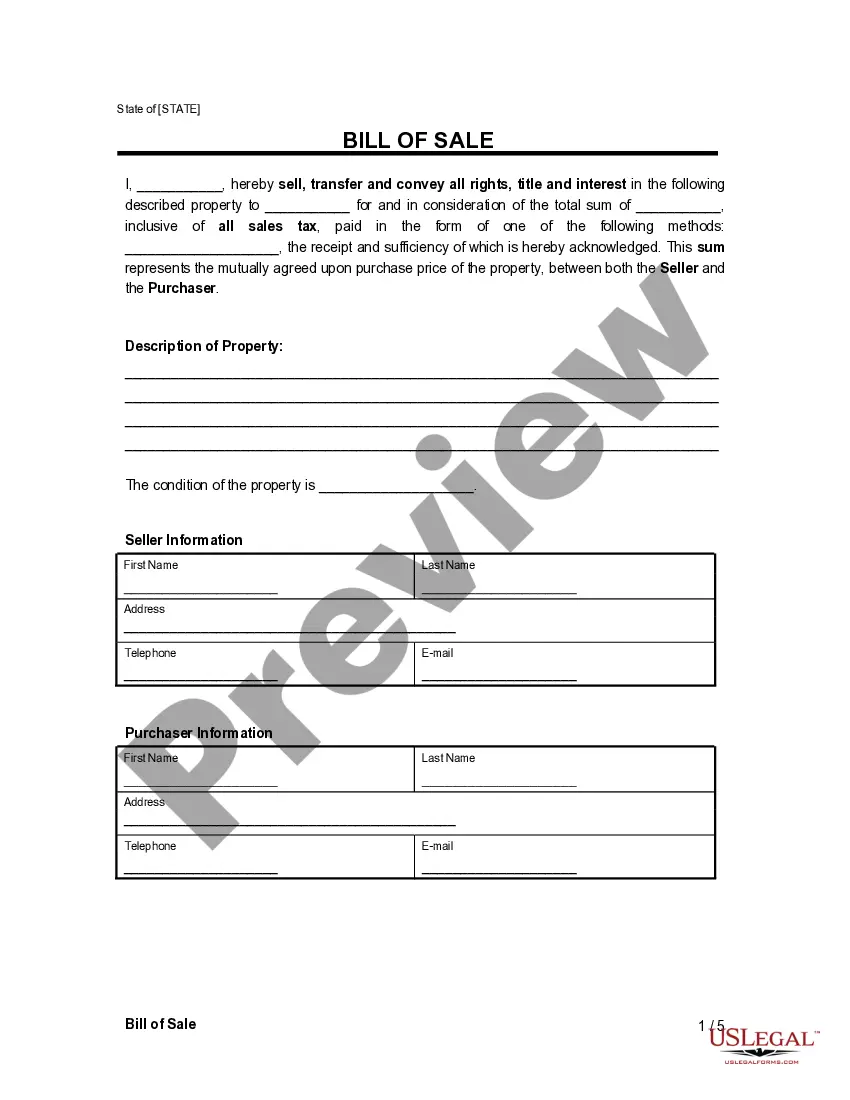
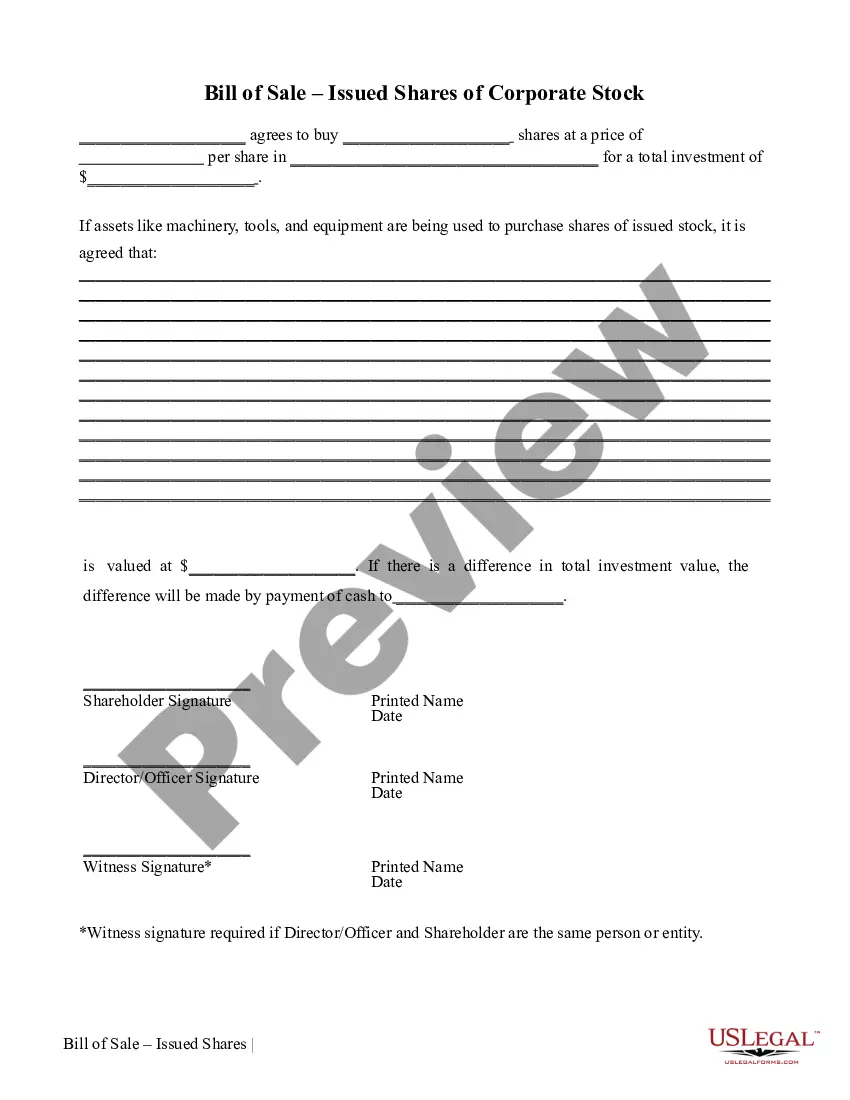
This Bill of Sale without Warranty by Corporate Seller is a legal document used to transfer ownership of personal property from a corporate seller to a purchaser, without any warranties regarding the property's condition. This quitclaim conveyance clearly outlines the terms of the sale and serves as proof of ownership transfer, ensuring compliance with applicable state laws.
Key components of this form
- Identification of the corporate seller and purchaser
- Details of the property being sold
- Consideration amount (the sale price)
- Signature of an authorized corporate officer
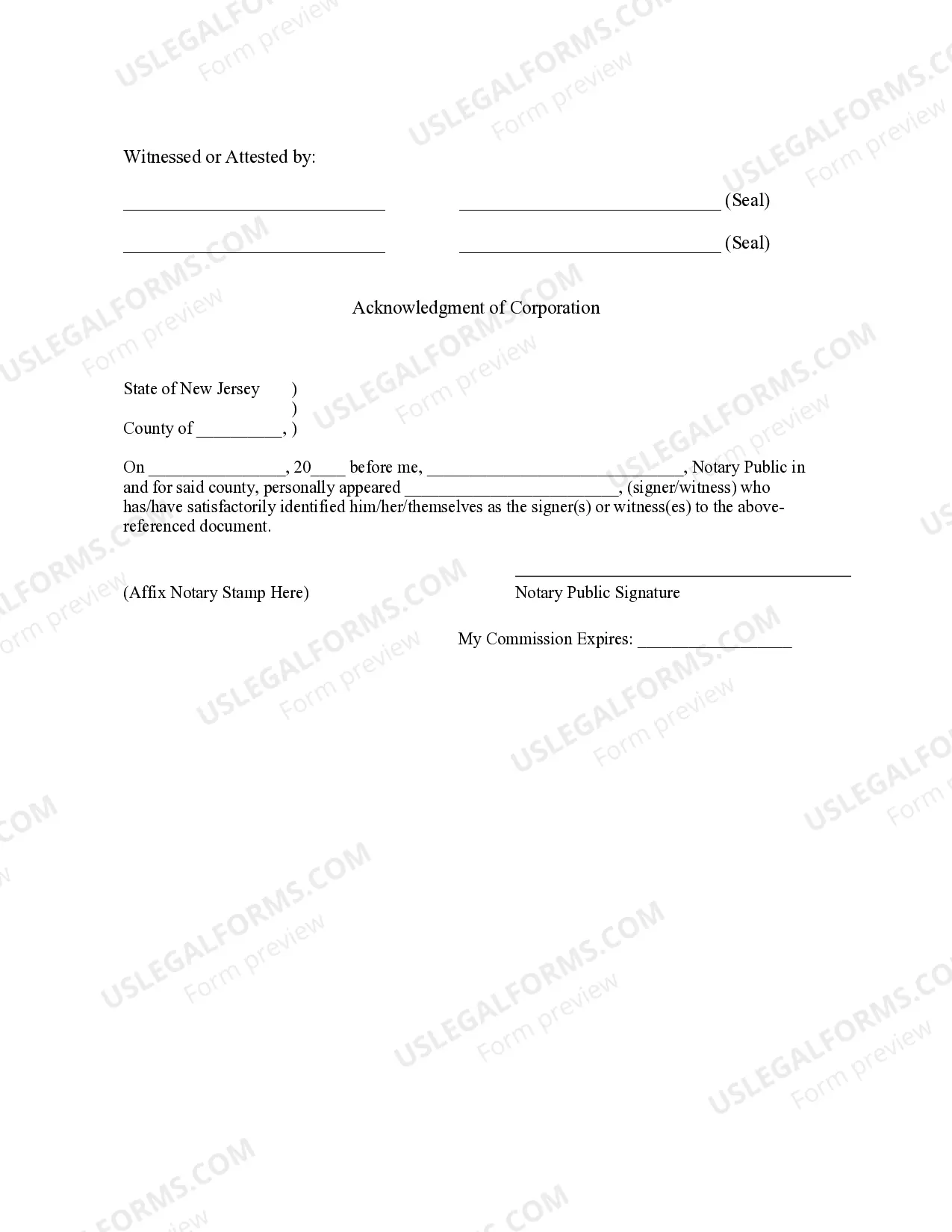
- Acknowledgment section for notarization
When to use this form
Use this Bill of Sale when a corporation is selling personal property, such as equipment, vehicles, or other tangible items, and you want to transfer ownership without providing warranties. This document is particularly useful in business transactions where the seller needs to delineate their lack of liability for the property's condition.
Intended users of this form
- Corporations looking to sell personal property
- Purchasers interested in acquiring property from a corporate entity
- Legal professionals assisting clients in property transfers
Instructions for completing this form
- Identify the full legal name of the corporation selling the property.
- Enter the name of the purchaser and the amount being paid for the property.
- Describe the personal property being sold in detail.
- Have the authorized corporate officer sign the document, along with their title.
- Complete the acknowledgment section in the presence of a notary public.
Does this document require notarization?
Yes, this form must be notarized to be legally valid. The acknowledgment section requires a notary public to verify the identities of those signing the document, which helps establish its authenticity and prevent fraud.
Get your form ready online
Our built-in tools help you complete, sign, share, and store your documents in one place.
Make edits, fill in missing information, and update formatting in US Legal Forms—just like you would in MS Word.
Download a copy, print it, send it by email, or mail it via USPS—whatever works best for your next step.
Sign and collect signatures with our SignNow integration. Send to multiple recipients, set reminders, and more. Go Premium to unlock E-Sign.
If this form requires notarization, complete it online through a secure video call—no need to meet a notary in person or wait for an appointment.
We protect your documents and personal data by following strict security and privacy standards.

Make edits, fill in missing information, and update formatting in US Legal Forms—just like you would in MS Word.

Download a copy, print it, send it by email, or mail it via USPS—whatever works best for your next step.

Sign and collect signatures with our SignNow integration. Send to multiple recipients, set reminders, and more. Go Premium to unlock E-Sign.

If this form requires notarization, complete it online through a secure video call—no need to meet a notary in person or wait for an appointment.

We protect your documents and personal data by following strict security and privacy standards.
Common mistakes
- Failing to properly identify the seller and purchaser.
- Omitting the description or details of the property being sold.
- Not having the form signed by an authorized corporate representative.
- Neglecting to complete the acknowledgment section for notarization.
Benefits of using this form online
- Convenient access to legal forms from anywhere at any time.
- Editability allows you to customize the form easily to suit your needs.
- Reliability as the forms are drafted by licensed attorneys to ensure legal compliance.
Summary of main points
- This Bill of Sale transfers ownership of personal property without any warranties.
- It is specifically designed for transactions involving a corporate seller.
- Proper completion and notarization are crucial for legality.
- Ensure compliance with state laws when using this form.
Looking for another form?
Form popularity
FAQ
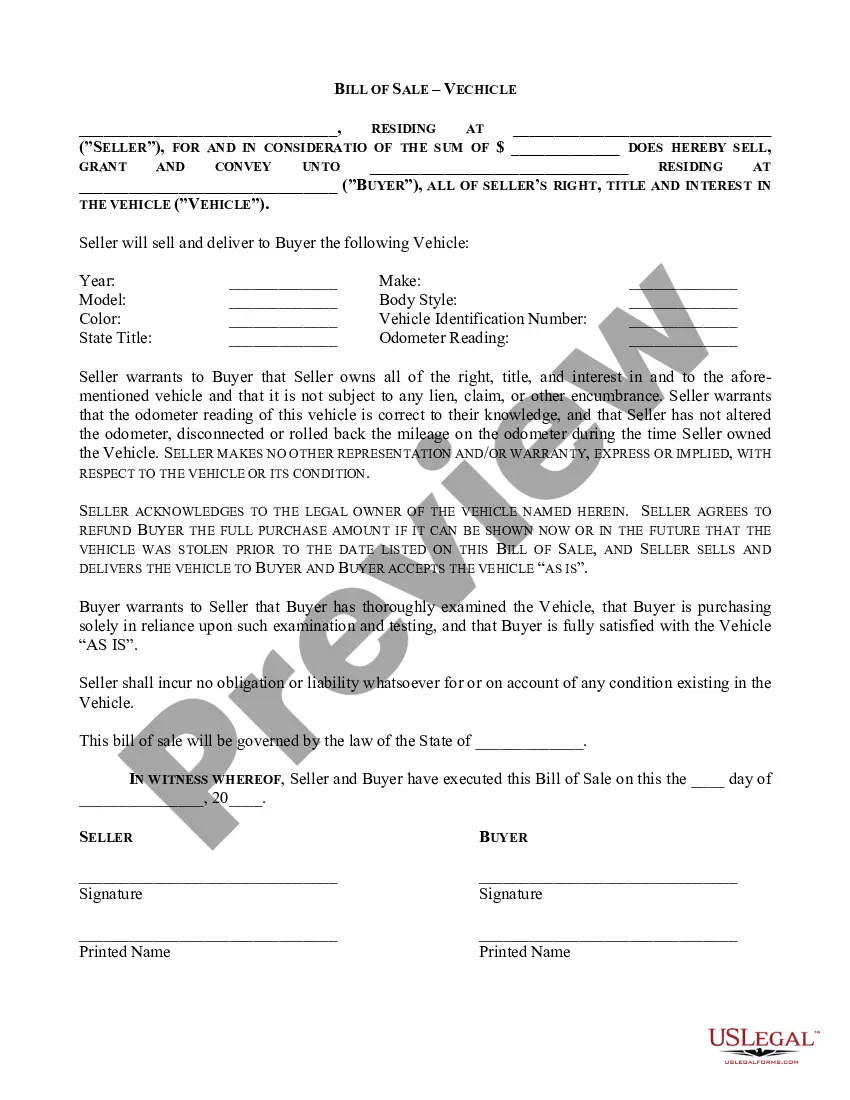
Year, Make and Model of the Vehicle. Vehicle Identification Number (VIN) Date of Sale. Purchase Price. Current mileage odometer reading. Legal full names, address and signatures of the buyer and seller.
According to the NJ DMV: "A vehicle is only exempt from sales tax if the customer indicates on the purchase price that it is a gift on the sales tax form." I'll be in that same boat in a few weeks when my Dad sells me my own car for $1 (was in his name for insurance purposes).
Both the buyer and seller should receive copies of the bill of sale form. It's important for the buyer to keep the bill of sale with the title of the vehicle for registration and licensing purposes, if necessary. However, all parties should keep them for their own personal records.
Can a bill of sale be handwritten? If your state does not provide a bill of sale form, yes, you can handwrite one yourself. As long as the document includes all of the necessary parts of a bill of sale and is signed by both parties and a notary, it is valid. Some states require a bill of sale while others don't.
A complete bill of sale is the only step available to you if you want to sell your car without a title. The bill of sale needs to include all the details of the car, including the make, model, year, and VIN. It also needs to include all your information (name, contact details, registration details).
Louisiana. Maryland. Nebraska. New Hampshire. West Virginia. Montana.
A bill of sale does not serve as proof of ownership. Only a title has that legal authority. Bills of sale serve as proof of title transfer, which buyers and sellers need for personal financial and tax records.
Typically, the Purchaser does not need to sign the Bill of Sale. However, some jurisdictions will require the Purchaser to sign the Bill of Sale for some or all forms of transactions. You should check your local laws to verify whether the Purchaser's signature is required for your specific sale.
New Jersey requires a bill of sale for cars and other motor vehicle type transactions. The New Jersey Motor Vehicle Commission (NJ MVC) requires a bill of sale, which is a legal document that offers proof of ownership, to register and title pre-owned vehicles bought at auctions, as well as abandoned vehicles.