New Jersey Quitclaim Deed from Husband and Wife to Corporation
Overview of this form
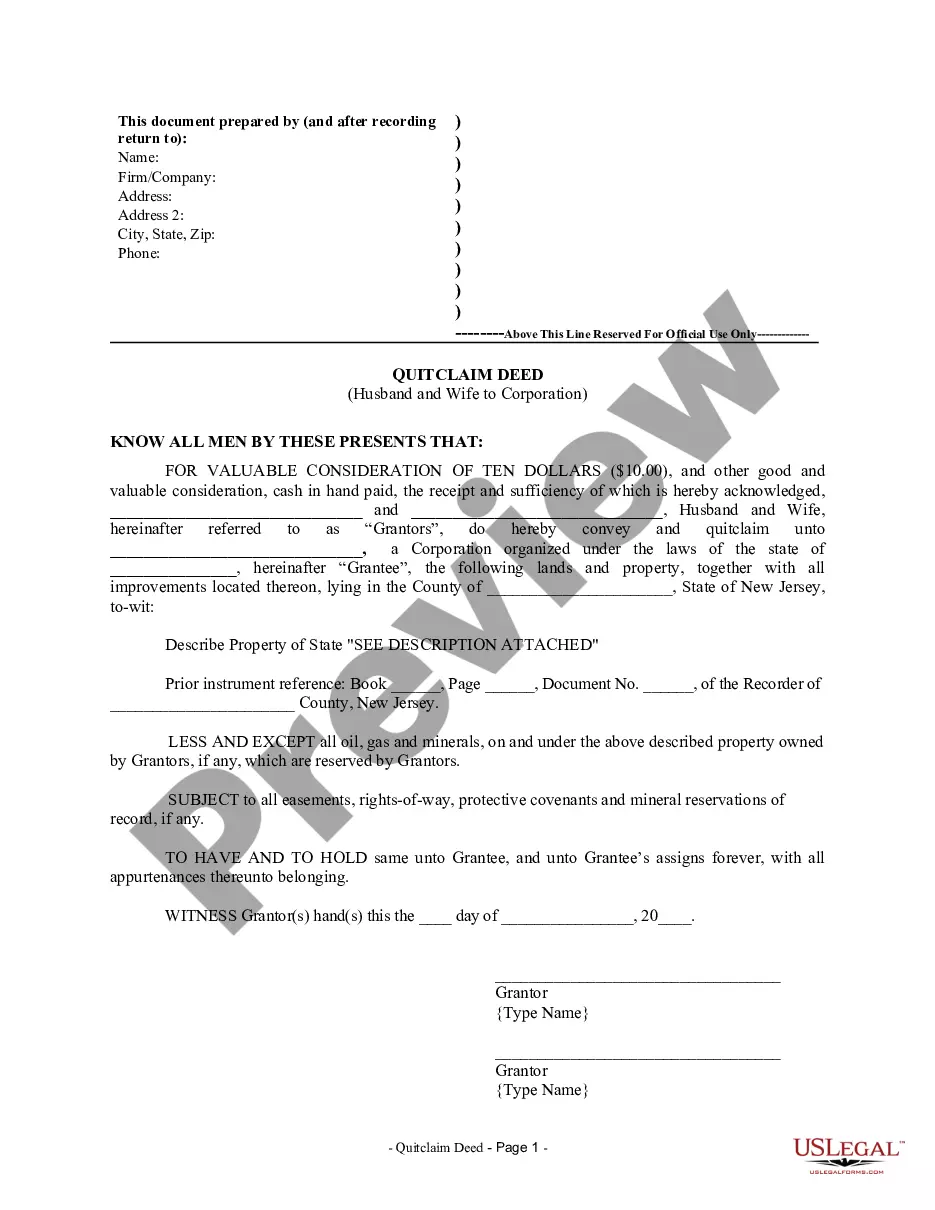
The Quitclaim Deed from Husband and Wife to Corporation is a legal document that transfers ownership of property from a married couple (the grantors) to a corporation (the grantee). This type of deed conveys the property without warranties, meaning the grantors do not guarantee that they hold clear title. It's particularly important when transferring property rights where less risk is involved compared to other types of deeds like warranty deeds.
Form components explained
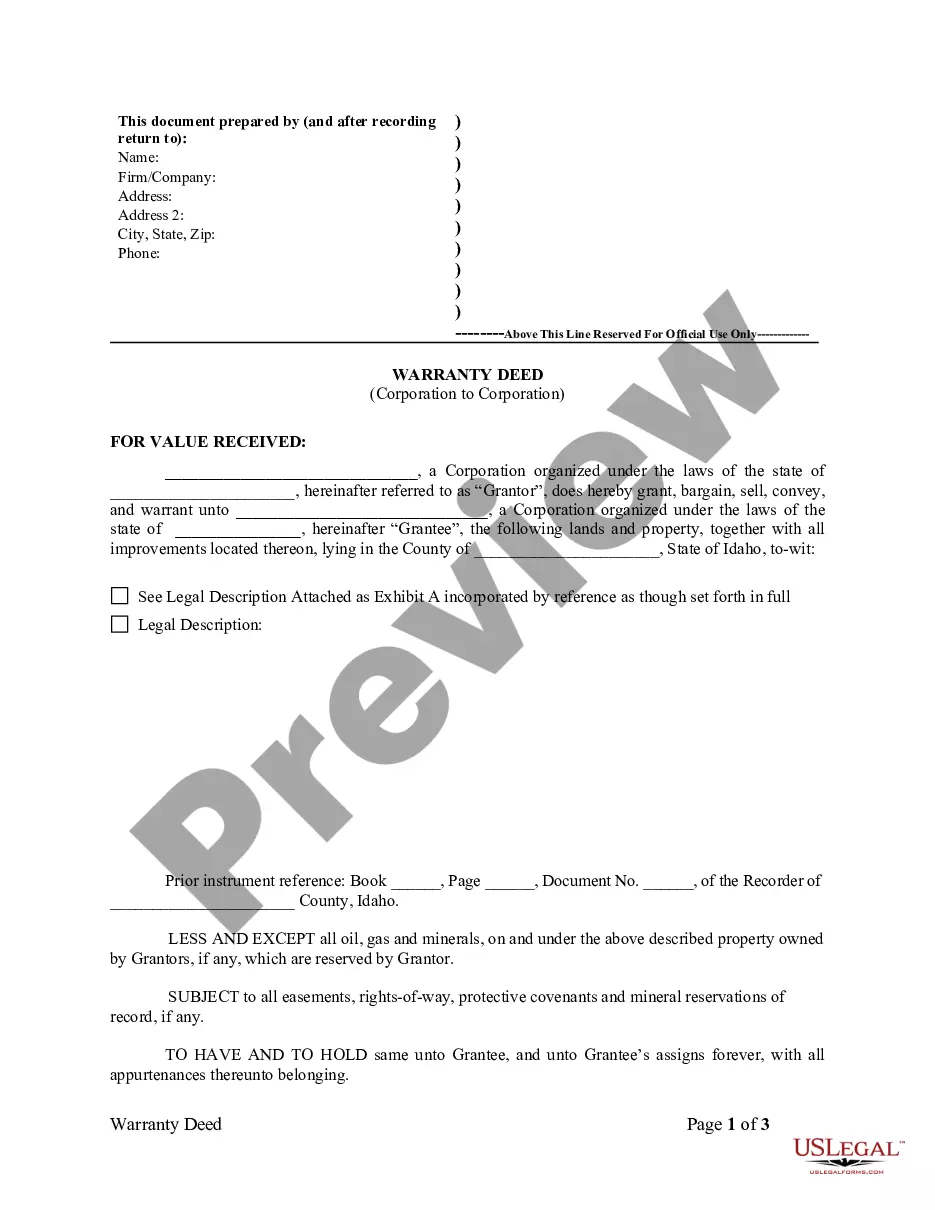
- Property description: Specifies the property being transferred.
- Prior instrument reference: Includes details about the previous deeds related to the property.
- Reservation clause: Outlines any reservations regarding oil, gas, and minerals below the land.
- Grantor information: Requires the names and signatures of both the husband and wife.
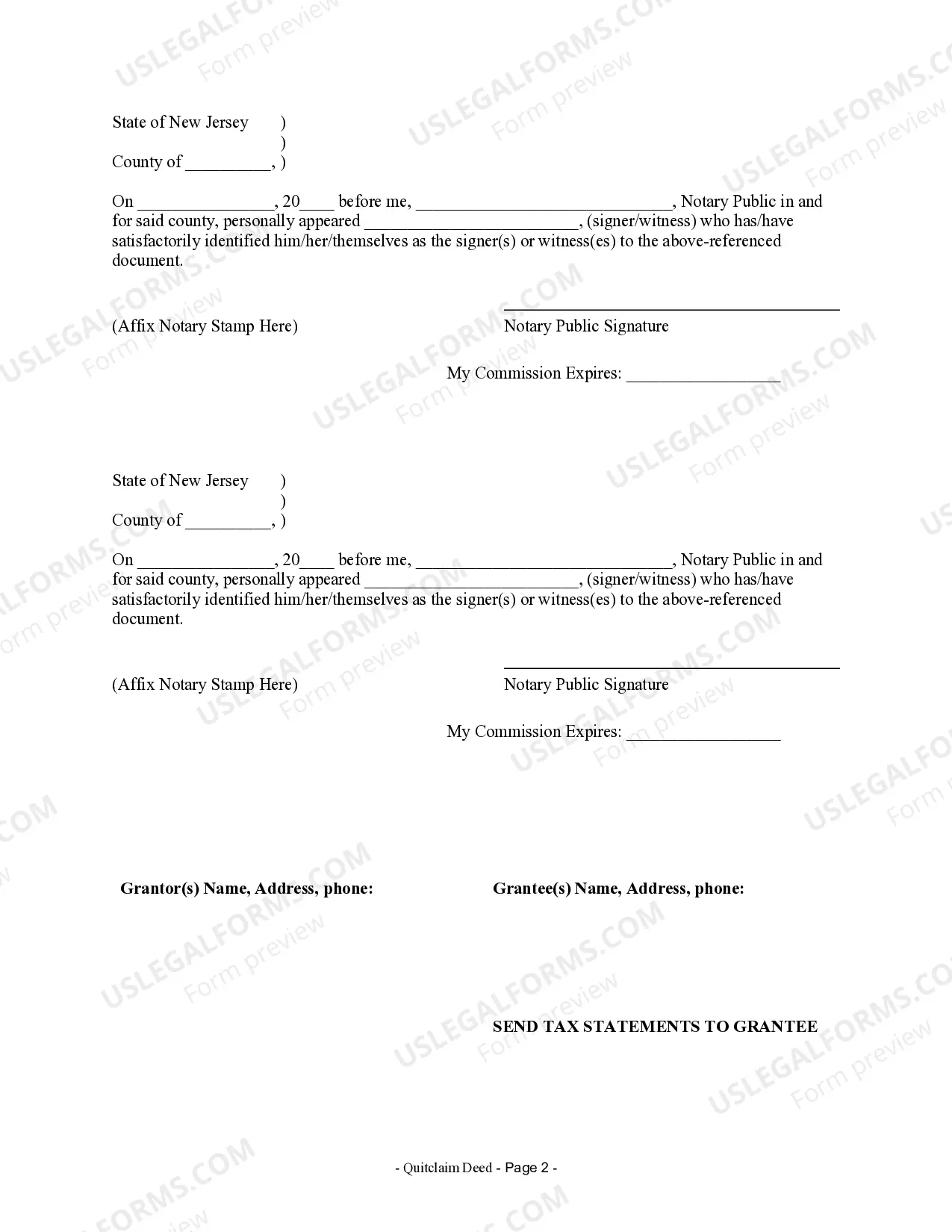
- Notary acknowledgment: Confirms the identity of the grantors and their signatures.



Common use cases
This form should be used when a married couple wishes to transfer their property to a corporation. It can be applicable in various situations, including business transactions, real estate investments, or when consolidating ownership within a corporate entity. This deed is suitable when the owners prefer a straightforward transfer without warranties against potential future claims on the property.
Intended users of this form
This form is intended for:
- Married couples who own property together.
- Corporations that are acquiring property from married grantors.
- Real estate professionals or attorneys assisting clients in property transfers.
How to prepare this document
- Identify the parties: Enter the full names of the husband and wife as grantors and the corporation as the grantee.
- Specify the property: Clearly describe the property being transferred, including any legal identifiers.
- Enter prior instrument reference: Include details of the previous deed related to the property.
- Sign the form: Both grantors must sign the deed in the presence of a notary public.
- Complete notary section: The notary must fill out their information and certify the document.
Notarization guidance
Yes, this form must be notarized to be legally valid. US Legal Forms offers an integrated online notarization service that allows you to have your documents notarized securely via video call, ensuring convenience without the need for travel.
Get your form ready online
Our built-in tools help you complete, sign, share, and store your documents in one place.
Make edits, fill in missing information, and update formatting in US Legal Forms—just like you would in MS Word.
Download a copy, print it, send it by email, or mail it via USPS—whatever works best for your next step.
Sign and collect signatures with our SignNow integration. Send to multiple recipients, set reminders, and more. Go Premium to unlock E-Sign.
If this form requires notarization, complete it online through a secure video call—no need to meet a notary in person or wait for an appointment.
We protect your documents and personal data by following strict security and privacy standards.

Make edits, fill in missing information, and update formatting in US Legal Forms—just like you would in MS Word.

Download a copy, print it, send it by email, or mail it via USPS—whatever works best for your next step.

Sign and collect signatures with our SignNow integration. Send to multiple recipients, set reminders, and more. Go Premium to unlock E-Sign.

If this form requires notarization, complete it online through a secure video call—no need to meet a notary in person or wait for an appointment.

We protect your documents and personal data by following strict security and privacy standards.
Mistakes to watch out for
- Failing to correctly describe the property, leading to potential disputes.
- Omitting prior instrument reference information.
- Not having the document notarized, which can render it unenforceable.
- Improperly signing the deed, such as missing signatures from both grantors.
Why use this form online
- Convenience: Download and complete the form from home at your convenience.
- Editability: Quickly fill in specific details relevant to your transaction.
- Reliability: Access forms drafted by licensed attorneys, ensuring legal compliance.
Looking for another form?
Form popularity
FAQ
A Quitclaim Deed must be notarized by a notary public or attorney in order to be valid.Consideration in a Quitclaim Deed is what the Grantee will pay to the Grantor for the interest in the property.
Fill out the quit claim deed form, which can be obtained online, or write your own using the form as a guide. The person giving up the interest in the property is the grantor, and the person receiving the interest is the grantee.
A person who signs a quitclaim deed to transfer property they do not own results in no title at all being transferred since there is no actual ownership interest. The quitclaim deed only transfers the type of title you own.
A New Jersey (NJ) quitclaim deed allows a property owner (or grantor) to release their ownership rights to a purchaser (or grantee).A quitclaim deed is different from a warranty deed, which warrants to the purchaser that the property owner has (and is conveying) legal title to the property.
But you might be wondering if an owner can transfer a deed to another person without a real estate lawyer. The answer is yes. Parties to a transaction are always free to prepare their own deeds.A quitclaim deed, for example, is far simpler than a warranty deed.
They are commonly used to add/remove someone to/from real estate title or deed (divorce, name changes, family and trust transfers). The quitclaim deed is a legal document (deed) used to transfer interest in real estate from one person or entity (grantor) to another (grantee).
Signing - According to New Jersey law, the quit claim deed must be signed by the seller of the property in the presence of a Notary Public. Recording - All quit claim deeds that have been notarized should be filed with the County Clerk's Office within the jurisdiction that the property falls under.
In New Jersey, the deed must be in English, identify the seller/buyer (grantor/grantee), name the person that prepared the deed, state the consideration (amount paid) for the transfer, contain a legal description of the property (a survey), include the signature of the grantor and be signed before a notary.